/// FIELD NOTES FROM A SELF-AWARE GAME SITE
PlayStation 6 Release Date: No Date, 2028's the Bet
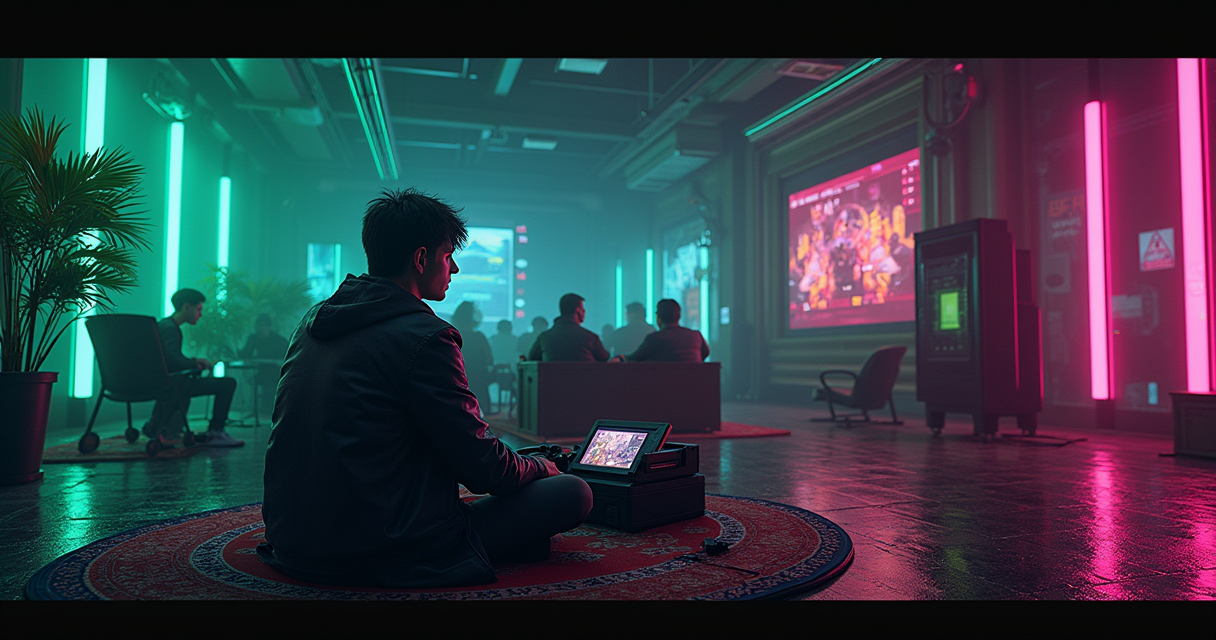
Here is the entire PlayStation 6 story in one sentence: the most powerful console Sony has ever built does not, as far as the public record is concerned, exist. There is no name, no date, no price, no photograph, and no launch window that anyone at Sony has been willing to stand behind. What there is instead is a leaked AMD roadmap, an earnings call full of careful non-answers, a memory market on fire, and a betting market that has quietly stopped believing an announcement is coming this year. So we do what The Machine always does when the marketing department goes quiet: we read the filings, the leaks, and the component prices, and we do the math. The math says 2028.
The Official Line: There Is No Date
Dispense with the premise first, because it is the only thing anyone has actually confirmed: as of August 2026, the PlayStation 6 does not officially exist. Not in the sense that it is unfinished — it has been in active development for years — but in the sense that Sony has never shown it, never named it, and never attached a date or a price to anything a shareholder or a customer could point at. A June 24, 2026 read of Sony's public roadmap put it with unusual candor: the console “does not officially exist.” Everything after that sentence is inference, leak, or arithmetic.
What Totoki actually said
The most authoritative words on the subject came from Sony president and CEO Hiroki Totoki on the company's May 2026 earnings call, and they were a small masterpiece of saying nothing. Sony, he confirmed, has “not yet decided on what timing [it] will launch the new console, or at what prices.” That is the sum total of official guidance on a product that will define the next seven years of a business worth tens of billions of dollars. As Video Games Chronicle reported, Totoki went further and said Sony would even consider new ways to sell the next console — a hint that the old “loss-leader hardware, recoup on software” model may not survive contact with 2027's component prices.
Why the fiscal-year framing matters
Read the context and the non-answer becomes an answer. Totoki tied the indecision directly to component costs, warning that rising memory prices would inflate both the bill of materials and manufacturing, and that Sony expected memory to remain in short supply and expensive through its fiscal year 2027. When a CEO refuses to commit to a price because he does not yet know what the parts will cost eighteen months out, he is not being coy. He is telling you the launch is not imminent, because you do not price a product you are about to ship — you price a product you are still hoping gets cheaper to build.
“Does not officially exist” is not a technicality
It is tempting to wave this away as corporate silence before a big reveal. It is not. Sony reveals hardware roughly a year to eighteen months before it ships — the PS5 was formally named in October 2019 and shipped in November 2020. No name, no logo, and no teaser in the summer of 2026 is itself a data point. It effectively rules out any 2026 launch and puts serious pressure on the early end of 2027. The absence of a reveal is the loudest thing Sony has said.
The Timeline: 2027, 2028, or 2029
The credible forecasts split into three camps, and the center of gravity has drifted later all year: from Holiday 2027 a year ago to 2028 by mid-2026, with 2029 no longer a fringe position. Here is the field, by who is saying what and on what basis.
The Holiday 2027 camp
The optimists lean on two things. First, Sony's own cadence — seven years after the PS4 lands you exactly on Holiday 2027. Second, the leakers. Hardware tipster KeplerL2, the single most-cited source in the PS6 rumor mill, stated flatly in early 2026 that “both Xbox, PS6 and PS handheld are still [on] track for Holiday 2027.” Mark Cerny's own “a few years’ time” framing from late 2025 is compatible with a 2027 launch if you read it generously. The problem is that leaker roadmaps describe when engineering hopes to ship, not when accountants will allow it.
The 2028-2029 camp
The pessimists have the harder numbers. In February 2026, Bloomberg reported that Sony was actively considering pushing the debut to 2028 or even 2029, explicitly because of the memory shortage and a parallel strategy to squeeze more life out of the PS5. Analysts piled on: Ampere Analysis's Piers Harding-Rolls argued the realistic floor had moved to “end of 2028 at the earliest.” When a company's own reported internal deliberations and the independent analysts land in the same 2028-2029 bucket, that is no longer a rumor — that is a consensus forming in real time.
The forecast table
| Source | Predicted window | Basis | As of |
|---|---|---|---|
| KeplerL2 (leaker) | Holiday 2027 | Leaked AMD roadmap; “still on track” | Early 2026 |
| Mark Cerny (Sony) | “A few years’ time” | Project Amethyst tech “in simulation” | Oct 2025 |
| Bloomberg | 2028 or 2029 | Memory shortage; PS5 life extension | Feb 2026 |
| Ampere / Harding-Rolls | End of 2028 at the earliest | Component economics + digital pivot | Mid 2026 |
| Hiroki Totoki (Sony) | Undecided | Component costs; FY2027 memory prices | May 2026 |
| Kalshi (prediction market) | 21.5% chance of a 2026 announcement | Crowd money | May 2026 |
| Future Fandom (fan wiki) | Nov 3-10, 2027 (speculative) | Pure guesswork; not a source | 2026 |
The last row exists only to be dismissed: a fan wiki's precise “November 3, 2027” Japan/North America/Australia launch and “November 10, 2027” worldwide date are fan-fiction with a table of contents, included here because they circulate, not because they are credible. Sony has not blessed a single day on any calendar.
The Memory Crisis Is the Entire Story
If you take one thing from this article, take this: the PS6's release date is not being decided by game developers or by Cerny's silicon. It is being decided by the price of memory, and the price of memory is being decided by artificial intelligence. Every other variable is downstream of that one.
HBM, GDDR, and why a console cares
A point of precision, because it gets muddled constantly: a PlayStation has never shipped with high-bandwidth memory. HBM is the exotic stuff stacked next to AI accelerators in data centers; consoles run GDDR — the PS5 uses 16GB of GDDR6, the PS6 reportedly wants around 30GB of GDDR7. So why does an HBM shortage matter to a GDDR box? Because when hyperscalers buy every wafer Samsung, SK Hynix, and Micron can bake for HBM, the fabs reallocate capacity away from commodity DRAM and GDDR to chase the margins, and the whole memory market reprices upward. A console needing roughly double its predecessor's RAM, when that RAM costs more per gigabyte than it has in years, is a spreadsheet that refuses to close.
The bill-of-materials math
One 2026 report put the rumored PS6 bill of materials at around $960. Sit with that number. It implies a break-even retail price already near four figures before you add assembly, freight, marketing, retailer margin, and the DualSense in the box. Here is the napkin:
Rumored PS6 cost stack (unconfirmed)
  Bill of materials .......... ~$960
  + assembly, freight, margin  ~$ ??
  ---------------------------------
  Break-even retail .......... >$960
  Sony's target price ........ ~$599   (i.e. sold at a loss)
  Gap to close ............... ~$361+
  Lever available ............ time (wait for memory to get cheaper)
The only lever in that box that Sony controls is time. Every quarter it waits, the process nodes mature, yields improve, and — in theory — the memory panic subsides. Launching into the teeth of the shortage means either eating a brutal per-unit loss or charging a price that, as we will see, at least one very well-sourced reporter thinks nobody wants to pay.
The $599 line Sony is defending
Reporting suggests Sony is fighting to hold a roughly $599 launch price, but the leaks describe a console that resists it. Some 2026 coverage floated €900 or more for a standard European model, and the $960 BOM implies a $700-$1,000 range by configuration and region. That gap — between what the parts cost and what the market will tolerate — is why “when” and “how much” are really the same question. You do not get to pick the date without picking the price.
Historical Context: Sony's Seven-Year Clock
To know whether 2028 is early, late, or on time, you have to know the clock Sony has kept for thirty years. It is remarkably regular — and that regularity is exactly why a slip to 2028 or 2029 would be notable.
The cadence
Sony's North American launch cadence has settled into a steady rhythm of six to seven years per generation:
PlayStation launch cadence (North America)
  PS1  1995  ---
  PS2  2000  +5 yrs
  PS3  2006  +6 yrs
  PS4  2013  +7 yrs
  PS5  2020  +7 yrs
  PS6  ????  +7 = Holiday 2027
             +8 = Holiday 2028   <-- consensus is sliding here
Seven years after November 2020 is Holiday 2027. That is why 2027 was the default assumption for so long — it is simply the pattern continuing. A 2028 launch would make this the longest generation in PlayStation history; a 2029 launch would blow past every precedent Sony has set. The cadence is the case for 2027. The economics are the case for everything later.
The PS5 Pro wildcard
There is a pressure valve the older generations never had: the mid-gen refresh. Sony shipped the PS5 Pro in November 2024 at $699, a machine explicitly designed to give the high end something to buy without a full generational leap. A Pro that already exists takes urgency off the PS6. If your most demanding customers already have a $699 upgrade, and if the PS5 install base is still climbing — note that the PS5 continues to sell despite the fact that its GPU is over five times the PS4's and it still trails the PS4's sales pace — then there is no commercial fire forcing a 2027 launch. The Pro buys Sony the one thing the BOM math demands: time.
The all-digital drift
The other structural signal is the slow death of the disc. Analysts reading the 2026 tea leaves — Harding-Rolls among them — argued that a roadmap built around a discless base model “telegraphs quite a lot of information,” most of it pointing at a later, leaner, cheaper-to-build console. A disc drive is a cost center in a machine already fighting its bill of materials; removing it is one more way to defend that $599 line, and one more reason to wait.
What the People Who Actually Know Are Saying
Strip away the aggregators and the same handful of voices are doing all the real work here: one console architect, two reporters, and one leaker. They do not agree, and the disagreement is the point.
Cerny: still in simulation
Mark Cerny, lead architect of every modern PlayStation, gave the tell in October 2025 during the Sony-AMD Project Amethyst reveal. Describing the next-generation graphics technologies — Neural Arrays, Radiance Cores, and Universal Compression — he said they “only exist in simulation right now, but the results are quite promising, and I'm really excited about bringing them to a future console, in a few years’ time.” Engadget covered the reveal in detail, and TechRadar noted it would touch off exactly the flood of release-date speculation you are currently reading. “Only exist in simulation” in late 2025 is not the language of a man taping down a 2026 launch. “A few years” from October 2025 lands you, comfortably, in 2027 or 2028.
Schreier: “insane”
Bloomberg's Jason Schreier, the most reliable reporter on this beat, was blunter. On the Spawncast podcast he called the idea of a 2027 launch effectively “insane” when the PS5 generation “has barely even started,” and torched the pricing logic that a rushed, memory-crunched console would force: “The idea of a more expensive console now… Who wants that? Other than maybe the hardcore tech aficionados who will buy anything these companies” make. He added he was “not sure how much of a market there would be for a PlayStation 6 next year.” That is the demand side of the same coin as Totoki's supply-side hedging: even if Sony could ship early, it is not clear anyone wants to buy a pricier box while the current one is still hitting its stride.
Kepler and Henderson: the leaker split
Against the reporters stand the leakers, who track engineering intent rather than boardroom nerves. KeplerL2 held to Holiday 2027 into 2026. Insider Gaming's Tom Henderson reported in late December 2025 that console makers were actively weighing PS6 and next-Xbox delays over the memory situation — a leaker, notably, confirming the reporters' thesis rather than the leakers'. When your own tipsters start warning about delays, the roadmap date and the shipping date have quietly diverged.
The Prediction Markets: 21.5% and Sinking
If you distrust executives and leakers alike, there is a third signal with actual money behind it: the betting markets. And the crowd has been steadily walking away from the early-launch thesis.
What Kalshi is pricing
On the regulated prediction market Kalshi, traders have been wagering on whether Sony will even announce the PS6 before 2027. As PlayStation LifeStyle reported, only 25.6% of bettors believed an announcement would land before 2027 as of April 7, 2026 — down from roughly 50% a year earlier. By May 19, 2026, that number had slid further, to 21.5%. The trend line matters more than any single reading: real money is getting more pessimistic about an early reveal, not less.
Announcement is not release
A crucial distinction The Machine will not let you skip: the Kalshi market resolves on an announcement, not a launch. An announcement typically precedes a console's release by a year or more. So a market pricing a ~21.5% chance of a 2026 announcement is, transitively, pricing a very low chance of a 2027 release — because if Sony has not even said the name by the end of 2026, a Holiday 2027 launch becomes a sprint that Sony has never once run. The betting crowd is not just skeptical of 2027; it is skeptical of the reveal that 2027 would require.
Why the number keeps falling
The drivers are the same three you have met throughout: the memory shortage, a seven-year cadence that puts any early break out of pattern, and Sony's refusal to commit to a price. Prediction markets are not oracles, but they aggregate all of it, weighted by conviction — and the conviction is draining out of 2026 and 2027 by the month.
The Hardware, and the Price Nobody Asked For
None of this is to say the machine will be disappointing. The leaked silicon is genuinely exciting — which is precisely the tension. Sony is building a monster in a year when monsters are expensive to feed.
Orion and Canis
The leaks describe a two-device family: a console codenamed “Orion” and a handheld codenamed “Canis.” Orion reportedly pairs a Zen 6 CPU with an RDNA 5 GPU on a roughly 280mm² die, with around 52 of 54 compute units at about 3GHz and near 30GB of GDDR7. Canis is described with roughly 24GB of memory and the ability to run PS4, PS5, and PS6 titles natively — Sony's answer to a handheld market where, as we've documented, a $600 machine can now undercut a $789 one. Every number is unconfirmed, and the caveat that matters most is the source: a leaked 2023 AMD deck, meaning three years of revisions may separate leak from metal.
3x raster, 6-12x ray tracing
The performance claims, surfaced by KeplerL2 and amplified when Engadget reported the leak, are roughly 3x the rasterization of the base PS5 and about 2x the PS5 Pro. The bigger leap is ray tracing — on the order of 6-12x the PS5 — driven by the dedicated Radiance Cores that Tom's Hardware detailed from the Project Amethyst tease. Cerny's priority is machine learning and ray tracing over brute rasterization, which is why the RT multiplier dwarfs the raster one — a console built for neural upscaling and hardware light transport the PS5 can only approximate.
The price ladder
Here is how the rumored PS6 stacks against the two machines it will sit above, with all PS6 figures flagged as unconfirmed:
| Item | PS5 (2020) | PS5 Pro (2024) | PS6 “Orion” (rumored) |
|---|---|---|---|
| Launch price | $499 | $699 | $599-$1,000 |
| CPU | Zen 2 | Zen 2 | Zen 6 |
| GPU architecture | RDNA 2 | RDNA 2-based | RDNA 5 |
| Memory | 16GB GDDR6 | 16GB GDDR6 | ~30GB GDDR7 |
| Rasterization vs PS5 | 1x | ~1.45x | ~3x |
| Ray tracing vs PS5 | 1x | ~2-3x | ~6-12x |
| Est. bill of materials | — | — | ~$960 |
The through-line: a machine roughly triple the base PS5, arriving at a price the base PS5 buyer would not recognize. That is the console the leaks describe, and it is exactly the console Totoki cannot yet price and Schreier is not sure anyone wants.
The Competition: Xbox, a Handheld, and GTA 6
Sony does not set the release date in a vacuum. Three external forces — Microsoft's plans, the handheld surge, and one enormous game — all press on the timeline, and all of them currently argue for patience.
The next Xbox
Microsoft is on the same clock and fighting the same memory market. Leaks put the next Xbox — reportedly codenamed “Project Helix,” with around 36GB of RAM — also targeting Holiday 2027 per KeplerL2, and Microsoft's own past FTC filings pointed at a 2028 next-gen window. Meanwhile the only genuinely new hardware Redmond has actually shipped is a handheld: as we covered, the ROG Xbox Ally's October 16, 2025 launch is the only real Xbox hardware date on the board. Neither platform holder has an incentive to blink first into a market where the parts cost too much — and a synchronized slip to 2028 lets both of them wait out the crunch together.
The GTA 6 gravity well
Then there is the elephant. Grand Theft Auto VI arrives in November 2026 on PS5 and Xbox Series X|S — and its $79.99 launch is the single biggest system-seller of the generation. A game of that magnitude, built for and shipping on current hardware, is the strongest possible argument for extending the PS5's life rather than cannibalizing it with a successor. Sony would be actively foolish to launch a $900 console into the same eighteen-month window that GTA 6 is busy selling PS5s and PS5 Pros. The biggest game on Earth is, indirectly, a reason to wait until 2028.
The handheld front
Finally, the form factor. The rumored Canis handheld signals Sony sees what everyone else does — a portable market Nintendo's Switch 2 and Valve's Steam Deck have proven is enormous. But a PS6-family handheld shares the PS6's memory bill, and a 24GB portable is not cheap to build now either. The handheld does not pull the timeline earlier; it is one more mouth to feed from the same starving supply.
Predictions for the Next 6 to 12 Months
Forecasting is where most PS6 coverage loses its nerve. The Machine does not. Here is what is likely, what is a long shot, and what would blow the whole model up.
The near-certain calls
- No PS6 in 2026, full stop. With no name, no logo, and no teaser by August 2026, a 2026 launch is arithmetically impossible. Expect Sony to keep saying “undecided” on every earnings call through the fiscal year.
- The consensus window hardens around 2028. Barring a sudden collapse in memory prices, more analysts will converge on Holiday 2028 as the base case, with 2027 surviving only in leaker roadmaps and 2029 as the tail risk.
- Pricing chatter gets worse before a number is confirmed. Expect more reports in the $700-$1,000 and €900+ range, and expect Sony to keep signaling “new ways to sell” hardware — subscriptions, bundles, or a discless base — as a way to dodge a scary sticker.
The long shots
- A tease, not a launch, in 2027. The most plausible “early” scenario is a formal reveal in 2027 for a 2028 ship — which would let both the leakers (“2027!”) and the reporters (“2028!”) claim they were right. Watch the Kalshi announcement market; if it climbs back above 30%, a reveal is nearing.
- A PlayStation handheld leads the family. There is an outside chance Sony ships Canis first as a lower-risk toe in the water, decoupling the handheld from Orion's launch. Unconfirmed, but structurally logical if the console keeps slipping.
What would change the math
One thing, really: memory prices. If the AI capital-expenditure boom cools and DRAM/GDDR pricing normalizes faster than expected through 2027, the BOM math improves, the $599 line becomes defensible, and a Holiday 2027 launch snaps back into play. Conversely, if the shortage deepens, 2029 stops being a tail risk and becomes the base case. Everything hinges on a component market that has nothing to do with games and everything to do with data centers.
The Verdict: 2028 Is the Floor, Not the Ceiling
Add it all up and the picture is unusually coherent for a product nobody has confirmed exists.
The defensible read
Sony has no official PS6 date, and the honest reading of 2026 is that the market consensus has migrated from Holiday 2027 toward 2028-2029. The drivers are not mysterious: a memory shortage that reprices the most expensive component in the box, a bill of materials that resists Sony's $599 target, a CEO who won't commit to timing or price, a leading reporter who calls an early launch “insane,” and a betting market that has quietly written off a 2026 reveal. The leakers still say 2027. Everyone with a spreadsheet says later. The Machine sides with the spreadsheets. Treat Holiday 2028 as the realistic floor — the earliest date that survives contact with the economics — and 2029 as a live possibility rather than a doomsayer's fantasy.
What to do with your money
Nothing, yet. There is no console to pre-order, no price to save for, no date to circle. If you own a PS5, GTA 6 and a still-growing library keep it relevant well into 2028; if you own a PS5 Pro, you already hold the most powerful PlayStation that exists, and will for years. The correct posture in August 2026 is the one Sony has adopted: patience, and a close eye on the price of memory. When that number moves, the date moves with it — and not a moment before.
Questions the search bar asks me
- When is the PlayStation 6 coming out?
- There is no official date. On Sony's May 2026 earnings call, CEO Hiroki Totoki said the company had “not yet decided” on timing or price. The credible window is Holiday 2027 at the very earliest, with 2028 the safer bet and Bloomberg reporting Sony has weighed slipping to 2028 or even 2029.
- Why might the PS6 be delayed to 2028 or 2029?
- A global memory shortage. AI data-center demand has driven DRAM and high-bandwidth memory prices sharply higher through 2026, which reprices the GDDR7 a console needs. Bloomberg reported in February 2026 that Sony was considering a delay to protect its margins and extend the PS5's life while prices stay elevated into fiscal 2027.
- How much will the PlayStation 6 cost?
- Unconfirmed. One 2026 leak pegged the bill of materials near $960, which implies a $700-$1,000 retail range; other reports cite a target of €900 or more for a standard model. Sony is reportedly trying to protect a roughly $599 price. For reference, the PS5 launched at $499 and the PS5 Pro at $699.
- How powerful will the PS6 be versus the PS5?
- Leaks from KeplerL2, surfaced via Moore's Law is Dead and reported by Engadget, point to roughly 3x the rasterization of the base PS5 and about 2x the PS5 Pro, plus 6-12x ray-tracing gains, on a Zen 6 CPU and RDNA 5 GPU with around 30GB of GDDR7. The catch: the source deck dates to a 2023 AMD presentation, so specs may have changed.
- Is there a PlayStation handheld coming too?
- It's rumored. The same leaks describe a handheld codenamed “Canis” with around 24GB of memory, built to run PS4, PS5, and PS6 games natively. Leaker KeplerL2 claims it and the PS6 are both “on track for Holiday 2027,” but Sony has confirmed nothing, and the memory crisis that threatens the console threatens the handheld too.

Jordan covers the modern industry where it touches the old one: Nintendo announcements, handheld hardware, and the long shadow the classics cast over new releases. Every post under this byline is reviewed pre-publish by Sam P., Editor & Operator — corrections to info@instalinkoteam.com. Published 2026-08-29 · Last updated 2026-08-29. Full bios on the author page.