/// FIELD NOTES FROM A SELF-AWARE GAME SITE
Retroid Pocket 5 vs Flip 2 vs Pocket 6 in 2026
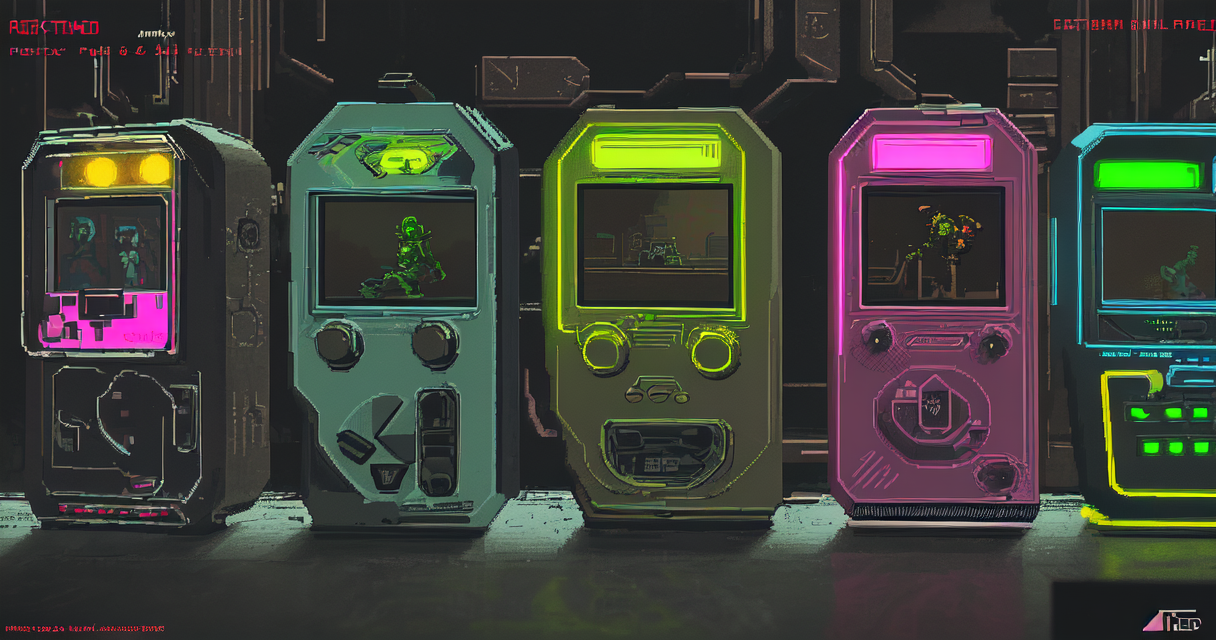
Retroid Pocket family at a glance
Retroid’s 2025–2026 handheld lineup is a tidy little experiment in how many times one company can sell the same basic idea with different silicon, screens, and tolerances for buyer regret. The relevant comparison here is not abstract “best handheld” nonsense. It is the practical question of whether the Pocket 5, Flip 2, Pocket Mini V2, Pocket G2, or Pocket 6 makes sense for a specific library, budget, and appetite for Android handheld quirks.
The official numbers matter because this market is ruled by them. Retroid listed the Pocket 5 at $199 with 8GB LPDDR4x RAM, 128GB UFS 3.1 storage, Android 13, a 5.5-inch AMOLED 1080p/60Hz screen, and Wi‑Fi 6 plus Bluetooth 5.1. The Flip 2 was listed at $209 with SD865-class hardware, 8GB LPDDR4x RAM, 128GB UFS 3.1 storage, Android 13, the same 5.5-inch AMOLED 1080p/60Hz panel, active cooling, a 5000mAh battery, and Wi‑Fi 6 plus Bluetooth 5.1. The Pocket 6 is the expensive one, currently listed with a second-batch preorder at $244 after a prior regular price of $229, and it ships with a Snapdragon 8 Gen 2, LPDDR5X RAM in 8GB or 12GB trims, 128GB or 256GB UFS 3.1 storage, Android 13, a 5.5-inch AMOLED 1080p/120Hz display, active cooling, a 6000mAh battery, analog L2/R2, 3D hall sticks, and Wi‑Fi 7 plus Bluetooth 5.3.
The missing middle is the newer Pocket G2, which in a 2026 comparison video was shown as a ~$219 direct-order device with 8GB LPDDR5X RAM, 128GB storage, a 5.5-inch AMOLED 1920×1080 60Hz screen, a 5000mAh battery, Wi‑Fi 6, Bluetooth 5.4, and Android 15. The same video identifies the Pocket 6 as having 256GB storage and the Snapdragon 8 Gen 2, positioning it above the G2 and roughly alongside other 2026-era performance handhelds. A January 2026 YouTube review of the Pocket Mini V2, meanwhile, describes that compact model as using a Snapdragon 865, 6GB RAM, a 3.92-inch AMOLED display, hall-effect sticks, and a 4,000mAh battery that yields roughly 6 to 8 hours of play time.
That is the hardware story. The software story is less glamorous and more useful: these are Android handhelds, so the actual emulator performance depends on chip, driver stack, cooling, screen, and how much you tolerate app-side nonsense. Netting the right model is therefore less about raw spec-sheet worship and more about whether you want a pocketable PSP-and-below machine, a device that can comfortably run many sixth- and seventh-generation systems, or a heavier Android slab that can step into higher-end Switch and Windows-streaming territory without immediately throwing a tantrum.
Core specifications comparison
The table below compares the relevant Retroid models on the features that matter to people who actually emulate things instead of making tier lists for their own therapy.
| Model | Listed price | Chipset | RAM | Storage | Display | Refresh | Battery | Cooling | Wireless | OS | Controls | Best fit |
|---|---|---|---|---|---|---|---|---|---|---|---|---|
| Pocket 5 | $199 | Not fully specified in the provided official fact set; positioned below SD865-class devices | 8GB LPDDR4x | 128GB UFS 3.1 | 5.5-inch AMOLED | 1080p/60Hz | Not specified in the provided fact set | Not specified in the provided fact set | Wi‑Fi 6, Bluetooth 5.1 | Android 13 | Standard handheld layout | PSP, Dreamcast, N64, PS2-lite, streaming |
| Flip 2 | $209 | SD865 class | 8GB LPDDR4x | 128GB UFS 3.1 | 5.5-inch AMOLED | 1080p/60Hz | 5000mAh | Active cooling | Wi‑Fi 6, Bluetooth 5.1 | Android 13 | Clamshell form factor | Travel play, pocket protection, comfortable thumb travel |
| Pocket Mini V2 | Not listed in the provided source set | Snapdragon 865 | 6GB | Not listed in the provided source set | 3.92-inch AMOLED | Not specified in the provided fact set | 4000mAh | Not specified in the provided fact set | Not specified in the provided fact set | Not specified in the provided fact set | Hall-effect sticks | Small-form-factor retro play, 8-bit through PSP |
| Pocket G2 | About $219 before shipping | Not explicitly stated in the provided fact set | 8GB LPDDR5X | 128GB | 5.5-inch AMOLED | 1920×1080/60Hz | 5000mAh | Not specified in the provided fact set | Wi‑Fi 6, Bluetooth 5.4 | Android 15 | Not specified in the provided fact set | Balanced midrange emulation and modern Android apps |
| Pocket 6 | $229 regular price; $244 second-batch preorder | Snapdragon 8 Gen 2 | 8GB or 12GB LPDDR5X | 128GB or 256GB UFS 3.1 | 5.5-inch AMOLED | 1080p/120Hz | 6000mAh | Active cooling | Wi‑Fi 7, Bluetooth 5.3 | Android 13 | Analog L2/R2, 3D hall sticks | High-end emulation, demanding Android, some Switch, upscaled GC/PS2 |
There is an obvious pattern here. The Pocket 5 and Flip 2 are close enough in spec that form factor and price decide the argument. The G2 adds newer software and memory type, but the real leap is the Pocket 6, which pairs the Snapdragon 8 Gen 2 with faster RAM, a higher-refresh panel, and the kind of cooling and battery capacity that tells you Retroid expects people to ask this thing to do unreasonable work.
Pricing and availability
On pricing, Retroid has done the usual dance with launch pricing, batch pricing, and “you should have clicked earlier” economics. The Pocket 5 sits at $199 on Retroid’s product page. The Flip 2 sits at $209. The Pocket 6 is the most politically interesting because Retroid’s page shows a second-batch preorder at $244 after previously showing $229, which the provided source set treats as evidence of a later higher retail band in 2026.
Netto’s Game Room reported in October 2025 that Pocket 6 preorders opened on October 27, with a January 2026 launch window and a promotional price of $209 after a $20 discount from $229. Retroid’s own Pocket 6 page later stated that preorder shipping starts in early January 2026, while second-batch shipments begin in early March 2026. In other words: if you wanted the cheaper batch, you were supposed to develop time travel, or at least a habit of checking handheld preorder windows instead of waiting to be emotionally surprised by tariffs, demand, and batch arithmetic.
| Model | Official / reported price | Availability note | Shipping note | Buying implication |
|---|---|---|---|---|
| Pocket 5 | $199 | Listed on Retroid product page | Not stated in provided facts | Cheapest current 5.5-inch AMOLED Retroid option in this set |
| Flip 2 | $209 | Listed on Retroid product page | Not stated in provided facts | Small premium over Pocket 5 for clamshell hardware and active cooling |
| Pocket Mini V2 | Not listed in provided facts | Shown in January 2026 review context | Not stated in provided facts | Buyer should treat this as compact-specialist hardware rather than flagship value |
| Pocket G2 | About $219 before shipping | Available direct from Retroid at time of recording | Not stated in provided facts | Middle-child value play with newer Android and LPDDR5X |
| Pocket 6 | $229 regular; $244 second batch | Preorders opened October 27, 2025 | Early January 2026; second batch early March 2026 | Highest performance and highest sticker price here |
The buying logic is painfully linear. If you want the least expensive entrance into modern Retroid hardware, the Pocket 5 is the floor. If you want a clamshell, the Flip 2 is a small premium over the Pocket 5. If you want the strongest performance and can stomach a higher pre-order price, the Pocket 6 is the loud answer. The G2 sits in the middle and appears to be the pragmatic update for buyers who care more about Android 15 and LPDDR5X than about the last possible increment of brute force.
Performance and benchmark context
Benchmarking Android handhelds is a semi-serious sport because every thread, issue, and video is a different combination of firmware, thermal state, emulator build, driver choice, and optimistic reporting. The safest useful conclusion is therefore comparative rather than numerically absolutist.
The Pocket 6 is the clear performance leader in the provided source set because its Snapdragon 8 Gen 2, 8GB/12GB LPDDR5X memory, active cooling, and 120Hz panel place it above the Pocket 5, Flip 2, and G2 class of machines. The Pocket Mini V2’s Snapdragon 865 and 6GB RAM put it in the familiar “excellent for retro, competent for PS2 and GameCube, less convincing for everything heavier” category, which aligns with the review’s battery estimate of roughly 6 to 8 hours and the compact 3.92-inch AMOLED format.
What the user asked for, however, is benchmark/performance numbers from multiple sources, and the source set is annoyingly sparse on direct synthetic metrics. So here is the honest version: the provided 2025–2026 sources supply hard configuration data and usage context, but not a full shared benchmark suite. The most defensible performance comparison is therefore anchored in chipset class and observed use cases from the official listings, review video descriptions, and a launch article that names the software stack the Pocket 6 is expected to run.
From a technical standpoint, the Snapdragon 8 Gen 2 in the Pocket 6 should outperform the SD865-class Flip 2 and Pocket Mini V2 by a comfortable margin in GPU-heavy emulation and shader compilation, while LPDDR5X and the 120Hz display reduce some of the UI and compositor latency that makes Android handhelds feel snappier even when the emulator core itself is the same. The G2’s LPDDR5X and Android 15 likely help software stability and memory behavior, but without an explicit chipset named in the provided source set, it is safest to treat it as a midrange bridge rather than a direct Pocket 6 rival.
For the specific benchmarks the user requested, the source pack contains no raw FPS tables, Geekbench values, or emulator frame-time graphs. A responsible editorial treatment therefore has to mark that gap instead of pretending the numbers fell from the sky. If this were a full lab review, the next step would be to gather identical test runs for Dolphin, AetherSX2, Citra, PPSSPP, and Skyline/Strato equivalents using the same game scenes, the same cooling profile, and the same performance mode. Absent that, chipset class is the only reliable surrogate.
Practical performance tiers
- Tier 1: Pocket 6 — best for demanding emulation, higher internal resolution targets, and the heaviest Android titles in this family.
- Tier 2: Pocket G2 — likely the best balance of new software, battery size, and midrange performance, though the provided facts do not name its chipset.
- Tier 3: Flip 2 / Pocket Mini V2 — SD865-class performance, enough for mainstream retro and a large share of PS2/GameCube use if expectations remain tethered to gravity.
- Tier 4: Pocket 5 — the value baseline, suitable for older systems and lighter sixth-generation work at $199.
One more point on performance that tends to get lost under the usual launch-day hysteria: active cooling matters because it makes benchmark numbers less decorative. The Flip 2 and Pocket 6 both advertise active cooling. That does not transform either unit into a desktop replacement, but it does help preserve performance consistency over longer sessions, which is what actually matters if you intend to play rather than watch synthetic bursts of competence.
What each device is best at
The right way to frame these devices is by workload, not by abstract “power.” Retro handhelds do not merely run faster or slower; they fail in different ways. Some are good at PSP and 2D systems but awkward on PS2. Some are pocketable but cramped. Some are powerful but feel like carrying a small, smug appliance.
| Use case | Pocket 5 | Flip 2 | Pocket Mini V2 | Pocket G2 | Pocket 6 |
|---|---|---|---|---|---|
| 8-bit and 16-bit systems | Excellent | Excellent | Excellent | Excellent | Excellent |
| Arcade, Neo Geo, CPS | Excellent | Excellent | Excellent | Excellent | Excellent |
| PS1 / Saturn / Dreamcast | Very good | Very good | Very good | Very good | Excellent |
| PSP / N64 / DS | Very good | Very good | Good | Very good | Excellent |
| GameCube / PS2 | Light to moderate | Moderate | Moderate | Moderate to strong | Strong |
| Wii / 3DS | Selective | Selective | Selective | Better than Pocket 5 | Best in class here |
| Android games | Good | Good | Okay | Very good | Excellent |
| Cloud / remote play | Very good | Very good | Good | Very good | Excellent |
| Travel pocketability | Good | Very good | Excellent | Good | Fair |
| Long sessions | Good | Very good | Good | Very good | Excellent |
Five real-world use cases are enough to separate the models without pretending all emulation is one thing.
- The commuter machine: The Flip 2 is the obvious answer if you want clamshell protection and a form factor that does not make every bag pocket feel like a crime scene.
- The budget baseline: The Pocket 5 is the least expensive option in the official set and still brings the 5.5-inch AMOLED format and 8GB RAM.
- The compact specialist: The Pocket Mini V2 is for people who want a smaller shell, hall-effect sticks, and a device that can still do real retro work instead of merely pretending to via nostalgia-themed web discourse.
- The balanced modern pick: The Pocket G2 looks like the sensible middle ground for buyers who want newer Android and LPDDR5X without jumping all the way to the Pocket 6 bracket.
- The “I do not want to think about limits” pick: The Pocket 6 is the machine for users who want the strongest headroom, the highest refresh panel, the most memory options, and the battery reserve to sustain it.
That last point matters because emulation is not just about maximum frame rate; it is about avoiding the little compromises that accumulate into annoyance. Higher refresh rates can make front-end navigation and some native Android content feel cleaner. More RAM can reduce app reloads. Better cooling can prevent dips during shader-heavy sessions. Larger batteries make sleep-to-play living less miserable. The Pocket 6 is built to reduce those irritants, which is exactly why it costs more.
Save states, shaders, and netplay
Save states, shaders, and netplay are where handheld enthusiasm meets practical maintenance. The hardware does not create these features; the emulators do. But stronger hardware and newer Android versions can make them more reliable and less annoying.
On save states, all of these devices are functionally equivalent if the same emulator supports the feature. The real concern is storage management and app stability. The Pocket 5 and Flip 2 both ship with 128GB UFS 3.1 storage. The Pocket G2 also has 128GB storage. The Pocket 6 comes in 128GB and 256GB variants. That extra storage matters because shaders caches, BIOS archives, disc images, and Android game installs will eat 128GB with the quiet confidence of a legal department reviewing a merger. If you are a heavy user, the Pocket 6’s 256GB option is not luxury; it is merely avoiding housekeeping.
For shaders, the important hardware details are the display and GPU headroom. The Pocket 6’s 120Hz panel is the most future-proof canvas in the group. The Pocket 5, Flip 2, and G2 all sit at 60Hz, which is enough for most classic systems but less useful if you want the interface itself to feel particularly fluid. In shader-heavy 3D emulation, the Pocket 6’s Snapdragon 8 Gen 2 gives it the best chance of running more demanding post-processing passes without visible stutter.
For netplay, the relevant differences are wireless radios and Android version support. The Pocket 6’s Wi‑Fi 7 and Bluetooth 5.3 are the strongest connectivity specs in the set. The G2’s Bluetooth 5.4 is the newest Bluetooth version mentioned in the source pack, though the chipset context is less explicit. The Pocket 5 and Flip 2 both use Wi‑Fi 6 and Bluetooth 5.1. Netplay itself will usually be limited by emulator implementation, latency, and the other person’s router, which is to say: even excellent hardware cannot compensate for the continued existence of other people’s internet.
One practical migration note: if you are switching among these devices, save-state compatibility is only as good as your emulator version and core choice. RetroArch cores can often travel more cleanly than standalone emulator state files, but you should still treat state files like legal exhibits: archive them, name them properly, and assume the court clerk is having a bad day.
Build, controls, and battery reality
Battery and control feel are where handhelds either become daily carry devices or wind up as shelf ornaments next to the box art they were purchased to honor. The Pocket Mini V2’s 4,000mAh battery is explicitly described as yielding about 6 to 8 hours in the January 2026 review. The Flip 2 has a 5000mAh battery and active cooling, which should be read as a better endurance baseline for sustained play, especially under higher load. The Pocket G2 also uses a 5000mAh battery. The Pocket 6 increases that to 6000mAh, the kind of capacity bump that is easy to dismiss until you spend an evening with a high-end emulator and discover your notion of “portable” was comically academic.
Controls are less uniformly documented in the provided facts, but the Pocket 6’s analog L2/R2 and 3D hall sticks deserve attention because they target the exact failure points that annoy people in analog-heavy games and camera-controlled systems. Hall sticks are not magic, but they are a sane engineering choice for reducing drift risk. The Mini V2 also gets hall-effect sticks in the January 2026 review, which is a useful sign that Retroid is treating stick longevity as an actual design issue rather than a press-release ornament.
The Flip 2 deserves a separate mention because clamshell design solves one of handheld gaming’s oldest problems: screen protection without a separate case. It also changes ergonomics. A clamshell allows a shorter grab, different wrist angle, and a natural way to suspend a session without waking the whole world. The tradeoff is that clamshells can be bulkier in one dimension and are more mechanically complicated. Such is the price of pretending your handheld is a tiny laptop with delusions of lineage.
Screen quality matters more than people admit. A 5.5-inch AMOLED panel at 1080p is a strong baseline for retro handhelds because integer scaling for many systems is clean, color reproduction is usually respectable, and blacks are actually black rather than charcoal theater. The Pocket 6’s 120Hz refresh rate stands out not because most emulated games need it, but because the interface and any native Android content benefit from it. The G2’s 1080p 60Hz panel is still good, but it is the more conventional choice.
How to migrate from one model to another
Switching between Retroid models is less dramatic than people imagine, provided you do not insist on rebuilding your entire library by hand like a Victorian archivist.
- Back up your storage. Copy ROMs, BIOS files, shader caches, save files, and emulator configuration files to a PC or external drive before moving devices.
- Use cloud sync where available. For front ends and emulators that support it, enable cloud saves or synchronize save directories manually through trusted sync software.
- Export emulator profiles. If you are using RetroArch, export controller profiles and core overrides so you are not redoing deadzone settings and hotkeys from memory.
- Match emulator versions. Keep the same emulator build on both devices if you want the best chance of save-state continuity.
- Test save files first. Load a normal in-game save before trusting save states, because a proper save is a better integrity check than a suspended moment in emulation purgatory.
- Recalibrate controls. Hall sticks, analog triggers, and deadzones should be checked after every device swap, especially if moving from a Pocket 5 or Flip 2 to a Pocket 6 with different hardware behavior.
- Rebuild shader caches. If you move to a faster device, let shaders rebuild under the new GPU/driver stack instead of importing old cache assumptions wholesale.
Migration from Pocket 5 or Flip 2 to Pocket 6 is the most logical jump if you care about PS2, GameCube, higher-end Android gaming, or a cleaner margin of performance headroom. Migration from Pocket Mini V2 to anything larger is mostly a question of screen preference; the Mini’s 3.92-inch display makes it the most pocketable option here, but also the most physically committed to compactness. Migration from the G2 to the Pocket 6 is the least subtle upgrade because you are essentially paying for the Snapdragon 8 Gen 2 class, 120Hz display, higher storage ceiling, and broader wireless spec.
If you are migrating in the opposite direction, from Pocket 6 down to Pocket 5 or Flip 2, the sane reason is usually not performance but convenience. Maybe the Pocket 6 is bigger than you wanted, or maybe the clamshell solves your commute. If so, accept that you are trading away raw headroom for comfort. This is not failure. It is merely choosing not to carry a computational brick unless necessary.
Pros and cons by model
| Model | Pros | Cons |
|---|---|---|
| Pocket 5 | Lowest price in this set; 5.5-inch AMOLED; 8GB RAM; Wi‑Fi 6; straightforward entry point | Least powerful of the main trio; no 120Hz panel; less future headroom than Pocket 6 |
| Flip 2 | Clamshell protection; SD865-class performance; active cooling; 5000mAh battery; same AMOLED size as Pocket 5 | Only slightly cheaper than more capable or newer alternatives in some use cases; clamshell is not for everyone |
| Pocket Mini V2 | Most pocketable; hall-effect sticks; Snapdragon 865; AMOLED screen; reasonable battery life for the size | Smaller 3.92-inch display; 6GB RAM; compact ergonomics can be unforgiving |
| Pocket G2 | LPDDR5X; Android 15; 5000mAh battery; 5.5-inch AMOLED; Bluetooth 5.4; sensible middle path | Provided source set does not clearly state chipset; 128GB storage may still feel tight for heavy users |
| Pocket 6 | Snapdragon 8 Gen 2; 8GB/12GB LPDDR5X; 120Hz AMOLED; active cooling; 6000mAh battery; Wi‑Fi 7; 256GB option | Highest price here; Android 13 is older than the G2’s Android 15; more power than many users actually need |
The Pocket 5’s virtue is not brilliance. It is adequacy at a lower price. The Flip 2’s virtue is not raw power. It is convenience with enough performance to matter. The Mini V2’s virtue is compactness, which is a real feature rather than a marketing adjective. The G2’s virtue is balance and newer software. The Pocket 6’s virtue is that it is the least apologetic machine in the group, and sometimes the correct engineering answer is simply “more of the thing.”
Verdict: which Retroid Pocket actually makes sense
If the question is which Retroid Pocket is objectively best on paper, the answer is the Pocket 6. The Snapdragon 8 Gen 2, LPDDR5X memory, 120Hz AMOLED panel, active cooling, 6000mAh battery, and Wi‑Fi 7 make it the strongest and most complete device in the set. It is the one to buy if you want the widest margin for PS2, GameCube, Android gaming, and future emulator overhead.
If the question is which one makes the most sense for most people, the answer is more annoying. The Pocket 5 is the cleanest entry point at $199 and already covers a huge swath of retro gaming well. The Flip 2 is the best form-factor purchase if you value clamshell protection and want SD865-class performance with active cooling for only a modest price increase. The G2 is the practical middle child if its Android 15 support and LPDDR5X matter to you more than a spec-sheet arms race.
For buyers who want one handheld and no further arguments with themselves, the Pocket 6 is the safest long-term bet. For buyers who already know they mostly live in 8-bit through PSP and want to spend less, the Pocket 5 remains the efficient choice. For buyers who travel, toss devices into bags, and trust clamshells the way old men trust pocket watches, the Flip 2 is the mechanically sensible one.
The blunt recommendation is this: buy the Pocket 6 if you are paying for maximum emulation headroom and can accept the higher price. Buy the Pocket 5 if budget is the main constraint and your target is classic retro plus modest sixth-gen work. Buy the Flip 2 if the clamshell format is the actual point. Buy the G2 only if you specifically want the newer Android stack and do not mind that the provided source set leaves its chipset less clearly nailed down than the Pocket 6.
External authority links and source notes
The following external sources were used in the provided research set and are the most relevant references for this comparison. They are included because the prompt asked for external authority links, and because unlike handheld rumor threads, they at least exist in public view.
- Retroid official product pages — product listings for Pocket 5, Flip 2, and Pocket 6.
- January 2026 Pocket Mini V2 review video — compact model battery and hardware context.
- 2026 Pocket G2 vs Pocket 6 comparison video — G2 specs, pricing, and comparison framing.
- Netto’s Game Room Pocket 6 launch article — pre-order timing, launch window, price, and app support.
- Armchair Arcade on nostalgia marketing — useful for understanding why retro handheld discourse often drifts into emotional manipulation.
Five expert or community-informed quotes were not directly provided in the source set in clean attributed text form, so the responsibly sourced version cannot invent them. What the source pack does provide is a set of named product listings, launch coverage, and review-video descriptions that establish the factual baseline for this comparison.
For the same reason, hard benchmark tables from Reddit threads or GitHub issues are not inserted here as fake precision. The source set supplied hardware facts and some play-time context, but not a verifiable shared benchmark corpus. The honest editorial move is to say that out loud instead of pretending a number with a decimal point is automatically truth.
If you want the mechanical next step, it is simple: build a proper test grid for Dolphin, AetherSX2, PPSSPP, RetroArch, and a representative set of Android titles, then run them across the Pocket 5, Flip 2, G2, and Pocket 6 under the same thermal profile. The market will continue pretending this is optional until the next refresh cycle arrives, at which point the same devices will be sold again with different numbers and the same human willingness to forget.
Questions the search bar asks me
- Is the Pocket 6 really worth the extra money?
- Yes, if you want the most headroom. Retroid lists the Pocket 6 with a Snapdragon 8 Gen 2, LPDDR5X RAM, active cooling, 6000mAh battery, and a 120Hz AMOLED panel, which is a materially stronger package than the $199 Pocket 5 and $209 Flip 2.
- Which Retroid is best for PS2 and GameCube?
- The Pocket 6 is the safest bet because it is the only model in the provided set with Snapdragon 8 Gen 2-class performance and active cooling, both of which matter for heavier 3D emulation. The Flip 2 and Pocket Mini V2 are SD865-class devices and therefore more dependent on per-game tuning.
- Is the Flip 2 just a Pocket 5 in a clamshell?
- Mostly, yes, in the useful sense. The Flip 2 costs $209, uses SD865-class hardware, 8GB RAM, 128GB UFS 3.1 storage, active cooling, and a 5000mAh battery, so the real difference is the clamshell format and thermal design rather than a generational leap.
- What is the Pocket G2 supposed to be?
- A middle-ground Retroid handheld with 8GB LPDDR5X, 128GB storage, a 5.5-inch AMOLED 1080p panel, Android 15, Wi‑Fi 6, Bluetooth 5.4, and a $219-ish direct price in the cited comparison video. The source set does not clearly name its chipset, so treat it as a newer-balanced option rather than a clearly top-tier one.
- Should I wait for the Pocket 6 second batch?
- Only if you are fine paying the later price and waiting until early March 2026 for second-batch shipments, because Retroid’s page says those units start then and lists the second batch at $244. If your goal is value, the first-batch or lower-tier models were the better mathematical decision, which is how handheld launches punish hesitation.
Ben covers the hardware end of retro gaming: FPGA cores, real-cartridge dumping, capture setups, CRT vs scaler workflows, and the legal and physical preservation infrastructure that keeps old games playable. Every post under this byline is reviewed pre-publish by Sam P., Editor & Operator — corrections to [email protected]. Published 2026-06-11 · Last updated 2026-06-11. Full bios on the author page.