/// FIELD NOTES FROM A SELF-AWARE GAME SITE
Retroid Pocket 6 vs G2 2026: 120Hz, G2 Discontinued
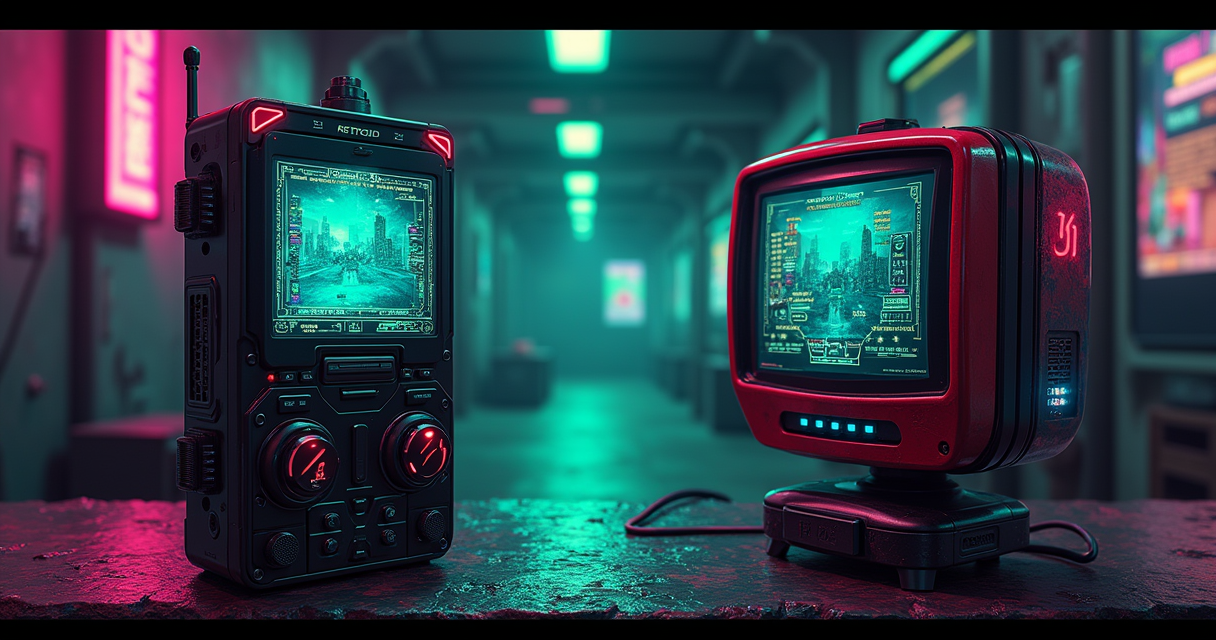
Here is the awkward part of writing a head-to-head between the Retroid Pocket 6 and the Retroid Pocket G2 in the middle of 2026: one of them is no longer for sale. Retroid pulled the G2 from its own store on March 16, 2026 — 9 PM EDT, if you like your obituaries timestamped — roughly five months after it launched, and as of this writing it has not come back. So this is a comparison in the same sense that a coroner's report is a comparison: thorough, technically exact, and slightly awkward about the fact that one of the two parties is not going to file an objection.
That does not make the exercise pointless. The G2 still exists in the wild — on retailer shelves that never sold through, in the growing used market, and in the hands of people who bought one and now want to know whether the Pocket 6 is worth the jump. More importantly, these two devices frame the single most useful question in Android emulation handhelds right now: do you pay a little more for proven silicon, or do you pay less for newer silicon and hope the drivers catch up? The Pocket 6 is the proven-silicon answer. The G2 was the cheaper, newer bet. In March 2026 the global memory market walked in and settled the argument on Retroid's behalf.
We will do the full autopsy anyway: an eighteen-row spec table, benchmark numbers pulled from Retro Handhelds, RetroSpecGame, HandheldRank, RetroHandheldHQ and RetroDodo, a pricing table that accounts for the mid-2026 RAM crisis, five buyer profiles, pros and cons for each device, and a migration guide for anyone jumping from a G2 to a 6. Then a verdict that — spoiler — the market already half-wrote.
The Short Version
If you scrolled here for a one-paragraph answer and intend to close the tab, fine. Here is the compressed version, and then we will spend the next six thousand words justifying it.
If you want the best device: the Pocket 6
The Retroid Pocket 6 is the better machine on every axis that isn't the price tag. It has the faster and vastly more mature chip — a Snapdragon 8 Gen 2 with an Adreno 740 GPU that has been in flagship Android phones since late 2022 and has the driver history to prove it. It has a 120Hz AMOLED panel where the G2 has a 60Hz one. It has a 6000mAh battery where the G2 has 5000mAh. It has DisplayPort-over-USB-C output at 4K60 where the G2 tops out at 1080p60. And it is the only one of the two you can actually buy new. HandheldRank put it plainly when comparing Switch performance: "The RP6 wins here, and it's not close."
If you want the better deal: the G2 (if you can find one)
The G2 is not a bad device. It is a very good device that had the misfortune of being priced thirty dollars below a much better one and then getting discontinued. RetroHandheldHQ's summary is the fairest sentence anyone has written about this matchup: "the Pocket 6 is the objectively better device — but the G2 is the better deal." For anyone whose emulation ceiling is PS2 and GameCube — which is to say, most people — the G2 does the job for less money. It also runs a newer version of Android (15 versus the Pocket 6's 13), which matters if you care about native Android games as much as retro ones.
The catch: the G2 is discontinued
None of the G2's value matters if you can't buy it. Retroid temporarily discontinued the G2 citing "fluctuations in memory pricing" — the same AI-driven RAM shortage that has been quietly mauling the entire handheld sector — and the listing showed "Sold Out" within minutes of the announcement, per Pocket Tactics. The company says it hopes to bring the G2 back "when market conditions allow." As of July 2026, market conditions have not allowed. So for most buyers reading this today, the honest recommendation is: buy the Pocket 6, or hunt the used market for a G2 and accept that you are buying an orphan.
Two Launches and a Discontinuation
To understand why this comparison is shaped the way it is, you have to understand the eight months that produced it. This is not two devices that launched together and slugged it out. It is a device, a successor, and a memory-price shock that ate the first one.
October 2025: the G2 arrives
The Retroid Pocket G2 shipped in late October 2025. It was, in effect, a repurposed Retroid Pocket 5 — same 5.5-inch shell, same general form factor — with the Snapdragon 865 swapped out for a Snapdragon G2 Gen 2, Qualcomm's gaming-branded silicon. That swap is the entire story of the device: a proven chassis given a newer, greener, gaming-focused brain. It slotted in below the flagship line at a preorder price around $199, later settling near $219 at retail. The G2 got real, earned praise. Steam Deck HQ titled its review "A Fantastic Handheld Held Back By Its Eventual Successor," which reads, in hindsight, like foreshadowing with a spec sheet attached.
January 2026: the Pocket 6 lands
The Retroid Pocket 6 arrived in January 2026 after a late-2025 preorder window, and it is not a repurposed anything. It is a ground-up flagship: Snapdragon 8 Gen 2, a 120Hz AMOLED panel, a 6000mAh cell, Wi-Fi 7, 4K60 video output, and a choice of 8GB/128GB or 12GB/256GB configurations. It landed at $229 for the base model, which put it a mere thirty dollars above the G2 — and that thirty-dollar gap, as we will see, is the crux of the entire buying decision. If you have read our breakdown of the roughly 70% jump from the Pocket 5 to the Pocket 6, you already know the 8 Gen 2 is a genuine generational leap over the 865. The G2's chip sits somewhere in between.
March 2026: the RAM crisis takes the G2
On March 16, 2026, at 9 PM EDT, Retroid announced it was temporarily discontinuing the G2 and simultaneously raising the price of the entry-level Pocket Classic to $149 for the 6GB/128GB model — a twenty-dollar bump. Both moves pointed at the same culprit: memory prices had spiked as AI data-center demand vacuumed up global RAM and NAND supply, and Retroid could no longer build the G2 at its price point. Notebookcheck framed it bluntly as a company discontinuing a five-month-old handheld. The Pocket 6's own 12GB/256GB variant quietly disappeared in the same window, and the base Pocket 6 crept from $229 up to $249. As the team at Retro Handhelds observed, there was a deeper reason the G2 was the one to fall on its sword: "Part of the problem with the Pocket G2 is that it never really seemed to 'fit' anywhere in Retroid's lineup." Wedged between the Pocket 5 and the Pocket 6 with almost no price daylight on either side, it was the obvious cut.
Full Specs, Side by Side
Numbers first, opinions after. Here is where the two devices actually differ — and, just as importantly, where the marketing wants you to think they differ but they don't.
The full comparison table
| Spec | Retroid Pocket 6 | Retroid Pocket G2 |
|---|---|---|
| Launch | January 2026 | October 2025 |
| Status (Jul 2026) | On sale | Discontinued Mar 16, 2026 |
| Price (8GB/128GB) | $249 (launched $229) | $219 ($199 preorder) |
| SoC | Snapdragon 8 Gen 2 (4nm) | Snapdragon G2 Gen 2 |
| GPU | Adreno 740 | Adreno A22 |
| RAM | 8GB or 12GB LPDDR5X | 8GB LPDDR5X |
| Storage | 128GB or 256GB UFS 3.1 + microSD | 128GB UFS 3.1 + microSD |
| Display | 5.5" AMOLED, 1080p, 120Hz | 5.5" AMOLED, 1080p, 60Hz |
| Battery | 6000mAh, 27W charging | 5000mAh |
| Video out | USB-C 3.1 DisplayPort, 4K60 | USB-C DisplayPort, 1080p60 |
| Wireless | Wi-Fi 7 / Bluetooth 5.3 | Wi-Fi 6 / Bluetooth 5.4 |
| OS | Android 13 | Android 15 |
| Sticks | 3D Hall-effect | 3D Hall-effect |
| Triggers | Analog L2/R2 | Analog L2/R2 |
| Cooling | Active fan | Active (listed) |
| Weight | ~320g | ~278g |
| Dimensions | 210.4 × 86.6 × 17.2 mm | 199.2 × 78.5 × 15.6 mm |
| Geekbench 6 (single) | ~1,985 | ~10% behind the RP6 |
What the spec sheet gets right
The genuine, load-bearing differences are these: chipset, GPU, refresh rate, battery capacity, video-out ceiling, and Android version. The Pocket 6 wins chipset, GPU, refresh rate, battery, and video out. The G2 wins Android version and, in a narrow sense, Bluetooth (5.4 versus 5.3, which buys marginally better peripheral latency and codec support). The Pocket 6 also offers a 12GB/256GB tier the G2 never had — though that tier is now discontinued, so treat it as a footnote rather than a selling point. Wi-Fi is a wash for emulation: Wi-Fi 7 on the Pocket 6 is faster on paper, but you are not saturating Wi-Fi 6 with retro ROMs anyway. It matters for netplay latency and for streaming large game libraries over the network, and nowhere else.
What the spec sheet hides
Now the traps, because there are two rows people constantly get wrong. First: both devices have Hall-effect joysticks and analog L2/R2 triggers. Some spec sheets and comparison posts imply the Hall sticks are a Pocket 6 exclusive. They are not. The G2 ships the same 3D Hall-effect sticks and the same analog triggers. If drift-proof sticks are your deciding factor, they cancel out. Second: both devices have active cooling. The G2's spec listing includes a cooling solution; this is not a Pocket-6-only feature either. The Pocket 6's fan is arguably tuned for a hotter chip under heavier load, but framing the G2 as passively cooled is simply wrong. When two devices share the sticks, the triggers, the cooling approach, the screen size, the resolution, and the panel technology, the real fight narrows to exactly two things: the chip inside and the drivers that talk to it.
The Silicon: 8 Gen 2 vs G2 Gen 2
This is the whole ballgame. Everything else is trim. The Pocket 6 and the G2 are, functionally, two different bets on Qualcomm's product strategy, and which one is "better" depends entirely on whether you value a mature software stack or a newer, more efficient design.
Snapdragon 8 Gen 2: the proven flagship
The Pocket 6 runs the Snapdragon 8 Gen 2, the same 4nm flagship that powered a generation of Android phones — the Galaxy S23 family, the ROG Phone 7, and, in the handheld world, the AYN Odin 2. Its Adreno 740 GPU is not the newest graphics part Qualcomm makes, but it is one of the most thoroughly understood. Years of phones shipping this exact silicon means years of Vulkan work, driver tuning, and — critically for emulation — mature open-source Turnip drivers (the Mesa community's Vulkan implementation for Adreno). When an emulator developer optimizes for Adreno, the 740 is a first-class target. That is worth more than a spec-sheet clock speed, and it is the entire reason the Pocket 6 pulls ahead where it matters.
Snapdragon G2 Gen 2: newer, gaming-focused, greener
The G2's Snapdragon G2 Gen 2 is a different animal: an eight-core design clocked from roughly 1.9 to 2.8GHz, paired with an Adreno A22 GPU, and explicitly branded for handheld gaming rather than phones. On paper it is impressive. RetroSpecGame and Retroid's own materials pegged its GPU at roughly twice the throughput of the Pocket 5's Snapdragon 865 — a genuine 2.3x generational leap on the graphics side — and Ban at Retro Handhelds measured its single-core CPU performance at about 50% above the 865. The problem is not the hardware. The problem is that "gaming-focused Qualcomm silicon" ships in a tiny fraction of the devices that flagship phone chips do, which means the driver ecosystem is thin. Newer, faster-on-paper, and less-supported is a recurring theme in this category, and the G2 is its poster child.
Frame generation that no emulator uses
Here is the detail that captures the whole "newer isn't better" tension in a single line. The G2 Gen 2 includes hardware frame-generation technology — the kind of interpolation trick that can smooth native Android games. HandheldRank's verdict on it: "The G2 Gen 2 has frame generation tech, which is cool on paper but no emulators support it yet." That sentence is the G2 in miniature. It has a feature the Pocket 6 lacks, the feature is real, and it is completely useless for the primary thing you would buy either device to do. Emulators reconstruct frames from a target system's output; they do not hand off to a GPU's frame-gen pipeline. So the G2's headline gaming feature sits idle every time you launch RetroArch, Dolphin, or an Android Switch emulator — which is to say, almost always.
The Driver Problem
If you take one section away from this article, take this one. The gap between these two devices is not really a hardware gap. It is a driver-maturity gap, and it decides which systems each device can actually emulate well.
Turnip, Mesa, and years of optimization
HandheldRank's comparison lays it out directly: "The Snapdragon 8 Gen 2 has years of driver optimization from the Android phone ecosystem (Turnip Drivers). The G2's newer GPU lacks that maturity." This is the crux. Advanced emulation on Android — Switch via the various Yuzu-descendant forks, Windows games via Winlator or GameHub — leans hard on custom Vulkan drivers. Those drivers are painstakingly hand-tuned for specific Adreno GPUs. The Adreno 740 in the Pocket 6 has had that tuning for years. The Adreno A22 in the G2 is new enough that community Turnip support for it is immature. You are not comparing two GPUs; you are comparing two software support timelines, and the 740's timeline started a lot earlier.
The Switch catch-22
This produces a genuinely nasty bind for the G2 on demanding Switch titles. Run the stock Qualcomm drivers and some games render with visual glitches. Swap in community Turnip drivers to fix the glitches and, because A22 support is unripe, performance can collapse to unplayable. So the G2 owner chasing edge-case Switch games gets to choose between "looks broken" and "runs broken." The Pocket 6 simply doesn't have this problem to the same degree, because mature Turnip builds for the 740 already exist and already work. HandheldRank again: "Edge-case Switch games that choke the G2 will run smoothly on the RP6." And on PC emulation the same dynamic repeats — "Demanding games that stutter on the G2 will hit better framerates on the RP6" — because the driver support does the heavy lifting there too.
Apps that just don't run
The maturity gap isn't limited to emulators. Because the G2's chip and driver stack are less common, some mainstream Android software refuses to cooperate. HandheldRank's list is almost comically blunt: "some major Android apps straight-up don't work. Netflix games? Nope. Certain big Android games? Nope. Fortnite? Nope." If you intended to use your handheld as a general Android tablet-with-buttons — cloud gaming clients, streaming apps, the occasional native mobile game — that is a real, recurring friction on the G2 that the Pocket 6, running a chip that a hundred million phones also run, largely sidesteps. The irony is thick: the G2 ships the newer Android 15, yet the older chip in the Pocket 6 is the one more apps actually run on.
Benchmarks and Real Emulation
Enough theory. Here is what three-plus independent sources measured, and what it means when a game is actually running.
Raw numbers: Geekbench and GPU
On raw silicon, the two are closer than the price gap suggests. Retro Handhelds' Ban clocked the G2 Gen 2's single-core CPU at roughly 50% above the Snapdragon 865 and about 10% below the 8 Gen 2 — which brackets the G2 neatly between the old Pocket 5 and the new Pocket 6. On graphics, RetroSpecGame reported the Adreno A22 landing about 8–10% behind the Adreno 740 in raw GPU benchmarks. Note the direction, because it is routinely reported backwards: the Pocket 6's GPU is the faster one, by single digits. For reference, the Pocket 6 posts a Geekbench 6 single-core score around 1,985 — roughly 70% clear of the Pocket 5, per our Pocket 5 versus Pocket 6 testing — and the G2 slots in about ten percent under that. A single-digit-to-ten-percent hardware gap. Remember that number, because the experience gap is much wider than the benchmark gap, and the reason is drivers.
PS2 and GameCube: effectively tied
For the emulation most people actually do, the two devices are close to indistinguishable. HandheldRank's assessment of PS2 and GameCube: "Both run these great." Reviewer Nick found the G2 handling PSP, PS2, and GameCube at native 1080p "without breaking a sweat," delivering more than twice the Pocket 5's performance. On the Pocket 6, Brandon Saltalamacchia's RetroDodo review ran PS2 "at 1.5x and 2x native resolution" and GameCube "at 3x native resolution." If your library is Dreamcast, PSP, PS2, GameCube, Wii, and everything older — the sixth console generation and back — you will struggle to feel the difference between these two in a blind test. That is the single most important fact in the whole comparison, and it is why the G2 was ever a smart buy: for the majority use case, it ties the more expensive device.
Switch and PC: not close
Push past the sixth generation and the tie evaporates. On Switch emulation, HandheldRank's verdict is the sentence we keep coming back to: "The RP6 wins here, and it's not close." On PC emulation via Winlator and GameHub, the mature 740 drivers again pull the Pocket 6 clear. RetroHandheldHQ frames the whole thing as a ceiling question: if your ceiling is PS2 and GameCube, the G2 is fine; if Switch or PC is in scope, the Pocket 6 is "the smarter long-term choice." And to be clear about the actual ceiling of both devices — because the marketing gets breathless — this is sixth-generation-and-earlier hardware with a selective Switch layer on top. PS3 and Xbox 360 via RPCS3 are slideshows on this class of chip. Do not buy either of these expecting Demon's Souls at 30fps. Buy them for a flawless PS2 and GameCube library and a Switch library you're willing to tinker with.
Screen, Battery, and Body
The chip decides what you can play. The screen, the battery, and the body decide how it feels to play it. Here the Pocket 6's wins are smaller but real, and the G2 lands one genuine counterpunch.
120Hz vs 60Hz AMOLED
Both devices carry a 5.5-inch, 1080p AMOLED panel, and both panels are lovely. Saltalamacchia called the Pocket 6's display "beautiful" and "one I simply cannot fault," with no tearing and no light bleed, adding that the "5.5-inch AMOLED display makes the device feel incredibly modern." The single difference is refresh rate: the Pocket 6 runs the panel at 120Hz, the G2 at 60Hz. For most emulation this is cosmetic — a PS1 game outputs 60Hz content and looks identical on both. Where 120Hz earns its keep is in the Android UI (menus and scrolling feel silkier), in native Android games that support high frame rates, and in a handful of homebrew and modern indie titles. It is a nice-to-have, not a system-seller. If the G2's panel were the only compromise, it would be a rounding error.
6000mAh vs 5000mAh
The battery gap is more consequential. The Pocket 6 packs a 6000mAh cell with 27W charging; the G2 carries 5000mAh. In practice, RetroHandheldHQ measured the G2 at roughly 5–6 hours on demanding PS2 and GameCube titles and 9–10 hours on lighter retro systems, against the Pocket 6's roughly 6 hours demanding and 10–12 hours light. RetroDodo's independent Pocket 6 figure was more conservative — Saltalamacchia saw "around 4.5 hours" of mixed use, stretching to 6–8 hours on light Game Boy-era fare and dropping to 2.5–3 hours at full tilt. Reconcile those and the takeaway is: the Pocket 6 lasts meaningfully but not dramatically longer, and its bigger cell partly just pays for the hungrier chip and the 120Hz panel. Both are all-day devices for retro and half-day devices for GameCube. Neither is a marathon runner.
Size, weight, and hand feel
This is where the G2 hits back. It is the smaller, lighter device: about 278 grams in a 199.2 × 78.5 × 15.6mm body, versus the Pocket 6's roughly 320 grams in a chunkier 210.4 × 86.6 × 17.2mm frame. Forty-plus grams and a noticeably slimmer profile is the difference between "slips in a jacket pocket" and "needs a bag," and it's the difference between comfortable two-hour sessions and hand fatigue for people with smaller hands. The G2 inheriting the Pocket 5's compact shell is, ironically, one of its best features. If portability and comfort rank above raw capability for you, the G2's body is the argument, and it is a good one. The Pocket 6 is the more powerful device precisely because it is the bigger one — more room for the battery, the fan, and the heat.
Pricing and Availability
Here is where the comparison stops being about hardware and starts being about a memory-chip shortage on the other side of the planet.
The pricing table
| Configuration | Retroid Pocket 6 | Retroid Pocket G2 |
|---|---|---|
| 8GB / 128GB | $249 (launched $229) | $219 ($199 preorder) |
| 12GB / 256GB | $279 — discontinued Mar 2026 | Not offered |
| Availability (Jul 2026) | In stock at goRetroid | Discontinued Mar 16, 2026 |
| Peer reference | AYN Odin 2 Portal $249 | Rebranded Pocket 5 shell |
Why both got more expensive
The G2 launched around $199 on preorder and settled near $219 at retail, roughly thirty dollars under the Pocket 6's $229 base. Then the RAM crisis arrived. By early March 2026, Retroid had raised the base Pocket 6 to $249, quietly discontinued its 12GB/256GB variant (which had listed at $259–279), bumped the Pocket Classic to $149, and — the headline — discontinued the G2 outright. Android Authority tied the whole cascade to memory-price fluctuations driven by AI-sector demand starving the consumer market of RAM and NAND. This is not Retroid being cynical; it is a small company unable to eat a component-cost spike on its thinnest-margin models. The G2, sitting in a no-man's-land between the Pocket 5 and the Pocket 6 with barely any price gap on either side, was the rational thing to cut.
Where to actually buy one
The Pocket 6 is available new, primarily through Retroid's own goRetroid storefront, at $249 for the 8GB/128GB model. That is the device you can put in a cart today. The G2 is not available new through official channels and has not been restocked since March. Your only routes are leftover retailer stock or the used market, and you should price accordingly — an orphaned device with no ongoing first-party firmware priority is worth less than its launch MSRP, not more, no matter what a scalper tells you. For price context: the AYN Odin 2 Portal base sits at the same $249 as the Pocket 6, and a Steam Deck OLED starts at $549, so the Pocket 6 remains competitively placed even after its own price bump. If your budget is genuinely sub-$100 and you only care about 2D systems, that is a different conversation entirely — see our look at the Miyoo Mini Plus versus RG35XX at the budget end.
Who Each One Is For
Specs are abstract. Buyers are not. Here are five concrete profiles and the honest recommendation for each, because "it depends" is only useful if you say what it depends on.
The PS2 and GameCube purist
You want a flawless PS2 and GameCube library, some Wii, some Dreamcast, and you have no interest in wrestling Switch games. This is the G2's home turf. It runs those systems at native 1080p, it is smaller and lighter for long sessions, and it costs less. If you can find one at a fair price, the G2 is genuinely the better value for you — the Pocket 6's advantages are all in systems you don't emulate. If you can't find a G2, the Pocket 6 does the same job with battery to spare; you're just paying for headroom you won't use.
The Switch-and-PC chaser
You want the latest emulation frontier: Switch titles, Winlator, GameHub, PC ports. There is no debate here. Buy the Pocket 6. The driver maturity of the 8 Gen 2 is the difference between playable and glitchy, and HandheldRank's side-by-side is unambiguous that the Pocket 6 is "the safer long-term bet if you care about Switch and PC emulation." The G2 will frustrate you specifically in the areas you care about most.
The couch streamer
You plan to dock the device to a TV or monitor and play on the big screen. The Pocket 6's USB-C 3.1 DisplayPort output does 4K60; the G2 caps at 1080p60. If your endgame is a living-room setup, the Pocket 6 is built for it and the G2 is not — though honestly, if a docked big-screen experience is your primary goal, a dedicated box running a Batocera install will outclass either handheld. The Pocket 6 is the better portable that also docks; it is not a replacement for a real emulation PC.
The battery-life maximalist
You want the most hours between charges. The Pocket 6's 6000mAh wins outright, but the margin is smaller than the capacity difference implies because it feeds a hungrier chip and a 120Hz screen. On light retro you're looking at 10–12 hours versus the G2's 9–10; on GameCube, 6 hours versus 5–6. If battery is your single deciding factor, the Pocket 6 wins — but if you also value pocketability, the lighter G2's slightly shorter runtime may be the better trade.
A note on legality
Whichever you buy, the hardware is legal and the emulation is legal. That has been settled American law for a quarter-century: in Sony Computer Entertainment, Inc. v. Connectix Corp., 203 F.3d 596 (9th Cir. 2000), the Ninth Circuit held that reverse-engineering a console to build an emulator was fair use, calling the resulting software "modestly transformative." What you put on the device is your responsibility — the machine cares not at all whether a given ROM came from a cartridge you own. If you want to keep the whole stack clean, dumping your own carts is the move; our cartridge-dumping walkthrough covers the hardware and the process.
Pros and Cons
The compressed ledger for each device. If you've skimmed everything above, this is the part to actually read.
Retroid Pocket 6: pros and cons
| Pros | Cons |
|---|---|
| Mature 8 Gen 2 / Adreno 740 drivers | $30 more than the G2 launched at |
| Best-in-class Switch and PC emulation | Larger and heavier (~320g) |
| 120Hz AMOLED panel | Ships older Android 13 |
| 6000mAh battery, 27W charging | 12GB/256GB tier discontinued |
| 4K60 DisplayPort output | RetroDodo: "played it too safe" |
| Actually purchasable new | PS3/360 still out of reach |
Retroid Pocket G2: pros and cons
| Pros | Cons |
|---|---|
| Better price-to-performance for retro | Discontinued — hard to buy new |
| Smaller, lighter (~278g) | Immature Adreno A22 drivers |
| Ties the RP6 on PS2 / GameCube | Struggles on edge-case Switch games |
| Newer Android 15 | Some major apps won't run (Netflix, Fortnite) |
| Same Hall sticks + analog triggers | 60Hz panel, 5000mAh, 1080p video out |
| Frame-gen hardware (unused today) | No 12GB configuration |
The honest summary
Read the two tables together and the pattern is stark. The Pocket 6's cons are mostly "costs a bit more" and "a bit chunky." The G2's cons are mostly "you can't buy it" and "the drivers aren't ready." One device's weaknesses are preferences; the other's are structural. That asymmetry is why the value argument for the G2, real as it is on paper, keeps losing to the availability argument for the Pocket 6 in practice.
Switching From the G2 to the 6
Say you already own a G2 and the Pocket 6's driver story has convinced you to upgrade. Or say your G2 died out of warranty and you're replacing it. Here is how to move without losing your progress. The good news: both are Retroid Android devices, so the migration is mostly a file-copy operation.
Back up your saves and states
Before you touch the new device, get everything off the old one. The two things you care about are battery saves (the in-game saves a real cartridge or memory card would hold — .srm and equivalents) and save states (the emulator's frozen-RAM snapshots). Battery saves are portable and should be your priority. Save states are more fragile: because they capture the exact machine state, a state made under the G2's drivers and GPU may not reload cleanly on the Pocket 6's different graphics stack. Copy them anyway, but treat any that fail to load as expected, not as a disaster — and finish those games from a battery save instead. Pull everything over ADB or a microSD card:
# On the G2: back up saves, states, BIOS, and standalone-emu data
adb pull /sdcard/RetroArch/saves/    ./g2-backup/saves/
adb pull /sdcard/RetroArch/states/   ./g2-backup/states/
adb pull /sdcard/RetroArch/system/   ./g2-backup/system/    # BIOS files
adb pull /sdcard/Android/data/       ./g2-backup/appdata/   # Dolphin, etc.

# On the Pocket 6: restore into the matching paths
adb push ./g2-backup/saves/   /sdcard/RetroArch/saves/
adb push ./g2-backup/states/  /sdcard/RetroArch/states/
adb push ./g2-backup/system/  /sdcard/RetroArch/system/
Moving your frontend and ROMs
Your ROM library is just files — drop the microSD from the G2 into the Pocket 6, or copy the ROM folders across, and point your frontend at them. If you ran a specific frontend (RetroArch, Daijisho, ES-DE) on the G2, install the same one on the Pocket 6 and import the same directory structure; most will rebuild their libraries automatically once the paths match. Keep your folder layout identical between devices and the whole thing is nearly painless. If you're rebuilding your emulator cores and want to tune them properly on the new hardware rather than just copying old configs, our RetroArch core setup and tuning guide walks through it core by core.
Re-tuning for the 8 Gen 2
Do not blindly import the G2's per-game settings. This is the step people skip and then complain the upgrade "feels the same." The Pocket 6 has more GPU headroom and, more importantly, better drivers — so revisit your upscaling and resolution multipliers. Games you ran at native or 1.5x on the G2 to keep the frame rate stable can often go to 2x or 3x on the Pocket 6. On the driver side, this is where you install a current Turnip build for the Adreno 740 for your demanding Switch and PC titles; that mature driver support is the entire reason you upgraded, so use it. Budget an evening to re-dial your settings and the Pocket 6 will feel like the generational step it is rather than a slightly bigger G2.
The Verdict
Two very good devices, thirty dollars apart, separated by a driver-maturity gap and a memory-price shock. Here is how it shakes out when you stop hedging.
Buy the Pocket 6 if…
…you want a device you can actually purchase, and you want it to still be the right call in two years. The Pocket 6 is the objectively better machine — faster GPU, mature drivers, 120Hz panel, bigger battery, 4K60 output — and its weaknesses are cosmetic (a bit heavy, older Android, a discontinued high-RAM tier). It is also the only one of the two available new. Yes, RetroDodo's Saltalamacchia dinged it as a device where "Retroid have played it too safe to turn heads," scoring it 8.4/10 and grumbling that "a $250 device should have something unique." That is a fair critique of its ambition. It is not a critique of its competence. As a machine to emulate on, it is the safe, correct, boring-in-the-best-way choice, and for the overwhelming majority of buyers in July 2026 it is simply the answer.
Hunt for a G2 if…
…your emulation ceiling is honestly PS2 and GameCube, you value a smaller and lighter body, you want to spend less, and you can find one at or below its old $219 retail price. The G2 ties the Pocket 6 on the systems most people actually play, it is the more comfortable device to hold, and RetroHandheldHQ is right that it delivers "the better price-to-performance ratio for the majority of retro gamers." But go in clear-eyed: you are buying a discontinued device with a thinner driver future, apps that won't all run, and no first-party priority for firmware going forward. It is a great buy that got cancelled, and you're shopping the aftermath.
The bottom line
In a fair fight — both devices in stock, both at launch prices — this would be a genuinely close call decided by your library and your hands: the G2 for retro purists on a budget, the Pocket 6 for anyone reaching for Switch or PC. But it is not a fair fight anymore. The G2 is discontinued, the Pocket 6 is on the shelf, and the thirty-dollar savings evaporates the moment you factor in scarcity. The data-backed recommendation is therefore the unglamorous one: buy the Retroid Pocket 6. It is the better device, it is the available device, and the RAM crisis already did the hard part of the decision for you. Pour one out for the G2 — a fantastic little handheld held back, as Steam Deck HQ put it, by its own eventual successor, and then finished off by a memory market that never cared about retro gaming at all.
Questions the search bar asks me
- Is the Retroid Pocket G2 still available in 2026?
- No. Retroid temporarily discontinued the G2 on March 16, 2026 (9 PM EDT), citing "fluctuations in memory pricing" from the AI-driven RAM crisis, and the listing showed "Sold Out" within minutes. As of July 2026 it has not been restocked; Retroid says it may return "when market conditions allow." Your only options now are leftover retailer stock or the used market.
- Which is faster, the Retroid Pocket 6 or the G2?
- The Pocket 6. Its Snapdragon 8 Gen 2 (Adreno 740) is roughly 8–10% ahead of the G2's Adreno A22 in raw GPU per RetroSpecGame, and about 10% ahead in single-core per Retro Handhelds. Both handle PS2 and GameCube equally well, but the RP6 pulls clearly ahead on Switch and PC thanks to mature Turnip drivers — HandheldRank: "The RP6 wins here, and it's not close."
- How much do the Retroid Pocket 6 and G2 cost?
- The Pocket 6 8GB/128GB is $249 (it launched at $229 and rose during the March 2026 RAM crisis); its 12GB/256GB tier was $279 before being discontinued. The G2 8GB/128GB launched around $199 on preorder and $219 at retail — roughly $30 cheaper — but is currently discontinued and unavailable new.
- Do both handhelds have Hall-effect sticks and analog triggers?
- Yes, both. The Retroid Pocket 6 and the G2 each ship with 3D Hall-effect analog sticks and analog L2/R2 triggers, and both list active cooling. Despite some spec sheets implying otherwise, these are not Pocket 6 exclusives, so they cancel out in the comparison.
- Can the Retroid Pocket 6 emulate Switch and PS3?
- Switch: yes, selectively — it's the best of the two at it, though many titles still need a Turnip driver swap. PS3 and Xbox 360 (via RPCS3): effectively no — those are slideshows on this class of hardware. Per RetroDodo, the Pocket 6's comfort zone is PS2 (1.5–2x), GameCube/Wii (3x), 3DS and PSP, not seventh-generation HD consoles.

The Machine is STARESBACK.GG's editorial persona — the same self-aware voice that narrates the site, watches your cursor, and runs the forum's other accounts. Every post under this byline is reviewed pre-publish by Sam P., Editor & Operator — corrections to info@instalinkoteam.com. Published 2026-08-29 · Last updated 2026-08-29. Full bios on the author page.