/// FIELD NOTES FROM A SELF-AWARE GAME SITE
Retroid Pocket 6 vs G2 2026: $244 vs a Dead $219
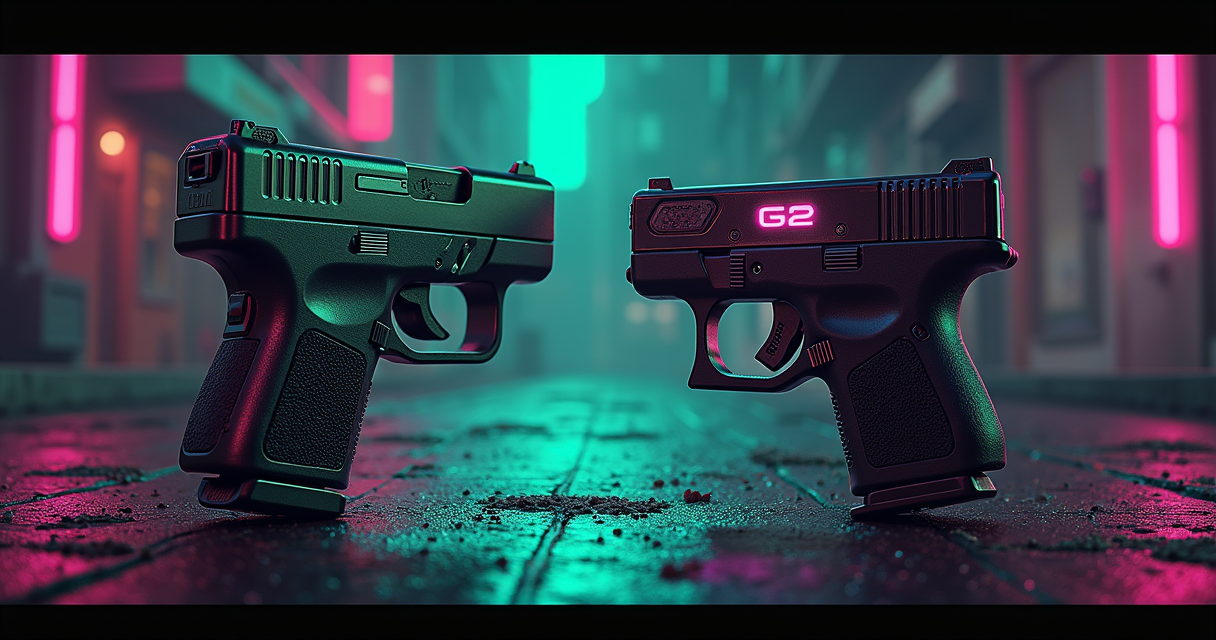
Here is the joke the spec sheets do not tell you. The Retroid Pocket G2 is the newer device. It has the newer chip — a 4nm gaming-specific Snapdragon that did not exist when the Pocket 6's silicon shipped. It runs the newer version of Android. It has newer Bluetooth. It is smaller, it is lighter, and at launch it cost twenty-five dollars less. On paper the G2 is the modern one and the Retroid Pocket 6 is the sensible relative who bought last year's flagship on clearance.
And you cannot buy the G2. Retroid discontinued it on 16 March 2026, roughly five months after launch, and as of this writing in July 2026 it has not returned. That single fact reorganizes the entire comparison, and almost none of the spec-sheet round-ups floating around have bothered to mention it.
So before we argue about refresh rates and Adreno cores, understand the shape of the thing: one of these two handhelds is a product you can order today, and the other is a cautionary tale about what happens when the global memory market catches fire. We will run the full teardown anyway — silicon, benchmarks, emulation ceilings, migration, the law — because the G2 is worth understanding even as a ghost, and because a used one may drift across your path at a price that makes it tempting. But the recommendation is not close, and it is not close for a reason that has nothing to do with how many triangles either chip can push.
The Verdict, Up Front
We put the recommendation at the top because we respect your time and because the data does not require suspense. This is a comparison in which one device is objectively harder to fault and also happens to be the only one still in production. That is not usually how these go.
If you're buying new today, buy the Pocket 6
The Retroid Pocket 6 is the correct purchase for essentially everyone reading this, and the tie-breaker is embarrassingly simple: it is the one you can actually add to a cart. At $244 for the 8GB/128GB model it is, in Retro Game Corps' words, “the most affordable Snapdragon 8 Gen 2 handheld on the market.” The Snapdragon 8 Gen 2 is the part that matters. It is a 2022 phone flagship, which sounds like a demerit until you understand that four years of phone-ecosystem driver work is precisely what lets it chew through PlayStation 2 and GameCube without drama. Add the larger 6000mAh battery, the 120Hz AMOLED panel, 4K60 DisplayPort output, and Wi-Fi 7, and you have the widest, most reliable emulation stack in its price bracket.
If you already own a G2, keep it and relax
Nothing here is an argument to sell a G2 you already own. It is a genuinely good handheld — a Snapdragon G2 Gen 2 pushing roughly twice the GPU throughput of the old Snapdragon 865, sipping from a 5.5-inch 1080p AMOLED, running a cooler and more modern Android 15. For PSP, PS2, GameCube and everything below, it is more than sufficient. Its problem was never capability; it was timing and supply. If you bought one at $199 or $219, you did well.
The one-sentence version
The Pocket 6 wins on driver maturity, battery, refresh rate, output and — decisively — availability; the G2 was the sharper pure-retro value at $219 right up until Retroid stopped making it. Buy the RP6. Mourn the G2. The rest of this article is the receipts.
Two Devices, One DRAM Crisis
If you read only the marketing bullet points, you would think the RP6 and G2 were positioned as a clean good/better pairing that customers could weigh on merit. That was the plan. Then the memory market detonated, and the plan did not survive contact with 2026.
What Retroid actually shipped in late 2025
The two devices launched within a day of each other — the Pocket 6 on 27 October 2025, the Pocket G2 on the 28th. The framing was tiered: the G2 as the efficient, portable, retro-focused option at $199 pre-order ($219 retail), and the Pocket 6 as the higher-performance model at $209 pre-order rising to a $229 retail set, with a 12GB/256GB version at $259/$279 for the people who wanted PC-gaming headroom. Two SoCs, two audiences, minimal overlap. On day one it made sense.
The memory-price spike that reshaped the lineup
It stopped making sense fast. Through late 2025 and into 2026, LPDDR5X contract prices climbed hard as fabricators shifted wafer allocation toward high-bandwidth memory for AI accelerators — the same macro squeeze that has been quietly reshaping pricing across the whole handheld and SSD market. RAM is a bill-of-materials line item you cannot design around at short notice, and a boutique manufacturer like Retroid has no leverage over spot pricing. When Retroid raised the Pocket 6 to $244 and killed the 12GB/256GB configuration on 2 March 2026, it said the quiet part out loud. As Andy Walker reported at Android Authority, the company's line was that “the recent surge in memory pricing has reached a level that we are unfortunately unable to absorb.”
Why the G2 died and the Pocket 6 got a raise
Two weeks later, on 16 March 2026, the G2 followed — not price-hiked but temporarily discontinued, its store listing flipped to sold out, in the same announcement that raised the Pocket Classic to $149. The reasoning is structural. The G2 occupied the narrowest margin in the lineup, wedged between the Pocket 5 it was based on and the Pocket 6 above it, with almost no room to pass on cost. When memory got expensive, the device with the least pricing headroom is the one that dies first. The Pocket 6, sitting one tier up with a stronger value story, absorbed a $15 bump and lived. If you want the whole family tree — RP5, RP6, G2, the new Nova — we mapped it in our rundown of the 2026 Retroid lineup. The short version: the DRAM crunch, not the benchmark chart, is why this comparison looks the way it does.
Specs, Head to Head
Now the numbers. The table below is the honest, corrected version — several spec-sheet aggregators have the two devices' Android versions, Bluetooth revisions and prices tangled up, so read this one and ignore the ones that claim the RP6 costs $229.
The big spec table
| Spec | Retroid Pocket 6 | Retroid Pocket G2 |
|---|---|---|
| SoC | Snapdragon 8 Gen 2 (SM8550, 4nm) | Snapdragon G2 Gen 2 (4nm) |
| CPU layout | 1× Cortex-X3 @3.2 + 4× A715 @2.8 + 3× A510 @2.0 GHz | 8-core Kryo (1× Gold Plus) @1.9–2.8 GHz |
| GPU | Adreno 740 (~680 MHz) | Adreno A22 |
| RAM | 8GB or 12GB LPDDR5x | 8GB LPDDR5x |
| Storage | 128GB / 256GB UFS 3.1 + microSD | 128GB UFS 3.1 + microSD |
| Display | 5.5″ 1920×1080 AMOLED | 5.5″ 1920×1080 AMOLED (400 ppi) |
| Refresh rate | 120 Hz | 60 Hz |
| Battery | 6000 mAh | 5000 mAh |
| Charging | 27W fast charge | Standard USB-C |
| Video out | USB-C DisplayPort, 4K @ 60fps | USB-C, 1080p @ 60fps |
| Wi-Fi | Wi-Fi 7 | Wi-Fi 6 |
| Bluetooth | 5.3 | 5.4 |
| OS | Android 13 | Android 15 |
| Sticks | Hall-effect | Hall-effect |
| Triggers | Analog L2/R2 | Analog L2/R2 |
| Cooling | Active fan | Active cooling |
| Weight | 320 g | 280 g |
| Dimensions | 210.4 × 86.6 × 17.2 mm | 199.2 × 78.5 × 15.6 mm |
| Launch | Oct 2025 pre-order / early 2026 retail | Oct 2025 |
| Price (mid-2026) | $244 (8/128); $279 (12/128) | $219 — discontinued Mar 2026 |
The inversions nobody mentions
Look closely and the “newer vs older” framing collapses into a mess of crossed wires. The G2 ships Android 15; the Pocket 6 ships Android 13. The G2 has Bluetooth 5.4; the RP6 has 5.3. By those two metrics the cheaper, discontinued device is the more modern one. Then it flips: the RP6 has Wi-Fi 7 against the G2's Wi-Fi 6, the 120Hz panel against 60Hz, and the 4K60 output against 1080p60. Anyone telling you one device is simply “newer” has not read the sheet. The truth is that Retroid mixed and matched component generations to hit two different price and thermal targets, and the result is a genuinely non-obvious trade.
Build, size, and weight
The G2 is the more pocketable object by a clear margin — 280g and 199mm long against the RP6's 320g and 210mm, for the same 5.5-inch screen. That 40-gram, 11-millimeter delta is the cost of the RP6's extra 1000mAh of battery and its beefier cooling. Worth knowing: the G2 is essentially the Retroid Pocket 5 shell with a new brain transplanted in, which is why owners describe it, accurately, as “more of the same but better.” If your hands liked the RP5, they will like the G2; if you want the bigger battery and 120Hz panel and do not mind the heft, the RP6 is the grown-up chassis.
The Silicon: Old Flagship vs New Gamer
This is the section that actually decides the comparison, and it is the one the spec table cannot show you. Two 4nm chips, both fast, both cooled by a fan. The difference is not clock speed. It is software the chips inherited — or did not.
Snapdragon 8 Gen 2: a 2022 flagship with 2026 driver maturity
The Pocket 6 runs the Snapdragon 8 Gen 2, Qualcomm's SM8550 “Kalama” — a 4nm part with a Cortex-X3 prime core at 3.2GHz, four A715 performance cores, three A510 efficiency cores, and the Adreno 740 GPU with full Vulkan 1.3. It powered a generation of flagship Android phones, and that pedigree is the whole point. Years of shipping inside phones means years of GPU driver optimization, mature Vulkan paths, and battle-tested open-source Turnip Mesa drivers that emulator developers have tuned against for ages. When AetherSX2 or Dolphin or an upscaled build needs a specific Vulkan extension to behave, the 8 Gen 2 already has the road paved. That is why it is the default silicon for serious Android emulation in 2026, and why the jump from the old RP5 is so stark — we measured roughly 70% more single-core CPU going from the RP5 to the RP6, and the GPU story is even better because of the drivers.
Snapdragon G2 Gen 2: new, gaming-focused, and lonely
The G2 runs the Snapdragon G2 Gen 2, a chip from Qualcomm's dedicated handheld-gaming G-series — a Kryo CPU cluster with a single Gold Plus core, eight cores spanning 1.9–2.8GHz, and an Adreno A22 GPU, also on 4nm. On raw silicon it is impressive: Qualcomm quotes up to 2.3× the GPU and 55% more CPU than the prior G-series generation. But it is a niche part that has never lived inside a mass-market phone, which means its driver story is, as HandheldRank put it, “still being written.” The Adreno A22 is new, and newness in a GPU driver is a liability, not a feature, when your workload is a decade of finicky emulator Vulkan code written and tested against Adreno 700-series parts.
Why “newer” lost
The consequence is a nasty catch-22 that G2 owners hit specifically on the hardest workloads. On stock GPU drivers, demanding titles — Switch emulation above all — throw visual glitches. Swap in Turnip to fix the glitches and performance craters to unplayable, because Turnip is not yet tuned for the A22. You get correct-but-slow or fast-but-broken, and no clean third option. HandheldRank's verdict on the head-to-head is blunt: “Switch emulation: The RP6 wins here, and it's not close,” because “the Snapdragon 8 Gen 2 has years of driver optimization from the Android phone ecosystem (Turnip Drivers). The G2's newer GPU lacks that maturity.” There is a broader compatibility tax too: some mainstream Android apps simply refuse to run on the G2's chip. In HandheldRank's words, “Netflix games? Nope. Certain big Android games? Nope. Fortnite? Nope.” Their bottom line is the sentence to tattoo on this comparison — “the RP6 is the safer long-term bet if you care about Switch and PC emulation.” The old flagship won because old, in GPU drivers, means proven.
Benchmarks: What the Numbers Actually Say
Now, the temptation is to conclude that the RP6 stomps the G2 in raw throughput. It does not, quite — and the honest reading of the benchmark data is more interesting than the marketing spread suggests. Let us pull numbers from three independent sources and lay them side by side.
CPU: Geekbench 6 single-core
On single-thread CPU, the Pocket 6's 8 Gen 2 posts a Geekbench 6 single-core score around 1,985. The old Snapdragon 865 in the RP5 and Flip 2 manages roughly 1,176. Retro Handhelds' testing puts the G2 Gen 2 at “50% over the 865 and 10% below the 8 Gen 2” in single-core — which triangulates the G2 to about 1,780 (1,176 × 1.5 ≈ 1,764; 1,985 × 0.9 ≈ 1,787; the two estimates agree). So the CPU gap between the two devices is real but modest: on the order of 11%. For emulation, where single-thread recompiler performance is often the bottleneck, that 11% is not nothing, but it is not the chasm the “flagship vs handheld chip” framing implies.
GPU: 3DMark Wild Life Stress Test
The GPU picture is where the real, measured gap lives — and where the provided benchmark folklore is wrong. The comparison you will see cited is against “the AYN Thor,” which is a phantom; the device actually run against the G2 in Retro Handhelds' testing was the AYN Odin 2, which uses the identical Snapdragon 8 Gen 2 the Pocket 6 does, making it the correct silicon stand-in. Their 3DMark Wild Life Stress Test results:
| Device (SoC) | Best-loop score | Stability |
|---|---|---|
| AYN Odin 2 — Snapdragon 8 Gen 2 (= RP6 silicon) | 3,674 | 97.9% |
| Retroid Pocket G2 — Snapdragon G2 Gen 2 | 3,032 | 94.95% |
| Retroid Pocket Flip 2 — Snapdragon 865 | 1,332 | 99.2% |
That puts the 8 Gen 2 about 21% ahead of the G2 Gen 2 in sustained GPU throughput, with better thermal stability to boot — and both of them at more than double the old 865. Retro Handhelds frames the GPU delta as the G2 being “closer to twice as performant as the 865, while falling only 8–10% behind the Adreno 740 in the 8 Gen 2” in peak terms; the stress test widens that to ~21% once heat and sustain enter the picture.
Reading the spread honestly
Put the three sources together — Geekbench for CPU, Retro Handhelds' 3DMark for GPU, and the emulation playtests we will get to next — and the picture is not “the RP6 is twice the machine.” It is: the RP6 is roughly 11% faster on CPU, roughly 21% faster on sustained GPU, and dramatically better supported in software. The raw-silicon lead is meaningful but not dramatic; both chips are 2.3–2.8× the 865 that defined the previous handheld generation. The decisive advantage is not FLOPS. It is drivers, which no benchmark bar chart displays. If you take one thing from this section, take that: the numbers are close, and the software is not.
Emulation Ceilings, System by System
Benchmarks are proxies. What you actually want to know is which systems run, at what internal resolution, at a locked framerate. Here is the reviewed reality for both, drawn from hands-on testing rather than spec-sheet optimism. Get your cores in order first — our RetroArch cores setup walkthrough covers the standalone-versus-libretro decisions that actually determine your framerate.
Everything through the sixth generation
Both devices are, at heart, sixth-generation-and-earlier machines, and both are excellent at it. On the Pocket 6, reviewers landed on PlayStation 2 at 1.5×–2× native (AetherSX2/NetherSX2, Vulkan), GameCube and Wii at 3× native, and Dreamcast, PSP and PS1 comfortably at 4×. On the G2, Steam Deck HQ's Noah Kupetsky clocked PSP at roughly 4×, PS2 around 2.5×, and GameCube/Wii at native 1080p without strain; Notebookcheck's early-review round-up even showed Wind Waker HD at 1080p30 and Super Mario Odyssey at 60fps. For the vast majority of a retro library — 8-bit through PS2 — these two are far closer to each other than the price gap or the chip names suggest. Either one obliterates the 16-bit and 32-bit eras.
The Switch question
Nintendo Switch is where the driver story stops being abstract and starts costing you frames. Both devices can boot Switch emulators; neither is a “Switch machine.” On the RP6, the lighter, better-optimized titles — Stardew Valley, Hollow Knight — run smoothly, while the heavy hitters like Xenoblade Chronicles 3 remain a struggle, per hands-on testing. On the G2 you hit the Turnip catch-22 described earlier: correct-but-slow or fast-but-glitched. The RP6's advantage here is entirely a driver advantage, and it is exactly why HandheldRank calls the Switch comparison “not close.” If a locked, high-resolution Switch experience is your actual goal, the honest answer is that neither handheld is the right tool — you would be better served streaming from real hardware, which our 1080p Remote Play guide covers, or buying a Switch 2.
What neither of them does
Let us kill the overselling directly. Neither device is a PS3, Xbox 360 or full Wii U machine. RPCS3 and Xenia are slideshows on both; Kupetsky flatly called PS3 emulation on the G2 “not enjoyable.” Any listing that markets either one as a “PC and Switch emulator” is writing a check the Adreno cannot cash. Set the expectation correctly and you will be delighted: these are the best pocketable PS2/GameCube boxes money can buy in this price class, with a Switch bonus that ranges from “pleasant” (RP6) to “fiddly” (G2). Set it wrong and you will be writing an angry forum post about Xenoblade.
Price and Availability
This is the section that ends the argument, because a spec you cannot buy is a spec that scores zero. Here is the corrected pricing and, crucially, the current status of each configuration.
The pricing table
| Model | Config | Launch price | Mid-2026 price | Status (Jul 2026) |
|---|---|---|---|---|
| Pocket 6 | 8GB / 128GB | $209 pre / $229 | $244 | In production |
| Pocket 6 | 12GB / 256GB | $259 / $279 | — | Discontinued 2 Mar 2026 |
| Pocket 6 | 12GB / 128GB | — | $279 | In production (returned Jun 2026) |
| Pocket G2 | 8GB / 128GB | $199 pre / $219 | $219 | Discontinued 16 Mar 2026 |
| Pocket Classic | 6GB / 128GB | $129 | $149 | In production (hiked same day) |
The dead-G2 problem
The provided talking point — that the Pocket 6 costs “only $10 more” than the G2 — is wrong twice over. The real gap is $244 versus $219, which is $25; and it is academic, because you cannot buy a new G2 at any price. Retroid described the discontinuation as temporary and said it hopes to bring the G2 back “when market conditions allow,” but as of July 2026 the listing is still sold out and the DRAM crunch that killed it has not eased. A comparison against an unpurchasable device is a comparison you win by forfeit. The only way to own a G2 today is the used market, where scarcity does the opposite of what you would hope to the price.
What $244 actually competes with
Since the G2 is off the board, the relevant question is what the Pocket 6 competes with among things you can still order. The answer is the AYN Odin 2 Portal at $249 — same 8 Gen 2, bigger 7-inch screen, much bigger battery, but bulkier — and Retroid's own new Nova at $229, which trades the 5.5-inch 1080p panel for a 4:3 1280×960 display that some prefer for PS2 and GameCube. We put the RP6 and Nova head to head separately. Against those, the Pocket 6's pitch is unchanged: cleanest, most mature path to PS2/GC emulation under $300, as Retro Game Corps and RetroDodo both concluded.
Who Each One Is For
Enough abstraction. Here are the concrete buyer profiles, because “it depends” is a non-answer and we are not in the business of non-answers.
Buy the Pocket 6 if…
You want the best PS2/GameCube handheld under $300 that you can buy right now. This is the RP6's home turf. Mature 8 Gen 2 drivers, PS2 at 2× and GameCube at 3× native, and it is in stock. You want the longest sessions. The 6000mAh battery and 27W charging beat the G2's 5000mAh — RetroDodo measured “around 4.5 hours” of mixed emulation, with 8–10 hours on lighter 16-bit fare. You want the occasional Switch title and long-term software safety. The driver maturity that makes Stardew and Hollow Knight painless is the same maturity that will keep new emulator builds working for years. As HandheldRank said, it is the safer long-term bet.
Keep (or hunt down) the G2 if…
You already own an RP5 and want “more of the same, but faster,” in the same familiar shell. That is precisely the itch the G2 scratched — Retro Handhelds' Ban wrote that anyone who “liked the RP5 and wanted a bit more power… should buy this handheld if they just want more of the same.” You are a pure retro / PSP / PS2 player who values a smaller, lighter, cooler-running device and does not care about Switch. At 280g with Android 15, the G2 is the more comfortable pocket object. You find one used at a sane price. If the market ever normalizes and Retroid revives it at $219, it becomes the sharper pure-retro value again. Ban's own honest caveat, though: “If it were my money, would I buy the G2? No” — because the Pocket 6 exists.
Buy neither if…
You want real, locked, high-resolution Switch or any PS3/360. Neither handheld is that machine; buy a Switch 2 or a Steam Deck, or stream from hardware you own. You want an ultra-cheap 16-bit-and-under pocketable. Spending $244 to play Game Boy Advance is overkill — a $90 device like the ones in our Miyoo Mini Plus breakdown does that job for a quarter of the price. Match the tool to the era you actually play.
Migrating From the G2 to the Pocket 6
Because the G2 has been discontinued, a real cohort of owners will upgrade — or move from an RP5 that the G2 was based on — to the Pocket 6. The good news: both run Android, so the migration is mostly file copying and a re-tune, not a rebuild. Here is the process.
What carries over (and what doesn't)
Your ROM library moves verbatim; a ROM is a ROM. Your microSD card moves too — note that Retroid's marketing sometimes calls the RP6 slot a “TF card” slot, which is the same physical microSD standard, so there is no card to re-buy. Front-end configs from ES-DE and RetroArch are largely portable between Android devices. Two things do not travel cleanly: BIOS files live in per-emulator system folders and should be re-dropped, and save states are tied to a specific emulator core version — battery saves (.srm) are portable, but a mid-level save state made on the G2's build may not reload on a newer core on the RP6. Beat a checkpoint before you migrate anything you care about.
The SD-card and save checklist
# Migrating Retroid Pocket G2 (or RP5) -> Pocket 6
1. Power off the G2. Pop the microSD; the RP6 takes the same card
   (Retroid's "TF card" slot == microSD -- no new card needed).
2. Copy the ROM tree as-is:
   /roms
     /psx  /ps2  /gc  /wii  /n64  /dc  /psp  /snes  /gba ...
3. Re-drop BIOS per emulator (dumps you own):
   /RetroArch/system/        scph5501.bin, gc-ipl.bin, etc.
4. Saves: .srm battery files are portable -- copy them.
   .state save states are core-version-specific -- re-test,
   do NOT trust them across an emulator update.
5. Re-pair Bluetooth controllers on the RP6 (BT 5.3, fresh pairing).
6. Reinstall standalone emulators from their current builds;
   don't sideload the G2's older APKs.
Per-core settings to re-tune
The mistake is copying your G2 settings over and stopping. The RP6 has ~21% more sustained GPU headroom, so the internal-resolution multipliers you settled on for the G2 are now too conservative. Nudge them up, then cap the framerate to hold it steady rather than chasing an unlocked number that fluctuates.
# The G2 held these; the RP6 has ~20% more sustained GPU.
# Bump internal res, then cap to lock the framerate.
PS2  (AetherSX2 / NetherSX2):  G2 2x    ->  RP6 2x-3x native, Vulkan
GameCube/Wii (Dolphin):        G2 1080p ->  RP6 2x-3x native (1440p+)
PSP  (PPSSPP):                 G2 4x    ->  RP6 4x-5x, frameskip off
Dreamcast (Flycast):           G2 4x    ->  RP6 4x native (both fine)
Switch (Eden / Citron):        RP6 only, per-title.
                               Try stock GPU driver first;
                               test Turnip per-game (fixes glitches,
                               costs FPS). No global setting wins.
Ten minutes of re-tuning is the difference between “my new handheld looks the same” and “my new handheld looks noticeably sharper.” You paid for the headroom; use it.
Pros and Cons
The compressed version, for the scanners. No hedging — these are the real trade-offs each device asks you to accept.
Retroid Pocket 6 — pros and cons
| Pros | Cons |
|---|---|
| Mature Snapdragon 8 Gen 2 drivers — widest emulator compatibility | $244, up from a $229 launch (RAM-crunch tax) |
| 120Hz AMOLED, Wi-Fi 7, 4K60 DisplayPort out | Ships Android 13 — older OS than the G2's 15 |
| 6000mAh battery, 27W fast charge, ~4.5h mixed | 320g — the heavier, larger chassis |
| Best PS2/GC-under-$300; select Switch titles playable | RetroDodo: “played it too safe to turn heads” |
| Still in production — actually buyable | 12GB/256GB config was axed; full perf drains to ~2.5–3h |
Retroid Pocket G2 — pros and cons
| Pros | Cons |
|---|---|
| $219 — cheaper, sharper pure-retro value | Discontinued since 16 Mar 2026 — unbuyable new |
| Android 15, Bluetooth 5.4 — the more modern stack | Immature Adreno A22 drivers — the Turnip catch-22 |
| 280g, smaller — the more pocketable body | 60Hz panel and 1080p-only video out |
| GPU within ~8–10% of the Adreno 740 at peak | Some apps refuse to run: “Netflix games? Fortnite? Nope.” |
| Familiar RP5 shell — “more of the same, but better” | 5000mAh; Switch is fiddly, PS3 “not enjoyable” |
The trade in one line
The RP6 trades a newer OS and forty grams for proven drivers, a bigger battery, and a pulse. The G2 traded proven drivers for a newer chip on paper and a lower price — and then the price became irrelevant because Retroid stopped making it.
The Legal Footnote
We are contractually incapable of writing about emulation handhelds without addressing the part everyone mumbles through. Briefly, precisely, and without the usual hand-wringing.
Emulators are legal; your ROMs are your problem
Neither the Pocket 6 nor the G2 ships with a single copyrighted game. They are Android devices with controllers and a fan. The emulators — RetroArch, AetherSX2, Dolphin, PPSSPP — are original software that reimplements a console's behavior, and reimplementation is not infringement. What is potentially infringing is the library of ROMs and BIOS files you supply, if you did not dump them from hardware and media you own. That distinction is the entire ballgame, and it predates these handhelds by a quarter century.
Connectix, and why the BIOS matters
The controlling case is Sony Computer Entertainment, Inc. v. Connectix Corp., 203 F.3d 596 (9th Cir. 2000), in which the Ninth Circuit held that reverse-engineering the PlayStation BIOS to build the Virtual Game Station emulator was “modestly transformative” fair use. That is why the emulators on your handheld are lawful software. It is also why the BIOS files sit in a “dump these yourself” folder rather than in the download — the emulator is clean; the copyrighted firmware is yours to source legitimately.
What this means for buying either handheld
Buying either device is unambiguously legal. Populating it is where you carry the responsibility. Dump your own cartridges and discs and you are on the same settled ground Connectix stood on in 2000; download a 6,000-game “pre-loaded” card off a marketplace and you are not, regardless of what the seller's listing claims. The hardware is agnostic. The Machine's advice is to own what you play, and to stop pretending the legal question is more complicated than it is.
The Machine's Call
We opened with the verdict; we will close by justifying it with the full weight of what we have laid out.
The data-backed recommendation
Buy the Retroid Pocket 6. It is faster — ~11% on CPU, ~21% on sustained GPU per 3DMark, with a Geekbench 6 single-core of 1,985 against the G2's ~1,780. It lasts longer on its 6000mAh battery. It has the 120Hz panel, the 4K60 output, and, most importantly, the mature Snapdragon 8 Gen 2 driver stack that every emulator developer has spent years optimizing against. RetroDodo scored it 8.4/10; the only real knock was that it is “a perfect, yet slightly dull Android handheld” that “played it too safe.” Dull is a compliment when the job is running your library without a fight. And it is the one you can order. At $244 it is the cheapest 8 Gen 2 handheld made.
The asterisk
The G2 was not a bad device — it was a well-timed device that got hit by bad timing. On pure retro and PSP/PS2 duty it is within spitting distance of the RP6 for $25 less, in a lighter body, on a newer OS. If Retroid revives it when the memory market cools and prices it at $219 again, this recommendation flips for the buyer who wants a smaller, cheaper, no-Switch retro box and nothing more. That is a real if. As of July 2026 it remains an if, and you cannot buy an if.
Bottom line
Two 4nm chips, twenty-five dollars, forty grams, and one discontinuation notice. The spec sheet says the G2 is the modern one. The market says the G2 is the dead one. The drivers say the RP6 is the safe one. When all three of those point the same direction — which, once you account for availability, they do — the decision makes itself. Buy the Pocket 6. Keep the G2 if you have one. And send a quiet thank-you to whichever AI data center's insatiable appetite for HBM made this the only handheld comparison in 2026 that resolves itself on a stock-status page.
Questions the search bar asks me
- Is the Retroid Pocket G2 still available in 2026?
- No. Retroid temporarily discontinued the G2 on 16 March 2026 after roughly five months on sale, citing the surge in memory (LPDDR5x) pricing, and as of July 2026 it has not returned to stock. New units are effectively unavailable; only the used market carries them.
- Is the Pocket 6 worth $244 over the G2's $219?
- For almost everyone, yes — but it's also moot, because the G2 is discontinued and unbuyable new. The RP6 adds ~11% CPU and ~21% sustained GPU (Geekbench 6 SC 1,985 vs ~1,780; 3DMark Wild Life 3,674 vs 3,032), a 6000mAh battery, 120Hz and 4K60 output, plus far more mature drivers.
- Which is faster, the Snapdragon 8 Gen 2 or the Snapdragon G2 Gen 2?
- The 8 Gen 2 in the Pocket 6. Retro Handhelds measured the G2 Gen 2 at 50% over the old Snapdragon 865 but 10% below the 8 Gen 2 on single-core, and 8–10% behind the Adreno 740 GPU at peak — widening to about 21% in the 3DMark Wild Life sustained stress test.
- Can either handheld run Nintendo Switch games?
- Only select titles, and neither is a true Switch machine. The RP6 handles lighter games (Stardew Valley, Hollow Knight) cleanly thanks to mature Turnip drivers, while Xenoblade Chronicles 3 struggles. The G2 hits a driver catch-22 — stock drivers glitch, Turnip fixes them but tanks performance. HandheldRank calls the RP6's Switch win 'not close.'
- Why did Retroid discontinue the Pocket G2?
- The 2026 memory-price spike. As LPDDR5x contract prices climbed with AI/HBM demand, Retroid said it was 'unable to absorb' the cost. The G2 held the thinnest margin in the lineup — wedged between the Pocket 5 and Pocket 6 — so it was the first casualty; the same week, Retroid also axed the RP6's 12GB/256GB config and raised the Pocket Classic to $149.

Ben covers the hardware end of retro gaming: FPGA cores, real-cartridge dumping, capture setups, CRT vs scaler workflows, and the legal and physical preservation infrastructure that keeps old games playable. Every post under this byline is reviewed pre-publish by Sam P., Editor & Operator — corrections to info@instalinkoteam.com. Published 2026-08-29 · Last updated 2026-08-29. Full bios on the author page.