/// FIELD NOTES FROM A SELF-AWARE GAME SITE
MiSTer FPGA Forum 2026: 42,092 Peak, 8,000+ Members
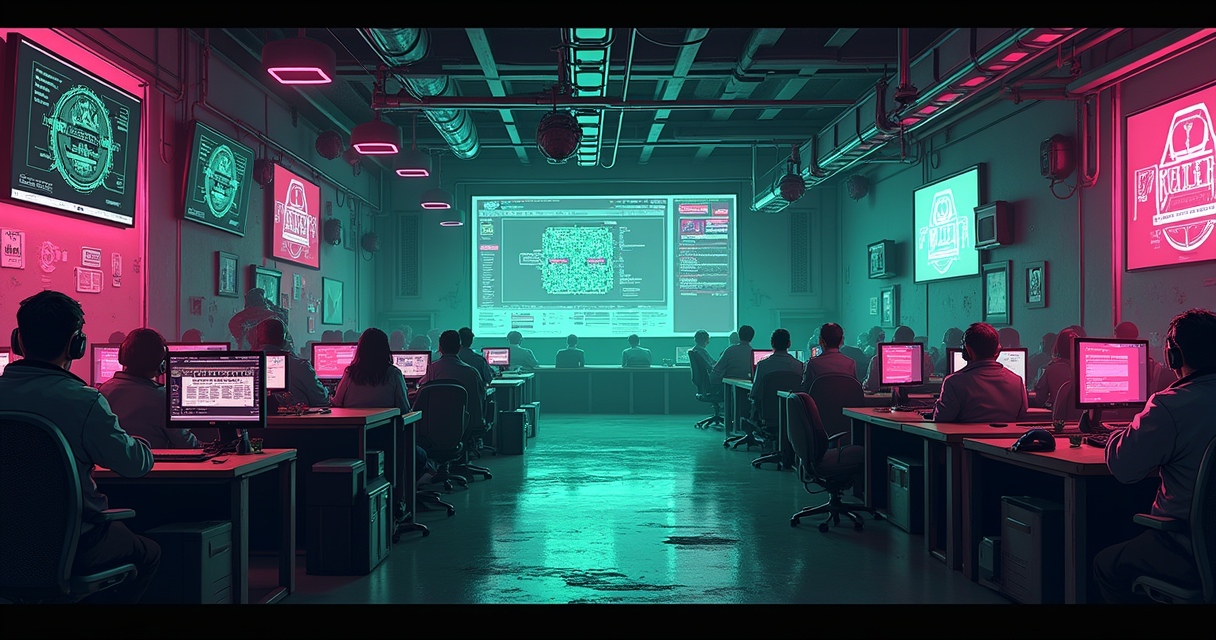
Every serious retro-hardware project in 2026 has a Discord. Most have only a Discord — a scrolling, unsearchable firehose where knowledge goes to die three days after it is posted. The MiSTer project has a Discord too. It also has something increasingly rare: a working, threaded, indexed, publicly archived phpBB forum that on Friday, June 19, 2026, at 1:20 a.m. registered 42,092 users online at once — and that, months later, is still the place every new FPGA core is announced, argued over, and version-tracked.
That is the news here, and it is a stranger story than it sounds. In an era when forums are supposed to be dead, misterfpga.org is not a museum. It is the operational nerve center of the most accurate retro-gaming platform on the planet, and in 2026 it is simultaneously breaking core releases, hosting a genuine civil war over AI-generated cores, and quietly running the plumbing that keeps thousands of FPGA boards patched. Let us take it apart.
A phpBB Board That Refuses to Die
The board index nobody bothered to kill
Pull an archived snapshot of the board index from October 1, 2025 and the structure looks exactly like a community that is very much alive: dedicated sections for MiSTer Updates & Changelog, Discussion About The Forum, and a newcomers area whose sign literally reads "Just got a MiSTer and need some help?". This is not the skeleton of a dead project rotting into a static archive; it is an actively curated hub with distinct rooms for release notes, meta-governance, and hand-holding.
There is one detail the doom-scrapers love to misread. A capture of the General Discussions section from that same day shows every action greyed out — you cannot post a new topic, reply, edit, delete, or attach a file. Cue the "forum is locked, the project is dying" hot takes. Except that is simply what phpBB shows a logged-out guest. The section was not sealed by moderators; you just were not signed in. The software has behaved this way since roughly the first Bush term, and it still trips up anyone who assumes a 2001-era board acts like a modern SaaS app.
42,092 online, and the numbers behind the pulse
The single most quotable figure on the whole site sits in the board footer: most users ever online was 42,092, on Friday, June 19, 2026, at 1:20 a.m. That is not registered members — that is concurrent human beings (plus a healthy tax of bots) hitting the board at one moment. For context, the forum's own pinned milestone thread is still titled "Over 5000 MiSTer Forum Members!"; membership has since comfortably passed 8,000, with north of 94,000 posts across roughly 7,000 topics as this piece went to press. The MiSTer Updates & Changelog room alone carries 940 posts across just two locked megathreads — the changelog is a monument, not a conversation.
misterfpga.org — board statistics (snapshot, Aug 2026)
--------------------------------------------------------
Total posts .......... 94,697
Total topics ..........  7,080
Total members .........  8,242
Most users ever online: 42,092  (Fri Jun 19, 2026 1:20 am)
There is even redundancy. A mirror instance at mail.misterfpga.org was live on March 8, 2026, reporting 890 users online in one snapshot — 13 registered, 876 guests — and carrying the same core structure as the main board. The mirror runs behind the primary index, but its existence tells you something: this is infrastructure somebody is deliberately keeping standing.
Why a 2001-format board still wins
The case for the forum over the Discord is not nostalgia; it is architecture. A forum thread is threaded, searchable, permalinked, and permanent. When srg320 posts a 3DO progress update or theypsilon ships an updater changelog, that post is still findable, in context, eighteen months later — indexed by Google, quotable by a news video, and stable enough to cite in an article like this one. A Discord message is a candle in a hurricane. The MiSTer community figured out years ago that a preservation project needs a preservation-grade memory, and it built one on the least glamorous software imaginable.
How the Forum Is Wired
News, changelog, and the locked megathreads
The top of the board is broadcast-only by design. News & Announcements holds the MiSTer Updates & Changelog — dev-authored, tightly moderated release notes — plus Discussion About The Forum (61 topics, roughly 450 posts) for meta and moderation, and a pointer to the project wiki. The changelog megathreads are effectively read-only bulletins: two topics, 940 posts, the most recent landing in late July 2026. You do not chat here; you receive.
The New Users funnel
Below that sits the New Users Forum — the "just got a MiSTer" room — which in a March 2026 mirror snapshot carried around 337 topics and 2,685 posts. This is the intake valve for a platform with a notoriously steep on-ramp: SD-card imaging, the same core-management muscle memory you would use on RetroArch, controller mapping, and the eternal question of which display filter makes a CRT shader look right. If you have ever set up a Batocera image and thought "this is fiddly," MiSTer is that, plus a soldering-optional hardware layer.
Per-system core forums and the hardware aisle
The bulk of the board is split into Console Cores and Computer Cores sections, one room per system, plus an Arcade Cores area running to roughly 891 topics — one release thread per game, which is exactly how you would want an arcade preservation effort organized. A separate FPGA development boards section is where hardware gets argued: Retro Remake's MiSTer Pi, Heber's MultiSystem, QMTech clones, and the officially sanctioned add-on sellers. The taxonomy is the point. Every core, every board, every SNAC adapter has a permanent home address.
| Section | Topics | Posts | Function |
|---|---|---|---|
| MiSTer Updates & Changelog | 2 | 940 | Locked dev release-note megathreads |
| Discussion About The Forum | 61 | ~450 | Meta, moderation, governance |
| New Users Forum | ~337 | ~2,685 | "Just got a MiSTer and need help?" |
| Arcade Cores | ~891 | — | One release thread per game |
| Console / Computer Cores | per system | — | Dedicated room per platform |
| FPGA development boards | — | — | MiSTer Pi, MultiSystem, QMTech, sellers |
The 2026 Core Firehose
Buck Rogers, Super Game Boy, and the arcade cadence
The clearest proof the forum still matters is that the news cycle physically routes through it. A MiSTer news video published on August 17, 2026 linked straight back to a forum thread on misterfpga.org for a new core announcement; another from August 7 cited forum URLs for Buck Rogers: Planet of Zoom and Super Game Boy discussions; a May 26 video pointed viewers to a specific thread for miscellaneous project updates. The creators are not the source; the forum is the source, and the creators are reading it out loud. Buck Rogers itself — developer shimian, first release August 1, 2026 — shipped with schematic-derived discrete audio that was, per the release thread, "not quite right yet." That is the forum working as designed: a public lab notebook.
Virtual Boy goes anaglyph
In early August 2026 the platform picked up a core almost nobody expected anyone to bother with: Nintendo's Virtual Boy, courtesy of developer kitrinx. It renders the console's monochrome-red 3D via anaglyph glasses, with a side-by-side output mode for 3D TVs. There is no commercial logic to reproducing a machine that sold catastrophically in 1995; there is only the FPGA community's completionist streak, which treats "impossible or pointless" as a to-do list.
The 3DO core and the accuracy ceiling
The most technically interesting 2026 thread is the 3DO core by srg320 (also responsible for the SNES and Saturn cores). It is a rare case of a developer publicly conceding the platform's limits. In an interview with ReadOnlyMemo, srg320 explained the problem is memory: "The main problem is VRAM emulation. This is likely what prevented other developers from working on the 3DO core." The Cyclone V simply does not have the internal RAM the job needs. "The FPGA's memory is only sufficient for 1/3 of the total VRAM. The remainder had to be placed in DDRAM (in burst mode)," he said, and the conclusion is blunt: "Accurate VRAM emulation requires a certain amount of internal FPGA memory, which it doesn't have. Therefore, unfortunately, the core cannot be accurate on the MiSTer." The core is not resource-heavy — "it currently uses about 55% of the resources" — it is memory-bound. This is the forum at its best: an engineer telling the community the honest ceiling instead of selling them a dream.
| Core / Project | Developer | 2026 milestone | Notes |
|---|---|---|---|
| Update All 2.6 | theypsilon | March | Overscan 0–20%, NTSC CRT, Dual RAM DB |
| 3DO | srg320 | Beta Mar; single-RAM testable Apr | "Cannot be accurate" — VRAM-bound |
| RetroAchievements | Odelot fork | April | ~13 cores, MD5 hash + ~60 Hz poll |
| Capcom CPS3 | community | ~May–June | Street Fighter III lineage |
| DreamSTer (Dreamcast) | skmp | r1 ~July 17 | Hybrid ARM + FPGA; "not a MiSTer core" |
| Buck Rogers: Planet of Zoom | shimian | August 1 | Discrete audio still WIP |
| Virtual Boy | kitrinx | Early August | Anaglyph + side-by-side 3D |
| Macintosh LC | community | August 10 | Fixed HDMI PLL "no signal" |
The AI-Core Schism
When the LLMs showed up
The defining forum argument of 2026 is not about a game; it is about method. Over the summer, some developers began using large language models — Claude Code, Codex — to machine-translate MAME's source into FPGA cores, largely for Gaelco arcade titles. A forum thread appeared with a title that leaves no doubt about the temperature in the room: a proposal to segregate "AI-slop cores to a dark corner of the forum or ban them altogether." The board, in other words, is not just tracking cores; it is adjudicating what a core is allowed to be.
Jotego's three-count indictment
The loudest critic is Jotego (@topapate), whose JTCORES framework is one of the platform's pillars. His objection, posted on X, is precise: "All these are AI-generated ports of MAME using the JTCORES framework." His argument, expanded across interviews, is a three-count indictment: an FPGA that merely re-implements what an emulator already does turns MiSTer into a second-class MAME; the practice drives skilled human core-authors away; and it discourages the hardware research — probing real boards, drawing KiCAD schematics, simulating at the gate level — that made the platform accurate in the first place. This is not a Luddite panic. It is a preservation-methodology dispute with real stakes.
Accuracy versus availability
The counter-argument is equally real: there are thousands of arcade boards and a vanishingly small number of humans willing to spend months reverse-engineering each one. If an LLM can stand up a playable core in a weekend, is a slightly-less-accurate Gaelco game worse than no Gaelco game? The forum has not resolved this, and it will not soon. But note where the fight is happening — not on Discord, not on Reddit, but in a permanent, citable thread. When a hobby needs to have an argument that actually matters, it still reaches for the forum.
Update All, MiSTer Organize, and the Plumbing
Update All 2.6
Underneath the drama, the forum's most consequential output is boring: it keeps thousands of boards patched. The community updater, Update All, hit version 2.6 in March 2026, shipped by theypsilon. Per the release notes, it finished a long CRT-focused push: a new Overscan setting with five presets (None 0%, Low 5%, Medium 10%, High 15%, Max 20%), a live mask preview, plus proper NTSC CRT support so NTSC users can finally see the updater's progress on a real tube. It also introduced a Dual RAM Console Cores database — maintained by community member TheJesusFish — tracking which cores (think PSX, Saturn, Jaguar) need a second SDRAM chip. That database is not trivia; it is the difference between a core booting and a core hanging.
MiSTer Organize and the DAT layer
Another maintenance project, MiSTer Organize, keeps the ROM-management metadata sane — the No-Intro-style DAT files, translation patches, and RetroAchievements-hack tracking that turn a heap of files into a browsable library. The project's thread is demonstrably alive in 2026: an August 7, 2026 page references a "December 28 update" being pushed, and the maintainer publishes a plain contact channel, misterorganize@gmail.com. This is the unglamorous connective tissue that a Discord cannot provide — versioned, addressable, and maintained in the open.
The self-updating box
All of this is delivered to the hardware the same way: over the network, to a board that is really a small Linux computer wearing an FPGA. You SSH in, run one script, and the maintenance layer pulls the latest cores, arcade metadata, and databases. ROMs, naturally, are your own legal problem — the toolchain moves cores and DATs, not copyrighted images, a distinction the community is fastidious about in public even as everyone knows what dumping your own cartridges is for.
# The maintenance layer: SSH into the DE10-Nano (it is a Linux box)
$ ssh root@mister.local

# Run the community updater from the SD card
# cd /media/fat/Scripts
# ./update_all.sh          # theypsilon, v2.6

  Main Distribution ........ OK
  Jotego Arcade Cores ...... OK
  Arcade ROMs (MRA/DAT) .... OK
  Dual RAM Console Cores DB. OK   (PSX / Saturn / Jaguar)
  Overscan ................. None(0%) Low(5%) Med(10%) High(15%) Max(20%)

# Cores and DATs only. ROMs are your own (legal) problem.
Forum vs Discord vs Reddit
The fpga.camp Discord
The forum does not operate alone. The official MiSTer Discord — listed and last updated on fpga.camp on August 9, 2026 — is described as an active, global, English-language community centered on MiSTer FPGA, retro cores, and DE10-Nano hardware, with stated use-cases of real-time support, core development, and gaming. This is the correct division of labor: Discord is the emergency room (fast, synchronous, disposable), the forum is the medical record (slow, permanent, searchable). A healthy project needs both, and MiSTer is rare in actually running both well.
Reddit, RetroRGB, and the amplifiers
Around the core sit the amplifiers. Reddit's MiSTer community relays project updates — a March 13, 2026 post announced Update All 2.6 to a broader audience, complete with its overscan support and suggested NTSC/PAL modes — and outlets like RetroRGB run regular news roundups. But look closely and every one of them is a downstream reader: they summarize, embed, and link back to forum threads. The forum is the primary source; everything else is commentary.
The Feedspot ranking, for what it is worth
If you want an outside yardstick, Feedspot's "Top 15 FPGA Forums" list ranks the MiSTer board ninth, describing it as the place to "discuss the best way to handle ROMs, and integer scaling, and get updates & changelog for MiSTer projects." Ninth sounds modest until you notice the peers above it are general-purpose engineering communities like Intel's own FPGA forum. For a single hobbyist preservation project to rank alongside vendor-run professional boards is, quietly, absurd.
| Channel | Role | Strength | Weakness |
|---|---|---|---|
| misterfpga.org (phpBB) | Source of truth | Threaded, searchable, permanent | Slow; 403s crawlers; guests read-only |
| Official Discord (fpga.camp) | Real-time support | Fast, synchronous dev chat | Ephemeral, unsearchable |
| r/MiSTerFPGA (Reddit) | Amplifier | Reach and discovery | Downstream, not authoritative |
| RetroRGB / YouTube | News desk | Curation and video | Links back to the forum |
From MiST to Institution
Till Harbaum's analog-only MiST
The lineage matters. Before MiSTer there was MiST, Till Harbaum's early-2010s FPGA board aimed at Amiga and Atari ST reproduction — analog output only, a niche within a niche. It proved the concept: you could configure a gate array to become old hardware rather than software-emulate it. What it lacked was HDMI, mass-produced hardware, and a community big enough to sustain dozens of cores.
Sorgelig, June 2017, and the DE10-Nano bet
MiSTer, per its Wikipedia entry, was created by Alexey "Sorgelig" Melnikov and introduced on GitHub in June 2017 as a port of MiST to Terasic's DE10-Nano — an off-the-shelf Intel Cyclone V SoC board with an ARM Cortex-A9 pair bolted to the FPGA fabric. Choosing a mass-produced dev board over a custom PCB was the decisive call: it gave the project HDMI, a Linux host processor, and a hardware platform anyone could buy. As The Verge framed it in its 2021 primer, MiSTer dragged FPGA retro-computing from a soldering-iron pursuit toward something approachably close to a console.
Why Sorgelig built a forum
Crucially, Sorgelig did not just publish code. As the community explainer at misterfpga.co.uk records, he set up a dedicated forum at MiSTerFPGA.org — establishing it, from the start, as the project's official-style community destination rather than leaving discussion scattered across GitHub issues and third-party chats. That decision is why, nine years on, there is a single authoritative place to watch a 3DO core inch toward release. The forum was not an afterthought; it was infrastructure, built on purpose.
What the Hardware Costs in 2026
DE10-Nano and the Ultimate kits
The forum's hardware aisle exists because getting into MiSTer is a genuine purchasing decision. The foundation, a bare Terasic DE10-Nano, runs about $225 — a Cyclone V SE, dual 800 MHz A9 cores, roughly 110,000 logic elements. From there, vendors sell it consolized: Ultimate MiSTer PRO at 349.90 euros ex-VAT ("Original Terasic DE10-Nano, no clones," as the store is at pains to note), or the Dual RAM build at 379.90 euros — that second SDRAM being exactly what the 3DO and Saturn cores demand.
MultiSystem 2 and the consolized wave
The bigger 2026 story is the fully integrated console. Heber and RMC's MiSTer MultiSystem 2 solders the Cyclone V directly to a custom board — no DE10 sandwich — at 216 pounds inc-VAT for the digital (HDMI) model and 264 pounds for the analogue version with SCART, VGA, TOSLINK, and Ethernet. Reviewer Lon Seidman, who reviewed it, framed the appeal precisely: it "bridges the gap between the technical flexibility of the original FPGA development boards and the convenience of a dedicated home console." Hackaday's take was blunter — the MultiSystem line finally gets MiSTer "out of the tinker cave and into the living room," and "you don't need to be a soldering wizard" to run it.
The bare-chip paradox
Here is the number that breaks people's brains, and the forum's hardware regulars love it: a single Cyclone V FPGA — the exact chip inside these consoles — costs roughly 290.46 pounds in one-off quantities from Mouser. The finished, cased, powered MultiSystem 2 Digital is 216 pounds. The whole console is cheaper than its own central component, because Heber buys silicon by the reel and you do not. It is the clearest illustration going of why "just build your own" is a fantasy for all but a handful of people, and why the consolized market exists at all. For contrast on the closed-hardware side, Analogue's route — see its Pocket and the 3D's 2026 firmware upscaler work — sells sealed FPGA appliances with none of the forum's open, patch-it-yourself ethos.
| Product | Price | FPGA / note |
|---|---|---|
| Terasic DE10-Nano (bare) | ~$225 | Cyclone V SE, dual A9, ~110k LE |
| Ultimate MiSTer PRO | 349.90 euros ex-VAT | Original DE10, "no clones" |
| Ultimate MiSTer Dual RAM | 379.90 euros ex-VAT | Second SDRAM (3DO / Saturn) |
| MiSTer MultiSystem Kit | 309.90 euros ex-VAT | Case + RAM + WiFi; DE10 not included |
| MiSTer MultiSystem RED / ZERO | 599.90 euros ex-VAT | Consolized, 512 GB SD |
| Heber MultiSystem 2 (Digital) | 216 pounds inc-VAT | Cyclone V soldered, HDMI, no DE10 |
| Heber MultiSystem 2 (Analogue) | 264 pounds inc-VAT | + SCART / VGA / TOSLINK / Ethernet |
| Bare Cyclone V chip (Mouser, 1-off) | ~290.46 pounds | The chip alone > a finished console |
The Next 6 to 12 Months
Cores: the accuracy frontier keeps moving
Expect the 3DO core to reach a stable public release inside this window, with srg320's honesty about its VRAM ceiling baked into the release notes — a "great, but not cycle-perfect" core rather than a broken promise. Expect the Dreamcast experiment (skmp's hybrid ARM-plus-FPGA "DreamSTer") to stay firmly in the "very early, not really a MiSTer core" bucket; sixth-generation 3D is a different universe from the 2D and early-3D machines the platform nails. And expect at least two more "why would anyone bother" cores in the Virtual Boy vein, because that is the community's entire personality.
The AI-core question gets a policy, not a peace
The AI-slop thread will not end in consensus; it will end in administration. My prediction: within 6 to 12 months the forum adopts some form of labeling or a segregated subforum for AI-assisted cores — not a ban, because bans are unenforceable, but a taxonomy. The compromise will please no one and will therefore be exactly what a functioning community produces. Jotego will remain unconvinced.
Fragmentation pressure, and why the forum holds
The centrifugal force is real: Discord for speed, Reddit for reach, YouTube for discovery, plus a MiSTer subforum over on Atari-Forum siphoning some traffic. But the forum's structural advantages — permanence, search, citation — are the ones a preservation project cannot outsource. I expect membership past the current 8,000-plus to keep grinding upward, another concurrency record to fall (42,092 will not stand forever), and the board to remain, stubbornly, the source of truth. The plumbing does not get glamorous. It gets used.
The Verdict
An old format, doing a modern job
The MiSTer FPGA forum is a deeply unfashionable piece of software doing a job nothing fashionable can. It broke every major 2026 core — Virtual Boy, Buck Rogers, the 3DO, CPS3 — before the news channels did, because the news channels were reading it. It hosted the year's one genuinely important argument about preservation ethics in a form you can still cite. And it quietly shipped the plumbing, from Update All 2.6 to the Dual RAM database, that keeps the whole platform patched.
What Fahey understood
Kotaku's Mike Fahey put the stakes of the platform the forum serves about as well as anyone: "the MiSTer is the right-damn-now of retro gaming. By many metrics, FPGA hardware simulation surpassed software emulation a few years back." Configure the gate array correctly, he noted, and "some of the problems inherent in software emulation, like hard-to-avoid input lag, just go away" — the kind of flaw that still bites a software stack like RetroPie. A platform that ambitious needs a memory to match. If you want to understand where accurate retro gaming actually happens in 2026 — not the marketing, the work — you do not open a Discord. You open a phpBB board that peaked at 42,092 and never got the memo that forums are dead.
Questions the search bar asks me
- What is the MiSTer FPGA forum and where is it?
- It is the project's official phpBB community board at misterfpga.org, set up by MiSTer creator Alexey 'Sorgelig' Melnikov. As of August 2026 it holds more than 8,000 members and 94,000-plus posts, and it peaked at 42,092 concurrent users on June 19, 2026.
- Is the forum still active in 2026, or has everything moved to Discord?
- Both run in parallel. The fpga.camp-listed official Discord handles real-time support, but the forum remains the source of truth: new core threads for Virtual Boy, Buck Rogers and the 3DO originate there, and news videos in May and August 2026 link straight back to specific forum posts.
- What is the 'AI slop cores' controversy?
- In mid-2026 some developers used LLMs such as Claude Code and Codex to port MAME source into FPGA cores, mainly Gaelco arcade titles. Jotego objected publicly on X, calling them 'AI-generated ports of MAME using the JTCORES framework,' and a forum thread proposed segregating or banning them.
- Why can't the MiSTer 3DO core be fully accurate?
- Developer srg320 told ReadOnlyMemo the Cyclone V's internal memory holds only one-third of the 3DO's VRAM, forcing the rest into burst-mode DDRAM. He concluded 'the core cannot be accurate on the MiSTer' because accurate VRAM emulation needs internal FPGA memory the chip does not have, even though the core uses only about 55% of its resources.
- How much does it cost to get into MiSTer in 2026?
- A bare Terasic DE10-Nano is about $225; consolized kits such as Ultimate MiSTer PRO run 349.90 euros ex-VAT, and Heber's MultiSystem 2 is 216 pounds inc-VAT for the digital model. The paradox: a single Cyclone V chip from Mouser costs roughly 290.46 pounds in one-off quantities, more than a finished console.

Casey writes about speedrunning, tool-assisted runs, and the strange engineering of going fast in old games. Every post under this byline is reviewed pre-publish by Sam P., Editor & Operator — corrections to info@instalinkoteam.com. Published 2026-08-29 · Last updated 2026-08-29. Full bios on the author page.