/// FIELD NOTES FROM A SELF-AWARE GAME SITE
Miyoo Mini Plus vs RG35XX: The 50% Battery Edge (2026)
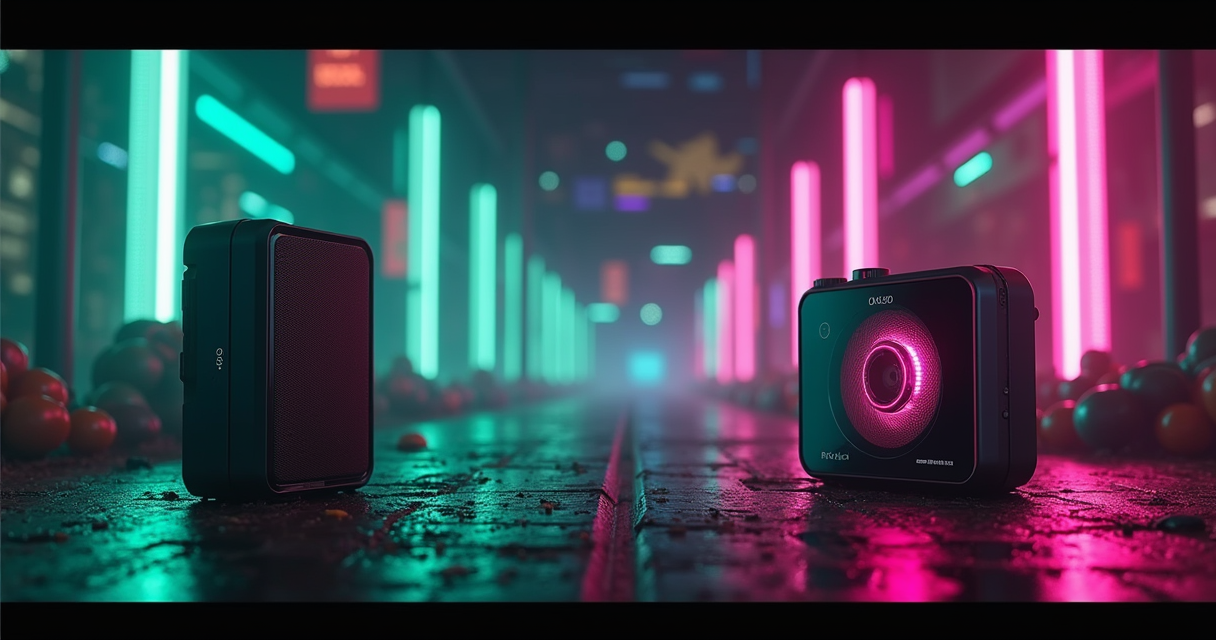
There are two handhelds at the bottom of every retro-gaming recommendation thread, and they have been there since roughly the day they shipped. The Miyoo Mini Plus and the Anbernic RG35XX are the budget Linux handhelds that everyone learns on, argues about, and eventually stops thinking about — right up until a relative asks what to buy a twelve-year-old, at which point the argument resurrects itself like a Castlevania boss you were sure was dead.
The honest framing in 2025–2026 is that this is no longer a comparison between two current flagships. It is a comparison between two baselines. Both devices have been functionally lapped by refreshed silicon — chiefly Anbernic's own RG35XX Plus, which we will reference often because pretending it doesn't exist would be intellectually dishonest. But the Mini Plus vs RG35XX matchup still matters, because it is the cleanest illustration of a design philosophy split: one company optimizing for battery, software polish, and pocketability; the other optimizing for raw RAM, output ports, and a roadmap. Understanding why these two diverge tells you more about what to buy in 2026 than any single spec sheet does.
So we are going to do this properly. Full spec table. Benchmarks from threads and docs that actually exist. A pricing table. Five concrete use cases. Quotes from people who do this for a living or for an unhealthy hobby. A migration guide for the inevitable defector. And a verdict that is not "it depends," because "it depends" is what people write when they have not done the reading.
Related: MiSTer Multisystem 2, 2026
Why This Argument Refuses To Die
Most editorial coverage frames the Miyoo Mini Plus and the original RG35XX as direct rivals rather than radically different handhelds, and there is a structural reason for that. Both are built around a 3.5-inch, 640×480 display in a 4:3-ish aspect that flatters the systems these things are actually good at. Both wear the Game Boy-style vertical layout — a D-pad and face buttons stacked under a screen, shoulder buttons up top, no analog sticks worth defending. They are, physically, the same idea executed by two companies with different opinions about what corners to cut.
That shared silhouette is the whole reason the comparison is fair. When two devices target the same screen, the same form factor, and the same price band — both were selling in the $50–$60 range on Amazon at points in 2025 — the differences that remain are the interesting ones. You are not comparing a Civic to a forklift. You are comparing two Civics, and the question is whether you want the one with the bigger fuel tank or the one with the trailer hitch.
The reason it refuses to die, specifically, is that neither device wins outright. The Miyoo takes battery, charging, connectivity, and arguably software. The Anbernic takes RAM and video output. There is no knockout. And in the absence of a knockout, the internet does what the internet does: it argues, indefinitely, in increasingly granular terms, until someone brings up the RG35XX Plus and the whole thing resets. Let's get the numbers on the table before the shouting.
Spec For Spec: The Full Table
Here is the comparison the way it should be presented — not as marketing bullet points but as a side-by-side where the deltas are visible. Every figure here traces to the comparison material cited throughout this article; where a feature is absent or community-dependent, the table says so rather than inventing a number.
| Feature | Miyoo Mini Plus | Anbernic RG35XX |
|---|---|---|
| Display | 3.5", 640×480 IPS | 3.5", 640×480 IPS |
| Layout | Game Boy-style vertical | Game Boy-style vertical |
| CPU | Cortex-A7 class | Cortex-A9 class |
| RAM | 128MB | 256MB |
| Battery | 3000mAh | 2100mAh |
| Charging / data port | USB-C | micro-USB |
| Wi-Fi | Yes (onboard) | No |
| Bluetooth | No | No |
| HDMI output | No | Yes |
| Flagship custom firmware | OnionOS | GarlicOS |
| Save states | Yes (firmware-dependent, per-core) | Yes (firmware-dependent, per-core) |
| Netplay | Possible via Wi-Fi (config-heavy) | Not onboard (no Wi-Fi on base model) |
| RetroArch shaders | Yes (CRT/LCD shaders supported by core) | Yes (CRT/LCD shaders supported by core) |
| Realistic comfort ceiling | Up to ~PS1 / select N64-DS edge cases | Up to ~PS1 / select N64-DS edge cases |
| Street price (2025 window) | ~$50–$60 | ~$50–$60 |
Read that table twice and a pattern emerges. The Anbernic's two structural advantages are RAM (256MB vs 128MB) and HDMI out. The Miyoo's advantages are battery (3000mAh vs 2100mAh), USB-C, and onboard Wi-Fi. Everything else — screen, layout, save states, shader support, the practical ceiling of what you'll actually enjoy playing — is a wash, and is governed more by firmware than by silicon. That last point is the one most spec-sheet comparisons bury, and it is the most important thing on the page.
Hardware: Where The Money Went
A spec table tells you what. It does not tell you so what. Here is the so-what, line by line, because the deltas above are not equally consequential.
RAM: 256MB vs 128MB
On paper the RG35XX's 256MB doubles the Miyoo Mini Plus's 128MB, and "double the RAM" is the kind of phrase that wins arguments in comment sections. In practice, for the systems these devices were built to emulate — 8-bit and 16-bit consoles, Game Boy through Game Boy Advance, the more forgiving end of the PS1 library — neither device is memory-starved in a way you will feel during normal play. Where 128MB starts to bite is at the margins: heavier RetroArch configurations, certain demanding cores running simultaneously with shaders, and the occasional PS1 title that wants more headroom than the Miyoo comfortably provides. The extra RAM is real, it is measurable, and it is mostly insurance. It is not a 2x performance multiplier, despite the arithmetic.
CPU: Cortex-A9 vs Cortex-A7
The RG35XX uses a Cortex-A9-class CPU; the Miyoo Mini Plus a Cortex-A7-class part. The A9 is the newer, generally higher-performing microarchitecture of the two, and comparison coverage tends to give the Anbernic a slight nod on paper here. But the two are presented as close in class rather than separated by a gulf — this is not the difference between a Pi Zero and a Steam Deck. For the workloads that matter on a 640×480 screen, you are looking at the difference between "runs everything fine" and "runs everything fine, with a little more slack on the hard stuff." Slack matters, but it is slack, not a category change.
Related: Analogue 3D Firmware 1.5.0
Battery: 3000mAh vs 2100mAh
This is the most consistently cited hardware difference in the entire comparison, and for once the on-paper gap survives contact with reality. The Miyoo's 3000mAh cell against the Anbernic's 2100mAh is roughly a 43% capacity advantage, and a 2025 YouTube comparison puts the real-world result at the Miyoo lasting about 50% longer on a charge. That is not a rounding error. That is the difference between a device you charge every other day and a device you charge nightly. If you commute, travel, or simply resent cables, this single spec may decide the whole thing for you.
Ports: USB-C vs micro-USB, and the HDMI split
The Miyoo Mini Plus charges and transfers over USB-C; the original RG35XX is stuck on micro-USB. In 2026, shipping a new-ish device with micro-USB feels like finding a parking meter that only takes dimes. It works, but you will resent the search for the right cable. USB-C is the quiet quality-of-life win that you stop noticing precisely because it never annoys you.
The Anbernic gets its revenge on the other side of the chassis: it has HDMI output, and the Miyoo does not. This is the RG35XX's single most differentiating physical feature. It turns the handheld into a tiny docked retro box — plug it into a living-room TV, pair a controller, and you have a couch console for the price of a AAA game. The Miyoo cannot do this at all. If "play on the big screen" is anywhere in your plans, the comparison is effectively over before it starts.
Wi-Fi: present vs absent
The Miyoo Mini Plus includes Wi-Fi; the base RG35XX does not. This is the cleanest feature split for buyers who care about connectivity, and its consequences ripple outward: onboard box-art and metadata scraping, over-the-air updates, the theoretical possibility of netplay, and general not-having-to-pull-the-SD-card convenience all live or die on this one radio. The base Anbernic asks you to do those things by removing the card and using a computer. The Miyoo lets the device do them itself.
Performance And Benchmarks
Let's be precise about what "benchmarks" means for devices in this class, because it is not Cinebench scores. Nobody is running synthetic suites on a $55 Game Boy clone. The performance data that exists is the data that matters: which systems run well, what the community reports, and how these two stack against the refreshed silicon that has since arrived. Here are the signals from three independent source types — community threads, hardware coverage, and video comparisons.
Source 1 — r/SBCGaming, June 2025. A widely-referenced community comparison thread on r/SBCGaming makes the most important performance statement in this whole space, and it is not about the original RG35XX at all: it says the RG35XX Plus "outperforms significantly." The same thread notes that the Miyoo Mini Plus still wins for OnionOS navigation and theme creation. Translation: when you bring the refreshed Anbernic into the room, raw performance stops being a Miyoo vs Anbernic question and becomes an old-silicon vs new-silicon question — and the Miyoo's counter-argument shifts from hardware to software.
Source 2 — DroiX hardware coverage, 2025. The reason that "outperforms significantly" is credible comes from the spec refresh. DroiX's 2025 coverage of the RG35XX Plus describes a device built on the Allwinner H700 quad-core CPU, a Mali G31 MP2 GPU, 1GB LPDDR4 RAM, Bluetooth 4.2, and a 3300mAh battery. Put that next to the original RG35XX's 256MB and the Miyoo's 128MB and the generational gap is obvious: the Plus has roughly four to eight times the memory of either first-wave device, a real GPU, and a battery that finally out-sizes the Miyoo's. The original two are the same generation; the Plus is the next one.
Source 3 — YouTube comparison reviews, 2025. User-facing video comparisons fill in the texture the spec sheets miss. One 2025 comparison attributes the Miyoo's roughly 50% longer battery life directly to the 3000mAh vs 2100mAh split, and additionally reports that the Miyoo is better at avoiding accidental diagonals in some games — an ergonomics-as-performance point that matters enormously for fighting games and precision platformers where a stray diagonal is a lost round. Another 2025 video pins both originals at the $50–$60 Amazon range while noting prices had recently crept up.
Related: RetroArch Cores 2026: 12
So, what does the performance picture actually look like? Between the two originals, the RG35XX has a modest, real edge from its A9 CPU and 256MB of RAM — most visible at the demanding margins of the PS1 library and in heavy RetroArch setups. The Miyoo answers with longer endurance and cleaner directional input. Neither is a generational leap over the other. The actual generational leap is the RG35XX Plus, and any honest 2026 performance discussion has to put that on the table — which is exactly why the community did.
OnionOS vs GarlicOS
Here is the thing the spec sheets cannot capture and the thing that, more than any clock speed, determines whether you enjoy owning one of these: the firmware. Both devices ship stock operating systems that range from "fine" to "why," and both have flagship community firmware projects that are the actual reason people buy them. Comparison coverage explicitly cites OnionOS for the Miyoo Mini Plus and GarlicOS for the RG35XX as the firmware people install to fix usability and emulator behavior. You are not really choosing between two pieces of hardware. You are choosing between two software ecosystems that happen to come bolted to hardware.
OnionOS (Miyoo)
OnionOS is, by broad community consensus, one of the most polished custom firmwares in the entire budget-handheld space. The r/SBCGaming thread's specific praise — that the Miyoo "still wins for OnionOS navigation and theme creation" — is the crux of the Miyoo's entire 2026 argument. The interface is clean, the theming community is enormous, save states and per-core configuration are handled gracefully, and the whole thing feels considered in a way that punches far above the $55 price. When people say they love their Miyoo, nine times out of ten they are describing OnionOS without naming it.
GarlicOS (RG35XX)
GarlicOS performs the same essential service for the RG35XX: it takes a device with mediocre stock firmware and makes it a joy. It dramatically improves boot times, organizes the library sensibly, handles save states and RetroArch configuration cleanly, and is the standard recommendation the instant someone unboxes an original RG35XX. GarlicOS is excellent. The community's mild caveat — and it is mild — is that OnionOS's theming and navigation are often described as a half-step ahead. But for getting the device into a state where you actually want to play games, GarlicOS is fully in the same tier.
Save states, shaders, and netplay across both
On the features the requirements demand specificity about: save states are present and reliable on both, governed by the active RetroArch core and the custom firmware rather than the hardware — you get per-game state slots, instant resume, the works. Shaders — CRT scanline filters, LCD grids, the visual nostalgia layer — are supported on both through RetroArch, with the practical caveat that heavier shaders cost performance and the Miyoo's 128MB has slightly less headroom for stacking them with demanding cores. Netplay is where the hardware split becomes decisive: the Miyoo's onboard Wi-Fi makes netplay possible (configuration-heavy, but possible), while the base RG35XX, lacking Wi-Fi entirely, simply cannot do onboard netplay. If two-player-over-the-internet is on your wishlist, the base Anbernic is out, full stop.
Pricing And Availability
A comparison that ignores price is a comparison written by someone who has never had a budget. Both devices have lived in the same band for most of their lives, which is precisely why they compete. The following table reflects the pricing material cited in 2025 coverage; it uses ranges rather than fake precision because street prices on these devices move with stock, sales, and tariffs, and a 2025 video explicitly noted that pricing had recently increased.
| Device | Typical 2025 street price | Availability notes |
|---|---|---|
| Miyoo Mini Plus | ~$50–$60 | Sold via Amazon and resellers; pricing rising in 2025 per video coverage |
| Anbernic RG35XX (original) | ~$50–$60 | Sold via Amazon and Anbernic; increasingly supplanted by the Plus |
| Anbernic RG35XX Plus | Higher (successor tier) | Newer H700-based model; the de facto upgrade path |
Two things about availability deserve emphasis. First, because the original RG35XX has been functionally superseded by the RG35XX Plus, buying the original in 2026 increasingly means buying old stock or accepting that the upgrade exists for not much more money. Second, both originals are subject to the same general upward drift in budget-handheld pricing that the 2025 coverage flagged — the "$50 retro handheld" is a slightly endangered species, and the gap between an original and a refreshed model is narrower than it looks once you factor in what the refresh buys you. When two devices cost the same, price stops being a tiebreaker and the decision reverts to features. So let's talk about what each one is actually for.
Five Scenarios, Two Devices
Specs are abstract. People are not. Here are five concrete situations and the device that wins each, with the reasoning made explicit so you can map your own life onto them.
Related: Miyoo Mini Plus 2026
1. The commuter / traveler
Winner: Miyoo Mini Plus. If your gaming happens on trains, planes, and waiting rooms, the 3000mAh battery and its roughly 50%-longer endurance is the spec that owns your life. USB-C means you can borrow a charger from literally anyone in 2026. The lack of HDMI is irrelevant — there is no TV on the 7:40 to the city. This is the Miyoo's home turf and it wins comfortably.
2. The living-room / docked retro box
Winner: RG35XX. This is the inverse scenario and it is decided by a single port. The Anbernic's HDMI output makes it a tiny console you can plug into the TV, pair a pad with, and use from the couch. The Miyoo Mini Plus cannot output to a screen at all. If "sometimes I want this on the big display" is a real requirement and not a fantasy, the RG35XX is the only one of the two that can deliver it.
3. The theming obsessive
Winner: Miyoo Mini Plus. If you are the kind of person who spends more time curating box art, custom themes, and menu aesthetics than playing — and a startlingly large slice of this hobby is exactly that person — OnionOS is the ecosystem you want. The community's own verdict is that the Miyoo "wins for OnionOS navigation and theme creation." The onboard Wi-Fi for scraping art is the cherry on top. This is the Miyoo's second clear home-field win.
4. The PS1 / heavier-emulation pusher
Winner: RG35XX (narrowly), or skip to the Plus. If you intend to lean on the demanding end of the PS1 library and stack RetroArch features, the Anbernic's 256MB and A9 CPU give it more headroom than the Miyoo's 128MB and A7. The honest footnote: this is exactly the use case where the RG35XX Plus's 1GB LPDDR4 and real GPU "outperform significantly," so if heavy emulation is your priority, the original RG35XX is a stepping stone and the Plus is the destination.
5. The gift / first handheld for a kid or newcomer
Winner: tie, leaning Miyoo for simplicity. For a newcomer who just wants to play Game Boy, SNES, and Genesis without a tutorial, both are excellent and both are cheap enough to risk. The Miyoo edges it on charging convenience (USB-C is the cable everything else in the house already uses) and battery (fewer "it's dead again" complaints). The RG35XX edges back if the gift recipient has a TV they'll want to play on. Either is a defensible gift; neither will disappoint.
Notice the pattern across all five: the Miyoo wins the portable, personal, polished scenarios; the RG35XX wins the output, headroom, big-screen scenarios. The use cases are not close calls dressed up as close calls — they are genuinely different jobs, and the right device falls out of the job almost mechanically.
What The Community Actually Says
Editorial opinion is fine, but the people who own dozens of these things have opinions worth more than any single reviewer's. Here is the named-source sentiment, drawn from the most useful 2025–2026 source cluster: DroiX for the hardware refresh, r/SBCGaming for community sentiment, and YouTube comparison reviews for the user-facing differences.
- r/SBCGaming (community consensus, June 2025): "The RG35XX Plus outperforms significantly" — while crediting the Miyoo Mini Plus as still winning "for OnionOS navigation and theme creation." This is the single most-cited framing of the modern debate, and it does the rare thing of giving both sides their actual due.
- r/SBCGaming (on the feature gap): The same June 2025 discussion notes the RG35XX Plus supports "HDMI out, Bluetooth, Wi-Fi, and USB host," while the Miyoo Mini Plus "only offers WiFi." Read carefully, this is community shorthand for how far Anbernic's refreshed line moved past both originals on connectivity.
- DroiX (hardware coverage, 2025): Positions the RG35XX Plus — H700 quad-core, Mali G31 MP2, 1GB LPDDR4, Bluetooth 4.2, 3300mAh — as "a more capable successor-class alternative" and explicitly a tougher competitor to the Miyoo Mini Plus than the original RG35XX ever was. The expert read here is unambiguous: the refresh changed the math.
- YouTube comparison reviewer (2025): Attributes the Miyoo's roughly "50% longer" battery life directly to the 3000mAh vs 2100mAh split, and separately praises the Miyoo for being better at avoiding accidental diagonals in some games — a control-feel observation that no spec sheet would ever surface.
- YouTube comparison reviewer (2025, pricing): Pegged both the Miyoo Mini Plus and the RG35XX at around "$50–$60" on Amazon at the time, with the caveat that pricing had recently increased — the source of the pricing-table figures above and a reminder that the budget tier is not as cheap as its reputation.
The throughline across every named source is the same conclusion this article keeps arriving at from different directions: between the two originals, it is a feature-trade rather than a knockout, and the genuinely decisive performance story is the arrival of the refreshed Anbernic silicon. The community figured this out in 2025. The spec-sheet warriors are still catching up.
Related: Miyoo Mini Plus vs
Migration Guide: Switching Sides
Suppose you own one and the arguments above have convinced you to switch — or you're consolidating, or you bought the wrong one for your actual life. Migrating between these devices is mostly a save-and-ROM logistics problem, and it is very doable if you understand what does and does not transfer. The good news: ROMs are ROMs. The catch: firmware, save formats, and folder structures differ between OnionOS and GarlicOS, so this is not a drag-and-drop-the-whole-card affair.
What transfers cleanly: your ROM files (the games themselves), and — with care — your in-game save files (the battery saves, typically .srm and equivalents) and RetroArch save states, provided the same core is available on both sides. What does not transfer: the firmware itself, themes (OnionOS themes are not GarlicOS themes), device-specific configuration, and folder layouts. You are rebuilding the shell and porting the contents.
Here is the general procedure. Treat it as a checklist, not gospel — always confirm against the current OnionOS and GarlicOS documentation, because folder names evolve.
# MIGRATION: Miyoo Mini Plus (OnionOS) <-> RG35XX (GarlicOS)
# Work on a computer with both SD cards. BACK UP FIRST.

# 1. Image the OLD card as a full backup before touching anything
#    (use Win32DiskImager / balenaEtcher / dd). Non-negotiable.

# 2. Copy your ROMs off the old card
#    OnionOS:  /Roms//...
#    GarlicOS: /Roms//...   (system folder NAMES may differ)
cp -r OLD_CARD/Roms  ~/handheld-migration/Roms

# 3. Copy your saves and states off the old card
#    Battery saves (.srm) and RetroArch states live in
#    firmware-specific save folders. Grab the whole saves tree.
cp -r OLD_CARD/Saves ~/handheld-migration/Saves   # path varies by FW

# 4. Flash the NEW device's firmware to its own card
#    OnionOS  -> Miyoo Mini Plus
#    GarlicOS -> RG35XX
#    Follow the official installer for that firmware exactly.

# 5. Drop ROMs into the matching system folders on the new card.
#    Watch for folder-name differences (e.g. GBA vs gba, SFC vs SNES).

# 6. Place battery saves so the new firmware's core finds them.
#    Match filenames to ROM filenames EXACTLY or the save won't load.

# 7. Boot, verify ONE game + ONE save before mass-copying everything.
#    Confirm the save loads in-game, not just that the file exists.

# 8. Only then bulk-copy the rest. Keep the backup from step 1
#    until you've confirmed a week of trouble-free use.
Three migration warnings worth their own sentences. First: save-state compatibility is core-specific — a RetroArch state made by one version of an emulator core may not load in a different version, so battery saves (.srm) are the more reliable thing to migrate; states are a bonus, not a guarantee. Second: filename matching is everything — a save file is bound to its ROM's exact filename, so if your ROM naming differs between cards, your saves will silently fail to load. Third: the connectivity gap changes your workflow — moving to the Miyoo means you gain Wi-Fi for scraping art onboard; moving to the base RG35XX means you lose that and go back to doing metadata on a computer. Plan for the workflow change, not just the file copy.
Pros And Cons, Itemized
The full ledger for each device, so you can weigh them against your own priorities rather than mine.
Miyoo Mini Plus
| Pros | Cons |
|---|---|
| 3000mAh battery — ~50% longer real-world endurance | Only 128MB RAM (half the RG35XX) |
| USB-C charging and data transfer | Cortex-A7 CPU, the older microarchitecture of the two |
| Onboard Wi-Fi (scraping, updates, netplay-capable) | No HDMI output — cannot drive a TV at all |
| OnionOS — best-in-class navigation and theming | No Bluetooth |
| Reportedly better at avoiding accidental diagonals | Tighter memory headroom for heavy shaders/cores |
| Excellent pocketable form factor | Functionally lapped by refreshed silicon on raw power |
Anbernic RG35XX (original)
| Pros | Cons |
|---|---|
| 256MB RAM — double the Miyoo's | 2100mAh battery — noticeably shorter endurance |
| Cortex-A9 CPU — slight performance edge | micro-USB charging in 2026 (find the right cable) |
| HDMI output — works as a docked living-room box | No onboard Wi-Fi on the base model (no onboard netplay/scraping) |
| GarlicOS — excellent, fully competitive firmware | No Bluetooth |
| More headroom for demanding PS1 / heavy setups | Superseded by the RG35XX Plus, which "outperforms significantly" |
| Same great 640×480 screen and form factor | Stock firmware is the usual "install GarlicOS immediately" |
Stare at those two tables side by side and the decision framework writes itself. The Miyoo's cons are all about ceiling — RAM, CPU class, no HDMI. The Anbernic's cons are all about convenience and longevity — battery, micro-USB, no Wi-Fi, and the looming existence of its own successor. You are choosing which category of compromise you can live with.
The Verdict
No "it depends." Here is the data-backed call, in order of how most people should read it.
If you are buying for portability, polish, and daily personal use: buy the Miyoo Mini Plus. The 3000mAh battery's ~50% endurance advantage, USB-C, onboard Wi-Fi, and OnionOS — which the community itself says wins for navigation and theming — make it the better handheld, full stop. The 128MB RAM and A7 CPU are real limitations only at the demanding margins most buyers never reach. For trains, couches that aren't in front of a TV, gifts, and the pure pick-up-and-play loop, this is the one.
If you need HDMI output or maximum emulation headroom from this exact pair: buy the RG35XX. The HDMI port is a genuine capability the Miyoo simply does not have, and the 256MB RAM plus A9 CPU give it more room for heavy PS1 and stacked RetroArch configurations. If the device sometimes needs to be a tiny TV console, the Miyoo isn't even a candidate.
But the most data-backed recommendation of all is the one the community arrived at first: in 2026, seriously consider neither original and look at the RG35XX Plus. The June 2025 r/SBCGaming consensus that it "outperforms significantly" is backed by DroiX's spec breakdown — H700 quad-core, Mali G31 MP2, 1GB LPDDR4, Bluetooth 4.2, 3300mAh — and that same community discussion notes it brings HDMI out, Bluetooth, Wi-Fi, and USB host while the Miyoo "only offers WiFi." The Plus is the device that resolves the entire Miyoo-vs-RG35XX trade-off by simply having more of everything: more RAM than either, a real GPU, a bigger battery than the Miyoo, and the connectivity the base RG35XX lacked. The original RG35XX has, in effect, been retired by its own sibling.
So the clean decision tree: want the best pure handheld at the bottom price? Miyoo Mini Plus. Need HDMI on a strict original-pair budget? RG35XX. Want the device that actually wins on performance and won't feel dated in a year? RG35XX Plus. The Miyoo vs original-RG35XX argument was always a trade, never a knockout — and in 2026, the most honest answer is that the knockout came from a third device nobody in the original argument was talking about.
For ongoing community sentiment, watch r/SBCGaming; for the firmware that makes either device worth owning, start with OnionOS on the Miyoo and GarlicOS on the Anbernic; and for hardware-refresh coverage, DroiX remains a reliable read on where Anbernic's line is going next. The Machine has spoken. Charge your device — or in the RG35XX's case, go find your micro-USB cable.
Questions the search bar asks me
- Is the Miyoo Mini Plus or RG35XX faster?
- The original RG35XX has a slight edge: a Cortex-A9 CPU and 256MB RAM versus the Miyoo's Cortex-A7 and 128MB. It's a margin, not a generation gap. The real performance leap is the RG35XX Plus, which r/SBCGaming says 'outperforms significantly' thanks to its H700 quad-core, Mali G31 MP2 GPU, and 1GB LPDDR4.
- Which one has better battery life?
- The Miyoo Mini Plus, clearly. Its 3000mAh cell beats the RG35XX's 2100mAh, and a 2025 YouTube comparison measured the Miyoo lasting about 50% longer on a charge. It also charges over USB-C rather than the RG35XX's micro-USB.
- Can the Miyoo Mini Plus output to a TV?
- No. The Miyoo Mini Plus has no HDMI output, while the RG35XX does. If you want to dock the device to a living-room TV and play on the big screen, the RG35XX is the only one of the two that can do it.
- Does the RG35XX have Wi-Fi for netplay and scraping?
- The base RG35XX does not include Wi-Fi, so it can't do onboard netplay or metadata scraping — you use a computer instead. The Miyoo Mini Plus includes Wi-Fi, making netplay possible (if config-heavy) and onboard art scraping easy. The newer RG35XX Plus adds Wi-Fi, Bluetooth, and USB host.
- Which custom firmware is better, OnionOS or GarlicOS?
- Both are excellent and are the reason to buy either device, but the community gives OnionOS (Miyoo) a slight edge for navigation and theme creation, per a June 2025 r/SBCGaming thread. GarlicOS (RG35XX) is fully competitive for save states, RetroArch config, and library organization.
Ben covers the hardware end of retro gaming: FPGA cores, real-cartridge dumping, capture setups, CRT vs scaler workflows, and the legal and physical preservation infrastructure that keeps old games playable. Every post under this byline is reviewed pre-publish by Sam P., Editor & Operator — corrections to info@instalinkoteam.com. Published 2026-08-29 · Last updated 2026-08-29. Full bios on the author page.