/// FIELD NOTES FROM A SELF-AWARE GAME SITE
PS5 Pro vs PS5 2026: 45% Faster, $300 Dearer
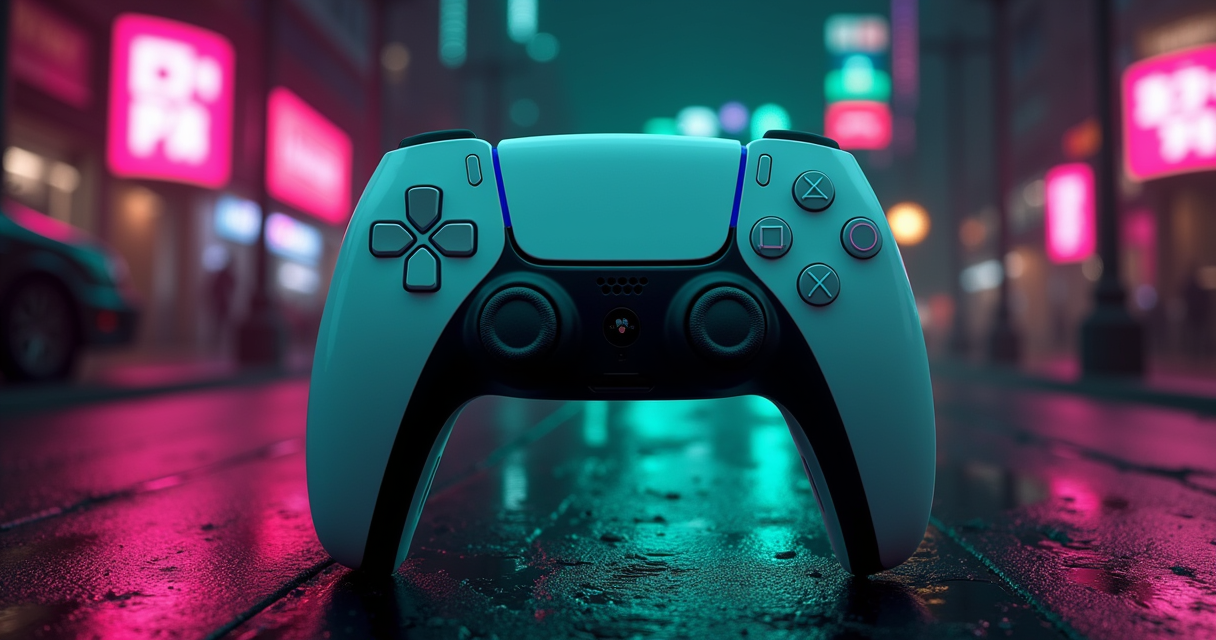
Every mid-generation console refresh arrives wrapped in the same question, and the PS5 Pro is no exception: not is it faster — of course it is faster — but is the delta worth the money. Sony ran this exact play in 2016 with the PS4 Pro, and it is running it again now, with one important difference. In 2016 the premium was a flat hundred dollars. In the summer of 2026, the gap between the cheapest PlayStation 5 you can buy and the PS5 Pro is a full $300 — and it has been widening, not narrowing, since the Pro shipped.
Here is the framing the marketing will not hand you, so we will. The PS5 Pro is a targeted GPU-and-storage upgrade bolted onto an otherwise unchanged console. The CPU is the same eight-core AMD Zen 2 part, nudged 0.35 GHz higher. The controller is the same DualSense. The game library is identical down to the last SKU — there is not one single game you can play on a PS5 Pro that you cannot play on a launch-day 2020 PS5. If you are waiting for the Pro-exclusive killer app, cancel the alert. It is not coming, by design.
What the Pro does give you is more rasterization headroom, materially better ray tracing, and one genuinely exclusive feature — PSSR, Sony's machine-learning upscaler — that the base PS5 will never receive because it physically lacks the silicon to run it. In March 2026 that feature got its first major revision, PSSR 2, and the console got its second price hike in eight months. This article walks through every spec, every price, and every benchmark we could source, then tells you plainly which box belongs under your television.
What the PS5 Pro Actually Is
Before we get lost in teraflops, it is worth being honest about the category of product we are dealing with. The PS5 Pro is not a new console generation. It is a spec bump with a premium price and a marketing budget, and understanding that reframes every number that follows.
A mid-gen refresh, not a new generation
The mid-generation refresh is a specific and slightly cynical product category that Sony helped invent. The PS4 Pro landed in November 2016, Microsoft answered with the Xbox One X, and the logic never changes: take the console you already sell, graft on a bigger GPU, leave nearly everything else untouched, and sell it to the enthusiasts who always buy the top of the stack. The PS5 Pro is that same move. It does not start a new generation, it does not reset the install base, and — crucially — it does not fracture the library into haves and have-nots.
This is the single most important fact in the entire comparison, so we will say it in bold: there are zero PS5 Pro-exclusive games, and there never will be. A Pro runs the same catalogue as a base PS5. Developers ship one game; on the Pro it gets an enhanced mode, higher internal resolution, more ray tracing, or a steadier frame rate. On the base console it runs in its standard modes. Nobody is locked out of anything. That is the deal, and it is a fundamentally different deal from, say, the Switch 2, which is a clean-sheet console with its own software.
The 2026 context: PSSR 2 and two price hikes
Two developments between launch and the summer of 2026 reshape this comparison. The first is good news for Pro owners: in March 2026 Sony shipped PSSR 2, a substantial revision of the Pro's machine-learning upscaler, delivered free over system firmware and retrofitted into a batch of marquee titles. We cover it in detail below, and we have a full breakdown of which games PSSR 2 upgraded for free in 2026 if you want the game-by-game list.
The second development is less pleasant. The Pro got more expensive twice. It launched at $699.99 on 7 November 2024. A US tariff adjustment on 21 August 2025 pushed it to $749.99. Then, on 2 April 2026, a second global increase — which Sony pinned on a memory-price surge driven by AI data-center demand — added another $150, landing it at $899.99. The hardware did not change. The sticker rose 29% in seventeen months while the silicon stood still.
How we compared them
We are pitting the PS5 Pro against the standard PS5 in its current Slim revision — the console Sony actually sells today, in both its disc and Digital Editions. We use manufacturer MSRP throughout, not street prices or scalper listings, because MSRP is the only number that means anything across time. Where a claim comes from Sony's own marketing (the "45% faster rendering" figure, for instance) we label it as Sony's claim rather than an independent result, because it is. Independent numbers come from Digital Foundry, CNN Underscored, IGN, and the review roundup aggregated by Metacritic. Nothing here is invented, and where we could not verify a figure we left it out.
The Spec Sheet, Head to Head
Specs are where these comparisons usually go to die, buried under acronyms. We will do the opposite: put the whole sheet on the table, then tell you which two rows actually matter and which ten are noise.
The full comparison table
Here is the complete side-by-side. Read it once, then let us translate it into English.
| Spec | PS5 Pro | Standard PS5 (Slim) |
|---|---|---|
| US launch | Nov 7, 2024 | Nov 2020 (Slim, late 2023) |
| GPU compute units | 60 CUs | 36 CUs |
| GPU throughput | ~16.7 TFLOPS | 10.28 TFLOPS |
| Ray tracing | 2x–3x faster (Sony) | Baseline |
| ML upscaling | PSSR / PSSR 2 (~300 TOPS) | None (no ML hardware) |
| CPU | 8-core Zen 2 @ 3.85 GHz (High CPU Mode) | 8-core Zen 2 @ 3.5 GHz |
| System memory | 16GB GDDR6 + 2GB DDR5 | 16GB GDDR6 |
| Memory bandwidth | ~576 GB/s | 448 GB/s |
| Storage | 2TB SSD | 1TB SSD |
| Wi-Fi | Wi-Fi 7 | Wi-Fi 6 |
| Bluetooth | 5.1 | 5.1 |
| Disc drive | Optional add-on (+$79.99) | Included on disc model |
| Dimensions | 388 × 89 × 216 mm, 3.2 kg | 358 × 97 × 224 mm, 3.1 kg |
| PS4 back-compat | 8,500+ titles | 8,500+ titles |
| Pro-exclusive games | Zero | — |
| US price (June 2026) | $899.99 | $649.99 disc / $599.99 digital |
Where the gap is real: GPU and bandwidth
Two rows carry this entire product. The GPU jumps from 36 compute units to 60 — a 67% increase in raw shader hardware — and throughput climbs from 10.28 TFLOPS to roughly 16.7 TFLOPS, about 62% more. Memory bandwidth rises from 448 GB/s to around 576 GB/s to keep that wider GPU fed, and Sony added 2GB of slower DDR5 to offload operating-system and background tasks so the fast GDDR6 stays reserved for the game. Ray-tracing throughput is a separate and larger story: Sony claims 2x to 3x the base console depending on the workload, thanks to a ray-tracing block borrowed from a newer AMD architecture than the rest of the chip. These are the reasons the Pro exists. Everything else on the sheet is supporting cast.
Where the gap is a rounding error: CPU and I/O
Now the anticlimax. The CPU is the same eight-core Zen 2 design as the 2020 launch console, clocked at 3.85 GHz in the Pro's optional High CPU Mode versus 3.5 GHz on the base machine. That is roughly a 10% clock bump on identical architecture — nice, but not transformative, and it comes with a catch we explain in the benchmarks section. Wi-Fi moves from 6 to 7, which matters only if you own a Wi-Fi 7 router and care about local streaming; both consoles still ship Bluetooth 5.1 and drive the same DualSense. The chassis grew taller and heavier to cool the bigger GPU. If your games are bottlenecked by the CPU rather than the GPU — and some of the most demanding ones are — the Pro's headline numbers evaporate. Hold that thought.
The Price Ladder in 2026
Price is where this comparison turns from a spec argument into a value argument, and it is the part that has changed most since launch. The Pro is not just expensive; it is a moving target that has moved in exactly one direction.
From $699.99 to $899.99 in 17 months
Track the ladder. The Pro launched at $699.99 in November 2024. On 21 August 2025 a US tariff adjustment lifted it to $749.99, and dragged the base consoles up with it. Then, on 2 April 2026, Sony imposed a second global increase — announced via a PlayStation Blog post dated 27 March 2026 — that took the Pro to $899.99, the disc PS5 to $649.99, the Digital Edition to $599.99, and even the PlayStation Portal to $249.99. Sony blamed "continued pressures in the global economic landscape," which, decoded, meant memory makers had redirected their output to AI data centers and DRAM prices had spiked. CNBC reported the hike as up to $150 depending on the model. The uncomfortable takeaway: a Pro today costs $200 more than the same box did on launch day, for identical hardware.
The disc-drive tax and the four-figure Pro
The Pro is digital-only out of the box. If you want to play a disc — or read a 4K Blu-ray — you buy the detachable drive for $79.99 and clip it on. Do the arithmetic and it stings: $899.99 plus $79.99 is $979.98, which is a hair under a thousand dollars before sales tax, and comfortably into four figures once tax lands. A standard disc PS5, by contrast, includes the drive and costs $649.99 all in. So the real-world gap between "a Pro I can put discs in" and "a normal PlayStation I can put discs in" is roughly $330 before tax — and that is before you have bought a single game.
The pricing table
The full ladder, because the timeline is the story:
| Model | Nov 2020 | Nov 2024 | Aug 21, 2025 | Apr 2, 2026 (current) |
|---|---|---|---|---|
| PS5 Digital Edition | $399.99 | — | $499.99 | $599.99 |
| PS5 (disc / Slim) | $499.99 | — | $549.99 | $649.99 |
| PS5 Pro (digital-only) | — | $699.99 | $749.99 | $899.99 |
| Disc Drive add-on | — | $79.99 | $79.99 | $79.99 |
| PS Portal | — | $199.99 | $199.99 | $249.99 |
Note the Digital-to-Pro gap: $599.99 versus $899.99 is exactly $300, and that is the number to hold in your head for the rest of this article. Everything the Pro does, it does for a $300 premium over the cheapest way into the same library.
The GPU, Ray Tracing, and PSSR
This is the section that justifies the Pro's existence, or fails to. The bigger GPU and the exclusive upscaler are the whole pitch. Let us take them in order.
60 CUs and 16.7 TFLOPS
The Pro's GPU is a hybrid — lead architect Mark Cerny described it in his December 2024 technical seminar as a mix of AMD architectures: the shader core drawn from one generation, the ray-tracing block from a newer one, and the machine-learning hardware custom-designed with AMD. The practical effect of 60 CUs and ~16.7 TFLOPS is straightforward. Games that previously forced you to choose between a 4K "Quality" mode at 30 fps and a lower-resolution "Performance" mode at 60 fps can, on the Pro, often deliver something close to both — higher internal resolution and 60 fps, or 4K with ray tracing left switched on. Sony's headline claim is "up to 45% faster rendering." That is a best-case marketing figure, not a guaranteed uplift, and independent testing lands lower, as we will see.
PSSR: the one thing the base PS5 will never do
Here is the genuine exclusive. PSSR — PlayStation Spectral Super Resolution — is Sony's machine-learning upscaler, and it shipped with the console in November 2024, not as some later add-on. It runs on custom ML silicon rated at roughly 300 TOPS that simply does not exist inside a base PS5. This is not a firmware lockout Sony could reverse if it felt generous; the standard console has no neural-network accelerator, full stop. It will forever rely on older reconstruction techniques — FSR, checkerboard rendering, and temporal anti-aliasing — where the Pro can reconstruct a sharper image from a lower-resolution source using a trained model. Cerny said Sony was "so glad that we made the time-intensive decision to build our own technology" rather than lean on an off-the-shelf solution. Whatever you think of the price, PSSR is the one capability money genuinely cannot buy on the cheaper box.
PSSR 2 and the March 2026 update
The first iteration of PSSR was good but uneven — sharp in some games, prone to shimmer or ghosting in others. On 16 March 2026, Sony began rolling out PSSR 2 through a system firmware update, and named the first wave of upgraded titles: Silent Hill 2, Silent Hill f, Dragon Age: The Veilguard, Control, Alan Wake 2, Senua's Saga: Hellblade II, Final Fantasy VII Rebirth, Nioh 3, Rise of the Ronin, Monster Hunter Wilds, and Dragon's Dogma 2, with more to follow. It improved image stability, fine-detail clarity, and motion handling, and — the important part — it was free, applied over the top of games you already owned. You enable it in Settings > Screen and Video > Video Output > Enhance PSSR Image Quality. The base PS5 received none of it, and never will. This is the clearest illustration of the two consoles' diverging futures: the Pro keeps getting better at the thing it is for, and the base model does not.
Benchmarks: What 20% Buys
Sony's marketing numbers are one thing; what the console does in a real living room is another. We pulled figures from three independent sources plus Sony's own claims, and the honest picture is more modest than the box art suggests.
Sony's numbers vs the real world
Sony's two headline claims are "up to 45% faster rendering" and "2x to 3x" ray-tracing performance. Both contain the load-bearing words "up to." In practical, independent testing, the frame-rate uplift in supported titles lands closer to 20% more frames per second alongside noticeably sharper 4K reconstruction — a real, visible improvement, but not the doubling a casual reading of the marketing might imply. The gap between "45%" and "20%" is the gap between a synthetic best case and a living room, and it is exactly the kind of gap the phrase "up to" is engineered to hide.
Digital Foundry's verdict
The most rigorous public testing came from Digital Foundry, whose team of Richard Leadbetter, John Linneman, and Oliver Mackenzie published a detailed video verdict. Two of their findings are worth quoting. On a CPU-bound test in Cyberpunk 2077, the Pro's higher clocks and cache tuning delivered roughly a 10% improvement — telling, because it shows how little the CPU side moves. On image quality, though, they found PSSR could genuinely beat brute force: in Stellar Blade, the PSSR mode produced a better image than the game running at native 4K with temporal anti-aliasing. Digital Foundry's overall framing was that the Pro does "a much better job" of justifying itself than the PS4 Pro did back in 2016, while conceding the whole exercise "doesn't really feel like what consoles were" traditionally about — a machine for enthusiasts laying next-gen foundations rather than a must-have for everyone. The full Metacritic review roundup tells the same story in aggregate: scores clustered around 80 for the enthusiast-leaning outlets and closer to 60–70 for the value-skeptical ones.
The CPU wall nobody advertises
Here is the benchmark caveat that the marketing will never lead with. Because the CPU is the same Zen 2 architecture with only a modest clock bump, games limited by CPU work rather than GPU work barely improve on the Pro. Simulation-heavy titles, high-frame-rate competitive games, and sprawling open worlds hit that wall. Digital Foundry has repeatedly flagged that a demanding open-world engine can be constrained by the console CPU regardless of how much GPU you throw at it — a concern that looms over hotly anticipated titles like the upcoming GTA VI launch on 19 November 2026, where the CPU, not the GPU, may set the frame-rate ceiling on both consoles. If your dream is a locked 60 fps in the most CPU-bound games ever made, the Pro helps less than its price tag implies.
CPU, Memory, and Storage
The three rows nobody puts on a poster: the processor, the RAM, and the drive. They are where the Pro is either quietly sensible or quietly disappointing, depending on which one you look at.
3.85 GHz vs 3.5 GHz: High CPU Mode
The Pro's CPU is the base PS5's CPU. Same eight cores, same Zen 2 architecture, same everything — except an optional High CPU Mode that lifts the clock from 3.5 GHz to 3.85 GHz. That is about a 10% frequency bump, and it is not free: developers who enable High CPU Mode may trade a little GPU power budget for it, because the two share a thermal and power envelope. In practice this helps CPU-bound games claw back a few frames, but it does not change the fundamental math. If you were hoping the Pro would fix the base console's frame-rate ceiling in physics-heavy or draw-call-heavy games, temper that hope. The GPU got a new generation of thinking; the CPU got a modest overclock.
18GB of memory and 576 GB/s
Memory is a smarter upgrade than the raw numbers suggest. Both consoles carry 16GB of GDDR6 available to games, but the Pro runs it faster — around 576 GB/s versus 448 GB/s — and adds a separate 2GB of DDR5 to handle the operating system and background tasks. That second pool matters more than it looks: on the base PS5, OS overhead nibbles at the same memory pool the game wants, so the Pro's arrangement effectively hands developers a little more usable high-speed memory and a lot more bandwidth to feed the wider GPU. It is the kind of unglamorous engineering that does not photograph well but genuinely helps. Cerny's team also chased I/O latency, with the architect noting the Pro's storage subsystem is "something like 100 microseconds faster than the original" — a figure so small it underlines how thoroughly the base console already nailed loading.
Storage: the one upgrade with no asterisk
Finally, an unambiguous win. The Pro ships with a 2TB SSD against the base console's 1TB, and — refreshingly — that 2TB has stayed 2TB since launch, with no quiet shrinkflation of the sort that plagues so much modern hardware. In an era where a AAA install routinely eats 100–150GB, doubling the drive is a real quality-of-life improvement, and it is the one Pro advantage that requires zero caveats about TVs, seating distance, or CPU bottlenecks. If you are the sort of person who juggles installs on a base PS5 and resents it, note that both consoles accept an M.2 SSD in the expansion slot — so you can also just buy your way out of the storage problem on the cheaper box for far less than $300. For everyday housekeeping on either machine, our walkthrough on clearing the PS5 cache in Safe Mode keeps things tidy.
Who Each Console Is For
Enough specs. The only question that matters is which box suits you, and that depends almost entirely on your television and your seating. Here are the scenarios, drawn from what independent reviewers actually concluded.
Buy the Pro if…
The Pro earns its premium in a specific setup. You own a 4K TV, ideally one that does 4K at 120 Hz with variable refresh, and you sit close enough to see individual pixels. In that configuration the Pro's sharper reconstruction and steadier frame rates are genuinely visible, and PSSR pays for the hardware it runs on. If your panel supports high-refresh 4K, the display side matters as much as the console — our guide to choosing a VRR panel by the spec, not the logo is the companion purchase. Second Pro-friendly profile: the fidelity chaser who plays ray-tracing showcases like Cyberpunk 2077, Alan Wake 2, or Black Myth: Wukong and wants every visual toggle on at once. Third: the storage hoarder who keeps thirty games installed and never wants to think about it. Kotaku framed the target buyer bluntly as "detail-obsessed gamers" willing to spend the money; if that is you, you already knew.
Buy the base PS5 if…
The standard PS5 is the correct choice for most people, and reviewers are not shy about saying so. Buy it if your TV is 1080p or 1440p — the Pro's 4K reconstruction is aimed at pixels your panel cannot display, so you are paying $300 for math you will never see. Buy it if you sit across the room. Buy it if you are budget-conscious or buying your first PlayStation: the $599.99 Digital Edition plays the entire library identically, and the $649.99 disc model throws in 4K Blu-ray playback the Pro charges $79.99 extra to match. Both machines run PlayStation's full feature set, including 1080p high-quality Remote Play and the same online services. CNN Underscored spent a week with the Pro and landed where most sensible reviewers did: it is a lovely machine that most players do not need.
The seating-distance test
If you take one heuristic from this article, take The Verge's. Reviewer Sean Hollister reduced the entire buying decision to a question of geometry: "Do you sit 10 feet away or more? Then no, the PS5 Pro is probably not worth $700" — and it is now $899.99. Up close, he found the Pro's extra detail real and delightful: "blades of grass, pillars of rough hewn stone, the weave of a backpack — they pop." From the couch, those details dissolve into the same image the base console produces. The Pro does not make your games better; it makes them sharper, and sharpness has a viewing distance past which it is invisible. IGN reached the same shrug from a different angle, calling the Pro "without question the most powerful" console while concluding it is "not essential, but it is certainly nice to have."
Pros and Cons, Tallied
Every argument above, compressed into two ledgers. If you skimmed everything else, read this.
PS5 Pro: the ledger
| PS5 Pro — Pros | PS5 Pro — Cons |
|---|---|
| 60 CUs / ~16.7 TFLOPS — up to 45% faster rendering (Sony) | $899.99, up 29% from its own $699.99 launch price |
| PSSR / PSSR 2 ML upscaling — a true exclusive | No disc drive; +$79.99 to play discs (~$980 total) |
| 2x–3x ray-tracing throughput | Same Zen 2 CPU; only +0.35 GHz |
| 2TB SSD, no shrinkflation since launch | Zero exclusive games; identical library |
| Wi-Fi 7, ~576 GB/s bandwidth, +2GB DDR5 for the OS | Gains shrink past ~10 ft or on non-4K panels |
| Fewer quality-vs-performance compromises | PSSR can still ghost or shimmer in some titles |
Standard PS5: the ledger
| Standard PS5 — Pros | Standard PS5 — Cons |
|---|---|
| $599.99 digital / $649.99 disc — $300 cheaper | 1TB SSD fills fast; half the Pro's storage |
| Plays every PS5 game, identically | No PSSR — relies on FSR / checkerboard / TAA |
| Disc model reads 4K Blu-ray out of the box | Harsher fidelity-vs-frame-rate trade-offs |
| Smaller, quieter Slim revision | Wi-Fi 6 only |
| Perfectly adequate at 1080p / 1440p | Weaker ray-tracing hardware |
The pattern is hard to miss. The Pro's pros are all about the top 1% of visual fidelity; its cons are all about money and diminishing returns. The base console's pros are about value and parity; its cons are about ceilings you may never actually hit.
Switching From PS5 to Pro
If you have read this far and decided the Pro is for you, moving from a base PS5 is painless — Sony built the tools, and nothing about your account, saves, or library changes. Here is the clean path.
Transfer your data (three routes)
You have three ways to move everything across, in descending order of speed:
- Wired LAN transfer (fastest). Connect both consoles to the same network, ideally via Ethernet, power them on, and follow the console-to-console wizard.
- Wi-Fi transfer. The same wizard works wirelessly if you cannot cable both machines; it is slower but hands-off.
- USB backup / cloud saves. Back the old console up to a USB drive, or lean on PlayStation Plus cloud saves, then restore on the Pro.
The menu paths, so you are not hunting through settings:
# Move everything from base PS5 -> PS5 Pro
Settings > System > System Software > Data Transfer   # LAN cable recommended

# Cloud saves (PS Plus) or USB backup as a fallback
Settings > Saved Data and Game/App Settings > Saved Data (PS5) > Cloud Storage

# If you expanded storage, physically move the M.2 SSD across too
Turn on the features you paid for
This is the step people forget, then wonder why their $900 console looks like their old one. After the transfer, go into settings and switch on the Pro-exclusive features, because some are not on by default:
# Enable the machine-learning upscaler (Pro only)
Settings > Screen and Video > Video Output > Enhance PSSR Image Quality

# Confirm 4K / 120 Hz / VRR output matches your TV
Settings > Screen and Video > Video Output > Resolution / VRR
Individual games often expose their own "Pro" or "Enhanced" graphics mode in their in-game options too — check each one. High CPU Mode is handled per-game by developers, so there is no global toggle for it.
What to do with the old console
Do not just shelve the base PS5. Deactivate it as your primary console if you are selling it (Settings > Users and Accounts > Other > Console Sharing and Offline Play > Don't Share), factory reset it, and sell or hand it down — a working base PS5 still holds meaningful resale value, which quietly offsets the Pro's premium. If you are keeping it as a second console in another room, both machines can sign into the same account and share the library. And if you ever hit a weird post-transfer glitch, a cache clear usually sorts it; our two-minute Safe Mode cache clear is the first thing to try.
The Verdict
We have thrown a lot of numbers at you. Here is what they add up to, without hedging.
The data-backed recommendation
The PS5 Pro is the most powerful PlayStation you can buy, and for the overwhelming majority of people it is the wrong purchase. That is not a contradiction; it is the definition of a luxury product. The Pro delivers a real, measurable improvement — roughly 20% more frames in the real world, sharper 4K reconstruction, meaningfully better ray tracing, and an exclusive ML upscaler that keeps improving — but it delivers those gains to a shrinking audience: people with high-end 4K displays who sit close and care intensely about image quality. For everyone else, the $300 premium buys detail they will not see and frame rates their favourite CPU-bound games will not reach anyway. BGR argues the Pro finally delivers the "4K at 40–120 FPS" promise the base console could not consistently keep — and in the right room, that is true. The catch is how narrow that room is, and how much wider the price gap has grown while the hardware stood still.
Here is the decision, as logic:
if TV_is_4K and (sits_close or refresh_rate >= 120):
    if budget >= 900 and wants_max_fidelity:
        -> PS5 Pro ($899.99, +$79.99 for discs)
elif TV_is_1080p or sits_10ft_away:
    -> Standard PS5 (save the $300)
elif collects_discs and not wants_Pro:
    -> Standard PS5 disc ($649.99, 4K Blu-ray included)
else:
    -> Standard PS5 Digital ($599.99), bank the difference
The one-sentence answer
Buy the PS5 Pro only if you own a good 4K TV, sit close to it, chase fidelity, and consider $300 a rounding error; otherwise buy the standard PS5, spend the saved $300 on games and a year of PlayStation Plus, and understand that you are not missing a single title. The Pro is a targeted GPU-and-storage upgrade wearing a flagship price tag — excellent at what it does, unnecessary for what most people do. In a generation defined by the base console being genuinely, quietly great, that verdict was always going to be the honest one.
Questions the search bar asks me
- Is the PS5 Pro worth $300 more than the base PS5 in 2026?
- Only if you own a 4K TV, sit reasonably close, and chase fidelity or ray tracing. At $899.99 versus $599.99 for the Digital Edition, the Pro delivers up to 45% faster rendering (Sony's figure) and about 20% more real-world FPS — but The Verge's own reviewer said if you sit 10 feet away it is "probably not worth $700," and it now costs $899.99.
- Does the standard PS5 get PSSR?
- No, and it never will. PSSR runs on custom machine-learning hardware rated around 300 TOPS that only exists inside the Pro; the base PS5 lacks the silicon entirely and stays on FSR, checkerboarding, and TAA. PSSR shipped with the Pro in November 2024, and the upgraded PSSR 2 rolled out to the Pro over firmware in March 2026.
- Why did the PS5 Pro jump to $899.99?
- Two increases. On 21 August 2025 a US tariff adjustment took it from $699.99 to $749.99; on 2 April 2026 a second global hike added $150 more to reach $899.99. Sony blamed "continued pressures in the global economic landscape," chiefly a memory-price surge driven by AI data-center demand — the hardware itself did not change.
- Do I need the disc drive, and what does a disc PS5 Pro cost?
- The Pro is digital-only; the detachable disc drive is a separate $79.99 accessory. That makes a disc-capable Pro about $979.98 before tax, versus $649.99 for a standard disc PS5 that includes the drive and 4K Blu-ray playback. If you buy physical media, factor the add-on into the comparison.
- Is the PS5 Pro's CPU actually faster?
- Barely. It is the same eight-core AMD Zen 2 processor, clocked at 3.85 GHz in the optional High CPU Mode versus 3.5 GHz on the base console — roughly a 10% bump on identical architecture. CPU-bound games (simulation-heavy titles, high-refresh esports, and demanding open worlds like GTA VI) see far less benefit than GPU-bound ones; Digital Foundry measured only about 10% in a CPU-limited Cyberpunk 2077 test.

Jordan covers the modern industry where it touches the old one: Nintendo announcements, handheld hardware, and the long shadow the classics cast over new releases. Every post under this byline is reviewed pre-publish by Sam P., Editor & Operator — corrections to info@instalinkoteam.com. Published 2026-08-29 · Last updated 2026-08-29. Full bios on the author page.