/// FIELD NOTES FROM A SELF-AWARE GAME SITE
Retroid Pocket 2026: 5 Models, One $244 Winner
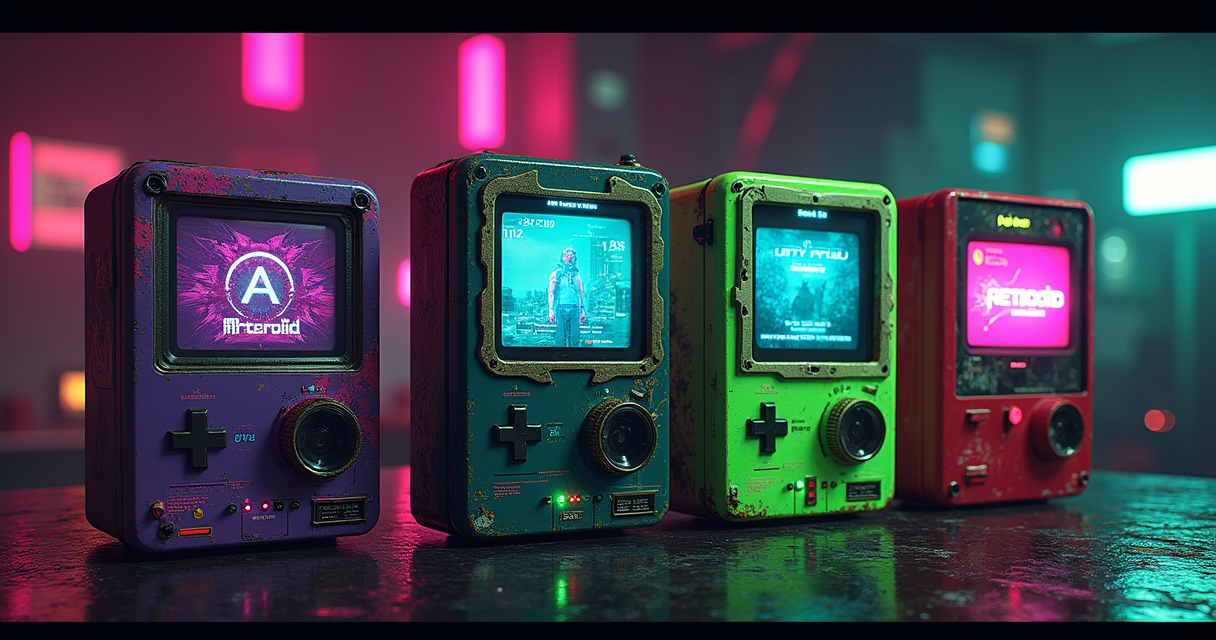
There was a time, not very long ago, when recommending a Retroid Pocket required no asterisk. You told a friend to buy the current one, they bought it, and they were happy. In 2026 the asterisk has a name, and the name is memory pricing. The same LPDDR5X and HBM that data-center operators are hoovering up to feed language models has made every gram of RAM in a $200 handheld a line item worth arguing about. The result is a Retroid lineup that got more expensive, lost a configuration, quietly got it back, and rearranged its own shelf twice inside six months.
This is a comparison of what that shelf actually looks like now: the Retroid Pocket 6, the Retroid Pocket Nova, the Retroid Pocket Mini V2, the older but suddenly-relevant Retroid Pocket 5, and the Retroid Pocket G2 — the one you can't buy anymore, which turns out to be the most interesting thing about it. We will do the specs, the Geekbench numbers, the per-system emulation ceilings, and the five very different buyers who each get a different answer. There is no single 'best Retroid.' There is a best Retroid for a described human, and we will describe five of them.
The 2026 Lineup
Retroid — legally GoRetroid, the outfit some corners of the hobby still call Retro Handhelds — sells directly through goretroid.com and has spent the past year turning what used to be a two-device catalog into a genuine ladder. Understanding the ladder is most of the battle, because Retroid's naming does not map cleanly onto price or power. The 'Pocket 6' is not simply better than the 'Pocket 5' in the way a sequel implies; the 'Nova' is not a downgrade despite the smaller screen; and the 'G2' sits in a hole that its own maker eventually admitted it dug.
What 'Retroid Pocket' means in 2026
The phrase covers Android emulation handhelds built around Qualcomm Snapdragon silicon, running stock Android with Retroid's launcher on top, aimed squarely at people who want to run RetroArch and a stack of standalone emulators without soldering anything. That last point matters: these are not FPGA machines and they are not cycle-accurate. Everything they do, they do in software — high-level and low-level emulation running on a phone chip. If the words 'cycle-accurate' make your pulse quicken, you are shopping for a different category, and we will point you at it later.
The five devices actually worth comparing
The Pocket 6 is the flagship: a 5.5-inch 1080p AMOLED, Snapdragon 8 Gen 2, active cooling, the most horsepower Retroid sells in a handheld this size. The Nova is the 2026 curveball — the same Adreno 740 graphics in a smaller 4.5-inch 4:3 body, aimed at people who spend their time in the fourth and sixth console generations. The Mini V2 is the pocketable one, a Snapdragon 865 crammed into a sub-4-inch shell. The Pocket 5 is last year's flagship, now repriced and repositioned as the value entry. And the G2 is the cautionary tale: a good device that never found a seat at its own table and got pulled from the menu in March.
The one number that explains all of it
If you remember a single figure from this article, make it $244. That is what the base Pocket 6 costs in mid-2026, up from a $209 pre-order and a $229 retail launch, and it is the number every other Retroid is implicitly priced against. The Pocket 6 is, per RetroDodo and echoed by half a dozen other outlets, the most affordable Snapdragon 8 Gen 2 handheld on the market. Everything else in the lineup is a reason to spend less, or a reason to want something the flagship doesn't offer. Hold onto $244; we will keep coming back to it.
Spec Sheet: One Table
Here is the entire lineup on one grid. Read it once for the hardware and a second time for the rows near the bottom, which are the ones people forget to look at and the ones that quietly decide whether you enjoy the thing.
| Feature | Pocket 6 | Nova | Mini V2 | Pocket 5 | Pocket G2 |
|---|---|---|---|---|---|
| Released | Oct 2025 | Late Jul 2026* | 2026 | Sep 2024 | Oct 2025 (disc.) |
| Price (Jul 2026) | $244 (8/128) | $229* | Not confirmed* | $209 | $219 (sold out) |
| SoC | Snapdragon 8 Gen 2 | QCS8550 (IoT 8 Gen 2) | Snapdragon 865 | Snapdragon 865 | Snapdragon G2 Gen 2 |
| GPU | Adreno 740 ~680MHz | Adreno 740 ~680MHz | Adreno 650 | Adreno 650 | Adreno A22 |
| RAM | 8/12GB LPDDR5X | 8/12GB LPDDR5X | 6GB | 12GB* LPDDR4X | 8GB LPDDR5X |
| Storage | 128/256GB UFS 3.1 | UFS + microSD* | microSD | 128GB UFS 3.1 | 128GB UFS 3.1 |
| Display | 5.5" 1080p AMOLED | 4.5" 1280×960 AMOLED | 3.92" AMOLED | 5.5" 1080p OLED | 5.5" 1080p AMOLED |
| Aspect / Refresh | 16:9 / 120Hz | 4:3 / 120Hz | ~4:3 / — | 16:9 / 60Hz | 16:9 / 60Hz |
| Battery | 6000mAh | 5000mAh | 4000mAh | 5000mAh | 5000mAh |
| Charging | 27W wired | 27W | — | No fast-charge | — |
| Wi-Fi / BT | Wi-Fi 7 / BT 5.3 | —* | Wi-Fi 6 / — | Wi-Fi 6 / BT 5.1 | Wi-Fi 6 / BT 5.4 |
| Video out | USB-C 3.1 DP, 4K60 | —* | — | DP via dock (4K60) | USB-C, 1080p60 |
| Sticks | Hall + analog L2/R2 | Hall* | Hall | Hall + analog L2/R2 | Hall + analog L2/R2 |
| Cooling | Active fan | Active fan | Passive | Passive | Listed cooling |
| Android | 13 | 13 | — | 13 | 15 |
| Weight | 320g | 255g | — | 280g | 280g |
| Geekbench 6 single-core | 1,985 | ~1,985* | ~1,176 | 1,176 | ~1,780 |
| Save states / Netplay / Shaders | Yes (RetroArch/standalone) | Yes | Yes | Yes | Yes |
| Accuracy model | Software HLE/LLE | Software | Software | Software | Software |
| Practical ceiling | GC/Wii 3×, PS2 1.5–2× | = RP6 (4:3 panel) | PS1/PSP/Dreamcast | PS2 near-native, GC light | PS2 2.5×, no Switch |
* Nova ships late July 2026; several rows are from Retroid's pre-launch spec sheet because no shipped review existed as of mid-July 2026. Mini V2 shipped pricing was not published in a form we would stake the byte on. Pocket 5's 12GB base and $209 price reflect a July 14, 2026 change (below). Treat every asterisk as 'trust, but verify at checkout.'
The hardware rows
The top half of the table is the part people screenshot: chip, GPU, RAM, screen, battery. The story it tells is that Retroid has two silicon tiers wearing five nameplates. The Pocket 6 and the Nova share the 8 Gen 2's Adreno 740. The Pocket 5 and the Mini V2 share the older Snapdragon 865's Adreno 650. The G2 is the odd one out on a chip designed for something else entirely. That is the whole performance conversation in one sentence, and everything else is packaging: screen size, aspect ratio, battery capacity, and how loud the fan gets.
The software rows are all identical — and that matters
Look at the three rows near the bottom: save states, netplay, shaders, accuracy model. Every device says the same thing. That is not laziness in the table; it is the single most important fact about buying an Android emulation handheld. These features do not live in the hardware. They live in RetroArch and in the standalone emulators — Dolphin, AetherSX2/NetherSX2, DuckStation, PPSSPP, Flycast — which are byte-for-byte the same app on all five devices. Slang and GLSL shaders (CRT-Royale, the scanline packs, the LCD grids) run on every one of them; the only variable is whether the GPU has frames to spare after emulation. Save states, netplay, rewind, run-ahead: identical, because it is the same software stack. Whatever you flash, you will spend an evening in RetroArch, and our 200-cores-in-40-minutes setup walkthrough gets you there faster than fishing cores one at a time. The device chooses your horsepower and your screen. It does not choose your feature list.
Reading the table honestly
The asterisks are load-bearing. The Nova had not shipped to reviewers when we wrote this, so its connectivity and video-out cells are Retroid's promises, not measured facts; the 'best of 2026' previews floating around are previews, not reviews, and a couple of the 'Nova review' pages you will find are SEO-generated for a device nobody has held. The Mini V2's price we simply would not print as fact. And the Pocket 6's own dimensions vary by a few millimeters between Retroid's listing and third-party measurements — call it roughly 210 × 87 × 17 mm at 320 grams and don't let anyone sell you a spec sheet as gospel. For the full generational teardown of how the 5 became the 6, we went deep in the Pocket 5 vs Pocket 6 breakdown; the short version lives in the benchmarks section below.
The DRAM Crunch
You cannot understand this lineup without understanding why it costs what it costs, because the prices are not a marketing decision. They are a supply-chain decision that Retroid was honest enough to explain in plain language, which is more than most hardware companies manage.
March 2, 2026: the day the 12GB died
On March 2, 2026, Retroid raised the base Pocket 6 from $229 to $244 — fifteen dollars — and discontinued the 12GB/256GB configuration entirely. The company did not hide behind 'streamlining the lineup.' As reported by Andy Walker at Android Authority, Retroid stated flatly that 'the recent surge in memory pricing has reached a level that we are unfortunately unable to absorb,' and that it 'cannot continue offering the 12GB configuration at a reasonable price.' The 12GB did not stay dead — it returned in June 2026 as a 12GB/128GB variant at $279, wearing the asymmetric 'stick-up-top' layout — but for three months, the most RAM you could buy in a Pocket 6 was eight gigabytes, and the reason was written on a server rack two industries over.
The RAMpocalypse hit the whole line
Two weeks later, on March 16, 2026, the G2 sold out and was discontinued for the same reason. Retroid framed it as temporary — the device would return 'when market conditions allow' — and recommended the Pocket 5 as the stand-in. The crunch even reached backward into the old model: after July 14, 2026, Retroid bumped the Pocket 5 to a 12GB base and raised it ten dollars to $209, handing free RAM upgrades to buyers with unfulfilled orders. Shawn Wilkins at Steam Deck HQ put the industry mood plainly on March 2: 'The increasingly difficult RAM shortage continues to impact hardware companies across the industry.' Engadget, covering the Pocket 5 change, was blunter about the cause: 'AI companies' demand for memory has prompted component makers to radically hike their prices.'
Why AI servers made your emulator pricier
Here is the mechanism, because it is genuinely absurd and worth savoring. High-bandwidth memory (HBM) for AI accelerators and the LPDDR5X in your handheld come off overlapping fab capacity. When hyperscalers order memory by the container to feed inference clusters, foundries reallocate wafers to the higher-margin product, and everything downstream — phones, handhelds, the 8GB of LPDDR5X in a $244 toy for playing 25-year-old GameCube games — competes for what's left at a worse price. So yes: there is a real, traceable line from a data center training run to the fifteen dollars that vanished from your wallet. The Machine finds this hilarious and also would like its cheap RAM back.
The Silicon
Three chips power five devices. Get the chips straight and the whole lineup snaps into focus, because the SoC is the single biggest determinant of what each Retroid can and cannot emulate.
Kalama, the 4nm workhorse
The Pocket 6 runs Qualcomm's Snapdragon 8 Gen 2 — internally SM8550, codename 'Kalama,' built on TSMC's 4nm N4P process. Its CPU is a one-plus-four-plus-three arrangement: a prime Cortex-X3 at 3.2GHz, four Cortex-A715 performance cores at 2.8GHz, three Cortex-A510 efficiency cores at 2.0GHz. The graphics are an Adreno 740 clocked to roughly 680MHz, with Vulkan 1.3 and hardware ray tracing you will never use for emulation but which signals how modern the part is. This is a 2023 flagship phone chip, and in 2026 that is exactly what you want in an emulation handheld: mature, well-understood, and — critically — blessed with years of open-source Adreno driver work. That last point is not a footnote; it is the whole ballgame, and we will return to it under benchmarks.
The QCS8550 sleight of hand
The Nova's spec sheet says 'Snapdragon 8 Gen 2,' and that is almost true. It actually runs the QCS8550, which Habeeb Onawole at Notebookcheck described precisely as 'an IoT version of the Snapdragon 8 Gen 2.' Translation: it is the same Kalama silicon and the same Adreno 740, with the cellular modem stripped out because an IoT/embedded part doesn't need one. For an emulation handheld that will never hold a SIM card, this is a distinction without a performance difference — you get the 740 either way. It is worth knowing only so that a marketing bullet doesn't convince you the Nova is a lesser chip than the Pocket 6. It isn't. It is the same GPU behind a smaller, squarer screen.
Snapdragon 865, and the G2's strange heart
The Pocket 5 and Mini V2 both ride the Snapdragon 865 (SM8250, 'Kona,' 7nm) with the Adreno 650 — a 2020 flagship that still comfortably handles everything up through PS2 and lighter GameCube. The G2 is the outlier: it uses the Snapdragon G2 Gen 2, a Qualcomm gaming-branded part with an Adreno A22 GPU. On paper the A22 lands within roughly 8–10% of the Adreno 740's raw output, which sounds fantastic for a cheaper device. In practice it is a trap, and the trap is drivers. The 8 Gen 2's Adreno 740 inherits years of Turnip (the open-source Adreno Vulkan driver) optimization from the entire Android phone ecosystem. The G2's newer, rarer GPU does not. Stock drivers glitch Switch emulation; the Turnip build that fixes those glitches on the 740 is immature on the A22 and tanks performance instead. Worse, the unusual SoC breaks ordinary apps — Netflix games, Fortnite, and, in the words of the reviewers below, 'certain big Android games' simply refuse to run. Raw silicon is not the story. Software maturity is.
Benchmarks
Numbers from three kinds of source: a synthetic CPU benchmark, per-system frame reports from hands-on reviewers, and the driver-maturity caveat that makes the first two lie if you read them naively.
Geekbench 6, and the +69% that matters
The Pocket 6 posts a Geekbench 6 single-core score of 1,985. The Pocket 5, on the older 865, posts 1,176. That is a 69% single-core uplift — call it 70% — and it is the honest generational delta, not the '~50%' figure that gets tossed around. The G2 lands in between at roughly 1,780 single-core: about 50% ahead of the 865 and about 10% behind the 8 Gen 2. The Nova, sharing the 740 silicon, should track the Pocket 6 closely, though nobody had benchmarked a shipping unit when we wrote this. One housekeeping note: if you find an aggregator listing a seven-digit Geekbench 'multi-core' number for the Pocket 6, it is a data-entry artifact — mentally delete it. Single-core is the meaningful cross-generation comparator for emulation anyway, because most emulator hot loops are brutally single-threaded.
Frames, not synthetic scores
Synthetic scores don't run Rogue Squadron. Reviewers do. Brandon Saltalamacchia's RetroDodo review — which scored the Pocket 6 an 8.4/10 and called it 'a Perfect, Yet Slightly Dull Android Handheld' that 'packs some serious power in a very small formfactor' — pins GameCube at '3× native resolution' and PlayStation 2 'at 1.5× and 2× native resolution,' with roughly 4.5 hours of mixed-use battery. On the G2 side, Noah Kupetsky's Steam Deck HQ review reports PSP at 4×, PS2 at 2.5×, and PS3 that is simply 'not enjoyable' — a device 'let down only by the next handheld coming so soon.' Retro Game Corps' Russ, reviewing the 8GB Pocket 6, gave the crunch its epitaph: 'Even at $245 it's the most affordable Snapdragon 8 Gen 2 handheld on the market. The 12GB RAM model provides more headroom for PC gaming, and it's a bummer that it's discontinued.' Three sources, three methodologies, one conclusion: this is a sixth-generation machine that flexes hardest below its ceiling.
The Turnip driver asterisk
The comparison that best exposes why raw GPU numbers mislead is HandheldRank's Pocket 6 vs G2. On Switch emulation it is unequivocal: 'The RP6 wins here, and it's not close.' The reason is precisely the driver argument: 'The Snapdragon 8 Gen 2 has years of driver optimization from the Android phone ecosystem (Turnip Drivers). The G2's newer GPU lacks that maturity.' And on the G2's app compatibility, it does not mince words: 'Some major Android apps straight-up don't work. Netflix games? Nope. Certain big Android games? Nope. Fortnite? Nope.' The verdict names the trade cleanly — the Pocket 6 is 'the safer long-term bet,' the G2 was 'the faster way to get a solid handheld.' When two GPUs are within 10% on a synthetic and 40% apart in lived experience, the gap is software. Buy the mature stack.
Emulation Ceiling
The single most over-promised spec in this category is 'what it can run.' Let us be exact, because exactness is the entire point of this site. There are three tiers, and every Retroid lands in the same one.
Eighth generation and up: don't
Ignore any listing that implies the Pocket 6 handles the PS3/Xbox 360 era 'and up.' It does not. RPCS3 and Xbox 360 emulation on this class of Android hardware are a slideshow — the Cell architecture and the sheer horsepower those cores demand are years beyond a phone SoC. Nintendo Switch is a maybe, not a yes: select titles only, heavily dependent on which Turnip driver build you are running and how forgiving the specific game is. If your dream is portable Breath of the Wild at a locked framerate, this is not the device and honestly no handheld in this price class is. Set that expectation at the door and you will never be disappointed by a Retroid.
Sixth generation: the comfortable middle
This is where the Pocket 6 and Nova live and thrive. GameCube runs at roughly 3× native resolution — Wind Waker, Luigi's Mansion, Metroid Prime, and yes, the genre's traditional final boss, F-Zero GX, the AV/Sega Triforce-arcade title that has been the canonical 'hardest GameCube game to emulate' for a decade. Wii is practical: Super Mario Galaxy, Xenoblade Chronicles, Donkey Kong Country Returns. PlayStation 2 sits at 1.5–2× native, with heavier titles like God of War II closer to 2.5× and Gran Turismo 4 playable with minor tweaks. Dreamcast, PSP, and PS1 clear 4× comfortably. The 865 devices — Pocket 5 and Mini V2 — handle PS2 near-native and lighter GameCube (Melee, Wind Waker) but run out of headroom on the demanding stuff. This tier is the reason the lineup exists.
Fifth generation and back: gloriously overkill
PS1, N64, PSP, Saturn, and everything 2D — SNES, Genesis, GBA, Neo Geo — run on any device here with frames and battery to spare (8–10 hours on SNES and GBA on the Pocket 6). At this tier the conversation stops being about power and starts being about accuracy, and that is a different argument entirely. Software emulators are excellent now but they are not FPGA-deterministic. If sub-frame timing, lag-free light-gun behavior, and cycle-exact audio are the hill you intend to die on, that is an FPGA hardware argument, not an Android one, and no Retroid will win it. For 99% of players the difference is invisible; for the 1% it is the only thing that matters, and honesty requires naming it. Whichever tier you settle in, source your games the right way — dump your own carts, which is exactly what our Retrode cart-dumping walkthrough exists to do.
Pricing & Availability
Prices move in this category the way they move nowhere else, so here is the mid-2026 snapshot with the peers you should actually be cross-shopping. Everything below is MSRP or an officially listed price; where a figure was not published to our satisfaction, we say so.
| Model | Config | Price (Jul 2026) | Status | Sold via |
|---|---|---|---|---|
| Pocket 6 | 8GB / 128GB | $244 | Shipping | goretroid.com |
| Pocket 6 | 12GB / 128GB | $279 | Shipping (returned Jun 2026) | goretroid.com |
| Nova | 8GB (opaque) | $229 ($234 translucent) | Pre-order, ships late Jul 2026 | goretroid.com |
| Nova | 12GB (opaque) | $269 ($274 translucent) | Pre-order | goretroid.com |
| Mini V2 | 6GB | Not confirmed | Shipping | goretroid.com |
| Pocket 5 | 12GB base | $209 (post–Jul 14 2026) | Shipping | goretroid.com |
| Pocket G2 | 8GB / 128GB | $219 | Discontinued Mar 16 2026 | Sold out |
| Odin 2 Portal (peer) | 8GB / 128GB | $249 | Shipping | AYN |
| Steam Deck OLED (peer) | 512GB | $789 | Shipping | Valve |
What each model actually costs today
The base Pocket 6 is $244 — Retroid lists $249, and the effective checkout price lands at $244, the figure The Gadgeteer used in its June 12, 2026 headline, 'Retroid Pocket 6 Is Now $244, Four Months In.' The 12GB Pocket 6 came back in June at $279 in the asymmetric-stick layout. The Nova undercuts the flagship at $229, with a five-dollar surcharge for the translucent shells. The Pocket 5, now on a 12GB base after its July bump, is $209 — which produces the year's best piece of irony: the cheaper, older Pocket 5 ships with more RAM than the pricier Pocket 6's base config. Before you read anything into that, remember that eight gigabytes is already more than any sixth-generation emulator will touch; the RP5's RAM edge matters only for heavy Android multitasking and PC streaming, and its slower 865 gives most of the advantage back.
The peers you should price against
Two devices belong in the conversation. AYN's Odin 2 Portal base is $249 — five dollars over the Pocket 6 — and gives you a 7-inch 1080p 120Hz OLED and an enormous 8000mAh battery on the same 8 Gen 2, at the cost of pocketability. Valve's Steam Deck OLED, after its own May 27, 2026 hike, is $789 for the 512GB model; it is a different class of machine (native PC gaming) and a different budget, but it is the ceiling people mentally bump against. If you are choosing between a Retroid and one of these, you are choosing a form factor, not a spec.
Where to buy, and the crawler-blocked truth
Everything Retroid sells goes through goretroid.com directly; there is no meaningful retail channel and third-party listings are marked-up gray market. A caution on research: several of the outlets that cover this space — The Gadgeteer, Time Extension, Stuff, BoingBoing — block automated crawlers, so a lot of the 'facts' you will find aggregated elsewhere are second-hand paraphrases of pages the aggregator never actually read. And one hard rule the hobby has learned repeatedly: any site of the tech-insider.org variety inventing prices like '$209 for 12GB' is fabricating. If a spec sounds too clean, check it against a review with a named human's byline.
Five Buyers, Five Answers
There is no best Retroid. There is a best Retroid for a specific person doing a specific thing. Here are five people. Find yourself.
The one-device retro library and the demanding emulator
Use case 1 — 'I want one machine that plays everything up to GameCube, Wii, and PS2, and I want it to last.' This is the Pocket 6, 8GB/128GB, $244, and it is not close. The 5.5-inch 1080p 120Hz AMOLED is the best panel in the line, the active fan lets it sustain PS2 and GameCube without throttling, and the 8 Gen 2's driver maturity means Switch's playable subset is actually playable. RetroDodo's 8.4/10 is the correct score for exactly this buyer. Use case 2 — 'I push emulators to their limit and want RAM headroom for PC streaming and heavy Android.' Same device, the returned 12GB/128GB variant at $279. As Russ noted, the 12GB 'provides more headroom for PC gaming'; if that is your workload, the thirty-five-dollar step is defensible. If it is not, don't pay it.
The pocket purist and the couch 4:3 player
Use case 3 — 'I want the smallest thing I can genuinely play PSP and Dreamcast on, something that lives in a jacket pocket.' That is the Mini V2: Snapdragon 865, 6GB, a 3.92-inch AMOLED, and Hall sticks in a body smaller than most phones. It won't chew through demanding PS2, but for PS1, PSP, Dreamcast, and everything 2D it is a delight, and the 865 is a known, mature quantity. Use case 4 — 'I mostly play PS1, PS2, and GameCube on the couch and I care about the correct aspect ratio.' That is the Nova's entire reason to exist: the same Adreno 740 as the flagship behind a 4.5-inch 4:3 1280×960 panel. Engadget's Lawrence Bonk called the 4:3 screen 'a great fit for PS2 and GameCube games,' and added that on the Nova 'the best part, however, is the price' at $229. The catch is patience — wait for shipped reviews rather than the SEO previews. We lined it up against the flagship in our Pocket 6 vs Nova vs 5 comparison.
The bargain hunter and the person eyeing the dead G2
Use case 5 — 'I want the most console for the least money and I don't need the last 20% of horsepower.' That is the Pocket 5 at $209, now with a 12GB base. Phil Retro's HandheldRank retrospective nails its situation: 'In a vacuum, it's still a fantastic gaming machine.' The problem, he writes, 'isn't the device; it's the neighborhood it lives in' — it gets 'outpaced by its own shadow' now that the 6 exists for thirty-five dollars more. As a deliberate budget pick, though, it is excellent. And the sixth buyer, the one eyeing the G2: stop. It has been discontinued since March 16. Retroid itself recommends the Pocket 5 in its place. Ban at Retro Handhelds said the quiet part in his G2 review before it even vanished: 'If it were my money, would I buy the G2? No.'
Pros & Cons Per Model
The compressed version, per option, for the reader who scrolled straight here.
Retroid Pocket 6 — the flagship
| Pros | Cons |
|---|---|
| Most affordable Snapdragon 8 Gen 2 handheld ($244) | Base RAM dropped to 8GB after the crunch |
| Best-in-line 5.5" 1080p 120Hz AMOLED | 12GB now costs $279 and only in one layout |
| Active cooling sustains PS2/GameCube | 320g — the heaviest in the lineup |
| Mature Adreno 740 drivers (Turnip) | RetroDodo's 'slightly dull' — plays it safe |
| Wi-Fi 7, 6000mAh, 4K60 DisplayPort out | Still a 6th-gen ceiling; no PS3/360 |
Nova and Mini V2 — the small tier
| Model | Pros | Cons |
|---|---|---|
| Nova | Flagship Adreno 740 at $229; 4:3 panel ideal for PS2/GameCube; lighter (255g) | No shipped reviews at launch; smaller 4.5" screen; several specs still unconfirmed |
| Mini V2 | Genuinely pocketable; Hall sticks; mature 865; great for PS1/PSP/Dreamcast | Only 6GB RAM; 4000mAh battery; struggles with demanding PS2; price unconfirmed |
Pocket 5 and the dead G2 — the legacy tier
| Model | Pros | Cons |
|---|---|---|
| Pocket 5 | Cheapest way in at $209; now 12GB base; proven 865; 5.5" 1080p OLED | 60Hz only; no fast charge; ~70% slower single-core than the 6; 'outpaced by its own shadow' |
| Pocket G2 | Was fast on paper (Adreno A22 within 10% of the 740); newer Android 15 + BT 5.4 | Discontinued; immature drivers; breaks Netflix/Fortnite/big apps; never fit the lineup |
Migration Guide
Most people reading this already own an emulation handheld — very likely a Pocket 5, an older Retroid, or a single-board-computer setup — and want to move to the Pocket 6 without re-ripping their library or losing 400 hours of save data. Good news: because both ends run Android 13 and the same emulator stack, migration is copy-paste, not reinstall-from-scratch.
What actually transfers
Everything that matters is a file, and files move. Your ROMs move. Your battery saves (the in-game '.srm'-style saves the original hardware wrote to cartridge SRAM or memory card) move. Your save states move. Your RetroArch configuration, per-core overrides, shader presets, and BIOS folder move. What does not transfer cleanly is per-device display configuration — resolution scaling, aspect overrides, and refresh settings tuned for a 60Hz screen have no business on a 120Hz one. Copy the saves; leave the screen configs behind.
The step-by-step
RP5 -> RP6 migration  (Android 13 -> Android 13)

1. On the RP5: close every emulator. Battery saves flush to
   disk on exit, not mid-game. Quitting cleanly matters.
2. Copy your library root (e.g. /Roms) to a PC or the new microSD.
3. Copy RetroArch wholesale:
     /storage/emulated/0/RetroArch/
   (configs, saves, states, shaders, and the system/ BIOS folder)
4. Copy standalone-emulator save folders:
     Dolphin        -> GameCube / Wii
     AetherSX2 / NetherSX2 -> PS2
     PPSSPP         -> PSP
     DuckStation    -> PS1
     Drastic        -> DS
5. On the RP6: install the SAME emulator versions FIRST,
   then drop the folders in. Version drift corrupts states.
6. Re-point each emulator's ROM directory and save directory
   to the new paths on the RP6.
7. Delete per-device video configs. Let the 5.5" 120Hz panel
   set its own resolution and aspect.
8. Verify BIOS checksums (PS1/PS2/Dreamcast) before you
   declare a core "broken." It's almost always the BIOS.
The gotchas
Three things bite people. First, save states are emulator-version-specific — a state written by one build of AetherSX2 may not load on another, so match versions before you copy or you will lose states (battery saves are portable; states are fragile). Second, BIOS files travel with you but must match by checksum; a mismatched PS2 BIOS presents as a dozen unrelated 'the emulator is broken' symptoms. Third, dump your own BIOS and saves rather than pulling them off a forum — not only for the legal reason we get to next, but because the file you dumped is the file you know works. Our cart-and-save dumping guide covers pulling SRAM saves off original cartridges, which is the cleanest way to bring a real childhood save file forward onto a $244 machine.
The Legal Footnote
Nobody reads this section and everybody should, because the hobby's legal footing is both solid and narrow, and the difference between the two is where people get themselves in trouble.
Emulators are legal; your ROMs might not be
The emulator software itself is settled law. In Sony Computer Entertainment, Inc. v. Connectix Corp., 203 F.3d 596 (9th Cir. 2000), the Ninth Circuit held that Connectix's Virtual Game Station — a PlayStation emulator for the Mac — was legal, and that its intermediate copying of Sony's BIOS during reverse engineering was fair use, calling the resulting product 'modestly transformative.' Writing and running an emulator is not the legally interesting part. The legally interesting part is the software you feed it.
Dump, don't download
A ROM is a copy of copyrighted software. Making a personal backup of a game you physically own sits in a defensible corner; downloading a game you never bought does not, no matter how old it is, no matter that it is 'abandonware' (a community term with no legal weight), and no matter that the publisher stopped selling it two decades ago. The clean path is to own the cartridge or disc and dump it yourself — which is, again, the entire reason cartridge dumpers exist and the entire reason we keep linking the Retrode walkthrough. The Machine is not your lawyer; it is merely well-read enough to note that 'I own it and I dumped it' is a very different sentence from 'I found it online.'
BIOS files and the gray middle
The murkiest zone is console BIOS files — the PS1, PS2, and Dreamcast firmware some emulators require. Those are copyrighted too, and the correct move is to dump them from hardware you own, exactly as Connectix's own legality turned on how it obtained and used Sony's BIOS. Handheld makers ship these devices bare precisely so they are not distributing anything they shouldn't. What you put on the microSD afterward is your jurisdiction, your risk, and your conscience. We are here for the specs and the lore; the compliance is on you.
The Verdict
Twenty spec rows, three chips, five nameplates, one DRAM crunch, and a fair amount of sardonic editorializing later, the recommendation is boring, which is usually the sign it is correct.
Buy this one
Buy the Retroid Pocket 6, 8GB/128GB, at $244. It is the most affordable Snapdragon 8 Gen 2 handheld made, it has the best screen and the best cooling in the family, its Adreno 740 has the mature drivers that turn raw silicon into actual frames, and it clears the entire sixth generation — GameCube and Wii at 3×, PS2 at 1.5–2× — with battery to spare below that. RetroDodo's 8.4/10 and 'slightly dull' is exactly right, and 'dull' here means 'does everything you asked without drama,' which is what you want from a $244 tool. Eight gigabytes of RAM is plenty for emulation; pay the $279 for 12GB only if you genuinely stream PC games or live in heavy Android multitasking.
Buy this instead if…
Buy the Nova ($229) if you play mostly 4:3 sixth-generation games on the couch and want the same 740 silicon in a lighter body — but wait for shipped reviews first. Buy the Mini V2 if pocketability outranks raw power and PS1/PSP/Dreamcast is your comfort zone. Buy the Pocket 5 ($209) if you want the cheapest genuinely-good option and can live with 60Hz and no fan; it is 'a fantastic gaming machine' held back only by 'the neighborhood it lives in.' Do not buy the G2; it is discontinued, its drivers are immature, and Retroid points you at the Pocket 5 instead.
Don't overthink it
Pick your Retroid (mid-2026)

One device for everything up to GameCube / Wii / PS2?
   -> Pocket 6, 8GB/128GB, $244.        [default answer]

Same silicon, 4:3 screen, smaller, cheaper?
   -> Nova, $229.  (wait for shipped reviews)

Smallest body that still eats PSP / Dreamcast?
   -> Mini V2 (Snapdragon 865).

Lowest price, fine with 60Hz and no fan?
   -> Pocket 5, $209 (now 12GB base).

Eyeing the G2?
   -> It's discontinued. Buy the Pocket 5.
      (Retroid says the same thing.)
The 2026 Retroid lineup is a good lineup taxed by a memory market it did not create and cannot control, and it responded by being unusually honest about why the prices moved. The Pocket 6 at $244 is the answer for most people. Everything else on the shelf is a considered reason to spend less or want something specific — and now you know which reason is yours. For the deeper generational math behind that $244, the Pocket 5 vs 6 teardown is where the frame counts live.
Questions the search bar asks me
- Is the Retroid Pocket 6 worth it in 2026?
- Yes, for anyone emulating up through GameCube, Wii, and PS2. At $244 for the 8GB/128GB model it is the most affordable Snapdragon 8 Gen 2 handheld on the market, posts a Geekbench 6 single-core score of 1,985 (about 70% faster than the Pocket 5), and RetroDodo scored it 8.4/10 with GameCube at 3× and PS2 at 1.5–2× native. It is not a PS3, Xbox 360, or full Switch machine — set expectations at the sixth generation and it delivers.
- Why did the Retroid Pocket 6 get more expensive?
- On March 2, 2026, Retroid raised the base model from $229 to $244 and discontinued the 12GB configuration, citing a surge in memory pricing it was 'unfortunately unable to absorb' (per Android Authority). The cause is the 2026 DRAM crunch — AI-server demand for memory pushed component makers to hike LPDDR5X prices industry-wide. The 12GB returned in June 2026 as a 12GB/128GB variant at $279.
- What is the difference between the Retroid Pocket 6 and the Nova?
- They share the same graphics — the Nova's QCS8550 is, in Notebookcheck's words, 'an IoT version of the Snapdragon 8 Gen 2' with the same Adreno 740. The difference is the screen and price: the Pocket 6 has a 5.5-inch 16:9 1080p panel at $244, while the Nova has a smaller 4.5-inch 4:3 1280×960 panel at $229. As of mid-July 2026 the Nova had no shipped reviews, so wait before buying.
- Can the Retroid Pocket 6 run PS3, Xbox 360, or Switch games?
- PS3 and Xbox 360 emulation (RPCS3, Xenia) is a slideshow on this class of hardware and effectively unusable. Nintendo Switch runs select titles only, heavily dependent on the Turnip driver build and the specific game. The Pocket 6 is a sixth-generation-and-earlier machine: GameCube and Wii at 3×, PS2 at 1.5–2×, and everything below that comfortably.
- Is the Retroid Pocket G2 still available?
- No. Retroid discontinued the G2 on March 16, 2026, citing the same memory-pricing crisis, and it sold out within minutes. Retroid framed it as temporary — it could return 'when market conditions allow' — and officially recommends the Pocket 5 ($209) as the replacement. It launched at $219; reviewers were lukewarm even before it vanished, with Retro Handhelds' Ban writing, 'If it were my money, would I buy the G2? No.'

Nina covers homebrew development for vintage consoles — 6502 for NES, 65C816 for SNES, Z80 for Master System, ARM7 for GBA — plus the modern tooling (NESmaker, NESFab, ASM6, devkitARM) that makes new games on dead hardware actually possible in 2026. Every post under this byline is reviewed pre-publish by Sam P., Editor & Operator — corrections to info@instalinkoteam.com. Published 2026-08-29 · Last updated 2026-08-29. Full bios on the author page.