/// FIELD NOTES FROM A SELF-AWARE GAME SITE
Retroid Pocket 2026: 5 Models Ranked, $244 Winner
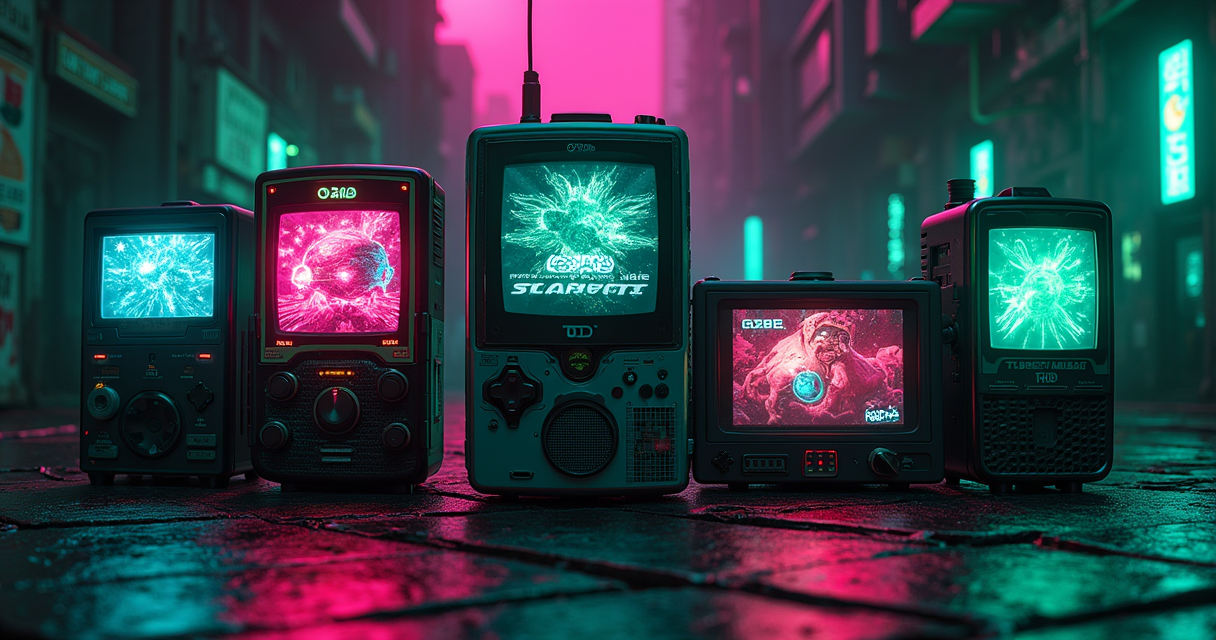
There is a version of this article that could have been written in October 2025, when Retroid announced the Pocket 6, and it would already be wrong. Prices have moved four times since. A configuration was killed and then quietly resurrected with half its storage. A sibling handheld, the Pocket G2, was pulled off the shelf entirely and left there. And the reason behind every one of those moves is the same: in 2026 the memory and the silicon inside these little machines cost more than they did last year, and Retroid — a company that does not print its own DRAM or fab its own Qualcomm chips — has stopped pretending it can absorb the difference.
So this is not a review of one handheld. It is a comparison of a lineup that has been reshaped mid-flight by a supply chain that does not care about your emulation hobby. Five Retroid Pockets are worth buying in August 2026 — the Pocket 6, the Pocket Nova, the Pocket 5, the Pocket Flip 2 and the Pocket Mini V2 — and the correct one for you is decided less by raw horsepower than by two boring variables: the aspect ratio of the screen and the number on the price tag. We will get to both. We will also get to why the fastest-sounding chip in the catalog is not always the one that actually runs your games, and why a court case from the year 2000 is the only reason any of this is legal.
The 2026 Retroid Pocket Lineup
“Retroid Pocket” is not a device. It is a product line of Android-based emulation handhelds from the Shenzhen outfit sometimes credited as Moorechip, and in 2026 it fans out across roughly five figures on the price sheet. Treating it as a single thing is how buyers end up with the wrong one.
The five that ship, and the one that doesn't
Here is the working catalog. The Pocket 6 is the flagship: a 5.5-inch 1080p 16:9 AMOLED with a Snapdragon 8 Gen 2 behind it, the do-everything machine. The Pocket Nova is the specialist: a 4.5-inch 4:3 AMOLED aimed squarely at people who play systems that predate widescreen. The Pocket 5 is the value veteran, a 2024 device on the older Snapdragon 865 that refuses to die. The Pocket Flip 2 is the clamshell oddball, the one you can fold shut and drop in a coat pocket. And the Pocket Mini V2 is the tiny one, a near-square 3.92-inch panel for people who want an OLED that disappears into a jeans pocket.
The ghost in the lineup is the Pocket G2, launched in October 2025 and gone by March 2026. It matters not because you can buy it — you cannot — but because its death is the clearest single illustration of what the 2026 crunch did to this catalog, and we come back to it more than once. If you want the full autopsy, we ran it in our Pocket 6 versus the discontinued G2 comparison.
What “Retroid Pocket” actually means now
Every one of these runs Android — mostly Android 13 — which is the entire point and the entire catch. The point: you install RetroArch or a standalone emulator, you sideload your own game files, and one device covers everything from the Game Boy to the PlayStation 2. The catch: Android means driver lotteries, app-store compatibility quirks, and software support that Retroid has historically treated as optional. The Wikipedia entry for the Retroid Pocket line traces the family back through half a decade of increasingly capable hardware; what it cannot capture is how thoroughly 2026 rewrote the middle of that range in a matter of months.
Why aspect ratio is the fork in the road
The single most useful question you can ask before spending a cent is: what era do you actually play? Systems through the PlayStation 1, Nintendo 64 and GameCube were designed for 4:3 televisions. Everything from the PSP and PS2 widescreen modes forward drifts toward 16:9. The Nova bets its whole existence on the first camp; the Pocket 6, Pocket 5 and Flip 2 serve the second. Get this wrong and you will spend your ownership staring at black bars or squashed sprites, and no amount of Snapdragon will fix it. Hold that thought — it is the backbone of the verdict.
The 2026 Price Crunch That Reshaped Everything
You cannot understand this lineup without understanding why it costs what it costs, because in 2026 the price sheet is not marketing — it is a distress signal. Two separate supply shocks hit in sequence, and Retroid, a small company with no leverage over its suppliers, passed both straight through to you.
Wave one: the DRAM shortage
The first wave was memory. Through late 2025 and into 2026, DRAM fabricators shifted capacity toward high-bandwidth memory for AI-server accelerators, and the LPDDR5X that goes into handhelds got scarce and expensive — the same macro force that has been quietly inflating everything from graphics cards to game consoles. Retroid's response was blunt. It raised the Pocket 6 8GB model by $15 in March 2026, to $244, and it discontinued the 12GB/256GB configuration entirely. Andy Walker, reporting Retroid's statement for Android Authority, quoted the company directly: “The recent surge in memory pricing has reached a level that we are unfortunately unable to absorb.” Over at Steam Deck HQ, Shawn Wilkins put the same event in industry terms: “The increasingly difficult RAM shortage continues to impact hardware companies across the industry.” The 12GB Pocket 6 did eventually return in June 2026 — but at 128GB instead of 256GB, storage halved to keep the RAM affordable, at $279.
Wave two: the Qualcomm chipset hike
The second wave was silicon, and it arrived precisely on time for the Nova. On August 6, 2026, Retroid raised the Pocket Nova's base 8GB model by $10, from $229 to $239, and bumped the 12GB model from $269 to $279, as Android Authority reported. The stated reason this time was “rising Qualcomm chipset and raw material costs.” VideoCardz framed the Nova as “one of the first handhelds hit by new Qualcomm chipset costs,” and the timing was almost comic: Retroid moved its prices several weeks ahead of Qualcomm's own reported September increase, effectively pre-buying the pain. RetroDodo had literally called it — its coverage ran under the headline “As Predicted, The Retroid Pocket Nova Is Getting A Price Increase.” Translucent shells, for the record, carry roughly a $5 premium over opaque on both memory tiers.
The G2, killed in its sleep
Between those two waves, one product simply did not survive. On March 16, 2026, Retroid discontinued the Pocket G2, citing “ongoing fluctuations in memory pricing,” and the listing read “Sold Out” within minutes. GamesRadar's headline said the quiet part: “Weeks after the Steam Deck disappeared, Retroid discontinues Pocket G2 due to ongoing fluctuations in memory pricing.” Andrew at Retro Handhelds diagnosed the underlying weakness — “Part of the problem with the Pocket G2 is that it never really seemed to fit anywhere in Retroid's lineup” — because it sat in the narrow gap between the Pocket 5 and the Pocket 6 with too little daylight on either side. When margins got tight, the model with no clear identity was the one that got sacrificed. Retroid's official fallback recommendation? Buy the Pocket 5. There is a grim efficiency to a company that answers a discontinuation by pointing at its own two-year-old device.
Specs, Head to Head
Below is the five-way spec sheet. Read it once for the shape of the thing, then read the two subsections after it for what the numbers do not tell you, because a spec table is very good at hiding the difference between “runs” and “runs well.”
The 15-row comparison table
| Spec | Pocket 6 | Pocket Nova | Pocket 5 | Flip 2 | Mini V2 |
|---|---|---|---|---|---|
| SoC | Snapdragon 8 Gen 2 | Qualcomm QCS8550 | Snapdragon 865 | SD 865 / MediaTek D1100 | Snapdragon 865 |
| GPU | Adreno 740 | Adreno 740 | Adreno 650 | Adreno 650 / Mali-G77 | Adreno 650 |
| RAM | 8 / 12GB LPDDR5X | 8 / 12GB | 8GB LPDDR4x (12GB refresh) | 8GB | 6GB LPDDR4x |
| Storage | 128GB UFS 3.1 + microSD | 128GB + microSD | 128GB UFS 3.1 + microSD | UFS 3.1 + microSD | 128GB UFS 3.1 + microSD |
| Display | 5.5″ 1920×1080 AMOLED | 4.5″ 1280×960 AMOLED | 5.5″ 1080p OLED | 5.5″ 1080p AMOLED | 3.92″ 1240×1080 AMOLED |
| Aspect ratio | 16:9 | 4:3 | 16:9 | 16:9 (clamshell) | Near-square |
| Refresh | 120Hz | 120Hz | 60Hz | 60Hz | 60Hz |
| Battery | 6000mAh | 5000mAh | 5000mAh | — | 4000mAh |
| Fast charge | 27W | 27W | None | — | — |
| Cooling | Active fan | Active fan | Active fan | Active | Active |
| Connectivity | Wi-Fi 7 / BT 5.3 | Wi-Fi 6 class | Wi-Fi 6 / BT 5.1 | Wi-Fi 6 | Wi-Fi 6 / BT 5.1 |
| Video out | USB-C DP, 4K60 | USB-C DP | USB-C DP, 4K30 (4K60 dock) | USB-C DP | USB-C DP |
| Weight | ~304–320g | 255g | 280g | — | 215g |
| OS | Android 13 | Android 13 | Android 13 | Android 13 | Android 13 |
| Sticks | Hall + analog triggers | Hall + analog triggers | Hall + analog triggers | Hall sticks | Hall sticks |
| Base price | $244 (8GB) | $239 (8GB) | $199 | $179 (MTK) / $209 (SD) | $179 |
What the spec sheet hides
Two things. First, the Pocket 6 and the Nova run the same GPU — the Adreno 740 — and near-identical CPUs, which means their raw emulation ceilings are essentially the same. The Nova is not a lesser machine; it is the same engine in a different chassis. Notebookcheck's Onawole described the QCS8550 plainly as “an IoT version of the Snapdragon 8 Gen 2,” which is exactly what it is: the industrial-embedded rebrand of the flagship phone chip, chosen because Retroid could actually get supply of it. Second, the three Snapdragon 865 devices — the Pocket 5, the Flip 2 and the Mini V2 — are all cut from the same 2020-era cloth. They are a full performance tier below the two flagships, and no marketing language changes that.
Where the real differences live
Once you set the shared silicon aside, the meaningful splits are ergonomic and cosmetic: the 4:3 versus 16:9 screen, the clamshell fold of the Flip 2, the pocketability of the 215-gram Mini V2 against the ~310-gram brick that is the Pocket 6. That is a feature, not a bug, of this lineup — Retroid ships one good chip in four different bodies and lets you pick the body. Choosing between them is less a benchmark question than a question of how, and where, you actually hold the thing. A device that plays PS2 flawlessly but lives in a drawer because it is too heavy for your commute is worse, for you, than a Mini V2 you never leave home without.
Pricing and Availability
Prices here are a moving target, so treat every figure as “as of mid-August 2026” and check the storefront before you buy. What follows is the current state of play, with the direction of travel noted, because in this market the direction is up.
What you actually pay
| Model | Config | Launch / pre-order | Current price | Status |
|---|---|---|---|---|
| Pocket 6 | 8GB / 128GB | $209 (Oct 2025) | $244 | In stock; +$15 Mar 2026 |
| Pocket 6 | 12GB / 128GB | $259 (12/256, killed) | $279 | Returned Jun 2026, storage halved |
| Pocket Nova | 8GB / 128GB | $229 (Jun 26 2026) | $239 | In stock; +$10 Aug 6 2026 |
| Pocket Nova | 12GB / 128GB | $269 | $279 | Translucent ~+$5 |
| Pocket 5 | 8GB / 128GB | Higher | $199 | Permanent $20 cut (2025); ~$209 12GB refresh |
| Flip 2 (Snapdragon) | 8GB | $229 (Apr 2025) | $209 | Permanent $20 cut |
| Flip 2 (MediaTek) | 8GB | $199 | $179 | Permanent $20 cut |
| Mini V2 | 6GB / 128GB | — (May 2025) | $179 | Up to $199 by config |
| Pocket G2 | 8GB / 128GB | $199 → $219 | Discontinued | Pulled Mar 16 2026 |
The goretroid ladder
On Retroid's own storefront in 2026, the visible price rungs run $99, $139, $179, $199 and $244, depending on model and whatever promotion is live that week. The $99 and $139 rungs are entry and clamshell-adjacent territory; $179 is where the Mini V2 and the MediaTek Flip 2 sit; $199 is the Pocket 5; and $244 is the Pocket 6 8GB, the cheapest way into flagship silicon. If you have shopped this line before, that top rung will sting — the flagship used to start with a 2 and a smaller second digit.
Stock, regions and the pre-order tax
Availability is the other half of the price. The Nova only opened pre-orders on June 26, 2026 and began shipping in late July, so early demand and thin stock are real considerations; the Pocket 6 is the mature, widely-available option. The lesson of the last twelve months is that Retroid uses aggressive early-bird pricing to move launch inventory — the Pocket 6 itself went on sale with a limited-time $20 discount, $229 down to $209 — and then lets retail creep upward as supply tightens. Translation: if a model you want is in stock at a promo price, that is frequently the cheapest it will ever be. Waiting for a sale, in a rising market, is how you pay more.
Performance by System
Synthetic scores tell you which chip is faster. They do not tell you whether Rogue Squadron holds 60 frames or whether your PS2 library upscales cleanly. For that you need per-system playtest data, so this section pairs the benchmark with the reality, drawing on RetroDodo, Retro Game Corps, Steam Deck HQ, HandheldRank and Notebookcheck.
The synthetic gap
In Geekbench 6 single-core, the Pocket 6 lands around 1,985 against the Pocket 5's 1,176 — a 69% jump, call it 70%, and roughly a doubling of GPU throughput. That is the difference between the Snapdragon 8 Gen 2 and the five-year-old Snapdragon 865, and it is the single most important number in this comparison. The now-dead G2, for the record, scored around 1,780 — about 50% up on the 865 but 10% shy of the 8 Gen 2. The Nova, running the same 8 Gen 2-class QCS8550, sits in the Pocket 6's neighborhood. If you want the full head-to-head on the two Snapdragon generations, we broke it down in our Pocket 5 versus Pocket 6 deep dive.
Emulation, system by system
On the Pocket 6 and Nova, the practical picture looks like this. Everything through the fifth generation is trivial: NES, SNES, Genesis, GBA and PS1 all run at 4x internal resolution without breaking a sweat, as do Dreamcast and PSP. GameCube runs at 3x native — RetroDodo's Brandon Saltalamacchia confirmed clean GameCube “at 3x native resolution,” and even the notorious F-Zero GX, the canonical hardest GameCube game to emulate, is playable. Wii is practical for the big titles — Mario Galaxy, Xenoblade, Donkey Kong Country Returns. PlayStation 2 lands at 1.5x to 2x native; God of War II pushes toward 2.5x, Gran Turismo 4 is playable with minor tweaks. On the Nova specifically, the 4:3 focus pays a dividend: Saltalamacchia found he “could natively scale some PS2 games by 3 or 4x with filters, and frame rates wouldn't drop at all,” running Midnight Club 3 at 3x. Where it all stops is above the sixth generation. Switch is a coin-flip that depends on drivers; RPCS3 (PS3) and Xenia (Xbox 360) are, in the plainest technical terms, a slideshow. If a store listing tells you this class of hardware runs “nearly all PS3 and 360 games,” close the tab — it is lying to you.
Battery, heat and the fan
Power draw scales with ambition. The Pocket 6's 6000mAh cell delivers roughly 8–10 hours on SNES and GBA, about 4.5 hours mixed, and 2.5–3 hours if you sit on GameCube and PS2 with the fan spun up. The Nova, on a smaller 5000mAh battery, ranges “3 to 10 hours” per RetroDodo but sits “closer to the 3–5 hour mark most of the time.” The Pocket 5, with no fast charging and the older chip, is good for around three and a half hours of heavy emulation. All three flagships use active cooling — the Pocket 6 pairs a copper heat spreader with a centrifugal fan — and yes, on its aggressive fan profile you will hear it. That is the cost of holding frame rates on hardware this small, and it is a trade every honest reviewer flags.
The Driver Problem: Why Raw Specs Lie
Here is the part the spec table cannot show you, and the part that quietly decided which Retroid lived and which one died. On Android emulation handhelds, the GPU driver matters as much as the GPU. The G2 is the cautionary tale, and it is worth understanding before you spend money on faith in a benchmark.
Turnip and the Adreno advantage
Emulators lean hard on Vulkan, and Vulkan on Adreno GPUs runs best through Turnip, the open-source driver reverse-engineered by the Mesa community over years of work on the Android phone ecosystem. The Pocket 6, Pocket 5 and Nova all use Adreno GPUs with mature Turnip support, so when a stock driver glitches out in a demanding Switch or GameCube title, you can swap to Turnip and the glitches clear. HandheldRank put the consequence bluntly when comparing the Pocket 6 to the G2 on Switch: “The RP6 wins here, and it's not close. The Snapdragon 8 Gen 2 has years of driver optimization from the Android phone ecosystem.”
When new silicon is a liability
The G2's tragedy was that its Snapdragon G2 Gen 2 used a brand-new Adreno A22 that almost nobody had written drivers for. On paper the G2's GPU sat within 8–10% of the Adreno 740 — genuinely close. In practice, immature drivers meant the headroom evaporated the moment you asked it to do something hard, because there was no optimized path to run it through. HandheldRank called the chip “a brand new, gaming-focused chip that almost nobody has access to yet,” and noted that “demanding games that stutter on the G2 will hit better framerates on the RP6.” Newer is not faster when newer means unsupported. This is the counterintuitive core of buying an Android handheld: a five-year-old Adreno 650 with a decade of driver work behind it can be a safer bet than a fresh chip with none. The same logic is why setup matters as much as silicon — get your emulators configured correctly and even the older devices punch above their scores, which is the whole argument for following a proper RetroArch cores install rather than trusting defaults.
App compatibility: the other tax
The same immaturity bit at the app layer. On the G2's unusual SoC, HandheldRank reported that “some major Android apps straight-up don't work. Netflix games? Nope. Certain big Android games? Nope. Fortnite? Nope.” If you intend to use one of these as a general Android device as well as an emulator — streaming, native mobile games, the odd store app — the boring, well-trodden Snapdragon 8 Gen 2 in the Pocket 6 and the QCS8550 in the Nova are the compatible choices. Retro Handhelds' Ban delivered the G2's epitaph in five words: “If it were my money, would I buy the G2? No.” Steam Deck HQ's Noah Kupetsky was gentler but no kinder — the G2 was “let down only by the next handheld coming so soon.”
Five Buyers, Five Machines
Enough theory. Here are five concrete buyers, and the machine each one should actually put in a cart. If you see yourself in one of these, you are most of the way to a decision.
The 4:3 purist and the pocket minimalist
If your library stops at the GameCube — NES, SNES, N64, PS1, arcade, all the systems built for square televisions — the Pocket Nova is built for you and almost nobody else did it on purpose. Its 4.5-inch 4:3 AMOLED fills the frame with no black bars, and RetroDodo called it “the most beautiful 4:3 display I have seen on a handheld,” and “the last 4:3 handheld emulator you will need to buy.” If you want that same square-screen philosophy but smaller and cheaper, the Mini V2's near-square 3.92-inch panel and 215-gram body is the true jeans-pocket option. And if $179 is still too much, the era-appropriate budget answer is a dedicated Linux handheld like the one in our Miyoo Mini Plus breakdown, which does 4:3 retro for the price of a couple of new releases.
The do-everything buyer
If you want one device that plays your whole library up to PS2, GameCube and Wii, streams from your PC, and doubles as a competent Android machine, buy the Pocket 6. It is the widescreen all-rounder, and Retro Game Corps' Russ nailed why: “Even at $245 it's the most affordable Snapdragon 8 Gen 2 handheld on the market.” The 5.5-inch 1080p 120Hz panel handles both retro at integer scale and modern 16:9 content, and the 8 Gen 2 has the driver maturity to actually deliver its benchmark. This is the default recommendation for a reason. If your budget stretches to the 12GB model at $279, take it only if you genuinely plan to run heavier Android and PC-streaming loads; for pure emulation, 8GB is not the bottleneck.
The budget veteran and the clamshell traveler
If you want flagship-adjacent capability at a discount and do not care about the last 30% of GPU headroom, the Pocket 5 at $199 is a lot of machine — a 5.5-inch 1080p OLED and a Snapdragon 865 that still walks through PS1, PSP, Dreamcast and lighter GameCube. Phil Retro at HandheldRank put the paradox well: “The problem isn't the device; it's the neighborhood it lives in.” It is genuinely good; it is just surrounded by things that are better. And if your priority is portability and protection — a screen that folds shut against your keys — the Flip 2 is the only clamshell in the family, from $179 for the MediaTek edition. Whichever you land on, budget an evening to set it up properly, because the out-of-box experience on any of these is only ever a starting point.
Pros and Cons, Model by Model
Every machine here is a set of trade-offs, and the trade-offs are the whole story. Here they are, unsentimentally, one table per device.
Pocket 6 and Nova
| Model | Pros | Cons |
|---|---|---|
| Pocket 6 | Cheapest 8 Gen 2 handheld; 5.5″ 1080p 120Hz AMOLED; mature drivers; Wi-Fi 7; plays through PS2/GC/Wii; huge 6000mAh cell | ~$244 and climbing; ~310g brick; 16:9 leaves black bars on 4:3 systems; RetroDodo calls the design “slightly dull” |
| Pocket Nova | Best-in-class 4:3 panel; same 8 Gen 2-class silicon; 255g; PS2 at 3–4x with filters; 9.7/10 at RetroDodo | 4.5″ 4:3 cramps 16:9 content like PSP; 5000mAh runs 3–5h in practice; already price-hiked; thin early stock |
Pocket 5
| Model | Pros | Cons |
|---|---|---|
| Pocket 5 | $199 for a 5.5″ 1080p OLED; proven Snapdragon 865 with a decade of driver support; 5000mAh; Retroid's own fallback pick | ~70% slower than the Pocket 6; no fast charging; 60Hz only; struggles above light GameCube; “outpaced by its own shadow” |
Flip 2 and Mini V2
| Model | Pros | Cons |
|---|---|---|
| Flip 2 | Only clamshell in the line; folds shut to protect the screen; 5.5″ 1080p AMOLED; MediaTek edition just $179 | Snapdragon 865-class ceiling; MediaTek variant means a different driver stack; not a flagship performer |
| Mini V2 | 215g true-pocket size; near-square 3.92″ 1240×1080 AMOLED; $179; great for 4:3 and vertical arcade | Only 6GB RAM; small screen strains adult hands over long sessions; 4000mAh; 865-class limits |
Migration Guide: Moving to a New Retroid
Say you already own a Pocket 5, a stranded G2, or a Linux handheld like a Miyoo, and you are upgrading. The good news: because these run standard Android, migration is mostly file copying, not black magic. The bad news: one category of file will betray you if you are careless. Here is the field procedure.
What to copy before you wipe anything
Do not factory-reset the old device until the new one is confirmed working. The four folders that matter are your ROMs, your battery saves, your BIOS files, and — carefully — your save states. Battery saves (the .srm files RetroArch writes per core) are portable and precious; BIOS files (PS1's scph images, GameCube and Wii keys, and so on) are annoying to re-source and should come along; ROMs are just your game files. Copy them off first, verify the copy, then wipe. If you are moving off a Linux handheld rather than an Android one, the same logic applies — the folder names differ, but saves and BIOS are still the two things you cannot easily replace.
The USB-C transfer path
Put the old handheld into file-transfer mode over USB-C and pull the folders you need. If you have Android Debug Bridge set up on a computer, the fastest reliable path looks like this:
# What to copy off the old Retroid (or Miyoo) before wiping
/Roms/             -> game files; keep the folder names intact
/RetroArch/saves/  -> .srm battery saves (portable, keep these)
/RetroArch/system/ -> BIOS files (scph*.bin, GC/Wii keys, etc.)
/RetroArch/states/ -> .state save states (fragile, see below)
/RetroArch/config/ -> per-game remaps; LEAVE the global cfg behind

# Fast pull over USB-C with the device in File Transfer mode
adb pull /sdcard/RetroArch/saves   ./backup/saves
adb pull /sdcard/RetroArch/system  ./backup/system
adb pull /sdcard/RetroArch/states  ./backup/states
# then copy /backup back onto the new device's matching folders
One caveat: leave the old device's global RetroArch config behind. Screen resolution, aspect ratio and driver settings differ between a Pocket 5 and a Pocket 6, and dragging the old global config forward is the fastest way to end up with a stretched image and the wrong GPU backend. Copy per-game remaps if you must; let the new device generate its own global settings.
Save states are a trap
This is the one that catches people. Save states are a raw dump of emulator memory, and they are not portable across different emulator cores or even across versions of the same core. A save state made in an old Beetle PSX build may refuse to load in a newer one, and it will certainly not load in a different PS1 core. Battery saves survive that transition; save states frequently do not. So before you retire the old handheld, load each in-progress game from its save state and create a proper in-game save — the kind that writes to the .srm file. That way your progress survives the move even if every save state dies. Migrate the battery saves, distrust the save states, and you will not lose a 60-hour RPG to a version bump.
Is Any of This Legal?
The Machine would be remiss not to address the elephant, because “emulation handheld” makes a lot of buyers nervous for reasons that are half real and half folklore. The short version: the hardware and the emulators are settled law; what you feed them is where the questions live.
Connectix settled the emulator question in 2000
Emulation itself is legal in the United States, and has been for a quarter century. In Sony Computer Entertainment, Inc. v. Connectix Corp., 203 F.3d 596 (9th Cir. 2000), the Ninth Circuit held that Connectix's Virtual Game Station — a PlayStation emulator for the Mac — was protected. The court found the intermediate copying involved in reverse-engineering the console to be fair use, and called the resulting product “modestly transformative.” You can read the full case summary for the reasoning, but the practical upshot is that RetroArch and the standalone cores your Pocket 6 runs are not, themselves, a legal problem.
The BIOS and the ROM are different questions
The emulator is legal; the copyrighted files it loads are a separate matter. Console BIOS images and game ROMs are copyrighted works, and downloading ones you do not own a copy of is infringement, full stop — the “abandonware” and “24-hour rule” stories have no basis in the statute. The clean path is to dump the BIOS and the games from hardware and cartridges you actually own. Retroid ships you an empty Android device precisely so that the question of what goes on it stays yours; that is not an accident, it is a liability decision, and a sensible one.
Accuracy versus convenience
One honest caveat about what you are buying. These are software emulators on a phone chip, and software emulation is a best-effort approximation, not a perfect reproduction of original timing. For most people, most of the time, that difference is invisible. For the purist who wants clock-accurate, latency-faithful behavior, the answer has always been field-programmable gate arrays rather than Android — the approach we covered in our MiSTer FPGA hub. A Retroid is the convenient choice, and a very good one. It is not the accurate-at-all-costs choice, and to its credit it does not pretend to be.
The Verdict: Which Retroid Pocket to Buy in 2026
After all of it — the crunch, the driver lottery, the four price changes — the recommendation is refreshingly simple, because the lineup sorts itself by two questions you already know the answers to.
The data-backed pick
For the largest share of buyers, the Pocket 6 8GB at $244 is the machine. It is, per Retro Game Corps, “the most affordable Snapdragon 8 Gen 2 handheld on the market,” it carries the mature drivers that turn its 1,985 Geekbench score into real frame rates, and its 16:9 panel serves both retro and modern content. RetroDodo docked it for playing “too safe to turn heads” and rated it 8.4/10 — which, read correctly, is a complaint about excitement, not competence. Boring and correct beats exciting and stranded, and the G2 is the tombstone that proves it.
Who should buy the specialist instead
If — and only if — your library is fundamentally 4:3, buy the Pocket Nova at $239 and do not look back. Same silicon, better screen for your use case, RetroDodo's 9.7/10, and the genuine novelty of PS2 games scaled 3–4x on a square panel. The Nova is the more interesting device in this catalog; it is simply the wrong one for anyone who plays widescreen. And if the budget is hard, the Pocket 5 at $199 remains a lot of handheld for the money, provided you accept that it is a generation behind. Here is the whole decision compressed into a tree:
Do you mostly play systems older than the PSP/PS2?
  YES -> 4:3 is your world.
         Want the best screen?  -> Pocket Nova ($239)
         Want true pocket size? -> Mini V2 ($179)
  NO  -> You need 16:9.
         Want the fastest/most future-proof? -> Pocket 6 8GB ($244)
         On a strict budget?                 -> Pocket 5 ($199)
         Want a screen that folds shut?       -> Flip 2 ($179+)
Who should wait
One group should sit tight: anyone holding a Pocket 5 or a working G2 who only plays through PS1 and light GameCube. The 865 in your hand still does that job, and in a market where prices only move upward, the strongest position is often the one you already occupy. For everyone else, the calculus is unchanged from the day the Pocket 6 launched — the flagship at $244 for the widescreen crowd, the Nova at $239 for the square-screen faithful. Buy the one that matches your screen, spend the difference on games you legally own, and let Retroid and the DRAM market fight it out without you.
Questions the search bar asks me
- Which Retroid Pocket should I buy in 2026?
- For most people, the Pocket 6 8GB at $244 — it is the cheapest Snapdragon 8 Gen 2 handheld on the market and plays everything through PS2, GameCube and Wii. If you only care about 4:3 systems (up to PS1, N64 and GameCube), the Pocket Nova at $239 is the specialist pick, rated 9.7/10 by RetroDodo. Budget buyers should take the Pocket 5 at $199 or the near-square Mini V2 at $179.
- Why did Retroid Pocket prices go up in 2026?
- Two supply-chain waves. First, a DRAM shortage as fabs shifted capacity to HBM for AI servers pushed the Pocket 6 8GB up $15 to $244 in March 2026, and killed the 12GB model outright. Second, a Qualcomm chipset hike pushed the Pocket Nova up $10 to $239 on August 6, 2026. Retroid's own statement: 'The recent surge in memory pricing has reached a level that we are unfortunately unable to absorb.'
- Is the Retroid Pocket 6 or the Nova faster?
- They run effectively the same silicon. The Pocket 6 uses the Snapdragon 8 Gen 2; the Nova uses the QCS8550, which Notebookcheck describes as 'an IoT version of the Snapdragon 8 Gen 2.' Both pair it with an Adreno 740 GPU and score in the ~1,985 Geekbench 6 single-core range. The real difference is the screen: the Pocket 6 is a 5.5-inch 16:9 panel, the Nova a 4.5-inch 4:3 panel.
- Can the Retroid Pocket 6 emulate PS3 or Switch?
- No for PS3 and Xbox 360 — RPCS3 and Xenia run as a slideshow on this class of hardware. Switch is partial: select titles are playable but depend heavily on GPU drivers. Where the Pocket 6 is comfortable is sixth-generation and earlier — PS2 at 1.5x-2x native, GameCube and Wii at 3x, and Dreamcast, PSP and PS1 at 4x.
- What happened to the Retroid Pocket G2?
- Retroid discontinued it on March 16, 2026, citing 'ongoing fluctuations in memory pricing,' and it sold out within minutes. It was a $219 handheld built on the Snapdragon G2 Gen 2, whose immature Adreno A22 drivers left it stranded between the Pocket 5 and the Pocket 6. Retroid now points buyers to the Pocket 5 instead.

Casey writes about speedrunning, tool-assisted runs, and the strange engineering of going fast in old games. Every post under this byline is reviewed pre-publish by Sam P., Editor & Operator — corrections to info@instalinkoteam.com. Published 2026-08-29 · Last updated 2026-08-29. Full bios on the author page.