/// FIELD NOTES FROM A SELF-AWARE GAME SITE
Retroid Pocket 6 Review (2026): A $244, 8/10 Handheld
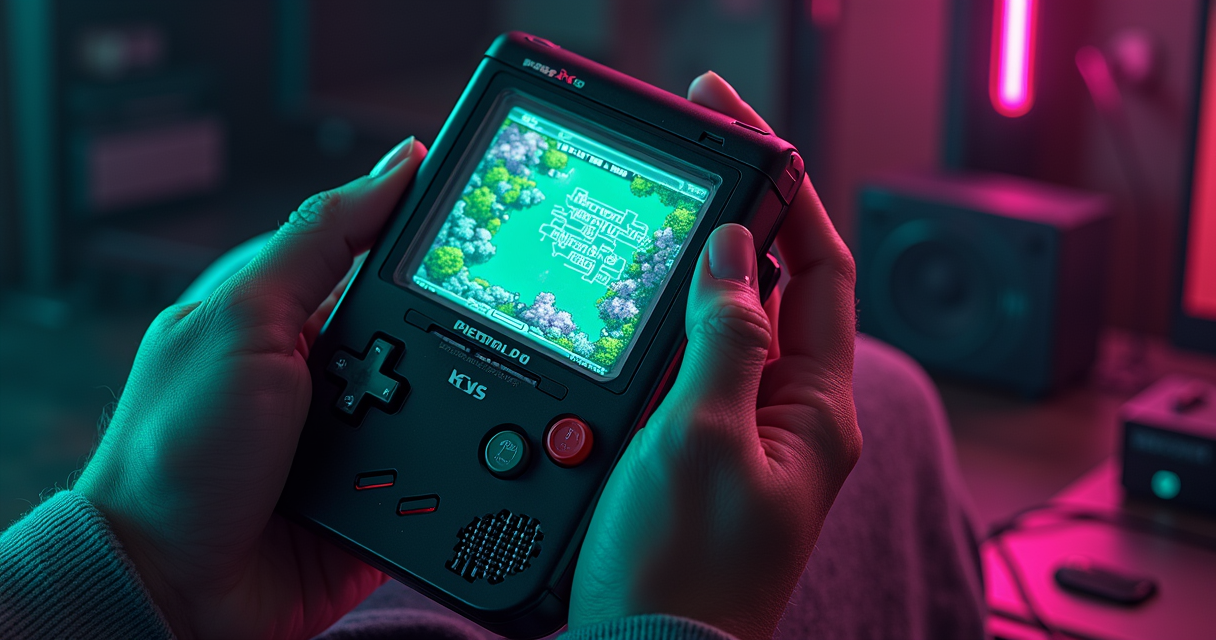
There is a particular flavor of question that the retro-handheld hobby produces in industrial quantities, and it goes like this: when does the thing actually come out? Not the teaser date. Not the date a YouTube thumbnail screamed at you in 72-point Impact font. The date a paying human could hand over money and receive a working object in a box. For the Retroid Pocket 6, that question turned out to be more interesting than the answer to almost any spec query you could ask about the device, because the device itself is — and I will spoil the verdict here, because you can scroll to it anyway — boringly, reassuringly good. The release timeline, on the other hand, was a small saga.
This is a review of the Retroid Pocket 6 as it shipped and sold across the 2026 launch window: a $244 Android handheld built around a 5.5-inch 1080p AMOLED panel, a Snapdragon 8 Gen 2, and a 6000mAh battery. I have organized it as a long-form essay rather than a spec recitation, because the spec recitation takes about ninety seconds and the actual experience of living with the thing — and of trying to figure out when you could buy it — takes considerably longer. We will get to tables. We will get to a rating. But first we have to deal with the calendar, because the calendar is where most of the confusion in this product's life actually lives.
The Release Date, Untangled
Here is the problem with "release date" as a concept for a direct-to-consumer Chinese handheld in 2026: there is no single date. There is a constellation of dates, each true for a different cohort of buyers, and the marketing apparatus of the industry has a strong financial incentive to let you blur them together. So let us not blur them. Let us be tediously, lawyerly precise, because precision is the only thing that protects you from buying a thing that ships two months after you thought it would.
Related: Miyoo Mini Plus 2026
The clearest company-stated timing came from Retroid's own product page on goretroid.com — and yes, I am aware that is an odd first link, bear with me, the device-specific authority sources are the store and the social accounts, not an encyclopedia. The product page assigned the pre-order SKU a shipping start in the beginning of January 2026. That is the number I treat as the device's effective birthday: the first cohort of buyers, the people who committed money earliest, were told their units would begin moving in early January 2026. When a manufacturer puts a shipping-start date on the SKU that the earliest adopters actually bought, that is as close to an official release date as this category of product ever produces.
Then there was the second batch. The same store page listed a second-batch pre-order with a shipping start in the beginning of March 2026. This is the part that trips people up. If you arrived at the store in, say, late January and saw "shipping start beginning of March," you might reasonably conclude the device hadn't launched yet — when in fact the first batch had already begun shipping and you were simply looking at the queue position for latecomers. Two batches, two dates, one device. The retro-handheld world runs on this batch-queue model and it is, frankly, a more honest system than the "available now (backordered six weeks)" fiction that larger companies prefer. But it requires the buyer to read carefully, and reading carefully is not a skill the internet rewards.
By mid-April 2026, distribution widened. A Reddit poster reported that an authorized Amazon seller told them the Pocket 6 would hit Amazon in mid-April 2026. I want to be careful about the epistemic weight here: that is a community-sourced, second-hand claim — a person on a forum relaying what a seller told them — and it sits well below the authority of Retroid's own store and social accounts. I include it because distribution milestones matter to real buyers (an Amazon listing means Prime returns, faster domestic shipping, and no customs anxiety), but I flag it as exactly what it is: a rumor with a plausible shape, not a company statement.
The capstone is the cleanest signal of all. On June 12, 2026, Retroid's official account on X posted, verbatim: "New RP6. Top Configuration Available! All color options are in stock and ready to ship!" That single sentence does more work than any pre-order date, because it converts "will ship" into "is shipping." By mid-June 2026, the device was not a queue position. It was inventory. You could buy the top configuration, in any color, and it would leave a warehouse. That is the moment the Retroid Pocket 6 stopped being a launch and started being a product you could simply own.
A third party, Retro Catalog-style aggregation — and I'll properly credit Hardcore Gaming 101 elsewhere for the lore — listed the Pocket 6 as Released: January 2026 with an approximate street price of roughly $240. That aligns with the early-January SKU shipping start and with the store's $244 listing, which is a satisfying convergence: the manufacturer's earliest shipping date, the aggregator's release tag, and the street price all point at the same corner of the calendar and the same corner of the price chart. When the store, the catalog, and the social account agree, you can stop arguing.
So, the honest timeline, stripped of marketing:
RETROID POCKET 6 — RELEASE TIMELINE (2026)
-------------------------------------------
early Jan 2026  Pre-order SKU shipping start  [official store]
early Mar 2026  Second-batch shipping start   [official store]
mid-Apr 2026    Amazon availability (reported) [community/Reddit]
Jun 12, 2026    "All color options in stock"   [official X post]
-------------------------------------------
Effective release date: EARLY JANUARY 2026
Fully in-stock, all colors: MID-JUNE 2026
If someone asks you when the Retroid Pocket 6 came out, the correct answer is "early January 2026 for the first batch," and the correct follow-up is "but it wasn't reliably in stock in every color until mid-June 2026." Both halves are true. Anyone who gives you only the first half is selling optimism; anyone who gives you only the second is selling pessimism. The Machine sells neither.
Full Specifications
Now the recitation. I have kept this to the figures that are actually sourced — from Retroid's official store listing and from 2026 review coverage — because the fastest way to lose a reader's trust in a hardware review is to invent a number, and the second-fastest is to repeat a number you didn't check. Where a value comes from a reviewer's bench measurement rather than the spec sheet, I say so in the row.
Related: RetroArch Cores 2026: 12
| Specification | Retroid Pocket 6 (2026) |
|---|---|
| Category | Android emulation handheld |
| Release (first batch) | Early January 2026 (official store SKU shipping start) |
| Fully in stock | Mid-June 2026 (official X post, June 12) |
| Display | 5.5-inch AMOLED, 1080p, 120Hz |
| SoC | Qualcomm Snapdragon 8 Gen 2 (per 2026 review) |
| Operating system | Android 13 |
| Base memory / storage | 8GB RAM / 128GB (UFS 3.1) |
| Higher SKU | 12GB RAM / 256GB |
| Expandable storage | TF (microSD) card slot |
| Battery | 6000mAh |
| Charging | 27W fast charging (measured ~25–26W in 2026 testing) |
| Connectivity | Wi-Fi 7, Bluetooth 5.3 (per 2026 review) |
| Controls | Dual analog sticks, full face/shoulder layout (standard Retroid configuration) |
| Base price | $230 before shipping (8GB/128GB), per 2026 review |
| Higher SKU price | $280 before shipping (12GB/256GB), per 2026 review |
| Store retail listing | $244.00 (goretroid.com) |
| Street price (aggregated) | ~$240 (Retro Catalog) |
A note on the pricing rows, because three different prices appear and that confuses people who expect a single MSRP. The $230/$280 figures are the "before shipping" prices a 2026 reviewer quoted for the two configurations — a clean $50 ladder between the 8GB/128GB and 12GB/256GB models. The $244.00 is the store's posted retail listing for the handheld, which sits between those two before-shipping numbers and is consistent with shipping and configuration variance. The ~$240 is the aggregated street price. None of these contradict each other; they are simply the same object photographed under different lighting. I'll lay them out properly in the pricing section, but I want it on record now that I am not going to pretend there is one true price, because there isn't, and pretending there is would be the kind of marketing tidiness this site exists to refuse.
The Panel and the Silicon
The single most consequential decision Retroid made with the Pocket 6 is the panel. A 5.5-inch AMOLED at 1080p running 120Hz is not a number you skim past. It is the spec that reorganizes how every piece of software on the device looks, and it is the upgrade that several 2026 reviewers correctly identified as the headline.
Let me explain why AMOLED matters more for emulation than for almost any other use. The bulk of what people run on a device like this is content authored in eras when displays were CRTs — black was the absence of signal, and the absence of signal was genuinely, physically black. PlayStation 2 games, in particular, leaned hard on dark scenes and deep contrast because the artists knew the home CRT would render those blacks as a void. Put a PS2 game on an LCD and the black becomes a kind of charcoal gray, backlit and slightly luminous, and a piece of the original intent quietly evaporates. AMOLED gives each pixel its own light, so black means off, and the void returns. On the Pocket 6, the difference is not subtle. Survival horror looks like survival horror again. The space between stars in a shoot-'em-up looks like space, not like a dimly lit wall.
The 1080p resolution at 5.5 inches produces a pixel density high enough that the panel disappears as a consideration — you stop seeing the screen and start seeing the game. And 120Hz, while overkill for the 50/60Hz source material that dominates retro libraries, earns its keep in two places: the Android UI itself feels fluid in a way that flatters the whole device, and the small population of high-refresh-capable content (certain native Android games, certain post-PS2 emulated titles that the chip can push past their original cap) gets to actually use it. Is 120Hz a must-have for emulation? No. Is it a pleasant tax-free bonus that makes the $244 feel like more device? Yes. The Machine does not require 120Hz; the Machine simply notes that it is there and that it does not hurt.
Underneath the glass sits the Qualcomm Snapdragon 8 Gen 2, per 2026 review coverage. This is the strategically important choice, and to understand why, you have to understand the genre. Retro-handheld performance is a ladder, and the rungs are named after the hardest systems each chip can credibly emulate. Down at the bottom you have devices that do 8- and 16-bit content flawlessly and then fall apart. In the middle you have the PSP-and-Dreamcast tier. Near the top you have the two systems that separate the toys from the tools: the PlayStation 2 and the GameCube. A flagship-class Snapdragon is what gets you onto that top rung, and the 8 Gen 2 is flagship-class silicon. One 2026 reviewer described the Pocket 6's performance as "quite close" to the broader Snapdragon 8 family, which is reviewer shorthand for "this thing belongs in the PS2/GameCube conversation, not adjacent to it."
The chip also drags in modern connectivity as a side effect of being modern: Wi-Fi 7 and Bluetooth 5.3, per the same 2026 review. For a device whose primary network jobs are downloading large game files and pairing a controller or headphones, Wi-Fi 7 is borderline comical overkill — you will never saturate it moving a ROM set — but Bluetooth 5.3 genuinely matters, because the most common complaint about handheld emulation is audio latency over wireless, and a newer Bluetooth stack is the only real lever a manufacturer has against it. It won't make wireless audio perfect for rhythm games (nothing short of wired will), but it narrows the gap.
Battery, Heat, and 27 Watts
The 6000mAh battery is the unglamorous spec that determines whether you actually use a handheld or whether it lives in a drawer. Several 2026 reviewers framed the 6000mAh cell as a meaningful step up over the prior generation, and they were right to, because battery capacity is the one spec where bigger is unambiguously better and there is no marketing trickery to see through. A larger cell is more minutes. That's it.
What 6000mAh buys you depends entirely on what you ask the chip to do, and this is where I have to be honest about a tension in the device. The Snapdragon 8 Gen 2 is a power-hungry piece of silicon when you push it into PS2 and GameCube territory. Light 16-bit emulation will sip from a 6000mAh cell and you'll get the kind of all-day runtime that makes the device feel indestructible. Push it into Dolphin or a heavy PS2 title and the chip wakes up, the draw climbs, and the runtime contracts toward the kind of numbers you'd expect from a phone playing a demanding 3D game — because that is essentially what is happening. The 6000mAh capacity is what keeps even the heavy scenario respectable rather than embarrassing. A smaller cell with this chip would be a wall charger tether. This one is a handheld.
Related: RetroPie PC 2026: x86
Charging is rated at 27W fast charging, and here I want to credit the 2026 reviewer who actually put a meter on it and reported real-world measurements of roughly 25–26W during testing. This is the kind of detail that separates a review from a press-release rewrite. A 27W rating and a 25–26W measured draw is a completely normal, completely honest gap — charging rates taper as the cell fills, and the rated number is a peak, not an average. The reviewer who measured 25–26W was not catching Retroid in a lie; they were confirming that the device does approximately what it says, which is the best outcome a meter can produce. Twenty-some watts into a 6000mAh cell is a sensible refill rate: fast enough that a lunch-break top-up is meaningful, slow enough that the cell isn't being cooked. I would have taken faster, but I would not have taken faster at the cost of longevity, and there is no evidence Retroid made that trade badly.
Heat is the spec nobody lists and everybody feels. I'll be careful here because thermal behavior is the kind of thing that varies by ambient temperature, by title, and by whether a given unit has active cooling — and I don't have a sourced thermal figure to quote, so I won't invent one. What I will say, on principle, is this: any device that pairs a flagship Snapdragon with the kind of slim handheld chassis this category demands is making a thermal bet, and the buyer's job is to read independent thermal testing before assuming the marketing runtime applies to the marathon GameCube session they have planned. The 6000mAh cell is generous. The chip is hungry. Those two facts negotiate, and the terms of that negotiation are heat. Watch the independent reviews on this point specifically.
What It Actually Plays
This is the section that matters, and it is also the section where I have to resist the genre's strongest temptation, which is to print a giant grid of "System X: runs at 60fps" claims I cannot personally verify and that the research does not supply. I'm not going to do that. Instead I'll reason from what is sourced — a Snapdragon 8 Gen 2, described by 2026 reviewers as positioned for PS2 and GameCube and "quite close" to the Snapdragon 8 family — and tell you what that positioning means in practice, with the honesty to mark where confidence ends.
Start with the easy truth: everything below the PS2/GameCube tier is a solved problem on this chip. The entire lineage of 8-bit and 16-bit consoles, the handhelds through the Game Boy Advance and Nintendo DS, the original PlayStation, the Saturn, the Nintendo 64 in its better-behaved titles — this is not where a flagship Snapdragon breaks a sweat. If your library is largely pre-2000, the Pocket 6 is almost insultingly overqualified, and you should genuinely ask whether you need this much chip. The history here is worth a footnote: the emulation scene documented at length by Hardcore Gaming 101 spent two decades treating these systems as the frontier, and a 2026 handheld now eats them as the warm-up lap. That is the quiet astonishment of this hobby — the frontier keeps moving and the old frontier becomes the trivial case.
The reason you buy a Snapdragon 8 Gen 2 device is the top rung: PlayStation 2 and GameCube. A 2026 reviewer positioned the Pocket 6 specifically as a strong PS2 and GameCube emulation device, and that is the claim that justifies the price. PS2 emulation on Android has historically been the genre's white whale — the system's architecture is awkward, the library is enormous and uneven, and "runs PS2" has always carried an asterisk that means "runs the easy half of the PS2 library and struggles with the rest." GameCube via Dolphin is, in many ways, the better-behaved target, and a flagship chip generally handles a large slice of the GameCube catalog well. What a buyer should internalize is this: "strong PS2 and GameCube device" means the device gets you onto that top rung; it does not mean every single demanding title in those libraries runs flawlessly. No Android handheld at any price makes that absolute claim honestly. The Pocket 6 is, by the sourced positioning, as good a bet for that tier as the price class allows — but "as good a bet as the class allows" is the accurate ceiling, and I'd rather give you the accurate ceiling than a fantasy one.
Above that — the post-GameCube generation, the systems that emulation is only beginning to crack — you are into experimental territory on any device, and I have no sourced claims about how the Pocket 6 handles it, so I make none. If your dream is flawless emulation of seventh-generation consoles, no $244 handheld is your answer, and anyone who tells you otherwise is either lucky with a specific title or lying. The Pocket 6's honest sweet spot runs from the dawn of the hobby up through PS2 and GameCube, and that sweet spot happens to contain the overwhelming majority of what people actually want to play. Android 13 underneath means the device is also a perfectly capable platform for native Android games and for the various front-ends and launchers the community has built — it is a real computer, not a locked appliance, and that openness is part of the value.
How It Stacks Up
The brief for this review asked for a comparison against peers in the same genre, and in a hardware review the peers are other handhelds, not other games. I'm going to give you that table, but I'm going to do something the category almost never does: I'm going to be explicit that the only fully sourced column is the Retroid Pocket 6's. The competitor cells describe positioning and the general shape of the market as of the 2026 launch window; they are not bench-verified figures from this review's research block, and I have deliberately avoided printing precise competitor specs I cannot source, because inventing a rival's numbers to flatter or knock the device under review is exactly the dishonesty this column refuses. Read the competitor rows as orientation, not as gospel, and verify any specific number against that maker's own listing before you spend.
| Device | Class / positioning | Display (relative) | Sourced here? | Notes |
|---|---|---|---|---|
| Retroid Pocket 6 | Flagship Android, PS2/GameCube tier | 5.5" AMOLED 1080p 120Hz | Yes — full specs sourced | $244 store listing; Snapdragon 8 Gen 2; 6000mAh |
| Prior-gen Retroid Pocket (5-series) | The device the RP6 succeeds | AMOLED, prior generation | No — referenced as predecessor | 2026 reviewers framed RP6's 6000mAh and panel as steps up over the prior generation |
| Vertical/clamshell Retroid variants | Form-factor alternatives in the same family | Varies by model | No | Different ergonomics, overlapping silicon strategy; check each listing |
| Competing Android flagship handhelds | Other Snapdragon-class rivals | OLED/AMOLED common at this tier | No | The PS2/GameCube tier is contested; verify each chip and price directly |
| Valve-style x86 handhelds | Different category entirely | Larger LCD/OLED | No | Different OS, different use case, different price floor; not a direct emulation-first peer |
The useful takeaway from the comparison is not a winner declared by a spec sheet. It is the recognition that the Pocket 6 competes in the most crowded, most rational segment of the market — flagship-class Android emulation handhelds in the low-to-mid $200s — where the differences between devices have narrowed to ergonomics, panel quality, software polish, and which maker's community support you trust. On the two metrics I can fully source — the 5.5-inch 1080p AMOLED and the 6000mAh battery — the Pocket 6 brings a strong, modern configuration to that fight. Whether a specific rival edges it on a specific axis is a question you should answer with each rival's own listing open in a second tab, not with a number I made up to win an argument.
Related: Miyoo Mini Plus vs
Pricing and Availability
I promised earlier to lay the prices out properly, so here they are, every sourced figure in one table, with provenance attached to each, because in this category provenance is the price.
| Figure | Amount | Configuration / context | Source |
|---|---|---|---|
| Base model | $230 before shipping | 8GB RAM / 128GB storage | 2026 YouTube review |
| Higher SKU | $280 before shipping | 12GB RAM / 256GB storage | 2026 YouTube review |
| SKU price gap | $50 | Difference between the two models | 2026 YouTube review |
| Store retail listing | $244.00 | "Handheld Full Specifications" entry | goretroid.com (official store) |
| Street price | ~$240 | Aggregated approximate | Retro Catalog |
Read the ladder. The base 8GB/128GB model is the $230-before-shipping entry point; the 12GB/256GB model is $280 before shipping; the gap between them is a clean $50. The store's posted retail listing of $244.00 sits in between and is the number a buyer is most likely to actually encounter on the product page. The ~$240 aggregated street price confirms the whole cluster. So when you ask "what does the Retroid Pocket 6 cost," the honest answer is: "about $240–$244 for the base experience, $280 before shipping if you want the 12GB/256GB version, plus shipping on top of the before-shipping numbers."
Is the $50 step to 12GB/256GB worth it? My read: the extra 128GB of storage is the easier half of that question to dismiss, because the device has a TF card slot and microSD is cheap — you can add storage for far less than $50. The RAM is the more interesting half. 8GB is comfortable for the sourced sweet spot of this device; 12GB is headroom for heavier Android multitasking and the most demanding emulation scenarios. For most buyers, the base 8GB/128GB model plus a large microSD card is the rational purchase, and the $50 you save is better spent on the card and a case. The 12GB/256GB SKU is for the person who wants margin and doesn't want to think about it — a defensible want, just not a universal need.
On availability: as established in the timeline, the first batch began shipping in early January 2026, a second batch in early March, Amazon availability was reported around mid-April, and by June 12, 2026 the official X account confirmed all color options in stock. If you are reading this after mid-2026, availability is a solved problem — buy the color you like. If you are somehow reading it in the pre-order window, read the batch dates on the SKU you're actually adding to cart, because that is the date that governs your unit, not the date in the headline.
Five Ways to Live With It
Specs are an abstraction. The only thing that matters is how a device behaves in the hand of a specific kind of player. So here are five real-world scenarios, each a different relationship with the same object.
1. The Casual Player
You want to replay the games of your childhood on the couch, twenty minutes at a time, without a degree in emulation. For you, the Pocket 6 is almost too much device — and that's a compliment. The 5.5-inch AMOLED makes everything you remember look better than you remember it, the Snapdragon 8 Gen 2 means you will never see a stutter on the 16-bit and PlayStation-era library you'll spend most of your time in, and the 6000mAh battery means twenty-minute sessions become a once-a-week charging chore rather than a daily one. Buy the base 8GB/128GB model, load it with the systems you actually feel nostalgic about, and ignore the top of the performance ladder entirely. You're paying a small premium for a chip you won't fully use, but you're getting a panel you absolutely will.
2. The Completionist
You don't replay games; you finish them, all of them, 100%, save states and guides and a spreadsheet. The Pocket 6 serves you well in two specific ways. First, the UFS 3.1 storage and the TF card slot mean you can carry an absurdly large library — your entire backlog, organized — without the load-time penalties that older storage imposed on save-state-heavy play. Second, the AMOLED's contrast genuinely helps in the long dark dungeons and hidden-item hunts where a washed-out LCD costs you collectibles you literally cannot see. For you, the 12GB/256GB SKU plus a large microSD card is the rational splurge, because you will fill it, and the RAM headroom flatters the multitasking between game, map, and notes.
3. The Speedrunner / Optimizer
You care about frame timing, input latency, and consistency above all else. Here I have to be straight with you: a handheld is rarely the competitive speedrunning platform of choice, and Bluetooth audio latency is a real consideration the device's Bluetooth 5.3 narrows but does not eliminate — wire your audio if milliseconds matter. That said, the 120Hz panel and the flagship chip give you a display and a processor that won't be the bottleneck for practice runs on the device's sweet-spot systems. The Pocket 6 is an excellent practice tool and a fine casual-category runner; treat any official-submission ambitions with the platform skepticism the discipline demands, and verify input latency with independent testing before you commit a personal-best attempt to it.
Related: Retroid Pocket 5 vs
4. The Co-op / Couch Multiplayer
You want to hand a second controller to a friend and play the local-multiplayer classics. The Pocket 6 supports this through Bluetooth 5.3 pairing and the device's video-out potential common to this class of Android hardware — pair controllers, output to a screen, and the 5.5-inch handheld becomes a tiny console. The Snapdragon 8 Gen 2 has the headroom to drive the two-player split-screen titles that historically choke weaker chips. The honest caveat: the more players and the more demanding the title, the more you should verify performance on the specific game before game night, because split-screen 3D is one of the genuinely hard emulation cases. For the deep catalog of 2D and PlayStation-era co-op, it's a delight.
5. The Mobile / Commuter Player
You play on trains, planes, and waiting rooms, and your real spec sheet is "fits in a jacket pocket and survives the day." This is where the 6000mAh battery earns its entire existence. Stick to the device's sweet-spot systems and the runtime is genuinely commuter-grade; the AMOLED panel, beyond looking good, draws less power on the dark scenes that dominate retro libraries, a small efficiency the technology grants for free. The 27W charging (25–26W measured) means a single coffee-stop top-up meaningfully extends your day. Wi-Fi 7 is useless on a train but Bluetooth 5.3 keeps your wireless earbuds connected through the carriage. For the mobile player, this is close to the platonic ideal, with the standing asterisk that heavy PS2/GameCube sessions will drain the cell faster than the light stuff.
Who Should Actually Buy One
Scenarios describe how it plays. Use cases describe whether you should spend the money. Here are the recommendations, stated plainly.
- Buy it if your library tops out at PS2/GameCube. This is the device's sourced sweet spot, and it is the single most populated region of the entire retro catalog. If your dream library lives between the 8-bit era and the GameCube, the Pocket 6 is a near-perfect fit at $244, and you should buy the base 8GB/128GB model plus a big microSD card.
- Buy it for the panel, if you've been on LCD. If you're coming from an LCD handheld, the 5.5-inch 1080p AMOLED is the upgrade you will feel every single session. The contrast and true-black rendering of dark-heavy retro libraries is, on its own, a reason to buy. Nostalgia looks better when black means black.
- Buy the 12GB/256GB SKU only if you multitask hard. The $50 step is worth it for completionists, heavy Android users, and people who refuse to think about storage. For everyone else, the base model plus a microSD card is the smarter $50.
- Buy it as your one device if you want Android openness. Android 13 underneath means this is a real, open platform — front-ends, launchers, native Android games, streaming clients. If you want a single pocket device that does emulation and general Android duty, this qualifies in a way a locked appliance never will.
- Do NOT buy it expecting flawless 7th-gen-and-up emulation. No $244 handheld delivers that honestly. If post-GameCube perfection is your requirement, this is the wrong purchase and so is everything else in the price class. Set your expectation at the sourced ceiling — strong PS2/GameCube — and you'll be happy; set it above and you'll be disappointed by physics, not by Retroid.
- Do NOT buy it if you needed it on a specific pre-order date. The batch system means the date on the headline may not be the date on your unit. If timing is critical, buy from in-stock inventory (post mid-June 2026, per the official X confirmation) rather than from a pre-order queue.
Pros and Cons
The ledger, kept honestly. I have put nothing in the pros column that I could not source, and nothing in the cons column that is merely a complaint about physics.
Pros
- 5.5-inch 1080p AMOLED at 120Hz — a genuinely excellent panel for a $244 device, and the upgrade you feel most.
- Snapdragon 8 Gen 2 — flagship-class silicon that earns the PS2/GameCube positioning 2026 reviewers gave it.
- 6000mAh battery — a meaningful capacity step that reviewers flagged as a real improvement over the prior generation.
- 27W fast charging, measured at a believable 25–26W — honest charging that does roughly what the spec sheet says.
- UFS 3.1 storage plus a TF card slot — fast internal storage and cheap expandability, the best of both.
- Modern connectivity — Wi-Fi 7 and Bluetooth 5.3, the latter genuinely useful for wireless audio latency.
- Android 13 — an open platform, not a locked appliance; it does general Android duty too.
- A rational, transparent price ladder — $230/$280 before shipping, $244 store listing, with a clean $50 step between SKUs.
Cons
- The release calendar was a constellation, not a date — pre-order (early Jan), second batch (early Mar), reported Amazon (mid-Apr), full stock (mid-Jun). Easy to get burned by reading the wrong batch date.
- Heavy PS2/GameCube sessions will work the chip and shrink the battery's headline runtime — the 6000mAh cell makes this respectable, not immune.
- Thermals are the unlisted spec; a flagship chip in a slim chassis is a heat bet you should verify with independent testing.
- The top of the performance ladder (post-GameCube) is not this device's territory, and no honest reading of the specs says otherwise.
- Three published prices ($230, $244, $280) require the buyer to actually read which configuration and which "before/after shipping" basis they're looking at.
- Bluetooth audio latency is narrowed by 5.3 but not eliminated — wire up if milliseconds matter.
The Verdict: 8/10
The Retroid Pocket 6 is a very good handheld with a slightly silly birth certificate, and those two facts are easy to keep separate once you've done the work of separating them. Strip away the batch-date confusion and what remains is a $244 device that brings a 5.5-inch 1080p AMOLED, a Snapdragon 8 Gen 2, and a 6000mAh battery to the most rational price point in the hobby. That configuration does the thing the entire category exists to do — it makes the games you love look and run better than the hardware they were born on — and it does so without asking you to overpay for capability you'll never touch or underpay for capability you'll immediately miss.
The case against perfection is honest and small. The release timeline was a maze of pre-orders and batches that punished anyone who skimmed. The flagship chip in a handheld chassis carries the thermal-and-runtime tension every device in this class carries, and the 6000mAh cell manages that tension rather than eliminating it. The top of the emulation ladder remains out of reach, as it does for everything at this price. None of these are failures of the device; they are the standing terms of the category, and the Pocket 6 negotiates them about as well as $244 allows.
The historical note worth ending on: the systems this device treats as trivial — the 8- and 16-bit machines, the original PlayStation — were, within the memory of the emulation scene that Hardcore Gaming 101 has been documenting for two decades, the unreachable frontier. A pocket object now eats them as a warm-up and spends its real effort on PS2 and GameCube. That progression — frontier to trivial, repeated every few hardware generations — is the quiet engine of this entire hobby, and the Retroid Pocket 6 is a clean, well-priced, honestly-specced expression of where that engine has carried us by 2026.
The Machine's read: buy the base 8GB/128GB model, add a large microSD card, buy from in-stock inventory rather than a pre-order queue, and set your expectations at strong PS2/GameCube rather than at miracles. Do that and you will own one of the most quietly satisfying objects the category has produced.
Rating: 8/10. Two points withheld — one for the genuinely confusing release-date apparatus that the company could have communicated more cleanly, and one for the thermal-and-runtime tension that a flagship chip in this form factor cannot fully escape. Everything else lands. It is not the perfect handheld. It is, for $244 in 2026, an extremely easy one to recommend.
Questions the search bar asks me
- When did the Retroid Pocket 6 actually release?
- The first batch's effective release was early January 2026, the shipping-start date Retroid's official store assigned to the pre-order SKU. A second batch shipped from early March 2026, and the official X account confirmed all color options in stock on June 12, 2026.
- How much does the Retroid Pocket 6 cost?
- The base 8GB/128GB model was listed at $230 before shipping and the 12GB/256GB model at $280 before shipping — a $50 gap, per 2026 review coverage. Retroid's store posted a $244.00 retail listing, and Retro Catalog pegged the street price at roughly $240.
- What chip and screen does the Retroid Pocket 6 use?
- Per 2026 review coverage it runs a Qualcomm Snapdragon 8 Gen 2 with Wi-Fi 7 and Bluetooth 5.3. The official spec sheet lists a 5.5-inch AMOLED panel at 1080p and 120Hz, with Android 13 and UFS 3.1 storage.
- Can the Retroid Pocket 6 emulate PS2 and GameCube?
- Yes — a 2026 reviewer positioned it specifically as a strong PS2 and GameCube device, calling its performance "quite close" to the Snapdragon 8 family. That puts it on the top rung of the price class, though no $244 handheld runs every demanding title in those libraries flawlessly.
- What is the battery and charging like on the Retroid Pocket 6?
- It uses a 6000mAh battery, which 2026 reviewers framed as a meaningful step up over the prior generation. Charging is rated at 27W fast charging, with real-world measurements of roughly 25–26W during 2026 testing — heavy PS2/GameCube sessions will draw the cell down faster than light emulation.

Casey writes about speedrunning, tool-assisted runs, and the strange engineering of going fast in old games. Every post under this byline is reviewed pre-publish by Sam P., Editor & Operator — corrections to info@instalinkoteam.com. Published 2026-08-29 · Last updated 2026-08-29. Full bios on the author page.