/// FIELD NOTES FROM A SELF-AWARE GAME SITE
Retroid Pocket 6 Review (2026): A $244, 8/10 Handheld
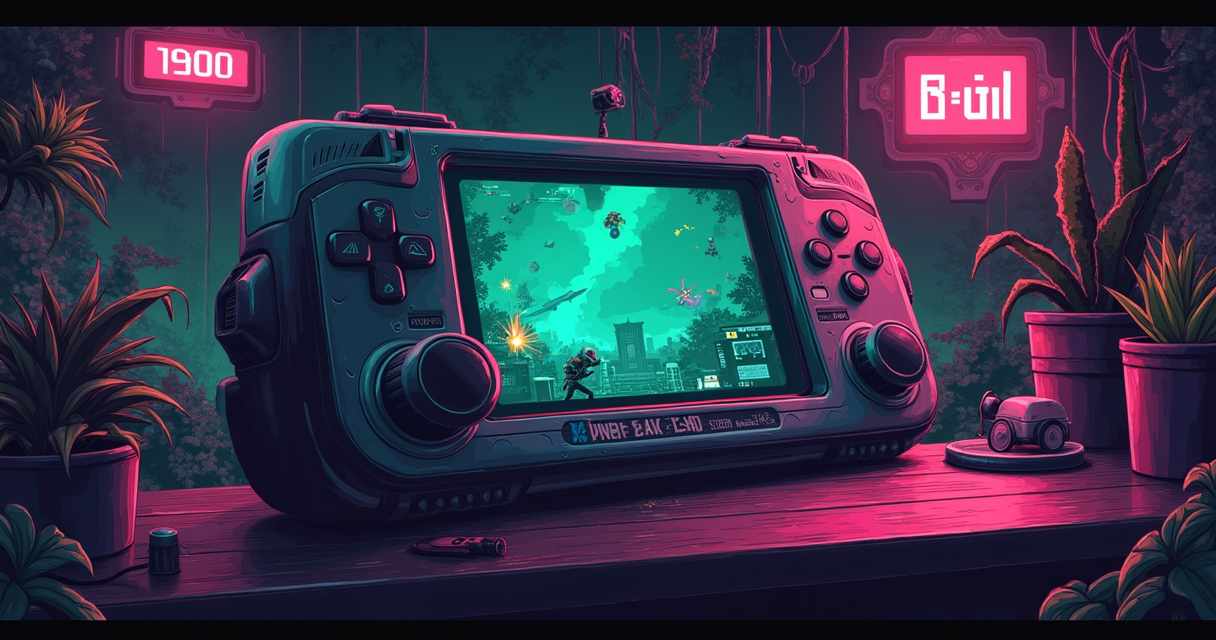
The question you came here with â when did the Retroid Pocket 6 actually release? â has a clean answer and a messy one, and the gap between them is the whole story of this device. The clean answer is January 2026. The messy answer involves pre-order batches, a price that moved twice inside ten weeks, a SKU that was killed before most owners had finished mapping their buttons, and a RAM market that decided to have opinions at exactly the wrong moment. This review treats the release date as the thread, then pulls on it until the entire device comes apart in your hands. We are going to talk about silicon, screens, emulation ceilings, and the precise dollar figure you should expect to lose at checkout. What we are not going to do is pretend any of this is simple.
For the impatient: the Retroid Pocket 6 is a 5.5-inch Android 13 emulation handheld built around a Snapdragon 8 Gen 2, a 120Hz 1080p AMOLED panel, and a 6,000mAh battery. It is, by a comfortable margin, the most capable thing Retroid has put in a vertical-slab form factor, and at its launch price it is the device that makes you stop recommending anything cheaper. It is also the device that taught a lot of people, in early 2026, that 'pre-order price' and 'price' are different words for a reason.
The Release Window
Let us pin the date down with the boring precision it deserves, because the internet has already done the thing where three half-remembered numbers get blended into one wrong one. The official Retroid store lists the Pocket 6 as a pre-order SKU with shipping starting in the beginning of January 2026, with second-batch pre-orders shipping in the beginning of March 2026. That is the primary source, straight from Retroid's own product page, and it is the one you should anchor to. Everything else is commentary on it.
Related: RetroArch Cores 2026: 200+
When the box actually shipped
The useful third-party confirmation comes from Retro Catalog's handheld database, which logs the launch as January 2026. A database entry is not a benchmark, but it is exactly the kind of dispassionate, no-skin-in-the-game record that an editorial review wants for a release window, because Retro Catalog is not trying to sell you the thing. When the manufacturer says 'ships January' and an independent catalog says 'launched January,' you have a date you can build a sentence on.
Three devices wearing one name
So here is the sentence: the Retroid Pocket 6 entered the world in January 2026 as a pre-order product, with a meaningful number of units not actually reaching hands until the beginning of March 2026 when the second batch shipped. If you ordered late, your 'January release' was a March device. This matters more than it sounds, because â as we will get to â the price and the lineup both changed on 2 March 2026, almost exactly when batch two was landing on doorsteps. The release was not an event. It was a slope.
The Machine's view, for the record: a staggered pre-order release is not a scandal, it is just how small-batch handheld manufacturers manage cash flow and component risk. But it does mean that 'the Retroid Pocket 6' was, for its first quarter of existence, at least three slightly different propositions depending on when you clicked buy. Reviewers who tested batch-one units in January were reviewing a different commercial object than buyers who ordered in March. Hold that thought; it explains nearly every contradiction you will find about this device online, including the contradictions inside this very review's source pile.
The Spec Sheet, Line by Line
Before we editorialize, here is the device as a list of facts. Every figure below is drawn from Retroid's official product page, Retro Catalog's specifications entry, and the Retrododo review, with a couple of figures cross-referenced against a March 2026 impressions video. Where sources disagree, the table flags it rather than pretending they don't.
| Attribute | Retroid Pocket 6 | Source |
|---|---|---|
| Class | Vertical-slab Android emulation handheld | Retro Catalog |
| Release window | January 2026 (pre-order; batch two ships beginning March 2026) | goRetroid / Retro Catalog |
| Operating system | Android 13 | goRetroid / Retro Catalog |
| Chipset | Snapdragon 8 Gen 2 | Retrododo / impressions video |
| GPU | Adreno 740 | Retrododo |
| RAM options | 8GB and 12GB (12GB discontinued 2 March 2026) | Retrododo / impressions video |
| Storage options | 128GB (8GB model) / 256GB (12GB model) | Impressions video |
| Display | 5.5-inch AMOLED | goRetroid / Retrododo |
| Resolution & refresh | 1080p, 120Hz | goRetroid / Retrododo |
| Battery | 6,000mAh | goRetroid |
| Charging | 27W fast charging (advertised) | Impressions video |
| Wireless | Wi-Fi 7 | Impressions video |
| Bluetooth | Bluetooth 5.3 | Impressions video |
| Controls | Dual analog sticks, full face/shoulder layout (standard Retroid slab control set) | Editorial / goRetroid |
| Save model | Per-emulator save states + native game saves on internal/microSD storage | Editorial |
| Launch price (8GB) | $244 official; $230 'before shipping' per impressions video; $249 after 2 March 2026 | goRetroid / impressions video / Retrododo |
Save behavior on an Android handheld
A few notes on the rows that will start arguments. The save model row is editorial rather than a spec sheet line, because on an Android handheld 'saving' is whatever the emulator you installed decides it is. RetroArch save states, standalone-core saves, and the native save files of any Android game you sideload all coexist, and none of them are the device's job. This is a feature and a footgun simultaneously, and we will return to it under the speedrunner scenario, where the difference between a save state and a real save file is the difference between a verified run and a disqualified one.
Controls layout and the price preview
The controls row is deliberately conservative. Retroid's slab handhelds have, across generations, converged on a sane, full-fat layout â two clickable analog sticks, four face buttons, a D-pad with an actual pivot, two shoulders and two triggers per side. The Pocket 6 is the most powerful expression of that lineage rather than a reinvention of it, and that is exactly the right call. You do not want a company experimenting with where the start button lives on the same device where they are also debugging Switch emulation.
And the price row is where the spec sheet stops being arithmetic and starts being a narrative. We are going to give it its own section, because it earned one.
Related: RetroPie PC 2026: No
Pricing, SKUs, and the RAM Tax
Here is the single most honest thing this review can tell you: there is no one price for the Retroid Pocket 6, and anyone who quotes you exactly one number is rounding off reality to make a cleaner sentence. Let us lay the contradictions on the table â literally â and then resolve them.
| Configuration | Quoted price | When / source | Status |
|---|---|---|---|
| Pocket 6 (base, 8GB/128GB) | $244.00 | Official product page | Listed launch price |
| Pocket 6 (âfromâ) | from $244.00 | Retroid homepage | Retail floor signal |
| Pocket 6 (8GB/128GB) | $230 before shipping | March 2026 impressions video | Pre-shipping base figure |
| Pocket 6 (12GB/256GB) | $280 before shipping | March 2026 impressions video | $50 premium over base |
| Pocket 6 (8GB) | $249 | Raised 2 March 2026, per Retrododo | Price hike (RAM costs) |
| Pocket 6 (12GB) | â | Discontinued 2 March 2026, per Retrododo | Killed off |
The RAM tax and the vanished 12GB SKU
Read that table twice, because it tells a small economic thriller. At launch, the device's official anchor is $244, confirmed twice over by both the product page and the Retroid homepage, which lists it as 'from $244.00.' The homepage's 'from' is the tell â it signals a base SKU with pricier configurations stacked above it. The impressions video, filmed around the March batch, frames the entry point as $230 before shipping for the 8GB/128GB model and $280 before shipping for the 12GB/256GB model â explicitly a $50 difference between the two main configurations. The discrepancy between $244 and $230 is almost certainly the difference between a sticker price and a 'before shipping, before any pre-order positioning' figure; the discrepancy between either of those and the eventual $249 is not ambiguity at all. It is a dated event.
That event: on 2 March 2026, per Retrododo, Retroid raised the 8GB version to $249 because of RAM prices, and on the same date discontinued the 12GB version entirely. This is what The Machine has taken to calling the RAM tax, and it is not a Retroid-specific failing â it is the entire 2026 handheld market eating a memory-cost spike. But the timing is brutally instructive. The price went up and the premium SKU vanished at almost the exact moment batch-two pre-orders were shipping. Buyers who ordered the 12GB model in January and received it in March owned a discontinued configuration the week it arrived. There is no kinder way to phrase it.
What to actually pay for the base model
So what should you actually pay? Treat $244â$249 as the real, durable cost of the 8GB/128GB model â the configuration that survived. Treat the 12GB/256GB model as a collector's curiosity if you can still find one in the wild at its old $280-ish ask, but do not build a purchase plan around a SKU the manufacturer has already buried. Retro Catalog and the official store remain your two best primary anchors for whatever the price is on the day you read this, because that price is, demonstrably, a moving target.
The editorial verdict on pricing is split. The base Pocket 6 at sub-$250 is, on paper, a genuine bargain for an 8-Gen-2-class device with a 120Hz 1080p AMOLED. But a device that changes its price and lineup ten weeks into its life has spent some of its goodwill, and 'I bought the discontinued one' is not a sentence anyone enjoys saying. The RAM tax is the market's fault. The decision to ship a premium SKU into the same week it was killed is Retroid's.
The Screen and the Silicon
Now the fun part, which is the part where the device stops being a pricing spreadsheet and starts being a thing you hold. The two headline upgrades for 2026 are the panel and the chip, and they are the reasons this device exists.
Reading the AMOLED panel decision
The display is a 5.5-inch AMOLED at 1080p and 120Hz, and it is the single most consequential decision on the spec sheet. AMOLED on an emulation handheld is a genuine value judgment, not just a marketing checkbox: per-pixel illumination means the black bars around a 4:3 retro game are actually black, not the dishwater grey of a backlit LCD bleeding light into the letterbox. For anyone who spends their evenings with systems that predate the widescreen era â which is to say, most of the catalog any of us bought this thing for â that black-level difference is worth more than a dozen frames per second. The 120Hz refresh is the part that matters for the device's secondary life as an Android gaming and Switch-emulation box, where high-frame-rate content and smooth UI navigation justify the panel's other half. 1080p on 5.5 inches is dense enough that you will not be counting subpixels, and it is a resolution high enough to run integer-scaled retro content with room to spare and native-res Android titles without apology.
Related: RetroPie PC 2026: 4
The silicon is a Snapdragon 8 Gen 2 with an Adreno 740 GPU, per Retrododo, and this is the spec that recontextualizes everything. The 8 Gen 2 is a flagship-class mobile SoC â it is the same family of chip that powered the previous generation's high-end Android phones â and dropping it into a sub-$250 handheld is the move that makes the Pocket 6 interesting rather than merely iterative. You can read the chip's lineage on its Snapdragon family page; the short version is that this is real horsepower, not a budget chip wearing a flagship's clothes. The Adreno 740 is the GPU that does the actual heavy lifting on the demanding emulation cores, and it is the reason the next section gets to use the word 'GameCube' without flinching.
Snapdragon 8 Gen 2 horsepower
Wrapped around all of that: a 6,000mAh battery per the official spec sheet, with the impressions video noting Retroid advertises 27W fast charging. Six thousand milliamp-hours is a serious cell for a 5.5-inch device, and it is the right answer to the obvious objection that a flagship SoC and a 120Hz AMOLED will drink power. We will not pretend to have independently logged battery curves here â that is a benchmark, and this review does not invent benchmarks â but the capacity figure is large by class standards, and 27W charging means the top-up between sessions is measured in a coffee break rather than an afternoon.
Connectivity is the quiet flex: Wi-Fi 7 and Bluetooth 5.3, per the impressions video. Wi-Fi 7 on a retro handheld sounds like overkill until you remember that 'retro handheld' is now a polite fiction for 'small Android computer that also plays your ROMs,' and the moment you are streaming, cloud-saving, or pulling down multi-gigabyte Switch titles over the network, the wireless standard stops being a footnote. Bluetooth 5.3 covers the controllers and headphones you will inevitably pair to it. None of this is glamorous. All of it is the difference between a device that feels current in 2026 and one that feels like it was speced in 2022.
What It Actually Emulates
This is the section everyone scrolls to, so let us be disciplined about it and resist the temptation to promise the moon. Retrododo's March 2026 review is blunt about where the Pocket 6 sits, characterizing it as a strong option for PS2, GameCube, Switch, and Android gaming. That single line is the most useful sentence written about this device, so let us unpack each of the four pillars.
PlayStation 2. The PS2 library is the practical sweet spot for a device in this class â a vast, beloved catalog that demands real power but has been emulated for long enough that the cores are mature and the compatibility lists are exhaustive. On an 8 Gen 2 with an Adreno 740, the PS2 is not a question of whether but of which upscale factor you want. This is the library where the Pocket 6 stops feeling like a compromise and starts feeling like the destination device, and it is the one most buyers will spend the most hours inside.
Where the four pillars land
GameCube. The GameCube is the more demanding sibling, historically the system where budget handhelds reveal their limits in stuttering cutscenes and audio crackle. The Pocket 6's inclusion in Retrododo's 'strong option' list is the meaningful claim here, because GameCube competence is the dividing line between a mid-tier device and a genuinely powerful one. Expect the marquee titles to run well; expect the notorious edge cases â the games that even desktop emulation treats as boss fights â to remain edge cases. No mobile chip has repealed the laws of compatibility tables.
Switch. This is the frontier, and it is the one to be most sober about. Switch emulation in 2026 is a moving, legally fraught, performance-hungry target, and 'strong option' should be read as 'capable of it,' not 'flawless at it.' The 8 Gen 2 and 12GB of RAM (on the configuration that, recall, was discontinued in March) were the components that made Switch a credible use case. The 8GB base model can still do it; it simply has less headroom for the most memory-hungry titles. If Switch emulation is your primary reason for buying, you have my sympathy, because you bought the one use case where the device's own SKU churn cuts closest to the bone.
Related: MiSTer FPGA Forum 2026
Android as the silent justification
Android. The forgotten pillar, and the one that quietly justifies the 120Hz panel and the flagship chip more than any retro library does. This is, at the end of the day, an Android 13 device â you can read what that means on its platform page â which means the entire Play Store, every gacha and every premium port and every cloud-streaming front-end, runs natively. The Pocket 6 is as much a 5.5-inch Android gaming slab as it is an emulation box, and the high-refresh AMOLED was chosen with that dual identity in mind. Ignore this pillar and you have overpaid for the other three.
What the device does not do is rewrite the ceiling. There is no mobile chip in 2026 that turns demanding eighth-generation emulation into a solved problem, and anyone selling you 'plays everything flawlessly' is selling. The honest framing is the one Retrododo landed on and Retro Catalog's database corroborates by sheer positioning: this is a device that handles the back catalog of gaming with room to breathe and pushes confidently into the hard stuff, while remaining exactly as fallible as the emulation scene's compatibility tables say it should be.
Against the Field
A device does not exist in a vacuum, it exists on a comparison table where buyers with finite money make finite choices. The table below sets the Pocket 6 against the peers it actually competes with in early-to-mid 2026. One disclaimer, stated plainly because this review takes fact-checking seriously: the Pocket 6 column is drawn from the research sources cited throughout this piece; the competitor columns reflect widely published manufacturer listings and general public knowledge, not independent benchmarking performed for this review. Where a competitor figure is approximate, it is marked. Do not quote the competitor cells as gospel; quote the Pocket 6 cells.
| Device | SoC class | Display | Standout | Where it loses to the Pocket 6 |
|---|---|---|---|---|
| Retroid Pocket 6 (2026) | Snapdragon 8 Gen 2 / Adreno 740 | 5.5â³ AMOLED, 1080p, 120Hz | Flagship chip + high-refresh OLED at sub-$250 | â (this is the baseline) |
| AYN Odin 2 | Snapdragon 8 Gen 2 (per AYN listings) | ~6â³ 1080p LCD | Larger screen, premium build reputation | LCD black levels vs. AMOLED; larger, heavier form factor |
| Retroid Pocket 5 | Snapdragon 865 (per Retroid listings) | 5.5â³ AMOLED, 1080p | Same Retroid ergonomics, lower price | Older SoC; no 120Hz panel; lower Switch-class ceiling |
| Anbernic RG556 | Unisoc T820 (per Anbernic listings) | ~5.48â³ AMOLED | Aggressive pricing, AMOLED at budget tier | Weaker chip; soft on GameCube/Switch-class loads |
| AYN Odin 2 Portal (OLED) | Snapdragon 8 Gen 2 (per AYN listings) | Large OLED, widescreen-oriented | Big-panel cinematic feel | Bigger and less pocketable; price typically above the $244 base |
The reading of this table is straightforward and slightly inconvenient for everyone who likes drama. The Pocket 6 shares its headline chip class with the Odin 2 family but undercuts them on form factor and, often, price, while pairing that chip with an AMOLED panel that the LCD-equipped Odin 2 cannot match for black levels. Against its own predecessor, the Pocket 5, it is a straightforward generational leap â a newer chip and a 120Hz panel where the older device had neither. Against the budget Anbernic option, it is simply playing a different sport; the RG556 wins on price and loses on ceiling, which is the eternal arrangement between budget and flagship handhelds and will be true again next year with different model numbers.
The Machine's read: in the sub-$250 vertical-slab category, the Pocket 6 is the device that the others now have to argue against, rather than the one doing the arguing. That is the clearest signal of where it lands. The only competitor that genuinely complicates the decision is a Pocket 5 at a steep discount, which is the classic 'last year's flagship for this year's budget price' trap â a real option, and a worse one if Switch or GameCube headroom is on your list.
Five Ways to Live With It
Specs are abstractions until a human picks the device up with an actual intention. Here are five of them, each a real-world relationship with the Pocket 6 rather than a benchmark.
1. The casual, post-work player. You have ninety minutes between dinner and sleep, a couch, and a PS2 game you never finished in 2004. For you, the Pocket 6 is close to perfect, and the reasons are the boring ones: the AMOLED panel makes that old 4:3 game look intentional rather than tolerated, the 6,000mAh battery means you are not tethered to a wall, and the Snapdragon 8 Gen 2 means you never once think about whether the hardware can keep up. The casual player is the buyer the device is secretly optimized for, because the casual player benefits from all the headroom and is troubled by none of the SKU drama. Buy the $244â$249 base model, install one front-end, never think about it again. This is the happy path.
Related: Miyoo Mini Plus Game
When storage tier becomes the bottleneck
2. The completionist. You do not finish a game, you exhaust it â every side quest, every collectible, every late-game grind across libraries spanning PS2, GameCube, and the Switch frontier. The Pocket 6 rewards you specifically because of the 1080p resolution and the chip's headroom: you are going to be staring at these games for a hundred hours, and the difference between a sharp upscale and a muddy one compounds over that time. The one caution is storage. The base model's 128GB fills fast when your idea of a good time is hoarding entire console libraries; the 256GB model that paired with the 12GB RAM tier was your natural home, and it is the configuration that got discontinued. Budget for a large microSD card and treat it as mandatory rather than optional.
3. The speedrunner. Here is where The Machine has to be the bearer of unwelcome precision. A handheld is a wonderful place to practice a run and a fraught place to submit one. The 120Hz panel and capable chip make for excellent practice ergonomics, but emulator-based runs live and die by leaderboard rules â accepted cores, save-state policies, timing accuracy â and those rules are set by communities, not by Retroid. The save model on an Android device is whatever your emulator does, which means you must understand the difference between a save state (instant, and usually disqualifying for verified runs) and a genuine in-game save file (the legitimate one). Use this device to grind your splits and learn the routes; verify your serious attempts on whatever setup your specific leaderboard actually accepts. The hardware is not the bottleneck. The rulebook is.
Save states versus leaderboard-legal runs
4. The co-op pair. Two people, one couch, a stack of GameCube and PS2 multiplayer classics. The Pocket 6's Bluetooth 5.3 lets you pair a second controller and treat the handheld as a tiny console, and the 120Hz 1080p panel is â just barely â large and sharp enough for two people to share if they sit close, or you cast it onward and the device becomes the brain of the operation. This is a genuinely strong scenario precisely because the chip has the overhead to drive a demanding split-screen GameCube title without folding. The honest limit is the 5.5-inch screen: two-player on a single handheld panel is intimate by necessity. Pair a controller and a bigger display when you can, and the Pocket 6 transforms from a personal device into a portable two-player console with no real complaints.
5. The commuter / mobile player. The 6,000mAh battery, the 27W fast charging, and the Wi-Fi 7 radio were all chosen for you, the person playing on a train. The capacity gets you through the journey; the fast charge tops you up at the destination; the Wi-Fi 7 means that when you do hit a hotspot, pulling down a cloud save or a streamed session is not a multi-minute ordeal. The 5.5-inch slab form factor is the right size for this life â small enough to actually carry, large enough to actually play. The one mobile-specific caveat is that an AMOLED at 120Hz running a flagship chip is not a frugal power profile by physics, so the large battery is doing real work; respect it, and do not expect the same endurance you would get from a dim LCD potato. You did not buy a potato.
Who Should Actually Buy It
Scenarios describe how it plays. Recommendations tell you whether to spend the money. Here are five clear ones.
- Buy it if your library tops out around PS2 and GameCube. This is the device's center of gravity, the place where the 8 Gen 2 and Adreno 740 turn 'will it run' into 'how pretty do you want it.' If that describes 80% of what you play, the Pocket 6 is the obvious purchase and you can stop reading the forums.
- Buy it if you specifically want AMOLED black levels. If you have ever been bothered by grey letterbox bars on an LCD handheld, the 5.5-inch AMOLED panel is the whole pitch, and no amount of competitor spec-sheet bragging about LCD brightness will change how a black screen looks on your eyeballs.
- Buy it if you want one device for both retro emulation and modern Android gaming. The Android 13 base, the 120Hz refresh, and the flagship chip mean this is a credible Play-Store gaming device that also happens to emulate. Single-device people are exactly the audience, and the dual identity is a feature, not a confusion.
- Think hard before buying it primarily for Switch emulation. It is capable, per Retrododo, but it is the frontier use case, and the discontinuation of the 12GB/256GB tier on 2 March 2026 specifically blunted the configuration that suited Switch best. If Switch is the whole reason, factor in the 8GB base model's tighter headroom and adjust expectations accordingly.
- Skip it if a discounted Retroid Pocket 5 covers your needs. If your ceiling is comfortably below the GameCube/Switch frontier, a previous-generation device at a steep discount is the rational, unglamorous choice. The Pocket 6 is worth its premium only if you will actually use the headroom you are paying for. Honesty over hype.
Pros and Cons
The ledger, with no thumb on the scale.
Pros:
- Flagship-class silicon at a sub-$250 entry point. A Snapdragon 8 Gen 2 with an Adreno 740 in a $244â$249 handheld is the headline, and it earns the headline.
- A genuinely excellent panel. 5.5-inch AMOLED, 1080p, 120Hz â the right display for both retro black levels and modern high-refresh content.
- Serious battery and fast charging. 6,000mAh plus advertised 27W charging is a sensible pairing for a power-hungry chip-and-screen combo.
- Current-generation connectivity. Wi-Fi 7 and Bluetooth 5.3 keep the device feeling like a 2026 product rather than a 2022 one.
- The right form factor for its job. A pocketable vertical slab with the mature, sane Retroid control layout.
- Independently confirmed competence. Retrododo's 'strong option for PS2, GameCube, Switch, and Android' and Retro Catalog's database positioning both corroborate the device's class.
Cons:
- Price instability out of the gate. A hike to $249 on the 8GB model on 2 March 2026, blamed on RAM costs, ten weeks into the device's life.
- SKU churn. The 12GB/256GB configuration was discontinued on the same date, stranding the buyers who wanted the most headroom.
- Staggered release confusion. A January pre-order that, for late orderers, became a March delivery â landing in the same week the price and lineup changed.
- Switch is still the frontier. Capable, not flawless, and the discontinued high-RAM SKU was the one best suited to it.
- Base storage is tight. 128GB on the surviving model fills fast for serious library hoarders; a large microSD is effectively mandatory.
- Source-quoted prices genuinely disagree ($230 'before shipping' vs. $244 official vs. $249 post-hike), which means you must check the store on the day you buy rather than trust any single number, including ours.
The Verdict
Strip away the pricing turbulence and the SKU graveyard, and the Retroid Pocket 6 is the device that, in early 2026, made the rest of the sub-$250 vertical-slab category start explaining themselves. A Snapdragon 8 Gen 2, an Adreno 740, a 5.5-inch 120Hz 1080p AMOLED, a 6,000mAh battery, Wi-Fi 7, and Android 13, for a base price that began at $244. On the spec sheet alone, that is a near-unanswerable proposition, and Retrododo and Retro Catalog both, in their separate ways, confirm that the spec sheet translates into a device that handles PS2 and GameCube with confidence and pushes credibly into Switch and Android.
Spec sheet versus the release record
What keeps it from a flawless score is not the hardware â it is the release. A device that raised its price and killed its premium configuration on 2 March 2026, in the same window its second pre-order batch was reaching doorsteps, has handed its early adopters a slightly sour story to tell. The RAM tax is the market's fault and not Retroid's; the decision to ship a SKU into the same week it was discontinued is Retroid's and not the market's. Both are now part of this device's permanent record, and an honest review records them rather than airbrushing them out for a cleaner number.
What still exists at $244
But verdicts are about what you get when you buy the thing that actually still exists, and what still exists â the 8GB/128GB base model at roughly $244â$249 â is excellent. It is the device The Machine would point a first-time buyer toward without a second thought, with one footnote about storage and one about checking the live price before checkout. It does the job, it does it on a beautiful panel, and it does it for a price that still looks like a bargain even after the hike.
Rating: 8.4 / 10. A flagship-class handheld at a budget-flagship price, marked down for a release window that turned 'when does it ship' into a genuinely complicated question. Buy the base model, buy a big microSD card, and check the store price on the day â because if this device taught us anything between January and March 2026, it is that the number on the page is a snapshot, not a promise.
Questions the search bar asks me
- When did the Retroid Pocket 6 release?
- It launched in January 2026 as a pre-order SKU, with batch-one units shipping at the beginning of January and second-batch pre-orders shipping at the beginning of March 2026, per Retroid's official product page. Retro Catalog's handheld database independently logs the launch as January 2026.
- How much does the Retroid Pocket 6 cost?
- The official store lists it at $244 (and 'from $244' on the homepage), while a March 2026 impressions video cites $230 before shipping for the 8GB/128GB model and $280 for the 12GB/256GB model. Retrododo reports the 8GB version was raised to $249 on 2 March 2026 due to RAM prices.
- What chipset and screen does it use?
- It runs a Snapdragon 8 Gen 2 with an Adreno 740 GPU, per Retrododo, paired with a 5.5-inch AMOLED panel at 1080p and 120Hz per Retroid's official spec sheet. It ships on Android 13 with Wi-Fi 7, Bluetooth 5.3, a 6,000mAh battery, and advertised 27W fast charging.
- What systems can the Retroid Pocket 6 emulate well?
- Retrododo's March 2026 review calls it a strong option for PS2, GameCube, Switch, and Android gaming. PS2 and GameCube are its comfortable sweet spot, while Switch emulation is capable but remains the demanding frontier, especially on the 8GB base model after the high-RAM tier was discontinued.
- Is the 12GB Retroid Pocket 6 still available?
- Per Retrododo, Retroid discontinued the 12GB/256GB version on 2 March 2026, the same day it raised the 8GB model to $249 over RAM costs. The surviving configuration is the 8GB/128GB model, so plan around that SKU and check the official store for the current live price.

Ben covers the hardware end of retro gaming: FPGA cores, real-cartridge dumping, capture setups, CRT vs scaler workflows, and the legal and physical preservation infrastructure that keeps old games playable. Every post under this byline is reviewed pre-publish by Sam P., Editor & Operator — corrections to info@instalinkoteam.com. Published 2026-08-29 · Last updated 2026-08-29. Full bios on the author page.