/// FIELD NOTES FROM A SELF-AWARE GAME SITE
Retroid Pocket 6 vs 5 (2026): 70% Faster, 8/10
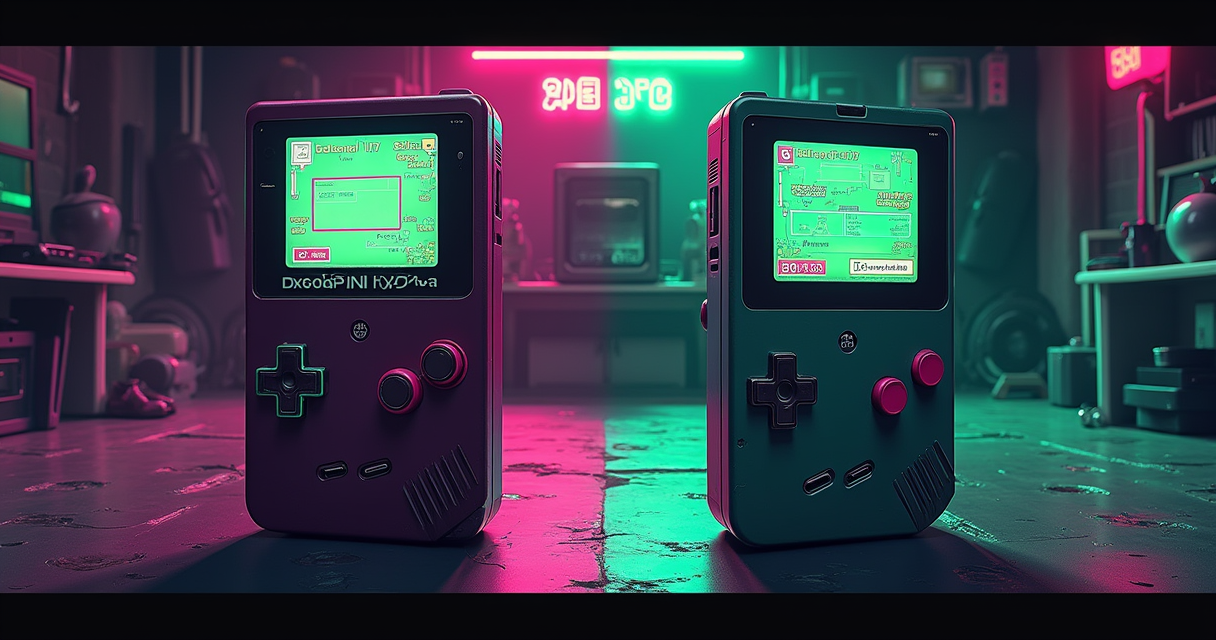
There is a particular species of consumer cruelty in shipping a handheld that makes your previous handheld look slow, charging more for the privilege, and then quietly discontinuing the exact configuration everyone wanted. Retroid managed all three in about sixteen months. The Retroid Pocket 5 arrived in September 2024 at $199 and was, by any honest reckoning, the best sub-$200 Android emulation handheld anyone had shipped. The Retroid Pocket 6 arrived in January 2026 roughly seventy percent faster, with a 120Hz AMOLED panel and a bigger battery — and then, four months later, instead of the customary mid-cycle price cut, it got a price increase.
So this is not a simple story of new-beats-old. New does beat old; the benchmarks are not subtle and the emulation ceiling genuinely moves up a console generation. But the Pocket 6 exists in a lineup and a market that have both shifted underneath it, and the interesting question in 2026 is not "is the 6 faster than the 5" (it is, obviously) but "is the 6 worth its current asking price over a Pocket 5 you can find on sale, or over the three other $250 handhelds fighting for the same coat pocket." We are going to answer that with numbers, with the actual court cases that make any of this legal, and with what the people who reviewed both devices actually said — not what the spec sheet wants you to believe.
One housekeeping note, because this site cares about it: several figures floating around the marketing copy for these two devices are wrong. The Pocket 5 does not use LPDDR5. The Pocket 6 is not "50% faster" — it is closer to 70. It does not run "nearly all PS3 and Xbox 360 ports," and anyone who tells you it does has not tried to boot RPCS3 on it. We will correct each of these where a reader would otherwise arrive believing them, because a review that repeats the brochure is not a review.
A Year and a Neighborhood Apart
The Pocket 5's original bargain
The Pocket 5 landed in September 2024 with a Snapdragon 865, 8GB of LPDDR4x, 128GB of UFS 3.1 storage, and a 5.5-inch 1080p OLED running at 60Hz, for $199. That was a stupidly good deal, and it was understood as such immediately. The 865 was a flagship phone chip from 2020, which sounds damning until you remember that emulation cares less about calendar age than about single-thread grunt and driver maturity, and the 865/Adreno 650 combination had both in abundance. A Geekbench 6 single-core score of 1,176 does not read like much next to a modern phone, but it was enough to make PSP, Dreamcast, and most GameCube run without you thinking about it.
The Pocket 6's awkward arrival
The Pocket 6 was revealed in late 2025, went up for pre-order at a promotional $209 for the 8GB model, and began shipping in January 2026 at a $229 regular price. The 12GB RAM / 256GB storage variant was listed around $259 to $279. On paper it was the successor everyone wanted: Snapdragon 8 Gen 2, LPDDR5x, a 120Hz AMOLED, a 6,000 mAh battery, Wi-Fi 7. Then, on roughly March 2, 2026, Retroid did something almost no handheld maker does four months into a product's life — it raised the price, citing a spike in memory (RAM/flash) component costs. The 8GB model climbed to around $244 (listed at $249 in some regions), and the 12GB model was quietly pulled. As of this writing in July 2026, goRetroid still shows the 12GB tier but no longer guarantees it will ship. You read that correctly: the configuration this review would otherwise recommend is the one you may not be able to buy.
The "Value Crisis," in Retroid's own lineup
Phil Retro at HandheldRank has a phrase for what happened to the Pocket 5 in this window — a "Value Crisis." His verdict, in a piece titled around whether the Pocket 5 is still worth it in 2026, is worth quoting because it is exactly right: "In a vacuum, the Retroid Pocket 5 is still a fantastic gaming machine," he writes, but "the problem isn't the device; it's the neighborhood it lives in." He calls the 5 a "sale-only device" that has been "outpaced by its own shadow" and "cannibalized" from two directions at once — by the cheaper Pocket G2 sitting one rung below it and by the Pocket 6 sitting one rung above. When a manufacturer's own product stack eats a device from both sides, the device didn't get worse. The neighborhood did.
The Spec Sheet, Line by Line
Sixteen rows, no marketing
Here is the full comparison, corrected against the actual retail listings rather than the launch brochures. Note in particular the RAM generation, the video-out row, and the single-core benchmark, all three of which are commonly misreported.
| Spec | Retroid Pocket 5 | Retroid Pocket 6 |
|---|---|---|
| Launch date | September 2024 | January 2026 |
| Launch price / current | $199 / sale-only (~$175 used) | $229 / ~$244 (raised Mar 2026) |
| SoC | Snapdragon 865 (7nm) | Snapdragon 8 Gen 2 (4nm) |
| GPU | Adreno 650 | Adreno 740 (~680MHz) |
| RAM | 8GB LPDDR4x | 8GB or 12GB LPDDR5x |
| Storage | 128GB UFS 3.1 + microSD (2TB) | 128GB / 256GB + microSD (2TB) |
| Display | 5.5" 1080p OLED | 5.5" 1080p AMOLED |
| Refresh rate | 60Hz | 120Hz |
| Battery | 5,000 mAh | 6,000 mAh |
| Charging | Standard (no fast-charge) | 27W fast-charge |
| Video out | DP-over-USB-C (4K30; 4K60 via dock) | DP-over-USB-C (4K60) |
| Wireless | Wi-Fi 6 / Bluetooth 5.1 | Wi-Fi 7 / Bluetooth 5.3 |
| Controls | Hall sticks + analog L2/R2 | Hall sticks + analog L2/R2; D-pad-top OR stick-top layout |
| Weight | 280g | ~320g |
| OS | Android 13 | Android 13 |
| Geekbench 6 (single-core) | 1,176 | 1,985 |
Where the brochure lies to you
Three corrections, because they matter. First, the Pocket 5 uses LPDDR4x, not LPDDR5 — retail listings are unambiguous, and it does not meaningfully affect emulation, but it is not the spec the aggregators keep copying. Second, the Pocket 5's video output is not absent; it does DisplayPort over USB-C, typically 4K30, and 4K60 through the official dock. If you read somewhere that the 5 can't drive a TV, that source is wrong. Third — and this is the one you will hear parroted most — the Pocket 6 is not a "50% faster" device. A single-core jump from 1,176 to 1,985 is a 69% increase, call it seventy. The GPU roughly doubles. "Fifty percent" undersells the one thing the 6 unambiguously wins.
The one spec that doesn't change
Both devices share a 5.5-inch 1080p OLED-class panel and, essentially, the same footprint (the 6 is about 6% larger to fit the bigger cell and the cooling). That matters more than it sounds. The Pocket 6 is not a size-class upgrade the way a jump to a 7-inch Odin would be; it is the same object in your hand, running faster and refreshing twice as often. If you liked the ergonomics of the 5 — and most people did — you will like the 6's, plus a choice at checkout between a D-pad-up-top or offset-stick-up-top face layout, which the 5 never offered.
Silicon: The 865 vs the 8 Gen 2
Geekbench, and what ~70% actually buys
The Snapdragon 8 Gen 2 is the same chip AYN put in the Odin 2 line, and it is a legitimate generational leap over the 865. Single-core Geekbench 6 goes 1,176 → 1,985. Multi-core and, more importantly, the Adreno 740 GPU roughly double the 650. In emulation terms, that ~70% single-thread gain is the difference between "PS2 runs at native resolution if you're careful" and "PS2 runs at 2x native with widescreen hacks and you stop thinking about it." It is the difference between a handful of Switch titles limping and most of the Switch 1 library running at full or near-full frame rate. The chip is the whole reason the Pocket 6 exists, and it delivers.
The GPU and the Turnip driver problem
Here is where the deadpan gets earned. Raw GPU horsepower is only half of Android emulation; the other half is drivers. The 8 Gen 2's Adreno 740 benefits from years of community work on the open-source Turnip Vulkan drivers, and that maturity is why it emulates cleanly. HandheldRank made this point sharply when comparing the 6 to the newer-but-greener Pocket G2, whose Snapdragon G2 Gen 2 uses a different, less-supported GPU: "The 8 Gen 2 has years of driver optimization behind it, including custom Turnip drivers. The G2's newer GPU lacks that maturity." On the G2 there is an actual catch-22 — the stock drivers glitch Switch games, the Turnip drivers fix the glitches but tank the frame rate. The Pocket 6 simply doesn't have that problem. Newer silicon is not automatically better silicon for this hobby, and the 6 is the proof by counterexample.
Why raw numbers lie about emulation
A benchmark measures a synthetic loop; an emulator measures how badly a 2001 console abused undocumented hardware quirks that now have to be reproduced in software. The 865 was never the bottleneck for sixth-generation emulation — it was the ceiling. What the 8 Gen 2 buys is headroom: the ability to upscale, to run high-resolution texture packs, to hold 60fps in a game the original hardware struggled to hold 30 in. That headroom is real and worth paying for if your library lives at the top of the emulation stack. If your library is SNES, Genesis, GBA, and PS1 — as most people's actually is — the 865 was already infinite headroom, and the 8 Gen 2 is horsepower you will never touch.
The Panel: 60Hz vs 120Hz
Same glass, different clock
Both devices use a 5.5-inch, 1080p OLED-class panel. The Pocket 6's is branded AMOLED and, crucially, runs at 120Hz against the Pocket 5's 60Hz. Brandon Saltalamacchia at RetroDodo, who scored the 6 an 8.4/10, was unusually unqualified in his praise of the screen, calling it "beautiful" and "one I simply cannot fault" — no tearing, no light bleed — and noting the "5.5-inch AMOLED display makes the device feel incredibly modern." That is not nothing from a reviewer whose overall take on the device was, and I quote, "A Perfect, Yet Slightly Dull Android Handheld."
What 120Hz does — and doesn't — do
Be precise about this, because it is oversold. The overwhelming majority of retro content runs at 30 or 60fps. A 30fps game does not become smoother at 120Hz; it becomes, at best, more evenly paced, because 120 divides cleanly by 30 in a way 60 does not always manage. Where 120Hz earns its keep is in three places: the Android UI and front-end feel genuinely slicker; native Android games and Switch titles that target 60 can run tear-free with the right sync; and — the one that matters to a specific crowd — anything you want to run above 60fps, whether that's an unlocked-framerate emulator hack or a mobile game, has somewhere to go. For a pure retro library, 120Hz is a pleasant luxury, not a reason to upgrade. For anything modern, it is a real advantage over the 5's hard 60Hz cap.
The critics on the display
The consensus across reviewers who handled both is that the panel is the single most "premium-feeling" thing about the Pocket 6 — the component that most makes a $244 device feel like it costs more. Saltalamacchia's "cannot fault" is the high-water mark, but even skeptics granted the screen. The Pocket 5's OLED was already excellent; the 6's is the same excellence, refreshing twice as fast, with slightly better brightness uniformity in the units reviewers measured. If you have never used an OLED handheld, either of these will spoil you for the LCD panels on cheaper devices — which is a large part of why the budget Miyoo and Anbernic tier competes on software and price rather than screen.
What Each One Actually Emulates
The ceiling both devices share
Let's set the floor first, because it is high on both. NES, SNES, Genesis, Game Boy through GBA, PlayStation 1, Nintendo 64, and Dreamcast run at or beyond full speed on both the Pocket 5 and the Pocket 6, full stop. PSP runs full-speed on both, with the 6 giving you more upscaling room. Saturn — historically the emulation white whale — is playable on the 5 and comfortable on the 6. If your collection stops at the sixth console generation, the honest truth is that the Pocket 5 already does everything, and the Pocket 6 does it with the fans quieter.
Where the Pocket 6 pulls ahead
The gap opens at the top of the stack. On PlayStation 2 via AetherSX2, the Pocket 5 manages roughly native resolution; the Pocket 6 runs demanding titles — Saltalamacchia's example was a game pushed to "1.5x and 2x native resolution" — with the caveat, in his words, that "PS2 performance was great if you don't mind tinkering between upscaling settings." On GameCube and Wii via Dolphin, the 6 reaches "3x native resolution" where the 5 sits closer to 1x–1.5x. And on Switch, via the post-Yuzu community forks Eden and Citron, the 6 runs most of the Switch 1 library at full or near-full frame rate while the 5 manages only select titles. HandheldRank's summary of the Switch gap versus lesser chips was blunt: "The RP6 wins here, and it's not close."
The PS3 / Xbox 360 lie
Now the correction the marketing copy earns. You will read that the Pocket 6 runs "nearly all PC ports from the PS3 and Xbox 360 eras" and "excels" at seventh-generation emulation. This is false. RPCS3 (PS3) and Xenia (Xbox 360) are desktop-class emulators that need x86 horsepower the 8 Gen 2 does not have; on this device they are a slideshow, when they boot at all. The Pocket 6 is a superb sixth-generation-and-earlier machine with meaningful Switch capability on top. It is not a seventh-generation machine. Anyone who tells you otherwise is selling something. Here is the honest ceiling, side by side:
EMULATION CEILING — Retroid Pocket 5 vs Pocket 6
                              RP5 (SD865)       RP6 (8 Gen 2)
NES / SNES / Genesis / GBA    full speed        full speed
PS1 / N64 / Dreamcast         full speed        full speed
PSP                           full speed        full speed, upscaled
Saturn                        playable          full speed
PS2   (AetherSX2)             ~1x native        1.5x-2x native
GameCube / Wii (Dolphin)      1x-1.5x           up to 3x native
3DS   (Citra fork)            playable          upscaled, stable
Switch (Eden / Citron)        select titles     most of the library
PS3   (RPCS3)                 no                no  (slideshow)
Xbox 360 (Xenia)              no                no  (slideshow)
And because half of getting good performance is configuration rather than silicon, here is roughly what a sane person runs on the Pocket 6:
# What actually works, per system (Pocket 6)
PS2    -> AetherSX2, Vulkan backend, 2x res, widescreen patches ON
GC/Wii -> Dolphin, Vulkan, 2x-3x internal res, dual-core ON
Switch -> Eden, Vulkan, GPU-accurate, docked profile for 60fps
PSP    -> PPSSPP standalone, 3x res, texture scaling OFF
Fan    -> "Performance" profile for PS2/GC; "Smart" for 8/16-bit
The Law You're Standing On
Connectix, Bleem, and "modestly transformative"
Every emulation handheld ships on top of a legal settlement most of its buyers have never heard of, and this site is constitutionally incapable of reviewing one without saying so. The emulator — the software that pretends to be a PlayStation — is legal in the United States, and it is legal because of a specific case: Sony Computer Entertainment, Inc. v. Connectix Corp., 203 F.3d 596 (9th Cir. 2000). Connectix made the Virtual Game Station, a software PlayStation for the Mac; Sony sued; the Ninth Circuit found that reverse-engineering Sony's BIOS to build a competing, interoperable product was fair use, calling the resulting emulator "modestly transformative." Its sibling case, Sony v. Bleem, went the same way for the Bleem! emulator around the same time. Those two 2000 decisions are the reason a company can sell you a Pocket 6 at all.
The emulator is legal; the ROM is your problem
What those cases did not do is bless piracy. The emulator is lawful; the copyrighted game image you feed it is a separate question, and downloading a ROM of a game you do not own is infringement, full stop, no matter how many forum posts wave the word "abandonware" at you. The clean path is dumping your own cartridges and discs, or playing the genuinely public-domain and homebrew scene, which is larger and better than newcomers expect. This is also the honest argument for the whole hobby: preservation. Roughly half of all published games are estimated to be commercially unavailable, and a device like this is often the only way to legally play a disc you legally own on hardware that still works.
What the historians say about why this matters
It is worth remembering what the machines in that emulation ladder actually did to the culture. Jimmy Maher, writing as The Digital Antiquarian, traces how the original PlayStation and Final Fantasy VII, across 1994–1997, dragged gaming "from a pastime that was for young people or maybe slightly geeky people" and "turned it into a highly credible form of mass entertainment." The PS2 and GameCube libraries the Pocket 6 exists to run are the direct sequel to that story. For the encyclopedic version of what made those consoles tick, Hardcore Gaming 101's PlayStation 2 retrospective is the reference. You are not buying a toy; you are buying a reasonably faithful software recreation of the most culturally important consoles ever made. Act like it.
The Competition: Odin, G2, Steam Deck
The bracket, on one screen
The Pocket 6 does not compete with the Pocket 5 so much as it competes with everything else near $250. Here is the field it actually fights in.
| Device | SoC | Screen | Battery | Price | The one-line take |
|---|---|---|---|---|---|
| Retroid Pocket 5 | Snapdragon 865 | 5.5" 60Hz OLED | 5,000 mAh | ~$175 (sale-only) | Still does everything 6th-gen; buy on sale |
| Retroid Pocket 6 | Snapdragon 8 Gen 2 | 5.5" 120Hz AMOLED | 6,000 mAh | ~$244 | Best OLED price-to-performance of 2026 |
| Retroid Pocket G2 | Snapdragon G2 Gen 2 | 5.5" 60Hz AMOLED | 5,000 mAh | $219 (discontinued) | Newer chip, greener drivers; already gone |
| AYN Odin 2 Portal | Snapdragon 8 Gen 2 | 7" 120Hz OLED | 8,000 mAh | $249 | Same chip, bigger everything, not pocketable |
| Steam Deck OLED | x86 (Zen 2 / RDNA 2) | 7.4" 90Hz OLED | 50Wh | $549 | Different class; PC games + PS3-era ceiling |
The G2, and why it's already gone
The Pocket G2 is the strangest entry. Launched in October 2025 as a rebranded Pocket 5 shell with the newer Snapdragon G2 Gen 2 chip, it slotted between the 5 and the 6 at $219 — and on March 16, 2026, it went "Sold Out" and was temporarily discontinued, about five months into its life, officially blamed on the same memory-pricing crisis that raised the Pocket 6. The reviewer at Retro Handhelds added the quieter truth: it "never really seemed to fit anywhere in Retroid's lineup." Its chip benches roughly 50% ahead of the 865 in single-core but about 10% behind the 8 Gen 2, and its GPU drivers are immature enough that HandheldRank flat-out recommends the 6 as "the safer long-term bet if you care about Switch and PC emulation." We went deeper on why the 120Hz Pocket 6 buried the G2 in its own piece; the short version is that a newer number on the box does not beat a mature driver stack.
The Odin 2 Portal and the Steam Deck bracket
The genuinely hard call is the Odin 2 Portal, which at $249 puts the same Snapdragon 8 Gen 2 behind a 7-inch 120Hz OLED and an 8,000 mAh battery. If pocketability is not a requirement, the Portal is arguably more device for the money. The Pocket 6's entire counter-argument is size: at ~320g and 5.5 inches, it is the one you can actually put in a jacket pocket. Above this bracket entirely sits the Steam Deck OLED at $549 — a different animal running actual x86 PC games and reaching a genuinely higher emulation ceiling, at nearly triple the price, double the weight, and a fraction of the battery life on demanding titles. If you want the PS3-and-up ceiling the Pocket 6 can't reach, that is the buy — or a desktop, where a Batocera install turns any spare PC into an emulation station for the cost of nothing.
Battery, Charging, and Heat
5,000 vs 6,000 mAh, and the 27W difference
The Pocket 6 carries a 6,000 mAh cell against the Pocket 5's 5,000 mAh, a 20% capacity bump — but it also feeds a chip that draws more under load and a panel that refreshes twice as fast, so real-world runtime does not scale by 20%. What genuinely changes the ownership experience is charging: the 6 supports 27W fast-charging where the 5 has none. On the 5, a dead battery is a long wait. On the 6, you get a meaningful top-up over a lunch break. For a device you actually carry, fast-charge is the underrated upgrade.
Real runtimes by workload
Reviewers converged on a consistent picture for the Pocket 6. Saltalamacchia measured "around 4.5 hours" of mixed use, stretching to six-to-eight hours on light 8-bit and Game Boy content, and collapsing to about 2.5–3 hours at full performance running PS2 or GameCube upscaled. The Pocket 5, with the smaller cell but the less demanding chip and 60Hz panel, lands around 3.5 hours of heavy emulation. The pattern to internalize: the 6 lasts longer on easy content and about the same or slightly less on the hardest content, because the hardest content is exactly where its faster chip drinks the extra capacity. Neither is an all-day device at the top of its range; both are all-evening devices for the retro middle.
Thermals and fan noise
Both devices are actively cooled. The Pocket 6's slightly larger shell exists partly to house a beefier cooling solution for the hotter 8 Gen 2, and the trade-off is audible: push PS2 or GameCube upscaling and the fan spins up. This is the tax on the headroom — the 6 can hold higher resolutions than the 5, but sustaining them makes noise. For 8- and 16-bit libraries the fan is effectively silent because the chip is barely awake. If you play mostly at the top of the stack and hate fan noise, that is a real, if minor, mark against the 6; if you play mostly retro, you will never hear it.
Five Ways It Actually Plays
The Casual and the Completionist
The Casual — an hour of SNES, GBA, or PS1 after work — is genuinely the worst-case argument for spending on the Pocket 6. Both devices run this content flawlessly; the OLED is identical in size; the only 6-exclusive perks are a snappier menu and longer battery on light games. A Casual player is better served by a Pocket 5 on sale or, honestly, by a far cheaper device. The Completionist grinding 80-hour PS2 and GameCube RPGs is the opposite case and the strongest one for the 6: this is where 2x–3x upscaling, the 8 Gen 2's headroom, and the ability to hold frame rate in busy scenes turn a compromised experience into a definitive one. If your goal is to 100% sixth-generation libraries at their best, the 6 is the tool.
The Speedrunner and the Co-op Player
The Speedrunner cares about input latency and frame timing above all, and here the 120Hz panel is a legitimate edge: lower persistence, more consistent frame pacing, and the option to run at native refresh where an emulator supports it. It is not a substitute for real hardware or an FPGA, but among Android handhelds the 6 is as good as frame timing gets in this price class. The Co-op Player lives on the video-out row: both devices push DisplayPort over USB-C, but the 6 does a clean 4K60 where the 5 typically manages 4K30, so pairing a second Bluetooth controller and throwing GameCube or Switch multiplayer onto a TV is materially better on the 6. Docked, it becomes a tiny living-room console.
The Commuter
The Mobile / Commuter case is where the Pocket 6's whole identity lives. At ~320g and 5.5 inches it is the largest thing you would still call pocketable and the smallest thing that runs Switch — the exact niche the 7-inch Odin 2 Portal cedes by being too big for a jacket. On a train or a flight, the AMOLED is a genuine pleasure, Wi-Fi 7 makes cloud gaming and Android game installs painless, and the fast-charge means a layover restores meaningful runtime. If you never play at a desk, this is the strongest argument for the 6 over both the Pocket 5 and the bigger Odin.
Who Should Buy Which
Buy the Pocket 6 if…
- You want Switch, GameCube, or upscaled PS2 and you want it in a pocketable body — this is the specific job the 6 does better than anything at its size and price.
- You're buying your first serious emulation handheld in 2026 and want the device with the longest runway — the mature 8 Gen 2 driver stack makes it, per HandheldRank, "the safer long-term bet."
- You play docked or on a TV and want clean 4K60 output plus a second controller for local multiplayer.
Buy (or keep) the Pocket 5 if…
- You already own one and play mostly sixth-gen-and-earlier — the 5 already does everything you play; the 6 would be paying ~$244 to make a fan you can't hear quieter. Don't.
- You can find a Pocket 5 on sale under ~$175 and your library tops out at PSP, Dreamcast, and light GameCube — it is still, in Phil Retro's words, "a fantastic gaming machine" in a vacuum.
- Budget is the hard constraint — though at that point also weigh the sub-$100 Miyoo and Anbernic tier, which nails 8- and 16-bit for a fraction of the money.
Buy neither if…
- You need PS3 or Xbox 360 — neither Retroid touches seventh-gen; that's a Steam Deck OLED or a gaming PC, full stop.
- You care about frame-perfect, lag-free accuracy over convenience — that is FPGA territory. A MiSTer Multisystem 2 reproduces the original hardware in logic rather than software, and for N64 specifically an Analogue 3D plays real cartridges on real silicon-accurate hardware. Different philosophy, different (higher) price.
- You want a bigger screen and don't need a pocket — the 7-inch Odin 2 Portal is the same chip with more of everything for $5 more.
Pricing and Availability
The table, as of July 2026
Prices move in this category faster than in most, and the last six months have been unusually chaotic. Here is where things actually stand.
| Model | Config | Price | Status (Jul 2026) |
|---|---|---|---|
| Retroid Pocket 5 | 8GB / 128GB | ~$175 (was $199) | Sale-only; still available |
| Retroid Pocket 6 | 8GB / 128GB | ~$244 (was $229) | Available; price raised Mar 2026 |
| Retroid Pocket 6 | 12GB / 256GB | ~$259–$279 | Listed but not guaranteed to ship |
| Retroid Pocket G2 | 8GB / 128GB | $219 | Discontinued Mar 16, 2026 |
| AYN Odin 2 Portal | 8GB / 128GB (Base) | $249 | Available (Pro $369 / Max $449) |
| Steam Deck OLED | 512GB | $549 | Available |
The RAM-spike story
The reason this table is weird is a global memory-component price spike that hit in early 2026. Most manufacturers ate the cost to protect their launch pricing; Retroid, unusually, passed it through — raising the Pocket 6 roughly four months in, discontinuing the Pocket 6's 12GB tier, discontinuing the Pocket G2 entirely, and bumping the Pocket Classic. The effect is a lineup that costs more and offers fewer configurations than it did at launch. It is not price-gouging so much as a small manufacturer with thin margins refusing to absorb a shock — but the practical result for you is that the "buy the 12GB for future-proofing" advice this review would have given in January is no longer reliably actionable.
Where to actually buy one
The Pocket 6 sells through goRetroid's official store (and its US warehouse), which is where the current $244 figure lives. Buy from the official channel or an authorized reseller; the emulation-handheld space attracts gray-market listings, and warranty support on these devices is worth having when a Hall stick eventually drifts. At checkout the 6 asks you to pick a face-button layout — D-pad up top or offset stick up top — so decide whether you're primarily a fighting-game/2D player (D-pad-top) or a 3D-analog player (stick-top) before you order, because you can't change it later.
The Verdict
Pocket 6 — the pros and cons
The Pocket 6 is the best pocketable OLED emulation handheld of 2026, and it is also slightly dull, and both of those things are true at once. Saltalamacchia caught it exactly: it is a "remarkable $250 Android handheld for those wanting a portable powerhouse," and yet "the only disappointment comes from knowing that Retroid can do better," because "a $250 device should have something unique." It plays it safe. It is a faster Pocket 5 with a better screen, not a reinvention.
- Pros: ~70% faster single-core than the 5; roughly 2x GPU; genuine PS2 (2x), GameCube (3x), and Switch capability; excellent 120Hz AMOLED; 27W fast-charge; mature 8 Gen 2 drivers; the pocketable device that runs Switch.
- Cons: price raised mid-cycle to ~$244; 12GB tier effectively gone; fan-audible under heavy upscaling; ~2.5–3h battery at full tilt; does NOT run PS3/360 despite the marketing; brings nothing genuinely new beyond speed.
Pocket 5 — the pros and cons in 2026
- Pros: still runs everything through the sixth generation flawlessly; excellent OLED; the same great ergonomics; frequently under $175 on sale; the value pick for a retro-first library.
- Cons: 60Hz only; no fast-charge; struggles with upscaled PS2/GC and most of Switch; "sale-only" status means inconsistent availability; genuinely outclassed the moment you care about seventh-gen-adjacent content.
The rating
The Retroid Pocket 6 earns an 8 out of 10. It is an excellent device and the correct buy for anyone who wants Switch and upscaled sixth-gen in a pocket — docked a full point for the mid-cycle price hike, the vanished 12GB tier, and a design brief that reads as "the Pocket 5, but more," which is fine but not thrilling. The Retroid Pocket 5 in 2026 lands at 6.5 out of 10 — not because it got worse, but because, as Phil Retro put it, of "the neighborhood it lives in"; buy it only on sale and only if your library respects its ceiling. If you own a 5 and play retro, keep it and skip the 6. If you're buying fresh and want the top of the Android stack in a jacket pocket, the 6 is the machine — just don't believe the box when it claims a console generation it can't reach.
Questions the search bar asks me
- Is the Retroid Pocket 6 worth it over the Pocket 5 in 2026?
- It depends entirely on your library. For PS2, GameCube, and Switch emulation the Pocket 6 is a clear upgrade (2x–3x upscaling, most of the Switch 1 library), but for PS1/PSP/16-bit content the Pocket 5 already runs everything flawlessly and can be found under ~$175 on sale versus the 6's current ~$244. If you own a 5 and play retro-first, skip the 6.
- How much faster is the Retroid Pocket 6 than the Pocket 5?
- About 70%, not the '50%' often quoted. Geekbench 6 single-core goes from 1,176 on the Pocket 5's Snapdragon 865 to 1,985 on the Pocket 6's Snapdragon 8 Gen 2 — a 69% increase — and the Adreno 740 GPU is roughly double the Adreno 650. That headroom is what enables PS2 at 2x and GameCube at 3x native resolution.
- Can the Retroid Pocket 6 run PS3 or Xbox 360 games?
- No. Despite marketing claims about 'PS3 and Xbox 360-era ports,' the Snapdragon 8 Gen 2 cannot drive RPCS3 or Xenia at playable speeds — they run as a slideshow if they boot at all. The Pocket 6's real ceiling is sixth-generation (PS2, GameCube, Wii) plus much of the Switch 1 library. For PS3-era games you need a Steam Deck OLED or a gaming PC.
- Is the Retroid Pocket 5 still worth buying in 2026?
- Only on sale. HandheldRank's Phil Retro calls it a 'sale-only device' that is 'still a fantastic gaming machine' in a vacuum but has been 'cannibalized' by the cheaper Pocket G2 and the faster Pocket 6. At its ~$175 street price it's a strong value for a PS1/PSP/Dreamcast library; at anything near its old $199 MSRP, buy the Pocket 6 instead.
- Is emulation on the Retroid Pocket legal?
- The emulator software is legal in the US — established by Sony Computer Entertainment, Inc. v. Connectix Corp., 203 F.3d 596 (9th Cir. 2000), where the court called an emulator 'modestly transformative' fair use. The games are separate: playing ROMs of titles you own (ideally dumped yourself) is the lawful path; downloading copyrighted games you don't own is infringement regardless of 'abandonware' claims.

Ben covers the hardware end of retro gaming: FPGA cores, real-cartridge dumping, capture setups, CRT vs scaler workflows, and the legal and physical preservation infrastructure that keeps old games playable. Every post under this byline is reviewed pre-publish by Sam P., Editor & Operator — corrections to info@instalinkoteam.com. Published 2026-08-29 · Last updated 2026-08-29. Full bios on the author page.