/// FIELD NOTES FROM A SELF-AWARE GAME SITE
Retroid Pocket 6 vs G2 2026: 120Hz OLED for $25 More
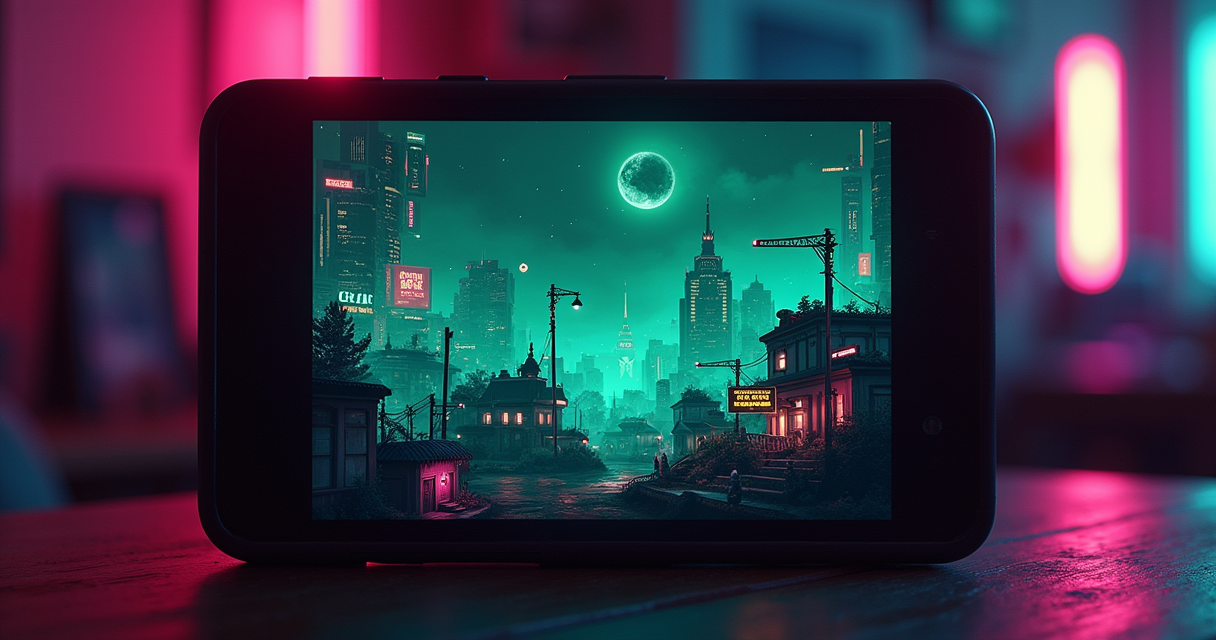
There is a genre of hardware release where the interesting question is not which one is faster — that part is settled before the box ships — but which compromise you are willing to pay for. The Retroid Pocket 6 and the Pocket G2, both unveiled in the last week of October 2025, are exactly that kind of release. They share a maker, a 5.5-inch AMOLED panel, a 27W charger, and a price bracket narrow enough to fit inside a rounding error. What separates them is a system-on-chip, a refresh rate, and — thanks to a memory market that spent the first half of 2026 quietly setting itself on fire — roughly twenty-five dollars.
On paper this is the easiest comparison Retroid has ever handed us. The Pocket 6 gets the Snapdragon 8 Gen 2, a flagship phone chip with years of driver maturity behind it, a 120Hz OLED, and a bigger battery. The Pocket G2 gets the brand-new Snapdragon G2 Gen 2, a 60Hz version of the same-size screen, and a lower asking price. HotHardware's reveal coverage from Chris Harper on October 27, 2025 put it bluntly: "For most users, we imagine that the Retroid Pocket 6 will be the most compelling deal." That is probably the correct answer. It is also not the whole answer, because the two devices are close enough in the middle of their performance envelopes that the cheaper one quietly wins more scenarios than the marketing lets on.
This is a long read because the honest version of this comparison has to survive three complications: a pricing timeline that changed four times in eight months, a chip nobody had benchmarked before this generation, and a driver situation that is still, as one reviewer put it, being written. We will take all three apart, with numbers from the people who actually ran the tests, and no fabricated figure anywhere in the piece.
The Verdict in Brief
If you scrolled straight here — and you did — this section is the compressed version. Everything below it is the evidence.
The one-sentence answer
Buy the Pocket 6 if you want the best Switch, Wii and PS2 emulation on a 5.5-inch handheld and the 120Hz OLED matters to you; buy the G2 if your ceiling is the sixth console generation and you would rather keep the twenty-five dollars. Neither is a mistake. One is simply more device than most buyers in this bracket will ever load.
Who should stop reading now
If your library is PS1, GBA, SNES, Genesis, PSP and Nintendo DS — the meat of what handhelds actually get used for — the G2 runs all of it with margin to spare, and the extra silicon in the Pocket 6 spends its afternoons idle. Steam Deck HQ's Noah Kupetsky called the G2 "a fantastic handheld that feels like a step up from the Pocket 5," and he is right up to the point where you try to brute-force a 4K-upscaled GameCube shader. That point is further away than you think.
The catch nobody puts on the box
The $25 delta is a 2026 artifact, not a launch fact. At reveal these devices were $10 apart. The gap widened because Retroid raised the Pocket 6's price during a RAM and NAND shortage — the same shortage that briefly deleted the 12GB model entirely. If you are reading a review that quotes the old $229 figure, it is out of date, and we will show you exactly when and why below.
The Spec Sheet, Line by Line
Start with the raw comparison, because most of the argument lives in this table. Two things to notice before you read it: first, the G2 is not strictly the lesser device on every row — it ships with newer Android and newer Bluetooth. Second, every emulation feature people ask about (save states, netplay, shaders) is a software function of Android and RetroArch, identical on both, so the hardware rows are where the real fork is.
| Spec | Retroid Pocket 6 | Retroid Pocket G2 |
|---|---|---|
| SoC | Snapdragon 8 Gen 2 | Snapdragon G2 Gen 2 |
| GPU | Adreno 740 (mature drivers) | Adreno (new; drivers maturing) |
| RAM | 8GB / 12GB LPDDR5x | 8GB LPDDR5x |
| Storage | 128GB / 256GB UFS 3.1 | 128GB UFS 3.1 |
| Display | 5.5" AMOLED 1920×1080 | 5.5" AMOLED (1080p-class) |
| Refresh rate | 120Hz | 60Hz |
| Battery | 6000mAh | 5000mAh |
| Charging | 27W | 27W |
| Wi-Fi | Wi-Fi 7 | Wi-Fi 6 |
| Bluetooth | 5.3 | 5.4 |
| Video out | USB-C DisplayPort, 4Kp60 | USB-C DisplayPort, 1080p |
| OS | Android 13 | Android 15 |
| Dimensions | Slightly larger | 19.92 × 7.85 × 1.56 cm |
| Weight | Heavier | 280 g |
| microSD | Yes | Yes |
| Accuracy model | Software cores (not FPGA) | Software cores (not FPGA) |
| Save states | RetroArch / standalone (identical) | RetroArch / standalone (identical) |
| Netplay | RetroArch rollback; Wi-Fi 7 edge | RetroArch rollback; Wi-Fi 6 |
| Shaders | More headroom at 1080p/120Hz | Fine at 1080p/60Hz |
| Emulation ceiling | Switch / Wii / PS2 with headroom | PS2 / GameCube / Wii; Switch with caveats |
| Mid-2026 price | $244 (8GB / 128GB) | $219 |
The headline silicon
The one row that decides the tier war is the SoC. The Pocket 6 runs the Snapdragon 8 Gen 2, the chip that powered a generation of flagship Android phones and, by extension, has a driver stack that has been beaten into shape by millions of devices. The G2 runs the Snapdragon G2 Gen 2, part of Qualcomm's gaming-specific G-series, which is newer, narrower in deployment, and — this is the important part — largely untested in emulation until these handhelds arrived. Two chips that benchmark close and behave differently under a driver-hungry workload like Switch emulation. Hold that thought; it gets its own section.
Displays, batteries, radios
Both panels are 5.5-inch AMOLEDs, and both are genuinely good. The Pocket 6's runs at 1920×1080 and 120Hz; the G2's is capped at 60Hz. The Pocket 6 also carries a larger 6000mAh cell against the G2's 5000mAh, and pairs Wi-Fi 7 with 4K-capable DisplayPort output where the G2 offers Wi-Fi 6 and 1080p out. The inversions are small but real: the G2 ships Android 15 to the Pocket 6's Android 13, and Bluetooth 5.4 to its 5.3. None of that reshapes the verdict, but it does mean the phrase "the G2 is just a cheaper Pocket 6" is lazy.
Everything that is identical
Because both run stock Android with sideloaded emulators, the entire software feature set — save states, rewind, RetroArch's rollback netplay, CRT and LCD shaders, per-game configuration, cloud-synced saves — is the same on both, right down to the version of RetroArch you install. Neither device does hardware-level accuracy the way an FPGA board does; both are software emulators whose fidelity depends on the core, not the chassis. If bit-exact accuracy is your religion, that is a MiSTer conversation, not a Retroid one, and we have written that MiSTer FPGA accuracy story separately. Here, the only thing the extra silicon buys you is how heavy a core you can run before it stumbles.
Price History: The RAMpocalypse Tax
You cannot evaluate these two without pinning down what they actually cost, and that is harder than it should be, because the Pocket 6's price moved four times between October 2025 and June 2026. Time Extension gave the phenomenon the only name it deserves: the RAMpocalypse.
What they cost at reveal
At announcement, Retroid ran an introductory preorder window. For the first two weeks the Pocket 6 was $209 for 8GB/128GB and $259 for 12GB/256GB; the Pocket G2 was $199. Retail pricing then settled at $229 and $279 for the Pocket 6 and $219 for the G2. At that moment the cheapest Pocket 6 was exactly $10 above the G2 — close enough that the extra chip was an easy upsell, which is precisely what HotHardware predicted.
The March hike and the vanishing 12GB
Then the memory market turned. On March 2, 2026 Retroid raised the 8GB/128GB Pocket 6 by $15, to $244, and pulled the 12GB/256GB tier from sale, citing — in its own words — "significant changes in the global memory market, including ongoing shortages and sharply rising costs for both RAM and storage." The G2, with only one 8GB configuration to defend, held at $219. In one stroke the entry gap between the two devices went from $10 to $25, and the premium tier simply disappeared. iXBT.games, Steam Deck HQ, RetroDodo and Notebookcheck all logged the change within days.
Where the money lands in mid-2026
By June 12, 2026, The Gadgeteer's headline was flat and accurate: the Pocket 6 is now $244, four months in, with the old $229 figure crossed out on Retroid's own store. The 12GB model did claw its way back the same week, but not as it was: as Android Authority's Hadlee Simons reported, the revived version is a 12GB/128GB configuration at $279 — you keep the RAM, you lose half the storage — and it exists, in Simons' words, only "several months after it discontinued the 12GB/256GB Pocket 6 due to the RAM crisis." The microSD slot is doing a lot of quiet load-bearing work in that decision.
| Date | Pocket 6 (8GB/128GB) | Pocket 6 (12GB) | Pocket G2 (8GB/128GB) |
|---|---|---|---|
| Oct 2025 — first two weeks (preorder) | $209 | $259 (256GB) | $199 |
| Oct 2025 — retail | $229 | $279 (256GB) | $219 |
| Mar 2, 2026 | $244 | Discontinued | $219 |
| Jun 12, 2026 | $244 | $279 (12GB/128GB, revived) | $219 |
The takeaway is not that Retroid got greedy — it is that RAM and NAND are commodities, and 2026 priced them like precious metals. The G2, by carrying less memory and one fixed configuration, was structurally insulated from the shock the Pocket 6 absorbed. That is a genuine, if accidental, point in the cheaper device's favor. If you want to see where both land against the rest of Retroid's stack after the dust settled, our 2026 Retroid range ranking puts the whole lineup in order at the current, real prices.
Silicon: 8 Gen 2 vs G2 Gen 2
This is the section that decides whether the $25 is a bargain or a tax. And the surprising thing — the thing that makes this comparison worth six thousand words instead of a tweet — is that the two chips are closer than their reputations.
The known quantity vs the new kid
The Snapdragon 8 Gen 2 is a settled quantity. It was a flagship phone SoC, it has been in handhelds and tablets for years, and its Adreno 740 GPU has drivers that emulator developers have already tuned against. The Snapdragon G2 Gen 2 is a different animal: part of Qualcomm's dedicated gaming line, purpose-built for handhelds, but so new that, as the comparison crowd kept noting, almost nobody had shipped software against it. Pocket Retro Gaming's Nicolas Viana summarized Qualcomm's own generational claim as "up to 2.3× GPU gains and 55% CPU improvements over the previous model" — impressive, but that is a comparison to the G-series predecessor, not to the 8 Gen 2 sitting in the more expensive Retroid.
How close is close
Close enough to matter. Retro Handhelds' reviewer, credited as Ban, ran the numbers in a detailed G2 review and found the G2 Gen 2 landing 50% above the Snapdragon 865 and 10% below the 8 Gen 2 in single-core, with a GPU "roughly twice as performant as the 865" and only 8-10% behind the Adreno 740. Pocket Retro Gaming reached the same neighborhood independently. Be careful here: the spec-sheet aggregators love to claim the Pocket 6 has "twice the GPU horsepower" of the G2, but that figure compares theoretical peaks, and it is flatly contradicted by two hands-on reviewers who measured single-digit percentage gaps in a real 3DMark run. Trust the people who pressed the button. Against a $25 price gap, you are paying roughly eleven percent more money for roughly ten percent more chip. That is not a rip-off in either direction — it is a remarkably honest price on the silicon. The 8 Gen 2's real advantages are elsewhere: sustained clocks under a bigger battery and thermal envelope, more RAM ceiling, and the driver maturity below.
The driver problem
Here is where the cheaper chip pays for its newness. Notebookcheck's Alex Alderson, covering early G2 reviews on November 6, 2025, noted that "driver issues with the Snapdragon G2 Gen 2 chipset cause graphical glitches in some Switch games, and third-party driver solutions reduce performance below playability thresholds." The comparison-site consensus was blunter: the 8 Gen 2 has thousands of devices' worth of driver history, while on the G2, "the driver story is still being written." This is the real reason to pay the premium — not headline benchmark scores, but the boring certainty a mature GPU driver stack brings to the flakiest, most demanding cores. If your ambitions stop below Switch, you will never meet this problem. If they do not, the Pocket 6 is buying you fewer bad afternoons. For the full generation-over-generation picture on Retroid's own ladder, our Pocket 6 versus Pocket 5 breakdown shows how far the 8 Gen 2 pulled ahead of last year's silicon.
Display, Build & the Stick Revolt
The screen is the second-most-cited reason to spend the extra money, and the build is where Retroid nearly talked itself into a public-relations hole before launch.
120Hz vs 60Hz OLED
Both devices use a 5.5-inch AMOLED, and in still images they look identical: deep blacks, punchy color, the per-pixel contrast that makes emulated 2D sprite art and CRT shaders sing in a way no LCD in this bracket manages. The difference is motion. The Pocket 6's panel runs at 120Hz; the G2's tops out at 60Hz. For the enormous slice of your library that renders at 60fps or below — which is to say almost every retro console ever made — this changes nothing about the game itself. Where 120Hz earns its keep is the Android layer: menus, launchers, high-frame-rate native Android titles, and the general sense that the device is expensive. It is a luxury refresh rate, not a functional one, for the workloads people actually buy these for. Honest framing: if you never leave the emulation stack, 60Hz is not a compromise you will feel; if you also use the thing as a pocket Android console, 120Hz is nice, and you already know whether you care.
The symmetrical-stick backlash
Before the Pocket 6 shipped, its design nearly became the story. Notebookcheck's Habeeb Onawole documented it on October 29, 2025: "Many fans of the brand have expressed their dislike of the Retroid Pocket 6's design," specifically the symmetrical thumbstick placement and a row of buttons crammed beneath the display. Retroid, to its credit, blinked. It ran two community polls — each pulling over 7,000 votes — and rebuilt the layout: the M1 and M2 programmable buttons moved to the back, the Home and Back buttons relocated beside the speakers, and, per Onawole, "nearly 70% voting for the new design and 60% of voters choosing to have the left thumbstick above the D-Pad." You can read the full redesign saga if you enjoy watching a company get corrected in public. The G2, being a revision of the well-liked Pocket 5 chassis, walked into none of this drama.
Size, weight, in the hand
The G2 is the smaller, lighter object: 19.92 × 7.85 × 1.56 cm and 280 grams, described at reveal as slightly more compact than the Pocket 6. For a device you hold for a four-hour PSP session, thirty grams and a couple of millimeters are not nothing. The Pocket 6 is the more substantial device in every dimension, which its bigger battery and 120Hz panel help justify. If pocketability and all-day comfort rank above peak horsepower for you, the G2's dimensions are quietly arguing its case.
Benchmarks: What the Numbers Say
Benchmarks on Android handhelds are noisy — thermal throttling, driver builds and per-title patches move the numbers around — so the rule here is to trust hands-on reviewers over spec-sheet aggregators, and to name the test variant every single time. Below are the figures three independent outlets actually recorded.
Synthetic scores
DROIX's DaveC put the Pocket 6 through the standard battery in a full review and logged an AnTuTu score of 1,518,895 — an 82.7% uplift over the Retroid Pocket 5's 831,297 — plus Geekbench 6 results of 2,005 single-core and 5,331 multi-core, and a 3DMark Wild Life Extreme score of 3,711, a 189.2% jump over the Pocket 5's 1,283. On the G2 side, Retro Handhelds' Ban recorded a 3DMark Wild Life run — the standard test, not Extreme — of 3,032 at 94.95% stability. Do not put those two Wild Life numbers side by side and declare a winner: one is Extreme, one is standard, and they are different workloads. The honest cross-device read is the relative one from the silicon section — the G2 trailing the 8 Gen 2 by roughly 8-10% on GPU.
| Test | Device | Result | Source |
|---|---|---|---|
| AnTuTu | Pocket 6 | 1,518,895 (+82.7% vs RP5) | DROIX (DaveC) |
| Geekbench 6 (single / multi) | Pocket 6 | 2,005 / 5,331 | DROIX (DaveC) |
| 3DMark Wild Life Extreme | Pocket 6 | 3,711 (+189% vs RP5) | DROIX (DaveC) |
| 3DMark Wild Life (standard) | Pocket G2 | 3,032 @ 94.95% stability | Retro Handhelds (Ban) |
| Single-core (relative) | G2 Gen 2 | +50% vs SD865; 10% below 8 Gen 2 | Retro Handhelds / Pocket Retro Gaming |
| GPU (relative) | G2 Gen 2 | ~2× SD865; 8-10% behind Adreno 740 | Retro Handhelds / Pocket Retro Gaming |
| Generational claim | G2 Gen 2 | +55% CPU / +2.3× GPU vs prior G-series | Pocket Retro Gaming (Viana) |
Emulation frame rates
Synthetic scores are a proxy; frame rates in real cores are the point. On the G2, Notebookcheck's Alderson documented The Legend of Zelda: The Wind Waker HD at 1080p and 30 FPS and Super Mario Odyssey at 1080p and 60 FPS with High Performance mode enabled — genuine Switch-class results from a sub-$220 device. Retro Handhelds separately ran PS2 at 2.5x-3x internal resolution comfortably and treated GameCube and Wii at 2x as the primary target. On the Pocket 6, DROIX pushed PS2 to a "full 60 FPS" at 1080p with graphics tweaks and found Switch on the Eden emulator "ran perfectly with no slowdown," with PS Vita running "exceptionally well." The pattern is consistent across all three outlets: the G2 gets you into the Switch and PS2 conversation; the Pocket 6 lets you stop worrying about it.
Battery under load
Endurance tracks the workload more than the badge. On the G2's 5000mAh cell, Steam Deck HQ's Kupetsky reported roughly 9-10 hours for PSP, 5-6 hours for PS2 and GameCube, and 2-3 hours for Switch and PS3. The Pocket 6's larger 6000mAh battery is quoted around 8-10 hours in typical use, dropping to about 4 hours 20 minutes under a sustained stress test in DROIX's measurements. The blunt reading: the Pocket 6 has more cells to feed a hungrier chip and a faster screen, so real-world endurance between the two is closer than the raw mAh suggests. Neither is an all-day PS2 machine; both are all-day PSP machines.
Emulation Ceilings by Console
The single most useful way to choose between these two is to find your heaviest system and see where each device sits relative to it. Here is the ladder, rung by rung.
Through the sixth generation: a tie
Everything from the Atari era up through PS1, N64, Dreamcast, GBA, DS and PSP runs on both devices without breaking stride. This is the overwhelming majority of what a 5.5-inch handheld gets used for, and at this tier the Snapdragon 8 Gen 2 and the G2 Gen 2 are indistinguishable in practice — both have horsepower to spare for internal-resolution upscaling, fast-forward, save states and heavy shaders. If your collection lives here, and most collections do, the choice collapses to price, refresh rate and ergonomics. Pair either one with a properly configured emulator stack — our RetroArch cores setup walkthrough gets both devices to a sane baseline in about half an hour — and you will never feel the silicon.
PS2, GameCube and Wii: the real battleground
This is the tier that separates a good handheld from a merely competent one, and it is where the G2 pleasantly overdelivers. Reviewers ran PS2 at 2.5x-3x internal resolution and GameCube and Wii around 2x-3x, comfortably, on the cheaper device — genuinely impressive for the price, and the reason Notebookcheck flagged that the G2 achieves performance comparable to the more expensive Ayn Odin 2 (a $399 device) while priced at $199. The Pocket 6 is stronger here, of course — PS2 at a locked 60fps and 1080p, more consistent GameCube upscaling — but the gap is one of margin, not capability. Both play these systems. The Pocket 6 just plays them with the fans, metaphorically, spinning slower.
Switch, Wii U and PS3: the ceiling
Now the chips separate. Switch emulation is where the G2's immature drivers bite: it will run Wind Waker HD and Odyssey at the numbers above, but expect graphical glitches in some titles and a driver situation that is still evolving. PS3 was described flatly as "not enjoyable" with "plenty of drops." The Pocket 6, with the mature Adreno 740 stack, is the device that turns Switch from a hopeful experiment into a routine one and gives PS3 and Wii U a fighting chance in the handful of titles those emulators handle. This is the entire justification for the premium, and it is a real one — provided this is genuinely your ceiling. Understand that you are paying for the top ten percent of the difficulty curve. If you never climb it, you have bought altitude you will not use. And if bit-perfect fidelity rather than raw speed is what you are chasing, remember that neither of these is doing hardware-accurate emulation the way dedicated FPGA gear does — that remains a different, pricier hobby entirely.
Five Buyers, Five Answers
Specs are abstract; people are not. Here are five concrete buyers and the device each of them should actually purchase.
1. The couch Switch emulator
You want to play Switch and the occasional GameCube title on the sofa, output to a TV now and then, and you do not want to fight drivers. Buy the Pocket 6. The mature 8 Gen 2 driver stack, the 4K-capable DisplayPort out, and the confidence that Eden or your Switch emulator of choice "ran perfectly with no slowdown" in testing are worth every dollar of the $25. This is the buyer the premium was designed for.
2. The PSP and PS1 commuter
Your library is PSP, PS1, GBA and DS, and you play in 40-minute train windows. Buy the G2. It runs your entire collection with margin, the smaller 280-gram body is easier on the wrists, and Kupetsky's measured 9-10 hours of PSP endurance covers a week of commutes. Spending up for Switch horsepower you will never invoke is the definition of a bad purchase.
3. The budget-first buyer
You have a hard ceiling around $220 and you want the most device under it. Buy the G2 and stop agonizing. It delivers, in the words of the comparison consensus, roughly ninety percent of the Pocket 6 experience for meaningfully less money, and it dodged the RAM-driven price hike entirely. If even $219 is too much, that is a different class of device — our Miyoo Mini Plus writeup covers the sub-$100 tier and its hard PS1 ceiling, which is the honest floor beneath these two.
4. The tinkerer who wants headroom
You flash custom firmware, you chase the newest cores, you want the device that will still feel current in two years. Buy the Pocket 6, and buy the 12GB version if the RAM math works for you. The extra memory, the mature driver base and the 120Hz panel are the components most likely to age well as emulators grow heavier. You are buying the ceiling precisely because you intend to reach it.
5. The Pocket 5 owner eyeing an upgrade
You already own a Pocket 5 and you are itching to move up. Be careful. Multiple reviewers, Kupetsky included, framed the G2 as essentially a revised Pocket 5 — a real step up, but an iterative one. If you are upgrading from the 5, the Pocket 6 is the more meaningful jump: it is the device that changes tiers rather than polishing the one you own. Buying the G2 to replace a Pocket 5 is a lateral move dressed as an upgrade.
Pros & Cons, Both Sides
Every device is a bundle of trade-offs. Here are both bundles, without the marketing gloss.
Retroid Pocket 6
| Pros | Cons |
|---|---|
| Snapdragon 8 Gen 2 with mature, battle-tested GPU drivers | $25 more, and rising — hit hardest by the 2026 RAM/NAND shortage |
| 120Hz 1920×1080 AMOLED | 12GB tier vanished, then returned only as 12GB/128GB at $279 |
| Best-in-class Switch, Wii and PS2 emulation for the bracket | Larger and heavier than the G2 |
| 6000mAh battery, Wi-Fi 7, 4Kp60 DisplayPort out | Ships Android 13 (older than the G2's 15) |
| 12GB/256GB configuration existed for the RAM-hungry | Launch design needed a community-forced redesign |
Retroid Pocket G2
| Pros | Cons |
|---|---|
| $219 and stable — it dodged the price hike entirely | Snapdragon G2 Gen 2 drivers still maturing; Switch glitches |
| Roughly 90% of the Pocket 6 experience for less money | 60Hz panel; no 120Hz luxury |
| Comfortable PS2 (2.5-3x) and GameCube (2x) emulation | Single 8GB/128GB configuration; no RAM headroom |
| Smaller, lighter (280g); newer Android 15 and Bluetooth 5.4 | PS3 and Wii U are frustrating to unplayable |
| Performance near a $399 Ayn Odin 2 at half the price | Feels like a refined Pocket 5 rather than a new tier |
The honest summary
Read the two tables together and the shape is clear: the Pocket 6 wins on ceiling, screen and driver certainty; the G2 wins on price stability, size and value-per-dollar. There is no row where either device is embarrassing. That is what makes this a genuine choice rather than an obvious one.
Migrating Between Retroids
Say you own a G2 (or a Pocket 5) and you are moving up to a Pocket 6 — or you bought a Pocket 6, hated its size, and are dropping back to a G2. Because both run Android and the same emulator ecosystem, migration is mostly a file-copy exercise, with a few landmines worth naming.
What transfers cleanly and what does not
ROMs, BIOS files and in-game saves (SRAM) are fully portable — the folder layout is effectively identical across Retroid devices, so a bulk copy just works. The landmine is save states. A save state is a raw memory snapshot tied to a specific emulator core build; move it to a device running a newer core version and it may load with glitches or refuse to load at all. In-game saves survive; save states are fragile. Plan around that before you wipe the old device.
The step-by-step
- On the old device, finish any session with an in-game save, not just a save state, so your progress lives in the portable SRAM file.
- Pull the microSD, or connect over USB, and copy your ROM, BIOS and saves folders to a computer as a backup.
- On the new device, install a fresh copy of RetroArch and your standalone emulators — do not clone old app binaries; let each build match the new hardware and Android version.
- Copy ROMs, BIOS and SRAM saves back into the matching folders on the new device.
- Re-scan your library and re-download cores. Re-apply per-core settings by hand rather than importing stale configs.
- Test one save state per system. If it loads clean, great; if not, fall back to your in-game save and move on.
# Folder mapping when moving to a Pocket 6 (Pocket 5 / G2 -> Pocket 6)
/Roms/          -> /Roms/          # ROM sets: identical layout, safe bulk copy
/BIOS/          -> /BIOS/          # system files: portable
/saves/         -> /saves/         # SRAM + in-game saves: portable, keep these
/states/        -> /states/        # SAVE STATES: core-version-locked, EXPECT breakage
/RetroArch/cfg/ -> (do NOT copy)   # configs: re-create; stale configs cause grief
/Screenshots/   -> /Screenshots/   # cosmetic, copy if you care
Gotchas
Two things bite people. First, if you are moving to the G2, its newer Snapdragon G2 Gen 2 driver may render a title differently than the 8 Gen 2 did — a game that was flawless on the Pocket 6 can show artifacts on the G2 until drivers mature, so verify your heavy hitters before you sell the old unit. Second, the Pocket 6 ships Android 13 and the G2 ships Android 15; a handful of emulator apps behave differently across those versions, so grab the current build for each device rather than assuming your old APK is the right one.
The Verdict: Who Wins the $25
After all of it — the four price changes, the two chips that benchmark within ten percent of each other, the driver caveats and the stick revolt — the recommendation is unglamorous and data-backed.
Buy the Pocket 6 if
Switch, Wii or PS2 emulation is genuinely your target, the 120Hz OLED and 4K DisplayPort out matter to you, or you are the kind of buyer who wants two years of headroom and will actually use it. You are paying about eleven percent more for about ten percent more chip plus the intangibles that do not show up in Geekbench: mature drivers, a bigger battery, and the confidence that the hardest cores will behave. HotHardware was right that it is "the most compelling deal" for most users — as long as "most users" means people who will climb to the top of the difficulty curve.
Buy the G2 if
Your ceiling is the sixth console generation and the occasional PS2 or GameCube session, you value a smaller and lighter body, or you simply refuse to feed the RAMpocalypse an extra $25. Steam Deck HQ's Kupetsky was candid in his G2 review that "if it were my money," the G2 was the harder sell against its own sibling — but that verdict was written before the March price hike widened the gap and before the 12GB tier turned into a moving target. At a stable $219 against a $244-and-climbing Pocket 6, the value argument for the G2 is stronger in mid-2026 than it was at launch.
The Machine's call
For the median buyer in this bracket — someone whose heaviest regular system is PSP or PS2 and whose Switch ambitions are occasional — the G2 is the smarter purchase, and it is not close on a dollars-per-delivered-frame basis. The Pocket 6 is the better device; the G2 is the better buy, right up until your library forces the issue. Pick your heaviest console, be honest about how often you actually play it, and let that decide. Everything else here is just the receipts.
Questions the search bar asks me
- Is the Retroid Pocket 6 worth $25 more than the G2?
- For sixth-generation systems and below, no — the G2 delivers roughly the same experience for less. The Pocket 6's Snapdragon 8 Gen 2, 120Hz OLED and 6000mAh battery earn the premium only if you specifically want the smoothest Switch, Wii and PS2 emulation. As of mid-2026 the gap is $244 versus $219.
- Can the Retroid Pocket G2 run Nintendo Switch games?
- Yes, within limits. Notebookcheck (Nov 6, 2025) documented The Legend of Zelda: The Wind Waker HD at 1080p/30 FPS and Super Mario Odyssey at 1080p/60 FPS with High Performance mode. But the new Snapdragon G2 Gen 2 still has immature GPU drivers that cause graphical glitches in some Switch titles.
- Why did the Retroid Pocket 6 jump to $244?
- A global memory shortage. On March 2, 2026 Retroid raised the 8GB/128GB model by $15 (from $229 to $244) and discontinued the 12GB/256GB tier, citing 'sharply rising costs for both RAM and storage.' A 12GB/128GB version later returned at $279, trading storage for RAM (Android Authority, June 12, 2026).
- Is the Snapdragon G2 Gen 2 slower than the Snapdragon 8 Gen 2?
- Yes, but by less than the price gap suggests. Retro Handhelds and Pocket Retro Gaming measured the G2 Gen 2 at roughly 10% below the 8 Gen 2 in single-core and only 8-10% behind the Adreno 740 GPU, while its 3DMark Wild Life run scored 3,032 at 94.95% stability.
- Which is better for PS2 and GameCube emulation?
- Both are comfortable there. Reviewers ran PS2 at 2.5x-3x internal resolution and GameCube around 2x-3x on the G2, while the Pocket 6 pushed PS2 to a full 60 FPS at 1080p. For sixth-gen the G2 is plenty; the Pocket 6's headroom only becomes decisive above that tier.

Casey writes about speedrunning, tool-assisted runs, and the strange engineering of going fast in old games. Every post under this byline is reviewed pre-publish by Sam P., Editor & Operator — corrections to info@instalinkoteam.com. Published 2026-08-29 · Last updated 2026-08-29. Full bios on the author page.