/// FIELD NOTES FROM A SELF-AWARE GAME SITE
Retroid Pocket 2026: Nova vs 6 vs 5, the $239 Pick
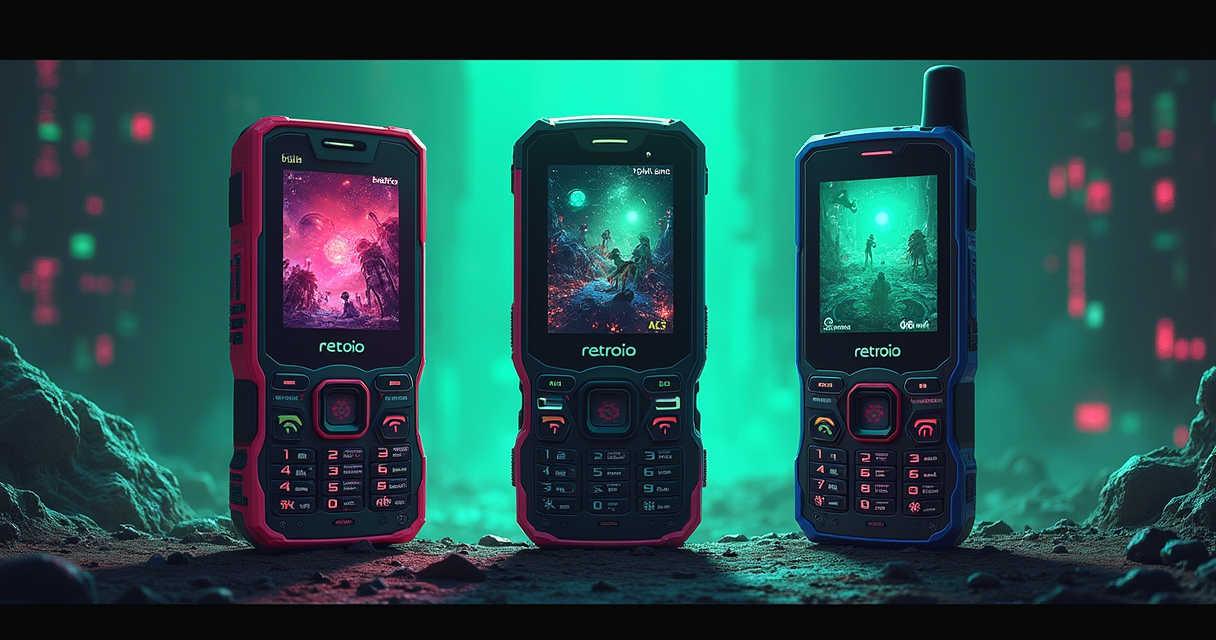
Retroid spent 2026 doing something that should not work as a business model: selling you four Android handhelds that mostly run the same games at mostly the same speed, and convincing a remarkable number of people to buy more than one of them. This is a comparison of the three that matter — the Pocket Nova, the Pocket 6 and the Pocket 5 — and a warning about the one fact the product pages would rather you did not notice.
The 2026 Lineup: One Brand, Four Bodies, Two Chips
By late August the storefront at goretroid.com read like a price staircase. The flagship Pocket 6 sat at $244. The older Pocket 5, after a mid-summer shuffle, started at $209. The freshly launched Pocket Nova opened at $239. Below them, a Pocket Mini V2 at $179 and something near the floor at $99. Five rungs inside a single brand, and the marketing copy would very much like you to read each rung as a different class of machine.
It is not. Strip the shells off and this is a two-chip lineup wearing four outfits. That single sentence is the most useful thing anyone will tell you about buying a Retroid this year, so we are going to spend the next several thousand words proving it, pricing it, and then telling you which body to put the chip in.
What Retroid actually sells right now
The three devices in contention are the Pocket 5 (a 5.5-inch 16:9 OLED handheld on Qualcomm's Snapdragon 865), the Pocket 6 (a 5.5-inch 16:9 AMOLED handheld on the Snapdragon 8 Gen 2), and the Pocket Nova (a 4.5-inch 4:3 OLED handheld on Qualcomm's QCS8550). Two of those three chips are, for practical purposes, the same chip. We will get to why in the silicon section, but hold onto it now, because it reframes every price on the store.
All three run Android 13 out of the box, all three take a microSD card, all three ship with drift-immune hall-effect analog sticks, and all three lean on the same open-source emulator stack that any Android device uses. That shared software layer means the interesting differences are almost entirely hardware: the processor, the panel, the shape, and the cooling. There is no secret Retroid sauce that makes a Pocket 6 emulate a PS2 differently from any other 8 Gen 2 handheld — the AYN Odin 2 proved that at $299 two years earlier, and the physics have not changed.
Why this is really a two-chip story
Here is the uncomfortable structure of the range. The Pocket 5 is the value tier: an old-but-plenty Snapdragon 865 that clears everything up to and including most of the PS2 and GameCube library. The Pocket 6 and the Pocket Nova are the premium tier, and they are premium because they share the Snapdragon 8 Gen 2 — the Pocket 6 in its phone-grade form, the Nova in its industrial QCS8550 form. Same GPU. Same core layout. Same emulation ceiling. The differences between the Pocket 6 and the Nova are the screen shape and a cooling fan, not the horsepower.
So the real decisions are two, not three. First: do you need the 8 Gen 2 at all, or does the 865 clear your library? Second, if you do want the 8 Gen 2: do you want it in a 5.5-inch 16:9 body (Pocket 6) or a 4.5-inch 4:3 body with a fan (Nova)? Everything else is noise, colour options, and the RAM-shortage tax. If you want the tighter head-to-head on exactly that question, we have a dedicated breakdown of the Nova against the Pocket 6 and Pocket 5, and a separate deep dive on whether the Pocket 6's 8 Gen 2 is worth its premium over the Pocket 5.
The devices sitting this one out
Three products round out the ladder and get honourable mentions rather than a column. The Pocket Mini V2 at $179 is a small-screen enthusiast toy, deliberately compact, and not cross-shopped with a 5.5-inch flagship. The $99 entry model is a starter device for someone who has never touched emulation and does not yet know whether they will care. And the Flip 2, a clamshell that got the same $10 spec bump as the Pocket 5 and now starts at $219, is a form-factor choice — you buy a Flip because you want a Game Boy Advance SP silhouette, not because you are agonising over PS2 frame rates. If a folding shell is the deciding factor for you, that is a different article. This one is about the three slabs.
Specs, Head to Head
Here is the full board. Read the rows that differ; then, more importantly, read the rows that do not.
The table
| Spec | Pocket 5 | Pocket 6 | Pocket Nova |
|---|---|---|---|
| Chipset | Snapdragon 865 | Snapdragon 8 Gen 2 | QCS8550 (industrial 8 Gen 2) |
| GPU | Adreno 650 | Adreno 740 | Adreno 740 @ 680MHz |
| CPU layout | 1x2.84 + 3x2.42 + 4x1.8 GHz | 1x3.2 + 4x2.8 + 3x2.0 GHz | 1x3.2 + 4x2.8 + 3x2.0 GHz |
| RAM | 8GB LPDDR4x (12GB after Jul 14) | 8GB / 12GB LPDDR5X | 8GB / 12GB LPDDR5X |
| Storage | 128GB UFS 3.1 + microSD | 128GB / 256GB UFS 3.1 + microSD | 128GB UFS 3.1 + microSD |
| Display | 5.5-inch OLED | 5.5-inch AMOLED | 4.5-inch OLED |
| Resolution / aspect | 1080p, 16:9 | 1920x1080, 16:9 | 1280x960, 4:3 |
| Refresh / brightness | 60Hz, 500 nits | Up to 120Hz | 120Hz |
| Cooling | Passive | Passive | Active fan |
| Battery | ~5000mAh | ~6000mAh | 5000mAh, 27W charge |
| Analog sticks | Hall-effect | Hall-effect | Hall-effect |
| Connectivity | Wi-Fi 6E, USB-C DP out | Wi-Fi 7, BT 5.3, USB-C DP out | Wi-Fi 6E, USB-C DP out |
| OS | Android 13 | Android 13 | Android 13 |
| Emulation ceiling | PS2 / GameCube (most) | PS2 / GameCube / Wii + light Switch | PS2 / GameCube / Wii + light Switch |
| Save states | Yes (RetroArch + standalone) | Yes (RetroArch + standalone) | Yes (RetroArch + standalone) |
| Netplay | Yes (RetroArch / Dolphin) | Yes (RetroArch / Dolphin) | Yes (RetroArch / Dolphin) |
| Shaders | GLSL / slang, CRT presets | GLSL / slang, CRT presets | GLSL / slang, CRT presets |
| Accuracy | Software HLE (not cycle-accurate) | Software HLE (not cycle-accurate) | Software HLE (not cycle-accurate) |
| Base price (Aug 2026) | $209 | $244 | $239 |
Reading the rows that matter
Four rows carry the entire buying decision. Chipset splits the range into the 865 tier (Pocket 5) and the 8 Gen 2 tier (Pocket 6, Nova). Resolution and aspect ratio splits the 8 Gen 2 tier into 16:9 (Pocket 6) and 4:3 (Nova). Cooling is the Nova's quiet trump card — it is the only one of the three with a fan, which matters more than the spec sheet implies once a chip has been pinned at full clocks for forty minutes. And base price tells you the RAM shortage has compressed these three devices into a $35 band, which is absurd given the spread of capability, and which we will unpick in the pricing section.
Note the CPU layout rows for the Pocket 6 and the Nova. They are byte-for-byte identical: one prime core at 3.2GHz, four performance cores at 2.8GHz, three efficiency cores at 2.0GHz, feeding an Adreno 740. That is not a coincidence or a rounding artefact. It is the same processor.
The rows that are identical (and why that is the point)
Now look at the bottom third of the table: save states, netplay, shaders, accuracy, OS. Every cell is the same across all three columns, and it is the same because these are Android tablets with gamepads bolted on. Save states come from RetroArch and from standalone emulators like Dolphin and NetherSX2, not from the hardware. Netplay is RetroArch's rollback stack and Dolphin's built-in lobby. Shaders are the standard GLSL and slang libraries, CRT-Royale and the rest, running on any Adreno GPU you like. None of it is a Retroid feature.
This is the deadpan truth the storefront elides: the software experience is a constant. What you are actually paying the price difference for is a processor, a panel, and a fan. Decide those three things and you have decided everything. If you want emulation that is genuinely more accurate rather than merely faster — the difference between high-level approximation and cycle-exact reproduction — then no Android handheld is your answer, and you should be reading our notes on building a MiSTer FPGA setup instead. These devices are brute force, not precision instruments.
The Silicon: 8 Gen 2, Twice, and an 865
Everything above rests on the chips, so let us be precise about them. There are exactly two processors in this comparison, not three, and one of them is five years old and still perfectly adequate.
Snapdragon 8 Gen 2 vs QCS8550 — the same die, minus the modem
The Pocket 6 runs the Snapdragon 8 Gen 2, the 2022-era Qualcomm phone flagship: a 1+4+3 core arrangement topping out at 3.2GHz, paired with the Adreno 740. The Pocket Nova runs the QCS8550. That part number is Qualcomm's industrial and IoT designation for the same 8 Gen 2 silicon with the cellular modem stripped out — same CPU cores at the same clocks, same Adreno 740 (here documented at 680MHz), just without the 5G radio a handheld would never use. For emulation, which cares about CPU single-thread throughput and GPU fill rate and nothing about a modem, the two are interchangeable. The Nova and the Pocket 6 are the same machine underneath.
That is not a knock on either. The 8 Gen 2 is a genuinely strong emulation part. Notebookcheck's coverage of 8 Gen 2 handhelds noted the AYN Odin 2 comfortably emulating PS2 titles at 1080p, and the same chip drives the Pocket 6 and Nova to the same place. The point is only that Retroid is selling you the identical compute in two bodies and letting the price ladder imply otherwise.
The Snapdragon 865, five years on
The Pocket 5's Snapdragon 865 launched in 2020, and in 2026 that sounds ancient until you remember what emulation actually demands. Reviewer Andrew at Retro Handhelds summarised the ceiling bluntly: the 865 lets you comfortably play up to PS2, with a smattering of Switch titles. That tracks with the broader record — Notebookcheck documented the AetherSX2 PS2 emulator running Metal Gear Solid 3 at a full 30 FPS on a Snapdragon 860, a chip a notch below the 865, which tells you the 865 has real headroom for the PS2 catalogue rather than scraping by.
The tuning trick worth knowing: the 865's Adreno 650 can be overclocked. Andrew's review noted an experimental GPU overclock to 1100MHz, via developer Gamma's build, holding a steady 60 FPS at 0.75x resolution on demanding fare. You would not run that as a daily driver, but it illustrates that the 865 is not maxed out at stock — it is a mature, well-understood part with a modding community that has wrung it dry. For the person whose library ends at GameCube, spending on an 8 Gen 2 is spending on headroom they will never touch.
Accuracy: none of these are a MiSTer
One clarification the spec race tends to bury. All three devices emulate through high-level emulation — software approximations of the original hardware, running on Android. That is why the accuracy row in the table is identical across the board: it is a property of the emulator, not the chip. HLE is fast and forgiving and covers the overwhelming majority of games perfectly, but it is not cycle-exact, and edge-case titles that rely on precise timing quirks can misbehave on any of the three equally.
If bit-perfect, cycle-accurate reproduction of a SNES or a Genesis is the thing you actually care about, an Android handheld is the wrong tool at any price, and you should look at FPGA hardware where the logic is reproduced in silicon rather than approximated in software. For the other 99% of use — playing the games, with save states and fast-forward and a gorgeous OLED — HLE on an 865 or an 8 Gen 2 is exactly right, and the difference between the two chips is speed and ceiling, never fidelity.
4:3 vs 16:9: The Decision Nobody Tells You Is the Decision
Once you have accepted that the Pocket 6 and the Nova are the same computer, the choice between them collapses to a single question that has nothing to do with performance and everything to do with geometry. What shape are the games you play?
The Nova's 4:3 panel and the CRT argument
The Pocket Nova's headline is a 4.5-inch OLED at 1280x960 — a 4:3 aspect ratio, which is unusual in a market that reflexively ships 16:9 phone panels. That ratio is not nostalgia for its own sake; it is the native shape of the hardware most people buy these devices to relive. The NES, the SNES, the Genesis, the PlayStation, the Neo Geo, the overwhelming majority of arcade boards — all 4:3 or close to it. On a 4:3 screen those systems fill the glass edge to edge. On a 16:9 screen they sit in a window between two black pillars, using a fraction of the panel you paid for.
Julian Horsey's Geeky Gadgets review put the design intent plainly: the Nova's design and display are clearly optimised for retro gamers, offering vibrant visuals and a form factor that makes it easy to carry and use. That is the whole pitch. If your shelf is Super Nintendo and Genesis and PS1 and CPS2, the Nova shows them the way they were meant to be seen, and the smaller 4.5-inch diagonal actually works in your favour because a 4:3 image on a 4.5-inch 4:3 panel is physically larger than the same 4:3 image boxed inside a 5.5-inch 16:9 one. This is the same logic that keeps a 4:3 Miyoo Mini Plus in so many pockets, except the Nova brings 8 Gen 2 muscle to the shape instead of a PS1 ceiling.
The 5.5-inch 16:9 case for PSP, GameCube and Switch
Flip the library and the argument flips with it. The PSP is 16:9. A large slice of the GameCube and Wii catalogue supports widescreen. The Switch is 16:9. Dreamcast and PS2 have plenty of anamorphic widescreen titles. For all of those, the Pocket 6's 5.5-inch 1920x1080 panel is the correct canvas — the image fills the screen, the extra diagonal is working for you, and the 1080p resolution gives upscalers room to render at 3x or 4x native without the panel becoming the bottleneck.
This is the honest split. The Nova is optimised for the systems that predate widescreen; the Pocket 6 is optimised for the systems that embraced it. Neither is wrong. Both run the same chip. You are choosing which half of gaming history you want framed correctly, and paying five dollars less for the 4:3 half.
Panels, refresh, and the 60Hz myth on the Pocket 5
A word on the Pocket 5's screen, because the internet is confidently wrong about it. Retailer listings and content-farm reviews frequently claim a 90Hz panel. Engadget's Jeff Dunn, in the outlet's best-handhelds roundup, lists it as it actually ships: a 5.5-inch 1080p OLED, 500 nits, 60Hz. Sixty. Not ninety. For emulation that is a non-issue — almost nothing you will run on an 865 targets more than 60 FPS anyway, and the panel itself is excellent. Dunn calls the 1080p OLED display the highlight, noting it makes everything look more vibrant and is sufficiently sharp and bright. Andrew at Retro Handhelds was less restrained: he could not get over how nice the screen is for a device costing less than $250.
The Pocket 6 and the Nova both run 120Hz panels, which is genuinely useful for the handful of Switch and PSP titles that unlock past 60, and for the general slickness of the Android UI. But do not let a refresh-rate spec talk you out of the Pocket 5 on emulation grounds. A 60Hz OLED at 500 nits is a lovely way to play a PS1 RPG, and the panel is not why you would choose one of the pricier two.
Performance and Emulation Ceilings
Enough theory. Here is what each device actually runs, drawn from hands-on testing rather than spec-sheet extrapolation.
PS2 and GameCube — where the 8 Gen 2 pulls ahead
The PS2 is the line in the sand for this class of hardware, and it is where the two chips separate. On the 865 Pocket 5, Engadget's testing had it playing relatively demanding PS2 fare at full speed and 1.5x to 2.5x their native resolution — a real, usable PS2 machine, upscaling enough to clean up the image without choking. On the 8 Gen 2 Pocket 6, DROIX's review pushed further: the PS2 emulator runs very well, upscaled to 1080p with some graphics tweaks and hitting a full 60 FPS. That is the gap in one sentence — the 865 does PS2 at 1.5x-2.5x, the 8 Gen 2 does PS2 at 1080p locked.
GameCube tells the same story with less drama. Both chips run the full GameCube library through Dolphin at playable speeds; the 8 Gen 2 simply gives you more upscaling headroom and steadier frame pacing in the heavier first-party titles. DROIX's blunt summary of the Pocket 6 was that the Snapdragon 8 Gen 2 is a capable processor, so you can expect to run just about everything up to the PlayStation 2 era without performance issues. The Nova, running the identical QCS8550, lands in exactly the same place — Horsey's review lists GameCube, Wii, PS2, PSP and 3DS all upscaling to 3x native. Same chip, same result.
Switch emulation and the RAM question
Switch is the one workload that genuinely justifies the jump from the Pocket 5 to the 8 Gen 2 devices, and it is also where RAM stops being a marketing number and starts mattering. Post-Yuzu forks are memory-hungry — shader caches and the Android overhead add up — and the difference between an 8GB device stuttering through a shader-compile spike and a 12GB device gliding past it is real. This is precisely why the RAM-shortage discontinuations sting: the configuration you most want for Switch is the one the market made scarce.
The 865 Pocket 5 will run lighter Switch titles, as Andrew and others note, but it is not the machine you buy for that job. The Pocket 6 and Nova, on the 8 Gen 2 with 12GB of RAM, are. If Switch is your priority and you want to understand where the ceiling sits against beefier competition, our comparison of the Pocket 6 against the AYN Odin 3 maps out how much further real money buys you past the 8 Gen 2. For most people, the honest answer is that these devices do Switch well enough to be delightful and not so well that you should expect every title to be flawless.
Battery, heat, and the fan
Sustained performance is where the Nova's one true hardware advantage shows up. Pin an 8 Gen 2 at full clocks — running PS2 at 1080p, or a demanding Switch title — and it produces heat. A passively cooled device sheds that heat through the chassis and, eventually, throttles. The Pocket 6 and Pocket 5 are both passively cooled. The Nova is the only one of the three with an active fan, and that fan is what lets it hold peak clocks through a long session instead of tapering off after the chassis saturates.
On raw endurance, DROIX measured the Pocket 6 at 4 hours 20 minutes under stress testing, with typical mixed use landing in the 8-to-10-hour range on its roughly 6000mAh cell. The Pocket 5 and Nova carry 5000mAh batteries; the Nova adds 27W fast charging to claw back the deficit. In practice all three are all-day devices for light retro and half-day devices for heavy PS2 and Switch work. The meaningful distinction is thermal, not capacity: if you specifically run the hardest emulators for long stretches, the Nova's fan is worth more than the spec sheet suggests.
Pricing and the Rampocalypse
Now the part that turned a clean lineup into a moving target. Retroid did not raise prices in 2026 because it wanted to. It raised them because the memory market caught fire, and the timeline of those increases is the single best argument for buying sooner rather than later.
The pricing table
| Device | Config | Price | When / Status | Source |
|---|---|---|---|---|
| Pocket 5 | 8GB / 128GB | $199 preorder / $219 listed | Early 2026 / Feb 16 2026 | Retroid / Engadget |
| Pocket 5 | 12GB / 128GB (spec bump) | $209 | After Jul 14 2026 (+$10) | Engadget (Jul 9 2026) |
| Pocket 6 | 8GB / 128GB | $209+ preorder | Early 2026 | Retroid |
| Pocket 6 | 8GB / 128GB | $244 | From Mar 2 2026 (+$15) | Time Extension |
| Pocket 6 | 12GB / 256GB | $259+ → discontinued | Mar 2 2026 | Time Extension |
| Pocket 6 | 12GB / 128GB (Top Stick) | $279 | Returned Jun 2026 | Notebookcheck |
| Pocket Nova | 8GB / 128GB opaque | $229 → $239 | Jun 26 → Aug 6 2026 | Retroid |
| Pocket Nova | 8GB / 128GB translucent | $234 | 2026 | Retroid |
| Pocket Nova | 12GB / 128GB opaque | $269 | 2026 | Retroid |
| Pocket Nova | 12GB / 128GB translucent | $274 | 2026 | Retroid |
| Pocket Mini V2 | — | $179 | 2026 | Retroid store |
| Flip 2 (clamshell) | 12GB / 128GB | $219 | After Jul 14 2026 | Engadget |
| Entry model | — | $99 | 2026 | Retroid store |
The RAM shortage, in Retroid's own words
The Pocket 6 is the clearest casualty. On March 2, 2026, Retroid raised the 8GB model by $15 to $244 and discontinued the 12GB configuration outright, citing, in a statement reported by Time Extension, ongoing shortages and sharply rising costs for both RAM and storage. Time Extension christened the phenomenon the Rampocalypse, and the name stuck because it kept happening.
Engadget's Ian Carlos Campbell traced the mechanism in his July 9 report on the Pocket 5 and Flip 2 increases: AI companies' demand for memory has prompted component makers to radically hike their prices. That is the whole grim story of handheld pricing in 2026 — data-centre demand for HBM and DRAM dragging the price of a $200 retro toy upward. Campbell also noted the one bit of grace in the shuffle: anyone with an unfulfilled order of the entry-level 8GB models would get an upgrade to 12GB at no additional cost, which is why the post-July-14 Pocket 5 quietly became a 12GB device even as it rose to $209.
What each tier actually costs you
Squint at the table and the compression is remarkable. After all the increases, the three flagships live inside a $35 band: Pocket 5 at $209, Nova at $239, Pocket 6 at $244. The 12GB variants stretch it — the Pocket 6 Top Stick at $279, the Nova 12GB at $269-$274 — but the entry points are astonishingly close for devices with such different capability ceilings. The Rampocalypse squeezed the value tier upward faster than the premium tier, which perversely makes the Pocket 5 look less like a bargain than it did at its $199 preorder. The lesson embedded in this table is simple and slightly bleak: on a Retroid, in 2026, the price you see is a snapshot of a rising curve. If a configuration you want is in stock at a price you can stomach, that is the buy signal, because the historical record says it will not get cheaper.
Five Buyers, Five Answers
Specs are abstract. People are not. Here are the concrete buyers, and the device each one should actually put in a cart.
The couch retro purist and the widescreen emulator
1. You mostly play pre-2000, 4:3 systems. NES, SNES, Genesis, PS1, arcade, Game Boy. Your answer is the Pocket Nova. The 4:3 OLED fills the screen with the exact content you care about, the 8 Gen 2 is wild overkill for 16-bit but means you never think about performance, and the fan is irrelevant because you will never stress the chip. You are buying the shape, and the shape is right. At $239 it is the most focused device in the range.
2. You mostly play PSP, GameCube, Dreamcast widescreen, and PS2. Your answer is the Pocket 6. The 5.5-inch 16:9 1080p panel is the correct canvas for widescreen content, the 8 Gen 2 upscales PS2 to a locked 1080p60, and the larger diagonal earns its keep. This is the generalist's flagship, and DROIX's verdict — highly recommended as a high-performance mid-range option — is aimed squarely at you.
The Switch-curious and the budget-first buyer
3. You want one device that also does a lot of Switch. Your answer is the Pocket 6, 12GB Top Stick, at $279, or the 12GB Nova if you prefer the smaller 4:3 body and want the fan for long sessions. Switch emulation is the one job that wants both the 8 Gen 2 and 12GB of RAM, and it is the one job that justifies the top of the price ladder. Go in with realistic expectations: excellent, not flawless.
4. You are price-first, or brand-new to emulation. Your answer is the Pocket 5 at $209, now shipping with 12GB after the spec bump. It clears everything up through GameCube and most of PS2, the OLED is genuinely lovely, the hall-effect sticks will not drift, and if it turns out you hate fiddling with emulators you have spent the least to find out. Jeff Dunn's framing at Engadget is the right one: it is an excellent device for anyone who mainly wants to emulate older consoles and is willing to go through the rigours of setup.
The traveller and the tinkerer
5. You want the smallest thing that still punches above PS1. Look past the big three to the Pocket Mini V2 at $179 — a deliberately compact enthusiast device for pockets and long flights. And 6. you are a tinkerer who wants to overclock the Adreno, flash alternative firmware, run Xbox games through Xemu on ROCKNIX, and generally treat the device as a project — the Pocket 5 is your bench, because its 865 is the most thoroughly reverse-engineered chip in the lineup and its modding community is deepest. Andrew's review documenting a community GPU overclock to 1100MHz is a glimpse of that ceiling. If tinkering with the operating system is the point for you, note that these are Android devices, not Linux ones — the sort of from-scratch flashing you would do on a Raspberry Pi with a Batocera install is a different world from Android's locked-down bootloaders.
Pros and Cons, Device by Device
The compressed version, for the person who scrolled straight here. Three tables, no hedging.
Retroid Pocket 5
| Pros | Cons |
|---|---|
| Cheapest flagship at $209, now with 12GB | Snapdragon 865 is five years old |
| Gorgeous 5.5-inch 1080p OLED | 60Hz panel, not the 90/120Hz some listings claim |
| Clears everything up to GameCube and most PS2 | Only light Switch capability |
| Deepest modding and overclock community | Passive cooling can throttle under sustained load |
| Hall-effect sticks, no drift | PS2 upscaling caps around 2.5x, not 1080p locked |
Retroid Pocket 6
| Pros | Cons |
|---|---|
| Snapdragon 8 Gen 2 does PS2 at 1080p60 | Most expensive base flagship at $244 |
| 5.5-inch 120Hz 1080p AMOLED, ideal for widescreen | 12GB Top Stick config costs $279 |
| Best Switch emulation of the three | Passively cooled — no fan for long sessions |
| Wi-Fi 7, Bluetooth 5.3, DisplayPort out | 16:9 panel letterboxes 4:3 retro systems |
| Largest ~6000mAh battery | Same chip as the cheaper Nova |
Retroid Pocket Nova
| Pros | Cons |
|---|---|
| 4:3 OLED fills the screen with retro systems | 4.5-inch 4:3 letterboxes PSP/Switch/widescreen |
| Same 8 Gen 2 power as the Pocket 6, $5 less | Smaller screen diagonal than the 5.5-inch pair |
| Only device with an active cooling fan | 128GB storage only (no 256GB option) |
| 120Hz panel, 27W fast charging | Translucent shells cost a $5-$35 premium |
| Best sustained performance under heat | 5000mAh, smaller than the Pocket 6 |
Migrating Between Retroids
Buying your second Retroid — upgrading a Pocket 5 to a Pocket 6, or adding a 4:3 Nova alongside a 16:9 flagship — is common enough that it deserves a proper procedure. The good news: because these are all Android devices sharing the same emulator stack, most of your setup is portable. The bad news: a few things are chip-specific and must not travel.
What moves cleanly
Your ROMs, BIOS files and box art are console-agnostic — a SNES ROM does not care which Snapdragon reads it — so the bulk of your microSD card copies straight across. Your RetroArch configuration and per-game saves move too: the config folder, the saves folder, the states folder, and the system folder that holds your BIOS images are all portable. Standalone emulator saves — Dolphin memory cards, NetherSX2 memcards, Azahar 3DS saves — move if you export the right folders. In practice, a clean migration is mostly a large file copy plus a handful of careful folder swaps.
What does not move
Three things must stay behind. RetroArch cores should be re-downloaded on the new device from the buildbot rather than copied, because the core binaries are compiled per-architecture and a stale core is a crash waiting to happen. GPU overclock profiles and thermal configs are chip-specific — a 1100MHz Adreno 650 profile from a Pocket 5 is meaningless and potentially harmful on a Pocket 6's Adreno 740. And save states, as opposed to in-game saves, are fragile across emulator version changes; where you can, close out to a real in-game save before migrating rather than trusting a raw state blob.
The nine-step migration
The procedure, condensed. Adjust paths to your card's layout, but the sequence holds.
# 1. Power down the old Retroid. Remove the microSD.
# 2. On a PC, mirror the entire card to a backup folder first:
rsync -av /Volumes/RETROID/ ~/retroid-backup/

# 3. Copy the console-agnostic content straight to the new card:
#    /Roms   /Bios   /Imgs   ->  identical paths on the new device

# 4. Back up RetroArch data over USB (adb), not the whole install:
adb pull /storage/emulated/0/RetroArch/ ~/retroarch-backup/
#    KEEP: config/  saves/  states/  system/   (system = your BIOS)
#    DROP: cores/   (re-download per-device inside RetroArch)

# 5. On the new device: Online Updater -> Update Core Info Files,
#    THEN download cores fresh. Never copy old core binaries.

# 6. Standalone emulators (NetherSX2, Dolphin, Azahar):
#    export each app's save + memcard folder before touching them.

# 7. Reinstall the standalone APKs on the new device, launch once,
#    then drop the exported saves into the matching new paths.

# 8. Re-point each emulator at its BIOS + ROM folders on the new card.

# 9. Do NOT migrate GPU overclock or thermal profiles between
#    different chips. Re-tune from stock on the new hardware.
Follow that and a Pocket 5 owner can be up and running on a Pocket 6 in the time it takes the file copy to finish, with every save intact and nothing chip-specific carried across to cause grief.
The Verdict: Who Wins at $239
We started by claiming the whole range is a two-chip lineup in four bodies, priced to imply otherwise. Having walked the specs, the silicon, the panels, the benchmarks and the pricing, that claim holds — so the verdict is not one winner but a decision tree, and then, because you asked, the one I would actually buy.
The data-backed pick
For the largest number of buyers, the Pocket 5 at $209 is the correct default, and it got more correct when the July spec bump quietly made it a 12GB device. The Snapdragon 865 clears the entire library most people actually play — PS1, N64, Dreamcast, PSP, GameCube and the bulk of PS2 — the OLED is a genuine highlight rather than a checkbox, and it is the cheapest way into a hall-effect, drift-free Retroid flagship. Engadget recommends it precisely for the person who mainly wants to emulate older consoles, and that is most people. Unless a specific need pushes you up the ladder, this is the device.
The contrarian pick
The Pocket Nova at $239 is the enthusiast's pick and the most interesting device of the three, because it is the only one built around a conviction rather than a spec race. It takes the same 8 Gen 2 as the $244 Pocket 6, undercuts it by five dollars, adds the only fan in the lineup, and wraps it in a 4:3 OLED that treats the pre-widescreen catalogue with the respect it deserves. If your library skews retro — and for a retro handheld that is a reasonable bet — the Nova shows those games larger and better-framed than either 16:9 sibling, and the fan means it never flinches. It is the device I keep coming back to, and the reason the internal shorthand for this whole comparison has quietly become the $239 Nova pick.
What I would actually buy
If I play mostly 16-bit and PS1 and arcade: the Nova, no hesitation, for the 4:3 panel and the fan. If I want one machine to cover everything through GameCube and a serious run at Switch: the Pocket 6, 12GB Top Stick, at $279, for the 16:9 screen and the RAM. And if I am buying my first emulation handheld, or buying for someone who does not yet know if they will fall down this rabbit hole: the Pocket 5 at $209, because it is the least money to find out and it still does almost everything.
Whatever you choose, choose soon. The one fact that overrides every recommendation above is the Rampocalypse itself: these prices have moved in one direction all year, driven by forces — AI memory demand, storage shortages — that have nothing to do with retro gaming and no reason to reverse on your schedule. The best Retroid is the one in stock, in the shape your library wants, at a price you can live with today. Buy the chip. Pick the body. Do not wait for a sale that the memory market is not going to allow.
Questions the search bar asks me
- Is the Retroid Pocket Nova faster than the Pocket 6?
- No. They run the same silicon. The Nova uses Qualcomm's QCS8550, the industrial variant of the Snapdragon 8 Gen 2 that powers the Pocket 6 — same Adreno 740 GPU, same core layout. The Nova's only real hardware advantage is an active cooling fan, which helps it hold clocks longer under sustained PS2 or Switch load. On a cold benchmark they are effectively tied.
- Why did the Retroid Pocket 6 jump to $244?
- RAM and storage prices. On March 2, 2026, Retroid raised the 8GB Pocket 6 by $15 to $244 and discontinued the 12GB model, citing (in a statement reported by Time Extension) ongoing shortages and sharply rising costs for both RAM and storage. Engadget's Ian Carlos Campbell tied the broader trend to AI companies' demand for memory prompting component makers to radically hike prices.
- Should I buy the Pocket 5 or the Pocket 6?
- If your ceiling is PS1, N64, Dreamcast, PSP, GameCube and most of PS2, the Snapdragon 865 Pocket 5 does all of it and costs $209 after its July 14, 2026 spec bump (which also bumped it to 12GB of RAM). Pay the roughly $35 premium for the Pocket 6's 8 Gen 2 only if you specifically want Switch emulation, higher PS2 upscaling, or Wi-Fi 7. For most buyers the 865 is enough.
- What can the Snapdragon 8 Gen 2 in the Pocket 6 and Nova actually emulate?
- Everything up to and including the PS2, GameCube and Wii at full speed, per DROIX's testing, which hit a locked 60 FPS on PS2 upscaled to 1080p. It also runs a large slice of the Switch library through post-Yuzu forks, where 12GB of RAM is the practical sweet spot. It is not cycle-accurate — for that you want an FPGA MiSTer, not an Android box.
- Is the Pocket Nova's 4:3 screen a gimmick?
- No, it is the whole point of the device. Its 4.5-inch 1280x960 panel matches the native aspect ratio of the NES, SNES, Genesis, PS1 and most arcade boards, so those systems fill the screen instead of sitting between black bars. The trade is that 16:9 content — PSP, GameCube, Switch — gets letterboxed. If your library is mostly pre-2000, the 4:3 shape is a feature; if it is mostly widescreen, buy the 5.5-inch Pocket 6 instead.

Casey writes about speedrunning, tool-assisted runs, and the strange engineering of going fast in old games. Every post under this byline is reviewed pre-publish by Sam P., Editor & Operator — corrections to info@instalinkoteam.com. Published 2026-08-29 · Last updated 2026-08-29. Full bios on the author page.