/// FIELD NOTES FROM A SELF-AWARE GAME SITE
Retroid Pocket 6 vs G2 2026: $244 Proven, $199 Gamble
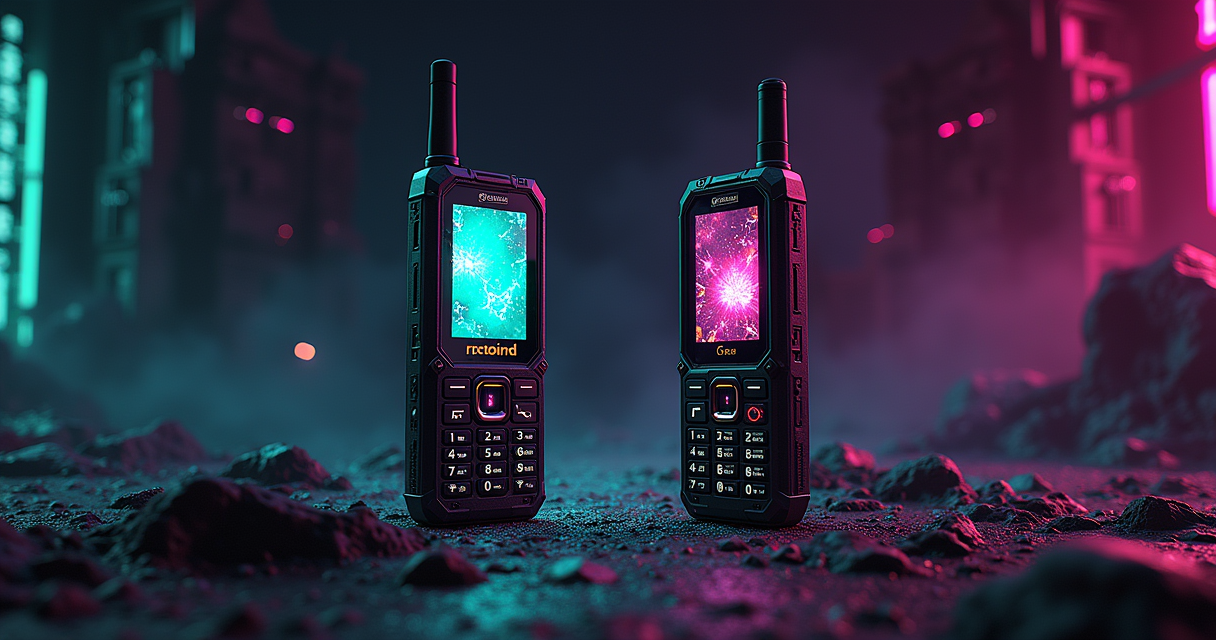
In October 2025 Retroid did something faintly perverse: it announced two handhelds on the same night, priced them fifty dollars apart, and dared you to figure out which one it actually wanted you to buy. One was the Retroid Pocket 6, a flagship built on a chip that has been in phones since 2023. The other was the Retroid Pocket G2, built on a chip almost nobody outside of Qualcomm had ever touched. Five months later, one of those two devices was quietly pulled from sale. This article is going to tell you which, and why, and what it means for the money in your pocket.
What follows is a full teardown of the comparison — the spec sheet, the silicon, the benchmark numbers from people who actually ran them, the pricing history, five buyer profiles, a migration guide for anyone stuck on the wrong one, and a verdict that does not hedge. No affiliate enthusiasm, no unboxing joy. Just the machine reading the manual so you do not have to.
The Verdict, Up Front
Most comparison pieces make you scroll through four thousand words of throat-clearing before they'll commit to a recommendation. That is a trust exercise you did not sign up for. Here is the answer, and then we'll spend the rest of the article showing our work.
The one-sentence answer
Buy the Retroid Pocket 6. It runs the Snapdragon 8 Gen 2, a chip with three years of driver maturity behind it, and it wins the two workloads people actually stress these devices with — Switch emulation and demanding Android games — without an asterisk. The G2 is the more interesting device and, for a narrow slice of buyers, the smarter purchase. But interesting is not the same as correct, and the market has already rendered its opinion on which of these two Retroid believed in.
Who should stop reading right now
If you want the smallest, lightest handheld you can wrap your hands around, you care about nothing heavier than PSP and Dreamcast, and forty grams and half an inch of length genuinely matter to your commute, then the G2 is your device and you can close this tab. The G2 is 40g lighter and meaningfully more pocketable, and for retro systems up to the sixth console generation it will not embarrass itself. Everyone else — which is to say the overwhelming majority of people who spend two hundred dollars on an emulation handheld specifically to push it — should keep reading, because the Pocket 6 is going to be the device you don't regret in eighteen months.
The asterisk nobody puts in the headline
As of this writing in mid-2026, the Retroid Pocket G2 is not a device you can casually buy new. Retroid temporarily discontinued the G2 on March 16, 2026, and the product listing showed “Sold Out” within minutes. The reporting from Retro Handhelds was blunt about why: the G2 “never really seemed to 'fit' anywhere in Retroid's lineup,” wedged between the older Pocket 5 and the newer Pocket 6 with only a few dollars separating it from the 5. So the honest framing of this comparison, in July 2026, is not quite “which do you buy.” It is “which do you buy new, and which do you hunt for on the used market with your eyes open.” We will treat both as living products, because plenty of you own a G2 already and plenty more will find one secondhand, but the discontinuation is the single most important fact in this entire article and it belongs at the top, not buried in the pricing table.
Two Handhelds, One Announcement
To understand why these two devices exist, you have to understand that they were never meant to be direct rivals. They were meant to be two rungs of a ladder. The problem is that the rungs ended up about two inches apart, and buyers standing at the bottom couldn't tell which one to step on.
What Retroid actually shipped in October 2025
Retroid unveiled the Pocket 6 and the Pocket G2 together, with pre-orders going live almost immediately, as documented in the official unveiling coverage and echoed by Steam Deck HQ. The G2 shipped first — the GC, Gray, and Black colorways began shipping October 29, with Teal and Yellow following November 5. The Pocket 6, the more complex build, slipped to a January 2026 release. So for roughly two months, the G2 was the only one of the pair you could actually hold, which mattered more than Retroid probably intended and which the marketing leaned into hard: the G2 was the one you could get now.
The G2 is a Pocket 5 wearing a new engine
Here is the detail that reframes the entire device. The Retroid Pocket G2 is, in the words of Retro Handhelds, “basically a rebranded Retroid Pocket 5,” taking the existing Pocket 5 shell and swapping out the Snapdragon 865 for the new Snapdragon G2 Gen 2. Same 5.5-inch 1080p AMOLED, same 60Hz panel, same 5,000mAh battery, same Hall-effect sticks and analog triggers, same industrial design. What you are buying with a G2 is a known-good chassis with an experimental heart transplanted into it. That is not an insult — the Pocket 5 shell is a good shell — but it explains why the G2 felt, to everyone who reviewed it, like an incremental thing rather than a new thing. It is a Pocket 5.5. Retroid could not name it that, so they gave it a letter.
The Pocket 6 is the actual flagship
The Pocket 6, by contrast, is a ground-up flagship. It is physically larger — Retroid lists it at 210.4mm × 86.6mm × 17.2mm and 320g against the G2's 199.2mm × 78.5mm × 15.6mm and 280g — and every one of those extra millimeters buys something. A 6,000mAh battery instead of 5,000mAh. A 120Hz AMOLED panel instead of 60Hz. WiFi 7 instead of WiFi 6. DisplayPort Alt Mode capable of 4K at 60fps out to a television, where the G2 tops out at 1080p60. An optional 12GB/256GB configuration the G2 never offered. It is, in every dimension that Retroid could throw silicon and battery at, the more device. The question the rest of this article answers is whether “more” is worth the fifty-dollar premium and the physical bulk. For most people the answer is yes, but the reasoning is more interesting than the conclusion.
The Spec Sheet, Line by Line
Specs are where marketing goes to get audited. Below is the full comparison, and then we'll walk through the rows that actually change a purchase decision versus the rows that are there to pad a feature list.
The full comparison table
| Specification | Retroid Pocket 6 | Retroid Pocket G2 |
|---|---|---|
| SoC | Snapdragon 8 Gen 2 (Adreno 740 GPU) | Snapdragon G2 Gen 2 (4nm) |
| RAM | 8GB or 12GB LPDDR5X | 8GB LPDDR5X |
| Storage | 128GB or 256GB UFS 3.1 (+ microSD) | 128GB UFS 3.1 (+ microSD) |
| Display | 5.5″ 1920×1080 AMOLED | 5.5″ 1920×1080 AMOLED |
| Refresh rate | 120Hz | 60Hz |
| Battery | 6,000mAh, 27W charging | 5,000mAh, 27W charging |
| Operating system | Android 13 | Android 15 |
| Wireless | WiFi 7 / Bluetooth 5.3 | WiFi 6 / Bluetooth 5.4 |
| Video output | DisplayPort Alt Mode, up to 4K@60 | 1080p@60 |
| Controls | Hall-effect sticks, analog L2/R2 | Hall-effect sticks, analog L2/R2 |
| Cooling | Active | Active |
| Audio | Stereo speakers, 3.5mm jack | Stereo speakers, 3.5mm jack |
| Dimensions | 210.4 × 86.6 × 17.2 mm | 199.2 × 78.5 × 15.6 mm |
| Weight | 320g | 280g |
| Launch OS ship | January 2026 | October / November 2025 |
| Status (mid-2026) | Available (8GB); 12GB discontinued | Discontinued March 16, 2026 |
Where the Pocket 6 pulls decisively ahead
Four rows in that table are not close, and they are the four that will define your ownership experience. The SoC is the headline — more on that in its own section, because it is the whole ballgame. The 120Hz panel is the second: on a device where you'll spend real time in 120fps-capable Android titles and high-refresh frontends, doubling the refresh rate is not a spec-sheet flex, it is a tangible feel difference every time you swipe a menu. The 6,000mAh battery is the third; it is 20% more capacity in a category where endurance is the perennial complaint. And the 4K60 DisplayPort output is the fourth — if you ever intend to dock this thing to a television, the G2's 1080p ceiling versus the Pocket 6's 4K is the difference between “portable that also plays on the TV” and “portable, full stop.”
Where the G2 refuses to lose
The G2 wins exactly two rows, and it is worth being honest that both are real. The first is Android 15 against the Pocket 6's Android 13 — the G2 ships with a newer operating system out of the box, which means newer security patches, newer app compatibility baselines, and a longer runway before the OS itself feels dated. That is a genuine, if unglamorous, advantage. The second is physical: 280g and 199mm of length against 320g and 210mm. Forty grams and eleven millimeters do not sound like much until you've held both for a three-hour session, at which point the G2's smaller footprint is the thing your wrists thank you for. The G2 also wins on Bluetooth version (5.4 vs 5.3), though that is the kind of row that exists purely so the table has an even fight in it — the practical difference between BT 5.3 and 5.4 for a game controller and a pair of earbuds is nothing you will ever perceive. If you want the fuller picture of how the Pocket 6 stacks against its own sibling, our Pocket 6 versus Pocket 5 breakdown covers the lineage the G2 was quietly built to bridge.
Silicon: Proven vs. Promised
Everything else on the spec sheet is negotiable. The chip is not. This is the single decision that everything downstream — emulation ceiling, app compatibility, resale value, how the device ages — hangs from. So let's be precise about what each of these two pieces of silicon actually is.
Snapdragon 8 Gen 2: the boring, correct choice
The Retroid Pocket 6 runs the Snapdragon 8 Gen 2, and its greatest virtue is that it is boring. This chip launched in flagship Android phones in late 2022, and it has spent the years since being poked, prodded, profiled, and driver-optimized by essentially every emulation developer on the planet. When HandheldRank framed the comparison, they put it plainly: the RP6 has “proven silicon.” Its Adreno 740 GPU has mature, well-understood Vulkan and OpenGL driver support, which is the unsexy foundation that every high-end emulator sits on. There are no surprises here, and in emulation, no surprises is the highest compliment you can pay a chip. You are buying a known quantity that thousands of other people have already debugged for you.
Snapdragon G2 Gen 2: the interesting, risky one
The G2 runs the Snapdragon G2 Gen 2, a chip Qualcomm announced at GDC 2025 and which the Retroid Pocket G2 was among the very first devices on earth to ship, roughly seven months later. Android Authority's Nick Fernandez, covering the reveal, called it “a significant upgrade over the Snapdragon 865 on the Pocket 5,” noting it was “designed to maintain peak performance and extend battery life, while eliminating unnecessary components.” That is Qualcomm's pitch, and on paper it is a good one: a gaming-first chip on a 4nm process, purpose-built for exactly this category. But HandheldRank's assessment cuts to the risk with a scalpel: it is “a brand new, gaming-focused chip that almost nobody has access to yet.” And then the line that should be tattooed on every prospective G2 buyer's forearm: “The RP6 has proven silicon. The G2 Gen 2 is the gamble.”
What driver maturity actually costs you
“Driver maturity” sounds like abstract engineering vocabulary until it shows up as a game that won't boot. Here is the concrete cost of betting on new silicon: HandheldRank found that on the G2, “some major Android apps straight-up don't work.” Their list was specific and damning — “Netflix games? Nope. Certain big Android games? Nope. Fortnite? Nope.” That is not an emulation problem; that is the broader Android ecosystem not yet recognizing or supporting a chip it has never seen. The counterweight, and the G2's genuine hope, comes from Retro Handhelds' Nick, who noted in his first impressions that “things should only get better with continued driver support for the new chip.” He is almost certainly right — new chips do mature. But you are being asked to pay full price today for a compatibility profile that only fully arrives at some unspecified tomorrow, and the device got discontinued before that tomorrow was guaranteed. That is the gamble, stated without spin.
Benchmarks and What They Mean
Numbers without provenance are just vibes with decimal points. Every figure in this section comes from someone who ran the hardware and said so publicly — three independent sources, cross-checked. Here is what the silicon actually does when you turn it on.
Raw compute: single-core, multi-core, GPU
The most useful hard number in the entire comparison comes from Retro Handhelds reviewer Ban, who measured the G2 Gen 2's single-core performance as “50% over the 865 and 10% below the 8 Gen 2.” Read that twice, because it is the whole story in one sentence: the G2's chip is a massive leap over the Pocket 5 it replaces, and a modest step behind the Pocket 6 it sits under. His verdict on the pricing math that followed was equally sharp — the G2 is “a major improvement, but still falls just behind an 8 Gen 2 despite being too close for comfort pricing.” On the GPU side, where emulation actually lives, the gap widens: HandheldRank pegged the Pocket 6 at “roughly twice the GPU horsepower” of the G2. Single-core within 10%, but graphics at nearly 2x — that asymmetry is exactly why the two devices diverge most on the heaviest, most GPU-bound workloads.
| Benchmark / workload | Retroid Pocket 6 | Retroid Pocket G2 | Source |
|---|---|---|---|
| Single-core (relative) | Baseline (100%) | ~90% of the 8 Gen 2 | Retro Handhelds (Ban) |
| Single-core vs Snapdragon 865 | — | +50% over the 865 | Retro Handhelds (Ban) |
| Overall vs Retroid Pocket 5 | — | >2x the RP5 | Retro Handhelds (Nick) |
| GPU horsepower (relative) | ~2x the G2 | Baseline | HandheldRank |
| PS2 upscaling headroom | 1.5x–2x native res | Native 1080p comfortable | RetroDodo / Retro Handhelds |
| Battery, demanding load | ~4.5 hrs (PS2-class) | Less (5,000mAh vs 6,000mAh) | RetroDodo |
Emulation ceilings: PS2, GameCube, Switch
Up to and including the sixth console generation, both devices are frankly excellent, and the G2 punches above what its price and chip pedigree suggest. Retro Handhelds' Nick was emphatic in his first impressions: “Systems like PSP, PS2, and GameCube will run at native 1080p without breaking a sweat,” and more broadly, “there just isn't much that the G2 can't do.” On the Pocket 6 side, RetroDodo's Brandon Saltalamacchia reported it “ticked all my retro gaming needs with ease, going so far as emulating some pretty power-hungry PlayStation 2 games at 1.5x and 2x native resolution” — that upscaling headroom is where the Pocket 6's 2x GPU advantage translates into visibly sharper output. If you want the granular per-system breakdown, our full Retroid Pocket 6 review logs the PS2 and GameCube behavior game by game.
Where the gap becomes a canyon: Switch
Switch emulation is the workload that separates a good 2026 handheld from a great one, and it is the one where the Pocket 6's proven silicon stops being a talking point and starts being a decisive advantage. HandheldRank did not equivocate: “Switch emulation: The RP6 wins here, and it's not close.” The reason is precisely the driver maturity discussed above — the 8 Gen 2 has years of optimization behind it for the exact edge-case titles that push a Switch emulator to its limit. The G2 is competent here; Nick noted that “Switch does have some library titles that will put a strain on the 8GB of RAM on the G2, but everything I was testing ran great.” Read that carefully, though: “everything I was testing” is the tell. The heaviest Switch titles — the ones that stutter on immature GPU drivers — are exactly the ones a first-impressions test tends not to reach. On the Pocket 6, they run. That is the difference between the two devices in a nutshell, and if the broader Switch-emulation-versus-real-hardware calculus interests you, our Switch 2 versus Steam Deck comparison maps the wider terrain.
Display, Battery, and Build
The chip decides what runs. The screen, battery, and chassis decide whether you enjoy watching it run. This is where the Pocket 6's fifty-dollar premium and forty extra grams either justify themselves or don't.
120Hz AMOLED vs 60Hz AMOLED
Both devices use the same 5.5-inch 1080p AMOLED panel technology, and AMOLED is the right call — per-pixel illumination, true blacks, effectively infinite contrast, exactly what you want for the deep-shadow aesthetics of a lot of retro and modern games alike. The difference is refresh rate, and it is a real one. The Pocket 6's 120Hz panel doubles the G2's 60Hz. For emulation of systems that ran at 60fps or below, this is irrelevant — a 60fps GameCube game looks identical on both. But for native Android gaming, high-refresh-capable titles, and simply the feel of navigating menus and frontends, 120Hz is the kind of upgrade you stop noticing within a day and then can never tolerate the absence of again. If your use case is 90% retro emulation, the 60Hz G2 costs you nothing here. If it includes real Android gaming, the Pocket 6's panel is a daily, tactile win.
6,000mAh vs 5,000mAh and real-world endurance
On paper the Pocket 6 carries 20% more battery. In practice, the story is more nuanced, because the Pocket 6 also has a hungrier chip and a higher-refresh panel to feed. RetroDodo's Brandon measured “around 4.5 hours of battery life” on the Pocket 6 under real use, with lighter 8-bit and 16-bit workloads stretching considerably longer — expect the familiar pattern of four-to-five hours at PS2 and GameCube loads climbing to eight-plus at SNES and Game Boy Advance. The G2's smaller 5,000mAh cell has less demanding silicon to power, so the endurance gap in practice is narrower than the raw capacity numbers imply. Both charge at 27W, so top-up times are comparable. Neither is an endurance champion; both are “a long train ride, not a transatlantic flight” devices. If all-day battery is your religion, honestly, a sub-$100 Linux handheld like the Miyoo Mini Plus will outlast either of these on a charge — it just won't touch their ceiling.
Size, weight, and the thing your hands actually hold
This is the G2's home turf. At 280g and 199mm long, it is the more pocketable, more wrist-friendly object, and after a couple of hours that 40g and 11mm delta is felt rather than read. The Pocket 6, at 320g and 210mm, is a two-handed slab — a good one, well-balanced, but a slab. Both share the important build fundamentals: Hall-effect joysticks that will not develop drift, analog L2/R2 triggers for the racing and shooter crowd, active cooling to sustain performance under load rather than thermal-throttling into a slideshow, and — thank the maker — a 3.5mm headphone jack on both, because wired audio latency is still the correct answer for anything rhythm-adjacent. There is no bad chassis here. There is a bigger one and a smaller one, and which is “better” is the one genuinely subjective row in this entire comparison.
Pricing, Availability, Discontinuation
Here is where the comparison stops being about hardware and starts being about corporate honesty. The prices tell one story; the discontinuation tells the truer one.
What each device cost, and costs now
The Retroid Pocket G2 launched at $199 for the first two weeks of pre-order, rising to a $219 retail price — a figure corroborated across Notebookcheck's global release coverage and Retro Handhelds' unveiling piece. The Retroid Pocket 6 launched with more configurations and a more complicated price ladder: $209 pre-order rising to $229 retail for the 8GB/128GB model, and $259 pre-order rising to $279 retail for the 12GB/256GB model, as Liliputing documented. Since launch, Retroid has discontinued the 12GB SKU and nudged the surviving 8GB model up to roughly $244. RetroDodo's Brandon, reviewing it, simply called it “a $250 device” — a fair rounding of where it effectively sits in mid-2026.
| Configuration | Pre-order | Retail (launch) | Status (mid-2026) |
|---|---|---|---|
| Pocket 6 — 8GB / 128GB | $209 | $229 | Available, ~$244 |
| Pocket 6 — 12GB / 256GB | $259 | $279 | Discontinued |
| Pocket G2 — 8GB / 128GB | $199 | $219 | Discontinued Mar 16, 2026 |
| Pocket 5 (for reference) | — | $199 | Available, $199 |
The March 16 sold-out, explained
The G2's problem was never performance. It was positioning. Priced at $219 retail, it sat a mere twenty dollars above the still-available Pocket 5 at $199 and below the Pocket 6 — a sliver of a gap defended by an unproven chip and a shell identical to the Pocket 5's. Retro Handhelds' reporting on the discontinuation nailed the diagnosis: the G2 “never really seemed to 'fit' anywhere in Retroid's lineup.” On March 16, 2026, Retroid temporarily discontinued it, and the listing read “Sold Out” within minutes. This is not a device that failed on the bench. It is a device that failed on the org chart. There simply was not enough daylight between the Pocket 5, the G2, and the Pocket 6 to justify all three existing, and the G2 — the newest, the riskiest, the one whose chip nobody else had validated — was the obvious one to cut.
What this means for your money
If you are shopping new in mid-2026, the practical field is the Pocket 6 at ~$244 and the Pocket 5 at $199, with the G2 available only intermittently or secondhand. That reframes the whole value question. The G2's original pitch — “newer chip than the Pocket 5 for twenty dollars more” — is moot if you can't reliably buy one. So the live decision for most new buyers is really Pocket 6 versus Pocket 5, with the G2 as an opportunistic used-market play for someone who specifically wants the G2 Gen 2 chip in the smaller Pocket 5 chassis and finds one at the right price. If you do find a G2 secondhand at a genuine discount — say, meaningfully under its $219 launch retail — it becomes a legitimately interesting buy, because the hardware was never the problem.
Five Buyers, Five Answers
“Which is better” is the wrong question. “Better for whom” is the right one. Here are five specific buyers and the device each should actually purchase, because the correct answer genuinely changes depending on who is holding the wallet.
The Switch-emulation maximalist
You bought a handheld to run Switch games, you intend to push the hardest titles in the library, and you have opinions about frame pacing. Buy the Pocket 6, 8GB is fine, no hesitation. This is the buyer HandheldRank was speaking to when they wrote that the RP6 wins Switch “and it's not close.” The 8 Gen 2's driver maturity is worth more to you than any other spec on either device. The G2 will run most of your library, but “most” is not a word this buyer accepts, and the edge cases that strain the G2 are exactly the games this buyer cares about. Do not overthink the 12GB model — it's discontinued, and 8GB handles Switch fine per the reviewers.
The pocket-first minimalist
Your ceiling is PSP, Dreamcast, and the occasional GameCube session, you value portability above all, and forty grams is a real number to you. The G2 is genuinely your device — if you can find one. Retro Handhelds' Nick confirmed PSP, PS2, and GameCube run “at native 1080p without breaking a sweat” on it, which is everything you need, in the smaller chassis you prefer, with a newer Android 15 to boot. If you can't find a G2 in stock, the Pocket 5 at $199 gets you the same shell and covers this use case for less; the G2 Gen 2 chip is overkill for a library that stops at the sixth generation. This is the one buyer for whom the Pocket 6 is actively the wrong choice — too big, too heavy, and paying a premium for a Switch ceiling you'll never approach.
The PS2 and GameCube library-clearer
You have a backlog of sixth-generation games and you want them looking their best on the go. Either device works, but the Pocket 6 wins on headroom. Both run PS2 and GameCube well at native resolution, but the Pocket 6's ~2x GPU advantage is what lets you push the 1.5x and 2x native upscaling that RetroDodo praised — the difference between “runs fine” and “runs fine and looks sharper than the original hardware ever did.” If you care about visual fidelity and not just playability, the Pocket 6's graphics horsepower is the reason to spend up. If you just want the games running smoothly at stock resolution, the G2 or even the Pocket 5 saves you money.
The Android-gaming and high-refresh crowd
You want a handheld that also plays native Android games — gacha titles, emulated store games, high-refresh shooters — not just emulators. Pocket 6, unambiguously. This is where two of its exclusive advantages compound: the 120Hz panel makes high-refresh Android titles feel the way they're meant to, and the mature 8 Gen 2 avoids the compatibility potholes that broke Netflix and Fortnite on the G2. RetroDodo's Brandon put the framing perfectly: “This is not a retro handheld. This is a high-end Android games console.” If that sentence describes what you want, the G2's unproven chip and 60Hz panel are exactly the wrong two compromises to accept.
The tinkerer, the collector, and the living-room player
Three edge buyers, quickly. The tinkerer who wants to flash custom firmware and experiment should lean Pocket 6 for the larger, better-supported community around proven silicon — and if you're the type building a dedicated emulation box anyway, a Batocera build on a spare PC complements a handheld nicely for the big-screen sessions. The collector who wants the more historically interesting object should, perversely, want the G2 — a discontinued, first-of-its-kind device with an experimental chip is exactly the sort of thing that becomes a conversation piece. And the living-room player who docks to a TV must buy the Pocket 6, because its 4K60 DisplayPort output versus the G2's 1080p ceiling is the difference between a real console-replacement and a compromise.
Migrating Between the Two
Say you own a G2 — maybe you jumped early for the “get it now” pitch — and you're moving to a Pocket 6. Or the reverse, and you're downsizing to the G2 you found secondhand. Both are Android devices, which makes migration straightforward if you're methodical. Here's the process that preserves your saves, your states, and your sanity.
Backing up saves and save states first
Nothing else matters if you lose your saves. Before you touch the new device, pull everything off the old one. If you use RetroArch as your frontend, your saves and states live in predictable directories, and the cleanest capture is over ADB from a PC with Android platform-tools installed, or simply by pulling the microSD card and copying directly. Do both if you're paranoid, which you should be.
# With the old device in USB file-transfer mode, from a PC:
adb pull /sdcard/RetroArch/saves ./retroid-backup/saves
adb pull /sdcard/RetroArch/states ./retroid-backup/states
adb pull /sdcard/RetroArch/config ./retroid-backup/config

# Standalone emulators (Dolphin, AetherSX2, etc.) keep saves
# under their own app data folders. Pull those too:
adb pull /sdcard/Android/data ./retroid-backup/appdata

# No PC? Do it via the microSD instead:
#  1. Power off the old device, eject the microSD.
#  2. Copy /RetroArch/saves and /RetroArch/states to a PC.
#  3. Keep a second copy somewhere that is not that PC.

# Restore onto the new device (also in file-transfer mode):
adb push ./retroid-backup/saves /sdcard/RetroArch/saves
adb push ./retroid-backup/states /sdcard/RetroArch/states
adb push ./retroid-backup/config /sdcard/RetroArch/config
Moving your frontend, ROMs, and cores
ROMs are the easy part — they are just files, and the fastest path is to move the microSD card physically from the old device to the new one, assuming you kept your library on removable storage rather than internal (you should). If your ROMs live on internal storage, a straight ADB pull-then-push works but will be slow for a large library; the card is faster. Reinstall your frontend of choice on the new device from scratch rather than trying to clone the app itself — a fresh install pointed at your existing ROM and save directories is cleaner and avoids dragging along a broken config from different hardware. If RetroArch is your weapon, our RetroArch cores walkthrough gets you from empty install to a fully stocked core library in about half an hour, which is the right way to rebuild rather than migrating a stale core set.
Re-pairing controllers, re-checking drivers, re-testing the heavy hitters
Two device-specific steps remain. First, re-pair any Bluetooth controllers and audio — pairings do not transfer between devices, and the G2 (BT 5.4) and Pocket 6 (BT 5.3) will each want a fresh handshake. Second, and this is the step people skip: if you are migrating to the G2 from a Pocket 6, re-test your heaviest games before you assume parity. The driver-maturity gap runs one direction. A Switch or heavy PS2 title that ran flawlessly on the Pocket 6's 8 Gen 2 may need per-game settings tweaks on the G2's newer GPU, and it is far better to discover that during a deliberate test pass than mid-session three weeks later. Migrating the other way — to the Pocket 6 — you'll rarely hit surprises, which is, once again, the whole argument for proven silicon in miniature.
Pros and Cons, Tabulated
Every argument above, compressed into two tables you can screenshot. If you read nothing else, read these.
Retroid Pocket 6: the ledger
| Pros | Cons |
|---|---|
| Proven Snapdragon 8 Gen 2 with mature drivers | Ships with older Android 13 |
| Wins Switch emulation decisively | Larger and heavier (320g, 210mm) |
| ~2x the G2's GPU horsepower | ~$244 — a $45 premium over the G2's launch price |
| 120Hz AMOLED panel | 12GB/256GB configuration discontinued |
| 6,000mAh battery, 4K60 DisplayPort out | Battery only ~4.5 hrs under heavy load |
| WiFi 7; optional 12GB RAM at launch | “Slightly dull” — competent, not exciting |
Retroid Pocket G2: the ledger
| Pros | Cons |
|---|---|
| Smaller, lighter, more pocketable (280g, 199mm) | Discontinued March 16, 2026 — hard to buy new |
| Ships with newer Android 15 | Unproven G2 Gen 2 chip, immature drivers |
| Handles PSP/PS2/GameCube at native 1080p | Some Android apps broken (Netflix, Fortnite) |
| >2x the Pocket 5's performance | 60Hz panel; 1080p-only video output |
| Cheaper at $199–$219 launch pricing | Loses Switch to the Pocket 6, not close |
| Proven Pocket 5 chassis | Never “fit” the lineup; only ~$20 over the Pocket 5 |
The tie-breakers
When the ledgers feel balanced, three questions break the tie. One: do you emulate Switch or play native Android games? If yes to either, the Pocket 6's proven silicon and 120Hz panel end the debate. Two: is forty grams and eleven millimeters worth more to you than driver maturity? If genuinely yes — and for some people it honestly is — the G2 earns its place. Three, the coldly practical one: can you even buy a G2 right now? In mid-2026, often the answer is no, and a device you can't reliably purchase loses every tie-breaker by default. Retro Handhelds' Nick captured the G2's entire availability pitch with one perfectly deadpan line about ordering it: “you can order and receive it immediately. Maybe.” That “Maybe” did a lot of work even before the discontinuation made it retroactively prophetic.
The Machine's Final Word
Two devices, one announcement, fifty dollars and one philosophical difference apart. The Pocket 6 bet on the boring, proven thing. The G2 bet on the interesting, unproven thing. The market resolved the argument in five months.
Buy the Pocket 6 if…
…you are anyone other than a dedicated portability minimalist. Buy it if you emulate Switch, if you play native Android games, if you upscale PS2 and GameCube, if you dock to a TV, if you want a device that will still be well-supported in two years, or if you simply do not want to think about whether a given game will run. At ~$244 for the 8GB model, it is the safer long-term bet — HandheldRank's exact phrase — and “safe” is not a knock in a category defined by driver risk. RetroDodo called it “a Perfect, Yet Slightly Dull Android Handheld,” and that is precisely the point: dull, here, means it works. Brandon's bottom line stands as the cleanest summary anyone's written: “if you don't have an Android handheld and have a budget of $250, this is the best you're going to get.”
The one scenario where the G2 still wins
The G2 wins for exactly one buyer: the portability purist whose library stops at the sixth generation, who values 40g and Android 15 over Switch performance and driver maturity, and who can find a G2 — new or used — at or below its $219 launch price. For that person, in that narrow window, the G2 is a genuinely good handheld that the corporate lineup treated unfairly. Its chip was never the problem; its position was. If you match that profile and you spot one at the right price, buy it without shame. Just go in knowing you're buying a discontinued device with an experimental chip whose full driver support arrived, if it ever fully did, after the device stopped shipping.
The honest recommendation
For the overwhelming majority of readers, the decision is simpler than the four-thousand words above might suggest: buy the Retroid Pocket 6, 8GB configuration, and don't look back. It is the device Retroid itself believed in — the one that survived the cull, the one built on silicon thousands of developers already optimized, the one that wins the workloads you actually bought a handheld to run. The G2 was the more fascinating gamble, and this site has a real fondness for fascinating gambles. But the machine's job is to tell you the correct answer, not the interesting one, and the correct answer is the boring, proven, slightly-heavier flagship that plays everything without an asterisk. Android Authority called the G2's chip “a significant upgrade” and they were right — it was. It just wasn't a significant-enough upgrade to survive its own position in the lineup, and a chip you can't buy is a benchmark you can't run. Pocket 6. Done.
Questions the search bar asks me
- Is the Retroid Pocket 6 or G2 better for Switch emulation?
- The Pocket 6, decisively. HandheldRank concluded the RP6 wins Switch emulation "and it's not close," because its Snapdragon 8 Gen 2 has years of mature GPU driver optimization that the G2's newer, unproven Snapdragon G2 Gen 2 chip still lacks. The G2 runs most Switch titles fine but strains on the heaviest ones.
- Why was the Retroid Pocket G2 discontinued?
- Retroid temporarily discontinued the G2 on March 16, 2026, and it sold out within minutes. Per Retro Handhelds, it "never really seemed to 'fit' anywhere in Retroid's lineup" — priced at $219 retail, it sat only about $20 above the still-available Pocket 5 while using an identical shell, leaving buyers no clear reason to choose it.
- How much do the Retroid Pocket 6 and G2 cost in 2026?
- The Pocket 6 launched at $229 retail for 8GB/128GB (from a $209 pre-order) and $279 for the now-discontinued 12GB/256GB model; the surviving 8GB version sits around $244 in mid-2026. The G2 launched at $199 for the first two weeks of pre-order, then $219 retail, before being discontinued.
- How much faster is the Pocket 6's chip than the G2's?
- In single-core performance, Retro Handhelds measured the G2 Gen 2 at 50% over the Snapdragon 865 but 10% below the 8 Gen 2 in the Pocket 6 — so single-core is close. GPU is the real gap: HandheldRank found the Pocket 6 has roughly 2x the G2's graphics horsepower, which is why it pulls ahead on demanding emulation.
- Can the Retroid Pocket G2 run PS2 and GameCube games?
- Yes, and well. Retro Handhelds' first-impressions review found that "systems like PSP, PS2, and GameCube will run at native 1080p without breaking a sweat" on the G2's Snapdragon G2 Gen 2. The Pocket 6's ~2x GPU advantage mainly matters if you want to upscale beyond native resolution (1.5x–2x) or run the heaviest Switch titles.

Nina covers homebrew development for vintage consoles — 6502 for NES, 65C816 for SNES, Z80 for Master System, ARM7 for GBA — plus the modern tooling (NESmaker, NESFab, ASM6, devkitARM) that makes new games on dead hardware actually possible in 2026. Every post under this byline is reviewed pre-publish by Sam P., Editor & Operator — corrections to info@instalinkoteam.com. Published 2026-08-29 · Last updated 2026-08-29. Full bios on the author page.