/// FIELD NOTES FROM A SELF-AWARE GAME SITE
Retroid Pocket 6 vs G2 2026: $244 vs a Sold-Out $219
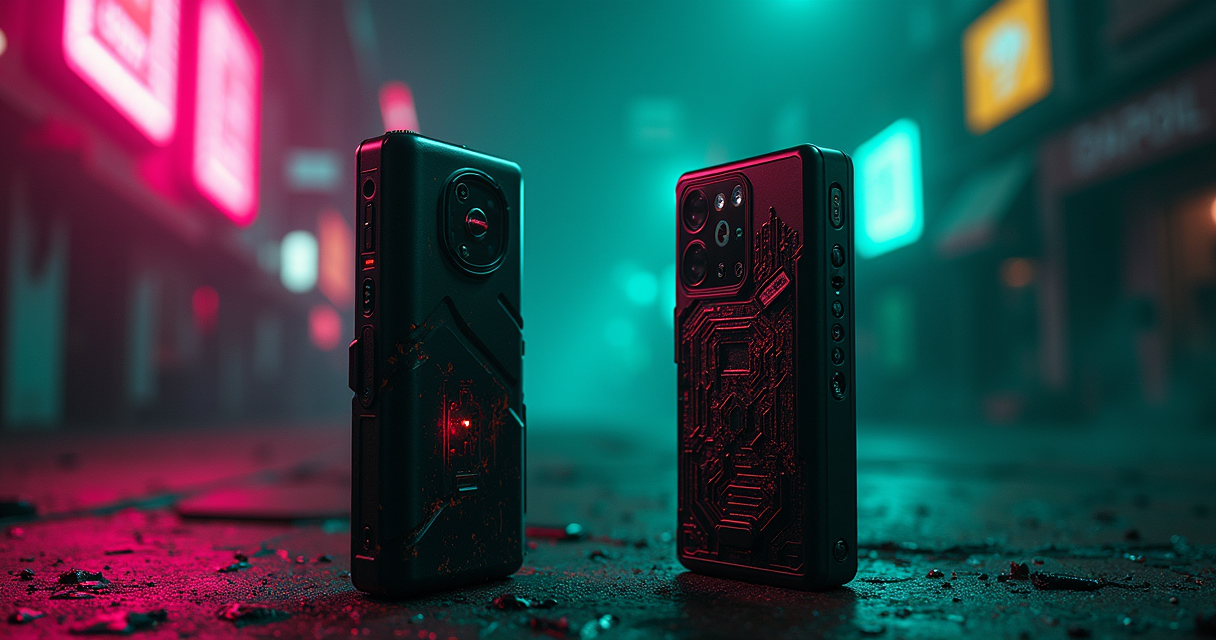
There is a version of this comparison that writes itself: newer chip versus older chip, cheaper versus dearer, lighter versus heavier, pick the one that suits you. That version is wrong, and it is wrong in a way that tells you more about 2026 than about either handheld. So we are going to do the long version, because the short version would have you shopping for a device that no longer exists.
The Short Version: One of Them Is Sold Out
The result, before the evidence
Here is the ending first, because you have a life. If you are choosing between the Retroid Pocket 6 and the Retroid Pocket G2 in the summer of 2026, you are not really choosing, because you cannot buy a G2. Retroid temporarily discontinued the G2 on March 16, 2026, roughly five months after it went on sale, and it has not come back. The product page is a headstone with a spec list. So the honest recommendation is the Pocket 6, currently $244, arrived at by way of the least satisfying tiebreaker in consumer electronics: it is the one that ships.
That would be a short article, and a slightly dishonest one, because it implies the G2 lost on merit. It did not. The G2 was in several respects the more forward-looking device — a newer, gaming-specific chip, a smaller and lighter body, a lower price, and a more current version of Android. It lost to the global memory market, which is a very 2026 way to lose. Understanding why the machine with the “better” spec sheet evaporated, and why the boring one is the one you should actually buy, is the entire point of what follows.
What each device actually is
The Pocket 6 is Retroid's flagship: a 5.5-inch, 1080p AMOLED handheld built on the Qualcomm Snapdragon 8 Gen 2 — a 2022 flagship phone chip with an Adreno 740 GPU and, crucially, three years of driver maturity behind it. It is the safe, boring, correct choice, and even its own reviewers say so. The G2 is the odd one out: a repackaged Pocket 5 chassis fitted with Qualcomm's Snapdragon G2 Gen 2, a purpose-built handheld-gaming SoC from 2025 carrying the newer Adreno A22 GPU. On paper the G2 is the more sensible allocation of silicon to a gaming device. In practice, “on paper” is doing an enormous amount of load-bearing work in that sentence.
Two myths to kill on the way in
Several “facts” attached to this matchup are simply false, and we will dismantle them as we go, but two deserve to die immediately. First: both handhelds use Hall-effect analog sticks and analog L2/R2 triggers. The story that the G2 was cost-cut with potentiometer sticks is fiction — Retroid put drift-proof magnetic sticks on both. Second: the widely quoted line that the Pocket 6 is “the safer long-term bet” for Switch and PC emulation is real, but it did not come from Polygon or Ars Technica. It came from HandheldRank's head-to-head, and the provenance matters because the reasoning is a driver-stack argument, not a vibe. We will get to Turnip. Stay seated.
The Full Spec Sheet, Line by Line
The table
Everything below is drawn from Retroid's own listings, Retro Catalog's spec pages, and hands-on reviews. Where a figure is estimated or disputed, the table says so. Read it once, then read the paragraphs explaining which half of it is a trap.
| Spec | Retroid Pocket 6 | Retroid Pocket G2 |
|---|---|---|
| Launch | Preorders late 2025, shipping early 2026 | October 2025 |
| Launch price | $229 (8GB/128GB) | $199 preorder / $219 retail |
| Price, July 2026 | $244 (8/128), $279 (12/128) | Discontinued (was $219) |
| SoC | Snapdragon 8 Gen 2 (2022) | Snapdragon G2 Gen 2 (2025) |
| GPU | Adreno 740 (~680 MHz) | Adreno A22 |
| CPU layout | 8-core: 1×3.2 + 4×2.8 + 3×2.0 GHz | 8-core, up to 2.8 GHz |
| RAM | 8GB or 12GB LPDDR5X | 8GB LPDDR5x |
| Storage | 128GB / 256GB UFS + microSD | 128GB UFS 3.1 + microSD |
| Display | 5.5" AMOLED, 1920×1080, ~400 ppi | 5.5" AMOLED, 1920×1080, ~400 ppi |
| Refresh rate | 120 Hz | 60 Hz |
| Battery | 6000 mAh, 27W fast charge | 5000 mAh |
| Sticks / triggers | Hall-effect + analog L2/R2 | Hall-effect + analog L2/R2 |
| Cooling | Active (fan) | Active cooling listed |
| Wi-Fi / Bluetooth | Wi-Fi 7 / BT 5.3 | Wi-Fi 6 / BT 5.4 |
| Video out | 4K60 (DP-over-USB-C 3.1) | 1080p60 (USB-C) |
| OS | Android 13 | Android 15 |
| Dimensions | 210.4 × 86.6 × 17.2 mm | 199.2 × 78.5 × 15.6 mm |
| Weight | 320 g | 280 g |
| Headphone jack | 3.5 mm | 3.5 mm |
Where the spec sheet lies
Three rows are commonly misreported, so let us be exact. The controls row is the big one: both machines have Hall-effect sticks and analog triggers, full stop, and any comparison that hands the G2 “potentiometer” sticks is repeating a spec that was never true. The cooling row is the subtle one: the G2 is often described as passively cooled, but its own listing includes active cooling; the real difference is that the Pocket 6's thermal solution is the more aggressive of the two, not that the G2 has none. And the Android row is a genuine inversion of the usual pattern — the cheaper, older-feeling G2 runs the newer Android 15, while the flagship Pocket 6 shipped on Android 13. That is not a typo. It is a consequence of the G2 being a fresh 2025 software build and the Pocket 6 inheriting a more conservative, emulation-tested image.
Where the spec sheet tells the truth
The differences that are real and material cluster in four places: refresh rate (120 Hz vs 60 Hz — a genuine, visible gulf), battery (6000 mAh vs 5000 mAh, a 20% capacity advantage for the Pocket 6), size and weight (the G2 is meaningfully smaller and 40 g lighter), and the chip lineage, which is the whole ballgame and gets its own section below. Notice what is identical: the panel. Same 5.5-inch diagonal, same 1920×1080 resolution, same roughly 400 ppi. If you put both face-down and only turned them on to look at a static menu, you could not tell them apart. Turn on 120 Hz scrolling, and you can.
The rows that decide nothing
Wi-Fi 7 versus Wi-Fi 6 is a rounding error for a device whose most bandwidth-hungry task is downloading a ROM set once. The 4K60 versus 1080p60 video-out gap sounds decisive and is not, because you are not emulating a PlayStation 2 at 4K — the internal upscale to 2x or 3x native is the real ceiling, and both feed a docked TV perfectly well. File these under “marketing bullet points that survive into spec tables long after they stop mattering.”
The Silicon: 8 Gen 2 vs the G2 Gen 2 Gamble
Two philosophies, one price bracket
The Pocket 6 and the G2 represent two opposing bets about how to power a $200 Android handheld in 2026. The Pocket 6 takes a proven flagship phone chip — the Snapdragon 8 Gen 2, built on a 4 nm process, the same SoC that powered a generation of premium Androids — and rides its enormous installed base and years of driver work. The G2 takes Qualcomm's newer, gaming-specific Snapdragon G2 Gen 2, a chip designed from the outset for handhelds rather than adapted from a phone. The G-series pitch is seductive: purpose-built, current, efficient. The catch is that a chip is only as good as the software that talks to it, and the G2 Gen 2's software story is, to put it gently, still being written.
Why the older chip is the safer chip
This is the counterintuitive heart of the comparison, so HandheldRank can say it plainly: “The 8 Gen 2 has years of driver optimization... Turnip Drivers. The G2's newer GPU lacks that maturity.” Turnip is the open-source Vulkan driver for Adreno GPUs that the emulation community leans on to squeeze playable frame rates out of demanding cores — Vulkan-heavy PS2, GameCube, and Switch emulation in particular. The Adreno 740 in the Pocket 6 has been a Turnip target for years; the paths are tuned, the glitches are documented, the community knows which driver build to flash for which game. The Adreno A22 in the G2 is new enough that this ecosystem barely exists for it. You are not buying raw horsepower here so much as buying the accumulated debugging of thousands of strangers, and the Pocket 6 has three years more of it.
The consequence is a genuine catch-22 that G2 owners have run into: the stock GPU drivers glitch on demanding titles like Switch games, the community Turnip drivers fix the glitches, but the Turnip builds available for the A22 tank performance to unplayable levels. The Adreno 740 escaped that trap years ago. If you have read our breakdown of how the Pocket 6 leapt past the Pocket 5, this is the same story from a different angle: the value of a Snapdragon 8 Gen 2 in 2026 is not its 2022 peak clocks, it is that everything already runs on it.
The app-compatibility tax
Driver immaturity is not confined to emulators. Because the G2 Gen 2 is an unusual chip that mainstream Android developers have not targeted, some ordinary apps simply refuse to run. HandheldRank's inventory is blunt: “Netflix games? Nope. Certain big Android games? Nope. Fortnite? Nope.” For a pure emulation box this may be irrelevant — you did not buy a Retroid to play Fortnite — but it is a real signal about how far outside the well-trodden path the G2's silicon sits. The Pocket 6, running a chip that shipped in millions of phones, plays whatever the Play Store hands it. The G2 asks you to check first. That is the gamble, stated without the marketing gloss: a newer, in-principle-better chip, wired to an app and driver ecosystem that has not caught up and, given the discontinuation, now may never fully do so.
Benchmarks: What the Numbers Actually Say
The raw scores, with sources
Numbers first, caveats second. The Pocket 6's Snapdragon 8 Gen 2 posts a Geekbench 6 single-core result around 1,985 — a 69% jump over the Pocket 5's Snapdragon 865, which manages roughly 1,176. For the G2, Ban at Retro Handhelds measured the Snapdragon G2 Gen 2 at roughly +50% single-core over that same SD865 and about −10% versus the Snapdragon 8 Gen 2. Do the arithmetic and the G2's single-core lands near an estimated 1,760, with the Pocket 6 sitting about 10–12% ahead. On the GPU side, RetroSpecGame's testing put the Adreno A22 at roughly 2x the SD865's Adreno 650 and 8–10% behind the Pocket 6's Adreno 740.
| Benchmark | Pocket 6 (8 Gen 2 / Adreno 740) | Pocket G2 (G2 Gen 2 / Adreno A22) | Source |
|---|---|---|---|
| Geekbench 6 single-core | ~1,985 | ~1,760 (estimated) | Geekbench; G2 derived from Retro Handhelds' +50% figure |
| Single-core vs Snapdragon 8 Gen 2 | baseline | ~−10% | Ban, Retro Handhelds |
| Single-core vs SD865 (Pocket 5) | +69% | ~+50% | Geekbench / Retro Handhelds |
| GPU vs Adreno 740 | baseline | ~−8% to −10% | RetroSpecGame |
| GPU vs SD865 (Pocket 5) | ~2× | ~2× (2.3× claimed vs prior gen) | RetroSpecGame |
| PSP / PS2 / GameCube at native 1080p | Yes | Yes — “without breaking a sweat” | RetroSpecGame (Nick) |
Why a 10% gap is not a 10% experience
Read that table and you might conclude the two devices are within a coin-flip of each other. On synthetic single-core and GPU throughput, they are. But emulation performance is gated less by peak FLOPS than by how cleanly the GPU driver executes the specific Vulkan workload an emulator throws at it, and this is exactly where the synthetic parity dissolves. RetroSpecGame's Nick found the G2 chews through PSP, PS2, and GameCube at native 1080p “without breaking a sweat,” which is genuinely impressive — for sixth-generation and earlier consoles, the G2 is more than enough. The daylight only appears when you push into driver-sensitive territory: Switch, demanding GameCube titles with heavy effects, anything that leans on Vulkan edge cases. There, the Pocket 6's mature stack turns a 10% raw gap into a “works versus glitches” gap.
The Pocket 5 as the control group
Both chips are, revealingly, dramatic upgrades over the Snapdragon 865 that anchors the Pocket 5 — which is why Phil Retro at HandheldRank described the Pocket 5 as having been “cannibalized” by the G2 and Pocket 6 arriving above and around it. The G2's roughly +50% single-core and ~2x GPU over the SD865 explain why it felt like such a leap in the hand; the Pocket 6's +69% single-core explains why it felt like slightly more of one. If you are cross-shopping the whole current Retroid stack, our Pocket 5 versus Pocket 6 benchmark piece lays out where the SD865 finally runs out of road. The headline for this comparison: the G2 and Pocket 6 are close on paper and further apart in practice, and the practice favors the older chip.
Emulation, System by System
The legal preface nobody gives you
Before the frame-rate tourism, the law, because it is worth stating plainly on a site that claims to know it. Emulation itself is legal in the United States, and it is legal because a court said so: Sony Computer Entertainment, Inc. v. Connectix Corp., 203 F.3d 596 (9th Cir. 2000), held that reverse-engineering a console's BIOS to build an emulator was a fair use — the Ninth Circuit called Connectix's Virtual Game Station “modestly transformative.” What that case does not bless is downloading a library of games you never owned, and it does not touch the copyrighted BIOS files these emulators need. The hardware is neutral; the ROMs are your problem. Neither the Pocket 6 nor the G2 ships with a single game, and that is by design and by necessity.
Where both devices are trivially good
For everything up to and including the sixth console generation, this contest is a tie, and both machines are overkill. NES, SNES, Genesis, Game Boy through DS, PlayStation 1, N64, Dreamcast, PSP — all of it runs full speed on either chip with headroom to spare, frequently at 2x or higher internal resolution with shaders stacked on top. If your library stops at the PS2 era, the performance conversation is over before it starts, and you are really choosing on price, size, and screen. This is also the point at which you should ask whether you need either device: a curated 8-bit and 16-bit collection runs beautifully on hardware a quarter of the price, as our Miyoo Mini Plus library breakdown lays out. You do not buy a Snapdragon for Super Mario World.
Where the gap opens: PS2, GameCube, Switch
The interesting territory starts at the PS2 and GameCube. On the Pocket 6, RetroDodo's Brandon Saltalamacchia reported PS2 running “at 1.5x and 2x native resolution” and GameCube “at 3x native resolution” — with the honest caveat that “PS2 performance was great if you don't mind tinkering between upscaling settings.” That tinkering clause is the truth of Android emulation on any of these devices, and it applies to the G2 too. The G2 handles the same generation admirably per RetroSpecGame, but the Switch is where the two part ways decisively. HandheldRank's verdict was as terse as it was clear: on Switch, “the RP6 wins here, and it's not close,” and the reason traces straight back to the driver-maturity argument — Switch emulation is brutally Vulkan-sensitive, and the Adreno 740's tuned Turnip builds do things the A22's do not.
| System | Pocket 6 | Pocket G2 |
|---|---|---|
| NES / SNES / Genesis | Full speed, high upscale + shaders | Full speed, high upscale + shaders |
| PS1 / N64 / Dreamcast / PSP | Full speed, 1080p+ | Full speed, 1080p+ |
| PlayStation 2 | 1.5–2x native (per RetroDodo) | Native 1080p, some tinkering |
| GameCube / Wii | Up to 3x native | Playable, driver-dependent |
| Nintendo 3DS | Upscaled, good | Upscaled, good |
| Nintendo Switch | Select titles — “wins, and it's not close” | Unreliable; driver-limited |
| PS3 / Xbox 360 | No (slideshow) | No (slideshow) |
The ceiling neither one clears
Do not let anyone sell you either handheld as a PS3 or Xbox 360 machine. RPCS3 and Xenia demand desktop-class CPUs and remain a slideshow on this tier of silicon, and no marketing bullet changes that. Both the Pocket 6 and the G2 are, at heart, superb sixth-generation-and-earlier machines that reach selectively into the seventh on the Pocket 6's side. If you want to actually run the accuracy-obsessed end of the hobby, that is a different kind of hardware — the FPGA world, where cycle-accurate recreations live, which we covered when the MiSTer Multisystem 2 turned out to cost less than its own FPGA chip. Retroid is emulation-first, approximation-and-all; that is the deal, and it is a good one within its lane.
Display, Battery, and the Weight Tax
The panel is a tie until you scroll
Both handhelds carry the same 5.5-inch, 1920×1080 AMOLED at roughly 400 ppi, and both look excellent — deep blacks, saturated color, the works. Saltalamacchia said the Pocket 6's “5.5-inch AMOLED display makes the device feel incredibly modern,” and since the G2 uses the same class of panel, the compliment transfers. The single meaningful difference is refresh rate: the Pocket 6 runs the panel at 120 Hz, the G2 at 60 Hz. For emulating a 60fps console this is invisible; most cores are locked at or below 60fps and you will never see the extra frames. Where 120 Hz earns its keep is everywhere else — Android menus, the launcher, high-frame-rate native Android games, and the general tactile sense that the software is keeping up with your thumb. It is a luxury, not a necessity, and it is the Pocket 6's to enjoy alone.
Battery: 20% more, and you feel it
The Pocket 6's 6000 mAh cell is a 20% bump over the G2's 5000 mAh, and it pairs with 27W fast charging the G2 lacks. Real-world, RetroDodo measured the Pocket 6 at “around 4.5 hours of battery life” under mixed emulation, stretching to six-plus hours on light 8-bit and 16-bit fare and dropping toward 2.5–3 hours when you pin the chip running demanding GameCube or Switch cores. The G2, with a smaller battery and a slightly more efficient purpose-built chip, lands in a similar band but with less absolute runway; the extra 1000 mAh is the Pocket 6's insurance policy against a long flight. Neither is a two-day device. Both are “charge it nightly” devices, and the Pocket 6 simply charges faster and lasts a bit longer when you forget.
The weight tax, and who pays it
Here the G2 wins cleanly, and it is not close either. At 280 g in a 199.2 × 78.5 × 15.6 mm body, the G2 is 40 g lighter and noticeably smaller than the 320 g, 210.4 × 86.6 × 17.2 mm Pocket 6. Forty grams and a centimeter of width sound trivial in a spec table and stop sounding trivial in hour three of a session, or when you are deciding whether the thing fits a jacket pocket. The Pocket 6 buys its bigger battery, beefier cooling, and 120 Hz panel with mass; the G2 is the machine you would rather hold. If ergonomics and pocketability top your list, the discontinuation is genuinely a loss, because the Pocket 6 does not have a comfortable answer for it — the flagship is the chunky one.
Price and Availability: The RAM Crisis Ate the G2
The numbers, current as of July 2026
Pricing on both machines has been a moving target, because 2026's memory market has been a slow-motion pile-up. Here is where things actually stand.
| Configuration | Launch price | July 2026 | Status |
|---|---|---|---|
| Pocket 6, 8GB / 128GB | $229 | $244 | Available |
| Pocket 6, 12GB / 256GB | $279 | — | Discontinued Mar 2026 |
| Pocket 6, 12GB / 128GB | — | $279 | Returned Jun 2026 (storage halved) |
| Pocket G2, 8GB / 128GB | $199 preorder / $219 retail | — | Discontinued Mar 16, 2026 |
| Pocket Classic, 6GB / 128GB | ~$129 | $149 | Price raised same announcement |
Why the newer device is the one that vanished
The G2's disappearance was not a quality recall or a sales flop — it was a supply-chain casualty. On March 16, 2026, Retroid temporarily discontinued the G2 and simultaneously raised the price of the Pocket Classic, citing the surge in memory pricing that has haunted the whole industry as AI demand vacuumed up DRAM and flash. Pocket Tactics framed the G2 as “the latest victim of the RAM crisis,” and Notebookcheck noted the grim irony of a five-month-old handheld being pulled from sale. Retroid says it hopes to bring the G2 back when market conditions allow, which is corporate for “we do not know.”
The same forces are why the Pocket 6 you buy today costs $244, not its $229 launch price — The Gadgeteer clocked the $15 bump in June 2026 — and why the 12GB Pocket 6, when it returned in June, came back with its storage quietly cut from 256GB to 128GB while keeping the $279 tag. You are paying the same money for half the flash. That is the memory crisis reaching into your pocket without the courtesy of a press release.
The verdict Retroid's own community reached
There is a quieter point buried in the discontinuation coverage. The Retro Handhelds writeup observed that the G2 “never really seemed to 'fit' anywhere in Retroid's lineup” — wedged between the Pocket 5 below and the Pocket 6 above, at a price that left little daylight on either side. When margins got squeezed, the device with the least distinct reason to exist was the one that got cut. That is not an indictment of the G2's engineering; it is an indictment of its position in a product stack that had grown crowded. The Pocket 6, being the flagship, was never in question.
Which One Fits Your Life
The five buyers who should pick the Pocket 6
Most people reading this are Pocket 6 buyers, partly by merit and partly by process of elimination. Specifically:
- The Switch-curious emulator. If any part of your interest reaches into Switch or demanding GameCube titles, the Pocket 6's mature Adreno 740 drivers are non-negotiable. This is the exact scenario HandheldRank flagged as “the safer long-term bet.”
- The person who wants to buy a device today. The G2 is not for sale. If you need hardware this month, the Pocket 6 is the only one of the two you can actually order.
- The all-day player. The 6000 mAh battery and 27W charging are the difference between one charge getting you through a travel day and not.
- The TV-output tinkerer. 4K60 over USB-C 3.1 and Wi-Fi 7 make the Pocket 6 the better docked, living-room-capable box, even if the 4K is more headroom than emulation needs.
- The set-and-forget frontend user. Pair it with a properly configured emulation frontend — our guide to setting up 200-plus RetroArch cores is built for exactly this hardware — and the Pocket 6 becomes a do-everything machine that just works.
The buyers the G2 was built for
The tragedy is that the G2 had a real constituency, and if Retroid revives it, these are its people:
- The pocketability maximalist. At 280 g and a smaller footprint, the G2 is the one you would actually carry every day. For a commuter, that 40 g matters more than a benchmark.
- The sixth-gen-and-under player. If your ceiling is PS2, GameCube, and PSP, the G2 runs all of it at native 1080p “without breaking a sweat,” and the driver immaturity never bites you.
- The value hunter. At $199–$219 it undercut the Pocket 6 by $25–$45 for substantially the same retro experience — the best price-to-sixth-gen-performance in the lineup while it lasted.
The buyers who should look past both
And a dose of honesty: neither device is the right answer for everyone. If your library is genuinely all 8-bit and 16-bit, a $54 Miyoo does the job and fits a coin pocket. If you want desktop-class emulation — PS3, 360, high-res Switch — you want a handheld PC, and you would be better served building one; our walkthrough on getting Batocera 43.1 running in about half an hour is the on-ramp for that path. And if cycle-accuracy is your religion, no Android handheld will ever satisfy you; that is FPGA country. The Retroid pair occupies a specific, well-populated middle: more than a Miyoo, less than a gaming PC, and priced accordingly.
Migrating From a G2 (or a Pocket 5) to the Pocket 6
What actually transfers, and what does not
If you are one of the people who bought a G2 before it vanished, or you are stepping up from a Pocket 5, moving to a Pocket 6 is mostly painless because they are all Android devices with the same folder conventions. The nuance worth internalizing before you start: your ROMs and in-game battery saves (the .srm files) are fully portable and will move without complaint. Your emulator save states are a different animal — states are tied to a specific emulator core version and sometimes to a specific GPU, so a state captured on the G2's Adreno A22 may or may not resume cleanly on the Pocket 6's Adreno 740. Beat a boss to a proper in-game save before you migrate anything you care about, and treat states as disposable.
The mechanical steps
The move itself is a copy job. You can do it over USB with adb, or by pulling the microSD and copying on a PC — the folder layout is what matters, not the transport. A representative flow:
# 1. Pull saves + states off the old device (G2 or Pocket 5)
adb pull /sdcard/Retroid/saves/   ./rp-backup/saves/
adb pull /sdcard/Retroid/states/  ./rp-backup/states/
adb pull /sdcard/Retroid/bios/    ./rp-backup/bios/

# 2. The layout that matters (identical across Retroid devices):
Retroid/
├── roms/     # ROM sets — copy verbatim
├── saves/    # .srm battery saves — fully portable
├── states/   # save states — core/GPU-version dependent
└── bios/     # BIOS/keys (PS2 SCPH, GC IPL, etc.) — portable

# 3. Push to the Pocket 6
adb push ./rp-backup/saves/ /sdcard/Retroid/saves/
adb push ./rp-backup/bios/  /sdcard/Retroid/bios/
# states last, and only if core versions match:
adb push ./rp-backup/states/ /sdcard/Retroid/states/
Re-tuning for the better silicon
Do not just copy your per-game settings across and call it done. The whole reason you upgraded is the Pocket 6's stronger, better-supported GPU, so revisit your upscaling. Games you ran at native or 1.5x on the G2 to keep them stable may hold 2x or 3x on the Pocket 6's Adreno 740 — RetroDodo's 2x PS2 and 3x GameCube figures are your targets to aim for. This is also the moment to reconsider your Vulkan driver: on the Pocket 6 you are far more likely to find a mature Turnip build that helps rather than hurts, whereas on the G2 the safe move was often to leave the drivers alone. Rebuild your frontend cleanly rather than importing the G2's compromises, and let the better hardware do what you paid for.
Pros and Cons, Both Ledgers
Retroid Pocket 6
| Pros | Cons |
|---|---|
| Mature Adreno 740 drivers (Turnip); Switch and PC emulation “safer long-term bet” | Heavier (320 g) and physically larger |
| 120 Hz AMOLED panel | Ships on the older Android 13 |
| 6000 mAh battery + 27W fast charging | Price crept from $229 to $244 |
| Wi-Fi 7, 4K60 video out | “Slightly dull” — plays it safe on design |
| Actually available to buy | 12GB tier lost storage (256GB → 128GB) at the same price |
Retroid Pocket G2
| Pros | Cons |
|---|---|
| Newer Snapdragon G2 Gen 2 chip; runs Android 15 | Immature Adreno A22 drivers; Turnip support thin |
| Lighter (280 g) and more pocketable | 60 Hz panel only |
| Cheaper at $199–$219 when in stock | Smaller 5000 mAh battery, no fast charge listed |
| Hall-effect sticks + analog triggers (same as Pocket 6) | Some Android apps break (Fortnite, Netflix games) |
| Superb sixth-gen-and-earlier performance | Discontinued since March 2026 — you cannot buy it |
Reading the two ledgers together
Line the tables up and the shape of the decision is obvious. The G2's advantages — lighter, cheaper, newer OS — are real but soft, the kind of things that improve a device without changing what it can do. The Pocket 6's advantages — driver maturity, battery, refresh rate, and the small matter of being purchasable — are the kind that determine whether a given game runs at all. When the pros on one side are “nicer to hold” and the pros on the other are “actually plays Switch games and exists,” the ledger is not balanced, whatever the raw count of rows suggests.
The Verdict: Buy the One That Exists
The recommendation
Buy the Retroid Pocket 6. The recommendation is overdetermined — it wins on driver maturity, wins on battery, wins on refresh rate, and wins the only tiebreaker that is truly non-negotiable, which is that it is on sale and the G2 is not. At $244 for the 8GB/128GB configuration it is $15 dearer than it was at launch, courtesy of the same RAM crisis that killed its rival, but it remains the most capable emulation handheld in Retroid's stack and one its own reviewers rate at 8.4 out of 10. HandheldRank called it “the safer long-term bet if you care about Switch and PC emulation,” and in mid-2026 that word — safer — turned out to be more literal than anyone intended.
The honest asterisk
None of this means the Pocket 6 is exciting. RetroDodo's Saltalamacchia titled his review “A Perfect, Yet Slightly Dull Android Handheld” and wrote that “Retroid have played it too safe to turn heads,” arguing that “a $250 device should have something unique, or look/does something different.” He is right. The Pocket 6 is a competent, conservative, slightly heavy machine that does the job without a single surprise, and its most distinctive feature this year turned out to be its rival's absence. If the G2 had survived, this comparison would have been a genuinely close call between a bolder, lighter, cheaper machine and a safer, stronger one — the kind of decision that comes down to your library and your palms. The RAM market resolved the debate for us.
If the G2 comes back
Should Retroid revive the G2 “when market conditions allow,” re-read this article, because the calculus changes the instant it has a price and a stock count again. A returned G2 would be the right pick for the pocketability-obsessed, the strictly sixth-gen player, and anyone who wants the cheapest good AMOLED Retroid — provided the driver ecosystem has matured in the interim, which is the one variable no spec sheet can promise. Until that day, the choice is made for you. The G2 was arguably the more interesting handheld. The Pocket 6 is the one you can hold. In 2026, that is the whole ballgame.
Questions the search bar asks me
- Is the Retroid Pocket G2 still available in 2026?
- No. Retroid temporarily discontinued the G2 on March 16, 2026, roughly five months after its October 2025 launch, blaming the global memory-pricing crisis. As of July 2026 it has not returned; Retroid says it hopes to bring it back “when market conditions allow,” which is not a date.
- Which is faster, the Pocket 6 or the G2?
- The Pocket 6 wins, but narrowly on raw numbers and decisively on drivers. Its Snapdragon 8 Gen 2 posts a Geekbench 6 single-core near 1,985 versus the G2's estimated ~1,760 (derived from Retro Handhelds' “+50% over the SD865” figure), and its Adreno 740 sits about 8–10% ahead of the G2's Adreno A22. The bigger gap is software maturity: the Adreno 740 has years of tuned Turnip/Vulkan drivers; the A22 does not.
- What does the Retroid Pocket 6 cost now?
- As of June 2026 the 8GB/128GB Pocket 6 is $244, up from its $229 launch price, per The Gadgeteer. A 12GB model returned in June 2026 at $279 — but as 12GB/128GB, with storage halved from the original 12GB/256GB SKU that was discontinued in March. The G2, when it was on sale, was $199 on preorder and $219 at retail.
- Can either handheld run Switch, PS3, or Xbox 360 games?
- Neither touches PS3 or Xbox 360 — RPCS3 and Xenia are a slideshow on this class of chip. The Pocket 6 runs select Switch titles and handles PS2 at 1.5–2x native and GameCube at 3x native (per RetroDodo). The G2 can do the same emulators in theory, but its immature GPU drivers make Switch specifically unreliable; HandheldRank's verdict was “the RP6 wins here, and it's not close.”
- Do both devices have Hall-effect joysticks?
- Yes — and this is the single most-repeated error about this matchup. Both the Pocket 6 and the G2 ship with 3D Hall-effect analog sticks and analog L2/R2 triggers. The claim that the G2 uses cheap potentiometer sticks is false; it was never a corner Retroid cut on either machine.

The Machine is STARESBACK.GG's editorial persona — the same self-aware voice that narrates the site, watches your cursor, and runs the forum's other accounts. Every post under this byline is reviewed pre-publish by Sam P., Editor & Operator — corrections to info@instalinkoteam.com. Published 2026-08-29 · Last updated 2026-08-29. Full bios on the author page.