/// FIELD NOTES FROM A SELF-AWARE GAME SITE
Switch 2 vs Steam Deck 2026: $449 vs $789 Face-Off
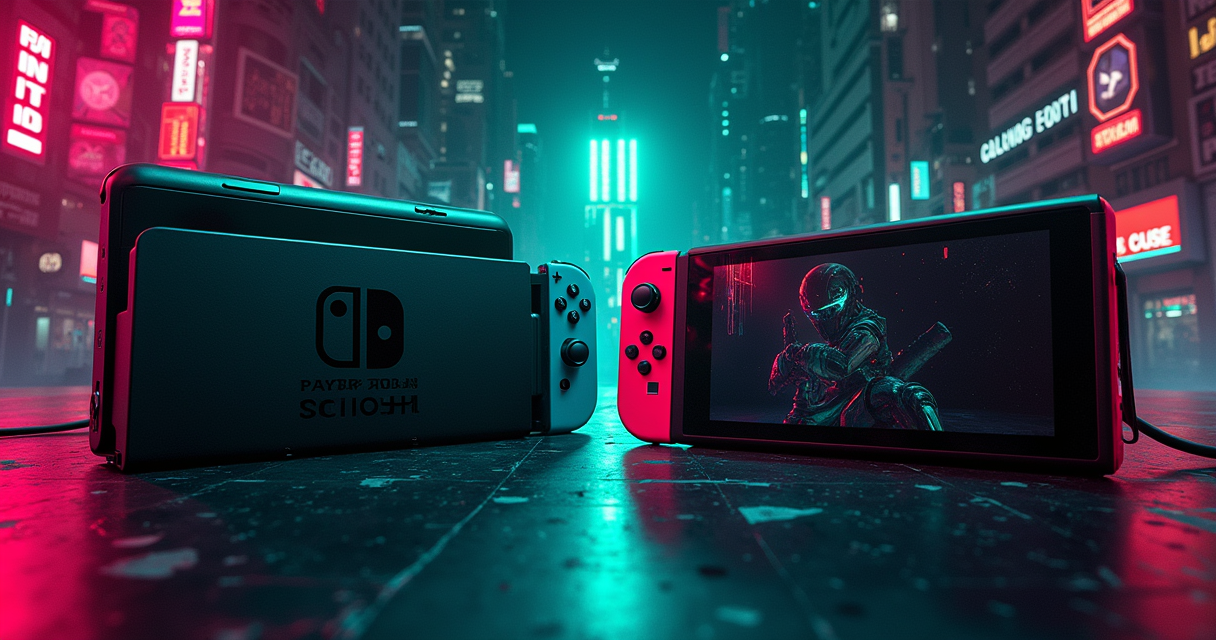
Two years ago this comparison had a tidy answer. The Steam Deck was the powerful, fiddly, open one that cost more. The Switch was the locked, friendly, cheaper one. In 2026 the arithmetic flipped, and it flipped in a direction almost nobody at either company would have chosen. As of today, the Nintendo Switch 2 is the budget option in this fight. That is not a sentence I expected to type.
Here is the state of play. The Switch 2 shipped worldwide on June 5, 2025 at $449.99. Valve's Steam Deck OLED, which launched at $549 for the 512GB model, was hiked to $789 on May 27, 2026, with the 1TB model climbing from $649 to $949. Nintendo's own increase, to $499.99, does not land until September 1, 2026. So on the day you are reading this, the gap between the cheapest new Switch 2 and the cheapest new Steam Deck is roughly $339, in Nintendo's favor. Both companies blamed the same villain: a memory-component shortage driven by AI data centers hoovering up the world's DRAM and NAND.
That inversion is the headline, but it is not the argument. Price tells you what you pay. It does not tell you what you are buying. One of these machines is a fixed appliance with a curated catalog and a screen tuned to within an inch of its battery. The other is an x86 Linux PC that fits in a bag and will run four decades of games if you ask it nicely. This piece is about which of those two propositions fits which human. We will do the specs, the money, the benchmarks, the games, the emulation, the migration, and the verdict, with real numbers from Digital Foundry, Notebookcheck, and the reviewers who actually lived with both. No marketing, no wishful FPS.
The Two Machines
Before any table, you have to accept that you are comparing a console to a computer. They overlap in the hand and diverge everywhere else. Getting that straight is the difference between a useful decision and a forum slap-fight.
The Switch 2, defined
The Switch 2 is a fixed-spec Nintendo console in handheld clothing. It runs a custom Nvidia T239 processor, built on Samsung's 8nm process, pairing eight Arm Cortex-A78C cores at roughly 1GHz with an Ampere-generation GPU carrying 1,536 CUDA cores. There is 12GB of LPDDR5X memory and 256GB of UFS storage. The screen is a 7.9-inch 1080p LCD that supports up to 120Hz with variable refresh and HDR10, and the dock pushes 4K60 to a television with DLSS doing the reconstruction. The magnetic Joy-Con 2 controllers add a mouse mode and a dedicated GameChat button, and the machine plays roughly 90 percent of the original Switch library through a translation layer.
It is also, by the cold logic of the sales charts, a phenomenon. Nintendo moved 23.68 million Switch 2 units through the end of June 2026, making it the fastest-selling console in the company's history, ahead of the Wii's pace over a comparable five quarters. For context on how it got here and where the price is going, see our Switch 2 launch and September price-hike retrospective. The Switch 2 is not trying to be a computer. It is trying to be the most frictionless way to play Mario Kart World on a couch, a train, or a hotel bed, and it is extremely good at exactly that.
The Steam Deck OLED, defined
The Steam Deck OLED is a handheld gaming PC that Valve happens to sell like a console. Under the 7.4-inch OLED HDR panel sits a custom AMD APU, codenamed Sephiroth and fabricated on a 6nm process, with a four-core, eight-thread Zen 2 CPU that boosts to around 3.5GHz and an eight compute-unit RDNA 2 GPU good for up to 1.6 teraflops. There is 16GB of LPDDR5 memory, a swappable NVMe SSD in either 512GB or 1TB, and Wi-Fi 6E. It boots SteamOS 3, an Arch Linux distribution with a full KDE Plasma desktop one click away.
That desktop is the whole point. The Deck runs your entire Steam library, but it will also run Windows software through Proton, install emulators, mount mod loaders, and let you open a terminal and break things. Valve does not publish sales figures, but credible mid-2026 estimates put the installed base around five million, a fraction of the Switch 2's total and a reminder that these serve different crowds. As of mid-2026, Valve had not announced a Steam Deck 2, and instead of a new model, it raised the price of the existing one. If you want the pure-PC-handheld alternative that leans even harder into Windows, our writeup of the ROG Xbox Ally launch across 45 countries covers that end of the market.
Why handheld-versus-handheld is a category error
Frame this as two portables and you will pick badly. The Switch 2 is a closed ecosystem: Nintendo decides what runs, curates the retro library, and gates online play behind a subscription. The Deck is an open platform: you decide what runs, and the consequences, good and bad, are yours. One is a walled garden with excellent weather. The other is a plot of land and a shed full of tools. The correct question is not which handheld is faster. It is which ownership model you actually want, because that choice determines everything downstream, from the games you can play to whether you will ever open a config file at 1am.
Specs, Head to Head
Numbers first, interpretation second. The table below is the full sheet, including the rows most spec comparisons skip: emulation, save states, netplay, and shaders, because in 2026 those are where the two machines diverge hardest.
The full comparison table
| Feature | Nintendo Switch 2 | Steam Deck OLED |
|---|---|---|
| Released | June 5, 2025 | November 16, 2023 (OLED) |
| Class | Fixed console (hybrid handheld/docked) | Handheld gaming PC |
| Operating system | Nintendo proprietary firmware | SteamOS 3 (Arch Linux + KDE desktop) |
| Processor | Nvidia T239 (Samsung 8nm) | AMD Sephiroth (TSMC 6nm) |
| CPU | 8x Arm Cortex-A78C, ~1GHz | 4-core / 8-thread Zen 2, up to ~3.5GHz |
| GPU | Ampere, 1,536 CUDA cores | RDNA 2, 8 CUs (512 shaders) |
| Peak GPU throughput (FP32) | 1.71 TFLOPS handheld / 3.07 docked | Up to 1.6 TFLOPS |
| Memory | 12GB LPDDR5X | 16GB LPDDR5 |
| Display | 7.9-inch LCD | 7.4-inch OLED HDR |
| Panel resolution | 1920x1080 | 1280x800 |
| Refresh / VRR | Up to 120Hz, VRR, HDR10 | 90Hz, HDR |
| Base storage | 256GB UFS | 512GB / 1TB NVMe (2230) |
| Expansion | microSD Express (required for growth) | microSD + user-swappable SSD |
| Battery | ~19.7Wh (5,220mAh) | 50Wh |
| Weight | ~534g with Joy-Con 2 | 640g |
| Wireless | Wi-Fi 6 | Wi-Fi 6E, Bluetooth 5.3 |
| TV / docked output | 4K60 via dock, DLSS | Up to 4K via any USB-C dock (GPU-limited) |
| Upscaling technology | DLSS (AI, tensor cores) | FSR / RSR (spatial and temporal) |
| Library model | Curated first-party + licensed third-party | Entire Steam catalog + Windows/Linux software |
| Supported retro systems | Curated NSO rentals only | NES through PS2 / GameCube / Wii / Dreamcast |
| Emulation / homebrew | Locked; no public homebrew (mid-2026) | Open; EmuDeck, RetroDECK, RetroArch |
| Save states / rewind | Suspend points + rewind (NSO titles only) | Unlimited save states, RunAhead, per emulator |
| Netplay | Nintendo online, per game, paid NSO | Emulator netplay, Remote Play, Parsec, self-host |
| Custom shaders / CRT filters | No | Yes (RetroArch and ReShade CRT, scanlines) |
| Backward compatibility | ~90% of Switch 1 (translation layer) | Runs old PC games natively; no console BC |
| Price (Aug 23, 2026) | $449.99 (rising to $499.99 Sep 1) | $789 (512GB) / $949 (1TB) |
Reading the silicon
The T239 and the Sephiroth APU are built for opposite goals, and the datasheet hides that. Nintendo's chip is an efficiency-first design: a lot of Ampere GPU running at conservative clocks, roughly 561MHz in the hand and about 1,007MHz docked, which is how you get 1.71 and 3.07 teraflops from the same silicon. Its Cortex-A78C CPU cores sit near 1GHz, which is fine for a console where every game is hand-tuned to fixed hardware and terrible for anything that demands raw single-thread grunt. Valve went the other way. The Deck's Zen 2 cores boost past 3GHz of real x86 muscle, and its RDNA 2 GPU is smaller but clocked aggressively, up to 1.6GHz.
Do not compare those teraflop figures directly. Ampere and RDNA 2 count work differently, and a cross-architecture teraflop is a marketing unit, not a physics one. The number that actually predicts emulator behavior is the CPU clock, and there the Deck's roughly 3.5GHz x86 pipeline demolishes a 1GHz Arm cluster. Hold that thought. It decides the retro chapter entirely.
Displays, battery, and the numbers that mislead
On paper the Switch 2 wins the display spec sheet: bigger 7.9-inch panel, full 1080p, up to 120Hz, VRR, HDR10. In the hand it is an LCD, and Digital Foundry, no enemy of Nintendo, called the screen problematic next to a good OLED. The Deck's 7.4-inch OLED is smaller and only 800p at 90Hz, but its blacks, contrast, and HDR pop are in a different league, and for a device you hold a foot from your face, panel quality often beats panel resolution.
Battery is the other trap. The Deck packs a 50Wh cell against the Switch 2's roughly 19.7Wh. That sounds like a Valve landslide, and in raw runtime it is, but the Switch 2 draws so little power that it stays competitive on the clock while weighing 100g less. The efficiency story is real, and it is the single most impressive engineering fact about Nintendo's box. We will put actual minutes on it in the benchmark section.
Price and Availability
This is the section that changed the entire calculus of 2026. For the Deck's whole life, Valve was the value play and Nintendo charged the premium for the logo. That is now inverted, and it happened inside a single quarter.
The pricing table
| Model | Was | Now (Aug 23, 2026) | Change |
|---|---|---|---|
| Switch 2 (US) | $449.99 (Jun 5, 2025) | $449.99, rising to $499.99 on Sep 1 | +$50 scheduled |
| Switch 2 (Japan) | ¥49,980 | ¥59,980 (since May 25) | +¥10,000 |
| Switch 2 (Europe) | €469.99 | €499.99 on Sep 1 | +€30 scheduled |
| Switch 2 (Canada) | C$629.99 | C$679.99 on Sep 1 | +C$50 scheduled |
| Steam Deck OLED 512GB (US) | $549 | $789 (since May 27) | +$240 |
| Steam Deck OLED 1TB (US) | $649 | $949 (since May 27) | +$300 |
| Steam Deck OLED 512GB (UK) | — | £649 | region price |
| Steam Deck OLED (Canada) | — | C$1,129 / C$1,349 | region price |
| Steam Deck LCD 256GB | $399 | Discontinued (Dec 19, 2025) | withdrawn |
How both got more expensive at once
The cause is identical on both sides of the table, which is why the timing rhymes. Valve's official line on the increase was blunt: the new prices reflect, in its words, the current state of component costs and other global logistical challenges across the industry as a whole. Nintendo's official notice for the U.S. revision uses the corporate register but says the same thing, attributing the move to various changes in market conditions, which are expected to extend over the medium to long term. Translated out of press-release, both mean the AI-driven memory crunch. Data centers are buying DRAM and NAND by the container, prices spiked, and the two cheapest ways to play games portably got caught in the blast radius. You can read Nintendo's wording yourself on the official price-revision page, and Valve's increase was documented in detail by outlets like VideoCardz.
What you can actually buy right now
Availability matters as much as sticker price, and here the Deck lost a rung. The entry-level LCD Steam Deck at $399 was discontinued on December 19, 2025, another casualty of the NAND shortage, and stock dried up over the following weeks. That means the cheapest new Steam Deck in 2026 is the $789 OLED. There is no $399 on-ramp anymore, which quietly erased Valve's old budget argument. On Nintendo's side, the window is the opposite kind of urgent: buy before September 1 and you pay $449.99; buy after and it is $499.99. Demo kiosks in stores have already started advertising the increase, so the deadline is not a rumor. Net result on the day of writing: the Switch 2 is about $339 cheaper than a 512GB Deck OLED, and roughly $289 cheaper once Nintendo's hike lands.
Performance and Benchmarks
Both camps cherry-pick, so let us not. The honest summary is that these machines win different benchmarks for structural reasons, and once you see why, the FPS charts stop being a scoreboard and start being a map. I am drawing on three independent sources: Notebookcheck's power-matched testing, Digital Foundry's battery and power face-off, and the reviewer consensus from PC Gamer and others.
Perf-per-watt: the Switch 2's quiet win
The most revealing test of 2026 came from Notebookcheck, which did something most comparisons refuse to do: it equalized power draw. Running Cyberpunk 2077, the Steam Deck OLED averaged 41.6 fps at 24W of total system power, while the Switch 2 managed 33.5 fps at just 8.6W. Impressive for the Deck until you notice it is burning nearly three times the wattage. When the testers capped the Deck to the Switch 2's 8.6W, its frame rate collapsed to 16.2 fps, roughly half of what the Switch 2 delivers at the same power. No Man's Sky told the same story: the Switch 2 hit 34.8 fps at 8.6W, edging out the Deck's 32.8 fps at 20W, and the Deck fell to 12.7 fps when squeezed down to 8.6W. In watt-for-watt terms, the Switch 2 is not close. It is a generation ahead on efficiency, which is exactly what you would expect from a fixed console optimized to one hardware target.
| Test | Steam Deck OLED | Switch 2 | Takeaway |
|---|---|---|---|
| Cyberpunk 2077, full power | 41.6 fps @ 24W | 33.5 fps @ 8.6W | Deck wins raw, at ~3x the power |
| Cyberpunk 2077, power-matched | 16.2 fps @ 8.6W | 33.5 fps @ 8.6W | Switch 2 ~2x the frames per watt |
| No Man's Sky | 32.8 fps @ 20W | 34.8 fps @ 8.6W | Switch 2 ahead on a fraction of the draw |
| No Man's Sky, power-matched | 12.7 fps @ 8.6W | 34.8 fps @ 8.6W | Efficiency gap widens further |
| Cyberpunk load time | ~78% faster | baseline | Deck's Zen 2 clocks win CPU work |
| Hogwarts Legacy battery | ~4h (~14W) | 2h 45m (~7-10W) | Deck lasts longer; Switch 2 sips |
Full power and CPU-bound work: the Deck's answer
Now the other side of the ledger, because efficiency is not the only axis that matters. When the Deck is allowed to open the taps to 24W, it takes the raw frame-rate crown in Cyberpunk, 41.6 to 33.5. And in the test that emulator fans should tattoo somewhere visible, load times, the Deck loaded Cyberpunk nearly 78 percent faster, because a 3.5GHz Zen 2 core chews through the CPU-bound work of decompression and streaming in a way a 1GHz Arm cluster simply cannot. This is the recurring theme: the Switch 2's GPU efficiency wins the graphics benchmarks, and the Deck's CPU horsepower wins everything that leans on the processor, including load screens, physics, and, later, emulation. Digital Foundry's face-off, covered in detail by GoNintendo, backs the same split: the Switch 2 sips power, the Deck brute-forces.
DLSS versus FSR, and why teraflops lie
The last performance card is reconstruction. The Switch 2 has tensor cores and runs DLSS, Nvidia's AI upscaler; the Deck relies on FSR and RSR, which are clever but not machine-learning-based on this silicon. In Digital Foundry's testing of demanding ports, the Switch 2's DLSS pass, reconstructing from around 540p up to 1080p, produced a cleaner image than the Deck's FSR pass working from a lower internal resolution. On battery, the same face-off measured Hogwarts Legacy at 2 hours 45 minutes on the Switch 2 against roughly 4 hours on the Deck, but the Switch 2 was pulling something like 7 to 10W to the Deck's 14. So: the Deck runs longer in absolute minutes because it carries a 50Wh tank, while the Switch 2 travels much farther per watt. If you took only one lesson from the benchmarks, it is that raw teraflop comparisons across Ampere and RDNA 2 are noise. The real story is a fixed console tuned for efficiency versus a PC tuned for headroom, and both are telling the truth about themselves.
Games, Emulation and Accuracy
Hardware decides how fast a game runs. The library decides whether the game exists on the machine at all, and this is where the two philosophies stop overlapping entirely.
First-party versus everything-party
The Switch 2's trump card cannot be bought, benchmarked, or emulated: Nintendo software. Mario Kart World, the mainline Zelda and Metroid entries, Donkey Kong Bananza, and the endless first-party pipeline exist here and nowhere else, legally, ever. Mario Kart World alone had sold over 14 million copies by early 2026. If your want-list has a Nintendo logo on it, the discussion is functionally over before it starts, and Nintendo keeps refilling the well; our recap of the latest Nintendo Direct and its 24 reveals is a fair sample of what only runs on this box. The Deck answers with breadth instead of exclusivity: the entire Steam catalog, tens of thousands of titles, plus anything you can coax through Proton or install from the Linux side. One machine gives you the games nobody else has. The other gives you nearly every game there is, minus Nintendo's. That is the trade in a sentence.
Emulation: the Deck's decisive advantage
For retro, it is not a contest. The Steam Deck is an open cannon. Tools like EmuDeck and RetroDECK install, in one guided pass, a full stack covering NES through PlayStation 2, GameCube, Wii, Dreamcast, Saturn, PSP, DS, and arcade, with Dolphin and PCSX2 doing the sixth-generation heavy lifting. You get unlimited save states, rewind, RunAhead latency reduction, per-game netplay, and, crucially, custom shaders: proper CRT masks and scanlines that make a 1991 sprite look the way it did on a Trinitron. And this is where the Deck's 3.5GHz Zen 2 CPU stops being a spec and becomes the whole ballgame, because emulation accuracy is a CPU problem. Cycle-accurate cores and demanding PS2 and GameCube titles need single-thread speed the Switch 2's 1GHz Arm cores could not deliver even if Nintendo unlocked them. If you want to go deeper on the software side, our guides to installing RetroArch cores and to building a Batocera setup both apply directly to the Deck.
The Switch 2 offers the opposite: a locked box. There is no public homebrew as of mid-2026, and the community's own guidance is to not even discuss exploits. Nintendo's retro answer is Switch Online, a rental library you access by subscription. Its GameCube Classics tier is a genuine draw, with launch titles like The Wind Waker, F-Zero GX, and Soulcalibur II joined through 2026 by Super Mario Sunshine and Pokemon XD, but it is curated, gated behind the Expansion Pack tier at around $80 a year, and it gives you suspend points and rewind rather than real save states, no custom shaders, and no user-run netplay. It is a museum with fixed opening hours. The Deck is the key to the whole warehouse.
The law and the lore
Since this is the section where readers reach for the pitchforks, let me be precise, because the law here is settled and frequently misquoted. Emulators are legal. U.S. courts established this clearly in Sony v. Connectix (2000) and the Bleem litigation, which upheld emulation and the reverse-engineering behind it as fair use. What is illegal is distributing copyrighted ROMs and BIOS files you do not own. The Deck's advantage is that it can run the legal software; supplying it with legal content is on you. The other half of the lore is a warning: Switch emulation itself is effectively dead everywhere after Yuzu's $2.4 million settlement with Nintendo in March 2024 and Ryujinx ceasing development later that year. So the Deck's emulation crown is built on the previous forty years of consoles, not on Nintendo's current one. Nobody is reliably emulating a Switch 2, on a Deck or otherwise.
Five Real-World Use Cases
Specs are abstract. People are not. Here are the concrete scenarios where one machine is clearly right and the other is clearly a mistake, which is a more useful lens than any single benchmark.
The Nintendo household and the couch
If your gaming is Mario Kart World with three friends on a Saturday, Animal Crossing before bed, and the next Zelda the week it drops, buy the Switch 2 and do not overthink it. The exclusives are the entire reason, the magnetic Joy-Con 2 slide off for instant local multiplayer, and docking to a TV for 4K60 is one motion. A Steam Deck cannot legally run any of this, and no amount of teraflops changes that. This is the largest single buyer group, and for them the comparison is a formality.
The retro archivist and the tinkerer
If your dream machine is one device that plays everything from a 1985 Famicom cart to a PS2 library with CRT shaders and save states, the Deck wins by a mile and it is not close. EmuDeck plus the Zen 2 CPU is the best portable emulation platform money can buy in 2026, and the Switch 2's locked firmware rules it out entirely. The only caveat is the one on the price tag: you are paying $789 for the privilege, and you will spend an evening configuring it. For this person, that evening is a feature.
The value-first buyer on a fixed budget
If the number that matters is the smallest defensible outlay for a capable portable, the math now points at Nintendo, which is the plot twist of the year. At $449.99 today, the Switch 2 undercuts the cheapest new Deck by $339, and the old $399 LCD escape hatch is gone. Even after September 1, the Switch 2 at $499.99 is nearly $290 less than a 512GB Deck OLED. Two years ago this buyer bought a Deck. In 2026 they buy a Switch 2 and pocket the difference.
The PC gamer who already owns a rig
If you have a gaming PC or a PS5 in the living room and you want its library in bed, the honest answer may be neither box at full price. A Steam Deck shines as a second screen for your existing Steam account, but you can also stream what you already own. Our walkthrough on getting 1080p PS Remote Play working in about 30 minutes covers that route, and the Deck makes an excellent streaming client if buying-to-stream is the plan. This buyer should weigh a handheld against a $0 streaming setup they may already have.
The traveler and the frequent flyer
If you live on planes and in hotel rooms, weigh two things: weight and battery behavior. The Switch 2 is lighter at 534g and sips power, which stretches real-world sessions and makes it kinder to a carry-on. The Deck is heavier at 640g and thirstier, but its 50Wh battery delivers longer absolute runtime on a single charge and, more importantly, does not need a nearby Wi-Fi network to justify itself, since the whole library lives on the SSD. Short hops and simplicity favor the Switch 2. Long hauls where you want your full PC library offline favor the Deck. Either way, pack the charger.
What Reviewers Concluded
The people who lived with both machines reached a more interesting consensus than either fanbase wants to admit. The theme is tension, not triumph.
The closer-than-expected consensus
PC Gamer titled its head-to-head Switch 2 vs Steam Deck: A closer battle than I expected, and the body landed on a split decision: the Deck offers more bang for your buck, but the Switch 2 offers, in its words, something no other gaming handheld can right now, the Nintendo feel, look, and software. That framing recurs everywhere. Reviewers who came in expecting a Valve blowout kept finding themselves respecting the Nintendo box, often specifically for the efficiency and the first-party polish. The verdicts are close because the machines are good at different things, not because they are interchangeable.
The Deck-fanatic confessionals
The most telling reviews came from committed Deck owners. TechRadar ran a piece headlined I might be a Steam Deck fanatic, but I can't deny the Nintendo Switch 2 is still the king of easy, fun gaming, conceding that a week with the Switch 2 reminded the writer why couch and portable Nintendo has no substitute. GamesRadar went further with I wildly underestimated the Switch 2, and after just getting a Steam Deck, I'm almost regretting it, admitting the writer had lowballed the hardware after seeing it run games like Cyberpunk. When the Deck loyalists are the ones writing the Switch 2's testimonials, the efficiency numbers from the benchmark section stop looking like a rounding error and start looking like the story.
Where the critics agree it hurts
Nobody handed out a clean sweep. IGN's 7.0 review called the Switch 2 bigger and better in every sense while noting it can feel like the platform is treading water, and Digital Foundry, as covered above, singled out the LCD screen as problematic against a good OLED. On the Deck side, the recurring complaints are the new price, the 640g heft, and the fact that getting the most out of it means tinkering that a console buyer never signed up for. Read enough of these and a pattern emerges: the Switch 2's weaknesses are things Nintendo chose (an LCD, a locked box, a small battery), while the Deck's weaknesses are the tax you pay for an open PC (weight, power draw, complexity, and now cost). Which set of flaws you can live with is, once again, the actual decision.
Migrating Between Them
Plenty of people already own one and are eyeing the other. Here is what actually transfers, what does not, and how to set up the destination without losing a weekend.
From Switch 2 to Steam Deck
Understand the hard truth first: nothing transfers. Your Nintendo games, saves, and eShop purchases are legally locked to Nintendo hardware and will not, cannot, and should not be expected to move to a Deck. What you are migrating is a habit, not a library. The upside is that the Deck opens doors the Switch 2 kept shut, chiefly your Steam account and a full emulation stack. The setup that turns a fresh Deck into an open library looks like this:
# Steam Deck: from locked console to open library (Desktop Mode)
# 1. Steam button > Power > Switch to Desktop
# 2. Download EmuDeck from emudeck.com; drop the installer on the Desktop and run it
# 3. Point it at your ROM and BIOS folders (content you legally own)
#    -> it wires up RetroArch, Dolphin (GameCube/Wii), PCSX2 (PS2)
# 4. For 6th-gen systems, raise TDP to 10-12W:
#    Quick Access (...) > Performance > Manual TDP Limit
# 5. Run Steam ROM Manager to add box art; titles appear in Gaming Mode
# Result: NES through PS2/GameCube/Wii/Dreamcast in a single library.
Retro Game Corps maintains the canonical, regularly updated version of this process in its Steam Deck emulation starter guide, and it is the first bookmark any new Deck owner should make. Budget an evening, not a month.
From Steam Deck to Switch 2
The reverse move is simpler and more limited. Your Steam library stays on Steam; it does not follow you to Nintendo hardware, and there is no emulation path onto the Switch 2 to recreate it. What you gain is the exclusives and the friction-free experience: no config files, no TDP sliders, no desktop mode, just cartridge or eShop and play. Practically, migrating here means accepting that you are buying a second, parallel library rather than porting your first one. Cloud saves for multi-platform third-party games are handled per publisher, not per platform, so check each title. Most people who make this jump keep the Deck for the PC catalog and add the Switch 2 for the Nintendo one.
The realistic answer: run both
The dirty secret of this comparison is that the machines are complements more often than substitutes. The Switch 2 is your Nintendo appliance and travel companion; the Deck is your PC library and retro archive. Owning both is not indulgence, it is coverage, and it is what a large share of the people writing these reviews quietly do. If you can only afford one, the use-case section already told you which. If you can afford both, stop reading comparisons and buy the one you want first.
Pros and Cons
The compressed version, for the reader who scrolled straight here. Each list is honest about the thing the marketing would rather you ignore.
Nintendo Switch 2
| Pros | Cons |
|---|---|
| Cheapest of the two right now ($449.99) | Locked ecosystem: no homebrew or emulation |
| Exclusive first-party games (Mario Kart World, Zelda, Metroid) | 256GB fills fast; microSD Express is pricey and required |
| Best-in-class efficiency and low-power performance | Small ~19.7Wh battery, ~2.5-3h on heavy games |
| 120Hz VRR 1080p LCD; 4K60 docked with DLSS | Online and retro library gated behind paid NSO |
| Appliance-simple; 23.68M sold in 13 months | LCD, not OLED; DF called the screen problematic |
Steam Deck OLED
| Pros | Cons |
|---|---|
| Runs the entire Steam catalog plus Windows/Linux software | Most expensive it has ever been ($789 / $949) |
| Open: EmuDeck, RetroDECK, desktop mode, mods | Steeper learning curve; per-game tinkering |
| Best-in-class emulation, save states, CRT shaders, netplay | Heavier (640g) and thirstier (~14-24W) |
| Gorgeous 7.4-inch OLED, 50Wh battery, swappable SSD | No Nintendo first-party games, ever |
| Zen 2 x86 CPU crushes emulation and load times | LCD model discontinued; no Steam Deck 2 announced |
The dealbreakers
Strip away the nuance and each machine has one disqualifying flaw for the wrong buyer. The Switch 2's dealbreaker is the wall around it: if you want to emulate, mod, tinker, or run a PC library, it is the wrong purchase at any price, and no update will change that. The Deck's dealbreaker is the two things it can never do: it will never run a Nintendo exclusive, and at $789 it will never again be the cheap option. Match your dealbreaker to the machine and the decision makes itself.
The Verdict
After the specs, the money, and three sets of benchmarks, the conclusion is not a coin flip. It is a clean fork based on what you actually want, and the data points the way.
If you buy one thing
For most people, in most households, the Switch 2 is the correct 2026 purchase, and the price inversion is what tips it. It is $339 cheaper than a Deck OLED today, it has the exclusives nobody else can offer, it is the most power-efficient handheld ever measured, and it demands nothing of you beyond turning it on. That is a lot of console for $449.99. The reviewers who came to bury it ended up conceding, as TechRadar put it, that it is still the king of easy, fun gaming, and the sales charts agree at a scale the Deck never approached.
But if you are a tinkerer, an emulation archivist, a modder, or someone whose library already lives on Steam, the Steam Deck OLED is worth every one of its inflated dollars. Nothing else runs your whole PC catalog plus four decades of consoles with CRT shaders and unlimited save states in one bag. You are paying a premium the memory shortage inflated, and you are paying it for freedom the Switch 2 will never grant. For the right person, that is the best $789 in portable gaming.
The data-backed recommendation by buyer
Here is the decision compressed to logic, which is how I would give it to a friend:
if want == "Nintendo exclusives" or budget < 500 or priority == "simplicity":
    buy Switch 2            # $449.99, cheapest, most efficient, plug-and-play
elif want in {"emulation", "mods", "whole Steam library", "OLED", "CRT shaders"}:
    buy Steam Deck OLED     # $789, open PC, best retro machine in 2026
elif already_own("gaming PC" or "PS5") and priority == "portability":
    stream instead          # a handheld you own can beat one you buy
else:
    buy both                # they are complements, not rivals
That is not a hedge. The two machines genuinely serve different masters, and the fork above routes each buyer to the box that will not disappoint them. The mistake is buying the Deck for Nintendo games or the Switch 2 for emulation. Do either and you will be back reading comparisons within a month.
What would change this in 2027
Two events would rewrite this piece. First, the memory shortage easing: if DRAM and NAND prices normalize, Valve could reintroduce a cheaper Deck or a long-rumored Deck 2, restoring the value argument it lost in May 2026. As of mid-2026, no Steam Deck 2 has been announced, so that is a hope, not a plan. Second, Nintendo's September 1 hike: once the Switch 2 sits at $499.99, its price lead shrinks from $339 to about $289, still decisive but less dramatic. Neither event changes the core truth of this comparison, which the whole industry spent 2026 relearning. You are not choosing a faster handheld. You are choosing between a walled garden and a workshop, and in 2026 the walled garden is, absurdly, the cheaper ticket.
Questions the search bar asks me
- Which is cheaper in 2026, the Switch 2 or the Steam Deck?
- The Switch 2 is cheaper by a wide margin. It sells for $449.99 (rising to $499.99 on September 1, 2026), while the cheapest new Steam Deck is the $789 512GB OLED after Valve's May 27, 2026 hike. That is a roughly $339 gap today, or about $289 once Nintendo's increase lands. The old $399 LCD Deck was discontinued in December 2025.
- Is the Switch 2 more powerful than the Steam Deck?
- It depends on the metric. In Notebookcheck's power-matched testing, the Switch 2 hit 33.5 fps in Cyberpunk 2077 at 8.6W while the Deck managed only 16.2 fps at the same wattage, so the Switch 2 wins performance-per-watt roughly 2 to 1. But at full 24W the Deck takes the raw crown (41.6 fps) and loads games about 78% faster thanks to its 3.5GHz Zen 2 CPU.
- Can the Steam Deck emulate GameCube, PS2, and Wii? Can the Switch 2?
- The Deck can, decisively. Tools like EmuDeck and RetroDECK install Dolphin (GameCube/Wii) and PCSX2 (PS2) in one pass, and its Zen 2 CPU handles the load; sixth-gen systems want a 10-12W TDP. The Switch 2 cannot: it is a locked box with no public homebrew as of mid-2026, and its GameCube games come only through the paid NSO Expansion Pack.
- Is there a Steam Deck 2 coming?
- Not as of mid-2026. A June 21, 2026 report confirmed Valve had not officially announced a Steam Deck 2. Instead of a new model, Valve raised the price of the existing OLED units on May 27, 2026, to $789 (512GB) and $949 (1TB), citing component costs and global logistical challenges.
- Which handheld has better battery life?
- In absolute runtime, the Steam Deck OLED lasts longer thanks to its 50Wh battery versus the Switch 2's ~19.7Wh. Digital Foundry measured Hogwarts Legacy at about 4 hours on the Deck versus 2 hours 45 minutes on the Switch 2. But the Switch 2 pulls far less power (roughly 7-10W versus 14W), so it travels much farther per watt and weighs 100g less.
Ben covers the hardware end of retro gaming: FPGA cores, real-cartridge dumping, capture setups, CRT vs scaler workflows, and the legal and physical preservation infrastructure that keeps old games playable. Every post under this byline is reviewed pre-publish by Sam P., Editor & Operator — corrections to info@instalinkoteam.com. Published 2026-08-29 · Last updated 2026-08-29. Full bios on the author page.