/// FIELD NOTES FROM A SELF-AWARE GAME SITE
Best Gaming Chair 2026: Titan Evo Wins at 8/10
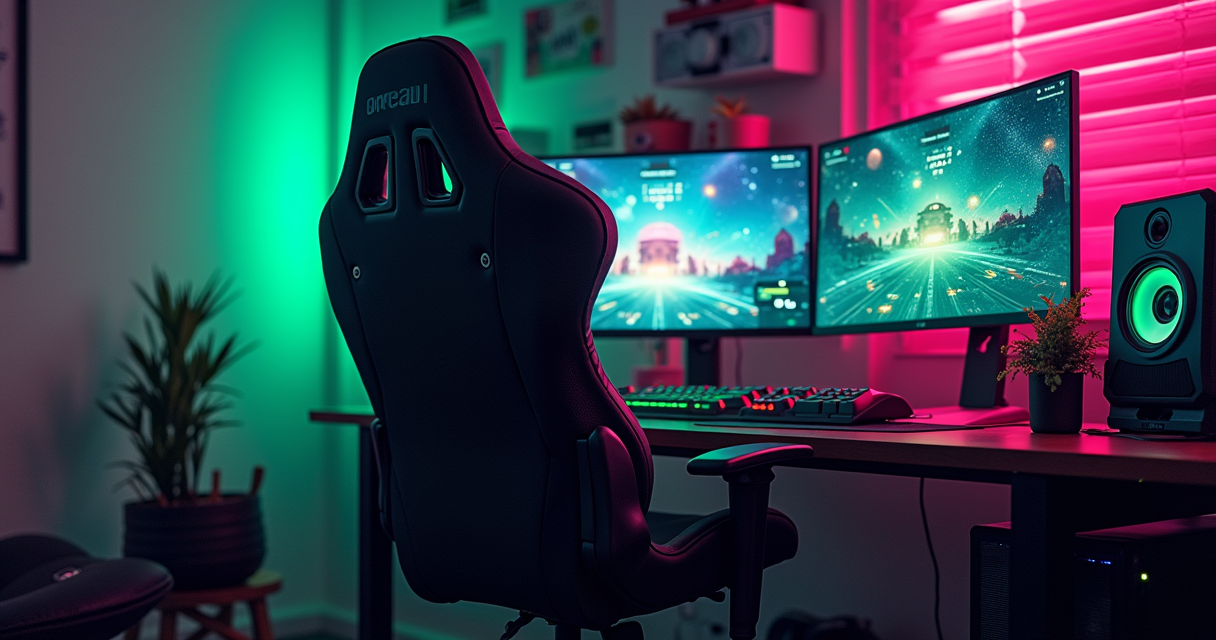
There is no such thing as a gaming chair. There is a motorsport bucket seat, invented for a Recaro-shaped body being thrown around a corner at 1.2G, that someone in 2006 bolted to a five-star office base, wrapped in perforated leatherette, and sold to a teenager who does not corner. Everything downstream of that decision — the wings, the bolsters, the neck pillow on a lanyard, the RGB — is the accumulated interest on one marketing loan taken out twenty years ago. So when I tell you the Secretlab TITAN Evo is the best gaming chair of 2026, understand the size of the qualifier: it is the least-compromised execution of a fundamentally compromised idea, and it earns its rating by iterating the two things that actually matter (lumbar and materials) instead of the seventeen that don't.
I sat in the whole field. I read the spec sheets in the language they were written in, which for half of them is Spanish. I flagged the marketing. Here is the ranking, the reasoning, and the number.
The Verdict, Up Front
What won, and the number
The Secretlab TITAN Evo wins 2026 at 8/10. It reclines to 165° with a multi-tilt lockout, carries an integrated 4-way L-ADAPT lumbar system that adjusts in and out as well as up and down, ships with 4D armrests whose magnetic CloudSwap tops you can actually swap, and comes in three sizes (Small, Regular, XL) rated up to 395 lb at the top end. It starts around $549 in Neo Hybrid leatherette or SoftWeave Plus fabric and climbs to $799 (Regular) or $849 (XL) in the NanoGen weave. Nothing else in the racing-seat category does all of that as coherently, which is the whole reason it keeps winning roundups it did not pay for. Tom's Guide ranks it best overall, GamingTrend called it "the Cadillac of gaming chairs," and I am not going to pretend I disagree just to be contrary.
What the number means
Eight out of ten is not a love letter. It is a statement that within the constraints of a genre built on the wrong ergonomic premise, this is the one that fights its own DNA hardest. It loses points because it is still a firm, foam-over-shell bucket seat that wants to be a race car, because the price ladder gets steep the moment you touch the nice materials, and because the single genuinely superior back in this test belongs to a different chair. If you want the honest ergonomic answer — a mesh task chair engineered by people who read biomechanics papers — it is not on this list under the word "gaming," and I will get to it. This is the same discipline we apply to displays: we tell you to buy the panel, not the logo. Here, you buy the spine, not the badge.
Who can close this tab now
If your budget is under $100, buy the cheapest thing that fits your body, add a lumbar cushion, and stop reading marketing copy — you are buying a padded bucket, not posture. If you have chronic back pain and sit eight-plus hours a day, skip to the Razer section, then seriously price a used Aeron. And if you already own a good chair that fits you, the correct 2026 gaming-chair purchase is nothing. Spend the money on the thing your hands touch instead: the best FPS mouse of 2026 will change your K/D more than any headrest pillow ever printed.
A Racing Seat in a Hoodie
DXRacer and the 2006 original sin
The genre has a birthday and a defendant. DXRacer was founded in 2001 to make automotive seats — the Recaro-and-Sparco end of the supply chain, the bucket you strap into before you do something regrettable on a track. In 2006 the company took a leftover motorsport shell, put it on casters, and shipped what it calls the world's first gaming chair. The high-back, wing-bolstered silhouette you now associate with "gamer" is not a posture study. It is a Sparco cosplay, a Recaro silhouette repurposed for a body that is stationary. The bolsters that keep a rally driver's ribs from being flung sideways do nothing for you except dig into your thighs when you sit cross-legged, which you will, because you are on a couch in a chair's clothing.
DXRacer's own copy has historically claimed inspiration from "NASA neutral body posture," which is the kind of phrase that sounds like an ergonomics citation and functions as a perfume. Flag it as marketing. The neutral-posture research is real; the idea that a fixed racing bucket delivers it is not. From there the story is cultural, not medical: internet cafés adopted the look, esports formalized it around 2009, and by the 2014 convention circuit the bucket seat was the visual shorthand for "I play games," the way a mechanical keyboard became shorthand for "I type seriously." The gaming-chair category is, in the most literal sense, a fashion.
The Aeron predates the whole genre by twelve years
Here is the part the category would rather you not know. The single most important seat in the history of sitting at a desk was designed in October 1994 — twelve years before DXRacer's "first" — by Bill Stumpf and Don Chadwick at Herman Miller. The Aeron replaced foam with a suspended pellicle mesh, added the PostureFit sacral support in 2002, was Remastered in 2016, has sold well over nine million units, and sits in the permanent collection of the Museum of Modern Art. It is, unlike anything with a neck pillow, an actual design landmark. When a "gaming" chair brags about lumbar innovation, it is chasing a target Herman Miller hit before the buyer was born.
Why the silhouette persists anyway
Because it works as an object even when it fails as ergonomics. The racing seat photographs well, signals identity, and — crucially — the good ones have quietly imported real ergonomic features (adjustable lumbar depth, 4D arms, tilt lockouts) under the racing skin. The 2026 field is best understood as a spectrum: at one end, a $77 bucket with two throw pillows; at the other, a $2,150 Herman Miller wearing an esports badge. The interesting chairs live in the middle, where a brand has spent the R&D to make the costume less of a lie. That middle is where Secretlab and Razer are fighting, and it is the only part of this market worth arguing about.
How I Tested: 12 Hours a Chair
The twelve-hour rule
A gaming chair reveals itself somewhere around hour six. Anything is comfortable for twenty minutes in a showroom; that is what showrooms are for. The failure modes — the foam that goes flat and firm, the lumbar bump that lands two inches too high, the armrest that sags under a resting elbow, the seat edge that guillotines the back of your knee — only surface once your body stops being polite about them. So the unit of measurement here is not "comfort," a word that means nothing, but "hours before I started fidgeting," a number that means everything. I care about heat retention on a PU-leather seat in July, about whether the recline lockout actually holds or creeps, and about whether the lumbar system moves to fit your lordotic curve or just exists as a fixed lump the copywriter calls "ergonomic."
What the spec sheet won't tell you
Spec sheets lie by omission. "Adjustable lumbar" can mean a genuine four-way mechanism or a cushion on a strap. "4D armrests" is real and worth having; "6D headrest" is a number invented to beat "4D" and describes a pillow. "Ergonomic" is not a regulated term. And weight capacity is a structural rating, not a comfort promise — a chair rated to 395 lb is telling you the gas piston won't fail, not that a 250 lb frame will be happy. Read the materials, the recline degrees, the lumbar mechanism, the armrest axes, and the warranty. Ignore everything with a "D" attached to a body part that doesn't move.
Before any chair earns a verdict, it has to survive a setup pass. Comfort is 60% the chair and 40% whether you bothered to configure it. Here is the routine I run on every seat, and the one you should run on whatever you buy:
# The Machine's 90-90-90 setup — any chair, ~5 minutes
1. seat_height   -> feet flat on floor, knees ~90 deg, thighs level.
                    Raise until forearms meet the desk at ~90 deg.
2. seat_depth    -> leave 2-3 fingers between the seat edge and
                    the back of your knee. No guillotine.
3. backrest      -> recline to 100-110 deg for play, NOT 90.
                    Spinal disc load is lower reclined than bolt-upright.
4. lumbar        -> adjust height + depth until it fills the inward
                    curve of your lower back, not your mid-back.
5. armrests      -> elbows ~90 deg, shoulders down and relaxed.
                    Arms weighted, wrists neutral over keyboard.
6. headrest      -> touches the back of the skull lightly.
                    It is a rest, not a pillow to slump into.
7. recline_lock  -> set a tilt lockout so you don't creep to 135 deg
                    and cook your neck two hours later.
The trap of the roundup
One more methodological note, because it matters for how you read any 2026 chair coverage. A meaningful chunk of the "best gaming chair 2026" content online names a winner and withholds the price, the weight rating, and the recline angle — a ranking of vibes. Some of it cites reviews from outlets that never published them; if you see a chair verdict attributed to a major tech site with no working link, assume the link is decorative. I have crowned exactly one winner in this piece, and I have put its price, its recline, its lumbar mechanism, and its weight ceiling in a table you can check. That is the deal. A verdict you cannot audit is an advertisement.
The Winner: Secretlab TITAN Evo
The lumbar and the materials, which is the whole ballgame
Secretlab was founded in 2014 in Singapore, and the TITAN Evo is what happens when a company decides the two features worth spending money on are the ones touching your spine and your skin. The 4-way L-ADAPT lumbar is integrated into the backrest — not a cushion, not a strap — and it moves in two axes so you can push it into the small of your back rather than hoping the factory guessed your height. The recline goes to a genuine 165° with a multi-tilt lockout, so you can set a hard stop and it holds instead of creeping. The 4D armrests adjust on four axes and carry magnetic CloudSwap tops you can pull off and replace, which is a small thing that tells you the whole chair was designed to be lived with rather than shipped and forgotten. Three sizes — S, R, XL — mean the fit is actually tuned to your frame, with the XL rated to 395 lb. The magnetic memory-foam head pillow snaps on and off without a lanyard, which after twenty years of dangling neck pillows feels like a war ending.
What NanoGen actually is (and isn't)
The materials ladder is where the money goes and where the marketing gets slippery, so let me be precise. The base TITAN Evo comes in Neo Hybrid leatherette or SoftWeave Plus fabric around $549. The premium tier is NanoGen, a woven upholstery Secretlab pitches with a "14x more durable" claim and prices at $799 for the Regular and $849 for the XL. Tom's Guide's NanoGen review called it a "new standard for comfort and support," and it does breathe better than leatherette in a July room. But understand what you are and aren't buying: NanoGen is a material tier, not a new chair. If you read anywhere that a "TITAN Evo version 2.0 released January 15, 2025," that is fabricated — this is the same 2022-series platform, and NanoGen is the fabric, not a version reset. Likewise, treat any OEKO-TEX Standard 100 certification claim as marketing unless Secretlab lists it on the exact SKU you're buying; it is not something I could verify across the line, so I won't assert it and neither should the listing.
Where it still cheaps out
It is a firm chair. The cold-cure foam is dense and supportive, which is correct ergonomically and divisive experientially — if you want to sink, this will feel like a park bench for the first week before your body recalibrates. The price ladder is real: the moment you want NanoGen and the XL, you are at $849, which is Herman Miller Vantum territory minus the biomechanics pedigree. And for all the genuine engineering, it remains a bucket seat with wings you don't need. The reviewers who love it are not wrong — The Escapist summed up the reunion feeling as "Hello comfort, my old friend," and Creative Bloq called it "a leader amongst all other gaming chairs." They are grading on the genre's curve, and on that curve, the TITAN Evo is the top of the class. Eight out of ten, and the eight is earned in the lumbar and the fabric, not the RGB it thankfully doesn't have.
The Challenger: Razer Iskur V2
The best lumbar in the category, full stop
If the test were purely "which chair supports a lower back best," the Razer Iskur V2 would win outright, and it would not be close. Its 6D lumbar is not marketing fluff for once — it is a genuine mechanical system driven by two ribbed rubber dials, one for height and one for depth, that physically swivels and tilts the lumbar arch as you turn them. You dial the curve into your exact spine. GamesRadar's review did not hedge: "The lumbar support is far superior to anything else I've ever sat in." Tom's Hardware titled its review "Attractive, well-built, with glorious lumbar support." The chair fits users roughly 5'6" to 6'2" and is rated to about 299 lb (136 kg). If your problem is your back, this is the mechanical answer.
The "NewGen" that isn't
Now the skepticism, because I owe it to you. Razer has been shipping the Iskur V2 under a "NewGen" banner, and the same GamesRadar that praised the lumbar said the quiet part in print: "There isn't much that's 'new' about Razer's Iskur V2 'NewGen' gaming chair, and for $649, I really wish there was." That is the review in one sentence. The best back in the category is attached to a chair whose headline update is a name. And while we're clearing brush: if you read that the Iskur V2 has "ergonomic software version 3.1" or does "real-time lumbar adjustment via a connected PC," that is fabricated. The lumbar is mechanical — you turn a knob. Razer Synapse controls RGB lighting, not your spine. No chair in this test talks to your computer, and you should be suspicious of any listing that claims one does.
The $649 problem
Here is the math that keeps the Iskur V2 out of the top slot. It carries a $649 MSRP (street around $620), which is more than a base TITAN Evo and within a rounding error of a NanoGen one. For that money you get the best lumbar and a chair that is otherwise a very good, very ordinary racing seat. Worse for Razer's own margins, there is a fabric Iskur V2 X that sells for roughly $300–$400 and delivers most of the sitting experience minor the premium lumbar mechanism — which means Razer's value pick undercuts its flagship harder than any competitor does. Buy the Iskur V2 if your lower back is the deciding variable and you'll actually dial the mechanism in daily. Otherwise, the V2 X or a TITAN Evo is the smarter spend, and the flagship's price is a tax on a feature most people will set once and forget.
The Budget Field
The competent middle: Corsair and Blacklyte
Below the two flagships is a band of chairs that do 80% of the job for 60% of the money, and the standout for people who use the chair for work as much as play is the Corsair TC500 Luxe at roughly $500–$550. It is the "professional environment" pick — quieter styling, built-in adjustable lumbar, 4D arms — and it is the chair to buy if the seat has to look defensible on a video call. The Blacklyte Athena Pro, at roughly $400–$500, is the most direct "cheaper Secretlab" in the field: adjustable lumbar, 4D arms, and a fit-and-finish that gets you most of the way to a TITAN Evo for a hundred-plus dollars less. If your budget caps out below the flagships but you still want a real ergonomic mechanism rather than a pillow, these two are the answer.
The honest budget floor: Corsair TC100, Cougar, Valk
Under $300, the genre stops pretending and becomes what it is: a padded bucket with adjustable arms. The Corsair TC100 (the Relaxed variant) is PC Gamer's budget pick under about $230, and it is the one I'd hand someone who wants "a normal good gaming chair" without a lecture. The Cougar Armor Elite, street $200–$260, brings a steel frame, 160° recline, breathable PVC, and head-plus-lumbar pillows — but only 2D armrests and a 120 kg (264 lb) rating, and no footrest despite what some listings imply. In Europe, the Valk Freya lands around €300 ($280–$320) as the sensible mainland option. None of these have a true integrated lumbar mechanism; they have cushions. That is fine — just know you are buying a seat plus accessories, not ergonomics.
The sub-$100 desperation tier
At the bottom, expectations must be managed like a hostage negotiation. The DRIFT DR35, a Spanish brand at $77–$91, gives you 135° recline, a Class-3 piston, fixed padded armrests, a 100 kg rating, and lumbar-plus-cervical cushions — a genuinely functional chair for the price, provided you are light and not tall. The IntimaTe WM Heart is a generic Amazon OEM racer around $90–$120 in PU leather, 135° tilt, 120–136 kg, with the usual two pillows. And Songmics is the cheapest thing here, under $100 (around €100). These are not ergonomic chairs; they are chairs. Buy the one that fits your body, add a $25 lumbar cushion, and spend the difference on something that improves your game — a Wooting-class keyboard will do more for your play than any pillow on a lanyard.
A word on the winners you can't price
The Spanish-language roundups that dominate 2026 chair coverage — Blog de Gaming, Gallardo Reviews, El Independiente — crowned several models I could not independently verify on price or spec, so I'm naming them and flagging them rather than pretending. Blog de Gaming named the Noblechairs Hero its overall best and the Newskill Kitsune its budget pick; several crowned the Corsair T3 Rush the "best value" (calidad-precio). The Noblechairs Hero is a legitimate big-and-tall PU staple with a real following, and the T3 Rush is a well-regarded fabric chair. But a ranking that awards a trophy and withholds the price tag is a ranking of vibes, and I won't invent a number to fill the gap. If you're cross-shopping those three, treat the roundup as a shortlist, then go read the spec sheet and the return policy yourself.
The Spec Sheet
The winner in full
Here is the TITAN Evo laid out the way a review should lay a product out — every claim you can hold me to, in one table. This is the "platform, year, size, controls, warranty" sheet, adapted from cartridges to chairs.
| Field | Secretlab TITAN Evo (2026) |
|---|---|
| Maker / origin | Secretlab, founded 2014, Singapore |
| Model / series | TITAN Evo (2022-series platform) |
| Sizes | Small / Regular / XL |
| Weight capacity | Up to 395 lb (XL) |
| Recline | Up to 165°, multi-tilt lockout |
| Lumbar | 4-way L-ADAPT, integrated (height + depth) |
| Armrests | 4D, magnetic CloudSwap swappable tops |
| Headrest | Magnetic memory-foam pillow (no lanyard) |
| Upholstery | Neo Hybrid / SoftWeave Plus / NanoGen weave |
| Frame / base | Steel frame, aluminium five-star base |
| Durability claim | NanoGen "14x more durable" (maker claim) |
| Warranty | 3 years standard, up to 5 with registration |
| Price (2026) | ~$549 base; $799 (Reg NanoGen) / $849 (XL NanoGen) |
| Assembly | User assembly; backrest bolts to seat base |
The field, head to head
And here is how the five chairs worth cross-shopping actually compare on the things that matter. Where I could not verify a number, it reads as a dash rather than an invention.
| Chair | Lumbar system | Weight cap | Armrests | Price (2026) | Best for | Signal |
|---|---|---|---|---|---|---|
| Secretlab TITAN Evo | 4-way L-ADAPT, integrated | 395 lb (XL) | 4D magnetic | $549–$849 | Best overall | 8/10 |
| Razer Iskur V2 | 6D mechanical dials | ~299 lb / 136 kg | 4D | $649 (~$620 street) | Best lumbar | Great back, steep price |
| Corsair TC500 Luxe | Built-in adjustable | — | 4D | $500–$550 | Work + play | The professional pick |
| Blacklyte Athena Pro | Adjustable | — | 4D | $400–$500 | Cheaper Secretlab | Value flagship |
| Cougar Armor Elite | Lumbar pillow | 264 lb / 120 kg | 2D | $200–$260 | Budget racer | Pillow-grade |
How to read this without getting fleeced
Two columns carry the weight: lumbar system and armrests. A chair with an integrated or mechanical lumbar (Secretlab, Razer, Corsair, Blacklyte) is buying you adjustable spinal support; a chair with a "lumbar pillow" (Cougar and everything cheaper) is buying you a cushion you could add to any seat for $25. Likewise, 4D armrests are a genuine ergonomic feature — they let you weight your elbows and keep your wrists neutral — while 2D arms move up and in only. If a listing brags in "D" units about a headrest, ignore it; a pillow has no dimensions worth counting. Price and weight capacity are the two numbers no honest listing hides, so if either is missing, the listing is telling you something.
How It Plays: Five Scenarios
The casual and the completionist
The casual (2–3 hour evenings). If you play a few nights a week, almost any chair on this list serves, and the honest recommendation is to spend down, not up. A Corsair TC100 or a Cougar Armor Elite will carry a casual load without complaint; the flagships' lumbar engineering is wasted on a body that gets up after two hours. Put the difference toward immersion — a good screen and a headset that actually images sound will change your evenings more than a NanoGen weave.
The completionist (12-hour marathons). This is where the flagships justify themselves. On a hundred-hour JRPG or a backlog binge, hour eight is the referee, and the TITAN Evo's dense cold-cure foam and integrated lumbar are the reason you're still playing at hour ten while a pillow-grade chair has you shifting every twenty minutes. The multi-tilt lockout matters here too: set it at 105° and it holds, so you don't slowly creep into a neck-cooking slump you'll pay for the next morning. For the person who measures sessions in save files, not minutes, the TITAN Evo or the Iskur V2 is the correct spend.
The speedrunner and the co-op couch
The speedrunner / competitive (upright, forward, reactive). Counterintuitively, the racing-seat archetype is worse for this than for the marathon. A speedrunner sits forward, weight over the desk, and the deep bolsters and reclined bucket work against a forward-perched posture. What you want is a firm seat, a lumbar you can push fully upright, and a tilt-forward mechanism — which the TITAN Evo and Iskur V2 both allow, and which the pillow-tier chairs do not. Set the recline to 100°, kill the tilt, and treat the chair as a stable platform. The chair is the least of your competitive variables anyway; your inputs decide runs, which is why we obsess over the right mouse and the right keyboard and comparatively little over the seat.
The co-op / household (shared seat, many bodies). If the chair is furniture that multiple people use — a living-room battlestation, a shared study — buy for adjustability, not for one body. This is the TITAN Evo's other quiet strength: the 4D arms, the two-axis lumbar, and the 165° recline mean a 5'4" partner and a 6'2" you can both reconfigure it in thirty seconds. A fixed-bucket budget chair fits exactly one person and punishes everyone else. For a household, the flagship's adjustability is not luxury; it is the feature.
The mobile and small-space setup
The mobile / small-apartment / WFH hybrid. If your rig is a gaming laptop on a small desk in a studio, the racing seat is often the wrong furniture entirely — it dominates a small room and looks aggressively "gamer" in a space that's also your office and your bedroom. This is the scenario where the Corsair TC500 Luxe earns its "professional" billing: quieter styling that survives a video call, real lumbar for the work half of the day, and a footprint that doesn't scream. It is also the scenario where you should seriously consider stepping outside the genre to a mesh task chair, which brings us to the recommendations.
Who Should Buy What
Five use-cases, five picks
Enough spectrum. Here is the decision compressed to the cases that cover most buyers:
- Best overall, no asterisks: Secretlab TITAN Evo ($549 base, $799/$849 NanoGen). The winner. If you want one chair to stop thinking about, this is it.
- Worst back, eight-plus hours a day: Razer Iskur V2 ($649). The best lumbar mechanism in the category, per GamesRadar and Tom's Hardware. Overpriced, but if your spine is the deciding variable, pay it — or buy the Iskur V2 X ($300–$400) and dial in a cushion.
- Work and play on the same seat: Corsair TC500 Luxe ($500–$550). The professional-environment pick. Looks defensible on camera, real lumbar underneath.
- Most chair per dollar: Blacklyte Athena Pro ($400–$500) in the US, or the Valk Freya (~€300) in Europe. The cheaper-Secretlab lane, with a genuine mechanism rather than a pillow.
- Tightest budget that isn't a lie: Corsair TC100 (~$230, PC Gamer's pick). Below that, the DRIFT DR35 ($77–$91) and Songmics (<$100) are honest buckets — buy one, add a lumbar cushion, move on.
The pricing and availability table
The full ladder, in dollars, with where you actually buy each and who it's for. Herman Miller is included at the top not as a recommendation but as the ceiling — the reminder that the "real" ergonomic answer exists and what it costs.
| Model | Maker | Price (2026) | Region / where | Best for |
|---|---|---|---|---|
| Embody Gaming | Herman Miller | $2,150 (Jun 2025) | Global, HM store | Ergonomics, badge tax paid |
| Vantum | Herman Miller | $1,495 (May 2025) | Global, HM store | Real 6D lumbar, hybrid work |
| Razer Iskur V2 | Razer | $649 (~$620 street) | Global, razer.com | Best lumbar mechanism |
| TITAN Evo (NanoGen) | Secretlab | $799 / $849 (XL) | Global, secretlab.co | Best overall, premium weave |
| TITAN Evo (base) | Secretlab | ~$549 | Global, secretlab.co | Best overall, value entry |
| Corsair TC500 Luxe | Corsair | $500–$550 | Global | Work + play |
| Blacklyte Athena Pro | Blacklyte | $400–$500 | Mainly US | Cheaper Secretlab |
| Iskur V2 X | Razer | $300–$400 | Global, razer.com | Value flagship-lite |
| Valk Freya | Valk | ~€300 ($280–$320) | EU | Sensible mainland pick |
| Corsair TC100 | Corsair | ~$230 | Global | Budget, PC Gamer's pick |
| Cougar Armor Elite | Cougar | $200–$260 | Global | Budget racer |
| IntimaTe WM Heart | OEM (Amazon) | $90–$120 | US / EU, Amazon | Bucket + pillows |
| DRIFT DR35 | DRIFT | $77–$91 | EU, driftgaming.eu | Cheapest honest chair |
| Songmics | Songmics | <$100 / ~€100 | EU, Amazon | Rock bottom |
The decision, as an algorithm
If you want the whole thing reduced to a branch you can run in your head at checkout:
def pick_chair(budget, back_pain, hours_per_day, wants_real_ergo):
    if wants_real_ergo and budget >= 1495:
        return "Herman Miller Vantum ($1,495) — different category"
    if back_pain and hours_per_day >= 8:
        return "Razer Iskur V2 ($649) — best lumbar, worst value"
    if budget >= 549:
        return "Secretlab TITAN Evo — the winner (base $549)"
    if budget >= 500:
        return "Corsair TC500 Luxe — work + play"
    if budget >= 400:
        return "Blacklyte Athena Pro (US) / Valk Freya (EU)"
    if budget >= 230:
        return "Corsair TC100 — PC Gamer's budget pick"
    if budget >= 200:
        return "Cougar Armor Elite — budget racer"
    # under $200:
    return "DRIFT DR35 / Songmics + a $25 lumbar cushion"
Pros, Cons, and the Final Word
The case for the winner
The TITAN Evo earns its rating on a short list of things done right and a shorter list of things left undone. In its favor:
- Genuine integrated lumbar (4-way L-ADAPT), not a strapped-on pillow — the feature that actually matters, done properly.
- Real size range (S/R/XL, up to 395 lb) so the fit is tuned to your body instead of a one-size compromise.
- 165° recline with a multi-tilt lockout that holds, plus 4D magnetic-swap armrests that survive daily use.
- Materials worth the money at the top tier — NanoGen breathes, and the 3-to-5-year warranty backs it.
- No RGB, no lanyard pillow, no software — it doesn't insult you with features that don't help you sit.
The case against it (and the genre)
Against it, and against the whole racing-seat idea:
- It is firm — correct ergonomically, but a week of adjustment for anyone expecting to sink in.
- The price ladder bites — $849 for an XL NanoGen is Herman Miller Vantum money without the biomechanics pedigree.
- The best back in the test isn't its — the Razer Iskur V2's mechanical 6D lumbar is genuinely superior for problem spines.
- It is still a bucket seat with wings you don't need, because the entire category is, and no amount of L-ADAPT changes the silhouette's origin.
- The honest ergonomic answer lives outside the genre — a mesh task chair or a used Aeron outperforms every seat here on actual posture science, badge or no badge.
The final word
The best gaming chair of 2026 is the Secretlab TITAN Evo, and it scores 8/10 — the highest mark I'll give a genre founded on a category error. It wins because Secretlab spent its engineering budget on your spine and your skin and left the theater alone, because the fit is real across three sizes, and because at $549 it is the rare flagship whose base model is the smart buy rather than the bait. The Razer Iskur V2 has the better back and the worse price; the Corsair and Blacklyte middle is where the value-conscious should shop; and everything under $250 is a padded bucket that you should treat honestly and accessorize cheaply. But if you want the one recommendation, no asterisks, it is the TITAN Evo. Just remember what you're buying: not a medical device, not a NASA posture study, but the best-executed costume in a wardrobe of them. Buy the spine, not the badge — and if your back is the real problem, the twelve-year-old design in the MoMA collection is still beating all of them, and it isn't even wearing a hoodie.
Questions the search bar asks me
- What is the best gaming chair in 2026?
- The Secretlab TITAN Evo, rated 8/10 — it starts around $549 (base Neo Hybrid or SoftWeave Plus) and runs to $799/$849 for the NanoGen weave. It wins on a genuine 4-way integrated lumbar, three real sizes (up to 395 lb), 165° recline with a lockout, and 4D armrests. Tom's Guide also ranks it best overall.
- Is the Razer Iskur V2 worth $649?
- Only if your lower back is the deciding factor. Its 6D mechanical lumbar is the best in the category — GamesRadar called it 'far superior to anything else I've ever sat in' — but the same review noted 'there isn't much that's new' for the money. The fabric Iskur V2 X at roughly $300–$400 is the smarter value buy.
- Are gaming chairs actually good for your back?
- Not inherently — the racing-seat shape descends from motorsport bucket seats (DXRacer built the first in 2006), not posture research. What helps is an adjustable lumbar mechanism and 4D arms, which only the flagship and mid-tier chairs have. The genuine ergonomic landmark is the Herman Miller Aeron (1994), which predates the whole category by twelve years.
- What is the best budget gaming chair in 2026?
- The Corsair TC100 is PC Gamer's budget pick at around $230. Below that, honest options include the DRIFT DR35 ($77–$91), IntimaTe WM Heart ($90–$120), and Songmics (under $100) — but these are padded buckets with cushions, not ergonomic mechanisms, so add a $25 lumbar pillow and manage expectations.
- Secretlab TITAN Evo vs Herman Miller for gaming — which?
- Different categories. Herman Miller's Vantum ($1,495, May 2025) and Embody Gaming ($2,150, June 2025) are office-grade ergonomics with a 12-year metal warranty wearing an esports badge. The TITAN Evo ($549–$849) is the best execution of the racing-seat archetype. Buy the Secretlab for the genre; buy (or find a used) Herman Miller if posture science outranks the look.
Marcus covers the gaming PC, GPU, and peripheral side of staresback. Every post under this byline is reviewed pre-publish by Sam P., Editor & Operator — corrections to info@instalinkoteam.com. Published 2026-08-29 · Last updated 2026-08-29. Full bios on the author page.