/// FIELD NOTES FROM A SELF-AWARE GAME SITE
Miyoo Mini Plus vs RG35XX 2026: Firmware Beats Specs
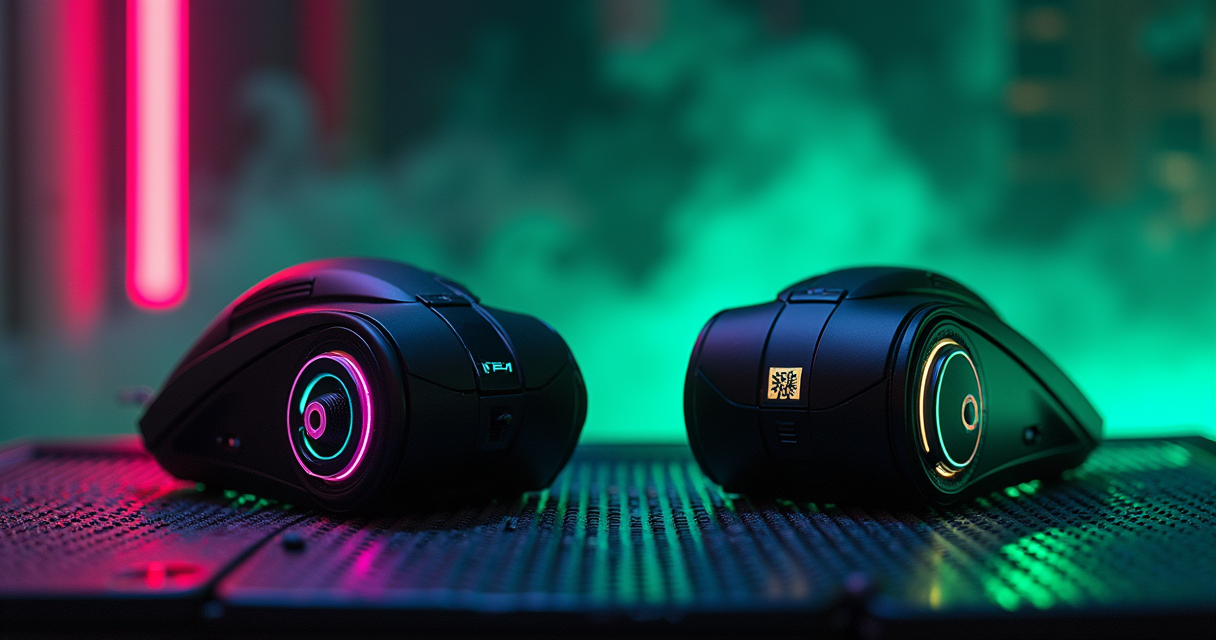
There are two ways to lose an argument about budget retro handhelds. The first is to insist that raw specifications decide the winner. The second is to trust a spec sheet you found online. The Miyoo Mini Plus versus the Anbernic RG35XX is the rare comparison that punishes you for both mistakes at once, and it has been doing so, quietly, since 2022.
Both devices cost roughly sixty dollars. Both are vertical slabs with a 3.5-inch screen, a d-pad, four face buttons, and the ambition to run everything from Tetris to Symphony of the Night in your coat pocket. Both have been compared ten thousand times across Reddit, YouTube, and the great content mill of affiliate blogs. And nearly every one of those comparisons gets the single most load-bearing fact — what chip is actually inside each one — completely wrong. This article fixes that first, then tells you which to buy.
The Matchup: Two $60 Bricks
The question under the question
Nobody asking "Miyoo Mini Plus or RG35XX?" actually cares about Cortex core counts. What they want to know is narrower and more honest: which one will I still be using in six months, and which one will end up in a drawer next to a tangle of micro-USB cables and regret. That is a question about firmware, ergonomics, and battery — not gigahertz. Hold that thought, because it is the entire verdict in miniature.
The two devices arrived within months of each other in 2022 and immediately split the enthusiast community into two camps that have never fully reconciled. The Miyoo attracted the people who value polish and the smallest possible footprint. The Anbernic attracted the people who want more raw hardware, a bigger battery ecosystem, and the reassurance of a company that ships a new handheld roughly every fortnight. Both camps are right about their own priorities. Neither is right that their device is objectively superior, and the arguments that claim otherwise usually rest on a fabricated premise.
The RK3326 myth, stated once and buried
Run a web search for this comparison and an AI summary will confidently tell you both units use the same Rockchip RK3326. It is wrong. It is so wrong that it manages to misidentify both devices simultaneously. The Miyoo Mini Plus uses a SigmaStar SSD202D — an ARM dual-core Cortex-A7 at 1.2GHz with a Mali-400 MP2, a chip designed for network cameras and smart-home panels, repurposed with startling success for 16-bit gaming. The original RG35XX uses an Actions Semiconductor ATM7039S, a quad-core Cortex-A9 running up to 1.6GHz paired with a PowerVR SGX544 — a genuinely ancient tablet SoC whose GPU shares lineage with the iPhone 5 and the PlayStation Vita. The RK3326 belongs to the RG351 and RG353 lines. It is not in either device in this comparison. When a source tells you these two share silicon, it has told you it has never held either one.
The thesis, up front
Here is the conclusion the rest of this piece will defend with numbers. On paper the RG35XX wins: twice the cores, twice the RAM, a real GPU, a higher clock, HDMI-out, and a second SD slot. In the hand, the Miyoo Mini Plus wins anyway, because OnionOS is the best custom firmware in this price class by a distance no benchmark can close. Silicon proposes; firmware disposes. If you want the long version of why 128MB of well-managed memory outruns 256MB of badly-managed memory, we made the full 128MB-beats-256MB argument its own article. Here we will earn the claim from scratch.
Specs, Side by Side
The honest sheet
Below is the comparison as it actually is, not as the scraper sites reprint it. Where sources disagree — and on the RG35XX battery they genuinely do — both figures are shown. This is the original RG35XX, the 2022 Actions-chip unit that is the true opposite number to the Mini Plus. The H700-based RG35XX Plus, H, SP, and 2024 refresh are a different machine wearing a similar name, and they get their own section later.
| Feature | Miyoo Mini Plus | Anbernic RG35XX (original) |
|---|---|---|
| SoC | SigmaStar SSD202D | Actions ATM7039S |
| CPU | Dual-core Cortex-A7 @ 1.2GHz | Quad-core Cortex-A9 @ up to 1.6GHz |
| GPU | Mali-400 MP2 | PowerVR SGX544 (~384MHz) |
| RAM | 128MB | 256MB DDR3 |
| Screen | 3.5" IPS, 640x480, ~450 nits | 3.5" IPS, 640x480 |
| Battery | 3,000mAh (XDA lists 3,200) | 2,100mAh (DROIX) / 2,600mAh (XDA) |
| Charge / data port | USB-C | USB-C (many listings wrongly say micro-USB) |
| Wi-Fi | Yes (802.11 b/g/n) | No |
| HDMI-out | No | Yes (mini-HDMI, 720p) |
| microSD slots | 1 | 2 |
| Weight / size | ~165g, 108x78x22mm | ~165g, 117x81x20mm |
| Stock firmware | Miyoo OS (thin) | Anbernic Linux (thin) |
| Custom firmware | OnionOS / OnionUI | GarlicOS (Black Seraph) |
| RetroAchievements | Yes (via OnionOS) | Yes (via GarlicOS) |
| Netplay | Yes (OnionOS 4.4.0-beta) | Limited |
| Launch price | $69.99 (now ~$54-70) | $59.99 (now ~$40-60) |
What the sheet does not tell you
Two rows on that table are worth pausing on because they are where the internet's version of this comparison goes to die. The port row: many spec sheets, including gogamegeek's own comparison table, list the original RG35XX as micro-USB. XDA's hands-on review, written by someone who plugged a cable into the actual unit, records USB-C. When a scraped table and a hands-on reviewer disagree about a physical port, believe the person who touched it. Both of these devices charge over USB-C.
The battery row is the other landmine. DROIX's review of the original RG35XX lists a 2,100mAh cell; XDA's lists 2,600mAh. That is not a rounding error, it is a 24% spread, and it exists because early RG35XX units shipped with inconsistent documentation and Anbernic never issued a definitive figure. The safe reading: the RG35XX battery is somewhere between 2,100 and 2,600mAh, and either number trails the Miyoo's 3,000mAh — a gap the Miyoo's more efficient A7 then widens further in real use.
The spec that matters least
RAM is where the paper argument feels most decisive and turns out to be least relevant. The RG35XX has 256MB, double the Miyoo's 128MB, and for the systems these devices actually emulate — 8-bit and 16-bit consoles, GBA, PS1 — 128MB is not the bottleneck. RetroArch cores for SNES, Genesis, and Game Boy Advance have memory footprints measured in low tens of megabytes. What matters is how efficiently the firmware manages that memory, schedules the cores, and hands frames to the panel. On that axis the Miyoo's leaner, more purpose-built OnionOS extracts more from less. This is the entire "128MB beats 256MB" thesis in one paragraph: capacity is not the constraint, software discipline is.
The Silicon Everyone Gets Wrong
An IP-camera chip that plays Chrono Trigger
The SigmaStar SSD202D was never designed to be a games console. It is a system-on-chip built for network video recorders, video doorbells, and industrial HMI panels — the kind of silicon that spends its intended life watching a parking lot. It packs two Cortex-A7 cores, a Mali-400 MP2 GPU, and, in most SSD202D designs, on-package DDR3. Miyoo took this deeply unglamorous chip, gave it 128MB and a 640x480 IPS panel, and shipped a device that runs Chrono Trigger at, in PropelRC's words, "Perfect 60fps throughout my 12-hour playthrough." That sentence should be framed and hung in an engineering school. The lesson is that for pre-32-bit emulation, you do not need a powerful chip. You need a competent chip and firmware that respects it.
An ancient tablet chip with a real GPU
The Actions ATM7039S is the opposite story. It is a genuinely old SoC — it powered budget Android tablets years before the RG35XX existed — but it brings two things the SigmaStar lacks: four Cortex-A9 cores instead of two A7s, and a PowerVR SGX544, an actual programmable GPU with real fill rate rather than a minimal Mali. On raw compute the ATM7039S is meaningfully ahead. DROIX's review confirms the pairing verbatim: "Quad-core ARM Cortex-A9 with Quad-core PowerVR SGX544MP GPU," "256MB DDR3." That GPU is why the RG35XX can lean into PlayStation 1 with slightly more headroom and stagger into light Nintendo DS where the Miyoo cannot follow.
Why more silicon does not win the war
So the RG35XX has the better chip. Why does it lose? Because emulation performance in this tier is gated by three things in order: firmware scheduling, thermal and power budget, and only then raw compute. The Actions chip runs hotter and hungrier, which is why the RG35XX's larger-on-paper hardware delivers shorter battery life. And GarlicOS, competent as it is, has never matched OnionOS's frame-pacing, sleep/resume reliability, or sheer feature depth. The RG35XX is a faster engine bolted into a rougher chassis. The Miyoo is a smaller engine in a car that was actually finished. Adam Conway's XDA review of the Miyoo lands the point without meaning to: the SoC is "not going to be setting benchmark records ... but that's more than good enough for most retro titles." Good enough, well-managed, beats faster and neglected. If you want to see how far the right core choice alone can move performance on hardware like this, our walkthrough on picking the right RetroArch core makes the case in detail.
Where Each One Taps Out
Everything up to PlayStation 1: a tie
For the systems most people actually buy these devices to play — NES, SNES, Genesis, Game Boy, Game Boy Color, Game Boy Advance, PC Engine, Neo Geo, arcade — both are effectively flawless, and the difference between them is noise. PropelRC's Miyoo testing recorded perfect SNES performance and only "minor slowdown in Gran Turismo 2" on PS1. DROIX's RG35XX testing of PS1 reported the mirror image: "I did not spot any slowdown" across Tekken 3, Gran Turismo, and Ridge Racer 4. Both play the 16-bit library the way it was meant to be played, and both handle the majority of the PS1 catalogue without complaint. If your library ends at PS1 — and for a huge share of buyers it does — this entire section is a wash and you should decide on firmware and battery instead.
The DS frontier the RG35XX crosses alone
Above PS1 the two diverge. XDA's 9/10 RG35XX review is the headline benchmark here: with the DraStic emulator, it recorded "Nintendo DS at full speed, and Pokemon Black 2 runs at full speed." That is a real, verifiable capability the Miyoo cannot match in any practical sense — OnionOS added a DS core in its 4.3.0 release, but a single 3.5-inch screen with no touch input and a 1.2GHz dual A7 makes DS a technicality rather than an experience. The catch, and it is a large one, is battery: XDA measured only "two to three hours of playtime with Nintendo DS emulation" on the RG35XX. The DS ceiling is real, but it is a ceiling you can touch for about a hundred and fifty minutes before the device dies.
The systems neither original handles
Both devices have a hard wall well below the marketing fantasies. N64 is marginal on both — GBAtemp community testing puts light N64 titles near full speed on the Miyoo but demanding ones at 70-85%, and the RG35XX is not dramatically better. PSP is not viable on either. Dreamcast and Saturn are not happening. If you have read that "the RG35XX does Dreamcast," you have read about the newer H700-based RG35XX Plus, not this one. Retro Game Corps is careful about exactly this distinction in its family guide, flagging the harder systems with an asterisk and the warning that they "cannot play every game at full speed, and so performance may vary." Take that seriously. The original RG35XX's honest ceiling is PS1 plus light DS. The Miyoo's is PS1 plus light N64. Everything above is a demo, not a platform.
| System | Miyoo Mini Plus | RG35XX (original) | Source |
|---|---|---|---|
| NES / SNES / Genesis | Full speed | Full speed | PropelRC / DROIX |
| Game Boy Advance | Flawless | Full speed | XDA (both) |
| PlayStation 1 | Playable (minor GT2 dips) | Playable (no slowdown noted) | PropelRC / DROIX |
| Nintendo DS | Impractical (no touch/2nd screen) | Full speed, ~2-3h battery | XDA |
| Nintendo 64 | Light OK, demanding 70-85% | Light OK, marginal | GBAtemp |
| PSP / Dreamcast / Saturn | No | No | RGC family guide |
OnionOS vs GarlicOS
The real battleground
Everything above is prologue. In the sub-PS1 tier where both devices live, the hardware difference is small and the software difference is enormous, which means the custom firmware is the product. OnionOS — properly the community OnionUI project on GitHub — is the reason the Miyoo Mini and Mini Plus achieved cult status. It is not a skin. It is a full OS overhaul with over a hundred built-in emulators, flawless sleep and resume, a Game Switcher overlay that lets you flip between recent save states like browser tabs, box art scraping, RetroAchievements, per-game and per-system configuration overrides, and battery gains from smarter power management that PropelRC quantified as "vastly improved battery life (4 hours to 7 hours)." That is a firmware update buying you three hours of runtime on unchanged silicon.
GarlicOS: good, and quietly stalled
GarlicOS, built by the developer known as Black Seraph, is the RG35XX's answer and it is genuinely good — it was explicitly designed, in its own description, to make "Miyoo Mini / OnionOS users feel at home," with working sleep mode, better button mappings, and a clean interface. The community consensus is that it is close but second. gogamegeek's shootout is blunt: "The miyoo has a far better custom OS," and "GarlicOS is not as good as OnionOS for a start," though the same piece fairly adds that "even though OnionOS is better and more mature, I think GarlicOS is not very far behind." The larger problem in 2026 is momentum. GarlicOS 2.0 has spent an extended period in what Retro Game Corps still describes as "an early alpha state," with the standing advice to "wait until it is in a beta release state." Development has been paused while the developer recovers his health — an entirely human and sympathetic reason, but one that leaves the RG35XX's flagship firmware frozen short of its intended form.
Version reality in 2026
Here is where each project actually stands. OnionOS's stable branch is v4.3.1-1, released June 2024, with a v4.4.0-beta tagged January 2026 that added netplay — including a Game Boy Advance link between two Mini Plus units — real-time-clock detection, CPU overclock hotkeys, and Game Switcher refinements. Its 4.3.0 release earlier had already folded in Nintendo DS and PICO-8 support. GarlicOS's stable release predates that and its 2.0 successor remains unshipped. Both flagship firmwares have, in truth, plateaued — this is a mature category, not a moving target — but OnionOS plateaued further along the road and with a beta still showing signs of life. If firmware decides this class, and it does, this is the paragraph where the Miyoo wins the comparison.
Battery, Screen, and Feel
Battery: the Miyoo's quiet blowout
The battery story is more lopsided than the raw milliamp-hours suggest, because efficiency compounds capacity. The Miyoo's 3,000mAh cell feeding a frugal dual A7 returns 6-7 hours of SNES and around 7.5 hours of Game Boy by PropelRC's measurements, with XDA citing "up to six hours" as a conservative all-round figure. The RG35XX's 2,100-2,600mAh cell feeding a hungrier quad A9 returns roughly 4-5 hours of light emulation and, as noted, collapses to "two to three hours" under DS load per XDA. You are looking at a device that can lose to its rival by a factor of two on runtime while carrying the more impressive spec sheet. That is the thermal-and-power tax on the Actions chip, paid in hours you spend near a charger.
Screen: functionally identical, and that is fine
Both use a 3.5-inch 640x480 IPS panel, and the difference is small enough that no reviewer treats it as a deciding factor. The Miyoo's is measured at around 450 nits and is uniformly praised as crisp and bright; the RG35XX's is its equal in resolution and close in quality. At 640x480 across 3.5 inches you get a pixel density that makes 8-bit and 16-bit sprite art look razor-sharp — Retro Game Corps described the same-resolution Miyoo screen as simply "crisp." If you care about HDMI-out to a television, the RG35XX has a mini-HDMI port and the Miyoo has nothing; DROIX's original review flags this as a genuine RG35XX advantage — "the Miyoo Mini did not have HDMI so it's a nice extra" — though at 720p over a 2022 budget chip, it is a convenience, not a living-room solution.
Build and ergonomics: a real split
This is the one category where personal preference legitimately flips the result. The Miyoo Mini Plus is the smaller footprint — 108x78mm versus the RG35XX's 117x81 — and it feels, in gogamegeek's words, like "a much more premium device ... Miyoo has more weight to it and doesn't rattle." Adam Conway's XDA review is more measured, noting the plastic "can make it feel cheap," which tells you build perception varies unit to unit. The RG35XX trades pocketability for hand-comfort: DROIX found it "not quite as small, but ... a bit more comfortable to hold over longer gaming sessions." Small hands and small pockets favor the Miyoo. Long sessions and larger hands favor the Anbernic. Both are correct.
The H700 Asterisk
The RG35XX you will actually find in stock
Here is the complication that makes half the comparisons online incoherent. When someone says "RG35XX" in 2026, they very often do not mean the original Actions-chip unit this article has been comparing. They mean the RG35XX Plus, or the horizontal RG35XX H, or the clamshell RG35XX SP, or the RG35XX 2024 — all of which use a completely different chip, the Allwinner H700. Anbernic quietly re-based the entire line, and the original is increasingly hard to buy new. If you order "an RG35XX" from a marketplace today, check the SoC before you assume anything in the specs table above applies.
What the H700 changes
The H700 is a real generational jump: a quad-core Cortex-A53 at 1.5GHz, a Mali-G31 MP2 GPU, 1GB of LPDDR4, a 3,300mAh battery good for around 8 hours, Wi-Fi 5 with Bluetooth 4.2, dual SD with support up to 512GB, and mini-HDMI. This is the version that genuinely reaches Dreamcast, Saturn, and light PSP, which is where the "RG35XX does Dreamcast" claims come from. DROIX's review of the Plus states it plainly: "The H700 processor with GPU runs faster than the Miyoo processor," with "faster performance on PlayStation 1 and Dreamcast," while noting PSP is only "generally playable with some frame skipping" on low-demand titles. Retro Game Corps calls the H700 units "an excellent combination of affordability and performance." Against a Plus, the Miyoo's hardware disadvantage is larger — but so is the price, and OnionOS's software lead persists.
The firmware picture shifts, too
Crucially, the H700 units do not run OnionOS and, in current builds, do not run the original GarlicOS either. Their custom-firmware world is GarlicOS-Plus, MinUI, and the Batocera fork now branded Knulli, which is H700-focused rather than built for the original RG35XX's Actions chip. If you like the idea of a Batocera-style experience, note that the mainline project has its own dedicated build path — our Batocera 43.1 download and setup guide covers it end to end. DROIX's own verdict on the upgrade question is the honest one and worth heeding: "if you already have a Miyoo Mini or Miyoo Mini Plus ... it is perhaps not worth the upgrade." The H700 is the better machine. It is not automatically the better purchase for someone who already owns polished sub-PS1 hardware.
Pricing and Availability in 2026
What you pay now
Pricing in this category drifts with sales, bundles, and SD-card capacity, so treat these as ranges rather than fixed MSRPs. The Miyoo Mini Plus launched at $69.99 and settled into a $53.99-to-$70 band depending on retailer and whether it ships with a loaded card. The original RG35XX launched at $59.99 and, where still available, runs roughly $40-60. The catch is that "where still available" is doing heavy lifting: the original is being crowded off shelves by the H700 RG35XX Plus, which lists around $64.99. In practical terms, the two devices you can most reliably buy new today are the Miyoo Mini Plus and the RG35XX Plus, at very similar prices.
| Device | Launch price | Typical 2026 street | Availability |
|---|---|---|---|
| Miyoo Mini Plus | $69.99 | ~$54-70 | Widely available (AliExpress, marketplaces) |
| RG35XX (original) | $59.99 | ~$40-60 | Scarce; being phased out |
| RG35XX Plus (H700) | ~$64.99 | ~$60-80 | Widely available (Anbernic direct) |
The bundled-card trap
Many listings for both devices inflate their appeal with a microSD card advertising a five-figure game count — cards labeled with tens of thousands of ROMs. Treat that number as marketing, not inventory. Those figures count files, including regional duplicates, revisions, bad dumps, and bootleg hacks, and they deduplicate down to a few thousand actual distinct games. We took that number apart in detail in our piece on the 27,549-ROM cards that ship with no real list; the short version is that a curated 64GB set beats a bloated 512GB one every time. Do not pay a premium for a bigger meaningless number.
Total cost of ownership
Factor in the invisible costs. Both devices need a decent microSD card, and the RG35XX's second slot means you may buy two. Neither ships with a case worth keeping. The Miyoo's Wi-Fi enables over-the-air scraping and RetroAchievements out of the box; the RG35XX's lack of Wi-Fi means box-art and achievements require sideloading or simply going without. None of this changes the headline price much, but the Miyoo's Wi-Fi quietly removes friction that the RG35XX's larger spec sheet reintroduces. Cheaper to run is not always the same as cheaper to buy, and here the two happen to align.
Five Buyers, Five Answers
The commuter and the collector
The pocket commuter — someone who wants the smallest possible device that plays SNES and GBA flawlessly on a train — should buy the Miyoo Mini Plus without hesitation. It is smaller, lasts longer, and OnionOS's instant sleep/resume is built for the interrupted, stop-start rhythm of a commute. The 16-bit purist, whose library begins at the NES and ends at the SNES and Genesis, is equally well served by the Miyoo: at that tier the RG35XX's extra horsepower is entirely wasted, and the Miyoo's firmware and battery are pure gain. For both of these buyers, the RG35XX's DS ceiling is a feature they will never use.
The tinkerer and the TV player
The tinkerer who wants a second SD slot to keep firmware and ROMs physically separated, likes flashing new operating systems on a Sunday afternoon, and reads GarlicOS changelogs for fun, will get more out of the RG35XX — dual slots and the Actions chip's slightly higher ceiling give more to play with. The living-room dabbler who genuinely wants to plug into a television belongs on the RG35XX for one concrete reason: it has mini-HDMI and the Miyoo has no video-out at all. It is 720p off a 2022 budget chip, but it exists, and "exists" beats "impossible." If HDMI is a hard requirement, the decision is made for you.
The DS fan, and the person who just wants it to work
The Nintendo DS enthusiast who accepts a two-to-three-hour battery in exchange for playing Pokemon Black 2 at full speed, as XDA verified, should buy the RG35XX and carry a power bank; the Miyoo simply cannot deliver a usable DS experience on one small screen. Finally, the person who just wants a thing that works — no tinkering, no research, best odds of loving it out of the box — should buy the Miyoo Mini Plus. OnionOS is the most finished, most forgiving software in the category, and Pixel Swish's 2026 review captured the typical arc of that buyer in its title alone: "Ok, I get the hype now." Five buyers, and the Miyoo wins three of them outright.
Migrating From One to the Other
Why saves do not transfer cleanly
Switching devices means confronting an unglamorous truth: OnionOS and GarlicOS organize their SD cards differently, and their save formats are not drop-in compatible. Both build on RetroArch under the hood, so raw SRAM battery-saves (the .srm files) are usually portable core-to-core, but RetroArch save states are tied to the specific core and often the specific core version that made them. Move a Genesis Plus GX save state from a Miyoo to an RG35XX running a different Genesis core and it may not load. Plan to carry your SRAM, and expect to re-make your save states after any major move.
The layout you are moving between
Here is the shape of an OnionOS card versus a GarlicOS card, so you know what you are looking at when you open each in a card reader:
OnionOS (Miyoo Mini Plus) — single microSD, FAT32
SD-ROOT/
  miyoo283_fw.img     <- drag to root, boot ONCE to flash, then it self-installs
  BIOS/               <- optional: PS1 (scph1001.bin), Neo Geo (neogeo.zip)
  Emu/                <- emulator packages + per-system config
  RetroArch/          <- cores, overlays, shaders, saves
  Roms/               <- one folder per system: SFC, GBA, PS, MD, FC...
  Saves/              <- save states + SRAM (survives firmware updates)
  miyoo/              <- OnionOS system files
GarlicOS (RG35XX original) — TWO microSD slots
TF1 (system, FAT32) TF2 (roms, exFAT or FAT32)
(flashed GarlicOS image) CPS1/
GBA/
PS/
SFC/
MD/The move, step by step
The safe migration path in either direction:
- On the source device, copy the entire
Saves/(Onion) or the RetroArch saves folder (Garlic) to your computer. This is your only irreplaceable data. - Extract the
.srmbattery-save files. These are your portable progress; keep them separate from the.statefiles, which likely will not transfer. - Flash the destination firmware fresh onto its card rather than editing in place — a clean OnionOS or GarlicOS install fails far less often than a converted one.
- Rebuild your ROM folders using the destination's naming scheme (note
SFCversusSNES,PSversusPSX— the folder names differ). - Drop your
.srmfiles into the matching save location and launch each game once to confirm the battery save loads. - Re-create save states natively on the new device. Yes, this means finding a save point. It is the cost of switching.
If you would rather populate the destination legitimately from your own cartridges instead of chasing files online, that path is cleaner than it sounds — our guide to dumping your own SNES and Genesis carts gets you there in about twenty minutes, and the resulting ROMs carry your own saves.
The Legal Part Nobody Reads
The device is legal. The card might not be.
Neither Miyoo nor Anbernic ships anything unlawful. An emulator is not contraband — that question was settled a quarter-century ago. In Sony Computer Entertainment v. Connectix (9th Cir. 2000), the court held that reverse-engineering a console's BIOS to build an emulator was fair use, and that the emulator itself was a legitimate, transformative product. OnionOS, GarlicOS, RetroArch, and the cores they run are legal software. What is not legal is downloading commercial ROMs you do not own, and the eye-watering "27,549 games" cards that pad these listings are, almost without exception, distributing exactly that.
The clean paths
There are two ways to fill one of these devices without wading into infringement, and both work. The first is homebrew: a growing catalogue of original games written for classic hardware and released freely — Apotris, an open-source Tetris-like for the GBA, is the canonical example, and it runs flawlessly on both devices. The second is dumping cartridges you already own, which produces a personal backup of software you legally possess. Neither path gives you a five-figure ROM count on day one, and neither is meant to. Both keep you clean.
The curated middle ground
Between "download everything" and "dump one cart at a time" sits the enthusiast community's actual answer: hand-curated, dedicated sets. The best-known is Tiny Best Set: GO!, a lovingly assembled collection built specifically for these handhelds, with variants for OnionOS on the Miyoo and Garlic on the RG35XX, offered in incremental base, 64GB, and 128GB tiers. It exists precisely because the maximalist "every ROM ever" card is a worse experience than a few hundred well-chosen games — a curated set that respects your time over a bloated one that wastes it. The legality of any given ROM within it is still on you, but the philosophy — fewer, better, deliberately chosen — is the correct one regardless of how you source the files.
The Verdict
Pros and cons, laid flat
Before the recommendation, the ledger for each device, honestly kept:
| Miyoo Mini Plus — Pros | Miyoo Mini Plus — Cons |
|---|---|
| Best-in-class firmware (OnionOS) | Only 128MB RAM and 2 CPU cores |
| Longest battery: 6-7h SNES | No HDMI-out at all |
| Wi-Fi: scraping + RetroAchievements built in | Only one SD slot |
| Smallest, most pocketable footprint | DS is impractical; N64 marginal |
| Netplay in the 4.4.0-beta firmware | Plastic can feel cheap on some units |
| Anbernic RG35XX — Pros | Anbernic RG35XX — Cons |
|---|---|
| Faster chip: quad A9 + real PowerVR GPU | GarlicOS trails OnionOS and 2.0 is stalled |
| Reaches full-speed DS (Pokemon Black 2) | Half the battery under heavy load (2-3h DS) |
| mini-HDMI video-out to a TV | No Wi-Fi: manual scraping and achievements |
| Two SD slots; more RAM on paper | Original unit is scarce, being phased out |
| Slightly comfier for long sessions | Runs hotter; larger and less pocketable |
The data-backed recommendation
Buy the Miyoo Mini Plus. For the overwhelming majority of people asking this question — buyers whose libraries live at or below PlayStation 1, who want the device that is most finished, most forgiving, and most likely to still be in a pocket rather than a drawer next year — it is the correct answer, and the numbers say so. It wins battery by up to a factor of two. It wins firmware maturity by a clear generation. It wins Wi-Fi, RetroAchievements, and footprint outright. It loses only on raw silicon and the DS ceiling, and in this class raw silicon is the least predictive spec on the sheet. The RG35XX has the better chip and the worse device.
When to buy the Anbernic anyway
Three buyers should still choose the RG35XX, and should do so confidently. If you specifically need Nintendo DS at full speed and will carry a power bank to get it, the RG35XX is the only one of the two that delivers — XDA verified it. If you need HDMI-out to a television, the Miyoo has no video-out and the decision is made. And if you want a second SD slot and enjoy the tinkering, the Anbernic gives you more to tinker with. Everyone else: the smaller device with the smaller chip is the better machine, because it is the more finished one. DROIX's line about the original RG35XX was accidentally the perfect epitaph for this whole comparison — it is "not a Miyoo Mini, but it's the next best thing." Second-best, from a company that makes very good hardware, is still second. Firmware beats specs, and in 2026 it is not close.
Questions the search bar asks me
- Do the Miyoo Mini Plus and RG35XX share the RK3326 chip?
- No. That is the single most-copied error in this comparison. The Miyoo Mini Plus runs a SigmaStar SSD202D (dual-core Cortex-A7 at 1.2GHz, Mali-400 MP2). The original RG35XX runs an Actions ATM7039S (quad-core Cortex-A9 up to 1.6GHz, PowerVR SGX544). The RK3326 lives in the RG351 and RG353 families, in neither of these two.
- Which one emulates more systems?
- The original RG35XX edges slightly higher. XDA's 9/10 review recorded Nintendo DS 'at full speed' with Pokemon Black 2 via DraStic, though only 'two to three hours' of battery doing it. Both handle everything up to and through PlayStation 1. The Miyoo tops out at light N64 (70-85% on demanding titles per GBAtemp) and impractical DS. Neither original does Dreamcast or Saturn — that is the H700-based RG35XX Plus.
- Is OnionOS or GarlicOS better in 2026?
- OnionOS is more mature. Its stable branch sits at v4.3.1-1 (June 2024) with a v4.4.0-beta from January 2026 adding netplay and a default gpSP GBA core. GarlicOS 2.0 remains in early alpha and development is paused. As gogamegeek's shootout put it flatly: 'The miyoo has a far better custom OS.'
- Which has better battery life?
- The Miyoo, comfortably. Its 3,000mAh cell plus the efficient dual A7 delivers 6-7 hours of SNES per PropelRC's testing. The RG35XX carries 2,100-2,600mAh behind a hungrier quad A9 — roughly 4-5 hours light, and XDA measured only 'two to three hours' under Nintendo DS load.
- Which should I actually buy in 2026?
- The Miyoo Mini Plus, for most people: better firmware, Wi-Fi, RetroAchievements, and battery at the same ~$54-70. Buy the RG35XX only if you specifically want HDMI-out, a second SD slot, or the DS ceiling — and be aware the original Actions-chip unit is scarce now, with shelves dominated by the H700 RG35XX Plus that needs Knulli or GarlicOS-Plus instead.
Casey writes about speedrunning, tool-assisted runs, and the strange engineering of going fast in old games. Every post under this byline is reviewed pre-publish by Sam P., Editor & Operator — corrections to info@instalinkoteam.com. Published 2026-08-29 · Last updated 2026-08-29. Full bios on the author page.