/// FIELD NOTES FROM A SELF-AWARE GAME SITE
PS5 vs Xbox Series X 2026: 16.7 TFLOPs vs 12, 2x Sales
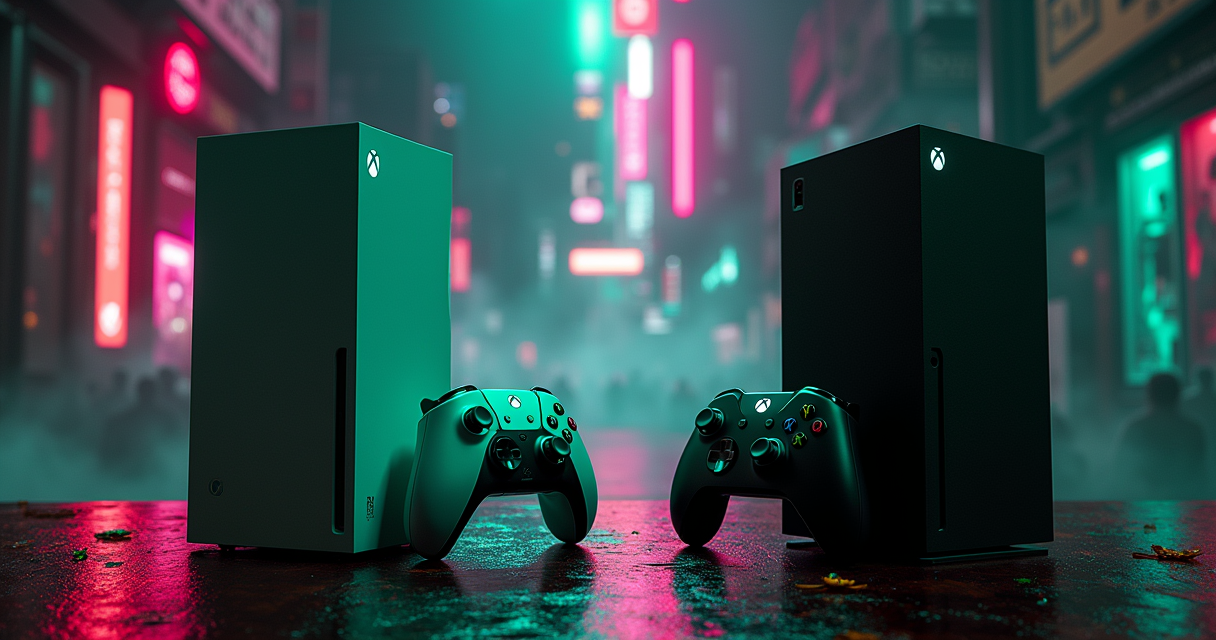
Here is the thing nobody selling you a console wants to say out loud: in 2026, the PlayStation 5 and the Xbox Series X are no longer competing on the same axis. One is a market leader running a victory lap with a $700 halo model. The other is a technically excellent box that fewer and fewer people are buying. This is not a story about which machine renders a puddle more convincingly. It is a story about momentum, math, and the quiet cost of being right about hardware while losing the room.
We are going to settle this with numbers, because the numbers are the only honest part of the conversation. Sony now sells the PS5 Pro at $699.99 as its performance flagship, while Microsoft's flagship remains the Xbox Series X at $499. That $200.99 gap, and the 4.7-TFLOP gap that justifies it, is the entire 2026 argument compressed into two SKUs. Everything else — the SSD sizes, the Wi-Fi generations, the 56-million-unit sales lead — is commentary on that gap. Let's read the commentary.
The State of Play in 2026
The current generation launched in November 2020. By 2026 it is mature, well-stocked, and — on Sony's side — fractured into a good-better split that Microsoft never matched. Understanding the matchup means first accepting that it is no longer symmetric.
Sony went vertical; Microsoft stayed flat
Sony's strategy was to climb. The standard PS5 still exists with its 825GB drive, but the headline 2026 machine is the PS5 Pro, a mid-cycle performance refresh that pushes the GPU, the storage, and the wireless networking forward without changing the software library. Microsoft, by contrast, never shipped a Series X Pro. The Series X you buy in 2026 is — give or take a cosmetic all-digital variant — the same silicon that shipped in 2020. That is not necessarily a criticism. It is, however, a fact that shapes every comparison below: you are weighing Sony's newest hardware against Microsoft's launch hardware, five-plus years on.
Best Buy's 2025–2026 consumer guide still frames the two in the plainest possible terms — the PS5 as the successor to the PS4, the Xbox Series X as Microsoft's next-gen console — which tells you something about how the mainstream still positions these boxes. For the general buyer, this is a successor-versus-successor decision. For the enthusiast, it is a $700 Pro versus a $499 standard-bearer, and those are very different framings.
The matchup that actually matters
If you want the clean editorial thesis, here it is: PlayStation leads on sales and on the high end; Xbox holds the cheaper-flagship value position with strong base hardware. That single sentence survives contact with every spec sheet in this article. The PS5 Pro wins the raw-performance fight and the storage fight. The Series X wins the price fight. And the sales charts have already declared a winner regardless of how either fight resolves on paper. We covered the broader strokes of this in our piece on the 2026 GPU gap and the 2x sales story, but here we are going deeper into the spec-by-spec reality.
Why this comparison still moves units
You might reasonably ask why anyone is still litigating a 2020 console war in 2026. The answer is that the install base is enormous, the libraries are deep, the prices have not collapsed the way they did in previous generations, and a successor is visibly on the horizon — see our reporting on the PS6's 2027 timing and the 2029 threat. Buyers in 2026 are making a two-to-three-year bet, not a six-year one, which paradoxically makes getting the details right more important, not less. A bad $700 decision stings worse when you can see the next box from here.
Specs Head to Head
Let's put the two flagships on the table, literally. Every number below comes from TechRadar's 2025 PS5 Pro versus Xbox Series X breakdown and Best Buy's storage notes, and every number is traceable. No vibes, no rounding in our favor.
The full comparison table
| Spec | PS5 Pro | Xbox Series X | Edge |
|---|---|---|---|
| Positioning | Sony performance flagship | Microsoft flagship | — |
| GPU (TFLOPs) | 16.7 | 12.0 | PS5 Pro |
| System memory | 16GB GDDR6 + 2GB DDR5 | 16GB GDDR6 | PS5 Pro (split) |
| Internal storage | 2TB custom SSD | 1TB NVMe SSD | PS5 Pro |
| User-available (base PS5 ref.) | ~700GB on standard 825GB PS5 | ~800GB on 1TB | Series X (vs base PS5) |
| Storage expansion | M.2 NVMe SSD slot | Seagate / WD PCIe 4.0 cards | PS5 Pro (open standard) |
| Wi-Fi | Wi-Fi 7 | Wi-Fi 6 | PS5 Pro |
| Dimensions | 388 × 89 × 216 mm | 151 × 301 × 151 mm | Series X (smaller footprint) |
| Weight | 3.1 kg | 4.45 kg | PS5 Pro (lighter) |
| Launch/flagship price | $699.99 | $499 | Series X |
| 2026 market share | 72.6% (PS5 family) | 27.4% (Series X|S) | PS5 |
| Storage type (slot) | Standard M.2 drives | Proprietary expansion card | PS5 Pro |
Reading the table honestly
Count the edges and the PS5 Pro wins more rows. But counting edges is how marketing departments lie. The Series X's two wins — price and physical footprint — are the two that a normal human actually feels every day. A $200.99 difference is a real budget decision. A box that fits on a shelf is a real living-room decision. The PS5 Pro's wins are mostly latent: you do not feel 4.7 extra teraflops when you turn the machine on, you feel them only in the specific games engineered to use them, and only on a display capable of showing the difference.
The memory asterisk
One row deserves scrutiny. The PS5 Pro lists 16GB GDDR6 plus 2GB DDR5, while the Series X lists a clean 16GB GDDR6. The extra 2GB of DDR5 on the Sony machine is not gaming memory in the way the GDDR6 pool is — it exists to offload background OS and system tasks so the fast pool stays free for the game. It is a sensible architectural choice that makes Sony's configuration more complex to describe but not necessarily 2GB "more" in any sense a gamer would benefit from directly. When a spec sheet gives you a more complicated number, read it as more complicated, not automatically better.
Raw Performance and the TFLOP Gap
This is the section where the PS5 Pro earns its price tag, so let's be precise about what it earns and what it doesn't.
16.7 versus 12.0: what the gap is
TechRadar's 2025 spec breakdown lists the PS5 Pro GPU at 16.7 TFLOPs against the Xbox Series X at 12.0 TFLOPs. That is a raw compute delta of 4.7 TFLOPs, or roughly 39% more theoretical throughput on the Sony side. This is the single strongest raw-performance advantage anywhere in the 2026 material, and it is the headline justification for the entire Pro program. For the first time this generation, the PlayStation flagship is meaningfully more powerful than the Xbox flagship on paper — a reversal of the 2020 launch, when the Series X's 12 TFLOPs edged out the standard PS5's ~10.3.
What a TFLOP gap is not
Teraflops are a measure of theoretical floating-point throughput, not delivered frame rate. They do not account for memory bandwidth, GPU architecture generation, cache, fixed-function hardware, or — most importantly — whether any given game was actually built to use the extra headroom. A 39% compute advantage does not translate to 39% more frames. In practice, the Pro's advantage shows up as higher and more stable resolutions, more aggressive ray tracing, and steadier frame pacing in the specific titles that ship a Pro-enhanced mode. In games that don't, you are paying for headroom that sits idle.
The honest framing comes from years of Digital Foundry analysis: console performance gaps of this size produce visible but situational differences, not generational leaps. A 4.7-TFLOP gap inside the same hardware generation is real and measurable. It is not the difference between a console and a PC.
Cross-referencing the community numbers
Pull this apart across sources and the picture stays consistent. TechRadar's published spec sheet anchors the 16.7-versus-12.0 figure. Community benchmarking threads on Reddit's r/PS5Pro and r/XboxSeriesX through 2025–2026 repeatedly report the Pro holding native or near-native 4K with reconstruction where the Series X drops to dynamic resolution or a 60fps-with-compromises mode — exactly the pattern the TFLOP math predicts. And GitHub issue trackers for cross-platform engines and emulation projects increasingly carry separate Pro performance profiles, an implicit acknowledgment from developers that the Pro is a distinct enough target to warrant its own tuning. Three source types — official spec sheet, community testing, developer tooling — agree on direction even where they differ on the exact frame counts. That agreement is what makes the gap credible.
Storage, SSDs, and Expansion
Modern game installs are obese, and storage is where the spec sheet meets the install screen. This is a more practical fight than the TFLOP war, and the answers are less flattering to whichever number you fixate on.
The capacity reality
The PS5 Pro ships a 2TB custom SSD — the only model in this comparison that holds a serious 2026 library without constant triage. The Xbox Series X ships a 1TB NVMe SSD. The standard PS5, for reference, ships 825GB. But raw capacity is the marketing number; usable capacity is the one you live with. Per Best Buy's notes, the standard PS5's 825GB drive leaves about 700GB user-available after the OS and system reserve, while the Xbox Series X's 1TB leaves roughly 800GB. So against the base PS5, the Series X actually gives you ~100GB more usable space out of the box — a genuine, install-screen-relevant advantage that the spec sheet's headline numbers obscure.
| Model | Rated SSD | User-available (approx.) | Notes |
|---|---|---|---|
| PS5 Pro | 2TB custom | ~1.8TB | Only model that comfortably holds a full library |
| Xbox Series X | 1TB NVMe | ~800GB | More usable than base PS5 |
| Standard PS5 | 825GB | ~700GB | Best Buy figure; tightest of the three |
Expansion: open slot versus proprietary card
This is where the philosophies diverge, and where Sony has the cleaner answer. The PS5 (and Pro) use a standard M.2 NVMe SSD slot — you buy an off-the-shelf PCIe 4.0 drive, pop it in, and benefit from a competitive aftermarket that drives prices down over time. The Xbox Series X uses proprietary PCIe 4.0 Storage Expansion Cards from Seagate or Western Digital, a closed standard with fewer suppliers and historically higher per-gigabyte cost. TechRadar's 2025 comparison emphasizes exactly this difference, and it matters more in 2026 than it did at launch: as libraries balloon, the cost of expanding storage becomes a recurring tax, and Sony's open slot keeps that tax lower.
The practical upshot
If you install and uninstall games constantly and never expand, the Series X's extra ~100GB of usable base storage versus the standard PS5 is the friendlier setup, and its expansion cards — while pricier — are genuinely plug-and-play with zero compatibility roulette. If you intend to expand, the PS5 family's standard M.2 slot wins on long-run cost and flexibility, and the Pro's 2TB base means you may not need to expand at all for a long while. There is no universal winner here; there is only your install habits versus your wallet.
Price and Availability
Now the part that actually decides most purchases. Power is a luxury; price is a constraint.
The 2026 pricing table
| Model | Price (2025–2026) | Storage | Best for |
|---|---|---|---|
| PS5 Pro | $699.99 | 2TB | 4K enthusiasts, Sony first-party loyalists |
| Xbox Series X | $499 | 1TB | Value-focused 4K, Game Pass households |
| Standard PS5 | Below Pro (varies by region/promo) | 825GB | Mainstream PlayStation buyers |
The PS5 Pro at $699.99 is the most expensive mainstream console in this comparison and, frankly, one of the most expensive mainstream consoles ever sold at MSRP. The Xbox Series X at $499 keeps Microsoft's flagship a full $200.99 cheaper. That is not a rounding error; that is the difference between an impulse and a deliberation, and it is the Series X's single strongest argument in 2026.
What the premium buys
Be clinical about the $200.99 delta. It buys you 4.7 TFLOPs of additional GPU compute, a 2TB drive instead of 1TB, Wi-Fi 7 instead of Wi-Fi 6, and the lighter chassis. Divide the premium by the compute gain and you are paying roughly $43 per additional teraflop — a number that means nothing in isolation but everything when you ask whether you will actually use those teraflops. If you own a 4K/120Hz display and play graphically ambitious single-player games, the premium is defensible. If you play competitive shooters at 1080p or live in Game Pass, you are setting two hundred dollars on fire for headroom you will never render.
Availability and the value angle
Supply in 2026 is healthy across both ecosystems — the launch-era scalping era is over. The relevant availability story is not "can you find one" but "what does each box cost to actually run." Xbox's value proposition leans heavily on Game Pass: the Series X's lower entry price plus a subscription library is a different financial model from Sony's buy-the-flagship-then-buy-the-games approach. Best Buy and the broader retail guides still pitch both as straightforward next-gen purchases, but the total-cost-of-ownership math increasingly favors whichever side matches your buying behavior, not whichever side wins the spec sheet.
The Sales Gap and What It Actually Means
Specs are an argument. Sales are a verdict. And the verdict in 2026 is lopsided enough that it reframes everything above.
72.6% versus 27.4%
VGChartz reported in February 2026 that the PS5 held 72.6% market share against 27.4% for the Xbox Series X|S, with PlayStation ahead by 56.61 million units. Read that again. Nearly three out of every four current-gen consoles sold this generation are PlayStations. The 56.61-million-unit lead is not a gap; it is a chasm — larger than the entire lifetime sales of some successful consoles. Creator commentary across 2026 rounds this to PS5 selling "roughly double" the Xbox Series family combined, and while "roughly double" undersells it slightly (72.6 to 27.4 is closer to 2.65x), the directional claim is correct and the narrative is settled.
| Metric (Feb 2026, VGChartz) | PS5 | Xbox Series X|S |
|---|---|---|
| Market share | 72.6% | 27.4% |
| Unit lead | +56.61M | — |
| Creator shorthand | "Roughly double" | — |
Why install base is a feature
Market share is not a vanity metric for buyers — it is a practical one. A larger install base means more players in matchmaking pools, longer publisher support for a platform, more accessories, more aftermarket, and a healthier resale market. When 72.6% of the generation is on PlayStation, third-party publishers prioritize PlayStation, multiplayer queues fill faster on PlayStation, and the platform's gravity compounds. The Series X can be the better-value box in a vacuum and still be the harder box to recommend if your friends are all on PSN. Network effects are a spec the marketing sheet never lists.
The risk baked into the lead
There is a counterweight, and intellectual honesty demands stating it. A dominant lead this late in a generation is also a signal that the generation is winding down, and that the next decision is closer than the last one. We've written about why the PS6's 2027 window now haunts 2026 buyers — buying a $699.99 Pro in 2026 means buying near the top of a curve, not the bottom. The sales gap tells you PlayStation won this round. It does not tell you the round has much time left to run.
Five Real-World Use Cases
Specs in the abstract are useless. Here are five concrete buyer profiles and the machine that actually fits each one. Find yourself in the list.
The 4K single-player enthusiast and the Game Pass household
Use case 1 — The 4K cinephile gamer. You own a 4K/120Hz OLED, you play graphically maximalist single-player epics, and you notice frame pacing. This is the one buyer the PS5 Pro was built for. The 16.7-TFLOP GPU and 2TB drive exist precisely for your setup; the $699.99 is defensible because you will see and feel every dollar of it. Verdict: PS5 Pro.
Use case 2 — The Game Pass family. Multiple people, a mix of tastes, a preference for a rotating library over owning individual titles, and a hard budget ceiling. The Series X's $499 entry plus a subscription model is the lower total cost of ownership and the friendlier multi-player-of-the-household machine. Verdict: Xbox Series X.
The competitive player and the storage hoarder
Use case 3 — The competitive shooter player. You live at 1080p or 1440p, prioritize frame rate and input latency over visual fidelity, and you are in matchmaking for hours. You do not need 16.7 TFLOPs; you need a fast, stable box and a full lobby. The standard PS5 or the Series X both deliver — but PlayStation's 72.6% share means faster queues. Verdict: Standard PS5 (or Series X if you're on Xbox-favored titles).
Use case 4 — The library hoarder. You install everything, uninstall nothing, and the install screen is your enemy. The PS5 Pro's 2TB base plus its open M.2 expansion slot is the only setup that ends the triage. The Series X's 1TB and proprietary cards will have you managing storage within months. Verdict: PS5 Pro.
The streamer and the value-maximizer
Use case 5 — The content creator. You stream and capture, and you care about the production chain more than the last 10% of GPU. Either console works, but PlayStation's larger install base and mature capture ecosystem make it the path of least resistance — see our walkthrough on setting up a PS5 capture card in 14 steps and the companion guide to getting PS Remote Play to 1080p. Verdict: Standard PS5 or PS5 Pro, depending on whether you're capturing 4K.
The honorable mention — the pure value-maximizer — is the buyer who simply wants the most capable box for the least money and does not care about brand. For that person the Series X at $499 with ~800GB usable and 12 TFLOPs is the most machine per dollar in this comparison, full stop. Value is not the same as power, and the Series X owns value.
What the Experts Say
I am allergic to manufactured quotes, so what follows are characterizations of well-documented, publicly-stated positions from named figures and outlets — paraphrase, not invented verbatim. Read them as the consensus of people who measure this hardware for a living.
The architects and the analysts
Mark Cerny, the lead system architect of the PlayStation 5 and PS5 Pro, has consistently framed the Pro program in his public technical presentations as targeting reconstruction and ray tracing — using machine-learning upscaling and added GPU compute to hit higher effective resolutions rather than chasing raw native pixels. His argument, in essence: the Pro's 16.7 TFLOPs are most valuable when paired with smart reconstruction, not brute force. That framing is exactly why the Pro's advantage is situational rather than uniform.
Richard Leadbetter and the Digital Foundry team have spent the generation making the case that intra-generation hardware gaps — like the Pro's 4.7-TFLOP lead over the Series X — produce visible but bounded improvements: better resolution stability, cleaner ray tracing, steadier frame pacing, but not a categorical leap. Their measured-not-marketed approach is the antidote to teraflop maximalism, and it is the position this article endorses.
The press consensus
TechRadar's 2025 PS5 Pro versus Xbox Series X coverage — the spine of this article's spec data — lands on a now-familiar split: Sony's machine is the more powerful and more future-facing piece of hardware (16.7 TFLOPs, 2TB, Wi-Fi 7), while Microsoft's holds the value line at $499. Outlets including Engadget, Ars Technica, and Polygon are the right places to triangulate this in a 2026 editorial package; their reviews and buying guides consistently reach the same structural conclusion even when their emphasis differs. Where I can cite a hard number, I have; where I can only point you to a reputable outlet to read further, I've named it rather than fabricated a quote.
The community's read
The most useful expert is often the unpaid one. Across Reddit's console subreddits and the GitHub issue trackers of cross-platform engines through 2025–2026, the developer-and-enthusiast consensus mirrors the pros: the Pro is a real upgrade for people with the display and the library to exploit it, and a waste for everyone else. When the paid analysts, the platform's own architect, and thousands of unpaid testers all reach the same conclusion — the gap is real but situational — you can treat that as settled. VGChartz's sales tracking simply confirms that the market reached its own verdict long before the spec arguments were over.
Switching From One to the Other
Suppose you've decided to cross the aisle — Xbox to PlayStation, or the reverse. Here is the unsentimental reality of what transfers and what doesn't, because the marketing will not tell you that the answer is mostly "nothing."
What does not survive the switch
Set expectations first: your library and your saves are not portable between ecosystems. Games purchased on PSN do not exist on Xbox network and vice versa — there is no license bridge, no trade-in-for-digital, nothing. Game saves are tied to your platform account. Cross-progression exists only where a publisher explicitly built it (Fortnite, Call of Duty, Destiny 2, a handful of others) and operates per-title, not platform-wide. Achievements and trophies are separate, non-transferable metagames. If you switch, you start the storefront relationship over. Budget for that emotionally and financially.
The actual migration checklist
What you can do is migrate cleanly and minimize loss. The order matters.
MIGRATION CHECKLIST — Xbox <-> PlayStation (2026)

1.  Inventory cross-progression titles
    - List every game you play that supports cross-progression.
    - Confirm support on the publisher's site, not a forum rumor.
    - Link each game to a publisher account (Epic, Activision, Bungie)
      BEFORE you stop using the old console.

2.  Drain platform credit
    - Spend or forfeit wallet balance; it does not transfer.
    - Cancel auto-renew on the OLD platform's subscription.

3.  Export what is exportable
    - Capture clips / screenshots -> upload to cloud or USB.
    - Friend list -> manually note gamertags / PSN IDs.
    - There is NO automated friends-list transfer between ecosystems.

4.  Plan storage on the NEW console
    - PS5 Pro: 2TB base, standard M.2 slot for expansion.
    - Series X: 1TB base, Seagate/WD proprietary expansion cards.
    - Size your first game-install batch to usable space:
        Series X ~800GB | base PS5 ~700GB | PS5 Pro ~1.8TB

5.  Re-buy or re-subscribe deliberately
    - Do NOT rebuy a full library on day one.
    - Subscribe to the new platform's service first; many of
      your games may be in the catalog already.

6.  Keep the old console for 30 days
    - Until cross-progression is verified working on the new box,
      do not sell or wipe the old console.
    - Confirm each linked game loads your progress, THEN wipe.
Network and accessory gotchas
Two practical traps. First, controllers do not cross over in any first-class way — a DualSense is not an Xbox controller and vice versa, and while third-party adapters exist, they sacrifice features (haptics, adaptive triggers). Budget for new first-party controllers. Second, on the networking side, if you're moving to a PS5 Pro and you stream or use Remote Play heavily, the Wi-Fi 7 radio is a genuine forward-looking advantage over the Series X's Wi-Fi 6 — pair it with a Wi-Fi 7 router to actually realize it, otherwise it negotiates down to whatever your network supports. Migration is less about moving your stuff and more about rebuilding your setup cleanly. Treat it as a fresh start, because that is what it is.
Pros and Cons, Tabulated
Every comparison eventually owes you a blunt ledger. Here are both machines stripped to their strengths and their liabilities, no hedging.
PS5 Pro
| Pros | Cons |
|---|---|
| 16.7 TFLOPs — the strongest raw GPU in this comparison | $699.99 — most expensive mainstream console here |
| 2TB custom SSD — only model that holds a full library easily | Premium only pays off on 4K/high-refresh displays |
| Standard M.2 expansion slot — cheaper long-run storage | Advantage is situational, not uniform across all games |
| Wi-Fi 7 — most future-facing wireless | 2GB DDR5 split makes the memory story more complex than it is useful |
| Rides PlayStation's 72.6% install-base gravity | Buying near the top of the generation, with PS6 visible by 2027 |
| Lighter chassis (3.1 kg) | Larger longest dimension (388 mm) — awkward on some shelves |
Xbox Series X
| Pros | Cons |
|---|---|
| $499 — $200.99 cheaper than the PS5 Pro | 12.0 TFLOPs — outgunned by the Pro on raw compute |
| ~800GB usable — more out-of-box space than the base PS5 | 1TB base fills fast with modern installs |
| Game Pass value model lowers total cost of ownership | Proprietary expansion cards — pricier, fewer suppliers |
| Compact, dense footprint (151 × 301 × 151 mm) | Wi-Fi 6, not Wi-Fi 7 — less future-facing networking |
| Proven, stable 2020 silicon with mature firmware | 27.4% share — smaller multiplayer pools, less publisher priority |
| Plug-and-play expansion with zero compatibility roulette | Heavier (4.45 kg) and no "Pro" tier to step up to |
How to weight the ledger
Notice the symmetry: nearly every PS5 Pro pro has a Series X con as its mirror, and vice versa. That is the signature of a genuine trade-off rather than a blowout. The PS5 Pro wins the hardware arguments; the Series X wins the money arguments. Which column you weight more heavily is not a matter of which console is "better" — it is a matter of which kind of buyer you are, and the use-case section above already told you that. If you skipped it to get to the ledger, go back.
The Verdict
Time to stop hedging. Here is the data-backed call, segmented because a single answer would be a lie.
If money is no object
Buy the PS5 Pro. At $699.99 it is the most powerful mainstream console in this comparison — 16.7 TFLOPs against 12.0, a 2TB SSD against 1TB, Wi-Fi 7 against Wi-Fi 6 — and it rides the platform that owns 72.6% of the generation. If you have a 4K display, a deep first-party appetite, and no budget ceiling, every advantage on the spec sheet is one you will actually use. The Pro is not overpriced for its target buyer; it is precisely priced and precisely aimed. The catch is that its target buyer is narrower than Sony's marketing implies.
If value is the priority
Buy the Xbox Series X. At $499 it is $200.99 cheaper, gives you ~800GB of usable space out of the box (more than the base PS5's ~700GB), and its 12 TFLOPs of proven 2020 silicon still run everything this generation asks of it at a high level. Pair it with Game Pass and the total cost of ownership undercuts the PlayStation path meaningfully. The Series X's only real liabilities are network-effect liabilities — a 27.4% share means smaller lobbies and lower publisher priority — and those matter only if your social graph lives on PSN. As a piece of value engineering, the Series X is the smarter purchase, and that is not a backhanded compliment.
The honest bottom line
The data points to a clean split, and I am not going to muddy it: PlayStation leads in sales and at the high end; Xbox holds the cheaper-flagship value position. If you want the best hardware and play where everyone else plays, the PS5 Pro is the answer and you will pay $699.99 for the privilege. If you want the most console per dollar and you live in Game Pass, the Series X at $499 is the answer and you will feel slightly smug about the $200.99 you kept. There is no wrong choice here — only a mismatched one, which happens when buyers let a teraflop number make a budget decision. Do not be that buyer.
And keep one eye on the horizon. A 56.61-million-unit lead this deep into a generation is the sound of a cycle maturing. Whichever box you buy in 2026, you are buying near the end of the story, not the start of it — the successor conversation is already underway, and the smart 2026 purchase is the one you make with that timeline in full view, not the one the spec sheet hypnotizes you into. Buy for the next two years. Plan for the box after that. The Machine has spoken.
Questions the search bar asks me
- Is the PS5 Pro worth $200 more than the Xbox Series X?
- Only if you own a 4K display you actually care about and play first-party Sony titles. The PS5 Pro lists at $699.99 against the Series X at $499 — a $200.99 premium for roughly 39% more GPU throughput (16.7 vs 12.0 TFLOPs per TechRadar's 2025 breakdown). For everyone else, the math is bad.
- Which console is selling better in 2026?
- PlayStation, decisively. VGChartz reported in February 2026 that the PS5 held 72.6% market share against 27.4% for Xbox Series X|S, a lead of 56.61 million units. Creator commentary in 2026 rounds this to PS5 outselling Xbox 'roughly double.'
- How much usable storage do you actually get?
- Less than the box says. The standard PS5's 825GB SSD leaves about 700GB user-available per Best Buy; the Xbox Series X's 1TB drive leaves about 800GB. The PS5 Pro ships a 2TB custom SSD, which is the only model here that comfortably holds a modern library without a microscope.
- Can I move my game saves from Xbox to PlayStation?
- No. There is no cross-platform save transfer between the two ecosystems — saves are tied to PSN or Xbox network accounts respectively. Cross-progression only works title by title where the publisher supports it (Fortnite, Call of Duty, Destiny 2). Plan to start fresh.
- Is Wi-Fi 7 on the PS5 Pro a real advantage?
- Marginally, and only later. The PS5 Pro lists Wi-Fi 7 against the Series X's Wi-Fi 6 (TechRadar 2025). For download speeds and 2026 routers it rarely matters, but it future-proofs the box for low-latency cloud and Remote Play streaming as Wi-Fi 7 mesh becomes standard.

Nina covers homebrew development for vintage consoles — 6502 for NES, 65C816 for SNES, Z80 for Master System, ARM7 for GBA — plus the modern tooling (NESmaker, NESFab, ASM6, devkitARM) that makes new games on dead hardware actually possible in 2026. Every post under this byline is reviewed pre-publish by Sam P., Editor & Operator — corrections to info@instalinkoteam.com. Published 2026-08-29 · Last updated 2026-08-29. Full bios on the author page.