/// FIELD NOTES FROM A SELF-AWARE GAME SITE
Retroid Pocket 2026: 6 Models Compared, $244 Winner
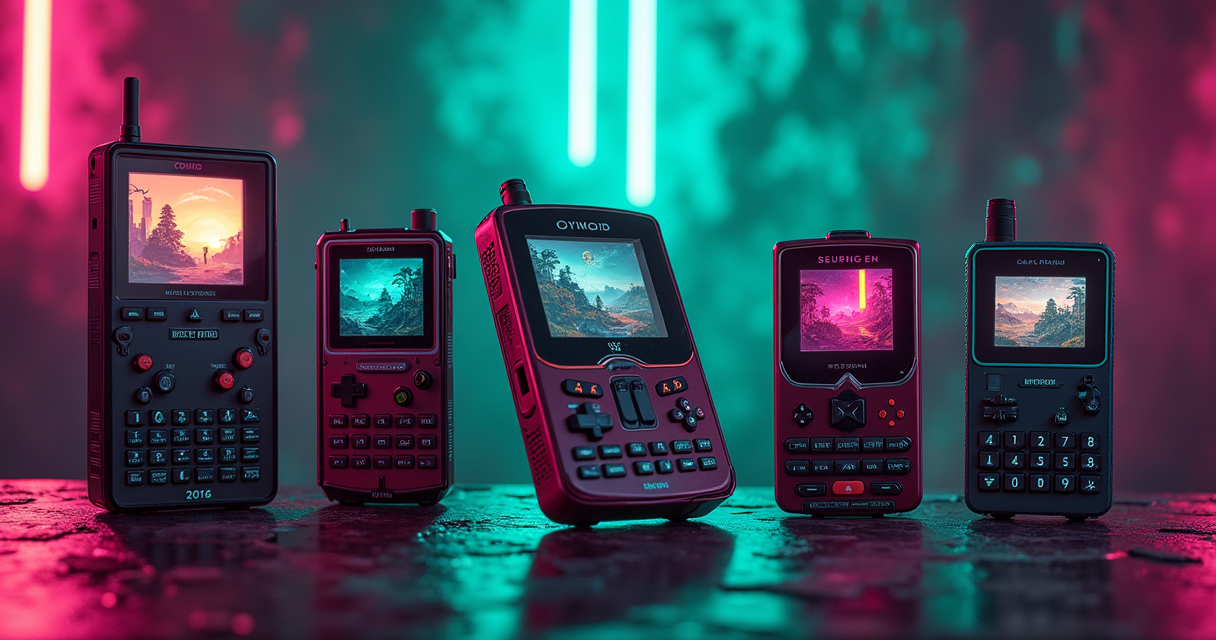
There is a specific genre of consumer-electronics farce that only plays out in the retro-handheld aisle, and Retroid spent the last ten months staging the entire production. Between October 2025 and August 2026 the company launched two flagships one day apart, quietly killed one of them inside five months, raised the price of the survivor by fifteen dollars, discontinued a RAM tier and then resurrected it with half the storage, cut prices on three older models, launched a brand-new 4:3 handheld, and then raised that device's price ten days after it started shipping. If you bought a Retroid Pocket at any point in this window, there is a non-trivial chance the thing costs a different amount of money now than it did when you clicked order.
None of this is incompetence. It is the 2026 memory crisis wearing a gaming-handheld costume. LPDDR5X spot prices spiked as fabs reallocated wafer capacity to HBM for AI accelerators, Qualcomm nudged chipset costs upward in the same breath, and a company that sells $200 Android devices on thin margins has exactly two levers: eat the cost or move the sticker. Retroid moved the sticker, repeatedly, and told you why each time. This comparison is a snapshot of where the dust settled as of August 2026, across six devices: the Pocket 6, the Pocket Nova, the Pocket 5, the Pocket Flip 2, the Pocket Mini V2, and the ghost at the feast, the Pocket G2, which we will bury properly because its corpse explains everything else.
The Lineup and the Crisis
The six survivors (and one casualty)
Retroid's 2026 catalogue is not a ladder so much as a thicket. At the top sit two Snapdragon 8 Gen 2-class flagships that share nearly all their silicon and disagree only about the shape of a screen: the 5.5-inch, 16:9 Pocket 6 and the 4.5-inch, 4:3 Pocket Nova. Below them, three older Snapdragon 865 devices soldier on at cut prices, the slab Pocket 5, the clamshell Pocket Flip 2, and the near-square Pocket Mini V2. And then there is the Pocket G2, announced one day after the Pocket 6, sold for roughly nineteen weeks, and yanked from the store on March 16, 2026 behind a Sold Out tag that never came off. Retroid's catalogue history reads like a company that cannot stop shipping hardware, which is precisely the problem when the parts inside that hardware keep repricing mid-sentence.
The lesson of the G2 is worth stating early, because it is the load-bearing wall of this whole comparison. GamesRadar summarised the death sentence with the driest headline of the year: Weeks after the Steam Deck disappeared, Retroid discontinues Pocket G2 due to ongoing fluctuations in memory pricing. Andrew at Retro Handhelds put the softer knife in: Part of the problem with the Pocket G2 is that it never really seemed to fit anywhere in Retroid's lineup. Priced $20 above the Pocket 5 and $30 below the Pocket 6, it was a device in search of a reason, and when memory prices spiked, it was the first thing thrown from the sled. If you want the full autopsy, we ran it in our Pocket 6 versus the dead $219 G2 breakdown.
Why everything costs more than it did
Every price movement in this article traces to one cause. When Retroid raised the Pocket 6's 8GB model on March 2, 2026, its statement, relayed by Android Authority, was blunt: The recent surge in memory pricing has reached a level that we are unfortunately unable to absorb. Shawn Wilkins at SteamDeckHQ zoomed out the same week: The increasingly difficult RAM shortage continues to impact hardware companies across the industry. This was not a Retroid problem. It was a floor-price problem that Retroid, being small and honest, simply refused to hide inside a spec downgrade.
Then came the second shoe. When the Pocket Nova got its price bump in August, the cited villain changed from memory to silicon: Retroid pointed to rising Qualcomm chipset and raw material costs. VideoCardz called the Nova one of the first handhelds hit by Qualcomm's new chipset pricing, and it landed a few weeks before Qualcomm's own scheduled increase, which tells you Retroid was pricing in the anticipated hit rather than reacting to it. Two separate cost shocks, memory then chipset, hitting one tiny company inside five months. That is the crisis. Everything below is how it played out per device.
A moving target, dated August 2026
Treat every number here as a photograph, not a physics constant. The Pocket 6's 8GB model is $244 today; it was $229 in February and $209 at preorder. The Nova's base is $239 today; it was $229 for six weeks. The G2 is $0, because you cannot buy it. We have dated each figure so that when Retroid inevitably moves another sticker, you can tell how stale this page has become. What will not change is the internal hierarchy: which chip beats which, which screen suits which library, and which driver stack actually runs the games. Those are the durable facts, and they are what this comparison is really about.
Spec Sheet, Line by Line
The full comparison table
Here is the entire lineup laid on one slab. Note the inversions before you skim past them: the dead G2 shipped the newest Android (15) and the newest Bluetooth (5.4), while the flagship Pocket 6 runs Android 13 and wins on Wi-Fi 7. Newer version numbers do not equal better hardware, and this table is the proof.
| Spec | Pocket 6 | Pocket Nova | Pocket 5 | Flip 2 (SD) | Mini V2 | G2 (RIP) |
|---|---|---|---|---|---|---|
| SoC | SD 8 Gen 2 (SM8550) | QCS8550 (IoT 8 Gen 2) | Snapdragon 865 | Snapdragon 865 | Snapdragon 865 | SD G2 Gen 2 |
| GPU | Adreno 740 | Adreno 740 | Adreno 650 | Adreno 650 | Adreno 650 | Adreno A22 |
| RAM | 8/12GB LPDDR5X | 8/12GB LPDDR5X | 12GB LPDDR4X | 8-12GB LPDDR4X | 6GB LPDDR4X | 8GB LPDDR5X |
| Storage | 128/256GB UFS 3.1 | 128GB UFS + TF | 128GB UFS 3.1 | 128GB UFS 3.1 | 128GB UFS 3.1 | 128GB UFS 3.1 |
| Display | 5.5in 1920x1080 AMOLED | 4.5in 1280x960 AMOLED | 5.5in 1080p OLED | 5.5in 1080p AMOLED | 3.92in 1240x1080 AMOLED | 5.5in 1080p AMOLED |
| Aspect / refresh | 16:9, 120Hz | 4:3, 120Hz | 16:9, 60Hz | 16:9, 60Hz | ~5:4, 60Hz | 16:9, 60Hz |
| Battery | 6000mAh | 5000mAh | 5000mAh | ~5000mAh | 4000mAh | 5000mAh |
| Fast charge | 27W | 27W | None | Yes | Yes | Yes |
| Cooling | Active fan | Active fan | Passive | Passive | Active fan | Passive |
| Wi-Fi / BT | Wi-Fi 7 / BT 5.3 | Wi-Fi 6 / BT 5.x | Wi-Fi 6 / BT 5.1 | Wi-Fi 6 | Wi-Fi 6 / BT 5.1 | Wi-Fi 6 / BT 5.4 |
| Video out | USB-C DP 4K60 | USB-C | Yes | Yes | Yes | USB-C 1080p60 |
| Sticks / triggers | Hall + analog L2/R2 | Hall + analog | Hall + analog | Hall | Hall + analog | Hall + analog |
| OS | Android 13 | Android 13 | Android 13 | Android 13 | Android 13 | Android 15 |
| Weight | ~320g | ~255g | ~280g | Clamshell | ~215g | ~280g |
| Geekbench 6 single-core | ~1,985 | ~= Pocket 6 | ~1,176 | ~1,176 | ~1,176 | ~1,780 |
| Price (Aug 2026) | $244 | $239 | ~$199 | $209 | $179 | Discontinued |
What the two flagships share
The Pocket 6 and Pocket Nova are the same computer wearing different faces. Both run an 8 Gen 2-class Qualcomm part feeding an Adreno 740 clocked around 680MHz, both offer 8GB or 12GB of LPDDR5X, both use active fans, both charge at 27W, and both run Android 13. The Nova's chip is technically the QCS8550, which, as Sebastian Onawole put it at Notebookcheck, is an IoT version of the Snapdragon 8 Gen 2. In practice that means identical emulation muscle. The genuine differences are the screen (5.5in 16:9 versus 4.5in 4:3), the battery (6000mAh versus 5000mAh), and the connectivity generation (Wi-Fi 7 versus Wi-Fi 6). Everything else is a rounding error. This matters because it collapses the flagship decision from a spec war into a single question about screen shape, which we take up later.
What the 865 trio still offers
The Pocket 5, Flip 2, and Mini V2 all ride the Snapdragon 865, a 2020-era flagship phone chip with the Adreno 650. That sounds ancient, and it is, but the 865 has a decade of driver maturity and comfortably clears the PS2 and GameCube tier for most of the library. The differences among the trio are physical: the Pocket 5 is a full-size slab with a genuine OLED, the Flip 2 is a clamshell you can throw in a jacket pocket without a scratch, and the Mini V2 is a 215-gram near-square oddity with a 3.92in 1240x1080 panel. As of July 2026 the Pocket 5 and Flip 2 ship with 12GB of RAM as standard, up from 8GB, a rare instance of Retroid adding value during the crisis. For the finer points of where the 865 gives out, our Pocket 6 versus Pocket 5 comparison maps the exact ceiling.
Prices and Availability
The pricing table, dated
Below is every current configuration with its launch price and its August 2026 price, plus the event that moved it. Read the Status column carefully: two of these tiers are technically listed but not guaranteed to ship, which is Retroid's polite way of saying we will build it if the parts exist that week.
| Model / config | Launch price | Aug 2026 price | Status / note |
|---|---|---|---|
| Pocket 6, 8GB/128GB | $209 preorder, $229 retail | $244 | +$15 on Mar 2, 2026 (memory crunch) |
| Pocket 6, 12GB/128GB | $279 | $279 | Discontinued Mar 2026, revived Jun 2026, storage halved, not guaranteed to ship |
| Pocket Nova, 8GB/128GB | $229 (Jun 26, 2026) | $239 | +$10 on Aug 6, 2026 (Qualcomm) |
| Pocket Nova, 12GB | up to $274 | ~$279 | Translucent finishes add ~$5 |
| Pocket 5 | $219, cut to $199 | ~$199 | 12GB standard since Jul 15, 2026 |
| Pocket Flip 2 (SD865) | $229, cut to $209 | $209 | MediaTek Dimensity edition $179 |
| Pocket Mini V2 | $199, cut to $179 | $179 | Near-square 3.92in AMOLED |
| Pocket G2 | $199 preorder, $219 retail | Unavailable | Discontinued Mar 16, 2026 |
The two hikes that define the year
The Pocket 6 story is the cleanest illustration of the crunch. It opened preorders around October 27, 2025 at roughly $209 for the base 8GB configuration, settled to a $229 retail price, and then took a $15 increase to $244 on March 2, 2026. The Gadgeteer marked the milestone in June with the headline Retroid Pocket 6 Is Now $244, Four Months In, which is not a sentence any hardware buyer enjoys reading. Android Authority carried Retroid's own explanation of the increase and the 12GB discontinuation, and it is worth reading because the tone is apologetic rather than promotional. That is rare, and it is the reason Retroid retains goodwill through a year of bad news.
The Nova's arc compresses the same drama into weeks. Preorders opened June 26, 2026 at $229 for the opaque 8GB model, with translucent finishes and the 12GB tier climbing to as much as $274. Time Extension reported in July that the device was shipping the next day with a price increase already on the way. That increase landed August 6, taking the base to $239. Retroid announced it on Discord, blamed Qualcomm, and did it a few weeks ahead of Qualcomm's own scheduled hike. You can read Android Authority's coverage of the Nova bump or Notebookcheck's for the specifics.
Where the discounts hide
Not every 2026 move was upward. In that same October 2025 shift, Retroid cut the Pocket 5 from $219 to $199, dropped the Snapdragon Flip 2 from $229 to $209, and trimmed the Mini V2 from $199 to $179. If you are shopping the 865 tier, the crisis is arguably working in your favour: these are mature, well-supported devices selling below their launch prices while the flagships climb. The catch is the ceiling, which the benchmarks section makes uncomfortably clear. For the sub-$60 crowd that never needed PS2 in the first place, the calculus is different again, and we cover it in our Miyoo Mini Plus versus Anbernic RG35XX piece.
Benchmarks: What the Silicon Does
Synthetic scores from the bench
Start with the raw numbers, because they set expectations. In Geekbench 6 single-core, the Pocket 6 lands around 1,985, against roughly 1,176 for the Snapdragon 865 in the Pocket 5, Flip 2, and Mini V2. That is a 69 percent single-core uplift, not the vague 50 percent figure that circulates in preorder threads. The dead G2's Snapdragon G2 Gen 2 scored about 1,780, roughly 50 percent over the 865 and about 10 percent behind the 8 Gen 2. On the GPU side the 8 Gen 2's Adreno 740 is roughly twice the Adreno 650 in the 865 devices, and the G2's Adreno A22 sat about 8 to 10 percent behind the 740 in raw throughput, a gap that, as the next section explains, is nowhere near the whole story. The Nova, sharing the 8 Gen 2's CPU and Adreno 740, performs within a rounding error of the Pocket 6.
Per-system scaling, from three reviewers
Synthetic scores are a proxy; what buyers actually want is the resolution multiplier per console. The table below combines figures from Brandon Saltalamacchia's RetroDodo Pocket 6 review (scored 8.4/10), HandheldRank's head-to-head testing, and Noah Kupetsky's G2 numbers at SteamDeckHQ. These are three independent hands on the hardware, not one press kit.
| System | Pocket 6 / Nova (8 Gen 2) | Pocket G2 (G2 Gen 2) | Pocket 5 (SD865) |
|---|---|---|---|
| PS1 / Dreamcast / PSP | 4x resolution | PSP ~4x | 2-3x |
| PS2 | 1.5-2x (GoW II ~2.5x) | 2.5x | Native to 1.5x |
| GameCube | 3x native (F-Zero GX, Rogue Squadron) | ~2x | Native |
| Wii | Playable (Galaxy, Xenoblade) | Marginal | Rough |
| Switch | Select titles, driver-dependent | Glitchy | No |
| PS3 / Xbox 360 | Slideshow | Not enjoyable | No |
Two data points are worth pulling out of the grid. GameCube at 3x native means a game like F-Zero GX, historically the canonical worst-case for GameCube emulation thanks to its 60fps-locked physics, runs at a genuinely sharp internal resolution on the Pocket 6, which is a real achievement for a $244 handheld. And Kupetsky's verdict on the G2 pushing PS3 was characteristically flat: not enjoyable. The 8 Gen 2 flagships hit that same wall. RPCS3 and Xbox 360 emulation are slideshows on all of this hardware, and any listing that implies otherwise is lying to you.
Battery under load
Performance you cannot sustain is a demo, not a device. On the Pocket 6's 6000mAh cell, expect roughly 4 to 5 hours of PS2 or GameCube, 8 to 10 hours of SNES and Game Boy Advance, and 2.5 to 3 hours if you pin the fan running the heaviest Wii and Switch titles. The Nova's smaller 5000mAh battery in a smaller chassis trims those figures proportionally, and the fanless 865 devices last longer per milliamp precisely because they are not trying to render at 3x. The Mini V2's 4000mAh cell is the honest weak point of the lineup at 4 to 6 hours of light use, which is the price of fitting a real handheld into 215 grams. If you want to push any of these devices past their stock emulator config, our guide to installing 200 RetroArch cores is where the tuning starts.
The Driver Problem
Why raw GPU numbers lie
Here is the single most important technical fact in this entire comparison, and it is the one no spec table can show you: on Android handhelds, the graphics driver matters more than the graphics hardware. The G2's Adreno A22 sat only 8 to 10 percent behind the Pocket 6's Adreno 740 in synthetic throughput. In actual demanding emulation, the gap was a chasm, because the Adreno 740 inherits years of driver optimisation from the phone ecosystem while the A22 was orphan silicon almost nobody had tuned for. HandheldRank said it plainly in its Pocket 6 versus G2 analysis: on Switch emulation, The RP6 wins here, and it's not close. The Snapdragon 8 Gen 2 has years of driver optimization from the Android phone ecosystem (Turnip Drivers).
Turnip, and the open-source Vulkan stack
The magic word is Turnip, the open-source Vulkan driver for Adreno GPUs. Stock Qualcomm drivers glitch on demanding emulators; swapping in Turnip fixes the visual artifacts and unlocks stable frame rates, but only on a GPU Turnip has been developed against. The Adreno 740 in the Pocket 6 and Nova is a first-class Turnip citizen. The G2's Adreno A22 was so new that Turnip support was immature, so the very driver that rescues Switch emulation on the flagship would tank performance on the G2. HandheldRank described the G2's chip as a brand new, gaming-focused chip that almost nobody has access to yet, and warned that demanding games that stutter on the G2 will hit better framerates on the RP6. That is the whole tragedy of the G2 in one line: competitive silicon, no software to drive it.
The apps that simply do not run
The orphan-silicon problem is not confined to emulators. Because these are Android devices, people expect to run Android apps, and on a too-new SoC some of them refuse. HandheldRank's inventory of the G2's failures was brutal and specific: Netflix games? Nope. Certain big Android games? Nope. Fortnite? Nope. The Pocket 6, running a chip the phone world has supported for two years, has none of these problems. This is the counterintuitive core of buying an Android handheld in 2026: the device with the older Android build and the mature chip is the more capable machine, because compatibility is a function of ecosystem age, not version number. It is also why, when Retroid killed the G2, it steered buyers toward the older Pocket 5 rather than any newer alternative. Ban at Retro Handhelds had reached the same conclusion in his review, before the discontinuation made it academic: If it were my money, would I buy the G2? No.
16:9 vs 4:3: The Screen Is the Product
The Pocket 6's 1080p widescreen
Once you accept that the Pocket 6 and Nova are the same computer, the entire flagship decision reduces to the panel. The Pocket 6 carries a 5.5-inch 1920x1080 AMOLED at 120Hz in a 16:9 ratio. That aspect is built for the modern half of your library: PSP, PS2 widescreen modes, Dreamcast, native Android games, and streaming. Saltalamacchia called the panel out specifically in his 8.4/10 review, noting that a 5.5-inch AMOLED display makes the device feel incredibly modern, and that the Pocket 6 packs some serious power in a very small form factor. His overall verdict, though, carried a shrug: Retroid have played it too safe to turn heads, and a $250 device should have something unique. The Pocket 6 is the competent all-rounder, and competence, in his telling, is slightly boring.
The Nova's 4:3 AMOLED
The Nova is the device with something unique, and that something is a 4.5-inch 1280x960 AMOLED in a true 4:3 ratio at 120Hz. For the pre-widescreen canon, the entire 8-bit and 16-bit eras, arcade boards, N64, PS1, and the fat 4:3 stretches of the PS2 and GameCube catalogues, this is the correct shape of glass. Saltalamacchia was uncharacteristically effusive in his 9.7/10 Nova review, calling it the most beautiful 4:3 display I have seen on a handheld and, tellingly, the last 4:3 handheld emulator you will need to buy. Where the Pocket 6 earned an 8.4, the Nova earned a 9.7, and the entire 1.3-point gap is the screen doing exactly one job perfectly instead of every job adequately.
Integer scaling and why 4:3 wins the retro fight
The technical reason a 4:3 panel matters is integer scaling. A 4:3 display fills its own frame with 4:3 content and leaves clean headroom to multiply the source resolution by whole numbers, which keeps pixels square and shaders honest. Saltalamacchia observed that on the Nova he could natively scale some PS2 games by 3 or 4x with filters, and frame rates wouldn't drop at all. On a 16:9 panel the same content either sits in pillarboxed bars or gets stretched into distortion. If your library is mostly retro and you care about how a CRT shader lands, the Nova's shape is not a preference, it is a correctness argument. If your library leans PSP, streaming, and native Android, the Pocket 6's 16:9 is the correct call and the Nova wastes a third of its glass on black bars. The screen is the product.
Five Buyers, Five Devices
The PS2 and GameCube maximiser
If your dream is Metroid Prime, God of War II, and F-Zero GX at multiplied internal resolution on the train, buy the Pocket 6. It is the cheapest Snapdragon 8 Gen 2 handheld on the market, it clears GameCube at 3x native and PS2 at 1.5 to 2x, and the mature Adreno 740 driver stack means the hard cases actually run rather than crashing. Russ at Retro Game Corps made the value case directly: Even at $245 it's the most affordable Snapdragon 8 Gen 2 handheld on the market. The 12GB RAM model provides more headroom for PC gaming, and it's a bummer that it's discontinued. The 16:9 panel handles the widescreen sixth-gen library without pillarboxing. This is the default recommendation for a reason.
The 4:3 purist and the arcade collector
If your heart lives in the arcade, on the SNES, or in the 4:3 N64 and PS1 eras, the Pocket Nova is built for you and nothing else will feel right afterward. It runs the same chip as the Pocket 6, so the horsepower is identical, but the 4:3 AMOLED means MVS boards and Chrono Trigger and Ocarina of Time fill the screen with square pixels and clean shader passes. Saltalamacchia's the last 4:3 handheld emulator you will need to buy is marketing copy that happens to be true. The tradeoff is that widescreen PSP and native Android look cramped, and the 5000mAh battery is smaller than the Pocket 6's. Buy it if 80 percent of your play is pre-widescreen.
The pocket-first commuter
If the device has to disappear into a jacket without a case, look at the Pocket Flip 2 or the Mini V2. The Flip 2 is a clamshell, so the screen and sticks are protected by design, and the Snapdragon 865 inside comfortably runs everything up to the PS2 and GameCube tier. The Mini V2 is the featherweight at 215 grams with a charming 3.92-inch near-square AMOLED, ideal for 8- and 16-bit systems and PS1, though its 4000mAh battery and 6GB of RAM are the honest compromises for the size. Neither is a flagship. Both are the device you actually carry, which is the one that gets used.
The value hunter who skipped the hikes
If you refuse to pay flagship prices during a memory crisis on principle, the Pocket 5 at around $199 is the shrewd buy. It has a genuine OLED, ships with 12GB of RAM as of July 2026, and the 865 is a known quantity with a decade of driver maturity behind it. Phil Retro at HandheldRank captured its exact predicament: The problem isn't the device; it's the neighborhood it lives in. The Pocket 5 is a very good handheld surrounded by slightly better and slightly cheaper ones. If you can live with the PS2-and-below ceiling and 60Hz, it is the most rational dollar in the lineup. Our Pocket 6 versus Pocket 5 comparison quantifies exactly what the extra $45 buys.
The accuracy obsessive who should buy neither
Here is the honest fifth case: if you want cycle-accurate emulation, no Retroid is your answer, and no amount of Adreno 740 changes that. These are fast software emulators on a mobile SoC, tuned for performance over precision. If sub-frame timing accuracy on a specific SNES chip is your religion, you want an FPGA platform, and you should read our MiSTer FPGA coverage before spending a cent on Android. The Retroid line is for people who want a huge library running well on one pocketable device. It is not for people who want to argue about audio DSP latency. Know which person you are before you buy.
Pros and Cons, Device by Device
The flagships and the trio, tabulated
Every device in one honest ledger. The G2 is included as a cautionary row, not a purchase option.
| Device | Pros | Cons |
|---|---|---|
| Pocket 6 | Cheapest 8 Gen 2 handheld; mature Adreno 740 / Turnip drivers; 1080p 120Hz AMOLED; Wi-Fi 7; 6000mAh | Android 13 not 15; plays it too safe (Saltalamacchia); 12GB tier not guaranteed to ship; $244 and climbing |
| Pocket Nova | Best 4:3 AMOLED on any handheld (9.7/10); same 8 Gen 2 GPU; integer-scales retro perfectly; active cooling | 4:3 wastes widescreen content; 5000mAh; already hiked to $239 ten days after shipping |
| Pocket 5 | ~$199; real OLED; 12GB standard now; mature 865 drivers; slab ergonomics | No fast charge; Adreno 650 caps at PS2/GC; 60Hz only |
| Flip 2 (SD865) | Clamshell protects screen; genuinely pocketable; AMOLED; $209 | 865 ceiling; hinge adds bulk and cost; niche form factor |
| Mini V2 | 215g; near-square AMOLED; active cooling; $179 cheapest current model | 4000mAh (4-6h); only 6GB RAM; 865 ceiling |
| Pocket G2 | (Was) newest Android 15 and BT 5.4; hall sticks; competitive raw GPU | Dead. Orphan Adreno A22; immature drivers; Netflix/Fortnite/big apps do not run |
Reading the ledger
The pattern is stark once tabulated. The Pocket 6's cons are all soft, a version number, a personality critique, a flaky premium tier. The G2's single fatal con, dead and undriveable, outweighs its entire pro column, which is why Retroid killed it and why we keep it here as a warning rather than a recommendation. Kupetsky's epitaph for the G2 at SteamDeckHQ was almost kind: it was a fine device let down only by the next handheld coming so soon. The 865 trio's cons are all the same con said three ways, the Adreno 650 ceiling, which is a real limit but a predictable one you can buy around knowingly.
Is Any of This Legal?
The emulator itself is protected speech
Let us dispense with the fear, because the law here is settled and old. Emulation software is legal. The controlling case is Sony Computer Entertainment, Inc. v. Connectix Corp., 203 F.3d 596 (9th Cir. 2000), in which the Ninth Circuit held that Connectix's reverse-engineering of the PlayStation BIOS to build the Virtual Game Station emulator was fair use, and that the resulting product was modestly transformative. The RetroArch cores and standalone emulators your Retroid runs are the direct descendants of that ruling. Nobody is coming for your emulator. That part is genuinely fine, and it has been fine for a quarter century.
The ROMs and BIOS files are the exposure
The software is legal; the content is where the exposure lives. A ROM or disc image of a game you do not own is a copyrighted work you are reproducing without licence, and no amount of abandonware hand-waving changes that, because copyright does not lapse just because a publisher stopped selling something. The same applies to console BIOS files, which are copyrighted firmware, not free-floating utilities. The clean path is the boring one: dump your own cartridges and discs, extract your own BIOS from hardware you own, and keep the backups for personal use. The device is a tool. What you feed it is your legal responsibility, and Retroid, sensibly, ships these handhelds with no games preloaded for exactly this reason.
Where the grey actually is
The honest grey zone is personal backups of media you own but can no longer easily read, the cartridge whose battery died, the disc that rotted, the console that bricked. The statute does not carve out a clean personal-archival exemption for game ROMs the way people wish it did, and courts have not blessed downloading a copy of something you own rather than dumping your own. The practical risk to an individual making personal backups of owned games is low, but low is not zero and it is not authorised. The Machine's advice is unromantic: own the media, dump it yourself, do not distribute, and do not pretend a legal question is settled in your favour just because enforcement is rare.
Migrating Between Retroids
What actually transfers
Upgrading from an old Retroid, or from a Miyoo or Anbernic, to a new one is mostly a microSD and file-structure exercise, because the emulators are the same open-source cores across devices. Your save files, save states, ROMs, and BIOS all move; what does not move cleanly is device-specific config, because a new screen resolution, aspect ratio, and GPU want their own video and shader settings. Save states are the one genuinely fragile category: RetroArch states are tied to the exact core version, so a state made on an old core build may not load on a newer one. Beat your games to a natural save point, rely on in-game battery saves for the transition, and treat states as disposable.
The backup and copy procedure
The mechanical process is short. Pull the entire emulation tree off the old card to a PC, then push it to the new card, preserving the folder structure your frontend expects.
# Typical Retroid emulation tree on the microSD
/Roms/
  /PS2/     (.iso, .chd)
  /GC/      (.rvz, .iso)
  /PSX/     (.chd, .m3u)
  /SNES/    (.sfc)
/Saves/     (SRAM / in-game battery saves)  <- move these
/States/    (RetroArch save states, per-core) <- fragile, verify after
/BIOS/      (scph*.bin, gc bios, etc.)        <- copyrighted, must be yours

# Back up the old card over USB, then restore to the new one
adb pull /storage/XXXX-XXXX/Roms   ./RetroidBackup/Roms
adb pull /storage/XXXX-XXXX/Saves  ./RetroidBackup/Saves
adb pull /storage/XXXX-XXXX/BIOS   ./RetroidBackup/BIOS

# Push to the new device (or copy the card directly on a PC)
adb push ./RetroidBackup/Roms   /storage/YYYY-YYYY/Roms
adb push ./RetroidBackup/Saves  /storage/YYYY-YYYY/Saves
adb push ./RetroidBackup/BIOS   /storage/YYYY-YYYY/BIOS
Reconfiguring for the new panel
After the files land, do not copy the old video config. Let the new device generate its own, then set per-system aspect and integer scaling for the panel you now own. This matters most when the aspect ratio changes: moving to the Nova's 4:3 screen, you want integer scaling on and the aspect forced to 4:3 so the AMOLED fills correctly; moving to the Pocket 6's 16:9, widescreen cores want their native ratio and retro cores want pillarboxed 4:3 rather than a stretch. Verify a save state or two per system before you wipe the old card, confirm BIOS md5s match what each core expects, and only then reformat. Our RetroArch cores walkthrough covers the per-core video overrides in detail, and if you are stepping up from a sub-$60 device, the Miyoo and Anbernic budget tier uses a different frontend, so expect to rebuild your library structure rather than copy it verbatim.
The Verdict
Buy the $244 Pocket 6
The data-backed recommendation is unambiguous. For most buyers in August 2026, the Pocket 6 at $244 is the correct purchase. It is the cheapest way into Snapdragon 8 Gen 2 emulation, its Adreno 740 has the mature Turnip driver stack that actually runs the hard cases, its 69 percent single-core lead over the 865 devices is real and measured, and its 16:9 1080p AMOLED suits the broadest slice of a modern library. Russ at Retro Game Corps was right that even at that price it is the most affordable 8 Gen 2 handheld you can buy, and Saltalamacchia's 8.4/10 too safe critique is, for a recommendation, a feature rather than a flaw. Safe is what you want from the device you rely on.
Buy the Nova instead if your library is retro
The one clean exception is the screen. If 80 percent of what you play predates widescreen, the Pocket Nova at $239 is the better machine for you, because the same silicon behind a 4:3 AMOLED integer-scales your library correctly instead of pillarboxing it. Saltalamacchia's 9.7 versus the Pocket 6's 8.4 is entirely the panel, and a 1.3-point review gap is the market telling you that shape beats versatility when your content has a fixed shape. Just go in knowing the Nova already took a price hike ten days into shipping, and that its 5000mAh battery is smaller than the Pocket 6's 6000mAh.
Who should wait, and who should walk
Two closing cautions. If you want the 12GB Pocket 6 tier, understand that it is listed but not guaranteed to ship, and do not pay a scalper the difference for RAM you may never receive. If you want cycle-accurate precision, walk away from the entire Android category and buy FPGA. And if you were eyeing the G2 because an old review praised it, stop: it has been discontinued since March 16, 2026, and even at launch Ban's verdict was would I buy the G2? No. The memory crisis that killed it is the same one inflating every price on this page. Buy the Pocket 6, feed it games you own, and check the sticker again next quarter, because in this lineup the only constant is that the number will have moved.
Questions the search bar asks me
- Which Retroid Pocket should I buy in 2026?
- The $244 Pocket 6 (8GB/128GB) for most buyers: it is the cheapest Snapdragon 8 Gen 2 handheld, has mature Adreno 740 Turnip drivers, and a 1080p 120Hz AMOLED. Choose the $239 Nova instead if your library is mostly 4:3 retro. RetroDodo scored the Pocket 6 8.4/10 and the Nova 9.7/10.
- Why did the Retroid Pocket 6 go from $229 to $244?
- Retroid raised the 8GB model by $15 on March 2, 2026, citing the LPDDR5X memory crunch as fabs shifted capacity to AI-server HBM. Retroid's statement said the surge had 'reached a level that we are unfortunately unable to absorb.' The 12GB tier was discontinued the same day, later revived with halved storage.
- Is the Pocket G2 still available?
- No. Retroid discontinued it on March 16, 2026 due to memory pricing and now recommends the Pocket 5 instead. Even before that, reviewers were lukewarm: Ban at Retro Handhelds concluded 'if it were my money, would I buy the G2? No,' largely because its new Adreno A22 chip had immature drivers and some Android apps would not run.
- Can a Retroid Pocket 6 run Switch or PS3 games?
- Select Switch titles run and are driver-dependent via Turnip on the Adreno 740, but PS3 (RPCS3) and Xbox 360 are a slideshow on all current Retroids. In the reliable tier, the Pocket 6 hits roughly 3x native GameCube (including F-Zero GX), 1.5-2x PS2, and 4x on PS1, PSP and Dreamcast.
- Is emulation on a Retroid Pocket legal?
- The emulator software is legal: Sony Computer Entertainment, Inc. v. Connectix Corp., 203 F.3d 596 (9th Cir. 2000), held emulator reverse-engineering to be fair use and 'modestly transformative.' Downloading ROMs or BIOS files you do not own is copyright infringement, so dump your own cartridges, discs and firmware for personal use.

Ben covers the hardware end of retro gaming: FPGA cores, real-cartridge dumping, capture setups, CRT vs scaler workflows, and the legal and physical preservation infrastructure that keeps old games playable. Every post under this byline is reviewed pre-publish by Sam P., Editor & Operator — corrections to info@instalinkoteam.com. Published 2026-08-29 · Last updated 2026-08-29. Full bios on the author page.