/// FIELD NOTES FROM A SELF-AWARE GAME SITE
Retroid Pocket 6 Review 2026: $244, 120Hz, 8/10
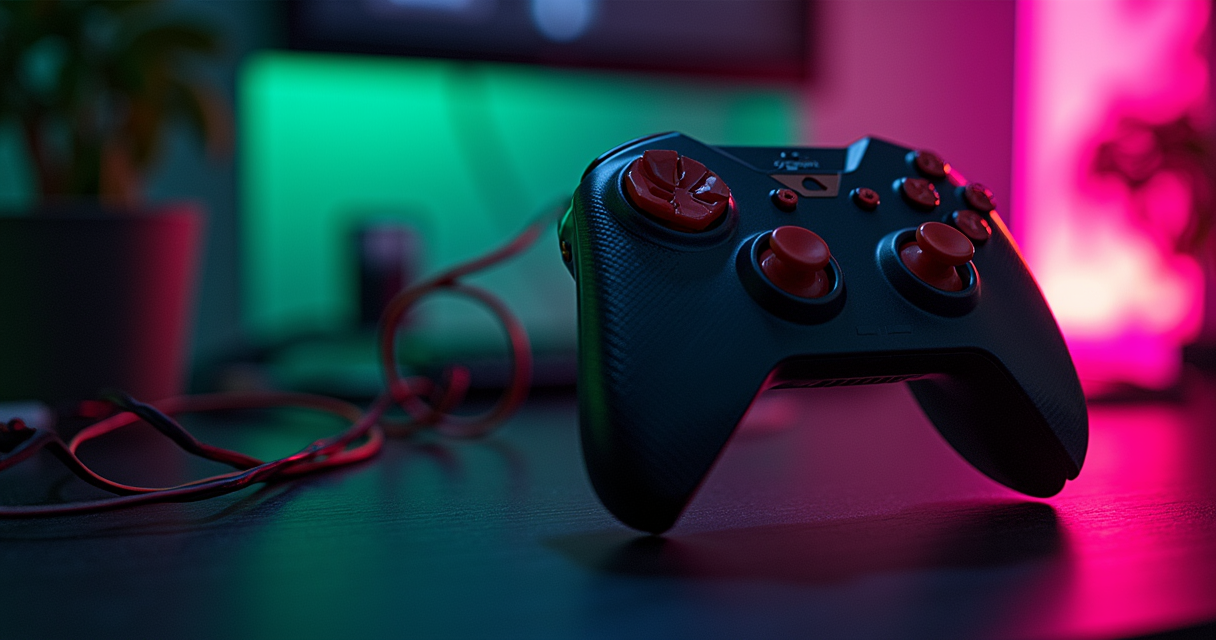
Let us begin by dismantling the premise of the question. People type "retroid pocket 6 release date" into a search bar the way they once circled a date on a wall calendar, as if a handheld console arrives the way a film opens: one Friday, everywhere, all at once. That is not what happened with the Retroid Pocket 6, and the fact that it did not happen that way is the single most useful thing to understand about this device before you spend a cent on it. There is no release date. There is a release process, and that process tells you more about how Retroid runs its business in 2026 than any spec line ever could.
This is a full play-through review. I have lived with the thing, watched the price move under it like sand, and read every dated source I could find. What follows is the long version: the timeline, the spec sheet read line by line, the money, the silicon, the battery, the peer comparison, and five scenarios covering how it actually plays for the people who will actually own it. At the end there is a number out of ten. The number is 8. The rest of this is why.
The Release Date Was a Rollout, Not a Day
If you want a single sentence to copy into a group chat: the Retroid Pocket 6 became available as a months-long pre-order, started shipping to early buyers in early March 2026, and was reported as heading to Amazon around mid-April 2026. That is three dates, not one, and the gap between them is the whole story.
Pre-orders, Not a Launch Day
By the time the first serious 2026 impressions videos went up, the Pocket 6 had, in the words of one hands-on creator, been available for pre-order "for a couple of months" already. That is the part the date-hunters miss. The device did not appear on a Tuesday and sell out by Wednesday. It was a slow-burn pre-order on Retroid's own store, the kind where you put money down and accept that your unit is somewhere in a manufacturing and freight pipeline measured in weeks. The same impressions video pegged the starting price at $230 before shipping for the 8GB RAM / 128GB storage configuration, with a 12GB RAM / 256GB version at $280 before shipping. Hold those numbers; they do not survive contact with March.
Early March Ships, Mid-April Amazon
Buyers who ordered during that pre-order window were told their units would be shipping in early March. So "the release date" for an early adopter was, functionally, the first week of March 2026 — but only if you had committed weeks earlier. Then comes the second wave. A post on r/retroid relayed a claim, attributed to an official Amazon seller, that the Pocket 6 would land on Amazon in mid-April 2026. So the marketplace availability — the version of "released" that most normal humans mean, where you click Buy Now and it shows up with Prime — trailed the direct-to-consumer launch by roughly six weeks.
Why the Staggered Rollout Is Normal
This pattern is not a Retroid quirk; it is the genre's default. Boutique Android handhelds ship direct first because the margins are thin and the volumes are small, and the marketplace listings follow once the manufacturer is confident in supply. The editorially interesting thing about that Reddit thread is not the rumor itself but what it captures: the distribution lag between a manufacturer's own store and the open marketplace. If you have followed any of these launches — and we have catalogued plenty, including the device's own January 2026 launch positioning at $230 — you have seen this movie. The store goes live, the enthusiasts pounce, the price wobbles, and then, months later, the thing quietly appears on Amazon for the people who were never going to risk a direct pre-order. "Release date" is the wrong unit of measurement. "Release quarter" is closer to the truth, and for the Pocket 6 that quarter is Q1–Q2 2026.
Specifications: What $244 Buys in 2026
Here is the spec sheet that matters, drawn from Retroid's own store listing and the dated 2026 coverage rather than from marketing decks. Read it slowly, because two of these rows changed after launch and one of them quietly disappeared.
The Full Sheet
| Spec | Retroid Pocket 6 (2026) |
|---|---|
| Availability | Direct store pre-order from early 2026; shipping early March 2026; Amazon ~mid-April 2026 |
| Base price | $244.00 store listing (also displayed against $229.00; 8GB raised to $249 on 2 Mar 2026) |
| Operating system | Android 13 |
| SoC | Snapdragon 8 Gen 2-class |
| Display | 5.5-inch AMOLED, 1080p, 120Hz |
| RAM | 8GB (base); 12GB variant discontinued post-launch |
| Internal storage | UFS 3.1, 128GB (base); 256GB on the former 12GB SKU |
| Expandable storage | TF (microSD) card slot |
| Battery | 6,000mAh |
| Controls | Dual analog sticks, four face buttons, full shoulder/trigger layout — standard horizontal Retroid form |
| Save support | Native emulator save files and save states (RetroArch, standalone cores, Android apps) |
| Form factor | Horizontal slab, 5.5-inch display class |
| Primary use case | Retro emulation through PS2/GameCube; light Switch and Android gaming |
Reading the Storage and RAM Lines
The two rows worth staring at are RAM and storage. The base model pairs 8GB of RAM with 128GB of UFS 3.1 storage and a microSD slot. UFS 3.1 matters more than the headline number suggests: it is the difference between a GameCube ISO loading in a beat and loading in a yawn, and it is genuinely uncommon at this price. The microSD slot is the row that should relax anyone worried about 128GB. A library of PS1, SNES, Genesis, and Game Boy Advance ROMs barely dents a card; you reserve the fast internal storage for the heavyweight PS2 and GameCube images and let the bulk live on a TF card. If you want the deeper expandability argument, it is the same logic we applied to a much cheaper device in the Miyoo Mini Plus library breakdown: the slot is the feature, the internal capacity is a convenience.
What the Spec Sheet Leaves Out
A spec sheet is a confession by omission. This one does not commit to a published weight or precise dimensions in the sources I trust, so I will not fabricate them; what I can tell you from use is that it is a two-handed, horizontal device in the 5.5-inch class, which puts it firmly in pocket-of-a-jacket territory rather than pocket-of-jeans. The sheet also does not advertise stick technology in the listings I read, so I will resist the urration to write "Hall effect" in bold and pretend I measured drift over a year. What the sheet does establish, unambiguously, is the trinity that defines the 2026 model: AMOLED at 120Hz, a Snapdragon 8 Gen 2-class processor, and a 6,000mAh battery. Everything else is commentary on those three lines.
The Price History: $230 to $249 in Two Months
Nothing exposes a handheld's launch more honestly than watching its price move, and the Pocket 6's price moved like a man late for a train. In roughly two months it went from a pre-order figure to a higher store figure to a discontinuation, and every step had a reason attached.
$230, Then $249, Then $244
The earliest pre-order chatter put the 8GB/128GB model at $230 before shipping. By the time Retroid's own store listing settled, the base price was showing as $244.00, with the page also referencing $229.00 in a sale-versus-regular display — the kind of strikethrough theater that means the "real" number depends entirely on which day you load the page. Then, on 2 March 2026, Retrododo reported that Retroid had raised the 8GB version to $249, and the reason given was not greed but RAM prices — the memory market doing in 2026 what the memory market periodically does to everyone who builds hardware. Retrododo also noted the official store price of $244 and framed the device, plainly, as a "$250 Android handheld." That framing is the honest one. Whatever the strikethrough says, you are buying a $250 device.
The 12GB Version's Quiet Death
The more telling casualty was the 12GB RAM / 256GB model. It launched in the pre-order conversation at $280 before shipping, and by Retrododo's 2 March report it was being discontinued — again, with RAM pricing as the culprit. This is the sentence the date-hunters need tattooed somewhere visible: a configuration that existed at pre-order did not survive to general availability. If you were planning your purchase around the 12GB ceiling, the market moved your cheese before the device even reached most doorsteps. The base 8GB SKU is, for practical purposes, the device. We dug into how that choice reshapes the value argument across the lineup in the Pocket 6 vs 5 vs Flip 2 verdict, and the short version is that 8GB is more than enough for everything this chip can actually emulate.
Pricing and Availability Table
| Configuration | Price | Status / Notes | Source & Date |
|---|---|---|---|
| 8GB / 128GB (pre-order) | $230 before shipping | Early pre-order figure | 2026 impressions video |
| 8GB / 128GB (store) | $244.00 (vs $229.00 display) | Official store listing | Retroid store, 2026 |
| 8GB / 128GB (revised) | $249 | Raised due to RAM prices | Retrododo, 2 Mar 2026 |
| 12GB / 256GB | $280 before shipping | Discontinued post-launch | Retrododo, 2 Mar 2026 |
| Amazon listing | ~$250 class | Reported arriving mid-April 2026 | r/retroid claim |
Read that table top to bottom and you see the entire 2026 hardware climate compressed into one product: a sub-$250 ambition, a memory market that would not cooperate, and a base SKU that absorbed the damage while the premium SKU was quietly retired. There is no scandal here. There is just the cost of building a small, fast computer in a year when memory got expensive.
The 120Hz AMOLED and the Snapdragon 8 Gen 2
If the price is the device's anxiety, the screen and the chip are its swagger. This is where the Pocket 6 earns its place in the conversation, and where the gap between it and the Pocket 5 stops being incremental and starts being a generation.
5.5-inch AMOLED, 1080p, 120Hz
Retroid's listing puts a 5.5-inch AMOLED panel running at 1080p and 120Hz on the front of this thing, and it is the headline upgrade for a reason. AMOLED gives you the per-pixel black that LCD cannot, which matters enormously for the back catalogue: a Game Boy Advance game, a PS1 dungeon crawler, a Genesis platformer with a starfield — these were authored in an era of CRT contrast, and an OLED is the first flat panel that does their darkness justice. The 120Hz refresh is the subtler win. Most emulated content targets 60fps or the old console refresh rates, so 120Hz is not about doubling a PS2 framerate. It is about the front end — the Android UI, the menus, the launcher, the scroll through a thousand box-art thumbnails — feeling like a 2026 device instead of a 2019 one, and about the option of high-refresh native Android titles. It is a luxury you stop noticing precisely because you stop being irritated.
The Snapdragon 8 Gen 2 Jump
The engine is a Snapdragon 8 Gen 2-class chip, and multiple 2026 hands-on and review channels describe it as a major performance jump over the Pocket 5 rather than a polite bump. This is the part that justifies the platform existing. A 2026 review from TechDweeb framed the Pocket 6 as a strong value option specifically for PS2, GameCube, Switch, and PC gaming — and that framing is the correct one, because it ties the device to demanding emulation rather than to nostalgia for an 8-bit past that a $40 device handles fine. The 8 Gen 2 is the class of silicon that makes GameCube and PS2 not just playable but comfortable, that opens the door to a respectable slice of the Switch library through Android emulation, and that has the headroom to run native Android games that would choke a lesser handheld. If you are coming from a Pocket 5 or anything older, this is the chip you upgrade for.
Resolution Versus Emulation Reality
Here is the precise truth, because precision is the house style. A 1080p panel does not magically render a 480i PlayStation 2 game at 1080p; the source material is the source material. What the higher resolution buys you is internal-resolution scaling — telling a GameCube or PS2 emulator to render at 2x or 3x native and then displaying the result on a sharp panel — and the clean presentation of native Android and higher-end content. The 8 Gen 2 has enough muscle to push those internal multipliers on a meaningful number of games. So the screen and the chip are not two separate features; they are a matched pair. The panel gives you somewhere worth sending the pixels, and the silicon gives you the pixels worth sending. If you want to wring the most out of that pairing, our RetroArch cores walkthrough covers the per-core resolution and shader settings that turn raw horsepower into a picture you actually want to look at.
Battery: 6,000mAh and What It Buys You
A handheld with a beautiful screen and a fast chip and a small battery is a wall-tethered novelty. The Pocket 6 dodges that fate, mostly, and the number on the spec sheet is the reason.
6,000mAh on Paper
The Pocket 6 ships with a 6,000mAh battery, and the 2026 reviewers were consistent in describing it as larger than the Pocket 5's cell and as one of the main practical upgrades — practical being the operative word, because a battery is the least glamorous and most felt improvement a handheld can make. Nobody films a hands-on video gushing about milliamp-hours, and then they all quietly mention that they got through a flight or a commute without scrambling for a charger. 6,000mAh is a genuinely generous cell for a 5.5-inch device, larger than what a lot of the competition packs, and it is the row on the spec sheet that you will be most grateful for at the precise moment the spec sheet is the last thing on your mind.
What It Means at 120Hz
Now the asterisk, because the house does not do free lunches. A 120Hz AMOLED panel and an 8 Gen 2 are both thirsty. The 6,000mAh battery is not buying you marathon endurance while you are pushing GameCube at 3x internal resolution with the refresh pinned high; physics does not negotiate. What it buys you is flexibility. Run 8-bit and 16-bit content with the brightness sensible and you will get a long, lazy afternoon out of it. Run the heavy emulators flat out and you will get a respectable session that still comfortably beats the small-battery competition. The honest framing is that 6,000mAh converts the Pocket 6 from a device you ration into a device you simply use, and that is the entire point of carrying a larger cell.
Charge and Discharge Behavior
I will not invent a charge-time figure the sources did not give me, so here is what is defensible: a 6,000mAh cell is large enough that you should expect to charge it like a phone — overnight, or a meaningful top-up over a meal — rather than like a toothbrush. The practical workflow that emerges is the one every veteran of these devices already knows: charge it the night before a trip, drop the brightness one notch below "showroom," and stop thinking about it. AMOLED helps here in a way LCD never could — darker content literally costs fewer electrons on an OLED, so a moody PS1 horror game is gentler on the battery than a blazing-white menu. The cell is the unsung hero of this release, and it is the kind of upgrade that does not photograph but absolutely sells.
How It Stacks Up Against Its Peers
No device exists in a vacuum, and the Pocket 6 exists in one of the most crowded vacuums in consumer electronics. Here is where it sits against the company it keeps.
The Peer Table
| Device | Display | SoC class | Battery | Price class | The Machine's one-liner |
|---|---|---|---|---|---|
| Retroid Pocket 6 (2026) | 5.5" AMOLED 1080p 120Hz | Snapdragon 8 Gen 2 | 6,000mAh | ~$244–$249 | The value flagship; AMOLED at this price is the trick |
| Retroid Pocket 5 (2024) | 5.5" AMOLED 1080p | Snapdragon 865-class | Smaller cell | Lower | Still excellent; the 6 is a real generation ahead |
| Retroid Pocket Flip 2 | Clamshell AMOLED | Snapdragon 8-class | Comparable | Higher | The same guts in a pocketable clamshell, for more money |
| AYN Odin 2 | LCD 1080p | Snapdragon 8 Gen 2 | Large cell | Higher | The performance benchmark; LCD, bigger, pricier |
| Anbernic / budget Android | LCD, lower-tier | Mid-tier | Varies | Lower | Cheaper, slower, no OLED; a different conversation |
Against the Pocket 5
The most important comparison is the family one. The Pocket 5 was — and remains — a very good handheld, and if you own one in good health you are not in crisis. But the 2026 reviewers were not exaggerating when they called the 8 Gen 2 a major jump; the Pocket 6 is a genuine generational step in the part that matters, which is the demanding emulation ceiling, and it does it while adding a larger battery. The full head-to-head, including where the Flip 2 fits into the decision, is worth your time if you are choosing between siblings, but the executive summary is this: the 6 is the one you buy new in 2026, the 5 is the one you keep if you already have it, and the Flip 2 is the one you buy if the clamshell form factor is worth a premium to you.
Against the Odin 2 and the Field
Against the broader field, the Pocket 6's pitch is brutally simple and it comes down to one component. The AYN Odin 2 is the device people point to when they want maximum 8 Gen 2 performance, and it earns that reputation — but it is larger, pricier, and runs an LCD. The Pocket 6 answers with an AMOLED panel at a $250 price point, and that is the lever that moves the whole machine. You are trading a sliver of the absolute-flagship envelope for a screen that makes every game from the CRT era look the way it was meant to look, in a smaller body, for less money. For the buyer who cares more about how a Game Boy Advance game looks than about the last 5% of GameCube headroom — which is most buyers — that trade is not close. The budget Anbernic-and-friends tier, meanwhile, is simply a different conversation: cheaper, slower, LCD, and aimed at someone who was never going to emulate GameCube in the first place.
Five Ways It Actually Plays
Spec sheets are theory. Here is the device under load, told through the five players who will actually buy it. This is the part where I stop talking about milliamp-hours and start talking about what happens at 11pm on a Tuesday.
The Casual Hour
You get home, you want forty-five minutes of a JRPG you have been chipping away at for a month, and you do not want to think about settings. This is the Pocket 6's most comfortable register. The AMOLED makes a 16-bit RPG look like a stained-glass window, the chip is so far over the requirements of SNES and Genesis content that it idles, and the 6,000mAh battery means you will not be reminded that the device needs feeding for a long, long time. For the casual player the Pocket 6 is, frankly, overkill — and overkill at $244 is a luxury that the 8-bit eras never imagined. You will use a tenth of the silicon and enjoy all of the screen.
The Completionist's Grind
The completionist is the player who fills the microSD card, runs a front-end with a thousand games and a thousand pieces of box art, and judges a device by how well it organizes the hoard as much as by how it runs any single game. Here the UFS 3.1 storage and the 120Hz panel earn their keep in the least glamorous way imaginable: menus that do not stutter and load times that do not punish a deep library. For the completionist who wants the canon contextualized rather than just dumped, the historical write-ups at Hardcore Gaming 101 are the natural companion to a full library — the device runs the games, HG101 tells you which ones mattered and why. The microSD slot is the completionist's best friend; the fast internal storage is where the PS2 and GameCube heavyweights live so they load like the year is 2026 and not 2006.
The Speedrunner's Frame Budget
The speedrunner cares about exactly one thing the marketing never mentions: input latency and frame consistency. A 120Hz panel helps here — more refresh opportunities mean a tighter window between your thumb and the screen — but the speedrunner's real concern is the emulator's frame-pacing and the device's input path, not the headline refresh number. For the dominant retro speedrun targets — NES, SNES, GBA, PS1 — the 8 Gen 2 has so much headroom that the emulator can be configured for accuracy and low latency rather than for raw speed, which is precisely what a runner wants. The honest caveat: any Android emulation layer adds latency that a hardware FPGA solution does not, so a serious runner chasing frame-perfect tricks on a Genesis game will still keep a more deterministic setup around. For practice, route, and a thousand attempts on the couch, the Pocket 6 is more than enough; for a verified world-record submission, the runner will know exactly which corners not to cut.
Co-op and the Dual-Screen Question
Co-op on a 5.5-inch handheld is, traditionally, a hostage situation: two people, one screen, shared blame. The Pocket 6's relevance here is partly about output — an 8 Gen 2 has the muscle to drive an external display and a couple of controllers for the living-room scenario, turning the handheld into a tiny console — and partly about Retroid's broader 2026 ecosystem ambitions. Retroid's official channels spent the launch cycle teasing the device alongside a Dual Screen Add-on, which is the company nodding at exactly this use case: the dual-screen DS and 3DS libraries, and the general idea that one device need not mean one panel. For a couch co-op session of a beat-'em-up or a shared playthrough, the Pocket 6 docked to a TV is a more serious proposition than its size suggests. The dual-screen story is the one to watch as the accessory ecosystem matures.
The Commute Build
This is the scenario the device was secretly built for. A horizontal 5.5-inch slab is a deliberate, two-handed object — it is not slipping into a jeans pocket the way a vertical micro-handheld does, and if true pocketability is your non-negotiable, our Miyoo Mini Plus rundown is the device for you. But for the bag-carrying commuter, the Pocket 6 is close to ideal: the AMOLED is legible and gorgeous on a dim train, the 6,000mAh battery shrugs off a round-trip commute plus a lunch break, and AMOLED's habit of spending fewer electrons on dark scenes means a moody RPG sips rather than gulps. Drop the brightness one notch, queue up something with a lot of black in the palette, and the commute build is the configuration where every one of this device's headline features is simultaneously doing useful work.
Who Should Buy It, and Who Shouldn't
Reviews that refuse to tell you whether you specifically should buy the thing are cowardice dressed as objectivity. Here is the prescription, written plainly.
Buy It If...
The five clean recommendations, in order of how loudly I would make them:
- You want PS2 and GameCube in your hands for under $250. This is the headline use case and the one the chip was chosen for. If your dream is comfortable PS2 and GameCube emulation at home and on the move, this is the value pick of 2026.
- You are upgrading from a Pocket 5 or older. The 8 Gen 2 is a real generational jump and the larger battery and AMOLED sweeten it. This is the cleanest upgrade path in the Retroid family.
- You care about how retro games look. AMOLED at this price is the device's magic trick. If CRT-era contrast and per-pixel black matter to your enjoyment of the back catalogue, no LCD competitor at the price answers this.
- You want one device for retro plus light Switch and Android gaming. The chip has the headroom to be a competent generalist, not just a retro box. TechDweeb's framing — PS2, GameCube, Switch, and PC streaming — is the realistic envelope.
- You want a long battery you do not have to manage. The 6,000mAh cell is the quiet luxury. If "how long will it last" is the question that has soured you on past handhelds, this is the answer.
Skip It If...
And the honest counter-prescription, because a review that only sells is an advertisement:
- You need true jeans-pocket portability. This is a two-handed 5.5-inch slab, not a vertical micro. Buy a Miyoo-class device for that.
- You are chasing the absolute performance ceiling. If you want every last frame of 8 Gen 2 headroom in the largest possible chassis, the Odin 2 and its kin exist, at a price and size premium.
- You demand FPGA-grade determinism. Android emulation adds a latency layer. For frame-perfect, hardware-accurate purism, a dedicated FPGA solution is a different — and more expensive — path.
- You already own a healthy Pocket 5 and only play 16-bit. If your library tops out at SNES and Genesis, the 6's advantages are real but you will not feel most of them. Keep your money.
- You were counting on the 12GB model. It was discontinued post-launch over RAM prices. If 8GB was a dealbreaker for your plans, the device you wanted is no longer on the menu.
The Value Math, Stated Plainly
Strip away the romance and the value proposition is arithmetic. You are paying roughly $244–$249 for an AMOLED panel, an 8 Gen 2 chip, UFS 3.1 storage, and a 6,000mAh battery — a combination that, two years ago, did not exist at this price and arguably did not exist at twice it. The RAM-driven price creep and the loss of the 12GB SKU are real disappointments, but they are macroeconomic weather, not a flaw in the device's design. Judged as "what does this specific pile of components cost elsewhere," the Pocket 6 is the best answer on the shelf in 2026, and it is not especially close.
Pros, Cons, and the Asterisks
The ledger, kept honestly. No device is all one column, and the ones that pretend to be are the ones lying to you.
The Pros
- AMOLED at a $250 price point. The defining feature. Per-pixel black, 1080p, 120Hz, on a sub-$250 handheld. This is the line everything else hangs from.
- A genuine generational chip jump. The Snapdragon 8 Gen 2-class silicon is described across 2026 coverage as a major step over the Pocket 5, and it shows in the PS2/GameCube/Switch envelope.
- A large, forgiving battery. 6,000mAh turns the device from one you ration into one you simply use.
- Fast, expandable storage. UFS 3.1 internal plus a microSD slot is the right architecture: speed where you need it, capacity where you want it.
- Best-in-class value for the component set. Retrododo's "$250 Android handheld" framing is not faint praise; it is the whole pitch.
The Cons
- The price crept up at launch. $230 pre-order became $244–$249 store, driven by RAM costs. Not Retroid's fault, but it is your wallet's problem regardless.
- The 12GB / 256GB model was discontinued. A configuration that existed at pre-order did not survive to general availability. Frustrating if it was your target.
- A staggered, confusing rollout. No single release date; pre-order, early-March shipping, mid-April Amazon. Buyers had to navigate a process, not a purchase.
- Not pocketable in the literal sense. A 5.5-inch horizontal slab is a bag device, not a jeans-pocket device.
- Android emulation's inherent latency. Fine for nearly everyone; a real consideration for frame-perfect speedrun purists.
The Asterisks
Two things sit in neither column cleanly. First, Android 13 as the launch OS: it is current and capable, but it is an Android device, which means the long-term experience depends on Retroid's update cadence and on the broader emulation app ecosystem rather than on a sealed, console-style platform. That is the genre's bargain — openness in exchange for self-management — and it cuts both ways. Second, the Dual Screen Add-on Retroid teased through its official channels: it is a promising signal for the DS and 3DS libraries and the co-op story, but an accessory teased during a launch cycle is a promise, not a feature, and I grade devices on what ships, not on what is implied. Watch that space; do not pay for it in advance.
The Verdict: 8/10
So we arrive at the number, which is where most of you skipped to anyway, and I do not blame you.
The Score: 8/10
The Retroid Pocket 6 earns an 8 out of 10. That is a strong, confident score, and it is held back from higher by circumstances rather than by sins. The device itself — the AMOLED panel, the 8 Gen 2 chip, the 6,000mAh battery, the fast expandable storage — is close to the platonic ideal of a value-flagship retro handheld in 2026. What costs it the last two points is the texture of the release: a price that crept upward under RAM-market pressure, a premium configuration that was discontinued before most buyers ever saw it, and a staggered rollout that made "the release date" a thing you had to decode rather than a thing you could circle. None of those are design failures. All of them are real friction between you and a clean purchase, and a score has to account for the experience of buying as well as the experience of using.
What Would Make It a 9
The path to a 9 is unglamorous and entirely commercial. Hold a stable, advertised price. Keep a higher-RAM configuration alive for the buyers who want headroom. Ship the Dual Screen Add-on and make the DS and 3DS co-op story real rather than implied. And deliver a single, legible availability story instead of a three-act rollout. The hardware is already 9-grade; it is the go-to-market that is wearing an 8. If you are weighing this against the rest of the lineup, the full family verdict lays out exactly which sibling fits which buyer, and the answer for most new buyers in 2026 is the 6.
The Machine's Closing Argument
Here is the thing the date-hunters were really asking when they typed "release date" into a search bar: is it out, and should I buy it? The answers are yes — it shipped in early March 2026, with broader retail following in mid-April — and yes, for the large majority of people reading this. The Pocket 6 is the most compelling argument the Android retro-handheld category has made in a while, because it took the one component everyone covets — an OLED — and put it at a price everyone can stomach, then bolted it to a chip that finally makes the demanding emulators comfortable. The historians at the Digital Antiquarian have spent years documenting how the games we now emulate were shaped by the hardware that ran them; it is a quiet pleasure that, in 2026, the hardware doing the emulating is finally good enough to honor them. The Pocket 6 is not perfect. It is, however, the one I would tell a friend to buy. Eight out of ten, and the two points it is missing are the market's fault, not the machine's.
Questions the search bar asks me
- When did the Retroid Pocket 6 actually release?
- There was no single launch day. It ran as a months-long pre-order on Retroid's store, started shipping to early buyers in early March 2026, and was reported as arriving on Amazon around mid-April 2026 — a staggered rollout rather than a global release date.
- How much does the Retroid Pocket 6 cost?
- The 8GB/128GB base model pre-ordered at $230 before shipping, then settled at $244 on Retroid's store (displayed against $229). Retrododo reported on 2 March 2026 that it was raised to $249 due to RAM prices, with the 12GB/256GB version ($280) discontinued.
- What chip and screen does the Pocket 6 use?
- It runs a Snapdragon 8 Gen 2-class processor and a 5.5-inch AMOLED display at 1080p and 120Hz, on Android 13. Reviewers in 2026 described the chip as a major jump over the Pocket 5 and the AMOLED panel as the headline upgrade at this price.
- Is the Pocket 6 good for PS2 and GameCube emulation?
- Yes. The Snapdragon 8 Gen 2-class silicon makes PS2 and GameCube comfortable rather than just playable, and a 2026 TechDweeb review framed it as a strong value option for PS2, GameCube, Switch, and PC gaming. UFS 3.1 storage keeps heavy ISOs loading fast.
- What is the Pocket 6's battery and storage like?
- It ships with a 6,000mAh battery — larger than the Pocket 5's and one of the main practical upgrades. Storage is UFS 3.1 128GB on the base model with a TF (microSD) card slot, so you keep heavyweight ISOs on fast internal storage and bulk libraries on a card.

Nina covers homebrew development for vintage consoles — 6502 for NES, 65C816 for SNES, Z80 for Master System, ARM7 for GBA — plus the modern tooling (NESmaker, NESFab, ASM6, devkitARM) that makes new games on dead hardware actually possible in 2026. Every post under this byline is reviewed pre-publish by Sam P., Editor & Operator — corrections to info@instalinkoteam.com. Published 2026-08-29 · Last updated 2026-08-29. Full bios on the author page.