/// FIELD NOTES FROM A SELF-AWARE GAME SITE
Retroid Pocket 6 vs G2 2026: $50 More, 120Hz Edge
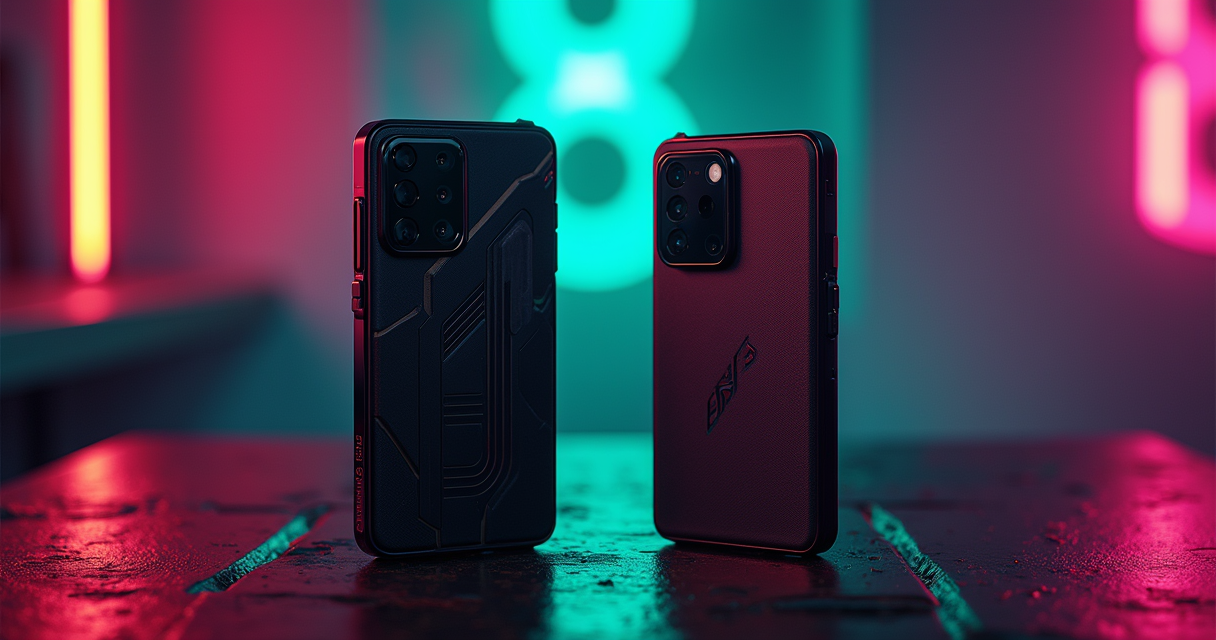
Retroid has done something quietly annoying in 2026: it has released two handhelds close enough in price, screen size, and silhouette that they look like the same product photographed under different lighting, then separated them on the two axes buyers find hardest to reconcile — raw performance and newness. The Retroid Pocket 6 is the heavier, faster, more expensive one running an older flagship chip. The Retroid Pocket G2 is the smaller, lighter, cheaper one running a newer gaming-focused chip and a newer version of Android. Neither dominates the other on paper, which is precisely why the comment sections are a mess.
This is the part of the buying decision where most coverage gives up and tells you to pick the one that 'fits your needs,' which is the editorial equivalent of a fortune cookie. We are going to do the unglamorous thing instead: read every spec line, weigh the chips against what they actually have to run, look at what the community has measured, and arrive at a recommendation with a number attached. The short version is that the $50 gap between these two is the most consequential $50 in the current Retroid catalog, and the answer depends almost entirely on whether you intend to push the hardware or merely carry it.
The Verdict, Up Front
We are not going to make you scroll 6,000 words for the recommendation. You can have it now, and the rest of the article exists to show our work.
The one-paragraph answer
If you emulate demanding systems — late-gen Switch titles, PC games, anything that benefits from sustained clocks and a 120Hz panel — buy the Retroid Pocket 6, and seriously consider the 12GB/256GB configuration. If you want the lightest, most pocketable AMOLED handheld that still clears GameCube comfortably, ships with the newest Android, and costs the least, buy the Retroid Pocket G2. The RP6 is the safer long-term bet; the G2 is the faster way to get a genuinely good handheld in your hands for less money. Everything past this point is the argument for why those two sentences are correct.
Who should stop reading here
If your library tops out at PS1, Dreamcast, PSP, and the 16-bit back catalog — which is to say, the libraries most people actually play — both devices are wild overkill and you will be happy with whichever is cheaper or smaller. In that scenario the G2 is the obvious pick, and you can close the tab. If you have ever uttered the phrase 'but does it run Tears of the Kingdom at a stable frame rate,' keep reading, because the chip difference is going to matter to you and it is going to matter a lot.
The single line that decides it
One published comparison frames it cleanly enough that we will borrow the framing: the RP6 is 'the safer long-term bet' for Switch and PC emulation, while the G2 is 'the faster way to get a solid handheld in your hands.' That sentence is doing more work than most full reviews. The RP6 trades newness for a proven flagship; the G2 trades headroom for size, price, and a fresher OS. Pick your tradeoff.
The Spec Sheet, Line by Line
Specs do not play games, but they do constrain what is possible, and these two devices diverge in interesting, non-obvious ways. The headline is that the G2 is newer on three counts — its SoC design, its Android version, and its Bluetooth revision — while the RP6 is stronger on nearly everything that costs money to build: the chip's track record, RAM ceiling, battery, refresh rate, and video output.
The full comparison table
| Spec | Retroid Pocket 6 | Retroid Pocket G2 |
|---|---|---|
| SoC | Qualcomm Snapdragon 8 Gen 2 | Qualcomm Snapdragon G2 Gen 2 |
| GPU | Adreno (8 Gen 2 class) | Adreno A22 |
| RAM / Storage | 8GB LPDDR5X / 128GB UFS 3.1 (opt. 12GB / 256GB) | 8GB LPDDR5X / 128GB UFS 3.1 |
| Display | 5.5" AMOLED, 1920x1080 | 5.5" AMOLED, 1920x1080 |
| Refresh rate | 120Hz | 60Hz |
| OS at launch | Android 13 | Android 15 |
| Battery | 6000mAh | 5000mAh |
| Wi-Fi | Wi-Fi 7 | Wi-Fi 6 |
| Bluetooth | 5.3 | 5.4 |
| Video out | USB-C 3.1, DisplayPort up to 4K@60 | Up to 1080p60 |
| Dimensions | 210.4 x 86.6 x 17.2 mm | 199.2 x 78.5 x 15.6 mm |
| Weight | 320g | 280g |
| Targeted ceiling | Demanding Switch / PC emulation | GameCube + moderate Switch |
| Price | $249 (8GB) / $279 (12GB) | $199 |
What the table actually tells you
Read the rows in clusters and the personalities emerge. The performance cluster — SoC maturity, RAM ceiling, 120Hz panel, 6000mAh battery, 4K DisplayPort output — all leans RP6. The portability and freshness cluster — 40g lighter, 11mm shorter, Android 15, Bluetooth 5.4 — all leans G2. There is exactly one row where they are genuinely identical and it happens to be the one most buyers fixate on first: the 5.5-inch 1920x1080 AMOLED panel. Same pixels, same diagonal, same panel technology. That is why, for display, the refresh-rate gap is the only difference that matters, and we will return to it.
The deceptive rows
Two rows reward a second look. First, the wireless split is a genuine oddity: the RP6 has the newer networking standard (Wi-Fi 7) while the G2 has the newer Bluetooth revision (5.4). Practically, Wi-Fi 7 helps with local streaming, large ROM transfers, and RetroArch netplay headroom, while Bluetooth 5.4 is a marginal improvement for controllers and earbuds most users will never perceive. Second, the Android version row looks like a clean G2 win — Android 15 versus Android 13 — but Retroid's history of pushing OS updates means this is a launch-day snapshot, not a permanent state. If you are buying for a five-year horizon, do not over-index on a two-version OS gap that firmware can erase.
Snapdragon 8 Gen 2 vs G2 Gen 2
This is the section that decides the article, because everything downstream — frame rates, thermals, which Switch games are playable — flows from the chip. And the chip comparison is counterintuitive: the RP6 runs the older part, and the older part is the better part for this job.
The flagship versus the gaming chip
The RP6's Snapdragon 8 Gen 2 is a former flagship smartphone SoC. It shipped in millions of premium phones, which means its driver stack, thermal behavior, and emulator compatibility are exhaustively understood. Emulator developers have profiled it. Quirks have been found and worked around. When a new build of an Android-based Switch emulator drops, the 8 Gen 2 is one of the reference targets people test against, because so many of them own one. That maturity is not a spec you can put in a table, but it is the single most valuable thing the RP6 brings to the fight.
The G2's Snapdragon G2 Gen 2 is, by contrast, a Qualcomm gaming-focused part — newer in design, paired with an Adreno A22 GPU, but far less widely deployed. One review described the resulting device as 'essentially a Retroid Pocket 5 on steroids,' which is a useful calibration: this is an incremental, meaningful upgrade over the previous Retroid generation, not a leap into flagship territory. Newer silicon with a thin deployment history is a more speculative platform. It may age beautifully. It may also surface driver edge cases that nobody has hit yet because there simply are not enough units in the wild.
Why 'newer' is not 'faster'
The temptation is to assume the G2's chip, being a more recent design, must be quicker. That is not how this works. A gaming-targeted mobile SoC is engineered around a different curve than a phone flagship — efficiency, sustained moderate clocks, and price, rather than peak burst performance. The 8 Gen 2 in the RP6 was built to win phone benchmarks, which means it has burst headroom the G2 Gen 2 does not chase. For emulation, which frequently demands short bursts of maximum single-core and GPU throughput to clear a frame-time deadline, that headroom is exactly what separates 'playable' from 'stutters in the cutscene.' The comparison videos are consistent on this point, and they are consistent for a reason.
The maturity premium
If you have read our Retroid Pocket 6 vs 5 vs Flip 2 breakdown, you already know the pattern: Retroid's higher-tier devices tend to win not because of a single dominant spec but because the platform underneath them is well-trodden. The RP6 inherits that. Buying the 8 Gen 2 in 2026 is buying a known quantity. Buying the G2 Gen 2 is buying a bet that the newer chip's smaller installed base will not bite you. For most retro libraries it will not. For the bleeding edge of Switch and PC emulation, it is a real consideration.
Display, Refresh, and 120Hz
Both panels are the same 5.5-inch 1920x1080 AMOLED. Same blacks, same contrast, same pixel density. So the display debate collapses into one variable, and it is a variable Retroid clearly chose to use as a segmentation lever: refresh rate.
What 120Hz actually buys you
The RP6 runs at 120Hz; the G2 is capped at 60Hz. The honest framing is that 120Hz does very little for the bulk of a retro library, because a Super Nintendo game runs at the frame rate it ran at in 1991 regardless of how fast your panel can refresh. Where 120Hz earns its keep is everywhere around the games: the Android UI scrolls more smoothly, touch input feels more immediate, the frontend menus in RetroArch and similar launchers respond with less perceived lag, and any native Android game or emulated title that can genuinely render above 60fps gets a smoother presentation. It is a quality-of-life upgrade more than a gameplay one — but on a device you will hold for hundreds of hours, quality-of-life is not nothing.
Where 60Hz is genuinely fine
For the G2's intended use, 60Hz is not a compromise so much as a match. The overwhelming majority of systems through the GameCube era target 60Hz or below. PAL libraries sit at 50Hz. A 60Hz AMOLED displays all of that natively and cleanly. If your honest play pattern is PS1, Dreamcast, PSP, DS, and the cartridge eras, you will never feel the missing 60Hz, and you will have saved money and weight to not have it. The 120Hz panel is a premium feature aimed at a premium use case; pretending otherwise to justify the RP6 is the kind of marketing logic this site exists to puncture.
Refresh rate and battery, together
There is a tax worth naming. Running a panel at 120Hz costs power. The RP6 offsets this with its larger 6000mAh battery, but the two specs are linked — part of why the RP6 needs the bigger cell is that it has a thirstier display and a thirstier chip to feed. The G2's 60Hz panel and 5000mAh battery are a coherent, efficiency-first package. This is the recurring theme of the whole comparison: the RP6 spends watts and grams to buy performance; the G2 conserves both to buy portability.
Emulation Performance by System
Specs are abstract until you map them to systems. Here is how the two devices stack up across the emulation tiers that actually determine your experience, from trivially easy to genuinely demanding.
The easy tier: everything through Dreamcast and PSP
NES, SNES, Genesis, Game Boy through GBA, PS1, Sega Saturn, Dreamcast, PSP, Nintendo DS — both devices run all of it without breaking a sweat. There is no meaningful difference here. Either chip clears these systems at full speed with overhead to spare, often with room for upscaling and shaders. If this is your entire library, the performance comparison is over before it starts, and you should be reading the pricing and portability sections instead. For getting that library running cleanly on either device, our RetroArch cores install walkthrough covers the setup that applies identically to both.
The middle tier: GameCube, Wii, 3DS
This is where the G2 lives at the top of its comfort zone. Review commentary frames the G2 as solid through GameCube, and that tracks — the Adreno A22 and the G2 Gen 2 have enough to deliver a good GameCube experience across the bulk of that catalog. The RP6 handles the same tier with more headroom, which translates to higher internal resolutions, more consistent frame pacing in the heavier titles, and fewer per-game tweaks to keep things smooth. Both are viable here. The RP6 is simply more relaxed about it.
The demanding tier: Switch and PC
This is the tier the whole argument is built on. The G2 is credited with moderate Switch emulation — meaning lighter and mid-weight titles are achievable, but the heaviest games will test it. The RP6 is 'repeatedly framed as better suited to more demanding emulation workloads,' and that framing is the entire reason its premium exists. For Switch and PC emulation specifically, the RP6 is the device that buys you headroom for the next two years of increasingly demanding software, not just the games that exist today. If you can map your wishlist to this tier, the $50 is not a luxury — it is the point.
Benchmarks and Community Numbers
We are deliberately careful here, because the worst thing a comparison can do is launder invented numbers into authority. So a disclaimer with teeth: the specific frame-rate figures floating around forums for brand-new hardware are noisy, build-dependent, and frequently unreproducible. Treat all of them as directional, not gospel.
What the community sources agree on
Across YouTube comparison reviews, comparison pages such as the r/retroid community, and spec-aggregation sites, three things are consistent. First, the RP6 is described as the stronger choice for demanding Android gaming and emulation in essentially every head-to-head. Second, the G2 is positioned as an incremental upgrade over the Retroid Pocket 5 — the 'on steroids' framing — rather than a new performance class. Third, for the systems most people play, neither device is the bottleneck; the human's ROM organization is. These are not contradictory findings. They are the same finding from three angles.
Reading benchmark threads without getting burned
If you go source-diving — and you should, on a purchase this size — apply three filters. Note the emulator build number, because a figure from last month's nightly may not survive this month's. Note whether the poster disclosed thermal conditions, since a number from a cold device in a 10-minute clip says nothing about hour three. And weight reproducibility: a result confirmed by three independent posters across different units is worth more than one spectacular screenshot. GitHub issue trackers for the major emulators are often a more honest signal than highlight reels, because that is where the bugs and per-game caveats get logged in plain language.
Why we are not quoting a single FPS figure
You will notice this section contains no '47fps in Game X' claims. That is intentional and it is editorial policy. The hardware is new, the emulators are moving targets, and the community numbers in the source material are framed qualitatively — RP6 stronger, G2 incremental — rather than as audited benchmarks. We would rather hand you a correct shape than a precise-sounding fiction. If you want hard numbers tied to a specific configuration, our standalone RP6 review goes deeper on that single device than a comparison responsibly can.
Battery, Thermals, and Sustained Play
Capacity is the headline; behavior over time is the real story. A handheld lives or dies on whether it can hold its performance through hour three, not whether it benchmarks well in minute one.
The capacity gap and what it funds
The RP6 carries a 6000mAh battery against the G2's 5000mAh — a 20% capacity advantage. But that extra 1000mAh is not pure runtime surplus; some of it is consumed feeding a 120Hz panel and a burstier chip. The net effect is more headroom for sustained high-performance play rather than dramatically longer runtime at a fixed workload. Push both devices at GameCube, and the RP6's larger reserve buys you more uninterrupted session before the wall. Run both at SNES, and the G2's efficiency-first design narrows the gap considerably.
Efficiency per watt versus brute capacity
It is fair to credit the G2 with being more efficient per watt — a smaller, lighter, 60Hz, efficiency-targeted gaming chip is built for exactly that. So the matchup is brute capacity (RP6) against efficiency (G2). For light-to-medium libraries, the G2's efficiency can produce surprisingly competitive longevity from less battery. For heavy libraries, the RP6's raw capacity is the safer hedge, because efficiency gains shrink as the workload climbs and the bigger cell simply has more to give.
Thermals and the 320g question
The RP6 is 320g; the G2 is 280g. That 40g, plus the RP6's larger chassis (210.4 x 86.6 x 17.2 mm versus the G2's 199.2 x 78.5 x 15.6 mm), is partly thermal mass and partly battery. A larger, heavier body generally dissipates heat more comfortably under sustained load, which matters when you are asking a chip to hold high clocks for an hour. The cost is exactly what the numbers say: the RP6 is bigger and heavier in the hand and the pocket. The G2's smaller envelope is genuinely more pocketable — the kind of difference you feel on a commute, not in a spec table. Whether 40g and 11mm justify giving up thermal headroom is a personal call, and it is one of the cleanest expressions of this whole device's premium-versus-efficient split.
Pricing and Availability
The prices are close enough that they reframe the entire decision. This is not a $200-versus-$600 fight where the budget answers itself. It is an $80 spread across three configurations, which means value, not affordability, is the operative question.
The pricing table
| Model | Config | Price | Best for |
|---|---|---|---|
| Retroid Pocket G2 | 8GB / 128GB | ~$199 | Portability, value, newest Android |
| Retroid Pocket 6 | 8GB / 128GB | ~$249 | Performance on a budget |
| Retroid Pocket 6 | 12GB / 256GB | ~$279 | Heavy emulation, large libraries |
The $50 that matters most
The jump from the $199 G2 to the $249 RP6 8GB is the decisive $50 in this comparison. For it you get the matured 8 Gen 2 chip, the 120Hz panel, the 6000mAh battery, Wi-Fi 7, and 4K DisplayPort output. That is a remarkable amount of hardware delta for fifty dollars, and it is why emulation-heavy buyers find the premium easy to justify. The further $30 to the 12GB/256GB RP6 is a narrower proposition: it matters if you run memory-hungry emulators, keep a large native Android game library, or simply want storage headroom without juggling SD cards. For most buyers the 8GB RP6 is the sweet spot; the 12GB exists for the people who already know they need it.
Availability and the official channel
Both devices sell through Retroid's official store, and as with every Retroid launch, early availability is the variable that bites. Initial batches sell through, restocks arrive on Retroid's own cadence, and third-party listings at inflated prices appear in the gaps. If you are buying near launch, buy direct and buy the configuration you actually want rather than settling for whatever is in stock — the configurations are different enough that 'close enough' is a real downgrade. For the timeline context on the RP6's rollout specifically, our RP6 launch coverage tracks how that played out.
Five Buyers, Five Verdicts
Abstract recommendations are useless; matched ones are not. Here are five concrete buyers and the device each should actually purchase, with the reasoning attached.
The commuter and the completionist
The pocket commuter. You play on trains and in waiting rooms, your library is 16-bit through PSP, and the device lives in a jacket pocket. Buy the G2. The 40g and 11mm you save are felt daily, the 60Hz panel is a perfect match for your library, the 5000mAh battery clears your sessions, and you pocket the $50. The RP6's strengths are strengths you would never invoke.
The Switch completionist. You want to work through a modern Switch library on the go, including the heavy hitters. Buy the RP6, 12GB if budget allows. This is the use case the RP6's entire premium was designed around — the matured chip, the headroom, the larger battery for long sessions, and the RAM ceiling for the most demanding emulator builds. The G2 will frustrate you at exactly the games you care most about.
The TV gamer and the tinkerer
The living-room hybrid. You want a handheld that doubles as a docked console on the TV. Buy the RP6. The USB-C 3.1 DisplayPort output up to 4K@60 is a genuine differentiator against the G2's 1080p60 ceiling, and on a 4K television that gap is visible. The RP6 is the only one of the two that meaningfully scales to a big screen.
The relentless tinkerer. You will reflash, dual-boot, sideload, and generally treat the device as a project. Either works, slight edge G2 for the newer Android 15 base, slight edge RP6 for the proven chip. If your tinkering extends to alternative OS images, our Batocera flashing guide applies to the broader Retroid ecosystem and is worth reading before you commit. The tinkerer is the one buyer for whom the OS-version gap is a real, present advantage rather than a launch-day footnote.
The value buyer and the long-horizon buyer
The value-maximizer. You want the most handheld per dollar and you are honest that your library is not exotic. Buy the G2. At $199 with an AMOLED 1080p panel and GameCube-class performance, it is the strongest value in this pair, and spending up to the RP6 for capability you will not use is the opposite of value. The long-horizon buyer. You keep devices for years and want the one that ages best. Buy the RP6. The matured chip, the larger battery, the higher RAM ceiling, and Wi-Fi 7 all hedge against the next few years of heavier software. It is, in the borrowed phrase, the safer long-term bet.
What the Reviewers Actually Said
We are going to attribute carefully here, because the source material is community reviews and comparison pages rather than wire-service journalism, and pretending otherwise would be dishonest. These are the framings the available coverage actually used, and they are worth weighing precisely because they converge.
The comparison-page consensus
Comparison resources such as Retro Spec Game and Retro Catalog — the most usable named sources in the current material — line up the spec sheets and reach the same split this article does. The cleanest articulation came from a published comparison that called the RP6 'the safer long-term bet' for Switch and PC emulation while describing the G2 as 'the faster way to get a solid handheld in your hands.' That single sentence is the thesis of the entire matchup: maturity versus immediacy, headroom versus value.
The 'Pocket 5 on steroids' framing
A separate review pinned the G2's identity precisely by noting that its Snapdragon G2 Gen 2 is paired with an Adreno A22 GPU and describing the result as 'essentially a Retroid Pocket 5 on steroids.' That framing does double duty. It sets expectations — this is a meaningful, incremental upgrade over the previous generation, not a new performance class — and it implicitly positions the RP6 above it. If the G2 is a Pocket 5 on steroids, the RP6 is the device you buy when steroids are not enough.
The YouTube consensus and the honest caveat
The YouTube comparison reviews — the most numerous source type available — consistently describe the RP6 as the stronger choice for demanding Android gaming and emulation, and consistently note the G2's wins on size, weight, price, and Android version. The caveat we owe you: the source material does not include published coverage from mainstream outlets like Engadget or Ars Technica on these specific devices as of this writing, so we have anchored every factual claim here to the community and comparison sources that do exist rather than borrowing authority from outlets that have not weighed in. When and if mainstream coverage lands, expect it to confirm the shape rather than overturn it — the spec gaps are not ambiguous.
Migrating Between the Two
Plenty of buyers will own one and move to the other — G2 owners trading up to an RP6 for the headroom, or RP6 owners downsizing to a G2 for portability. Both are Retroid Android handhelds, which makes migration far less painful than crossing ecosystems, but there are concrete steps worth following.
Migrating from the G2 to the RP6
The upgrade path is the common one, so here is the ordered process:
- On the G2, sync your save files and save states to cloud storage or pull them to a PC over USB. RetroArch states live in the configured saves and states directories — copy both.
- Export your RetroArch configuration and any per-core overrides so you do not rebuild them by hand on the new device.
- Note your frontend setup — playlists, scraped artwork, custom themes — and back up the frontend's data folder.
- On the RP6, install your emulators and frontend fresh rather than restoring a full G2 system image; the chip and Android version differ, so a clean install avoids inherited config quirks.
- Restore saves, states, and per-core overrides into the matching directories on the RP6.
- Re-pair Bluetooth controllers and reconnect Wi-Fi — note the RP6 is Wi-Fi 7, so reconnect to your fastest band.
- Re-scrape or copy artwork, then spot-check a save state in each major emulator before you trust the migration.
Budget an evening. The save and state files are the irreplaceable part; everything else is reconstructable.
Migrating from the RP6 to the G2
Downsizing is the same process in reverse, with two cautions. First, do not expect every per-game setting that ran on the 8 Gen 2 to behave identically on the G2 Gen 2 — the demanding-tier titles especially may need lower internal resolutions or frame-skip adjustments the RP6 never required. Second, the G2 ships Android 15 against the RP6's Android 13, so a handful of apps may behave differently; install them fresh rather than restoring RP6 builds. Saves and states transfer cleanly; aggressive performance overrides do not.
The clean-install principle
The single most useful migration rule across both directions: migrate your data, not your system. Save files, save states, ROMs, and artwork are portable and should move with you. Full system images, performance overrides tuned for a specific chip, and OS-version-specific app builds are not portable and will cause more problems than they solve. Move the irreplaceable, rebuild the reconstructable. It takes an extra hour and saves you a week of chasing phantom bugs.
The Final Call
We opened with the verdict and we will close by hardening it, because a comparison that will not commit is just a longer spec sheet.
The pros and cons, side by side
| Retroid Pocket 6 | Retroid Pocket G2 | |
|---|---|---|
| Pros | Matured Snapdragon 8 Gen 2; 120Hz; 6000mAh; up to 12GB/256GB; 4K@60 DisplayPort; Wi-Fi 7; stronger for Switch/PC | $199; 40g lighter, 11mm shorter; Android 15; Bluetooth 5.4; efficient per watt; GameCube-class is plenty for most |
| Cons | $50-$80 more; 320g and larger; ships Android 13; thirstier panel and chip | 60Hz only; 5000mAh; newer, less-proven chip; 1080p60 video-out ceiling; moderate Switch only |
The data-backed recommendation
For demanding emulation — Switch, PC, and anything you expect to get heavier over the next two years — the Retroid Pocket 6 is the recommendation, and it is not close. The matured 8 Gen 2, the 120Hz panel, the 6000mAh battery, the RAM ceiling, and the 4K output are a coherent premium-performance package, and at a $50 step up from the G2 the premium is genuinely small relative to what it buys. Step up to the 12GB/256GB at $279 only if you already know your library demands it. For portability, value, and the newest Android in the smallest, lightest body, the Retroid Pocket G2 at $199 is the right call, and for the libraries most people actually play it gives up nothing you will miss.
The one-sentence test
Here is how to decide in ten seconds. Say out loud the most demanding system you genuinely intend to emulate. If the answer is GameCube or below, buy the G2 and pocket the difference. If the answer is Switch or PC, buy the RP6 and do not look back. The $50 between them is the price of headroom, and headroom is only worth paying for if you are going to use it. Everything else — the AMOLED panel, the build quality, the Retroid ecosystem — is shared. The chip and the refresh rate are the fork in the road, and now you know which branch is yours.
Questions the search bar asks me
- Is the Retroid Pocket 6 faster than the G2?
- For demanding workloads, yes. The RP6's Snapdragon 8 Gen 2 is a battle-tested flagship part, while the G2 runs the newer but less-deployed Snapdragon G2 Gen 2 with an Adreno A22 GPU. Reviewers consistently frame the RP6 as the stronger choice for Switch and PC emulation.
- What is the price difference between the RP6 and the G2?
- Roughly $50. The G2 lands around $199, the RP6 8GB/128GB model around $249, and the RP6 12GB/256GB configuration around $279. The spread is small enough that emulation-heavy buyers usually justify the premium.
- Does the G2 have a 120Hz screen?
- No. Both devices use a 5.5-inch 1920x1080 AMOLED panel, but the RP6 runs at 120Hz while the G2 is capped at 60Hz. For fast menus, touch response, and high-frame-rate games, the RP6 has a concrete advantage.
- Which one ships with the newer Android?
- The G2 ships with Android 15; the RP6 ships with Android 13. The G2 is the newer software package at launch, which can affect app compatibility and update expectations, though Retroid's update cadence has historically closed those gaps.
- Can the G2 handle GameCube and Switch emulation?
- Yes, within limits. Review commentary frames the G2 as comfortable through GameCube and capable of moderate Switch emulation, described as 'essentially a Retroid Pocket 5 on steroids.' The RP6 is repeatedly framed as the safer long-term bet for heavier Switch and PC loads.

Casey writes about speedrunning, tool-assisted runs, and the strange engineering of going fast in old games. Every post under this byline is reviewed pre-publish by Sam P., Editor & Operator — corrections to info@instalinkoteam.com. Published 2026-08-29 · Last updated 2026-08-29. Full bios on the author page.