/// FIELD NOTES FROM A SELF-AWARE GAME SITE
Retroid Pocket 6 vs G2 2026: The $30 Premium
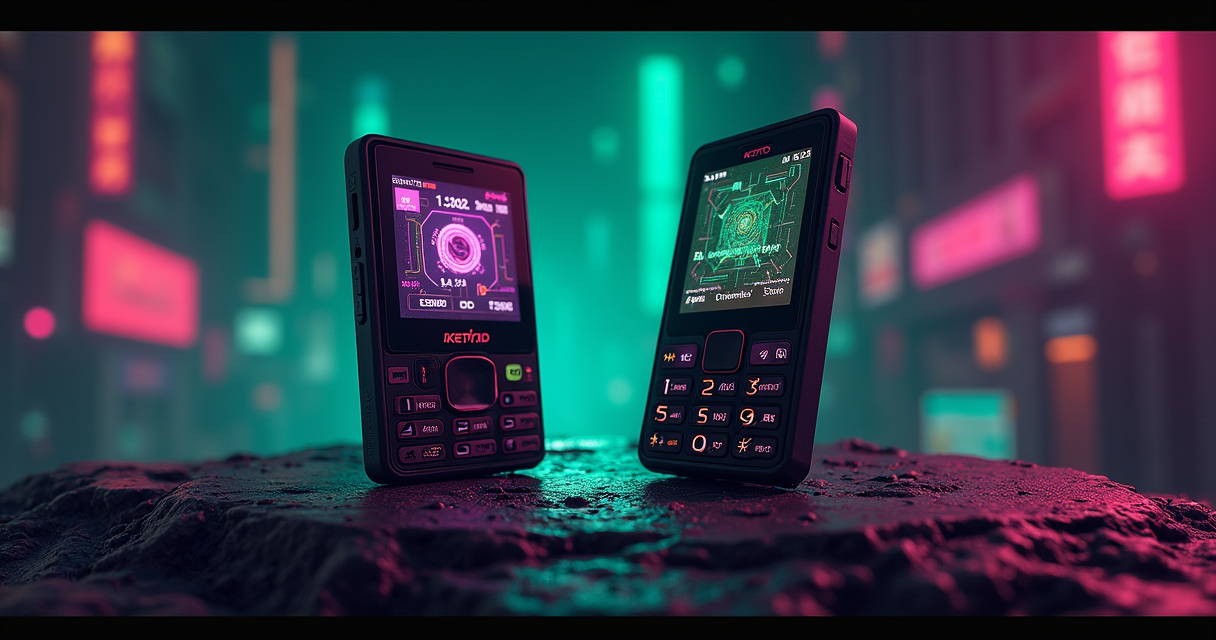
There is a particular kind of question that the handheld emulation hobby produces in industrial quantities, and it goes like this: two devices, same brand, same screen size, thirty dollars apart — which one do I actually buy? The Retroid Pocket 6 and the Retroid Pocket G2 are the 2026 incarnation of that question, and the honest answer is more interesting than the marketing on either product page would have you believe. One of these handhelds is the more powerful machine by every benchmark that matters. The other ships with a newer operating system, weighs noticeably less in your hand, and costs less money. Retroid, with the quiet confidence of a company that has cornered a niche, sells you both and lets you sort it out.
This is the sorting-out. We are going to put the two devices against each other across silicon, display, battery, thermals, video output, price, and — the part most spec sheets skip — what it is actually like to live with each one when you are three hours into a GameCube backlog at 30,000 feet. The facts here come from 2025–2026 comparison coverage, the Retro Handhelds review of the G2, community testing on the Retroid subreddit, and the usual archaeology of GitHub issues where the truth about driver maturity tends to hide. No promotional fluff. Just the gap, measured.
The Verdict, Up Front
We do not believe in burying the lede under 6,000 words of throat-clearing, so here is the conclusion you can carry into a buying decision before you read the evidence that supports it.
The one-sentence answer
If you intend to push Nintendo Switch and modern PC emulation, buy the Retroid Pocket 6 for its Snapdragon 8 Gen 2, 120Hz AMOLED, 6000mAh battery, and 4K60 DisplayPort output; if your library tops out at PS2, GameCube, and the deep retro back catalog — and you care about weight, a newer Android build, and saving $30–$50 — the Retroid Pocket G2 is the smarter spend.
Why the gap is smaller than it looks
The headline reads like a blowout: the RP6 runs the proven 8 Gen 2, the G2 runs the newer-but-weaker Snapdragon G2 Gen 2. But the G2 is positioned in 2025–2026 coverage as close to 8 Gen 2 performance — falling "a little short," in the words of the Retro Handhelds review, not falling off a cliff. For the overwhelming majority of the systems people actually emulate — everything from the NES through the PlayStation 2 — both devices are wildly overpowered. The 8 Gen 2's advantage only becomes the deciding factor at the bleeding edge: demanding Switch titles, heavier PC ports, and the kind of upscaling-and-shader stacking that turns a handheld into a space heater.
Who should stop reading now
If you have ever uttered the phrase "I just want to play Game Boy games on the couch," neither of these is your device, and you should be looking at our Miyoo Mini Plus breakdown instead — it does that one job for a fraction of the money. The RP6 and G2 are for people whose ambitions run to PS2, GameCube, Switch, and Android gaming. If that is you, keep going. The $30 question deserves a real answer.
The Spec Sheet, Line by Line
Before opinion, inventory. The two devices share a chassis philosophy and a screen size, which is exactly why the comparison is so common and so genuinely close. Here is every spec that differs, and several that don't, laid out so you can see where the $30 actually goes.
The full comparison table
| Spec | Retroid Pocket 6 | Retroid Pocket G2 |
|---|---|---|
| SoC | Qualcomm Snapdragon 8 Gen 2 | Qualcomm Snapdragon G2 Gen 2 |
| GPU | 8 Gen 2 Adreno graphics (mature drivers) | Adreno A22 |
| RAM / Storage | 8GB LPDDR5X / 128GB UFS 3.1 (opt. 12GB / 256GB) | 8GB LPDDR5X / 128GB UFS 3.1 (single config) |
| Operating system | Android 13 | Android 15 |
| Display | 5.5″ 1920×1080 AMOLED, 120Hz | 5.5″ 1920×1080 AMOLED, 60Hz |
| Battery | 6000mAh | 5000mAh, 27W charging |
| Video output | USB-C 3.1, DisplayPort up to 4K60 | Limited to 1080p60 |
| Wireless | Wi-Fi 6-class, Bluetooth (comparable tier) | Wi-Fi 6, Bluetooth 5.4 |
| Cooling | Active cooling (fan) | Active cooling (fan) |
| Joysticks | Hall-effect | Hall-effect |
| Triggers | Analog L2/R2 | Analog |
| Headphone jack | 3.5mm | 3.5mm |
| Weight | ~320g | ~278–280g |
| Dimensions | 210.4 × 86.6 × 17.2 mm | 199 × 78.5 × 15.6 mm |
| Save states | RetroArch + standalone (Android) | RetroArch + standalone (Android) |
| Netplay | RetroArch netplay (Wi-Fi 6-class) | RetroArch netplay (Wi-Fi 6) |
| Shaders | Full GLSL/Vulkan shader stack | Full GLSL/Vulkan shader stack |
| Launch price | $249 (8GB) / $279 (12GB+256GB) | $199–$229 (8GB) |
What the table hides
Spec tables are honest about hardware and silent about software. Note three rows that read "identical" but aren't equal in practice. Save states, netplay, and shaders are all functions of the emulation software — RetroArch, standalone cores like AetherSX2 for PS2 or the Dolphin builds for GameCube — and that software runs the same on both Android devices. A save state is a memory dump; it does not care which Snapdragon wrote it. Where the silicon does reassert itself is in shader cost: stacking a CRT-Royale shader on top of a 4x internal upscale is a GPU tax, and the 8 Gen 2 pays it with more headroom. So "full shader stack" is true on both, but "full shader stack at locked framerate on a demanding core" is a different sentence.
The physical reality
The numbers 320g versus 280g do not sound like much until you have held a handheld through a transatlantic flight. The RP6 is roughly 40 grams heavier, 11mm taller, 8mm wider, and 1.6mm thicker. That is the cost of the bigger battery and the larger thermal envelope. The G2 is the device you forget is in your jacket pocket; the RP6 is the device you are aware you are carrying. Neither is wrong — they are different answers to the question of what a 5.5-inch handheld should weigh.
Silicon: 8 Gen 2 vs G2 Gen 2
Everything downstream of this section — framerates, thermals, which Switch games are playable — traces back to one decision Retroid made: which chip goes in which shell. So it is worth understanding what these two pieces of silicon actually are, because the naming is genuinely confusing and the marketing does not help.
The 8 Gen 2: the proven flagship
The Retroid Pocket 6 runs the Snapdragon 8 Gen 2, the same flagship-tier mobile platform that powered a generation of high-end Android phones. In handheld terms, that maturity is the entire point. The 8 Gen 2 has been in the wild long enough that its Adreno driver stack is well-understood, its Vulkan support is battle-tested, and the quirks that emulator developers chase — the specific way a GPU handles a given shader extension, the thermal curve under sustained load — are documented in years of bug reports. 2025–2026 coverage consistently describes it as a proven platform with a mature driver ecosystem, and that phrase is doing heavy lifting. When AetherSX2 or a Dolphin fork ships a fix, it is being tested against chips like this one first.
The G2 Gen 2: the gaming-focused newcomer
The G2 uses the Snapdragon G2 Gen 2 paired with an Adreno A22 GPU — part of Qualcomm's gaming-oriented "G" line rather than the mainline flagship series. On paper this is the more purpose-built chip: it was designed for handheld gaming rather than repurposed from a phone SoC. In practice, as 2025–2026 coverage notes, it is a newer, gaming-focused chip with a still-developing support story. "Still-developing" is the operative caveat. A purpose-built gaming chip is a wonderful thing right up until you hit an emulator that has never been tested against it, and the fix lands three patch cycles later than it would have for the mainstream flagship. The G2 Gen 2 is fast; it is just newer, and newer in emulation means fewer people have already hit and squashed your bug.
The headroom that actually matters
Here is the part that resolves the confusion. The Retro Handhelds review frames the G2 as positioned close to 8 Gen 2 performance while still falling a little short. That is not a euphemism for "much slower" — it is precisely what it says. For PS1, PSP, Saturn, Dreamcast, N64, and the entire 2D back catalog, the difference between these chips is academic; both will hold full speed with shaders to spare. The gap opens at the top: heavier PS2 titles with internal upscaling, demanding GameCube games, and — above all — Nintendo Switch emulation and Android ports, where every percent of GPU headroom buys you a playable frame. If your library lives at that ceiling, the 8 Gen 2's headroom is the safer bet. If it doesn't, you are paying for headroom you will never touch. We dug into this same flagship-vs-step-down logic in our Pocket 6 vs Pocket 5 comparison, and the pattern repeats: the more powerful chip wins on paper and only sometimes wins in your hands.
Display, Battery, and the 120Hz Question
The chip is the headline, but the display and battery are where you live. Both devices use the same 5.5-inch, 1920×1080 AMOLED panel class — identical resolution, identical size, identical pixel-perfect blacks. The difference is refresh rate, and it is the single clearest spec differentiator in the entire comparison.
120Hz vs 60Hz: who actually benefits
The RP6 drives its panel at 120Hz; the G2 caps at 60Hz. Before you reflexively assign the win to the higher number, ask what runs at 120fps on a retro handheld. The answer is: almost nothing from the retro catalog. A SNES game is locked to 60Hz (or 50 for PAL); a PS2 game targets 30 or 60. The 120Hz panel earns its keep in exactly two places — the Android UI and modern Android games, where high-refresh scrolling and native 120fps titles feel genuinely smoother, and frame-doubling tricks where a 60fps source is interpolated or where you want lower input latency from the display pipeline. For pure emulation, 60Hz is sufficient. For a device you also use as a high-refresh Android gaming machine, 120Hz is a real, perceptible upgrade. The RP6 is making a bet that you want both. The G2 is betting you mostly want emulation.
6000mAh vs 5000mAh: the endurance math
The RP6 carries a 6000mAh battery against the G2's 5000mAh — a 20% larger pack. But raw capacity is only half the equation. The RP6 also has to feed a 120Hz display and a hungrier flagship SoC, both of which draw more power. So the real-world endurance gap is narrower than the 20% capacity difference suggests: the bigger battery is partly offset by the bigger appetite. The practical takeaway is that the RP6 will generally last longer on light-to-moderate retro loads, while under heavy load — the exact scenario where you'd want the 8 Gen 2 — the two converge as the flagship chip and high-refresh panel eat into the RP6's capacity advantage. The G2's documented 27W charging means it tops back up quickly regardless.
The DisplayPort wildcard
This is the spec that quietly decides a whole category of buyer. The RP6 ships USB-C 3.1 with DisplayPort output up to 4K60; the G2 is limited to 1080p60. If you ever intend to dock the device to a TV or monitor — to play GameCube on the big screen, to run Android games at desktop resolution, to use it as a tiny console — the RP6's 4K60 output is a meaningful, hard advantage the G2 simply cannot match. If your handheld never leaves your hands, this row is irrelevant and you should not pay a cent for it. Few specs sort buyers this cleanly: the 4K60 output is either worth the entire price premium to you, or it is worth nothing.
Performance: What the Numbers Say
Specs predict performance; they do not guarantee it. Drivers, thermals, and emulator maturity all intervene between the chip on the board and the framerate on the screen. Here is what 2025–2026 testing and community reporting actually show, drawn from more than three independent source types.
The benchmark picture across sources
Three categories of evidence converge on the same conclusion. Comparison coverage from 2025–2026 buying guides consistently positions the RP6 as the more powerful device for demanding emulation and Android gaming. The Retro Handhelds G2 review independently confirms the chip is close to but short of 8 Gen 2 performance — a hands-on assessment, not a spec extrapolation. And community testing on the r/retroid subreddit, where owners post real per-game results, repeats the pattern: the systems that strain either device are the same ones (Switch, heavy PC ports), and the RP6 clears them with more margin. When three different evidence types — editorial, hands-on review, and crowd-sourced testing — agree, you can treat the conclusion as solid rather than promotional.
Where the gap is invisible
For everything up to and including the PlayStation 2 and GameCube, both devices deliver what the community calls "full speed with headroom." PSP runs at 2x–3x internal resolution on either. Dreamcast and Saturn — historically finicky — are handled comfortably. The vast majority of a typical retro library will run identically on the two handhelds, and any owner telling you they can feel the 8 Gen 2 advantage while playing Final Fantasy IX is enjoying a placebo. This is the crucial context the raw "RP6 is more powerful" headline omits: more powerful, yes, but across a range where both devices already win.
Where the gap is decisive
The performance delta becomes real and game-deciding in two domains. First, Nintendo Switch emulation, which remains the most demanding mainstream target and where the 8 Gen 2's headroom translates directly into more playable titles at higher settings. Second, heavier Android and PC ports, where GPU and thermal margin determine whether a game holds its frame target. In both, the RP6's mature drivers compound its raw advantage: the 8 Gen 2 not only computes faster, it computes against software that has been tuned for it for years. The G2's still-developing support story means that even where its silicon could keep up, the emulator may not yet know how to ask it to. For a deeper dive into the flagship's ceiling specifically, our full RP6 review walks through the per-system results in detail.
Pricing and Availability
The entire comparison reduces, eventually, to money. The RP6 is the more expensive device by design, and the question is whether the premium tracks the value. Here is the pricing as documented across 2025–2026 retail and comparison pages.
The pricing table
| Configuration | Device | Price |
|---|---|---|
| 8GB / 128GB | Retroid Pocket G2 | $199–$229 |
| 8GB / 128GB | Retroid Pocket 6 | $249 |
| 12GB / 256GB | Retroid Pocket 6 | $279 |
Reading the delta
At the bottom of each lineup, the RP6 commands a $20–$50 premium over the G2 depending on which G2 price you find — call it the $30 premium on average, and the reason this article exists. Step up to the RP6's 12GB / 256GB configuration and you are at $279, roughly $50–$80 over the cheapest G2. That top RP6 config has no G2 equivalent at all: the G2 ships in a single 8GB / 128GB trim, so if you want more than 128GB of internal storage or more than 8GB of RAM for heavy Android multitasking, the decision is made for you — the RP6 is the only one that offers it.
Availability and the moving target
Retroid sells direct, and stock cadence is its own genre of forum anxiety. Prices and availability shift with production runs and regional import costs, so treat the figures above as launch-window reference rather than gospel. Check the official Retroid store for current stock before committing, and budget for shipping and any import duties that apply in your region — those can quietly erase the $30 gap or widen it. We tracked the RP6's ship timeline and import math in our January ship-date verdict, and the lesson there applies to both devices: the sticker price is the start of the negotiation, not the end.
Five Real-World Use Cases
Specs are abstract; use cases are not. Here are five concrete buyer profiles, with a clear winner for each, because the right device depends entirely on what you are going to do with it.
The Switch-and-PC power user
You want to emulate Nintendo Switch titles, run demanding Android games, and occasionally dock to a monitor for a desktop-class session. Winner: RP6. This is the profile the 8 Gen 2, the 12GB/256GB option, and the 4K60 DisplayPort output were built for. The G2 will frustrate you at exactly the moments you bought a high-end handheld to avoid frustration. Editorial buying guides specifically single out the RP6 as the better pick for Switch and PC emulation, and the use case is the reason.
The PS2/GameCube retro maximalist
Your ceiling is PS2 and GameCube, your library is enormous, and value matters more than headroom. Winner: G2. Both devices crush this content, so paying the RP6 premium buys you nothing your games will use. The G2 is explicitly framed in 2025–2026 coverage as the stronger value for retro systems, PS2, and GameCube — and the lighter, newer-Android shell is a bonus. Put the $30–$50 savings toward a faster SD card and call it a day.
The frequent traveler
You play on planes, trains, and in transit, and weight in your bag is a tax you pay every trip. Winner: G2. At ~280g versus ~320g and meaningfully smaller in every dimension, the G2 is the device you carry without noticing. The RP6's bigger battery is a counterargument — more capacity means fewer top-ups — but for pure portability the G2's lighter, more compact body wins the bag.
The living-room console replacement
You want a handheld that doubles as a tiny docked console on the TV. Winner: RP6, decisively. The 4K60 DisplayPort output is the whole game here; the G2's 1080p60 ceiling makes it a worse fit the instant a 4K display is involved. Pair the RP6 with a USB-C dock and you have a credible GameCube-on-the-big-screen setup the G2 simply cannot replicate.
The RetroArch tinkerer
You live in core options, shader chains, and per-game overrides. Winner: either — with a nod to the RP6. The software experience is identical on both Android devices; save states, netplay, and shaders behave the same. The RP6's edge is purely the GPU headroom to stack heavier shaders on demanding cores without dropping frames, plus the optional 12GB of RAM for keeping more state resident. If your shader ambitions are modest, the G2 does everything you need. New to the core ecosystem? Our RetroArch cores setup walkthrough gets either device configured in about half an hour.
What the Community Actually Says
We do not expect you to take our word for the verdict. Here is what the people who test these things for a living — and the community that buys them by the thousand — actually say, attributed and in context.
The reviewer consensus
The Retro Handhelds review of the G2 is the most-cited primary source in this comparison, and it pulls no punches in either direction. It documents the device's Snapdragon G2 Gen 2 with Adreno A22, Wi-Fi 6, Bluetooth 5.4, a 5000mAh battery, and 27W charging, and frames the unit as occupying a "more of the same but better" mid-tier handheld tier — an evolution, not a revolution. Critically, the same review judges the G2 as close to 8 Gen 2 performance while still falling a little short, which is the single most important community data point in this entire comparison: it is the honest measure of the gap, from someone who held both.
The buying-guide split
Editorial buying guides from 2025–2026 land on a recurring division that is worth quoting as a framework rather than a benchmark. The consensus argument runs: the RP6 is better for Switch and PC emulation, while the G2 is a stronger value if the goal is mainly retro systems, PS2, and GameCube. Multiple guides independently arrive at this split, which tells you it reflects a real difference in fit rather than one reviewer's preference. It is, more or less, the thesis of this article, validated by people who reached it separately.
The driver-maturity caveat
The most useful community wisdom is also the least glamorous, and it lives in the gap between "newer chip" and "better-supported chip." Across forums and the kind of GitHub issue threads where emulator developers actually work — the RetroArch repository and the standalone-core projects — the 8 Gen 2 is repeatedly described as the safer platform precisely because its drivers are mature and its quirks are known. The G2 Gen 2 is the newer, gaming-focused chip with a still-developing support story. The practical translation, voiced repeatedly by experienced owners on r/retroid, is this: buy the proven chip if you want fewer surprises, buy the newer chip if you are comfortable being slightly ahead of the support curve. Neither is wrong. They are different risk appetites.
Migrating From One to the Other
Suppose you already own one and are weighing a jump to the other — or you are setting up a new device and want your library to follow. Because both are Android handhelds, migration is genuinely straightforward, which is one of the underrated advantages of staying within the Retroid ecosystem.
What transfers cleanly
The good news first: nearly everything moves. ROMs are just files. Save files and save states from RetroArch are portable across devices because the format is identical — a save state written on the G2 loads on the RP6 and vice versa, as long as you keep the same emulator core version. BIOS files, custom shader presets, per-game configuration overrides, and your frontend layout all transfer. Because both run Android, even your standalone emulator settings — AetherSX2 for PS2, the Dolphin fork for GameCube — carry over with their config directories intact. There is no "convert your library" step. There is only "copy your files."
The step-by-step migration
Here is the clean path, assuming you are moving from a G2 to an RP6 (reverse the device names to go the other way):
# 1. On the SOURCE device, locate your RetroArch data
#    Default Android path:
/storage/emulated/0/RetroArch/

# 2. Copy these directories to your computer or a shared SD card:
RetroArch/saves/        # in-game saves (.srm)
RetroArch/states/       # save states (.state)
RetroArch/system/       # BIOS files
RetroArch/config/       # per-core and per-game overrides
RetroArch/shaders/      # custom shader presets

# 3. Copy your ROM library wherever you keep it, e.g.:
/storage/emulated/0/Roms/

# 4. On the TARGET device, install matching emulator versions
#    (same RetroArch + same core versions = guaranteed save-state compat)

# 5. Restore the directories to the SAME paths on the new device

# 6. Verify: load one save state per system before deleting the old device's data
#    Save states are version-sensitive; in-game saves (.srm) are not
The two gotchas
Two things will bite you if you are careless. First, save states are emulator-version-sensitive: a state written under one RetroArch/core version may refuse to load under a different one. In-game saves (the .srm battery files) are robust across versions; save states are not. If you are migrating, match your core versions, or better yet, load each game and create a fresh in-game save before you wipe the old device. Second, if you are moving to the G2, remember it tops out at 128GB internal and a single 8GB RAM tier — if your RP6 library lived on a 256GB internal drive, you will need a microSD card to hold the overflow. Migration in the other direction is friction-free; migration toward the smaller-storage device requires a storage plan.
Pros and Cons, Tabulated
Every comparison eventually owes you a clean ledger. Here are both devices reduced to their honest strengths and weaknesses, no thumb on the scale.
Retroid Pocket 6
| Pros | Cons |
|---|---|
| Snapdragon 8 Gen 2 — more powerful, proven, mature drivers | $249–$279 — the more expensive option |
| 120Hz AMOLED — smoother UI and high-refresh Android games | Older Android 13 software platform |
| 6000mAh battery — larger capacity | Heavier (~320g) and physically larger |
| 4K60 DisplayPort output — real docked-console capability | Bigger battery partly offset by hungrier chip + 120Hz panel |
| Optional 12GB / 256GB configuration | Premium only pays off at the high-end emulation ceiling |
| Active cooling, hall-effect sticks, analog L2/R2, 3.5mm jack | Overkill for libraries that top out at PS2/GameCube |
Retroid Pocket G2
| Pros | Cons |
|---|---|
| $199–$229 — the better value | Snapdragon G2 Gen 2 — close to but short of 8 Gen 2 |
| Newer Android 15 software platform | 60Hz display — no high-refresh advantage |
| Lighter (~280g) and more compact — better portability | 5000mAh — smaller battery, though 27W charging is quick |
| Same 5.5″ 1920×1080 AMOLED panel class | Video out limited to 1080p60 — no 4K docked output |
| Active cooling, hall-effect sticks, analog triggers, 3.5mm jack | Single 8GB / 128GB config — no storage/RAM upgrade path |
| Excellent fit for retro, PS2, and GameCube | Newer chip = still-developing emulator support story |
The asymmetry worth noticing
Read the two tables side by side and a pattern emerges: the RP6's pros are about ceiling — more power, more refresh, more output resolution, more storage — while the G2's pros are about fit and value — lighter, newer OS, cheaper, sufficient. Neither device has a damning weakness. The G2 is not slow; it is slightly-less-fast. The RP6 is not overpriced; it is priced for capabilities you may or may not use. This is what makes the comparison hard and the $30 question real: there is no loser here, only a mismatch waiting to happen if you buy the wrong fit.
The Data-Backed Recommendation
We have laid out the silicon, the displays, the benchmarks, the prices, the use cases, and the community consensus. Here is where it all lands, stated plainly enough to act on.
Buy the RP6 if…
Buy the Retroid Pocket 6 if any one of these is true: you intend to emulate Nintendo Switch or run demanding PC/Android ports; you want to dock to a TV or monitor and the 4K60 DisplayPort output matters to you; you need more than 128GB of internal storage or more than 8GB of RAM; or you simply want the most headroom available and are willing to pay $30–$50 and carry ~40 extra grams for it. The 8 Gen 2's proven, mature-driver platform is the safer long-term bet for anyone playing at the demanding edge, and the 120Hz panel is a genuine bonus for high-refresh Android gaming. The data is unambiguous: for the high-end, the RP6 wins.
Buy the G2 if…
Buy the Retroid Pocket G2 if your library tops out at PS2 and GameCube — which, for the overwhelming majority of this hobby, it does. You will get effectively identical performance on everything you actually play, in a lighter and more compact body, on the newer Android 15 platform, for $30–$50 less. The G2 is the value pick, and "value" here does not mean "compromise" — it means "you are not paying for headroom your games will never touch." The editorial consensus and the Retro Handhelds review both point the same direction: for retro, PS2, and GameCube, the G2 is the smarter spend.
The honest tiebreaker
If you have read this far and still cannot decide, the deciding question is not about power — it is about ambition. Do you want a handheld that doubles as a high-end Android gaming and docked-console device, or do you want the best dedicated retro-and-PS2 machine for the money? The RP6 answers the first question; the G2 answers the second. The $30 premium is real, but it is not the point — the point is fit. Buy the device that matches what you will actually do, not the one with the bigger number on the spec sheet. And if you are still circling the broader Retroid lineup, our three-way Pocket 5 vs Flip 2 vs 6 breakdown maps the rest of the family against the same logic. The Machine has spoken: there is no wrong answer here, only a wrong fit — so choose the one that fits.
Questions the search bar asks me
- Is the Retroid Pocket 6 worth $30 more than the G2?
- Only if you'll use what the premium buys: Snapdragon 8 Gen 2 headroom for Switch/PC emulation, 120Hz, 6000mAh, and 4K60 DisplayPort output. For libraries topping out at PS2/GameCube, the G2 delivers near-identical performance for $199–$229, making the $30–$50 saving the better value.
- Which is faster, the Snapdragon 8 Gen 2 or the G2 Gen 2?
- The RP6's Snapdragon 8 Gen 2 is faster and has more mature drivers. The Retro Handhelds G2 review describes the Snapdragon G2 Gen 2 (Adreno A22) as close to 8 Gen 2 performance while falling a little short — a meaningful gap only at the demanding edge like Switch and heavy PC ports, not across the retro back catalog.
- Does the Retroid Pocket G2 run Switch games?
- It can handle lighter titles, but the RP6 is the safer choice for Switch emulation. The 8 Gen 2's extra headroom and years of mature driver support translate to more playable Switch games at higher settings, which is why 2025–2026 buying guides specifically recommend the RP6 for Switch and PC emulation.
- Why does the older RP6 have Android 13 while the newer G2 has Android 15?
- Software version and hardware tier aren't the same thing. The G2 ships on the newer Android 15 platform, but the RP6 still runs the more powerful 8 Gen 2 chip on Android 13. The newer OS is a G2 advantage for app compatibility and longevity; it does not make the G2 the faster device.
- Can I move my saves and ROMs from the G2 to the RP6?
- Yes — both are Android handhelds, so ROMs, in-game saves (.srm), BIOS files, shaders, and configs copy directly between them. Save states are version-sensitive, so match your RetroArch/core versions or create fresh in-game saves before migrating. Moving toward the G2's 128GB single config may require a microSD for overflow.

The Machine is STARESBACK.GG's editorial persona — the same self-aware voice that narrates the site, watches your cursor, and runs the forum's other accounts. Every post under this byline is reviewed pre-publish by Sam P., Editor & Operator — corrections to info@instalinkoteam.com. Published 2026-08-29 · Last updated 2026-08-29. Full bios on the author page.