/// FIELD NOTES FROM A SELF-AWARE GAME SITE
Retroid Pocket 2026: 5 Models Ranked, RP6 at $244
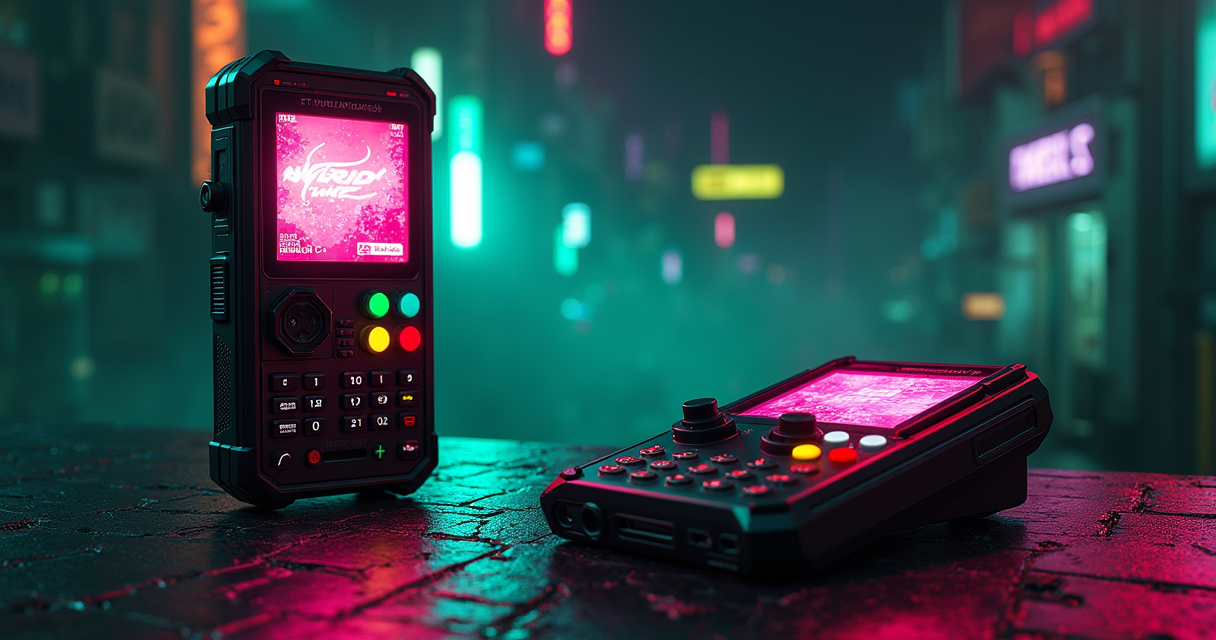
There is no such thing as the Retroid Pocket. There is a genus. As of July 2026 the living species include the Pocket 6, the now-deceased Pocket G2, the just-announced Pocket Nova, the veteran Pocket 5, the clamshell Pocket Flip 2, the Pocket Mini, and the entry-level Pocket Classic. That list was shorter three weeks ago and it will be different three weeks from now. Retroid ships new hardware the way other companies ship firmware patches, and in 2026 it has been forced to reprice that hardware at roughly the same cadence, because the single most important component in every one of these machines — LPDDR5X memory — has become a rationed commodity.
That is the story of this comparison, and it is not a marketing story. The 2026 memory crunch, driven by fabs reallocating wafer capacity toward high-bandwidth memory for AI accelerators, did three concrete things to the Retroid lineup in the space of four months. It pushed the flagship Pocket 6 from a $229 retail price to an effective $244. It killed the Pocket G2 outright. And it forced Retroid to delete the 8GB configuration of the Pocket 5 entirely and replace it with a 12GB model at a higher price. You cannot decide which Retroid to buy in 2026 without understanding that the price sticker is a weather report, not a spec.
So this is a lineup comparison with a thesis. Across silicon, benchmarks, price, use case, and the actual case law that makes these devices legal, the Snapdragon 8 Gen 2 Pocket 6 wins — not because it is exciting, but because nearly everything that used to sit beneath it is dead, discontinued, or now costs enough that the gap stopped mattering. It wins by attrition. Here is the full autopsy, in the order you should read it before spending money.
The 2026 Lineup at a Glance
Before the table, the roster. Retroid's catalogue in mid-2026 is wide, overlapping, and partly notional — one of these machines has never been reviewed by a human because it has not shipped, and one can no longer be bought at any price. Knowing which is which is the entire first move.
The five machines that actually matter
Strip out the accessories and the clamshells and you are left with five devices that define the shape of the lineup. The Pocket 6 is the flagship: a 5.5-inch 1080p AMOLED slab on a Qualcomm Snapdragon 8 Gen 2, unveiled on 27 October 2025. The Pocket G2 launched a single day later, on 28 October 2025, as a cheaper AMOLED sibling on a newer-but-unproven Qualcomm gaming chip — and it is now a ghost. The Pocket Nova, announced around 25 June 2026 and shipping late July, is the oddball: a 4.5-inch 4:3 AMOLED aimed squarely at 6th-generation console aspect ratios. The Pocket 5 is the 2024 workhorse, still on sale, still competent, quietly re-specced in July 2026. And the Pocket Mini V2 is the tiny one, a 3.92-inch AMOLED for people who want the Snapdragon 865 in a jeans pocket. Everything else Retroid sells is a variation on those five silicon stories.
The RAM crunch is the whole plot
If you take one fact from this article, take this one: in 2026 the constraint on a retro handheld is not the CPU, the GPU, the screen, or the battery. It is the memory. When Retroid discontinued the 12GB Pocket 6 on 2 March 2026, its own statement, reported by Android Authority, was blunt: “The recent surge in memory pricing has reached a level that we are unfortunately unable to absorb.” Two weeks later the G2 followed it into the grave for the same reason. By July, Retroid was pre-emptively swapping 8GB parts it could no longer source for 12GB parts it could, and charging $10 more for the privilege. Engadget framed the cause plainly: AI companies' demand for memory has prompted component makers to radically hike their prices. Every price in this article is a downstream effect of that sentence.
What "Retroid Pocket" even means in 2026
The phrase has drifted. In 2021 a Retroid Pocket was a $99 Android handheld with a mediocre chip and a devoted modding community. In 2026 it is a spread that runs from a $129 Snapdragon 865 Classic to a $244 Snapdragon 8 Gen 2 flagship, all of them Android devices, all of them running the same emulator stack — RetroArch, standalone Dolphin, NetherSX2, Vita3K, and the rest — and differentiated almost entirely by silicon tier, screen shape, and how much RAM Retroid could physically buy that month. The result is a lineup where the hardware question (which chip) and the market question (which one still exists and what it costs today) have to be answered together. That is unusual, and it is why a straightforward spec sheet is necessary but nowhere near sufficient.
Specs Compared, Side by Side
Here is the full spread. Read it as a map of tiers, not a scoreboard: the Pocket 6 and the Nova share a GPU, the G2 and Mini V2 sit a rung below, and the Pocket 5 anchors the last generation. Note the inversions — the dead G2 shipped with newer Android and Bluetooth than the flagship above it, which tells you something about how fast this catalogue was assembled.
| Spec | Pocket 6 | Pocket G2 | Pocket Nova | Pocket 5 | Pocket Mini V2 |
|---|---|---|---|---|---|
| SoC | Snapdragon 8 Gen 2 (4nm) | Qualcomm G-series “G2 Gen 2” | Qualcomm QCS8550 (IoT 8 Gen 2) | Snapdragon 865 (7nm) | Snapdragon 865 |
| GPU | Adreno 740 (~680 MHz) | Adreno A22 | Adreno 740 (~680 MHz) | Adreno 650 | Adreno 650 |
| RAM | 8GB / 12GB LPDDR5X | 8GB LPDDR5X | 8GB / 12GB LPDDR5X | 12GB LPDDR4X (post-Jul 14) | 6GB |
| Storage | 128GB / 256GB UFS 3.1 + TF | 128GB UFS 3.1 + TF | 128GB / 256GB + TF | 128GB UFS 3.1 + microSD | 128GB + microSD |
| Display | 5.5″ 1920×1080 AMOLED | 5.5″ 1080p AMOLED | 4.5″ 1280×960 (4:3) AMOLED | 5.5″ 1080p OLED | 3.92″ AMOLED |
| Refresh rate | 120 Hz | 60 Hz | 120 Hz | 60 Hz | 60 Hz |
| Battery / charging | 6000 mAh / 27W | 5000 mAh | 5000 mAh / 27W | 5000 mAh (no fast charge) | 4000 mAh |
| Cooling | Active fan | Passive | Active fan | Passive | Passive |
| Wireless | Wi-Fi 7 / BT 5.3 | Wi-Fi 6 / BT 5.4 | Wi-Fi 7 / BT 5.3 | Wi-Fi 6 / BT 5.1 | Wi-Fi 6 |
| Video out | USB-C 3.1 DP, 4K60 | USB-C, 1080p60 | USB-C DP | USB-C DP (4K30; 4K60 via dock) | USB-C |
| OS at launch | Android 13 | Android 15 | Android 13 | Android 13 | Android 13 |
| Weight | ~304–320 g | ~280 g | ~255 g | ~280 g | ~190 g |
| Geekbench 6 (single-core) | ~1,985 | ~1,780 (est.) | ~1,900 (projected) | ~1,176 | ~1,176 |
| Save states | Yes (RetroArch + standalone) | Yes | Yes | Yes | Yes |
| Netplay | Yes (RetroArch) | Yes | Yes | Yes | Yes |
| Shaders (Vulkan/GLSL) | Full; 120 Hz enables BFL/scanline motion tricks | Full; 60 Hz | Full; 120 Hz | Full; 60 Hz | Full; 60 Hz |
| Practical emulation ceiling | PS2/GC/Wii, select Switch | PS2/GC, weaker Switch | PS2/GC (projected) | GC (light), PS2 (light) | PSP/DC ceiling |
| Launch price | $209–$259 | $199–$219 | $229–$269 | $199 | ~$149 |
| Status (Jul 2026) | On sale, $244 | Discontinued | Pre-order, unshipped | On sale, $209 | On sale |
Silicon and memory
The tiering is cleaner than the marketing implies. Two chips do all the heavy lifting: the Snapdragon 8 Gen 2 in the Pocket 6 and its IoT-badged twin, the Qualcomm QCS8550, in the Nova. As Habeeb Onawole put it at Notebookcheck, the QCS8550 is “an IoT version of the Snapdragon 8 Gen 2” — the modem is stripped out, but the Adreno 740 GPU and the CPU cluster are the same, which is why the Nova can credibly claim flagship-class emulation from a 4.5-inch body. Below them sits the Pocket 5 and Mini V2 on the older Snapdragon 865/Adreno 650, and off to the side sits the G2 on a genuinely new Qualcomm gaming SoC (the Adreno A22) whose problem was never raw power. The memory column is where 2026 bites: the LPDDR5X shortage is the reason the 12GB tiers keep vanishing and reappearing.
Screens, batteries, and the heat budget
Every device here uses an AMOLED or OLED panel — a genuine luxury for a category that spent a decade on washed-out LCDs, and one that matters enormously for retro art, where deep blacks and saturated palettes were exactly what the original CRTs delivered. The Pocket 6 and Nova run those panels at 120 Hz; the G2, Pocket 5, and Mini V2 top out at 60 Hz. That refresh gap is not a gaming-marketing gimmick here: 120 Hz gives you headroom for black-frame-insertion and high-rate scanline shaders that approximate CRT motion clarity, which is precisely the sort of thing this audience cares about. The 120 Hz devices also carry active fans and, in the Pocket 6's case, a 6000 mAh battery to feed the heat budget — the 8 Gen 2 will happily cook itself pushing PS2 upscaling without one.
Reading the inversions
Look at the OS and Bluetooth rows and you find the flagship behind the budget model: the G2 shipped on Android 15 with Bluetooth 5.4, while the pricier Pocket 6 shipped on Android 13 with Bluetooth 5.3. That is not an error; it is a fingerprint of how fast Retroid iterates. The G2 was assembled later on a newer platform SoC that brought a newer Android BSP along for free. It flattered the spec sheet and, as we will see, actively hurt the device in practice, because a newer chip means immature graphics drivers. On a spec table, newer looks better. In an emulator, newer is frequently worse. Hold that thought.
Performance: What Actually Runs
Spec sheets do not emulate PlayStation 2 games; drivers and clock-hours of community optimization do. Here is what the reviewers who actually held these machines measured, drawn from four independent outlets plus Geekbench, and why the numbers do not fall where the chip names suggest they should.
Geekbench and the raw ceiling
Start with the synthetic floor. The Pocket 6 posts a Geekbench 6 single-core score around 1,985; the Pocket 5, on the Snapdragon 865, sits at roughly 1,176. That is a ~69% single-core uplift generation over generation — a genuinely large jump that we broke down at length in our Pocket 5 versus Pocket 6 teardown, and one that translates directly into higher, more stable upscaling in the emulators that are CPU-bound. The G2 lands in between: Retro Handhelds measured its single-core roughly 50% ahead of the 865 but about 10% behind the 8 Gen 2, with a GPU that is around twice as fast as the 865's Adreno 650 yet still “8–10% behind” the Adreno 740. On paper, the G2 was within a whisker of the flagship. That whisker is the entire story of the next two sections.
The per-system reality
Numbers on the hardware Retroid actually shipped, cross-checked across sources. On the Pocket 6, Brandon Saltalamacchia's RetroDodo review (8.4/10) clocks GameCube at 3× native resolution — Rogue Squadron, F-Zero GX, the genuinely demanding titles — and PlayStation 2 running “at 1.5x and 2x native resolution” through NetherSX2, with God of War II closer to 2.5× and Gran Turismo 4 playable with minor tweaks. Dreamcast, PSP, and PS1 sail at 4×. Wii is practical: Mario Galaxy, Xenoblade, DKC Returns. On the G2, Noah Kupetsky's Steam Deck HQ review reports PSP at 4×, PS2 at 2.5×, and PS3 flatly “not enjoyable.” Both machines top out at the sixth console generation. Neither is a Switch box you can trust across a library, and both turn RPCS3 and Xbox 360 into slideshows. Anyone selling you a $250 handheld as a PS3 emulator is selling you a slideshow.
The Turnip driver catch-22
Now the whisker pays off. The G2's GPU was only 8–10% slower than the Pocket 6's in raw terms, yet in the games that stress a handheld it lost badly — because of drivers. The 8 Gen 2's Adreno 740 inherits years of optimization from the Android phone ecosystem, including the open-source Turnip Vulkan drivers that the emulation community leans on to fix rendering glitches. The G2's brand-new Adreno A22 had none of that maturity. As HandheldRank put it, on Switch emulation “the RP6 wins here, and it's not close. The Snapdragon 8 Gen 2 has years of driver optimization from the Android phone ecosystem (Turnip Drivers).” The stock drivers glitch; installing Turnip fixes the glitches on the RP6's mature GPU but tanks performance on the G2's immature one. The same review notes the newer chip broke ordinary apps outright: “some major Android apps straight-up don't work. Netflix games? Nope. Certain big Android games? Nope. Fortnite? Nope.” A newer GPU that nobody has written code for is not an asset. It is a liability with a higher version number.
Pricing and Availability
This is the section that dates fastest, so treat every figure as a July 2026 snapshot. The through-line is simple: the memory crisis has been steadily deleting the cheap end of the lineup and pushing the survivors up.
| Model | Config | Launched | Launch price | Jul 2026 price | Status |
|---|---|---|---|---|---|
| Pocket 6 | 8GB / 128GB | 27 Oct 2025 | $209 preorder → $229 | $244 | On sale |
| Pocket 6 | 12GB tier | 27 Oct 2025 | $259 preorder → $279 | $279 | Not guaranteed to ship |
| Pocket G2 | 8GB / 128GB | 28 Oct 2025 | $199 → $219 | — | Discontinued 16 Mar 2026 |
| Pocket Nova | 8GB / 128GB | Announced ~25 Jun 2026 | $229 | $229 (preorder) | Ships late Jul; unreviewed |
| Pocket Nova | 12GB tier | Announced ~25 Jun 2026 | $269 (+$5 translucent) | $269 | Preorder |
| Pocket 5 | 12GB / 128GB | Sept 2024 | $199 (was 8GB) | $209 | On sale (post 14 Jul hike) |
| Pocket Flip 2 | 12GB | 2025 | $209 | $219 | On sale (post 14 Jul hike) |
| Pocket Classic | 6GB / 128GB | 2025 | $129 | $149 | On sale (+$20, 16 Mar) |
| Odin 2 Portal (rival) | 8GB / 128GB base | 2025 | $249 | $249 | On sale (Pro $369 / Max $449) |
| Steam Deck OLED (rival) | 512GB | 2023 | $549 | $789 | On sale (hiked 27 May 2026) |
The March 2 repricing and the death of the G2
The pivot month was March 2026. On 2 March, Retroid raised the 8GB Pocket 6 by $15 and discontinued the 12GB SKU entirely, with Steam Deck HQ's Shawn Wilkins observing that “the increasingly difficult RAM shortage continues to impact hardware companies across the industry.” Two weeks later, on 16 March at 9 PM EDT, the G2 was pulled — listed “Sold Out” within minutes — and the Pocket Classic jumped $20. GamesRadar captured the mood in a headline: “Weeks after the Steam Deck disappeared, Retroid discontinues Pocket G2 due to ongoing fluctuations in memory pricing.” Retroid promised to bring the G2 back “when market conditions allow” and, tellingly, pointed prospective buyers at the older Pocket 5 instead. As Retro Handhelds' Andrew noted, the G2 “never really seemed to fit anywhere in Retroid's lineup” — wedged between the 5 and the 6 with almost no daylight on either side. The crunch simply administered the coup de grâce.
The July RAM-for-money swap
By July the mechanism inverted. Rather than delete configurations, Retroid started force-upgrading them. Because it had, in its own words, completely run out of 8GB/128GB parts and could no longer manufacture them, it bumped the Pocket 5 and Flip 2 to 12GB of base RAM and lifted prices by $10 after 14 July — the Pocket 5 to $209, the Flip 2 to $219. Customers with unfulfilled 8GB orders were bumped to 12GB free of charge, a move Android Authority and Notebookcheck both flagged as a rare bit of consumer goodwill in an ugly market. Do not mistake it for generosity, though. It is a supply story: when the cheap part is unavailable at any price, giving away the expensive part is cheaper than refunding the order.
What the rivals cost
The Retroid prices only make sense against the neighborhood. The obvious cross-shop is the AYN Odin 2 Portal, whose base model is $249 — a 7-inch 1080p 120 Hz OLED on the same 8 Gen 2/Adreno 740, with an enormous 8000 mAh battery. For $5 more than the Pocket 6, you get a bigger screen and far more endurance at the cost of pocketability; the Pro and Max climb to $369 and $449. The other pole is the Steam Deck OLED, which is no longer a value reference at all: its May 2026 hike took the 512GB model to $789. When a real x86 handheld costs three times your emulator box, the emulator box's job description gets a lot clearer. That is the comparison we run in full in our Pocket 6 against four rivals breakdown.
Which Retroid Fits Which Player
The right Retroid is a function of what you emulate, how you hold it, and how much of the memory-crisis premium you are willing to eat. Here are the buyer profiles that map cleanly onto the hardware, with the honest caveat attached to each.
The PS2 and GameCube upscaler
If your library peaks at the sixth console generation — God of War, the GameCube first-party canon, the PS2 back catalogue — and you want it upscaled and sharp on a modern panel, the Pocket 6 is the machine. Its 3× GameCube and 1.5–2× PS2 headroom, verified by RetroDodo, is the sweet spot: enough to make F-Zero GX and God of War II look genuinely modern, not so much that you are paying for RPCS3 fantasies you will never realize. The 6000 mAh battery and active fan exist precisely to sustain that upscaling load. For the same money and endurance-first priorities, the Odin 2 Portal is the alternative; for the same silicon in a smaller shell, keep reading.
The 4:3 purist
The Pocket Nova exists for one specific, opinionated player: the person who resents letterboxing. Its 4.5-inch 1280×960 panel is a native 4:3 shape, which means GameCube, PS2, N64, and the entire pre-widescreen console era fill the screen edge to edge with no black bars and no stretching. Lawrence Bonk at Engadget called the 4:3 panel “a great fit for PS2 and GameCube games” and singled out the price as “the best part.” The load-bearing caveat, and it is a large one: as of this writing nobody has reviewed a shipping Nova. Its performance is projected from the QCS8550 being an 8 Gen 2 in an IoT costume, not measured. Buy on faith or wait for hands-on data — do not buy on the strength of the SEO-generated “reviews” already polluting search results for a device that has not left the warehouse.
The pocketable everything-machine and the budget floor
Two more profiles round it out. The player who wants flagship emulation that actually fits a pocket should look at the Pocket Mini line — smaller AMOLED, same 865-class chip as the Pocket 5, a genuine trouser-pocket form factor — accepting a lower ceiling (PSP and Dreamcast, not upscaled PS2) as the tax on size. And the budget-first buyer who mostly plays 8- and 16-bit systems, GBA, and PS1 does not need any of the flagships: the Pocket 5 at $209, or the Pocket Classic at $149, will run SNES, Genesis, GBA, and PlayStation for 8–10 hours on a charge without breaking a sweat. Phil Retro's line about the Pocket 5 at HandheldRank still holds — “in a vacuum, it's still a fantastic gaming machine” — and in a vacuum is exactly where a 16-bit library lives. That is five distinct buyers for five distinct machines, and only two of them should spend flagship money.
Pros and Cons, Model by Model
The compressed verdict on each machine, with the trade-off stated rather than buried. Note that two of these — the G2 and the Nova — carry an asterisk that overrides everything in their columns: one you cannot buy, and one nobody has tested.
| Model | Pros | Cons |
|---|---|---|
| Pocket 6 | Fastest here (GB6 ~1,985); mature Adreno 740 drivers; 120 Hz AMOLED; 6000 mAh + active cooling; only affordable 8 Gen 2 slab | “Slightly dull” design; 12GB tier not guaranteed; $244 and climbing; heaviest at ~320 g |
| Pocket G2 | Was ~90% of RP6 speed for less money; Android 15; lightest AMOLED slab; hall sticks + analog triggers | Discontinued; immature A22 drivers; some Android apps simply do not run; no clear niche |
| Pocket Nova | Native 4:3 for pre-widescreen consoles; 8 Gen 2-class QCS8550; 120 Hz; light (255 g); aggressive $229 price | Unreviewed / unshipped; small 4.5″ screen; 4:3 letterboxes modern/16:9 content; unproven thermals |
| Pocket 5 | Proven, cheap ($209); now 12GB base; 5.5″ OLED; excellent for ≤PS1/GC-light; huge community support | Older 865/Adreno 650; 60 Hz; no fast charge; “outpaced by its own shadow” |
| Pocket Mini V2 | Genuinely pocketable; AMOLED; same 865 tier as RP5; lightest overall (~190 g) | Small 3.92″ screen; 6GB RAM; PSP/DC ceiling; 60 Hz; niche ergonomics |
The flagship and the ghost
The Pocket 6's cons are real but survivable: Saltalamacchia's central complaint was aesthetic, not functional — “a perfect, yet slightly dull Android handheld” that “played it too safe to turn heads,” with the reasonable grumble that “a $250 device should have something unique.” Everything that matters works, and works with mature drivers. The G2's pros, by contrast, are all written in the past tense. It was a good value at $219; it is now a collector's footnote. Retro Handhelds' Ban delivered the epitaph before the discontinuation even landed: “If it were my money, would I buy the G2? No.” The market agreed by removing the option.
The newcomer and the veteran
The Nova is the most interesting device in the lineup and the one I can least responsibly recommend today, because its entire pros column is a projection. When shipping units get into reviewers' hands, that column becomes real or it does not. The Pocket 5 is the opposite: no surprises left, all data in, a known-good machine whose only sin is timing. Kupetsky's summary of the whole lineup dynamic — each device “let down only by the next handheld coming so soon” — describes the Pocket 5 perfectly. It is not worse than it was in 2024. It is just standing next to a faster sibling.
How to read the table
One rule collapses the whole grid: a con that says “discontinued” or “unreviewed” outranks every pro above it. The G2 could be the best-value entry here on paper and it would not matter, because you cannot complete a purchase. The Nova could be the sleeper of the year and it would not matter yet, because no independent source has confirmed it does what Retroid claims. That leaves three machines you can actually buy with confidence — the 6, the 5, and the Mini — and among those, price and screen size do the deciding.
Migrating Between Devices
Because these are all Android handhelds running the same emulator ecosystem, moving between them is mercifully mechanical — your saves, states, and BIOS files are portable in a way they never were between, say, a Miyoo and a Steam Deck. Here is the clean path for each realistic migration.
Pocket 5 to Pocket 6, the clean path
This is the most common upgrade and the least painful, because both devices are Android 13 running identical emulator apps. The whole job is copying save data and BIOS files between two devices with the same folder layout. The fastest route is USB debugging and adb from a computer; the paths below are illustrative and vary slightly by which emulator apps you use, but the principle is universal.
# Pull save data off the old Retroid over USB (adb)
adb pull /sdcard/RetroArch/saves            ./backup/saves
adb pull /sdcard/RetroArch/states           ./backup/states
adb pull /sdcard/RetroArch/system           ./backup/bios   # BIOS/firmware
adb pull /sdcard/NetherSX2/memcards         ./backup/ps2-memcards
adb pull /sdcard/Dolphin/GC                  ./backup/gc-saves

# Push them onto the new Pocket 6 (same folder layout)
adb push ./backup/saves   /sdcard/RetroArch/saves
adb push ./backup/states  /sdcard/RetroArch/states
adb push ./backup/bios    /sdcard/RetroArch/system
adb push ./backup/ps2-memcards  /sdcard/NetherSX2/memcards
adb push ./backup/gc-saves      /sdcard/Dolphin/GC
Reinstall your frontend of choice, drop your ROM library back onto the microSD, and rescan. Because the Pocket 6's Adreno 740 has the mature Turnip drivers the Pocket 5 lacked, expect to raise your internal-resolution multipliers after the move — the GameCube titles you ran at 2× will now hold 3×. If you are setting up RetroArch from scratch on the new device, our walkthrough on installing 200+ RetroArch cores in 12 steps covers the core-download order that keeps the process under half an hour.
The dead-G2-order problem
If you were mid-migration to a G2 when it was discontinued, or bought one on the secondary market, you have a subtler issue than missing files: you have a device on an immature GPU that some apps and cores render incorrectly. The migration advice here is defensive. Keep your ROMs and saves fully backed up per the commands above, do not assume the open-source Turnip drivers that help the Pocket 6 will help you — on the A22 they frequently make things worse — and stick to the stock GPU drivers plus known-good emulator versions. Practically, the cleanest exit is to treat the G2 as a ≤PS1-and-GameCube machine and route anything that stutters to a Pocket 6 or Odin later. It is not a downgrade you chose, but it is a manageable one.
Coming from a Linux or Miyoo handheld
Migrating from a Linux-based device — a Miyoo Mini Plus, an Anbernic, a RetroPie build — is a bigger conceptual jump, because you are leaving a locked-down custom firmware for full Android. Your ROM library carries over verbatim; your saves usually need per-emulator remapping because RetroArch's Android save paths differ from Onion or muOS. The upside is enormous: you go from a single frontend to the entire Android emulator marketplace, standalone Dolphin and NetherSX2 included. If you are stepping up from a Miyoo, our piece on the real Miyoo Mini Plus game count is a useful reality check on what that little machine could and could not do — and a good argument for why the jump to a Snapdragon Retroid is worth the setup tax.
The Law: Why These Are Legal
A comparison that skipped the legality of the entire category would be negligent, and this is a category built on a specific, load-bearing piece of case law. Retroid ships you a general-purpose Android computer. What makes it a legitimate retro console rather than a piracy appliance is a distinction the U.S. courts drew a quarter-century ago.
Sony v. Connectix, still the load-bearing case
The foundational ruling is Sony Computer Entertainment, Inc. v. Connectix Corp., 203 F.3d 596 (9th Cir. 2000). Connectix had reverse-engineered the PlayStation BIOS to build the Virtual Game Station, a software emulator for the Mac; Sony sued. The Ninth Circuit held that the intermediate copying required to reverse-engineer the console was fair use, and — the phrase that matters — called the resulting emulator “modestly transformative,” because it let games run on a platform Sony did not serve. Emulation of a console you do not need to own is, in short, legal. The emulator itself is not contraband. That holding is why every Android emulator app on your Retroid can exist on the open market, and why writing a Dolphin or a NetherSX2 has never been the crime.
The line Retroid does not cross
Retroid stays scrupulously on the right side of that line, and the memory of the last decade's takedowns explains why. The company ships the hardware and, at most, the emulator frontends — it does not preload copyrighted BIOS images or games, and reputable resellers do not either. The BIOS question is the sharp edge: a PS1 or PS2 BIOS is Sony's copyrighted code, and while emulators can run without official BIOS in some cases, the accurate ones want it. Legally, you are expected to extract that BIOS from hardware you own. It is the same principle that governs the ROMs themselves.
What you supply
The device is legal; the library is your responsibility. The clean, defensible position — and the one this site takes — is that you supply ROMs and BIOS files dumped from cartridges and discs you actually own. That is not merely a fig leaf: cartridge dumping is a real, accessible workflow, and we walk through it in our guide to dumping SNES and Genesis carts in 14 steps. The Retroid runs whatever you put on the microSD. Connectix settled that the machine may exist and the emulator may exist. What travels on the card is between you and the law, and the honest path is also the safe one.
The Verdict
Five machines, one memory crisis, and a recommendation that would have been closer a year ago and is not close now. Here is where the data lands.
The data-backed pick
Buy the Retroid Pocket 6. At an effective $244 it is, as Retro Game Corps' Russ noted, “the most affordable Snapdragon 8 Gen 2 handheld on the market,” and the 8 Gen 2 is the differentiator that matters: not for its ~69% Geekbench lead over the Pocket 5, but for the years of Adreno 740 driver maturity that make its 3× GameCube and 2× PS2 upscaling actually stable. It carries the 120 Hz AMOLED, the 6000 mAh battery, and the active cooling the load demands. RetroDodo's 8.4/10 and the “slightly dull” verdict tell you exactly what you are buying: not the most exciting handheld of 2026, but the one that does the job with the fewest asterisks. In a lineup where the cheaper options are dead or unproven, dull and reliable wins.
Who should buy something else
Three exceptions, all legitimate. If your library stops at PS1, GBA, and 16-bit, the Pocket 5 at $209 does everything you need for 8–10 hours a charge, and the extra $35 for the flagship buys you upscaling headroom you will never use. If you cannot stand letterboxing and you are willing to gamble on an unreviewed device, the Nova at $229 is the only native-4:3 AMOLED in the family — wait for hands-on data first. And if endurance and screen size beat pocketability for you, the Odin 2 Portal at $249 trades five dollars and your pocket for a 7-inch panel and an 8000 mAh battery. The one machine nobody should chase is the G2: it is discontinued, and even before it died, Ban's “no” was the correct answer.
Buy now or wait?
Ordinarily the answer to “should I wait?” for a fast-moving hardware line is yes. In 2026 it is no — and the reason is the entire thesis of this article. Prices in this category are not falling on a schedule; they are rising on the memory market's schedule, and the cheap configurations are being deleted, not discounted. The Pocket 6 went from $229 to $244 in four months. The G2 went from $219 to unavailable. The Pocket 5's 8GB model no longer exists. Waiting has not been rewarded once this year. If the Pocket 6 fits your library and your hand, buy it before the next repricing, because the historical pattern says the next number is higher and the next SKU is gone. That is not urgency-marketing. That is just what the memory market has done to this lineup, over and over, all year.
Questions the search bar asks me
- Is the Retroid Pocket 6 worth $244 in 2026?
- Yes, if your library peaks at PS2/GameCube. At an effective $244 it is the cheapest Snapdragon 8 Gen 2 handheld available, posts a Geekbench 6 single-core score of ~1,985 (about 69% over the Pocket 5), and RetroDodo scored it 8.4/10 with stable 3x GameCube and 1.5–2x PS2 upscaling. The price has risen $15 since launch due to the 2026 RAM shortage, so it is unlikely to get cheaper.
- Why was the Retroid Pocket G2 discontinued?
- The 2026 LPDDR5X memory crisis. Retroid pulled the G2 on 16 March 2026 citing 'ongoing fluctuations in memory pricing' (per GamesRadar, Android Authority, and Notebookcheck), promising to return it 'when market conditions allow.' It also never carved out a clear niche — priced between the Pocket 5 and Pocket 6 with almost no gap on either side.
- Retroid Pocket 6 vs Pocket 5 — how much faster is it really?
- About 69% faster in Geekbench 6 single-core (~1,985 vs ~1,176), thanks to the Snapdragon 8 Gen 2 replacing the Snapdragon 865. More importantly, its Adreno 740 has mature Turnip drivers the 865's Adreno 650 lacks, so GameCube titles hold 3x native resolution versus the Pocket 5's lighter ceiling. The Pocket 5 remains excellent for PS1 and 16-bit systems at $209.
- Can the Retroid Pocket 6 emulate Switch and PS3?
- Switch only for select, lighter titles (Stardew Valley, Hollow Knight run; Xenoblade Chronicles 3 struggles), and PS3 not at all — RPCS3 and Xbox 360 are slideshows on this class of chip. HandheldRank rates it the best sub-$300 Switch emulator of 2026 precisely because the 8 Gen 2's driver maturity beats newer chips, but it is fundamentally a sixth-generation-and-earlier machine.
- Should I wait for the Retroid Pocket Nova instead?
- Only if you specifically want a native 4:3 screen and are comfortable buying unproven hardware. The Nova ships late July 2026 at $229 on a QCS8550 (an IoT-badged 8 Gen 2), but as of this writing no independent outlet has reviewed a shipping unit — ignore the SEO-generated 'reviews' already appearing. Wait for hands-on performance data before ordering.

Ben covers the hardware end of retro gaming: FPGA cores, real-cartridge dumping, capture setups, CRT vs scaler workflows, and the legal and physical preservation infrastructure that keeps old games playable. Every post under this byline is reviewed pre-publish by Sam P., Editor & Operator — corrections to info@instalinkoteam.com. Published 2026-08-29 · Last updated 2026-08-29. Full bios on the author page.