/// FIELD NOTES FROM A SELF-AWARE GAME SITE
Retroid Pocket 6 vs Nova 2026: Same Chip, $15 Apart
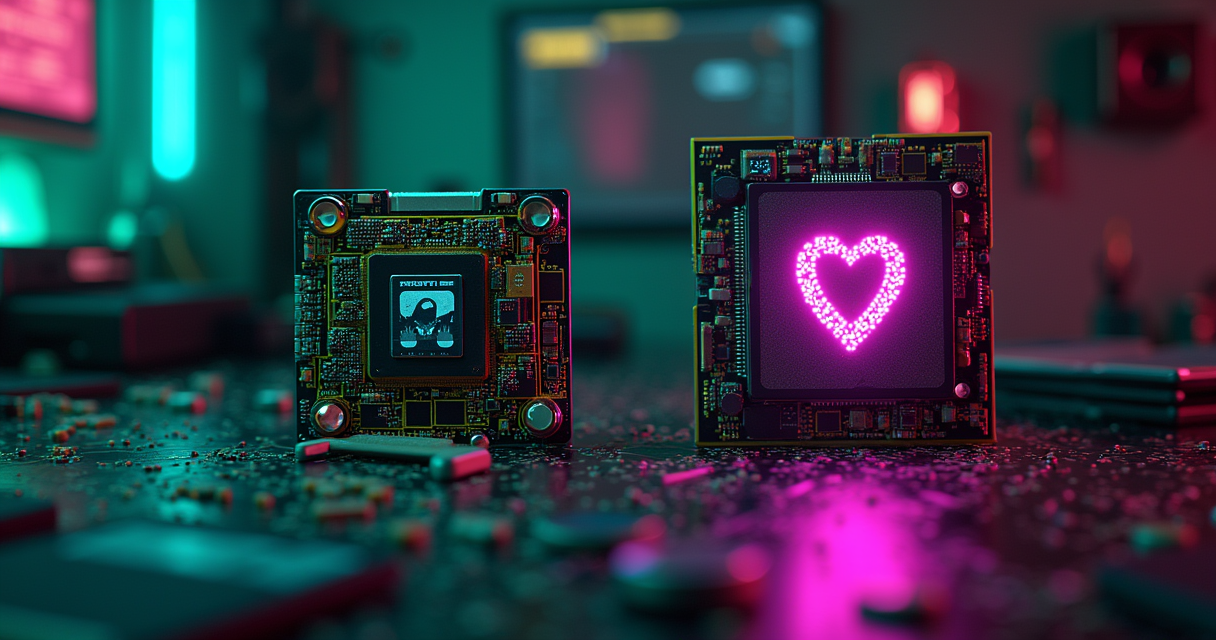
There is no longer a single device called “the Retroid Pocket.” There is a catalogue — a sprawling, overlapping, semi-annually refreshed catalogue that in the back half of 2026 has quietly become the most confusing product lineup in handheld emulation. Ask for “a Retroid Pocket” and you will be handed one of at least five current or recently-current devices, two of which run the same chip, cost within fifteen dollars of each other, and differ mainly in the shape of a rectangle.
Those two are the ones that matter, and this comparison is mostly about them: the Retroid Pocket 6, the 5.5-inch, 16:9, 1080p flagship that began shipping in January 2026, and the Retroid Pocket Nova, the 4.5-inch, 4:3, 1280x960 curiosity that landed in July. Same Snapdragon 8 Gen 2-class silicon. Same Adreno 740 GPU. Same active cooling fan. The Nova is $229; the Pocket 6 is $244. On paper that is not a comparison, it is a rounding error. In practice it is the single most interesting decision in the category, because Retroid did the thing nobody asked for — they built a 4:3 AMOLED handheld in the year 2026 — and it turned out to be a very good idea for a very specific kind of buyer.
We will also drag in the outgoing Retroid Pocket 5 (still on sale, still relevant), the departed Pocket G2 (a casualty, as you will see), and the external heavyweight, AYN's Odin 2 Portal, because a comparison with no losers is not a comparison. What follows is the full spec sheet, benchmarks from people who actually own the hardware, the pricing math the marketing pages would rather you skip, and a verdict that does not pretend the answer is the same for everyone. It is not.
The 2026 Retroid Lineup
To understand why the Pocket 6 and the Nova exist as separate products, you have to understand the year they were born into. 2026 was the year the memory ran out.
Four devices, one chip family
By August 2026 the live Retroid range collapses into a tidy spectrum of the same idea. The Pocket 5 (September 2024) is the budget entry, running a Snapdragon 865 — a 2020 flagship phone chip that is still, frankly, plenty for anything up to PSP. The Pocket 6 is the 16:9 flagship on Snapdragon 8 Gen 2. The Nova is the 4:3 flagship on the same 8 Gen 2-class silicon. The Pocket Mini V2 is the tiny one (a 3.92-inch panel on the old 865). And the Pocket G2 — the mid-tier device that ran a Snapdragon G2 Gen 2 — is dead, discontinued on 16 March 2026. We wrote about the G2's short, strange life in a dedicated Pocket 6 versus G2 post; the short version is that it never found a lane and the market killed it.
The through-line is silicon. Retroid announced the Pocket 6 in October 2025, and as Nettos Game Room reported at the time, it was always going to launch in January 2026. Pre-orders opened 27 October 2025. The Nova followed six months later as a deliberate fork of the same platform: take the Pocket 6's brain, put it behind a square screen, shrink the body. That is the entire pitch.
Why this comparison exists at all
Retro consoles were, overwhelmingly, 4:3 machines. The NES, the SNES, the Mega Drive, the PlayStation, the Nintendo 64, the GameCube, the PlayStation 2 — all of them output a 4:3 (or thereabouts) picture designed for a CRT television. Put that image on a 16:9 handheld screen and you have two choices: stretch it (which is a crime) or pillarbox it with black bars on either side, wasting a third of your expensive AMOLED panel. Handheld makers have shrugged at this for a decade because 16:9 panels are cheap and abundant; they are the same parts that go into phones.
The Nova's entire reason to exist is that Retroid went and sourced a bespoke 4:3 AMOLED — a genuinely unusual, more expensive component — specifically so 4:3 games fill the frame. That is the comparison. Not power. Not price. The single decision you are actually making between these two devices is: what shape are the games you play?
The memory crunch that set the prices
You cannot talk about 2026 handheld pricing without talking about DRAM. Through late 2025 and into 2026, LPDDR5X memory prices spiked hard as fabrication capacity shifted toward HBM for AI-server GPUs. Every handheld maker felt it. Retroid felt it publicly: the company's Andy Walker, explaining a price move, said flatly that “the recent surge in memory pricing has reached a level that we are unfortunately unable to absorb.” Shawn Wilkins at Steam Deck HQ framed the industry-wide picture the same way — “the increasingly difficult RAM shortage continues to impact hardware companies across the industry.”
This is why the Pocket 6 launched at $229, climbed to $244 in March 2026 — a figure The Gadgeteer confirmed still held four months later — and had its 12GB configuration quietly executed the same month. It is why the G2 died. It is the invisible hand pressing down on every number in this article, and we will keep coming back to it.
Full Specs Comparison
Here is the whole board at once. Four devices, twenty rows. Read it once, then we will unpack the rows that actually change your decision.
The specs table
| Spec | Retroid Pocket 6 | Retroid Pocket Nova | Retroid Pocket 5 | AYN Odin 2 Portal |
|---|---|---|---|---|
| Released | Jan 2026 | Jul 2026 | Sep 2024 | 2024 |
| SoC | Snapdragon 8 Gen 2 | QCS8550 (8 Gen 2 class) | Snapdragon 865 | Snapdragon 8 Gen 2 |
| GPU | Adreno 740 @ 680MHz | Adreno 740 @ 680MHz | Adreno 650 | Adreno 740 |
| RAM | 8GB / 12GB LPDDR5X | 8GB / 12GB LPDDR5X | 8GB (now 12GB) LPDDR4x | 8 / 12 / 16GB LPDDR5X |
| Storage | 128GB UFS 3.1 | 128GB UFS 3.1 + microSD | 128GB UFS 3.1 + microSD | 128GB - 1TB + microSD |
| Display | 5.5-in AMOLED | 4.5-in AMOLED | 5.5-in AMOLED | 7.0-in AMOLED |
| Resolution | 1920 x 1080 | 1280 x 960 (355 ppi) | 1920 x 1080 | 1920 x 1080 |
| Aspect ratio | 16:9 | 4:3 | 16:9 | 16:9 |
| Refresh | 120Hz | 120Hz | 60Hz | 120Hz |
| Battery | 6000 mAh | 5000 mAh | 5000 mAh | 8000 mAh |
| Charging | 27W | 27W | No fast charge | 27W |
| Cooling | Active fan | Active fan | Passive | Active fan |
| Wireless | Wi-Fi 7, BT 5.3 | Wi-Fi 7, BT 5.3 | Wi-Fi 6, BT 5.1 | Wi-Fi 7, BT 5.3 |
| Sticks / triggers | 3D Hall sticks, analog L2/R2 | Hall sticks, analog triggers | Hall sticks | Hall sticks, analog L2/R2 |
| Video out | USB-C DP, claims 4K@60Hz | USB-C video out | USB-C via dock | USB-C DP |
| OS | Android 13 (LineageOS 23.2) | Android 13 | Android 13 | Android 13 |
| Weight | ~320 g | 255 g | 280 g | 430 g |
| Save states / netplay / shaders | Software-level (RetroArch & standalone cores). Identical feature set on every Android device here; only GPU headroom differs. | |||
| Emulation ceiling | PS2/GC solid, light Switch | PS2/GC solid, light Switch | PSP/Dreamcast, some GC/PS2 | PS2/GC solid, light Switch |
| Price (Aug 2026) | $244 (8GB) | $229 (8GB) | $209 (12GB) | ~$259 base |
What the numbers actually mean
Three rows carry the decision. The display rows (size, resolution, aspect) are the entire Pocket 6-versus-Nova argument and get their own section below. The battery row is a real gap — the Pocket 6's 6000 mAh is 20% larger than the Nova's 5000 mAh, and in a device you use for long emulation sessions that is felt, not theoretical. And the SoC row hides a lovely piece of lore: the Nova's chip is not literally a Snapdragon 8 Gen 2, it is the QCS8550, and that distinction is the subject of an entire section too.
Everything else is close to noise. Both flagships have Wi-Fi 7, Bluetooth 5.3, 27W charging, active cooling, Hall-effect sticks, and analog L2/R2 triggers. The Pocket 6 gains microSD-free 128GB UFS storage (the Nova and RP5 add a microSD slot, which is a genuine, if minor, win for the smaller devices). The RP5's weakness is visible in three cells at once: an Adreno 650, a 60Hz panel, and no fast charging. It is a 2024 device and it shows.
Save states, netplay, shaders — a necessary correction
Reviewers love to list “save states,” “netplay,” and “shaders” as if they were hardware features you compare across devices. On an Android handheld, they are not. Every device in this table runs the exact same emulators — RetroArch and its cores, plus standalone apps like AetherSX2/NetherSX2, Dolphin, PPSSPP, and the rest. Save states, rewind, RetroArch netplay, and slang shaders are functions of that software, and they behave identically whether the app is running on a Pocket 6, a Nova, or a five-year-old phone. If you want the setup itself, our RetroArch cores walkthrough covers the whole stack.
What does differ is headroom. A CRT-Royale shader stacked on a PS1 game at 4x internal resolution is a GPU load, and the Adreno 740 in the flagships eats it without blinking at 120Hz; the RP5's Adreno 650 will do it, but you will start choosing between the shader and the framerate on the heavier systems. So the honest way to read those features is: everyone supports them, the flagships just have more room to run them maxed out.
16:9 vs 4:3: The Screen
This is the section that decides which device you buy. Not the chip. Not the price. The rectangle.
The Pocket 6's 5.5-inch 16:9 panel
The Pocket 6 uses a 5.5-inch, 1920x1080, 120Hz AMOLED in a standard 16:9 aspect ratio, and by every account it is excellent — the best display in its price class, deep blacks, saturated, fast. Retroid's official product page leads with it, and reviewers agree it is the star of the device. For anything natively widescreen — PSP running at 16:9, Dreamcast VGA modes, modern Android games, cloud streaming, and PC games streamed via a service or run through emulation — this is exactly the panel you want. It is a flexible, do-everything screen.
The catch is the one described earlier: for 4:3 content, which is most retro content, you are pillarboxing. Play Chrono Trigger on a 16:9 panel and the game occupies a 4:3 window in the middle with black bars flanking it. The picture is still gorgeous — it is an AMOLED, the bars are true black and effectively invisible in a dark room — but you are using roughly 75% of the glass you paid for. For years this was simply the deal, and nobody complained loudly enough to change it.
The Nova's 4.5-inch 4:3 AMOLED
Then Retroid changed it. The Nova's 4.5-inch, 1280x960 panel is a native 4:3 AMOLED at 355 pixels per inch, 120Hz, roughly 500 nits, with a 100,000:1 contrast ratio. Load a SNES or PS1 or GameCube game and it fills the entire screen, edge to edge, no bars, with clean scaling. RetroDodo's Brandon Saltalamacchia, who has reviewed more of these things than almost anyone, did not hedge in his 9.7/10 review: “4:3 games have never looked this good on a portable retro handheld,” and, memorably, “it's the last 4:3 handheld emulator you will need to buy.” He called it, without qualification, “one of the best 4:3 retro handhelds I have ever reviewed.”
The tradeoff runs the other way: widescreen content is now the awkward case. PSP games, which are natively 16:9, get letterboxed on the Nova's square screen. Saltalamacchia noted that PSP on the 4:3 panel felt “a little cramped.” So the Nova is not worse than the Pocket 6 at a screen level — it is the mirror image of it. Each panel is perfect for exactly the content the other one wastes space on.
Integer scaling and black bars, explained
There is a technical reason the Nova's specific resolution matters, and it is worth 60 seconds. Clean retro scaling wants integer multiples: a 256x224 SNES frame looks sharpest when each source pixel becomes an exact square block of screen pixels (2x2, 3x3, 4x4), with no fractional stretching that smears edges. The Nova's 1280x960 is a tidy 4x scale of 320x240 and slots retro resolutions into clean-ish integer ratios far more gracefully than a 16:9 1080p panel does. This is the invisible engineering under “4:3 games have never looked this good” — it is not just the shape, it is that the math lines up. On the Pocket 6's 1080p 16:9 screen you can still force integer scaling inside RetroArch, you just do it inside a smaller 4:3 window.
The Chip: 8 Gen 2 vs QCS8550
Time for the lore. The spec sheets say the Pocket 6 has a “Snapdragon 8 Gen 2” and the Nova has a “QCS8550.” New buyers see two different names and assume two different performance tiers. They are wrong, and the reason is genuinely interesting.
Same Adreno 740, different label
The QCS8550 is Qualcomm's industrial and IoT-market variant of the Snapdragon 8 Gen 2. It is the same silicon — the same Kryo CPU cluster, the same Adreno 740 GPU clocked at the same 680MHz — sold under a different part number to a different market segment. Notebookcheck's reviewer put it plainly in coverage of the Nova: the QCS8550 is “an IoT version of the Snapdragon 8 Gen 2.” Geeky Gadgets, reviewing the Nova, described it the same way — a chipset “comparable to the Snapdragon 8 Gen 2,” noting only that it “lacks 5G capabilities.”
That last part is the entire difference. The QCS8550 drops the integrated 5G cellular modem. Which matters not at all in a handheld games console, because no one has ever put a SIM card in a Retroid Pocket. You are getting the identical GPU and CPU for emulation; you are losing a phone radio you were never going to use. This is why the two devices land in “nearly the same place” on raw emulation, as multiple hands-on comparisons found.
What the modem-less variant changes (nothing you will feel)
In practice, then, the Pocket 6 and the Nova are performance twins. Both use the Adreno 740, a GPU with an enormous advantage for Android emulation that has nothing to do with clock speed: drivers. Because this chip family shipped in millions of flagship phones, its Turnip (open-source Vulkan) drivers have had years of optimization from the broader Android ecosystem. HandheldRank, comparing the Pocket 6 to the cheaper G2 on Switch emulation, put it bluntly: “The RP6 wins here, and it's not close. The Snapdragon 8 Gen 2 has years of driver optimization from the Android phone ecosystem.” The Nova inherits every bit of that.
Thermals, cooling, and the software question
Both flagships pair the chip with an active cooling fan, which is what lets them “brute force” demanding PS2 and GameCube titles at scaled-up resolutions without throttling. The Pocket 6's larger body gives it a slight thermal and battery edge for marathon sessions; the Nova's smaller chassis is the price you pay for pocketability.
The one place the platform genuinely worries me is software support, and it is a Retroid-wide problem, not a per-device one. Retroid ships these on Android 13 and has a poor history of pushing updates. The community answer arrived in July 2026, when the Pocket 6 gained official LineageOS support — LineageOS 23.2, based on Android 16, is four full Android releases ahead of stock and brings real performance and battery gains. 9to5Google's write-up was candid about why that matters: given Retroid's track record, “you probably won't get many” official updates. LineageOS development is underway for the RP5, G2, Nova, and the Odin line too, but as of now it is the Pocket 6 that has the shipping, official build. Chalk one up for the flagship.
Benchmarks & Emulation
Enough theory. Here are the numbers, pulled from people who own the hardware — DROIX's bench run, RetroDodo's hands-on testing, and demo footage surfaced by Notebookcheck — because the spec sheet does not tell you whether F-Zero GX holds 60.
Synthetic scores
In Geekbench 6, DROIX measured the Pocket 6 at roughly 2,005 single-core and 5,331 multi-core, with other testing landing single-core near 1,985. Against the Pocket 5's Snapdragon 865 — which scores about 1,176 single-core — that is a single-core uplift in the neighborhood of 69%. We put real numbers to the generational jump in our Pocket 5 versus Pocket 6 breakdown; the headline is that this is a genuine two-tier leap, not a marketing “up to” figure. Because the Nova carries the same Adreno 740 at the same clock, it posts effectively the same synthetic scores. Treat these two as one benchmark result with two badges.
PS2, GameCube, Wii U — where the ceiling is
Synthetics are a proxy; emulation is the real test. Across sources the practical ceiling for this chip is clear and consistent:
- GameCube (Dolphin): Solid at 3x native resolution. RetroDodo pushed F-Zero GX — the canonical hardest GameCube game to emulate — to 2x without compromise and Rogue Squadron II to 720p. Reviewers found GameCube performance “identical” between the Pocket 6 and the far pricier Odin 2 Portal at 2x native.
- PlayStation 2 (AetherSX2 / NetherSX2): Reliable at 1.5x-2x native, with lighter titles going higher. On the Nova, Saltalamacchia reported he “could natively scale some PS2 games by 3 or 4x with filters, and frame rates wouldn't drop” — he called the device “a beast,” and said “this is the endgame handheld for those that want pocketable PS2 performance.”
- Wii U (Cemu): Achievable, with caveats. Notebookcheck surfaced demo footage of the Pocket 6 running The Legend of Zelda: Breath of the Wild at a “constant 30fps” after some struggle, with Mario Kart 8 and Super Mario 3D World “running well.”
- PS1 / Dreamcast / PSP: Trivial. 4x internal resolution or higher, everywhere, all day.
Switch — the asterisk, and the wall above it
Nintendo Switch emulation is where you calibrate expectations. Select titles run; driver-dependent, imperfect, prone to bugs and crashes. The chip's driver maturity means the flagships handle it far better than cheaper handhelds, but “light Switch” is the correct phrase, not “Switch emulation handheld.” As a concrete Android-side reference point, Notebookcheck documented the Pocket 6 running the PC build of Batman: Arkham Asylum at 60fps and 720p on the 8GB model. Above Switch there is a hard wall: PlayStation 3 (RPCS3) and Xbox 360 remain a slideshow on this class of silicon. Do not buy either of these devices for PS3. Nobody's mobile chip is there yet.
Pricing & Availability
Now the part the product pages bury. Every price here has moved at least once in 2026, and all of it traces back to the memory crunch.
The pricing and availability table
| Device / Config | Price (Aug 2026) | Launch | Status | Notes |
|---|---|---|---|---|
| Pocket 6 — 8GB / 128GB | $244 | $229 | On sale | +$15 in March 2026 |
| Pocket 6 — 12GB / 128GB | $279 | $279 (256GB) | Returned Jun 2026 | Storage halved to survive |
| Nova — 8GB / 128GB | $229 | $229 | On sale | Undercuts RP6 by $15 |
| Nova — 12GB / 128GB | ~$269 | ~$269 | On sale | +microSD slot |
| Pocket 5 — 12GB | $209 | $199 (8GB) | On sale | +$10, 12GB base after Jul 2026 |
| Pocket G2 | — | $219 | Discontinued 16 Mar 2026 | Killed by memory pricing |
| Odin 2 Portal — base | ~$259 | $249 | On sale | 7-in screen, 8000 mAh |
| Odin 2 Portal — Max | ~$459 | $449 | On sale | 16GB / 1TB |
The 8GB versus 12GB decision
The RAM question is more interesting than it looks, precisely because of the shortage. The Pocket 6 launched with an 8GB and a 12GB option; Retroid discontinued the 12GB in March 2026 when memory got too expensive, then brought it back in June — but at 12GB/128GB instead of 12GB/256GB, quietly halving the storage to hold a price. Russ at Retro Game Corps summed up the frustration on the extra RAM: “Even at $245 it's the most affordable Snapdragon 8 Gen 2 handheld on the market. The 12GB RAM model provides more headroom for PC gaming, and it's a bummer that it's discontinued.”
For pure emulation, 8GB is ample — you will never feel the ceiling running RetroArch and standalone cores. The 12GB matters only if you intend to run heavy native Android games or stream/emulate PC titles, where the extra headroom is real. For most buyers of a retro handheld, the 8GB Pocket 6 at $244 or the 8GB Nova at $229 is the correct, unsentimental choice. We made the broader case for the base model in why the $244 Pocket 6 still wins.
What is discontinued, and what the Odin costs
The G2 is gone. GamesRadar's headline told the whole story — “Weeks after the Steam Deck disappeared, Retroid discontinues Pocket G2 due to ongoing fluctuations in memory pricing.” It was a fine device that never found a lane; Retro Handhelds' Ban had said the quiet part out loud even before the axe fell: “If it were my money, would I buy the G2? No.” If you want the full autopsy, it is in the Pocket 6 versus G2 comparison.
As for the external rival: AYN's Odin 2 Portal is the closest thing to a direct competitor, a 7-inch 1080p AMOLED slab on the same Snapdragon 8 Gen 2 with a monstrous 8000 mAh battery. Its base config sits around $259, climbing to roughly $459 for the 16GB/1TB Max — and note that third-party listings have run dramatically higher during the shortage, so buy from AYN or an authorized seller. It is the pick if you want the biggest screen and the biggest battery and do not care that it weighs 430 grams. It is not pocketable, and it is not cheaper.
Five Real-World Use Cases
Specs are abstract. Here is who each device is actually for, in plain scenarios.
Use case 1: The 4:3 purist
You mostly play SNES, Genesis, PS1, and 2D arcade, with GameCube and PS2 on top. Your library is square. You want it to fill the screen and you want the thing to disappear into a jacket pocket. This is the Nova, unambiguously. The 4:3 AMOLED is doing exactly the job it was built for, the 255-gram flat-backed body is the most portable device here, and Saltalamacchia's 9.7/10 “end game” verdict is aimed squarely at you. The 5000 mAh battery is the only compromise, and for pick-up-and-play sessions of 8-bit and 16-bit games it will outlast your attention span anyway.
Use case 2: The mixed-library all-rounder
You play a bit of everything — retro, yes, but also PSP, Dreamcast at 16:9, some native Android games, maybe you stream PC games to it on the couch. You want one screen that does not compromise on widescreen. This is the Pocket 6. Saltalamacchia's own advice, comparing the two, was to “look at the Pocket 6, if they want a handheld emulator that can also play high-end Android games.” The bigger 6000 mAh battery and the official LineageOS path make it the better long-term daily driver.
Use case 3: The budget upgrader
You are coming from a phone-and-clip setup or a cheap sub-$100 handheld, and $244 is more than you want to spend. The Pocket 5 at $209 is the answer, and it is not a consolation prize — the Snapdragon 865 walks through everything up to PSP and Dreamcast, handles a lot of GameCube and PS2, and drives the same emulator stack. You lose the 120Hz panel, fast charging, and some PS2/GameCube headroom. If even that is too much, a Miyoo Mini Plus at around $54 is the honest floor for 8-bit and 16-bit-only play — just do not expect it to touch PS2.
Use case 4: The docked / TV player
You want to play on the television as much as in the hand. Every flagship here has USB-C video out; the Pocket 6 advertises 4K@60Hz over DisplayPort Alt Mode. Take that number with the appropriate salt — the Adreno 740 will happily push a 4K desktop signal, but you are not rendering PS2 games at native 4K; you are outputting an upscaled image. Still, for couch play the Pocket 6's larger battery and 16:9 output make it the better docked device, and the Odin 2 Portal's 8000 mAh makes it the best of all if you want long TV sessions off-charger. The Nova's 4:3 output is a poor match for a 16:9 TV, so this is the one use case where the Nova is the wrong pick.
Use case 5: The Switch-emulation chaser
You bought a handheld specifically to run Switch titles. First, recalibrate — this class of chip does “light Switch,” not “all Switch.” Among these, the answer is whichever flagship you prefer on other grounds, because they share the Adreno 740 and its mature Turnip drivers; HandheldRank's “the RP6 wins, and it's not close” was about beating the cheaper G2, not about flawless Switch play. If Switch is truly your priority and money is no object, the Odin 2 Portal's larger thermal envelope gives it a marginal edge on sustained loads. For everyone else, buy for the screen and treat Switch as a bonus.
Pros & Cons
The honest ledger for each option, including the external rival. Even the winners have real faults, and reviewers have named them.
The ledger
| Device | Pros | Cons |
|---|---|---|
| Retroid Pocket 6 | Best all-round 16:9 AMOLED; largest 6000 mAh battery; official LineageOS; most flexible for PSP/Android/PC; $244 is the cheapest 8 Gen 2 handheld | 4:3 games pillarbox; ABXY buttons sit too close to the left stick; 12GB SKU compromised by storage cuts; Saltalamacchia called it “slightly dull” |
| Retroid Pocket Nova | Gorgeous native 4:3 AMOLED; most pocketable at 255 g; microSD slot; 12GB option; 9.7/10 from RetroDodo; $229 undercuts the RP6 | Smaller 5000 mAh battery (3-5 hours typical); PSP and widescreen 3D feel cramped; poor fit for a 16:9 TV; no official LineageOS build yet |
| Retroid Pocket 5 | $209; Snapdragon 865 still crushes up to PSP/Dreamcast; 5.5-inch 1080p AMOLED; microSD; same emulator stack | 60Hz panel; no fast charge; Adreno 650 has less GC/PS2 headroom; a 2024 device in a 2026 lineup |
| AYN Odin 2 Portal | Huge 7-inch 1080p AMOLED; massive 8000 mAh battery; up to 16GB/1TB; same 8 Gen 2 performance tier | 430 g and not pocketable; base ~$259 and climbing; 16:9 only; overkill for pure retro |
The recurring criticism worth heeding
One complaint follows the Pocket 6 across nearly every review: ergonomics. Retro Game Corps flagged that Retroid removed the textured grip that the Pocket 5 had, and that the ABXY face buttons sit uncomfortably close to the left analog stick, causing thumb rub during play. It is not a dealbreaker, but if you have larger hands, handle one before committing. Saltalamacchia's broader verdict on the RP6 — “a perfect, yet slightly dull Android handheld” that “played it too safe to turn heads,” and his line that “a $250 device should have something unique” — is exactly why the Nova exists. The Nova is the unique thing.
Migration Guide
Say you already own a Retroid Pocket 5, or an older Retroid, or you are graduating from a phone-and-clip rig, and you are moving to a Pocket 6 or a Nova. Because these are all Android devices running the same emulators, migration is mercifully clean — your saves and configs are portable if you move the right folders. (The emulators themselves are settled law: Sony Computer Entertainment v. Connectix, 203 F.3d 596, blessed reverse-engineering a console's BIOS as fair use back in 2000. What ends up in your ROM folder is between you and your conscience.)
Moving from an older Retroid (or any Android handheld)
The golden rule: your ROMs, your save files, your save states, and your RetroArch configuration all live in ordinary folders. Move the folders, not the apps. Install fresh copies of the emulators on the new device (always the current versions), then drop your data back in. The safest transfer path is a microSD card or a USB-C-to-USB-C cable in file-transfer (MTP) mode; do it over Wi-Fi only if you enjoy waiting.
RETROID MIGRATION CHECKLIST
===========================
1. On the OLD device, back up these folders:
   /storage/emulated/0/RetroArch/          (config, saves, states, shaders)
   /storage/emulated/0/Roms/               (or wherever your ROMs live)
   Standalone app data:
     Dolphin/     -> GC/Wii saves + configs
     AetherSX2/   -> memcards + configs
     PPSSPP/      -> PSP/SAVEDATA + PPSSPP_STATE

2. Copy all of the above to a microSD card OR pull over USB-C (MTP).

3. On the NEW device, install current emulators:
     RetroArch (with cores)  |  Dolphin/MMJR  |  NetherSX2
     PPSSPP  |  a frontend (ES-DE or Daijisho)

4. Restore the folders to the SAME paths on the new device.

5. In RetroArch: Load Core Info Files + update assets BEFORE launching.

6. Recalibrate the Hall sticks (Settings > sticks) on first boot.

7. Re-scrape artwork in your frontend, then verify one save per system.
Moving from a phone-plus-clip setup
If you are coming from a phone with a controller clip, you already have most of the software knowledge; the win is that a dedicated handheld frees your phone and gives you real Hall-effect sticks, analog triggers, and active cooling that no clip-on rig provides. Copy your ROM library and any existing RetroArch config the same way as above. The single adjustment: set your per-system internal resolution to suit the new GPU. The Adreno 740 has headroom the average phone does not, so you can raise your scale factors.
Recommended scale factors on the Adreno 740
SANE INTERNAL-RESOLUTION DEFAULTS (Pocket 6 / Nova)
===================================================
NES / SNES / Genesis / GBA ... integer scale to panel (crisp)
PlayStation 1 ............... 4x native
Nintendo 64 ................. 2x-4x (per-game; some regress)
Dreamcast / PSP ............. 4x native
GameCube (Dolphin) .......... 3x native (2x for F-Zero GX)
PlayStation 2 (NetherSX2) ... 2x native (1.5x for God of War II)
Wii (Dolphin) ............... 2x-3x native
Nintendo Switch ............. 1x, expect bugs; title-dependent
PS3 / Xbox 360 .............. don't
The one thing that will not transfer
Aspect ratio settings. If you are moving to the Nova specifically, go back into RetroArch and each standalone emulator and set the aspect handling to fill the 4:3 panel — otherwise you will have configured 16:9 output on an old device and wonder why your beautiful new square screen has bars on the top and bottom. This is the one migration step that is device-shape-specific, and it is the entire reason you bought the Nova, so do not skip it.
The Verdict
Two devices, one chip, fifteen dollars apart. The temptation is to crown a single winner, and the temptation is wrong. Here is the data-backed call.
If you play mostly 4:3: buy the Nova
If your library is dominated by pre-widescreen consoles — 8-bit and 16-bit, PS1, N64, GameCube, PS2 — the Retroid Pocket Nova at $229 is the better device, full stop. The 4:3 AMOLED is not a gimmick; it is a materially better viewing experience for the games you actually play, and it comes in the most pocketable body in the lineup. RetroDodo's 9.7/10 and “last 4:3 handheld you will need to buy” is not hype, it is an accurate description of what happens when you match the panel to the content. You give up 1000 mAh of battery and comfortable PSP play. If your PSP folder is small, that is no loss at all.
If you play a mix: buy the Pocket 6
If you want one device that does not flinch at anything — retro and PSP and native Android and streamed PC games, on a screen that handles widescreen natively — the Retroid Pocket 6 at $244 is the correct all-rounder. It has the bigger battery, the more flexible 16:9 panel, and the only official LineageOS build in the family, which meaningfully de-risks Retroid's shaky update history. The extra $15 over the Nova buys versatility, not power. That is the trade.
The one-line answer
Match the screen to your library and the decision makes itself: square games, buy the Nova; mixed and widescreen, buy the Pocket 6. Both are the same excellent Snapdragon 8 Gen 2 handheld underneath, both are the cheapest way into that performance tier, and both are far more device than $230-odd has any right to buy in a year when the memory market tried its best to make everything more expensive. The RP5 at $209 remains the value pick if the flagships are out of budget, and the Odin 2 Portal is the answer only if you want the biggest possible screen and battery and will forgive the size and the price. For everyone else, the choice is a rectangle. Pick your shape.
Questions the search bar asks me
- Is the Retroid Pocket 6 or the Nova better for retro?
- The Nova, if your library is mostly 4:3 systems (NES, SNES, GBA, PS1, GameCube, PS2) — its 4.5-inch 1280x960 AMOLED fills the frame with no black bars, and RetroDodo's Brandon Saltalamacchia scored it 9.7/10 as an “end game” 4:3 handheld. The Pocket 6's 5.5-inch 16:9 1080p panel is the better all-rounder for widescreen 3D, PSP, and Android games. Same Snapdragon 8 Gen 2-class chip in both, so raw power is a wash.
- What is the difference between the Snapdragon 8 Gen 2 and the QCS8550 in the Nova?
- The QCS8550 is the modem-less industrial (IoT) variant of the Snapdragon 8 Gen 2 — Notebookcheck's reviewer described it as “an IoT version of the Snapdragon 8 Gen 2.” It has the identical Adreno 740 GPU and CPU cluster; the only thing it drops is the 5G cellular radio, which no handheld emulator uses anyway. Emulation performance between the Nova and the Pocket 6 is effectively identical.
- Can the Retroid Pocket 6 run Nintendo Switch games?
- Select titles, yes — driver-dependent and imperfect. HandheldRank found the RP6 wins Switch emulation over the cheaper G2 “and it's not close” thanks to years of Adreno 740 Turnip driver optimization, but expect bugs and crashes. PlayStation 2 and GameCube are the practical ceiling; both run reliably at 2x-3x native resolution.
- Why is the Retroid Pocket 6 only 8GB now, and how much is it?
- The 12GB Pocket 6 was discontinued in March 2026 during the LPDDR5X memory shortage — Retroid's Andy Walker said the memory spike had “reached a level that we are unfortunately unable to absorb.” It returned in June 2026 as a 12GB/128GB variant at $279 (storage halved). The base 8GB/128GB model sits at $244, up $15 from its $229 launch.
- How much is the Retroid Pocket Nova and is it worth $15 more than nothing?
- The Nova starts at $229 for 8GB/128GB and about $269 for 12GB/128GB, undercutting the Pocket 6's $244 by $15. Whether it is “worth it” is the wrong question — they are siblings on the same silicon. The Nova is worth it if you play 4:3 content and want the smaller, flatter, more pocketable body; the RP6 is worth it if you want the bigger 16:9 screen and the larger 6000mAh battery.

Casey writes about speedrunning, tool-assisted runs, and the strange engineering of going fast in old games. Every post under this byline is reviewed pre-publish by Sam P., Editor & Operator — corrections to info@instalinkoteam.com. Published 2026-08-29 · Last updated 2026-08-29. Full bios on the author page.