/// FIELD NOTES FROM A SELF-AWARE GAME SITE
Retroid Pocket 6 vs Nova 2026: Same Chip, $244 vs $229
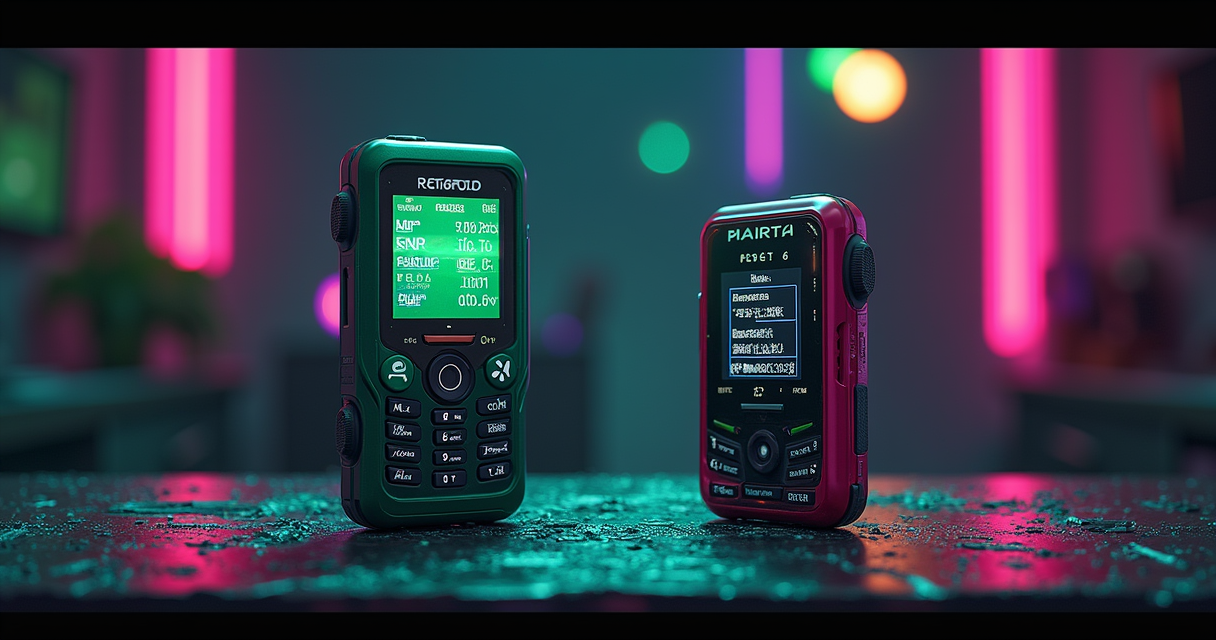
On paper, the 2026 Retroid Pocket lineup reads like a spec-sheet fever dream: a flagship Android emulation handheld with a 120 Hz 1080p AMOLED, a pocket-sized sibling wearing the 4:3 screen retro purists have begged for since the DS era, and a back catalogue of older units that refuse to lie down and die. In practice, the entire range is being dictated by two variables that have almost nothing to do with framerates: the shape of a screen, and the price of memory.
This is a comparison of the Retroid Pocket family as it actually exists in August 2026 — the Pocket 6, the Pocket Nova, the still-selling Pocket 5, the officially dead Pocket G2, and the tiny Pocket Mini V2. Two of them run the same chip. One of them was killed by a spreadsheet. And the model most people should buy is not the one with the biggest number in its name. Let us get into why, with real prices, real Geekbench figures, and real reviewer quotes rather than the marketing deck.
The 2026 Retroid Pocket Lineup, Decoded
Retroid has never respected chronology in its naming, and 2026 is the year that chaos peaked. A “Pocket 6” is not simply better than a “Pocket 5,” a “Nova” is not a numbered successor to anything, and the “G2” sat awkwardly between two other models before quietly being taken out back. Before we can compare, we have to catalogue.
Five devices, one chip family
The Retroid Pocket 6 is the flagship: a 5.5-inch 1920×1080 AMOLED at 120 Hz, Qualcomm's Snapdragon 8 Gen 2-class silicon, up to 12 GB of LPDDR5X, a 6,000 mAh battery with 27 W charging, Wi-Fi 7, Bluetooth 5.3, analog L2/R2 triggers, 3D Hall sticks, an active cooling fan, and USB-C DisplayPort output at 4K60. It pre-ordered in late October 2025 and reached wider retail in early 2026 on Android 13.
The Retroid Pocket Nova is the interesting one. It takes the same chip, the same fan, the same wireless stack, and bolts it to a 4.5-inch 1280×960 AMOLED — a genuine 4:3 panel — in a smaller, 255-gram shell with a 5,000 mAh battery. It pre-ordered on 26 June 2026 and started shipping in late July at a lower price than its bigger sibling.
The Retroid Pocket 5 (September 2024) is the old workhorse: Snapdragon 865, Adreno 650, a 5.5-inch 1080p 60 Hz OLED, 5,000 mAh with no fast charging. It is still sold, and in mid-July 2026 it quietly moved to a 12 GB base configuration with a $10 bump. The Pocket G2 is a ghost we will discuss at length, and the Pocket Mini V2 is a 3.92-inch Snapdragon 865 pocket toy for people who want their whole console to disappear into a jeans pocket.
The DRAM crunch is the real protagonist
None of this makes sense without the 2026 memory-pricing crisis. As fabs shifted capacity toward high-bandwidth memory for AI servers, LPDDR5X spot prices spiked, and small handheld vendors — who buy in the tens of thousands, not the tens of millions — got squeezed first. Retroid said so out loud. Explaining a March price hike, the company told Android Authority that “the recent surge in memory pricing has reached a level that we are unfortunately unable to absorb.” Steam Deck HQ's Shawn Wilkins framed it as an industry condition, not a Retroid quirk: “the increasingly difficult RAM shortage continues to impact hardware companies across the industry.”
The fallout defines the lineup. The Pocket 6's 12 GB/256 GB tier was discontinued in March 2026 and later returned with its storage halved to 128 GB. The base Pocket 6 crept from a $209 pre-order to $244. And the G2 was killed outright. If you want a single lens through which to read every price and every SKU decision below, it is this: the silicon is cheap and plentiful, the RAM around it is not.
What “Retroid Pocket” even means in 2026
One clarification that saves a lot of confusion: these are Android handhelds. Unlike a Miyoo Mini Plus or an Anbernic running bespoke Linux firmware, a Retroid Pocket boots full Android and runs RetroArch plus standalone emulators (AetherSX2/NetherSX2 for PS2, Dolphin for GameCube and Wii, Vita3K, Winlator for Windows games, and so on). That is the whole value proposition and the whole caveat. It means save states, netplay, and shaders are features of the software, identical in principle across every model, and it means the device's job is to feed those emulators enough clock speed, enough RAM, and enough mature GPU driver to keep the frame pacing honest. Keep that framing in mind: when we compare a Pocket 6 to a Pocket 5, we are comparing how well two Android boxes host the same emulators, not two closed consoles.
Full Specs, Head to Head
Here is the whole field in one table, hardware and emulation features together. Where a row is a software capability rather than a hardware one, it is marked, because those rows are identical by design across every Android Retroid.
| Feature | Pocket 6 | Pocket Nova | Pocket 5 | Pocket G2 (dead) |
|---|---|---|---|---|
| SoC | QCS8550 (8 Gen 2, IoT) | QCS8550 (8 Gen 2, IoT) | Snapdragon 865 | Snapdragon G2 Gen 2 |
| GPU | Adreno 740 (~680 MHz) | Adreno 740 (~680 MHz) | Adreno 650 | Adreno A22 |
| RAM | 8 / 12 GB LPDDR5X | 8 / 12 GB LPDDR5X | 8 GB LPDDR4X (12 GB post-Jul 2026) | 8 GB LPDDR5X |
| Storage | 128 / 256 GB UFS 3.1 + microSD | 128 GB UFS 3.1 + microSD | 128 GB UFS 3.1 + microSD | 128 GB UFS 3.1 + microSD |
| Display | 5.5″ 1920×1080 AMOLED (16:9) | 4.5″ 1280×960 AMOLED (4:3) | 5.5″ 1080p OLED (16:9) | 5.5″ 1080p AMOLED (16:9) |
| Refresh | 120 Hz | 120 Hz | 60 Hz | 60 Hz |
| Battery / charge | 6,000 mAh / 27 W | 5,000 mAh / 27 W | 5,000 mAh / none | 5,000 mAh |
| Weight | ~304–320 g | ~255 g | 280 g | 280 g |
| OS | Android 13 | Android 13 | Android 13 | Android 15 |
| Wireless | Wi-Fi 7 / BT 5.3 | Wi-Fi 7 / BT 5.3 | Wi-Fi 6 / BT 5.1 | Wi-Fi 6 / BT 5.4 |
| Video out | USB-C DP, 4K60 | USB-C DP | USB-C DP (4K30; 4K60 via dock) | USB-C, 1080p60 |
| Cooling | Active fan | Active fan | Passive | Passive |
| Geekbench 6 single-core | ~1,985 | ~1,985 (same silicon, est.) | ~1,176 | ~1,780 |
| Top emulation tier | GC 3×, PS2 1.5–2×, Wii, select Switch | GC 3×, PS2 1.5–2×, Wii, select Switch | GC native, PS2 1×–1.5× | GC 3×, PS2 2.5×, no Switch (driver) |
| Save states | Yes — RetroArch / standalone (software feature, all models) | |||
| Netplay | Yes — RetroArch netplay over Wi-Fi (software feature, all models) | |||
| Shaders | Yes — GLSL/slang via RetroArch; GPU-bound (RP6/Nova/G2 > RP5 headroom) | |||
| Status / price (Aug 2026) | $244 (8 GB) | $229 (8 GB) | ~$209 | Discontinued (was $219) |
The headline numbers
Read the table top-down and the story writes itself. The Pocket 6 and the Nova are the same computer in two different chassis: identical SoC, GPU, RAM options, wireless, cooling, and Android version. Everything that separates them — screen size, screen aspect ratio, battery capacity, weight, and $15 — is packaging. The Pocket 5, two years older, trails on the one metric that governs demanding emulation (single-core CPU) by roughly 70%. And the G2, despite a newer Android build and Bluetooth stack, is a dead end for reasons that have nothing to do with its raw numbers.
Reading the table: what matters, what is marketing
Three rows do the heavy lifting. SoC and GPU decide whether a demanding core holds framerate. Display decides whether your library looks right (more on aspect ratio shortly). Refresh rate matters less than the spec sheet implies — 120 Hz is lovely for the Android UI and for high-frame-rate native games, but the overwhelming majority of the retro library is locked to 50/60 Hz, so a 60 Hz panel is not the handicap it looks like on paper. The 27 W charging and Wi-Fi 7 are genuine, if unglamorous, quality-of-life upgrades.
The spec inversions worth noticing
Do not let a bigger number fool you. The dead G2 shipped with newer software (Android 15 vs the Pocket 6's Android 13) and a newer Bluetooth revision (5.4 vs 5.3), while the Pocket 6 answered with newer Wi-Fi (7 vs 6). The Pocket 5 outscores nothing here, yet it remains the model Retroid itself recommends to stranded G2 shoppers. Spec inversions like these are exactly why a row-by-row table beats a headline — and why the next section, the chip, is where the real comparison lives.
The Same Chip Twice: SD 8 Gen 2 vs the QCS8550
The most important fact in this entire comparison is that the Pocket 6 and the Pocket Nova are, at the silicon level, the same machine. Retroid markets both as “Snapdragon 8 Gen 2,” and the part underneath is Qualcomm's QCS8550. Understanding what that is settles half the performance debate before a single benchmark is run.
QCS8550 = Snapdragon 8 Gen 2 minus the modem
Notebookcheck's Habeeb Onawole put it precisely when the Nova's chip was revealed: the QCS8550's specs sound familiar “because they are the same as those of the Snapdragon 8 Gen 2 processor,” and “since this is the IoT version of the processor which lacks a 5G modem, it goes by a different name — Qualcomm QCS8550.” It is the same 4 nm die: one Kryo Gold prime core at 3.2 GHz, four at 2.8 GHz, three Kryo Silver cores at 2.0 GHz, an Adreno 740 GPU, Wi-Fi 7, and Bluetooth 5.3. Drop the cellular radio no handheld needs and you get a cheaper, embedded-branded version of a former phone flagship. The same QCS8550 powers the AYN Odin 2 and Odin 2 Portal, which is why those devices post near-identical emulation results.
Adreno 740 and the Turnip driver advantage
Raw clocks are only half the emulation story; driver maturity is the other half, and it is where the QCS8550 quietly wins. Because it is Snapdragon 8 Gen 2 silicon, its Adreno 740 inherits years of open-source Turnip (Mesa's Adreno Vulkan) work from the Android phone ecosystem. That matters enormously for the flakiest emulators — particularly Switch, where stock Qualcomm drivers glitch and Turnip fixes them. This is the exact reason the G2's newer-on-paper chip performed worse in practice: its Adreno A22 had no mature open-source driver, so demanding cores that ran clean on the Pocket 6 stuttered on the G2. As HandheldRank concluded in its head-to-head, on Switch emulation “the RP6 wins here, and it's not close. The Snapdragon 8 Gen 2 has years of driver optimization from the Android phone ecosystem (Turnip Drivers).”
Where the extra RAM actually helps
If the chip is identical, is the 12 GB configuration a waste? For pure retro emulation, largely yes — PS1, GBA, SNES, and even GameCube do not come close to saturating 8 GB. The RAM matters for two audiences: people running Windows games through Winlator (where extra headroom genuinely helps), and people who treat the device as a general Android machine. Retro Game Corps' Russ made the case bluntly after the 12 GB tier's on-again, off-again saga: “even at $245 it's the most affordable Snapdragon 8 Gen 2 handheld on the market. The 12 GB RAM model provides more headroom for PC gaming, and it's a bummer that it's discontinued.” For most buyers, the 8 GB model is the correct, cheaper answer.
16:9 vs 4:3: The Real Fight
If the chip is a tie, the screen is the entire war. This is the one axis on which the Pocket 6 and the Nova are genuinely, philosophically different devices, and it is the axis most spec tables bury under “5.5″” and “4.5″.” Aspect ratio, not size, is the decision.
The Nova's 4:3 case
Almost every console worth emulating before the PlayStation 2's widescreen era output a 4:3 image: the NES, SNES, Genesis, Game Boy Advance, PS1, Nintendo 64, GameCube (predominantly), and the entire arcade canon up to the late 1990s. On a 16:9 screen, all of it either sits in fat black pillarbox bars or gets stretched into a funhouse mirror. The Nova's 1280×960 4:3 AMOLED fills the glass with the picture the games were actually drawn for. RetroDodo's Brandon Saltalamacchia, who scored the Nova a startling 9.7/10, called it “the most beautiful 4:3 display I have seen on a handheld” and framed the whole device as an endgame: “it's the last 4:3 handheld emulator you will need to buy if you're happy with a 4.5″ retro-focused display.” That is not marketing copy; that is a reviewer who tests these for a living using the word “endgame.”
The Pocket 6's case
The Pocket 6's 16:9 1080p panel is the wrong shape for a SNES game and exactly the right shape for three things the Nova handles worse: PSP (whose library is natively 16:9), modern Android games, and Windows titles through Winlator, all of which are built for widescreen. Saltalamacchia noticed the inverse problem on the Nova, where PSP's 16:9 output looked “a little cramped” on the 4:3 glass. The Pocket 6 is also simply a bigger, more premium object — a larger battery, a 5.5-inch display that, in his Pocket 6 review, “makes the device feel incredibly modern.” It is the generalist's screen.
The aspect-ratio math
Here is the trade in one line. On a 4:3 Nova, your SNES library is full-screen and your PSP library is letterboxed. On a 16:9 Pocket 6, your PSP library is full-screen and your SNES library is pillarboxed. There is no display that is native to both, because the source material disagrees with itself. So the honest question is not “which screen is better” but “which half of your library do you care about more?” If your heart lives in the 8- and 16-bit and PS1 eras, the Nova's panel is a revelation and the endgame framing is earned. If you spend real time in PSP, Dreamcast widescreen modes, Android, or PC ports, the Pocket 6's 16:9 is the correct tool and the Nova will annoy you daily.
Benchmarks: What Actually Runs on These Things
Enough theory. Here is what these devices do when you point real emulators at them, drawn from RetroDodo, HandheldRank, Notebookcheck, Steam Deck HQ, Techxreviews, and Retro Game Corps rather than a single press kit.
Geekbench and the generational jump
The Pocket 6 posts a Geekbench 6 single-core score around 1,985 against the Pocket 5's ~1,176 — a roughly 69% jump, not the “~50%” some early write-ups claimed, with GPU throughput roughly doubling. That single-core delta is the number that matters for demanding emulators, because PS2, GameCube, and Switch cores lean hard on one or two threads. It is also why the Nova, sharing the QCS8550, lands in the same class despite not yet having a broad set of independent benchmark runs. The generational gap is genuine and it is the strongest argument for anyone still on a Pocket 5 to consider the ~70% single-core uplift the Pocket 6 offers.
Per-system reality
Translated into consoles, the Pocket 6 / Nova class behaves like this in 2026 reviews:
- GameCube (Dolphin): 3× native resolution on demanding titles. Reviewers cite Rogue Squadron and F-Zero GX — the latter being the canonical “hardest GameCube game to emulate”, an Amusement Vision arcade port that has humbled emulators for two decades — running clean at 3×.
- Wii (Dolphin): practical across the big titles: Super Mario Galaxy, Xenoblade Chronicles, Donkey Kong Country Returns.
- PS2 (AetherSX2 / NetherSX2): 1.5× to 2× native, with God of War II near 2.5× and Gran Turismo 4 playable. Techxreviews called this “a significant achievement” for the form factor.
- PS1, PSP, Dreamcast: 4× upscaling, essentially trivial for this chip.
- Switch (Yuzu-lineage / Eden): select titles only, and driver-dependent; the Turnip advantage is what makes it viable at all.
- PS3 / Xbox 360 (RPCS3): a slideshow. This is a sixth-generation-and-earlier machine; do not believe any spec sheet that implies otherwise.
On native and translated content, Retroid's own promo footage showed the Pocket 6 pushing Batman: Arkham Asylum at 60 fps, per Notebookcheck — a reminder that the QCS8550 is a former phone flagship, not a retro-only chip.
Battery under load
Performance you cannot sustain is a demo, not a spec. The Pocket 6's 6,000 mAh cell delivers roughly 4–4.5 hours of mixed PS2/GameCube emulation, 8–10 hours of SNES and GBA, and 2.5–3 hours flat-out. The Nova, with a smaller 5,000 mAh battery, Saltalamacchia measured at “3–10 hours… closer to the 3–5 hour mark most of the time.” And the active fan is not silent: Techxreviews noted the “Sport” fan mode “is effective at cooling, it generates audible noise that users will definitely notice.” Notebookcheck's aggregate verdict is the fair one — reviews “praise its performance and value, but knock some of its design choices.”
Pricing, the DRAM Crisis, and the Dead G2
Every price below is a real, dated figure, because in 2026 the price is the story. This is not a lineup where the numbers drifted gently; it is one where a memory shortage rewrote the SKUs mid-cycle.
The price timeline
The Pocket 6 opened at a $209 pre-order for 8 GB/128 GB and a $259–$279 tier for 12 GB/256 GB, settling to $229/$279 at retail. Then, on 2 March 2026, Retroid raised the 8 GB model to an effective $244 (listed $249) and discontinued the 12 GB/256 GB tier entirely, citing the memory surge it “unfortunately” could not absorb. The 12 GB configuration returned in June — but as 12 GB/128 GB, its storage quietly halved, at $279. By 12 June 2026, The Gadgeteer was cataloguing the base model under the plain headline that it was “now $244, four months in.”
| Device (config) | Launch | Launch price | Price now (Aug 2026) | Status |
|---|---|---|---|---|
| Pocket 6 (8 / 128) | Oct 27 2025 pre-order | $209 → $229 | $244 | On sale |
| Pocket 6 (12 / 128) | Returned Jun 2026 | — | $279 | On sale (storage halved) |
| Pocket Nova (8 / 128) | Jun 26 2026 pre-order | $229 | $229 | Shipping |
| Pocket Nova (12 / 128) | Jun 26 2026 pre-order | $269 | $269 | Shipping |
| Pocket 5 (now 12 GB base) | Sept 2024 | $199 | ~$209 | On sale |
| Pocket G2 (8 / 128) | Oct 28 2025 pre-order | $199 → $219 | — | Discontinued Mar 16 2026 |
| Pocket Mini V2 | 2026 | — | budget tier | On sale |
The G2's death certificate
The Pocket G2 launched one day after the Pocket 6, in late October 2025, and never found a reason to exist. It was killed on 16 March 2026. GamesRadar's headline captured the whole tragedy: “weeks after the Steam Deck disappeared, Retroid discontinues Pocket G2 'due to ongoing fluctuations in memory pricing.'” Retroid's own statement said it would bring the G2 back “when market conditions allow” and recommended the Pocket 5 in the meantime — an awkward recommendation of a two-year-old device. Retro Handhelds' Andrew diagnosed the deeper problem: the G2 “never really seemed to 'fit' anywhere in Retroid's lineup,” wedged between the 5 and the 6 with too small a gap to justify. Even before it died, the G2 had lukewarm reviews. Retro Handhelds' Ban was blunt: “if it were my money, would I buy the G2? No.” Steam Deck HQ's Noah Kupetsky liked it but conceded it was “let down only by the next handheld coming so soon.” If you are cross-shopping the two, our full Pocket 6 versus the dead G2 breakdown goes deeper on why the corpse is not a bargain.
What the crisis means for you
The practical takeaway is unsentimental. Prices in this category are floating upward, not downward, and the cheapest way into Snapdragon 8 Gen 2 emulation is the base 8 GB Pocket 6 at $244 or the base Nova at $229. Waiting for a sale is a worse bet in 2026 than it was in 2024, because the pressure on RAM is structural, not seasonal. If a configuration you want is in stock at a price you can live with, that is the buy signal — the next revision is at least as likely to cost more as less.
Which Retroid Fits Which Player
Specs do not buy handhelds; use cases do. Here are the profiles that actually map to these devices, with a recommendation for each.
The 4:3 purist and the pick-up-and-play crowd
If 80% of your play is NES through PS1 — SNES RPGs, GBA, Genesis, arcade, PS1 — the Nova is built for you and nothing else comes close. The 4:3 AMOLED fills the screen with the right image, the small body is genuinely pocketable at 255 g, and the chip is wildly overqualified for the job, which means silent-fan operation and long battery life on light cores. Saltalamacchia's “endgame” framing is aimed squarely at this player.
Second use case, same device: the PS2/GameCube upscaler on a 4:3 screen. Because most sixth-gen console output is still 4:3, the Nova lets you natively scale those games without bars. Saltalamacchia reported he “could natively scale some PS2 games by 3 or 4× with filters, and frame rates wouldn't drop at all,” and singled out playing Midnight Club 3 at 3× as the moment it “gave my inner child a big smile.”
The all-rounder and the streamer
Third use case: the PSP and widescreen player. God of War: Chains of Olympus, the PSP racing catalogue, Dreamcast widescreen modes — these want 16:9, and the Pocket 6 gives it to them full-screen. Fourth: the Android and PC-streaming generalist who wants one device for emulation, native Android games, Winlator, and Moonlight/Steam Link streaming to a big screen at home. The Pocket 6's larger 16:9 panel, bigger battery, 12 GB option, and 4K60 output make it the dockable do-everything box. The Nova can stream too, but its 4:3 screen fights every modern game you throw at it.
The budget buyer and the minimalist
Fifth use case: the value or backup buyer. The Pocket 5 at ~$209 is still, in HandheldRank's Phil Retro's words, “in a vacuum… a fantastic gaming machine” — it handles everything up to competent GameCube and light PS2, and Retroid literally recommends it to stranded G2 shoppers. Sixth: the true minimalist, for whom even a 4.5-inch Nova is too big. The Pocket Mini V2, with its 3.92-inch AMOLED and Snapdragon 865, disappears into a pocket and plays everything through PSP and light GameCube. It is the “always in my bag” device, not the “my main handheld” device.
Pros and Cons, Device by Device
The compressed version, per model, for skimmers and for anyone building a shortlist.
Retroid Pocket 6
| Pros | Cons |
|---|---|
| Cheapest Snapdragon 8 Gen 2 handheld at $244 | 16:9 pillarboxes the entire pre-PS2 library |
| Big 5.5″ 120 Hz 1080p AMOLED, mature Turnip drivers | Fan is audible in Sport mode |
| 6,000 mAh, 27 W charge, Wi-Fi 7, 4K60 out | Reviewers call the design “safe” and “slightly dull” |
| 12 GB option for Winlator / PC games | Stuck on Android 13; 12 GB tier lost its 256 GB storage |
Retroid Pocket Nova
| Pros | Cons |
|---|---|
| 4:3 1280×960 AMOLED — correct shape for retro | Same 4:3 panel cramps PSP, Android, and PC games |
| $229, cheapest way into the QCS8550 | Smaller 5,000 mAh battery (3–5 h typical) |
| Pocketable 255 g, native 3–4× PS2 scaling | Fewer independent long-term reviews than the Pocket 6 |
| RetroDodo 9.7/10, called an “endgame” device | Also stuck on Android 13 |
Pocket 5 and the dead G2
| Pros | Cons |
|---|---|
| Pocket 5: ~$209, proven, now 12 GB base | Pocket 5: Snapdragon 865 is ~70% slower single-core; 60 Hz; no fast charge |
| Pocket 5: still handles GameCube and light PS2 well | Pocket 5: “outpaced by its own shadow” in the current lineup |
| G2: was a fine 1080p AMOLED handheld on paper | G2: discontinued Mar 2026; immature Adreno A22 drivers; Netflix games and Fortnite “don't work” |
Migrating From an Older Retroid (or a Dead One)
Upgrading within the Retroid family — or escaping a stranded G2 — is mercifully painless, because these are all Android devices reading the same file formats. The trap is not the hardware; it is your save data. Here is the clean path.
Back up before you touch anything
- Copy your saves and states off the old device first. On the old Retroid, use a file manager to locate your emulator save folders (RetroArch keeps them under its own directory; standalone emulators like Dolphin and AetherSX2 keep their own). Copy the entire Saves and States trees to your PC or a microSD card. Do this before anything else, because it is the one thing you cannot re-download.
- Note your BIOS files. PS1, PS2, and a few others require BIOS images the emulators will not run without. Copy your BIOS folder alongside your saves.
- Export your RetroArch config if you have custom control maps, overlays, or per-core settings you do not want to rebuild.
The recommended folder layout
A clean microSD structure makes the move trivial and keeps every emulator finding its content on the new device. This is the layout worth standardizing on:
/storage/XXXX-XXXX  (your microSD)
├── Roms/
│   ├── GBA/     (.gba, .zip)
│   ├── SNES/    (.sfc, .smc)
│   ├── PSX/     (.chd  ← convert .bin/.cue to save space)
│   ├── PS2/     (.iso, .chd)
│   ├── GC/      (.rvz  ← Dolphin's compressed format)
│   └── PSP/     (.iso, .cso)
├── BIOS/            (scph*.bin, gba_bios.bin, etc.)
├── Saves/           (per-emulator — restore this AFTER install)
└── States/          (RetroArch .state files — core-version sensitive)
Restore, then verify
- On the new Pocket 6 or Nova, install the same emulators (RetroArch, AetherSX2/NetherSX2, Dolphin). Move the microSD over, or transfer your Roms, BIOS, Saves, and States folders across.
- Point each emulator at the restored folders and drop your saves back into place. Battery/SRAM saves are fully portable. RetroArch save states are more fragile — they are tied to a specific core version, so if the new device has updated cores, keep the old in-game saves as your fallback rather than relying on states.
- Rebuild RetroArch cores cleanly if anything misbehaves. Our 12-step RetroArch core setup gets a fresh device to a working library in about 20 minutes, which is faster than debugging a half-migrated config.
Coming specifically from a Pocket 5, the only thing you will actually feel is the speed — everything else carries over. If you are still deciding whether that jump is worth it, the full Pocket 5 vs 6 comparison lays out where the ~70% uplift shows up and where it does not.
Software: Android 13, Turnip, and LineageOS
Hardware is where Retroid excels and software is where it historically does not. Both current flagships ship on Android 13 — a 2022 OS in 2026 — and the company's update record is the single most-cited weakness in this whole comparison.
Stuck on Android 13
The Pocket 6, the Nova, and the Pocket 5 all run Android 13. That is not a crisis for emulation, which cares about drivers and clocks more than OS version, but it does mean aging security patches and the occasional modern app that expects something newer. When 9to5Google covered the community's response, it did not mince words about the vendor: “given Retroid's poor history with software updates, you probably won't get many.”
Turnip drivers and GPU maturity
The saving grace is the driver situation, and it is the same advantage we met earlier. Because the QCS8550 is Snapdragon 8 Gen 2 silicon, its Adreno 740 is supported by mature, community-maintained Turnip Vulkan drivers pulled from the Android phone world. In practice you install a Turnip build, point your Switch or demanding-PS2 core at it, and glitches that plague newer, unsupported chips simply resolve. This is the concrete reason the Pocket 6 emulates Switch titles the G2 could not: not more horsepower, but more driver. HandheldRank's parallel observation about the G2 — that some “major Android apps straight-up don't work. Netflix games? Nope… Fortnite? Nope” — is the flip side of the same coin: brand-new silicon without ecosystem support breaks things the old flagship handles fine.
The LineageOS lifeline
The most interesting 2026 development is that the Pocket 6 now officially supports LineageOS. As 9to5Google reported on 1 July 2026, LineageOS 23.2 is based on Android 16 — “four full Android releases” forward of the stock Android 13 — bringing “significant performance increases, arguably better battery longevity.” Development is underway for the Pocket 5, G2, Nova, and the AYN Odin family too. For a device family whose OEM updates are, charitably, sparse, an active custom-ROM community is worth more than a spec bump. It is also the answer to the Android 13 complaint: if the software staleness bothers you, the fix exists and it is officially blessed.
Is Any of This Legal? (Yes, Mostly)
Because we are the sort of publication that reads the case law, a word on the legal footing under all this emulation — since the devices are legal, the software is legal, and the line most people cross is narrower than they think.
Emulators are legal
The foundational case is Sony Computer Entertainment, Inc. v. Connectix Corp., 203 F.3d 596 (9th Cir. 2000). Connectix reverse-engineered the PlayStation BIOS to build its Virtual Game Station emulator, and the Ninth Circuit held that intermediate copying to achieve interoperability was fair use, calling the resulting product “modestly transformative.” The upshot, settled for a quarter-century: writing and running an emulator is lawful. RetroArch, Dolphin, and AetherSX2 are not contraband, and neither is a handheld built to run them.
ROMs are the line
The game files are where copyright still bites. A commercial ROM or ISO is a copyrighted work, and downloading one you do not own is infringement regardless of how many sites make it easy. The device does not change that analysis — a Pocket 6 is exactly as legal as a general-purpose computer, which is to say the hardware is fine and what you put on it is your responsibility. The much-repeated “24-hour rule” that lets you download a ROM if you own the cartridge is folklore, not law; there is no such statutory safe harbor.
Dumping your own carts
The clean path is to make your own copies from media you own. BIOS files should come off your own console, and game images off your own cartridges and discs. If you want to do it properly, a hardware cart dumper is the tool, and our walkthrough on dumping a cartridge in about 30 minutes covers the process end to end. It is slower than a download and it is the version that keeps you on the right side of the Connectix line.
The Verdict: Which Retroid Pocket to Buy
Two flagships, one chip, a $15 gap, and a memory crisis strangling the whole category. After all of that, the recommendation is refreshingly clear — and it is decided by your library, not your budget.
The data-backed pick
For most people reading a retro-handheld comparison, the Retroid Pocket Nova at $229 is the buy. Its 4:3 AMOLED is the correct shape for the overwhelming majority of games worth emulating, it shares the Pocket 6's exact QCS8550 silicon, it is smaller and cheaper, and it earned RetroDodo's 9.7/10 and the rare “endgame” label. If your play skews pre-PS2 — and statistically it does — the Nova will look better every single session while costing $15 less. That is not a close call; it is the reason a competing verdict argues the Nova beats the $244 Pocket 6 outright.
Buy the Pocket 6 instead if…
Buy the Pocket 6 at $244 if you are a generalist rather than a purist. Saltalamacchia drew the line himself: reach for the Pocket 6 “if they want a handheld emulator that can also play high-end Android games.” If you live in PSP, Dreamcast widescreen, native Android titles, Winlator/PC games, or you dock to a TV at 4K60, the 16:9 screen, larger 6,000 mAh battery, and 12 GB option make it the right generalist. It scored a strong-but-not-stunning 8.4/10 precisely because it plays it safe — Saltalamacchia's summary was “a perfect, yet slightly dull Android handheld” that “played it too safe to turn heads,” adding that “a $250 device should have something unique.” The Nova is what unique looks like; the Pocket 6 is what versatile looks like.
Skip, wait, or save
Skip the G2 entirely — it is discontinued, its drivers are immature, and even at full price reviewers would not spend their own money on it. Consider the Pocket 5 at ~$209 only if you find it discounted and you want proven, competent GameCube-and-below emulation on a budget; Phil Retro's verdict stands, that “the problem isn't the device; it's the neighborhood it lives in.” And do not sit around waiting for a price drop. In a year where Retroid told us plainly it could not “absorb” the RAM surge, the cheapest these get is probably today. Pick the screen shape that matches your library, buy the 8 GB model, and go dump some cartridges.
Questions the search bar asks me
- Is the Retroid Pocket 6 or the Nova better in 2026?
- They run the same QCS8550 (Snapdragon 8 Gen 2) chip, so it comes down to screen shape. The Nova's 4:3 1280×960 AMOLED ($229) is better for pre-PS2 retro and earned RetroDodo a 9.7/10; the Pocket 6's 16:9 1080p screen ($244) is better for PSP, Android, and PC games and scored 8.4/10. Most retro players should pick the Nova.
- What chip is in the Retroid Pocket 6 and Pocket Nova?
- Both use Qualcomm's QCS8550. As Notebookcheck's Habeeb Onawole explained, it is the IoT version of the Snapdragon 8 Gen 2 that 'lacks a 5G modem,' so it carries a different name but the same 4nm silicon, Adreno 740 GPU, Wi-Fi 7, and Bluetooth 5.3. The AYN Odin 2 uses it too.
- How much does the Retroid Pocket 6 cost now?
- As of August 2026 the base 8GB/128GB model is $244, up from a $209 pre-order after Retroid raised prices on March 2, 2026 citing the memory-pricing surge. The 12GB tier returned in June 2026 at $279 but with storage halved to 128GB. The Gadgeteer confirmed the $244 price on June 12, 2026.
- Can the Retroid Pocket 6 play PS2, GameCube, and Switch games?
- Yes to GameCube (3× native, including F-Zero GX) and PS2 (1.5–2×, God of War II near 2.5×), and select Switch titles thanks to mature Turnip drivers. It is a sixth-generation-and-earlier machine, though — PS3 and Xbox 360 emulation via RPCS3 runs as a slideshow, so ignore any claim it handles that era.
- Why was the Retroid Pocket G2 discontinued?
- Retroid killed the G2 on March 16, 2026 due to the 2026 RAM shortage. GamesRadar's headline read: 'weeks after the Steam Deck disappeared, Retroid discontinues Pocket G2 due to ongoing fluctuations in memory pricing.' Its immature Adreno A22 drivers also broke Switch emulation and some Android apps, and it never fit cleanly between the Pocket 5 and 6.
Ben covers the hardware end of retro gaming: FPGA cores, real-cartridge dumping, capture setups, CRT vs scaler workflows, and the legal and physical preservation infrastructure that keeps old games playable. Every post under this byline is reviewed pre-publish by Sam P., Editor & Operator — corrections to info@instalinkoteam.com. Published 2026-08-29 · Last updated 2026-08-29. Full bios on the author page.