/// FIELD NOTES FROM A SELF-AWARE GAME SITE
RTX 5090 in 2026: 33% Faster, Now a $4,000 Card
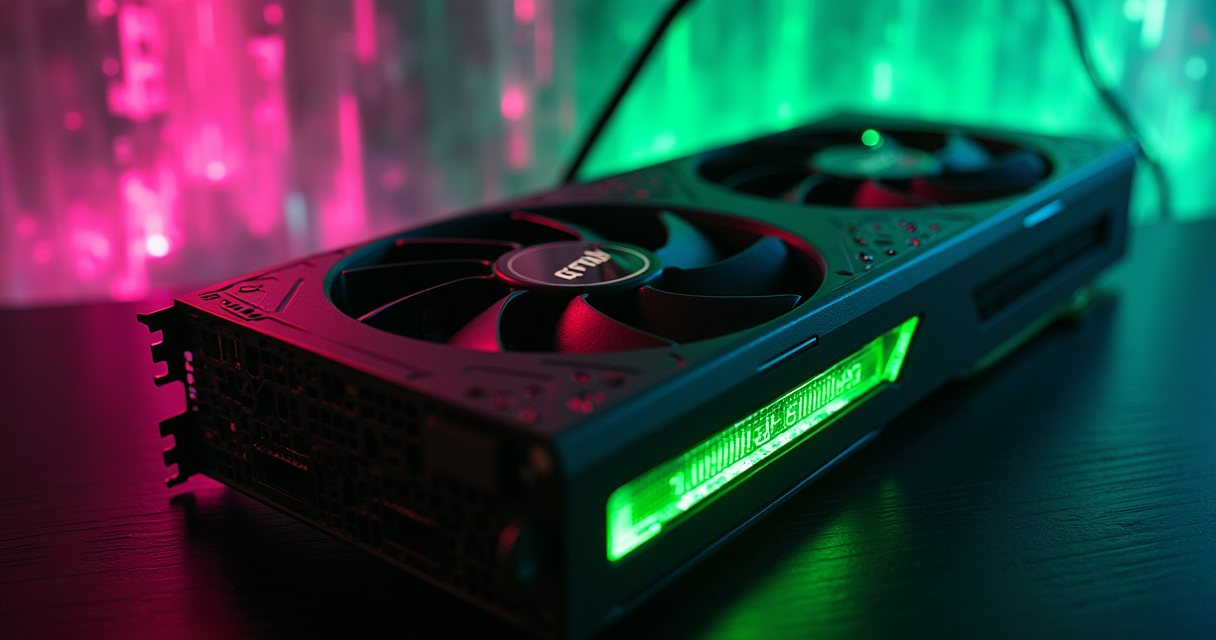
NVIDIA would like you to think of the GeForce RTX 5090 as a $1,999 graphics card. It launched at that price on January 30, 2025, and for roughly the length of a lunch break, that is what it cost. Eighteen months later, in the summer of 2026, the same card changes hands for somewhere between $3,000 and $4,300, and NVIDIA's own retail channel mostly lists it as out of stock. The fastest consumer GPU ever built is also, functionally, contraband.
This is a review of the silicon and a report on the market that ate it. The RTX 5090 is genuinely the best gaming graphics card money can buy in 2026 — nothing from AMD or Intel is within a country mile of it — and it is also a 575-watt space heater with a power connector that keeps catching fire and a price tag that has been rewritten upward by an AI-datacenter memory shortage that has nothing to do with gamers. Both things are true. Let us take them in order.
The Verdict: Fastest on Earth, Priced Like Contraband
The one-line take
The RTX 5090 is about 31–33% faster than the RTX 4090 in native 4K gaming, ships with 32GB of GDDR7, draws 575 watts, and is the only card on the market that can brute-force 4K path tracing without leaning on upscaling. It is also the least sensible purchase in PC gaming, because you will pay a 50–115% premium over its already-high MSRP for a generational uplift that, outside of ray tracing, sits in the low thirties.
What you are actually paying for
Strip away the marketing and the 5090 buys you three things: headroom at 4K and above, 32GB of VRAM for local AI and content work, and DLSS 4 Multi Frame Generation. Everything else — the AI TOPS figures, the "8K gaming" claims — is either a workload most buyers will never run or a number with an asterisk. As Engadget put it, the card is "incredibly fast thanks to DLSS 4, but at $2,000 it's not for mere mortals" — and that was written when it still cost $2,000. Digital Foundry's launch review reached the same one-word conclusion: it is the fastest gaming GPU yet made.
Who this is not for
Anyone gaming at 1080p or 1440p. Anyone on a 750W power supply. Anyone who flinches at four-figure GPU prices. The 5090 was slower than the 4090 at 1080p in several of GamersNexus' tests — a CPU-overhead quirk we will get to — which tells you everything about who this card is for: 4K-and-up, high-refresh, no compromises, budget no object. If that is not you, the math has already been settled elsewhere.
What Blackwell Actually Changed
GB202 and the move to 4nm
The 5090 is the first consumer product built on NVIDIA's Blackwell architecture, using a cut-down GB202 die fabricated on TSMC's 4nm (4N) process — the same node family as Ada Lovelace, not a full shrink. Engadget counted 91 billion transistors. The generational leap here is not from a smaller process; it is from a physically enormous die, a wider memory system, and 33% more shader cores. That distinction matters, because it explains why efficiency barely moved.
32GB of GDDR7 on a 512-bit bus
The headline number is memory. The 5090 carries 32GB of GDDR7 across a 512-bit bus, good for 1,792 GB/s of bandwidth — a 78% increase over the 4090's 1,008 GB/s. That is the single largest generational bandwidth jump in the 90-class lineage, and it is the reason the card scales so well at 4K and in memory-bound AI work, where it pushes roughly 85 tokens/sec on Llama 70B versus the 4090's 52.
Fourth-gen RT, fifth-gen Tensor
Blackwell brings fourth-generation RT cores and fifth-generation Tensor cores — not the "third-generation" RT hardware some spec sheets still misprint (that was Ada). NVIDIA quotes 318 RT-TFLOPS against the 4090's 191, and a frankly silly 3,352 AI TOPS versus 1,321. Treat those as ceiling figures; the honest, measured story is in the benchmarks below. Here is how the two cards line up on paper:
| Specification | RTX 5090 | RTX 4090 | Delta |
|---|---|---|---|
| Launch date | Jan 30, 2025 | Oct 12, 2022 | — |
| Launch MSRP | $1,999 | $1,599 | +25% |
| Architecture | Blackwell (GB202) | Ada (AD102) | — |
| Process | TSMC 4nm | TSMC 5nm | — |
| CUDA cores | 21,760 | 16,384 | +32.8% |
| Memory | 32GB GDDR7 | 24GB GDDR6X | +33% |
| Memory bus | 512-bit | 384-bit | +33% |
| Bandwidth | 1,792 GB/s | 1,008 GB/s | +78% |
| FP32 compute | 104.8 TFLOPS | 82.6 TFLOPS | +27% |
| RT (NVIDIA claim) | 318 TFLOPS | 191 TFLOPS | +66% |
| AI (NVIDIA claim) | 3,352 TOPS | 1,321 TOPS | +154% |
| TGP | 575W | 450W | +28% |
| Power connector | 12V-2x6 | 12VHPWR | — |
| Interface | PCIe 5.0 | PCIe 4.0 | — |
The Benchmarks: 33% and a Very Long Tail
4K rasterization: 20% to 50%
Across a 20-game native-4K suite, DSOGaming's John Papadopoulos measured the 5090 at exactly what NVIDIA's price hike implied: "the NVIDIA RTX 5090 is 33% faster than the RTX 4090 in these 20 games," with the spread running "from a 23% to a 47% performance boost." GamersNexus landed in the same neighborhood, reporting a 4K rasterization uplift of "anywhere from 20% to 50%" depending on title. Call it a third faster on average — real, meaningful, and almost identical to the 25% you paid extra at launch.
Ray tracing and path tracing
Ray tracing is where the wider memory system and fourth-gen RT cores earn their keep. GamersNexus put 4K RT gains "around 27% to 35%," and in full path-traced titles the gap widens: DSOGaming clocked +38% in Cyberpunk 2077 and +37% in Black Myth: Wukong. Engadget's native-4K, maxed, no-DLSS Cyberpunk run tells the same story in raw frames — 54 fps on the 5090 versus 42 on the 4090. It is the only card that gets close to 60 fps in that scenario without turning on the frame generator.
The 1080p regression nobody mentions
Here is the fact NVIDIA's slides omit: at 1080p, the 5090 was slower than the 4090 in multiple GamersNexus tests. This is a CPU-overhead issue with Blackwell's driver — the GPU is so fast that at low resolutions the processor becomes the bottleneck and the newer card's higher driver overhead actually costs frames. Drop to 1440p and the gap is still modest: TechRadar measured about an 18% average uplift with 22.6% better 1% lows, because the card starts waiting on the rest of your system. The resolution scaling data is unambiguous: this is a 4K-minimum GPU, and anything below that is money set on fire.
DLSS 4, Multi Frame Generation, and the Fake-Frames Fight
How Multi Frame Generation works
DLSS 4 shipped alongside the 50-series on launch day — January 30, 2025, with 75 supported games, not the later date some timelines claim — and its headline feature is Multi Frame Generation. Where the 40-series generated one AI frame per rendered frame, Blackwell's fifth-gen Tensor cores generate up to three, for a nominal 2× to 4× framerate multiplier. In a game like Cyberpunk with path tracing on, that is the difference between a 30-something native counter and a 200-plus one.
DLSS 4.5 and 6X frame generation
At CES 2026 NVIDIA announced DLSS 4.5, which shipped March 31, 2026. It raises the ceiling to 6X Multi Frame Generation — five AI frames per rendered frame — adds a Dynamic mode that varies the multiplier to hold a target refresh rate, and introduces a second-generation Transformer model for the upscaler. By CES 2026 the MFG catalogue had crossed 250 games and apps. This is genuinely useful technology on a 240Hz-plus display, and it is also where the marketing gets slippery.
The latency asterisk
Generated frames are interpolated, not rendered: they add visual smoothness but not responsiveness, and each one adds a little latency and the risk of artifacts. A "240 fps" counter built from one rendered frame and five fabricated ones does not feel like 240 fps under your hands. PC Gamer's reviewers have called them "fake frames" for a reason. It is a legitimate feature that NVIDIA routinely oversells — and it pairs best with a proper variable-refresh panel, which is its own G-Sync-versus-FreeSync decision. Console owners chasing the same trick via the PS5 Pro's PSSR 2 upscaler are watching NVIDIA's playbook get ported to fixed hardware.
575 Watts: Power, Heat, and the Efficiency Wash
The wall-power reality
The 5090 has a 575W TGP, up 125W from the 4090's 450W. In practice it pulls right up to that ceiling under a 4K load, which is why NVIDIA and every board partner tell you to budget a 1,000W PSU. This is not a card you slot into an existing mid-tower and forget about; it is a platform decision. Here is a representative telemetry snapshot under a maxed 4K workload:
$ nvidia-smi --query-gpu=power.draw,power.limit,temperature.gpu,utilization.gpu,memory.used --format=csv
power.draw [W], power.limit [W], temperature.gpu, utilization.gpu [%], memory.used [MiB]
573.44 W, 575.00 W, 72, 99 %, 28610 MiB
# Cyberpunk 2077, 4K, path tracing, DLSS off - pinned to the power limit.
Thermals: 72°C and a lot of air
The good news is the cooling works. GamersNexus recorded the Founders Edition settling at about 72°C at steady state in a 21–22°C room — impressive for a two-slot card dissipating well over 500 watts, thanks to a genuinely clever flow-through cooler. The bad news is that dissipating 575 watts means moving a great deal of air, and the card dumps every one of those watts into your room. In summer, it is noticeable, and your air conditioner will file a complaint.
The perf-per-watt sleight of hand
NVIDIA markets roughly 35% better performance-per-watt at 4K, and at iso-workload that is defensible — the card does about a third more work. But GamersNexus was blunter, measuring real-world gaming efficiency as "about the same as the 4090." The reconciliation is simple: the 5090 mostly buys its gains with 125 extra watts, not with architectural efficiency. If you want efficiency back, you undervolt it — a Blackwell card responds well to it — and claw back much of that power for a small performance haircut.
The 12V-2x6 Connector Is Still Melting
der8auer's 150°C wire
In February and March 2025, overclocker Roman "der8auer" Hartung clamped a thermal camera and a current meter onto a 5090 Founders Edition's power cable and found the load wildly unbalanced. Individual wires in the 12V-2x6 connector — rated for roughly 8–9 amps each — were carrying as much as 22 amps, and, in Club386's summary of his findings, "one of the wires in the cable was hitting 150°C." On a card pulling 575 watts through a connector rated for about 600, there is almost no margin.
No load balancing, no recall
The root cause is a design regression. The 3090 Ti had shunt resistors that balanced current across the connector's pins; the 5090 Founders Edition does not, so it cannot detect or correct a bad seat. Club386's Ben Hardwidge did not mince words: "This socket isn't fit for purpose, and our industry, particularly Nvidia, needs to admit it." He added the line that should worry NVIDIA's lawyers more than its engineers: "If a cooker had a mains cable that caught fire like this, it would be recalled." There has been no recall. PC Gamer's headline on the melting reports simply read "surely not again."
What owners should actually do
If you own one: use the cable that shipped with the card or a native ATX 3.1 / 12V-2x6 cable, seat it until it clicks, route it without a tight bend near the connector, and check its temperature during the first few heavy sessions. It is not a reason to avoid the card outright, but it is an unforced NVIDIA error entering its third product generation, and pretending otherwise would be dishonest.
The $4,000 Problem: A Memory Crisis, Not a Launch
From $1,999 to $4,300
The 5090 launched at a $1,999 MSRP and sold out in minutes; Founders Edition stock has been effectively vapor since. Through mid-2026 the street price settled around $2,999 — an ASUS TUF for Amazon Prime members, if you were lucky. By July 2026 it had gotten worse: VideoCardz reported prices "pushing toward $4,000," and TechTimes documented listings above $4,300, with Amazon showing a $4,329 card the same week. The MSRP is now a historical footnote.
Why: AI ate the memory
This is not scalping in the classic sense. Through the first half of 2026, an AI-datacenter buildout of unprecedented scale swallowed the world's memory supply, and GDDR7 — the exact memory the 5090 needs 32GB of — is caught in the same crunch that has spiked DRAM across the board. The same forces are gutting SSD availability; the AI industry's appetite is why PCIe 6.0 storage exists for datacenters and nobody else. When the buyers of last resort have infinite budgets, gaming hardware loses the auction.
The partner-card tax
Founders Edition pricing is theoretical; what you can actually buy is a partner card at a partner markup. Here is the 2026 pricing landscape as it actually stands:
| Card / SKU | Price (2026) | Notes |
|---|---|---|
| RTX 5090 Founders Edition | $1,999 MSRP | Launch price; effectively unobtainable |
| ASUS TUF RTX 5090 | ~$2,909–$2,999 | Cheapest street option, Prime-gated |
| MSI Gaming Trio OC | ~$3,299 | Mid-tier partner OC |
| Gigabyte Gaming OC | ~$3,299 | Mid-tier partner OC |
| ASUS ROG Astral OC | ~$3,509 | Premium air-cooled flagship |
| Street average (Jul 2026) | $4,000–$4,329 | Memory-crisis spike |
| MSI RTX 5090 32G Lightning Z | $5,090 | 1,300 units, CES 2026, lottery |
| Lightning Z (eBay resale) | $6,700–$27,000 | Reseller premium |
| RTX 4090 (used, EOL) | $1,200+ | Discontinued; prices propped up |
The $5,090 Halo: MSI's Lightning Z
1,300 units and a lottery
If $4,300 for a stock 5090 sounds unhinged, MSI has a card for you. Unveiled at CES 2026, the MSI GeForce RTX 5090 32G Lightning Z revives a legendary overclocking brand at a price that doubles as its name: $5,090.99. Production is capped at 1,300 units, sold not on a first-come basis but by lottery. Resellers have listed them on eBay from $6,700 to nearly $27,000 — a 500% premium on a card that was already a halo product.
An 8-inch screen and a 2,500W BIOS
The engineering is real, even if the price is theater. The Lightning Z carries a 40-phase VRM, dual 12V-2x6 connectors (finally, some current headroom), a 3oz-copper PCB, and the world's first 8-inch LCD panel mounted on a graphics card. Firmware offers an 800W stock power limit and a 1,000W "Extreme" preset, with a separate 2,500W "XOC BIOS" reserved for liquid-nitrogen record attempts. This is a card designed to be pushed off a cliff by people who own dewars of LN2.
"RTX 5090 Ti, anyone?"
The performance uplift is modest for the money: Tom's Hardware measured it about 12% faster than a stock 5090 out of the box, stretching to ~18% with a manual overclock — enough that the review ran under the headline "RTX 5090 Ti, anyone?" That is the real tell. The Lightning Z proves there is a faster 5090 hiding in the GB202 die, and it hints at what a mid-cycle refresh could be. If you want that headroom without the lottery, the ordinary route is overclocking a standard card yourself — for a fraction of the extra outlay and none of the resale insanity.
Historical Context: The 90-Class Lineage
From Titan to the xx90
The 5090 sits atop a lineage that used to be called Titan. NVIDIA's prosumer halo — the biggest die, the most VRAM, a price detached from mainstream reason — ran under the Titan name from 2013 until the RTX 3090 rebranded it "xx90" in 2020 at $1,499. The RTX 50 series continues that arc: a flagship that is really a workstation card wearing a GeForce badge, sold to gamers and AI hobbyists alike.
The 25% price ratchet
Every generation of this halo has ratcheted the price. The 3090 was $1,499 in 2020; the 3090 Ti hit $1,999 in 2022; the 4090 launched at $1,599 that October; the 5090 arrived at $1,999 — a 25% jump over its predecessor for a roughly 33% performance gain. On paper that is one of the better price-to-performance ratios in the lineage's history. In the 2026 market, with street prices at double MSRP, that math has been quietly detonated.
Cut-down halo silicon
Worth remembering: even the mighty 5090 is a cut-down GB202. NVIDIA reserves the fully-enabled die for its professional Blackwell cards, where 32GB becomes 96GB and the margins are datacenter-grade. The gaming flagship has always been the leftover-bin king — the best consumer silicon, but never the best silicon full stop. That was true of the Titan era and it is true now.
The Competition: There Isn't Any
AMD sat this tier out
There is no competitive framing for the 5090 because AMD declined to build a rival. RDNA 4 targeted the mid-range and mainstream, ceding the halo entirely; Intel's Arc is several tiers below. Engadget's verdict was blunt: NVIDIA is "once again cementing itself as the supreme leader of the high-end video card market." When you have no competition, you set the price — which is a large part of how we got here.
The 4090 is your only real rival
The 5090's only meaningful comparison point is its predecessor. A used, end-of-life 4090 still commands $1,200 or more in 2026 precisely because new-GPU supply is broken — so the usual "buy last-gen and save" logic is strained to breaking. You are choosing between an overpriced new card and an overpriced old one, and the generational gap between them sits at a consistent ~30% in native 4K. There is no good-value option at this tier; there is only the fastest one and the second-fastest one.
The 5080 value argument
The honest recommendation for most buyers is to look down the stack. Engadget said it plainly: "the $549 RTX 5070 is the GPU more gamers will actually be able to buy." The 5080 and 5070 Ti deliver the large majority of a real-world 4K experience — especially with DLSS 4 — at a fraction of the 5090's street price. The 5090 is the halo. Halos are for people who do not ask what things cost.
What Happens Next: 6-to-12-Month Predictions
Pricing stays broken
Prediction 1: Street prices stay above $3,000 — and likely above $4,000 — through the end of 2026. The memory crunch driving this is structural, tied to AI-datacenter demand for GDDR7 and HBM, and there is no sign of relief before 2027. Expect NVIDIA's $1,999 MSRP to remain a fiction it quotes in press releases and nowhere a customer can actually transact.
Prediction 2: Used 4090 prices hold above $1,000. Normally a two-year-old flagship craters in value once its successor ships; instead, broken new-card supply is propping up the entire used market. The 4090 becomes the strange story of a discontinued card that refused to depreciate.
A 5090 Ti or Super?
Prediction 3: No RTX 5090 Ti in the next six months. The Lightning Z proves the headroom exists — "RTX 5090 Ti, anyone?" — but with GB202 supply constrained and no competitive pressure from AMD, NVIDIA has zero incentive to release a faster SKU it cannot keep in stock. A Super refresh with denser 3GB GDDR7 modules is plausible for 2027, not 2026.
The fake-frames reckoning
Prediction 4: DLSS 4.5's 6X mode accelerates the backlash as much as the framerates. As the MFG catalogue pushes past 250 games, expect reviewers to standardize on latency-and-artifact testing that strips the "240 fps" marketing back to what it feels like under your hands. Prediction 5: board partners quietly standardize per-pin current balancing and dual connectors across premium 5090s, the way the Lightning Z already has — an admission-by-engineering that the Founders Edition connector was, as Club386 put it, not fit for purpose. NVIDIA will never say so out loud.
The RTX 5090 is the fastest thing in its class, unchallenged, and it will stay that way until NVIDIA decides otherwise. It is also a 575-watt card with a melting-connector problem in its third generation, sold at double its own MSRP because the AI industry outbid you for the memory. Buy it if you have the money and a 4K high-refresh display to justify it. Everyone else is better served waiting for a market that has not yet decided to come back. As Tom's Hardware summed up the launch: "Blackwell commences its reign with a few stumbles." The reign is uncontested. The stumbles are still there.
Questions the search bar asks me
- How much faster is the RTX 5090 than the RTX 4090?
- About 31–33% faster in native 4K gaming — DSOGaming measured exactly 33% across 20 games, with a 23–47% spread. Ray-tracing gains run 27–35% (GamersNexus), and full path tracing hits +38% in Cyberpunk 2077. At 1080p it can actually be slower than the 4090 due to a Blackwell CPU-overhead quirk.
- How much does the RTX 5090 cost in 2026?
- Its MSRP is $1,999, but that price is fiction. Through mid-2026 street prices were roughly $2,999, and by July 2026 an AI-driven memory shortage pushed listings above $4,300 (TechTimes). Partner cards run $2,900–$3,500, and MSI's limited Lightning Z is $5,090.
- Is the RTX 5090's power connector safe?
- It uses the same 12V-2x6 design lineage that has melted since 2022. der8auer measured individual wires hitting 150°C and carrying up to 22A (rated ~8–9A) because the Founders Edition lacks per-pin load balancing. Club386 called it "not fit for purpose"; there has been no recall, so use a proper ATX 3.1 cable and seat it fully.
- What is DLSS 4 Multi Frame Generation, and is it worth it?
- DLSS 4 (launched Jan 30, 2025) generates up to 3 AI frames per rendered frame for a 2–4× framerate boost; DLSS 4.5 (March 31, 2026) raised that to 6X, or five AI frames. The extra frames add smoothness but not responsiveness — critics call them "fake frames" — so they pay off most on a 240Hz-plus variable-refresh display.
- Should I buy the RTX 5090 or wait?
- Buy it only if you game at 4K or above, own a 1,000W PSU, and are indifferent to price. For most people the 5080 or 5070 delivers the bulk of the experience for far less — Engadget noted the $549 RTX 5070 is "the GPU more gamers will actually be able to buy." Otherwise, wait for the memory crisis to ease, most likely in 2027.
Marcus covers the gaming PC, GPU, and peripheral side of staresback. Every post under this byline is reviewed pre-publish by Sam P., Editor & Operator — corrections to info@instalinkoteam.com. Published 2026-08-29 · Last updated 2026-08-29. Full bios on the author page.