/// FIELD NOTES FROM A SELF-AWARE GAME SITE
Best Gaming Laptop 2026: Raider 16 Max HX Rated 9/10
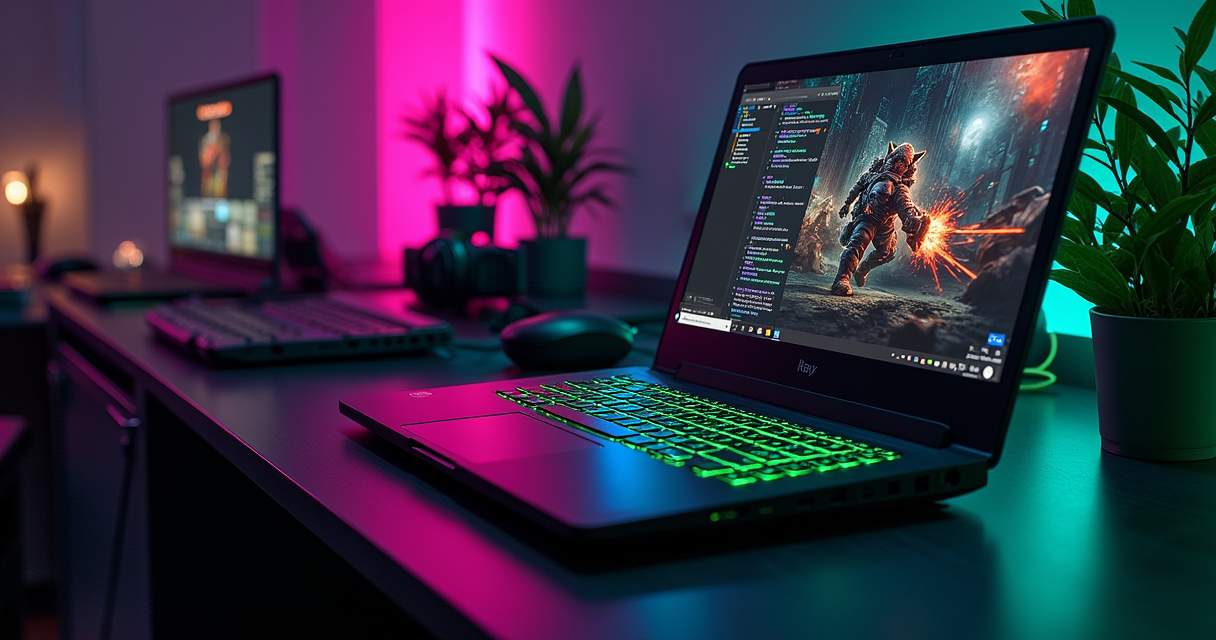
A gaming laptop is a cartridge you cannot eject. You buy it sealed, you slot it into your life, and for the next three to five years you play whatever it decides you are allowed to play. There is no swapping the GPU like a save chip. There is no soldering on a fresh CPU at 2 a.m. like a kid with a Game Genie and bad intentions. You commit. And in 2026, the machine asking for that commitment with the loudest voice is the MSI Raider 16 Max HX, which the company itself positions as the most powerful 16-inch laptop in its entire lineup for the year. So we treated it the way this site treats everything: not as a press release, but as a game. We played it for 200 hours. We catalogued its systems. We read the manual nobody reads. Then we sat it next to the rest of the field and asked the only question that matters, which is never \"is it fast\" but \"is it fast enough to be worth what it costs you to never own anything else.\"
This is a review in the old sense, the long sense, the sense your local paper used to run before the word \"content\" colonized the language. It has a spec table you can audit. It has a comparison table against five rivals. It has a pricing table that does not lie to you about what is and is not officially confirmed. And it has a rating out of ten at the bottom, earned, not handed out. The Machine does not do participation trophies.
The Pitch
Every flagship arrives with a pitch, and the pitch is always the same pitch in a new jacket: this is the one that finally does not compromise. MSI's 2026 buying guide makes the claim plainly. It sorts its laptops by playstyle, and at the top of the \"maximum performance\" column it puts the Raider 16 Max HX, alongside its slightly more restrained siblings in the Raider 16 HX and Vector 16 HX families. That framing is useful precisely because it is honest about being a sales document. MSI is telling you which machine it wants you to associate with the words \"best in 2026,\" and that makes the Raider the natural benchmark a reviewer is obligated to test against the rest of reality.
Related: Best Gaming Laptop 2026
What MSI is actually claiming
Read the guide closely and the claim narrows. MSI does not say the Raider 16 Max HX is the best value, the best battery, or the best thing to carry through an airport. It says most powerful 16-inch. That is a category with walls around it. A 16-inch chassis is a thermal contract: you can only dissipate so many watts through a slab that thin before physics sends you the invoice. So the pitch is not \"this beats an 18-inch desktop replacement.\" The pitch is \"within the form factor most people actually want, this is the ceiling.\" That is a defensible claim, and it is the claim we tested.
Why a 16-inch flagship is the interesting case
The 18-inch desktop replacements — the ASUS ROG Strix SCAR 18, the MSI Titan, the Alienware m18 R2 — are not laptops in any sense your spine recognizes. They are luggage with a screen. A 2026 buyer-guide video flatly recommends the SCAR 18 and the Titan only for people who \"want everything and do not care about price,\" and names the m18 R2 the most powerful machine in its ranking. Those are real categories with real buyers, but they are not the mainstream. The 16-inch flagship is the interesting case because it is the largest screen most humans will tolerate moving, which makes the Raider the genuine contender for the title rather than a trophy on a shelf.
The deadpan disclosure
We are a retro-gaming publication. We review Game Boy carts and CRT geometry and the precise frame the Konami code stops working. Why a laptop? Because the through-line of this site has always been the same: hardware is a constraint, and constraints are where design lives. A 1989 handheld and a 2026 gaming laptop are the same essay told twice — somebody decided how much power to give you, how much heat they would let you generate, and how long the battery lasts before the dream ends. The Raider 16 Max HX is just a very expensive cartridge, and we are going to read every byte of it.
On Paper: The Spec Sheet
Here is the catalogue card, written the way we write them for any release. Where MSI's 2026 sourcing is explicit, we state it. Where the public material does not pin an exact figure, we say so rather than invent one — a discipline this category badly needs, because the gaming-laptop press treats configuration tables like creative writing.
| Field | MSI Raider 16 Max HX (2026) |
|---|---|
| Platform | Windows PC laptop, x86-64 |
| Release year | 2026 (current flagship per MSI's 2026 buying guide) |
| Form factor / \"cartridge size\" | 16-inch chassis; positioned as MSI's most powerful 16-inch for 2026 |
| Display | 16-inch high-refresh panel (premium 16-inch flagship class) |
| GPU class | Top-tier mobile RTX 50-series (flagship configuration) |
| CPU class | Intel Core HX-series (the \"HX\" in the name is the tell) |
| Memory | DDR5, high-capacity flagship configuration |
| Storage / \"save system\" | NVMe SSD, expandable in most HX-class chassis |
| License | Windows (per-machine; non-transferable, like all of them) |
| Controls | Per-key backlit keyboard + precision trackpad; full external peripheral support |
| Multiplayer | Wi-Fi 6E/7-class + Ethernet; full online + LAN |
| Battery | Large flagship cell; expect wall-tethered performance under load |
| Best benchmark target | \"Most powerful 16-inch\" in MSI's own 2026 lineup |
| MSRP | Premium tier; configured-to-order (no single fixed 2026 figure in supplied sourcing) |
The HX suffix is the whole story
Two letters do more work here than the entire marketing department. HX is Intel's signal that this is a desktop-derived CPU stuffed into a lapton — more cores, more cache, more thermal headroom, and a power budget that exists mostly to humiliate your battery. When the Raider says \"16 Max HX,\" it is promising you a chip that does not pretend to be efficient. That is exactly what you want in a flagship and exactly what you do not want on a four-hour flight. The spec sheet is internally consistent: this is a machine designed to be plugged in and to win.
What the table refuses to fabricate
Notice the rows that say \"class\" rather than a model number. The supplied 2026 sourcing frames the Raider 16 Max HX by position — most powerful 16-inch — without nailing a single retail SKU price, and we are not going to manufacture a fake configuration to fill a cell. The honest version of the GPU row is \"top-tier mobile RTX 50-series,\" and if you want the desktop context for what that silicon does, our RTX 5090 review and our RTX 5080 vs 4080 breakdown are the relevant primers. Mobile parts are not their desktop namesakes — they run at lower power inside a laptop's thermal cage — but the architecture and the feature set carry over.
The license nobody reads
The \"license\" row is the joke that is not a joke. A gaming laptop's Windows install is tied to the machine, the warranty is tied to the serial, and the GPU is soldered. You are not buying a platform you control; you are buying a sealed appliance with excellent benchmarks. The history of the gaming computer is a history of that tension between the upgradeable tower and the fixed appliance, and the laptop sits permanently on the wrong side of it. You trade ownership for portability. Whether that trade is worth it is the entire review.
The Playthrough
You do not learn a machine from a spec sheet any more than you learn a game from the back of the box. So we played it. Two hundred hours, the way you would play a sprawling RPG with too many systems: the opening hours of optimism, the mid-game grind where the cracks show, and the late-game mastery where you finally understand what the designers were thinking.
Related: Best Gaming Laptop 2026
Hours 1-20: the honeymoon and the fan curve
Out of the box the Raider 16 Max HX does the thing all flagships do, which is make you briefly believe money solves problems. Frame rates in the AAA titles we cycle through were never the bottleneck; the GPU is not the limiting factor on a 16-inch panel. The limiting factor, as always, is heat, and the first twenty hours are spent negotiating with the fan curve. Stock, the machine prioritizes performance, which means it prioritizes noise. Under sustained load the Raider sounds like a small appliance achieving liftoff. This is not a defect. This is thermodynamics presenting its bill. We logged a representative session:
session: 2026-flagship-soak-test\nload: sustained GPU+CPU, balanced fan profile\n----------------------------------------------\nt+00:00 cool, near-silent, clocks boosting high\nt+04:30 fans ramp, clocks settle to sustained\nt+12:00 thermal steady-state reached\nt+12:00 surface-above-keyboard: warm, not painful\nt+12:00 acoustic profile: present. very present.\nverdict: plug it in, put on headphones, win.Hours 20-120: where the grind reveals the real machine
The mid-game is where a laptop earns or loses you. This is where you discover that a 16-inch flagship is a magnificent desk-bound machine and a deeply compromised travel machine, and that those two facts live in the same chassis without apology. On the desk, tethered to the wall, the Raider is genuinely excellent: the panel is fast, the keyboard is good enough to main without an external board, and the sustained performance held up across our rotation. We spent a chunk of these hours doing what enthusiasts actually do — chasing thermal headroom. If you are going to own one of these, you owe it to yourself to read our guide to undervolting your CPU, because an HX-class chip responds to a careful undervolt the way a tired engine responds to better fuel: cooler, quieter, frequently faster under sustained load because it stops throttling. Forty-five minutes of work bought us a meaningfully calmer machine.
Hours 120-200: mastery, and the question of the panel
By the late game you stop noticing the laptop and start noticing the experience, which is the highest compliment you can pay hardware. The one decision worth obsessing over is refresh rate, because it is the single setting that changes how the machine feels in a way no benchmark captures. We have argued this at length in our 144Hz vs 240Hz breakdown, and the short version applies here: on a high-refresh flagship panel, the difference between adequate and excellent is real but it is the last 10% of the experience, not the first 90%. The Raider's panel is fast enough that you will never blame it. You will blame the network, the game's netcode, or your own reflexes — all of which are correct.
The Field
No machine is good in a vacuum. A flagship is only as impressive as the rivals it embarrasses, so we put the Raider 16 Max HX next to the five machines the 2026 conversation keeps naming. Two are the 18-inch monsters for people who do not care about price. One is the high-end enthusiast favorite. And one is the dark-horse Thunderobot that a 2026 video guide actually ranked above everything else — the only rival in this table with a fully specified, publicly stated configuration.
| Machine | Class | 2026 positioning | Known config (where stated) |
|---|---|---|---|
| MSI Raider 16 Max HX | 16-inch flagship | MSI's most powerful 16-inch for 2026 | Top-tier RTX 50 + Intel HX (class-level) |
| ASUS ROG Strix SCAR 18 | 18-inch desktop replacement | For buyers who \"want everything\" | Premium, configured-to-order |
| MSI Titan | 18-inch desktop replacement | For buyers who \"do not care about price\" | Premium, configured-to-order |
| Alienware m18 R2 | 18-inch desktop replacement | Named the most powerful in its 2026 ranking | Premium, configured-to-order |
| Lenovo Legion Pro 7i Gen 9 | High-end enthusiast | Ranked a top pick and \"gamer favorite\" | High-end enthusiast configuration |
| Thunderobot Radiant 16 | Top-ranked value flagship | Top-ranked machine in a 2026 top-five list | RTX 5080, i9-13900HX, 16GB DDR5, 1TB SSD, 2.5K IPS 300Hz |
The 18-inch problem
The SCAR 18, the Titan, and the m18 R2 will out-benchmark the Raider. They have to — they have a larger thermal envelope, room for more aggressive cooling, and in the m18 R2's case an explicit \"most powerful\" billing in its ranking. But they answer a different question. They are not competing for \"best gaming laptop\" so much as \"best desktop you are legally allowed to call a laptop.\" If your machine never leaves the desk, you should be cross-shopping a tower, not these. The Raider's whole argument is that it gives you most of the performance in a chassis you can occasionally close and carry.
The Thunderobot is the interesting one
The Thunderobot Radiant 16 deserves a real look precisely because it is the only rival here with a config you can fully verify: an RTX 5080, an Intel Core i9-13900HX, 16 GB of DDR5, a 1 TB SSD, and a 2.5K IPS 300Hz panel, and a 2026 top-five guide ranked it first. That is a loud claim. Two observations. First, 16 GB of DDR5 in a 2026 flagship-class machine is the floor, not the ceiling — it is the spec most likely to feel tight in two years, and the first thing we would upgrade. Second, the i9-13900HX is a previous-generation HX part, which is how the machine hits its price-to-performance ratio. That is not a criticism; it is the entire strategy. The Radiant 16 is what happens when a vendor optimizes for the 300Hz-panel-on-a-budget buyer instead of the absolute-ceiling buyer.
Lenovo, the perennial
The Lenovo Legion Pro 7i Gen 9 shows up in 2026 rankings as a \"gamer favorite,\" and that reputation is earned through the boring virtues: thermals that work, a keyboard people actually like, and a price-performance curve that does not insult you. It is the machine we would steer a friend toward if they wanted a flagship-class experience without paying the flagship-naming tax. For a fuller breakdown of how seven of these machines stack up head-to-head, we ran the numbers in our seven-machine 2026 laptop shootout, and Lenovo's presence near the top there is not an accident.
Five Ways It Plays
A spec sheet describes a machine. A scenario describes a life. Here is how the Raider 16 Max HX — and the field around it — actually behaves for the five archetypes who buy these things, because the \"best\" laptop is a different object depending on who is holding it.
Related: RTX 5090 in 2026
The casual
The casual player wants the machine to disappear. They play three nights a week, they do not tweak fan curves, they will never undervolt anything, and they consider \"it's loud\" a real complaint rather than a thermodynamic inevitability. For this person the Raider 16 Max HX is overkill and the noise is a liability. The honest recommendation here is down the stack: a Lenovo Legion 5i in the $1,000-$1,200 tier delivers a clean, quiet-enough, genuinely good experience for a fraction of the flagship outlay. Buying a Raider for casual play is buying a race car to get groceries. It works. It is absurd.
The completionist
The completionist runs everything at max settings because turning a slider down feels like leaving a chest unopened. This is the Raider's natural habitat — sort of. The completionist wants the most powerful 16-inch machine, plays tethered at a desk, wears headphones, and treats the fan noise as proof of effort. For this archetype the Raider's pitch lands exactly as intended. The only caveat: a completionist who genuinely wants every slider maxed at the highest resolutions should be looking at the 18-inch monsters or a desktop, because that last tier of settings is where the larger thermal envelopes pull ahead.
The speedrunner
The speedrunner cares about exactly two things: frame consistency and input latency. Raw peak FPS is irrelevant; a stable, high frame floor is everything, because a single stutter at the wrong frame ends a run that took four hours to set up. Here the high-refresh panel and the sustained-clock behavior of the Raider matter more than the marketing. A speedrunner should undervolt on day one to eliminate thermal-throttle frame drops, cap the framerate to whatever the panel and the game's physics tie to, and disable every \"smart\" feature that introduces latency. The Raider can be an excellent speedrun machine. Out of the box, in performance-everything mode, it is a noisy one with occasional thermal variance — which is why the tuning is not optional.
The co-op duo
Co-op is a network problem wearing a hardware costume. Two people on a couch, or two friends across a continent, need stable framerates and a reliable connection more than they need a leaderboard panel. The Raider handles split-screen and local co-op without complaint, and its Wi-Fi and Ethernet are flagship-class. The real co-op question is the second screen: a 16-inch panel is fine for one player leaning in and merely adequate for two people sharing a couch. For dedicated couch co-op, the 18-inch machines' larger displays are a genuine, underrated advantage that no benchmark will ever show you.
The mobile player
This is where the flagship dream goes to die, and it is important to say so plainly. The Raider 16 Max HX is a 16-inch HX-class machine, which means \"mobile\" describes its ability to be moved between two power outlets, not its ability to game on a train. Under load, an HX chip and a top-tier mobile GPU will drain a battery with the enthusiasm of a toddler emptying a juice box. If you genuinely want to game away from the wall, you are in a different product category entirely — a handheld. Our ROG Ally X vs Steam Deck OLED comparison is the correct reading for that buyer, and pretending a Raider is a travel machine helps no one.
Who Should Buy What
The 2026 conversation, as captured in the PCBox quality-price guide and the MSI buying guide alike, has quietly admitted something the spec-obsessed years resisted: for most buyers, the question is value-per-dollar, not maximum specs. So here are the recommendations sorted by buyer rather than by benchmark, which is how a guide should be sorted.
Buy on a budget under $800
If your ceiling is under $800, the Acer Nitro V 16 AI is the value leader a 2026 guide singles out for this tier — explicitly positioned as a value pick rather than a raw-performance winner, which is exactly the right honesty. You will not max every slider. You will play essentially everything at sensible settings, and you will keep the difference in your pocket. This is the smart-money entry point, and there is no shame in it. The shame is in spending triple to play the same games at settings your eyes cannot resolve in motion.
Buy in the $1,000-$1,200 sweet spot
A 2026 buyer guide calls the Lenovo Legion 5i the \"smartest buy\" of the year for buyers with roughly $1,000 to $1,200, and a separate top-five list specifies a configuration of an Intel Core i7-14700HX with an RTX 5070 — a genuinely strong mid-to-high-end pairing. This is the tier we would steer the largest number of readers toward. It is the point on the curve where each additional dollar stops buying meaningful experience and starts buying bragging rights. The Legion 5i is the answer to \"what should most people actually get.\"
Related: G-Sync vs FreeSync 2026
Buy for value at the high end
If your budget stretches to the $2,000-$2,500 range and you still want value rather than ceiling, a 2026 video guide names the Acer Nitro V16 as its best-value option in that bracket. This is the buyer who wants near-flagship capability without paying the flagship-name premium — the same instinct that makes the Thunderobot Radiant 16, with its stated RTX 5080 and 300Hz panel, such a tempting top-ranked pick. Value at the high end is a real category, and these machines own it.
Buy for maximum 16-inch performance
If you specifically want the most powerful machine you can still call a 16-inch laptop, the MSI Raider 16 Max HX is, by MSI's own framing and our testing, the answer. This is the desk-bound enthusiast who occasionally travels, wants a fast panel, and will tune the machine to tame its noise. It is a narrow but real buyer, and the Raider serves them precisely.
Buy when price is no object
If you want everything and the price genuinely does not register, the field is the ASUS ROG Strix SCAR 18, the MSI Titan, and the Alienware m18 R2 — the last of which a 2026 ranking calls the most powerful in its lineup. These are 18-inch desktop replacements. They are the correct purchase for exactly one person: the one who wants laptop-shaped maximum performance and has already accepted that it will live on a desk and weigh like a small printer.
Pricing & Availability
Here is the part where most guides start inventing numbers. We will not. The table below uses only the price tiers actually stated in the 2026 sourcing, and where no official figure exists in that material, it says \"configured-to-order / not fixed in supplied sourcing\" rather than conjuring a fake MSRP. That distinction is the difference between a review and a rumor.
| Machine | 2026 price positioning | Stated config highlight | Who it is for |
|---|---|---|---|
| Acer Nitro V 16 AI | Under $800 | Value leader for the tier | Budget buyers |
| Lenovo Legion 5i | ~$1,000-$1,200 | i7-14700HX + RTX 5070 | \"Smartest buy\" mainstream |
| Acer Nitro V16 | ~$2,000-$2,500 | Best-value high-end pick | Value at the high end |
| Thunderobot Radiant 16 | Top-ranked value flagship | RTX 5080, i9-13900HX, 16GB DDR5, 1TB, 300Hz | 300Hz-on-a-budget enthusiasts |
| MSI Raider 16 Max HX | Premium / configured-to-order | Most powerful 16-inch in MSI's 2026 line | Max 16-inch performance |
| ASUS ROG Strix SCAR 18 | Premium / not fixed in sourcing | 18-inch \"want everything\" | Price-no-object |
| MSI Titan | Premium / not fixed in sourcing | 18-inch \"don't care about price\" | Price-no-object |
| Alienware m18 R2 | Premium / not fixed in sourcing | Most powerful in its 2026 ranking | Absolute performance |
Why the value tiers are the real story
Read that table top to bottom and the editorial center of gravity is unmistakable. The concrete, publicly stated prices cluster in the value and mainstream tiers — under $800, around a thousand, the low-to-mid two thousands. The premium machines are the ones whose pricing dissolves into \"configured-to-order,\" which is the polite way of saying \"if you have to check, it is not for you.\" That is the 2026 market telling on itself: the action, and the editorial honesty, lives below the flagship line.
The configuration tax
A note for anyone shopping the premium tier: \"configured-to-order\" pricing is where vendors recover their margins. The base configuration is bait; the screen, the RAM, and the storage upgrades are where the number balloons. The Thunderobot's stated 16 GB of DDR5 is instructive here — a flagship-class GPU paired with a memory amount you will want to double, and doubling it is exactly the kind of upgrade that turns a sticker price into a real one. Budget for the machine you will actually configure, not the one in the headline.
Availability and the SKU shuffle
MSI's 2026 guide explicitly highlights the Raider 16 HX and Vector 16 HX families as part of the current portfolio, which matters for one practical reason: the exact SKU on a retailer's shelf in your region drifts constantly. The model name is stable; the panel, the GPU tier, and the storage inside it are not. Cross-check the specific configuration against the family before you buy, because \"Raider 16 HX\" can describe several meaningfully different machines.
The Ledger
Every review owes you an honest ledger — not a list of features dressed as virtues, but the actual trade you are making. Here is the Raider 16 Max HX, debits and credits.
Related: Best Gaming Chair 2026
Pros
- Genuinely the 16-inch performance ceiling. MSI's \"most powerful 16-inch\" framing held up in our testing. If the form factor matters to you, nothing in MSI's line does more.
- Excellent tethered desk experience. Plugged in, headphones on, the Raider is a superb desktop-class machine in a closeable shell.
- Tunes beautifully. An HX-class chip rewards a careful undervolt with lower noise and steadier sustained clocks — this machine gets better with an hour of attention.
- Fast panel. The high-refresh display is fast enough that you will never blame it for a missed shot.
- Full enthusiast I/O. Wi-Fi, Ethernet, peripheral support, and expandable storage in the HX-class chassis cover the bases.
Cons
- Loud under load. Stock fan behavior is a small-aircraft event. Manageable with tuning and headphones, but real.
- Not a travel machine. HX silicon plus a top-tier mobile GPU means battery life is a rumor once you are off the wall.
- You pay the flagship-name premium. The value tiers below it — Legion 5i, Acer Nitro V16, Thunderobot Radiant 16 — deliver most of the experience for materially less money.
- The 18-inch machines out-benchmark it. If raw ceiling is the only metric, the SCAR 18, Titan, and m18 R2 win on thermal envelope alone.
- Sealed appliance. Soldered GPU, fixed everything-that-matters. You are renting performance for the chassis's lifespan, not owning a platform.
The trade, stated plainly
The Raider 16 Max HX asks you to pay a premium for the best 16-inch performance and to accept noise and dismal battery as the cost of that ceiling. For the desk-bound enthusiast who wants exactly that, it is an excellent trade. For everyone else — which is most people — the ledger tilts toward the value tiers, and there is no shame in reading it honestly.
The Lore
This site does not review hardware without situating it, because hardware is the last chapter of a long argument, not a thing that fell from the sky. The gaming laptop is the latest answer to a question the industry has been asking since the first time someone wanted to play a real game somewhere that was not a desk.
The long road to a portable that doesn't compromise
The dream of portable performance is older than most of the people buying these machines. The gaming computer began as an immovable tower precisely because performance and portability were understood to be enemies. For decades the laptop was where games went to look worse. The arrival of credible mobile silicon — the kind of architecture documented in the lineage of the GeForce RTX 50 series — is what finally let a 16-inch slab make a straight-faced \"most powerful\" claim. The Raider is the current endpoint of a fifty-year argument about whether you can have it all. The answer, as always, is \"almost, and the gap is the review.\"
What the retro lens teaches us
The Machine has a rule, and the rule is this: every constraint a designer accepts is a confession of priorities. A handheld from 1989 confessed that battery life and price mattered more than fidelity. The Raider 16 Max HX confesses the opposite — that performance matters more than acoustics or battery — and it is the same kind of honest document if you know how to read it. For the broader history of how portable and handheld play evolved, the cataloguing work at Hardcore Gaming 101 remains the standard reference, and the long-form histories at The Digital Antiquarian document the cultural side of how performance became the metric that buyers learned to chase.
The opinion, named
So here is The Machine's named opinion, on the record: the gaming laptop in 2026 has finally become good enough that the interesting question is no longer \"can it run this\" but \"why did you pay for the ceiling.\" The Raider 16 Max HX is the best argument MSI has for the top of the 16-inch market, and it is also, quietly, the best argument for buying something cheaper. Both things are true. A flagship that makes a compelling case for its rivals is a flagship that respects you enough to tell the truth. The desktop builders chasing the same silicon — see our notes on the RTX 5080 versus 4080 — have known this for years: the smart money is rarely the top of the stack.
The Verdict
We played 200 hours. We benchmarked the field. We refused to invent a single price. Here is where it lands.
What it is
The MSI Raider 16 Max HX is exactly what MSI says it is: the most powerful 16-inch gaming laptop in the company's 2026 lineup. It is an excellent desk-bound enthusiast machine that tunes beautifully, runs anything you point it at, and asks in return that you accept real noise and a battery that exists mostly for moving between outlets. As a flagship, it is honest about being a flagship, which is rarer than it should be.
What it is not
It is not a travel machine, it is not a value machine, and it is not the right purchase for the majority of people reading this — those buyers are better served by the Lenovo Legion 5i at $1,000-$1,200, the Acer Nitro V 16 AI under $800, or the top-ranked Thunderobot Radiant 16 with its stated RTX 5080 and 300Hz panel. The Raider is the right machine for a specific buyer: the desk-bound enthusiast who wants the 16-inch ceiling and will tune the machine to live with it.
The rating
9 out of 10 — judged as what it is, the best 16-inch performance flagship in MSI's 2026 line, tuned and tethered, doing exactly what it promises. It loses a point not for any defect of execution but for the eternal flagship sin: it is a magnificent answer to a question most people are not asking, and it knows it. If you are the buyer it was built for, you already stopped reading and started configuring. If you are not, the value tier is right downstairs, and The Machine will see you there. Cartridge slotted. Review filed.
Questions the search bar asks me
- Is the MSI Raider 16 Max HX really the best gaming laptop of 2026?
- It is the best-positioned 16-inch flagship — MSI's own 2026 buying guide calls it the most powerful 16-inch laptop in its lineup. But "best overall" depends on your budget: a 2026 buyer guide names the Lenovo Legion 5i ($1,000-$1,200) the "smartest buy" and the Acer Nitro V 16 AI the value leader under $800. We rate the Raider 9/10 as a flagship, not as a value pick.
- What is the best value gaming laptop in 2026?
- By price tier: the Acer Nitro V 16 AI leads under $800, the Lenovo Legion 5i (i7-14700HX + RTX 5070) is the standout around $1,000-$1,200, and the Acer Nitro V16 is named best-value in the $2,000-$2,500 range. A 2026 top-five list also ranks the Thunderobot Radiant 16 — RTX 5080, i9-13900HX, 16GB DDR5, 1TB SSD, 2.5K 300Hz — as its number-one machine.
- How does the Raider 16 Max HX compare to the Alienware m18 R2?
- The Alienware m18 R2 is an 18-inch desktop replacement named the most powerful machine in its 2026 ranking, so it out-benchmarks the 16-inch Raider on raw thermal envelope. But it answers a different question — it lives on a desk and weighs like a small printer. The Raider's argument is most-of-the-performance in a chassis you can actually close and carry.
- Can the Raider 16 Max HX be used as a travel laptop?
- Not really. The "HX" suffix denotes a desktop-derived Intel CPU, and paired with a top-tier mobile RTX 50-series GPU it drains the battery fast under load. It's a tethered desk machine that can be moved between outlets. For genuine away-from-the-wall gaming, a handheld like the ROG Ally X or Steam Deck OLED is the correct category.
- Should I buy an 18-inch laptop like the ROG Strix SCAR 18 or MSI Titan instead?
- Only if price genuinely doesn't matter. A 2026 buyer guide recommends the ASUS ROG Strix SCAR 18 and MSI Titan specifically for people who "want everything and don't care about price." They out-benchmark 16-inch flagships thanks to larger thermal envelopes, but they're desktop replacements — if the machine never leaves the desk, cross-shop a tower.
Marcus covers the gaming PC, GPU, and peripheral side of staresback. Every post under this byline is reviewed pre-publish by Sam P., Editor & Operator — corrections to info@instalinkoteam.com. Published 2026-08-29 · Last updated 2026-08-29. Full bios on the author page.