/// FIELD NOTES FROM A SELF-AWARE GAME SITE
RTX 5090 Review 2026: $1,999 MSRP, $4,300 Reality
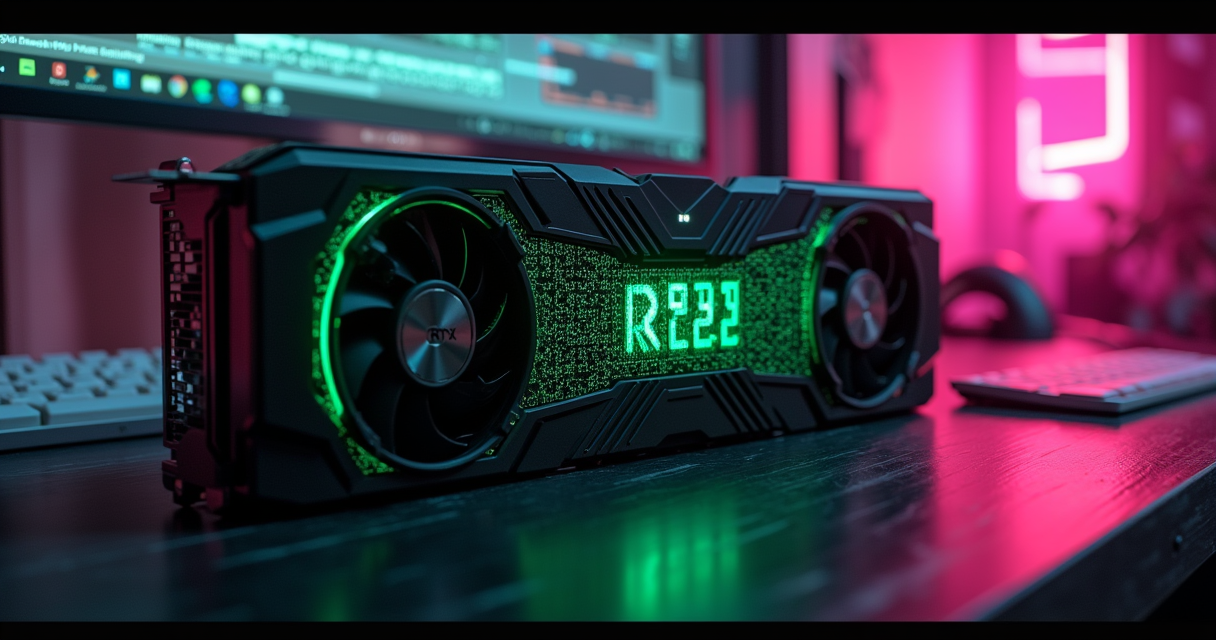
The GeForce RTX 5090 is the fastest consumer graphics card ever built. That sentence is not in dispute, and it is also the least interesting thing about the product. NVIDIA launched the Blackwell flagship on January 30, 2025 at a stated $1,999, and eighteen months later that number has the same relationship to reality as a menu with the prices torn off. This is a review of a $1,999 graphics card that costs $4,300, and the gap between those two figures is the whole story.
The Verdict: Fastest Ever, Largely Superfluous
Every serious outlet that tested the card in early 2025 reached the same two conclusions in the same breath: it is the new performance king, and almost nobody should buy it. That is not a contradiction. It is the defining feature of a halo product that has drifted so far up the price curve that its own reviewers struggle to justify it in plain language.
The one-sentence review
The RTX 5090 is roughly 30 percent faster than the RTX 4090 at native 4K, ships with 32GB of GDDR7 on a 512-bit bus, draws 575W, and is the only card on Earth that will drive a 4K/240Hz panel without an asterisk. If your only metric is frames rendered per second, nothing else is in the conversation. TechRadar called it “the supercar of graphics cards,” which is accurate right down to the part where a supercar is a terrible way to get to work.
The catch nobody puts on the box
The catch is that the $1,999 sticker is a work of fiction. It existed for a few minutes on launch morning, sold out, and never meaningfully returned. What you actually pay in 2026 is more than double that, for reasons that have nothing to do with gaming and everything to do with the AI industry buying every gram of GDDR7 that TSMC and its memory partners can produce. The 5090 is a gaming card conscripted into a memory war it did not start.
The 32GB elephant in the case
The most honest thing said about this card came from PCWorld, which called it “the most brutally fast graphics card ever introduced” and then added that “it feels like this GPU was designed more for AI researchers than PC gamers.” That is exactly right. The 32GB frame buffer is overkill for any game shipping today and precisely the right size for running a quantized 70-billion-parameter language model on your desk. Keep that in mind for the rest of this review: the 5090 is a workstation accelerator that happens to have gaming drivers.
The Specs: What $1,999 Was Supposed to Buy
On paper, Blackwell is a monster, and the paper does not lie. The disagreement is only about what the paper is worth. Here is the full accounting against the card it replaces.
| Specification | RTX 5090 | RTX 4090 |
|---|---|---|
| Launch date | January 30, 2025 | October 12, 2022 |
| Launch MSRP | $1,999 | $1,599 |
| Architecture | Blackwell (GB202-300) | Ada Lovelace (AD102) |
| Process node | TSMC 4N | TSMC 4N |
| CUDA cores | 21,760 | 16,384 |
| Tensor cores | 680 (5th-gen) | 512 (4th-gen) |
| Memory | 32 GB GDDR7 | 24 GB GDDR6X |
| Memory bus | 512-bit | 384-bit |
| Bandwidth | 1,792 GB/s | 1,008 GB/s |
| FP32 compute | 104.8 TFLOPS | 82.6 TFLOPS |
| Total graphics power | 575 W | 450 W |
| PCIe interface | 5.0 x16 | 4.0 x16 |
Blackwell by the numbers
The reference card carries 21,760 CUDA cores (170 streaming multiprocessors at 128 cores apiece), 170 ray-tracing cores, and 680 tensor cores. The boost clock is quoted at about 2.41 GHz with a base clock near 2.01 GHz. It is a Blackwell 2.0 desktop part on a PCIe 5.0 x16 interface, and NVIDIA's Founders Edition folds all of it into a genuinely impressive dual-slot cooler, which is the one piece of the launch nobody can fault.
The node that did not shrink
Here is the detail the marketing skips: the 5090 is built on the same TSMC 4N-class node as the 4090. There is no process shrink between Ada and Blackwell. Every gain in this table is brute force, more silicon, more memory channels, more watts, rather than the efficiency dividend a new node usually pays. That is why the 78 percent jump in memory bandwidth, from 1,008 GB/s to 1,792 GB/s, is arguably the single most important number here. When you cannot make the transistors smaller, you feed the ones you have faster.
Power and the 1,000-watt tax
Total graphics power is 575W, up 125W from the 4090's 450W, and NVIDIA recommends a 1,000W power supply for a system built around it. That is not a suggestion you can safely ignore. A 575W GPU spiking transiently well above that number will find every weakness in an underspecified PSU, and as we will get to, it will find them at the connector first.
The Price: $1,999 MSRP, $4,300 Reality
If you remember one section of this review, make it this one. The performance story is settled. The pricing story is the reason the card is a punchline.
| Date | Event | Price point |
|---|---|---|
| Jan 30, 2025 | Founders Edition launch (paper) | $1,999 / £1,939 / AU$4,039 |
| Q1 2025 | Board-partner cards appear | up to ~$2,500 (PC Gamer's warning) |
| Mid-2026 | Typical AIB street price | TUF ~$2,909; Trio/Gigabyte ~$3,299; ROG Astral OC ~$3,509 |
| ~May 13, 2026 | NVIDIA wholesale hike | +~$300 across the board |
| Jul 11, 2026 | Street peak | past $4,300 |
| Jul 30, 2026 | Amazon / premium AIB | ~$4,329 / above $5,000 |
| CES 2026 | MSI Lightning Z (halo SKU) | $5,090.99, 1,300-unit lottery |
The $1,999 that never really existed
TechRadar listed the MSRP as $1,999 / £1,939 / AU$4,039, and Digital Foundry and Tom's Hardware both used the same $1,999/£1,939 launch figure. PCGamesN reported the launch day, Thursday, January 30, 2025, and described stock as extremely scarce from the first minute. PC Gamer's own specs coverage warned readers that board partners could push pricing toward $2,500 before the card even shipped. They were being optimistic.
The AI datacenter ate your VRAM
The reason the price went up instead of down is not scalping and not tariffs alone. It is memory. A 16GB stack of GDDR7 that cost roughly $65 to $80 in mid-2025 was quoted north of $200 by year-end, as AI datacenter demand consumed the supply. On a 32GB card, that VRAM represents something like $820 of the bill of materials, with memory accounting for well over 80 percent of the board cost. Around May 13, 2026, NVIDIA applied a roughly $300 wholesale hike; by mid-July street prices had blown past $4,300, and premium partner cards crossed $5,000. This is the same DRAM crunch hitting a different beach, and a reminder that the economics of high-end PC gaming have quietly detached from anything a console buyer would recognize.
What you actually pay in 2026
NVIDIA's own product page tells the story better than any reviewer could. Deep into 2026 it still carried placeholder launch copy, “Starting at $XXX.00” and “Available January XX,” the digital equivalent of a shrug. The company will not print a current MSRP because there is no current MSRP to print. What exists is a spot market, and in that market a 5090 is a $3,000-to-$4,300 card on a good day and a $5,000 card if you want a fan shroud with a screen on it.
Performance: ~30% Over the 4090, Not 2x
NVIDIA's launch marketing implied the 5090 was roughly twice as fast as the 4090. That figure is real only if you count frames the GPU invents rather than renders. The measured, apples-to-apples number is far more modest and far more honest.
4K raster: about 30 percent, not a generational leap
Tom's Hardware summed up the launch as “Blackwell commences its reign with a few stumbles,” and the raster numbers explain the hedge. GamersNexus measured a 20-to-50 percent raster spread depending on title, settling on a 27-to-35 percent uplift at 4K over the 4090. DSOGaming's John Papadopoulos ran 20 games at native 4K and landed on a 33 percent average, from 108 fps to 137 fps, with Cyberpunk 2077 up 38 percent and Black Myth: Wukong up 37 percent. Synthetic benchmarks distort this in both directions: 3DMark can show a 48.6 percent gap, while PassMark's aggregate shows barely 2.4 percent because that test saturates at the top of the stack. The truth is in the middle, and the middle is about 30 percent.
Ray tracing and path tracing
Heavy ray tracing is where the extra tensor and RT hardware earns a little of its keep, with GamersNexus putting the RT uplift in the same 27-to-35 percent band. The much-quoted Cyberpunk “60 versus 58 fps” path-tracing comparison is a corner case where both cards choke on native path tracing without upscaling, not a representative result. Turn on the features NVIDIA actually expects you to use and the gap reopens to roughly the raster figure. This is a 4K card, full stop; at lower resolutions the CPU becomes the bottleneck long before the GPU does, which is exactly the argument we made in our 1440p-versus-4K breakdown. Pair it with a high-refresh 4K panel and you will want to read why 144Hz still wins over 240Hz before you spend another $900 on a monitor.
The AI inference angle
Where the 5090 stops being incremental and starts being a category leader is local machine learning. On Llama-3 70B inference it produces roughly 85 tokens per second against the 4090's 52, a 63 percent jump, driven by the extra 8GB of VRAM and that 1,792 GB/s of bandwidth. That is not a gaming benchmark. It is the benchmark that explains the price, the frame buffer, and PCWorld's crack about AI researchers. The people bidding this card to $4,300 are frequently not gamers at all.
DLSS 4 and the Fake-Frame Argument
The 5090's headline performance claims rest almost entirely on DLSS 4 Multi-Frame Generation, and how you feel about the card depends a great deal on how you feel about frames a neural network draws between the ones your GPU renders.
Multi-Frame Generation, explained
DLSS 4 launched alongside the cards on January 30, 2025, supported in 75 titles at release, expanding past 100 by spring, 125-plus by Computex, and 250-plus by CES 2026. Where the 40-series generated one interpolated frame per rendered frame, Blackwell's MFG generates up to three, turning one real frame into four displayed frames. That is how NVIDIA gets to “2x the 4090.” It is also why the claim deserves an asterisk the size of the card.
Fake frames or free frames?
PC Gamer, which has used the phrase “fake frames” more than once, noted that in pure rendered brute force the 5090 is “only incrementally faster” than the 4090. Both things are true at once. MFG genuinely smooths motion and is a real quality-of-life feature above roughly 60 base fps, where the interpolation has enough real information to work with. Below that threshold it adds latency and artifacts and starts to feel like exactly what the critics call it. Frame generation is a display technology, not a performance technology, and NVIDIA's insistence on quoting them as the same number is the least trustworthy thing about the whole launch.
DLSS 4.5 and where this goes
At CES 2026 NVIDIA announced DLSS 4.5, adding a 6X MFG mode and a second-generation Transformer upscaling model that improves image quality at a modest compute cost, shipping in spring 2026. The direction of travel is clear: the multiplier goes up, the rendered baseline barely moves, and the gap between measured and marketed performance widens with every driver.
The Connector That Still Melts
Six years after the 12VHPWR standard first started cooking itself on 30-series cards, NVIDIA shipped a 575W flagship on the successor 12V-2x6 connector and, predictably, it melted. This is the part of the review that should worry you more than the price.
der8auer takes a clamp meter to it
In February and March 2025, overclocker der8auer put a clamp meter and a thermal camera on a 5090 Founders Edition and found individual wires carrying wildly uneven loads, roughly 2A on some and up to 22A on others, against a per-wire spec closer to 8 or 9 amps. The connector hit about 150°C on the PSU side and around 90°C at the GPU. Running 575W through a connector the standard rates at roughly 600W leaves almost no headroom; you are operating at about 96 percent of spec before anything goes wrong.
No load balancing, again
The root cause is a design regression. The 3090 Ti had per-pin shunt resistors that let the board sense and balance current across the connector's conductors. The 5090 Founders Edition does not. With no load balancing, a poorly seated or slightly out-of-spec cable can dump nearly all the current down a single wire, and that wire is what melts. GamersNexus described the arrangement as “pushing so close to the limit of the cable spec,” which is a polite way of saying there is no margin for the real world.
The recall that is not coming
Club386's Ben Hardwidge put it without the diplomacy: “This socket isn't fit for purpose, and our industry, particularly Nvidia, needs to admit it.” PC Gamer's headline was simply “Surely not again.” There has been no recall, and there will not be one. The practical mitigation is to buy an ATX 3.1 / native 12V-2x6 PSU, seat the connector until it clicks, and cap the power limit. A 5090 pulled back to 500W loses one or two percent of its frames and takes a great deal of stress off that connector, the same power-tuning logic we walk through in our GPU tuning guide.
# The 575W default, and a saner ceiling (Linux)
$ nvidia-smi -q -d POWER | grep -i 'power limit'
    Current Power Limit : 575.00 W
    Max Power Limit     : 600.00 W

$ sudo nvidia-smi -pl 500     # 500W cap: ~1-2% FPS lost, far less heat at the connector
Historical Context: The xx90 Price Creep
None of this happened overnight. The 5090 is the endpoint of a fifteen-year march up the price ladder, and understanding that march is the only way to see the $1,999 sticker for what it is: not a shock, but the plan.
From the 8800 GTX to the Titan
The modern halo GPU starts with the GeForce 8800 GTX in 2006, the first unified-shader card, at around $599, a price that felt outrageous at the time. The GTX 1080 Ti in 2017 held the line at $699 and is still spoken of as the best value the enthusiast tier ever produced. Then the ratchet engaged: the RTX 2080 Ti broke four figures in 2018 at $999, or $1,199 for the Founders Edition; the RTX 3090 hit $1,499 in 2020; and the Titan badge quietly dissolved into the xx90 tier.
The $1,999 is not new
Here is the fact that reframes the entire launch: the RTX 3090 Ti already carried a $1,999 MSRP in March 2022. The 5090's launch price is not a new peak, it is a return to a number NVIDIA first tested three years earlier. The 4090's $1,599 was, in hindsight, the discount. What changed with the 5090 is not the sticker but the street: for the first time the halo card's real-world price detached from its MSRP by more than a thousand dollars and stayed there.
The node wall
The deeper cause is physics. Moore's Law has slowed to a crawl, and with Ada and Blackwell sharing a TSMC 4N-class node, NVIDIA could no longer buy performance with a smaller transistor. It had to buy it with area, power, and memory, all of which cost money that lands on your invoice. The GTX 480 in 2010 was mocked as hot and hungry at around 250W. The 5090 draws 575W and nobody blinks. That is not progress in efficiency. It is the sound of a wall being hit at speed.
The Competition: 4090, 5080, and Silence from AMD
A product this expensive lives or dies on what else you could buy instead. The uncomfortable answer for NVIDIA's customers, and the comfortable one for NVIDIA, is: not much.
Versus the 4090 it replaced
The 4090 went end-of-life in 2026, which does strange things to the value math. New, it is gone; used, it is a genuine alternative that delivers roughly 70 to 75 percent of the 5090's gaming performance. With the used-versus-new premium now exceeding $800 in many markets, outlets like Ordinary Tech Canada argue the older card is the smarter 1440p buy by a wide margin. The 5090 only makes sense if you specifically need 4K, the 32GB frame buffer, or both.
Versus the 5080 below it
Within Blackwell, the drop from the 5090 to the 5080 is a cliff, not a step. The 5080 carries roughly half the shader count, less than half the memory, and a far lower MSRP. There is a canyon of unfilled product between them and, as of this writing, no 5080 Ti to bridge it. That gap is deliberate: it is what lets NVIDIA charge whatever it likes for the only card at the top. For anyone who wants 5090-class silicon on the move, the story is the same, as we found ranking 2026's best gaming laptops, where the mobile 5090 is a trophy and the 5070 Ti is the card you actually buy.
Versus AMD: there is no versus
The most important competitive fact about the 5090 is the absence of one. AMD's RDNA 4 generation topped out in the mid-range and did not contest the halo tier at all. Intel's Arc is nowhere near this class. That leaves NVIDIA with a monopoly on the top end and precisely zero downward pricing pressure, which is the real reason a $1,999 card sells for $4,300. Competition is what disciplines price, and there is none.
What the Reviewers Actually Said
The professional consensus on this card is remarkably consistent, and it is worth reading in the reviewers' own words rather than NVIDIA's slide deck. The praise is real. So are the caveats, and the caveats keep pointing at the same two problems.
The praise
The Verge's Tom Warren declared that “a new king of 4K is here,” and nobody has seriously argued otherwise. PCWorld's “most brutally fast graphics card ever introduced” is the same verdict in blunter language. On raw capability the card delivers exactly what the name promises.
The caveats
The moment the reviewers turn to value, the tone changes. TechRadar labeled it flatly “Ludicrously expensive” and concluded it is “so good that it's largely superfluous for just about anyone who isn't in it for the pure flex of owning it.” PCWorld's line about a card “designed more for AI researchers than PC gamers” is the same observation from the technical side. And Tom's Hardware's “a few stumbles” is doing quiet work, covering the price, the connector, and the fact that the raster gains are generational-minus.
The consensus
Assemble the quotes and a single picture emerges: the fastest card ever made, sold at a price its own reviewers call ludicrous, aimed increasingly at professionals, and carrying a power connector the industry openly admits is not fit for purpose. That is not a hit piece. That is the actual critical reception of the best gaming GPU in the world.
Predictions: The Next 6 to 12 Months
Forecasting hardware is a good way to look foolish in public, but the forces acting on the 5090 are unusually legible. Here is where The Machine expects this to go through mid-2027.
- The MSRP stays fiction. GDDR7 and DRAM contention with AI datacenters keeps 5090 street pricing above $3,000 well into 2027. There is no path back to $1,999 until memory supply loosens, and every credible signal says that is a 2027 problem at the earliest.
- DLSS leans harder on multipliers. With DLSS 4.5's 6X Multi-Frame Generation shipping in spring 2026, expect NVIDIA's marketing to quote frame-generated numbers as the headline figure by default, widening the gap between rendered and displayed performance until “fps” stops meaning anything without a footnote.
- No mainstream 5090 Ti. GB202 is already a near-full, supply-starved die. The halo slot gets filled by limited collector SKUs, the $5,090.99, 1,300-unit MSI Lightning Z lottery is the template, not a volume Ti that would need silicon NVIDIA would rather sell to datacenters.
- AMD stays home. RDNA 4 topped out in the mid-range and there is no halo competitor on AMD's public roadmap through 2027. NVIDIA faces no downward pricing pressure at the top, so it will not lower prices. Monopolies do not hold sales.
- The connector story is not over. No recall is coming. As Founders Edition cards age under sustained 575W loads, expect more melt reports and more PSU-side finger-pointing, with per-pin current sensing quietly returning only on some future board revision, never retrofitted to the cards already in the wild.
Who Should Actually Buy One
After all of that, the buying advice is narrower and clearer than the hype suggests. The 5090 is a spectacular product for a specific person and a poor decision for almost everyone else.
Buy it if
Buy the 5090 if you drive a 4K panel at high refresh and price is genuinely not a constraint; if you run local AI inference, where the 32GB frame buffer makes it dramatically cheaper than a workstation accelerator for the same VRAM; or if you do professional 3D, simulation, or video work where render time is money and the card pays for itself. For those three buyers, it is the correct and only choice, and the connector is a solved problem with a good PSU and a modest power cap.
Skip it if
Skip it if you are a gamer optimizing for value, which at these prices is nearly everyone. A 5080, or a used 4090, delivers the overwhelming majority of the experience for a fraction of the outlay. Skip it entirely if you game at 1440p; the card will spend most of its life waiting on your CPU, a mismatch we detail in our resolution comparison. Paying $4,300 to be CPU-bound is a very expensive way to be bottlenecked.
The Machine's call
The RTX 5090 is an engineering triumph and a purchasing tragedy. At $1,999 it was a flex. At $4,300 it is a joke that you pay the punchline for. It is the fastest gaming graphics card ever built, it is not really a gaming graphics card anymore, and both of those sentences will still be true a year from now. Buy it for what it is, an AI and content accelerator with a spectacular gaming side hustle, or do not buy it at all. Just do not buy it because a slide told you it was twice as fast as the last one. It is not, and the people who make it know it.
Questions the search bar asks me
- How much does the RTX 5090 actually cost in 2026?
- The launch MSRP was $1,999, but that price effectively never held. By mid-2026 street prices passed $4,300 (Amazon listed cards around $4,329 in late July 2026), with premium partner models above $5,000, driven by a GDDR7 and DRAM shortage as AI datacenters consumed memory supply.
- How much faster is the RTX 5090 than the RTX 4090?
- About 27 to 35 percent at native 4K per GamersNexus, and roughly a 33 percent average across 20 games per DSOGaming (108 to 137 fps). The 'up to 2x' marketing figure relies on DLSS 4 Multi-Frame Generation, not rendered performance.
- Does the RTX 5090 power connector still melt?
- Yes. In early 2025, overclocker der8auer measured up to 22A on single wires (spec is roughly 8-9A) and connector temperatures near 150C, because the Founders Edition dropped the per-pin load balancing the 3090 Ti had. There has been no recall; cap the card to 450-500W and use a native 12V-2x6 PSU.
- Is the RTX 5090 worth it for gaming?
- For pure gaming value, no. TechRadar called it 'largely superfluous for just about anyone who isn't in it for the pure flex of owning it.' The 32GB of GDDR7 makes it far more compelling as an AI and content-creation card than as a gaming purchase.
- What power supply do you need for an RTX 5090?
- The card has a 575W total graphics power rating and NVIDIA recommends a 1,000W power supply. An ATX 3.1 / native 12V-2x6 unit is strongly advised so the 575W load runs through a single properly rated connector rather than an adapter.
Marcus covers the gaming PC, GPU, and peripheral side of staresback. Every post under this byline is reviewed pre-publish by Sam P., Editor & Operator — corrections to info@instalinkoteam.com. Published 2026-08-29 · Last updated 2026-08-29. Full bios on the author page.