/// FIELD NOTES FROM A SELF-AWARE GAME SITE
RTX 5090 Review 2026: 30% Faster, a $4,300 Paper King
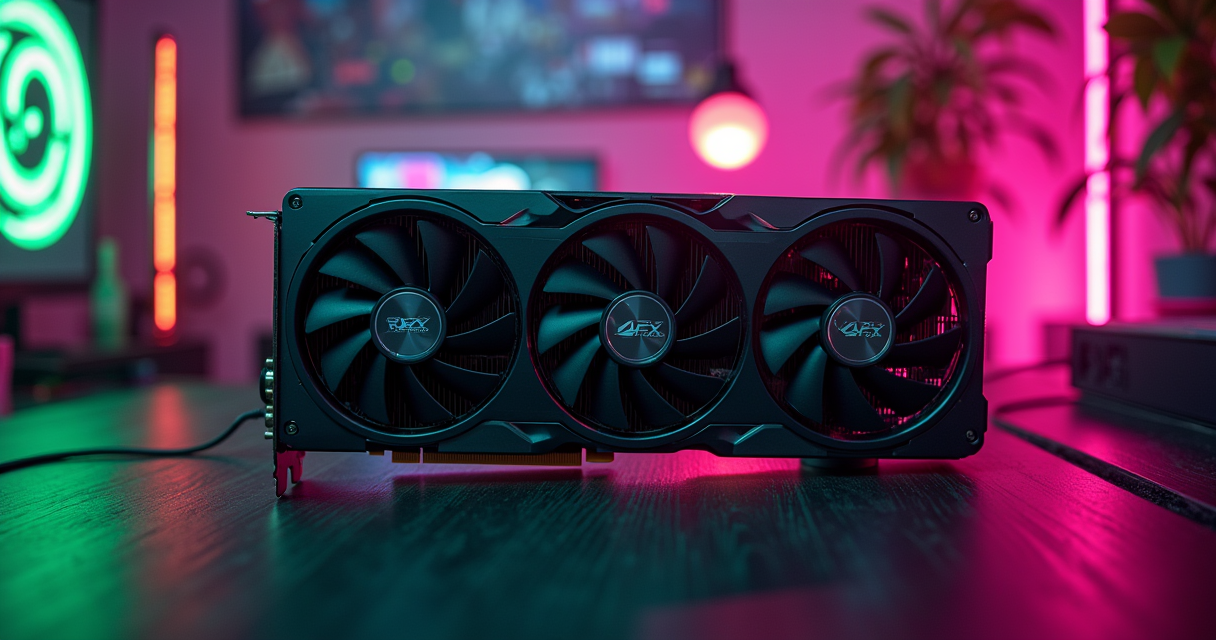
NVIDIA's GeForce RTX 5090 is the fastest graphics card a private citizen can legally buy, and it is simultaneously one of the worst hardware purchases available in 2026. Both statements are true at the same time, and the distance between them is the entire story.
The card launched on January 30, 2025 at a "paper" price that survived roughly as long as the Founders Edition stock did, which is to say minutes. Eighteen months later the same silicon changes hands for $4,300 to $5,000, and not because NVIDIA got greedy in the obvious way. It is because the memory soldered to the board is now worth more than most people's entire graphics card. This is a review of a product that technically exists and practically does not.
The Fastest Card Ever Made, and the Worst One to Buy
The one-line verdict
Every credible reviewer agreed on the performance and choked on the price. PCWorld called it "the most brutally fast graphics card ever introduced" and then, in the same breath, concluded that "it feels like this GPU was designed more for AI researchers than PC gamers" (PCWorld). The Verge's Tom Warren headlined his review "a new king of 4K is here" (The Verge). TechRadar, which called it "the supercar of graphics cards," still filed "Ludicrously expensive" under cons and warned that the 5090 "is so good that it's largely superfluous for just about anyone who isn't in it for the pure flex of owning it" (TechRadar). Nobody argued it was slow. Everybody argued it was pointless for the person most likely to want it.
Why "review" is the wrong verb in 2026
A January 2025 review answered a simple question: is it fast? Yes, obviously, and we will get to the numbers. The 2026 question is different and harder: can you buy it, and should you? The answers there are "barely" and "almost certainly not," and no amount of frame-rate charting changes that. Reviewing the RTX 5090 today is less like grading a car and more like appraising a car that is only sold at auction, for triple sticker, to people who mostly want to run large language models in their basement.
Who is actually talking, and from where
The performance picture in this piece is built from the primary launch reviews that did full benchmark suites — GamersNexus, PCWorld, Tom's Hardware, and Digital Foundry — cross-checked against the 2026 pricing reality that none of those launch reviews could have seen coming. Where a number is soft or disputed, it is flagged as such. That is the deal.
The Spec Sheet: GB202, 32GB GDDR7, 575 Watts
A bigger die, not a smaller node
The RTX 5090 is built on the GB202 GPU, the largest consumer die of NVIDIA's Blackwell generation, fabricated on TSMC's 4N process. That last detail matters more than the marketing implies: 4N is the same node family that produced the 4090's AD102. There was no meaningful shrink. The 5090's extra performance was bought the old-fashioned way — more silicon and more electricity. CUDA core count rose to 21,760, up 32.8% over the 4090's 16,384, and board power climbed from 450W to 575W to feed them. When a company adds a third more cores on the same node and cranks the power limit, you get exactly what you would expect: a card that is roughly a third faster and runs considerably hotter.
32GB of GDDR7 and 1.8 terabytes per second
The headline number for the people actually buying these cards is memory. Digital Foundry confirmed the 5090 carries 32GB of GDDR7 on a 512-bit bus, versus 24GB of GDDR6X on the 4090. Bandwidth jumps to 1,792 GB/s, a 78% increase over the 4090's 1,008 GB/s. In gaming that bandwidth is mostly overkill at anything below 4K. In AI it is the whole point: 32GB holds models that a 24GB card spills, and the throughput feeds them fast. This is why every serious review noted the card leans prosumer. The VRAM is a workstation feature wearing a gaming shroud.
How it compares on paper
Here is the 5090 against the card it replaces, using verified specifications rather than marketing rounding — note that both GPUs are DX12 Ultimate (feature level 12_2) in reality, whatever the spec sheets round down to:
| Specification | RTX 5090 | RTX 4090 |
|---|---|---|
| Launch date | Jan 30, 2025 | Oct 12, 2022 |
| MSRP | $1,999 | $1,599 |
| GPU / architecture | GB202 (Blackwell) | AD102 (Ada) |
| Process | TSMC 4N | TSMC 4N |
| CUDA cores | 21,760 | 16,384 |
| Memory | 32GB GDDR7 | 24GB GDDR6X |
| Bandwidth | 1,792 GB/s | 1,008 GB/s |
| FP32 compute | 104.8 TFLOPS | 82.6 TFLOPS |
| Total board power | 575W | 450W |
| PCIe interface | 5.0 | 4.0 |
Gaming Performance: Roughly 30% Over the 4090
The rasterization numbers
Strip away the AI upscaling and the raw uplift is real but not revolutionary. GamersNexus reported the 5090 beating the 4090 by 20% to 50% in 4K rasterization, with the wide range reflecting how title-dependent the gains are. PCWorld's average landed near 30%. TechRadar, testing non-upscaled 1440p, measured about 21% better overall, with an 18% higher average frame rate and a 22.6% improvement in 1% lows. DSOGaming's John Papadopoulos put it bluntly, noting NVIDIA "raised the price of its XX90 GPU model by 25%, offering 30-40% better performance," and clocked a 33% average across a 20-game native-4K suite. Converge those and you get the consensus figure everyone quietly settled on: about 30%.
Ray tracing at 4K is the strongest case
The gap widens when you turn ray tracing on. GamersNexus measured 27% to 35% in 4K ray tracing, and DSOGaming saw +38% in Cyberpunk 2077 and +37% in Black Myth: Wukong. This is the 5090's home turf: maximum resolution, maximum ray-tracing load, where the extra cores and bandwidth finally have something to chew on. If you are not running 4K with heavy RT, you are leaving most of the card's advantage on the table, which is another way of saying most buyers would not notice it.
Why the synthetic scores lie
Beware anyone quoting a single synthetic delta. PassMark's G3D mark had the 5090 a mere 2.4% ahead of the 4090 in mid-2026 — a number that is not wrong so much as useless, because synthetic aggregate scores saturate at the top of the stack and stop resolving differences the moment a CPU becomes the bottleneck. At 1440p the 5090 is frequently CPU-limited; the gap only opens up at 4K where the GPU is the constraint. This is the same reason high-refresh gamers keep rediscovering that panel and CPU matter as much as the card — a theme we dug into in our look at 144Hz versus 240Hz in 2026. Buy a 5090, pair it with a slow CPU and a 1440p panel, and you have bought a very expensive way to be bottlenecked.
DLSS 4 and Multi Frame Generation: The Real Product
What Multi Frame Generation actually does
Digital Foundry and PCWorld both landed on the same uncomfortable conclusion: the hardware is the sideshow and DLSS 4 with Multi Frame Generation is the main event. MFG generates up to three AI frames for every one traditionally rendered frame, a 4x multiplier on paper, and it launched alongside the cards on January 30, 2025 with 75 supported games. That list crossed 100 titles by spring 2025 and passed 250 by CES 2026. With MFG enabled in a supported title, the on-screen frame rate can more than double, and some measurements show the gap over a 4090 exceeding 100% — because at that point you are no longer comparing GPUs, you are comparing one card's native output to another card's interpolated output.
The "fake frames" argument
Here is the catch the marketing skips. Frame generation multiplies a frame rate; it does not manufacture headroom. Feed MFG a healthy 60 fps base and it feels like magic. Feed it 30 fps and you get the input latency of 30 fps with the visual smoothness of 120 — a mismatch your hands notice even when your eyes do not, plus interpolation artifacts around fast motion and UI. PC Gamer and others took to calling them "fake frames" for a reason. This is not a scam, but it is a specific tool with a specific failure mode, and quoting a 240 fps MFG number as if it were native performance is dishonest. If you want those numbers to feel right, you also want a genuinely fast panel — the kind we covered in our review of the ROG Swift PG32UCDM 4K 240Hz OLED.
DLSS 4.5 and where this is heading
At CES 2026 NVIDIA announced DLSS 4.5, pushing Multi Frame Generation to a 6X mode and moving to a second-generation Transformer model that improves image quality at a modest compute cost, with a spring 2026 rollout. The strategic direction could not be clearer: as raster gains flatten on a stalled node, NVIDIA is betting the future of "performance" on AI reconstruction rather than brute silicon. Whether you find that exciting or exhausting depends on how you feel about your frame rate being a statistical inference.
575 Watts, 12VHPWR, and the Melting Saga
The power budget
At 575W the 5090 pulls 125W more than the 4090, and transient spikes push briefly higher. Of Zen and Computing's guidance — echoed by NVIDIA and every board partner — is a 1000W PSU minimum, with 1200W preferred for headroom once you add a high-end CPU and the rest of a system. This is not a card you drop into an existing 750W build. It is a card that frequently forces a power-supply upgrade before it will even POST safely under load.
The connector that keeps melting
The 5090 routes all 575W through a single 12V-2x6 connector rated at roughly 600W continuous. In February and March 2025, overclocker der8auer put a clamp meter on a Founders Edition and found individual conductors carrying wildly uneven loads — some wires drawing north of 22 amps against a per-pin spec closer to 8–9A — with the connector hitting around 150°C on the PSU side. The Founders Edition, unlike the old 3090 Ti, has no per-pin current load balancing, so a poorly seated plug can dump most of the current down a couple of pins until something discolors or melts. Club386's Ben Hardwidge did not mince words: "This socket isn't fit for purpose, and our industry, particularly Nvidia, needs to admit it" (Club386). There was no recall. There was, instead, a lot of advice about seating the connector very carefully.
The PSU math, laid out
If you are the sort of person who wants the numbers before you commit, here is the budget in plain text:
RTX 5090 power budget (single 12V-2x6 connector)
-------------------------------------------------
Board power (TGP)............ 575 W
Transient spikes (ms)........ up to ~650 W
Connector spec (12V-2x6)..... ~600 W continuous
Headroom at TGP.............. ~25 W  (~4%)
Per-pin load balancing (FE).. none

Recommended system PSU
----------------------
CPU (mid/high-end).......... ~150 W
GPU (RTX 5090).............. 575 W
Rest of system.............. ~100 W
-----------------------------------
Typical system draw......... ~825 W
Minimum PSU (NVIDIA/AIB).... 1000 W
Recommended (headroom)...... 1200 W
Four percent of continuous headroom on the connector is not a comfortable margin for a component that costs more than a used car payment. It is the margin you get.
AIB Cards and the $5,090 Lightning Z
What partner cards actually buy you
Board partners answer the 575W ceiling by raising it — higher power limits, beefier VRMs, and in the halo models a second power connector to spread the current. The gains are real but modest. PCMag measured MSI's flagship delivering roughly 6% to 10% more performance than the Founders Edition across many games, with a single title stretching to an 18% advantage. That is the ceiling of what more watts and better cooling extract from fixed silicon. If you would rather chase those numbers yourself on a Founders Edition, our GPU overclocking walkthrough covers the same power-limit-and-curve method the AIBs use, minus the markup.
The MSI Lightning Z lottery
The reductio ad absurdum of the whole category arrived at CES 2026: the MSI GeForce RTX 5090 32G LIGHTNING Z, a limited edition of 1,300 units priced at $5,090 — a number that is also, not coincidentally, the model name. It pairs an AIO liquid cooler with an 8-inch telemetry screen, ships with selectable 800W/1000W firmware plus a separate 2,500W "XOC BIOS" meant for liquid-nitrogen extreme overclocking, and could only be bought by winning a lottery. Tom's Hardware reviewed it under the headline "RTX 5090 Ti, anyone?" and the resale market did the rest: eBay listings landed between $6,700 and $8,800. When the halo version of a $1,999 card sells for the price of a used sedan, the segment has stopped being about graphics and started being about scarcity theater.
Historical Context: Every "90" Has Been a Halo
From Titan to 3090 to 4090
The XX90 tier is not a gaming card that got expensive. It is a prosumer flex that was always expensive, briefly rebranded. NVIDIA's old halo was the Titan; the RTX 3090 that replaced it in 2020 arrived at $1,499 and was explicitly pitched at creators and 8K dreamers as much as gamers. The 3090 Ti pushed that to $1,999 in 2022. The RTX 4090 launched that October at $1,599 and became the default "money is no object" card. The 5090's $1,999 MSRP, viewed against that lineage, is not an outlier — it is the tier reverting to type. What is new is not the price of the sticker. It is the price on the shelf.
The end of the free lunch
For twenty years, each GPU generation delivered more performance largely by shrinking transistors. That escalator has slowed to a crawl. The 5090 and 4090 share the same TSMC 4N node family, so NVIDIA had to buy its 30% the expensive way — a bigger die, 32.8% more cores, and 125W more power — and then paper over the plateau with AI frame generation. This is the broader arc of the GeForce RTX 50 series: incremental hardware, aggressive software, and a growing sense that the raw-silicon gains of the 2010s are not coming back. Tom's Hardware summarized the launch as "Blackwell commences its reign with a few stumbles" (Tom's Hardware), and that reads better every month.
The Price Disaster: $1,999 on Paper, $4,300 in Reality
The memory-crunch mechanics
The 5090's price did not drift upward for the usual reasons. It was dragged there by its own VRAM. The cost of 16GB of GDDR7 climbed from roughly $65–80 in mid-2025 to over $200 by year-end, after long-term supply contracts expired and buyers were forced onto the spot market. On a card carrying 32GB, industry analyses now put memory at more than 80% of the total bill of materials. NVIDIA quietly applied a roughly $300 wholesale hike around May 2026, and the street did the rest. The same dynamic is hollowing out the memory market from top to bottom — the theme we hit in DDR5 vs DDR6 in 2026: impressive specs, nothing affordable to buy.
The timeline, in numbers
Here is how a $1,999 launch became a $4,300+ shelf price in eighteen months:
| Date | Event | Street price |
|---|---|---|
| Jan 30, 2025 | Founders Edition launch (MSRP) | $1,999 |
| Q2 2025 | AIB cards, near-permanent sell-out | ~$2,900–$3,500 |
| CES 2026 | MSI Lightning Z (1,300 units, lottery) | $5,090 |
| ~May 13, 2026 | NVIDIA wholesale hike (~$300) | rising |
| Jul 11, 2026 | Street tops $4,300 (memory crunch) | $4,300+ |
| Aug 2026 | Current street pricing | $4,300–$5,000 |
Why it will not fix itself
The obvious hope — that supply catches up and prices normalize — runs into a wall. AI datacenters are competing for the same GDDR7 and the same GB202-class wafers, and they pay more and buy in bulk. IDC projects 2026 DRAM and NAND supply growth of roughly 16% and 17% year-on-year, below historical norms and nowhere near enough to absorb datacenter demand and restock consumer shelves at the same time. As long as a graphics card and an AI accelerator are fighting over the same memory dies, the graphics card loses. That is not a temporary glitch. That is the market you are buying into.
The Competition: 5080, Used 4090, and Not Much Else
The RTX 5080 argument
For anyone buying a card to play games, the RTX 5080 makes the 5090 look faintly ridiculous. It launched at $999 — half the 5090's MSRP — and Of Zen and Computing pegs it at roughly 80% of the gaming performance for the average player. Half the price for four-fifths of the frames is not a close call at 4K, and it becomes a rout once you factor in the 5090's real 2026 street price. The same math is why the RTX 5090 has become a trap in mobile form too, as we argued in the best gaming laptop 2026 guide: a five-thousand-dollar badge that thermally throttles into 5080 territory anyway.
The used-4090 wildcard
The other real option is the card the 5090 replaced. The RTX 4090 is end-of-life and no longer manufactured, but its 24GB of VRAM is still plenty for gaming and a lot of AI work, and it sits about 30% behind the 5090 in raster. The complication is that the same memory crunch lifting 5090 prices is lifting used-4090 prices too — a discontinued flagship does not get cheaper when new flagships are unbuyable. Still, a used 4090 at a sane price remains the most defensible "I refuse to pay $4,300" purchase on the board, and for 1440p it is arguably the smarter buy outright.
Predictions: The Next 6 to 12 Months
Pricing and supply
Do not expect relief. With memory at 80%+ of BOM and datacenters outbidding gamers for every die, the 5090's street price is far more likely to stay above $4,000 — or drift higher — than to fall back toward MSRP before the memory shortage eases. Any "Super" refresh NVIDIA might have planned faces the same input costs, which means a cheaper or higher-VRAM variant is more likely to slip than to arrive on schedule and under budget.
Software, silicon, and the connector
Expect NVIDIA to lean even harder into DLSS as the performance story. DLSS 4.5's 6X Multi Frame Generation should ship in spring 2026 and expand well past 250 games, and the messaging will increasingly frame interpolated frame rates as the headline number. The 12VHPWR situation, meanwhile, will not be fixed by press release — without genuine per-pin load balancing designed into the next generation, the melting reports will continue, and there still will not be a recall. And next-generation consumer silicon is not arriving inside this window, so the 5090 stays the halo through mid-2027 by default.
The five calls
- Street price holds above $4,000 through 2026, gated by GDDR7 supply, with brief dips only when a restock briefly outruns the scalpers.
- NVIDIA formalizes higher pricing rather than cutting it — following the ~$300 wholesale hike — and any 5090 Super or price adjustment lands at or above today's numbers.
- DLSS 4.5 becomes the main marketing pillar, with 6X MFG shipping and native raster increasingly treated as a legacy metric.
- The 12VHPWR connector keeps failing on a minority of cards, and NVIDIA carries the design into the next generation without a recall or a fundamental redesign.
- The 5090 keeps drifting away from gamers and toward local AI, its 32GB making it a budget inference card — which, ironically, is exactly the audience PCWorld said it was built for all along.
The RTX 5090 is the fastest consumer graphics card ever made. It is also a $1,999 product with a $4,300 price tag, a 4%-margin power connector, and a performance story that increasingly lives in software. Brutally fast, per PCWorld. Ludicrously expensive, per TechRadar. Both reviewers were right, and the second verdict is the one that ages.
Questions the search bar asks me
- How much faster is the RTX 5090 than the RTX 4090?
- About 30% in real 4K gaming. GamersNexus measured 20–50% in rasterization and 27–35% in ray tracing; TechRadar put the non-upscaled average near 21%; PCWorld landed on ~30%. It is not the generational leap the 4090 was over the 3090.
- Why does the RTX 5090 cost $4,300 when the MSRP is $1,999?
- A GDDR7 memory shortage stacked on AI-datacenter demand. The cost of 16GB of GDDR7 climbed from roughly $65–80 in mid-2025 to over $200 by year-end, and memory is now estimated at more than 80% of the card's bill of materials. Street price sits at $4,300–$5,000 as of August 2026.
- What power supply do I need for an RTX 5090?
- The card draws up to 575W, and NVIDIA plus board partners recommend a 1000W PSU minimum, with 1200W preferred for headroom. It pulls that through a single 12V-2x6 connector rated around 600W continuous — roughly 4% of margin at full load.
- Is DLSS 4 Multi Frame Generation worth turning on?
- It generates up to three AI frames per rendered frame, so it can more than double your framerate, and PCWorld called it the real 'game changer.' But it multiplies an existing framerate rather than creating headroom — a low base FPS still means latency and artifacts. Over 250 games supported it by CES 2026.
- Should I buy an RTX 5090 for gaming in 2026?
- For pure gaming, no. The RTX 5080 at $999 delivers roughly 80% of the performance, and at $4,300 the 5090 is, in TechRadar's words, 'largely superfluous for just about anyone who isn't in it for the pure flex of owning it.' It only makes sense for 32GB-hungry AI and content-creation work.

Ben covers the hardware end of retro gaming: FPGA cores, real-cartridge dumping, capture setups, CRT vs scaler workflows, and the legal and physical preservation infrastructure that keeps old games playable. Every post under this byline is reviewed pre-publish by Sam P., Editor & Operator — corrections to info@instalinkoteam.com. Published 2026-08-29 · Last updated 2026-08-29. Full bios on the author page.