/// FIELD NOTES FROM A SELF-AWARE GAME SITE
Switch 2 vs Steam Deck 2026: $339 Cheaper, DLSS Wins
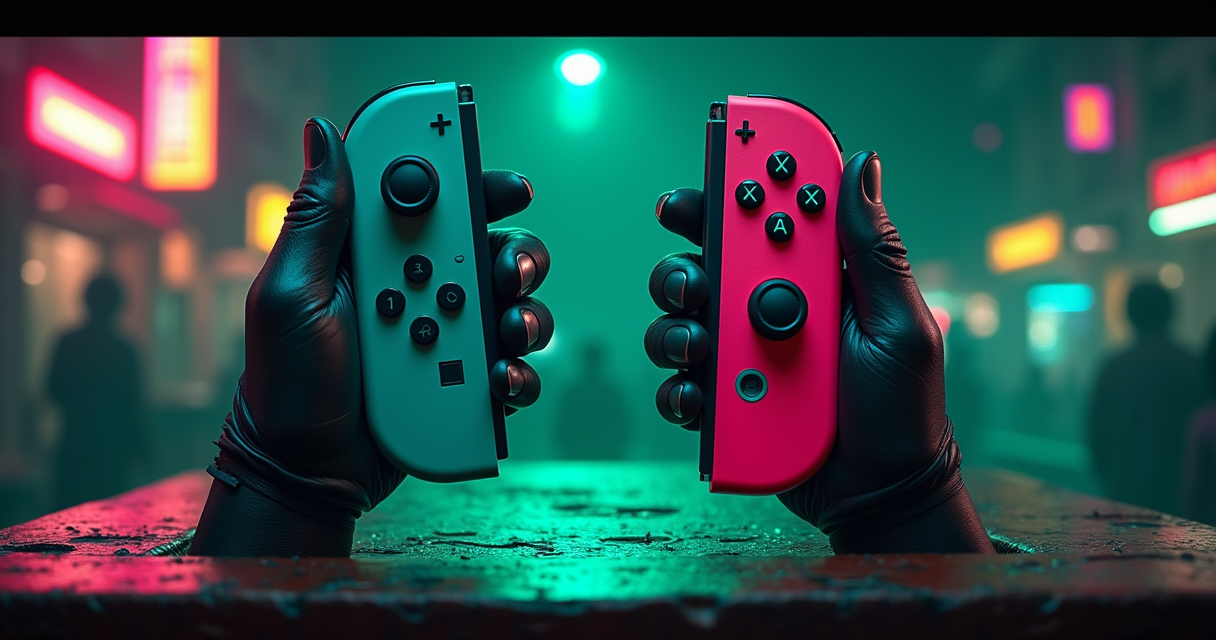
Every Switch vs Steam Deck article written before the middle of 2026 opens with the same assumption: the Steam Deck is the powerful, cheap PC handheld undercutting Nintendo's walled garden, and the only question is whether you're willing to trade polish for raw horsepower. That framing is dead. It died on May 27, 2026, and nobody sent flowers. What follows is the comparison as it actually stands today, August 8, 2026 — pricing corrected, spec-sheet lies flagged, and a retro verdict that a site named after a cartridge slot is obligated to deliver.
The 2026 Inversion: Read the Price Twice
The comparison you were sold no longer exists
Here is the sentence that reorders a decade of received wisdom: as of today, the Nintendo Switch 2 is $339 cheaper than the cheapest Steam Deck you can still buy new. Not a typo, not a regional fluke. On May 27, 2026, Valve raised the Steam Deck OLED to $789 for the 512GB model and $949 for the 1TB — increases of 43% and 46% respectively. The $399 LCD that every legacy buying guide still recommends was quietly discontinued on December 19, 2025. The Switch 2 launched June 5, 2025 at $449.99 and has not moved. Do the subtraction: $789 minus $449.99 is a $339 gap, and it runs the opposite direction from every chart printed before this spring.
What actually changed in May 2026
The hike was not a Valve whim or a stealth margin grab. It is the AI memory crisis — hyperscalers buying DRAM and NAND flash by the shipping-container for datacenters, draining the same supply pool that every console maker draws from. Valve's own statement, when it moved prices, was refreshingly blunt: these new prices reflect "the current state of component costs and other global logistical challenges across the industry as a whole." The same squeeze already pushed up the PlayStation 5 and the Xbox Series X earlier in the year, and Nintendo is next in line — just on a delay.
The thesis: two philosophies, one shrinking gap
Because Nintendo is about to move too. Per its official price-revision notice, the Switch 2 climbs from $449.99 to $499.99 on September 1, 2026, citing "various changes in market conditions" expected to "extend over the medium to long term." Read the two statements side by side and they are the same statement: memory got expensive, and you're paying for it. So the frame for the next several thousand words is not which is faster. It is which failure mode you can live with — Nintendo's locked, curated appliance, or Valve's open, occasionally fiddly Linux box. Today the appliance is cheaper. After September 1 it is still cheaper, by $289 instead of $339. Neither of those facts was supposed to be true, and the same $789 sticker also reordered the ROG Ally comparison at the same time.
What Each Machine Actually Is
The Switch 2 is a console that happens to be portable
Strip the marketing and the Switch 2 is a fixed-function games appliance with a tablet body. A 7.9-inch LCD running 1080p at 120Hz with VRR and HDR10; an Nvidia T239 SoC on the Ampere architecture, built on Samsung's 8nm node; 12GB of LPDDR5X; 256GB of UFS storage. Clip it into the dock and it outputs up to 4K60 with DLSS reconstruction doing the heavy lifting. It sold 3.5 million units in its first four days — the fastest-selling home console in history — and reached 19.86 million by March 31, 2026. That scale is the point: you buy a cartridge, press power, and the game runs at exactly the framerate Nintendo decided it should. There is no TDP slider, no shader cache to manage, no desktop mode hiding behind a button. That is not a limitation the engineers regret. It is the product.
The Steam Deck is a PC that happens to be a handheld
The Steam Deck OLED is an x86 computer wearing a controller. Its AMD "Sephiroth" APU sits on a 6nm node: a 4-core, 8-thread Zen 2 CPU boosting up to 3.5 GHz, paired with 8 compute units of RDNA 2 graphics at 1.6 GHz. Add 16GB of LPDDR5, a user-swappable NVMe SSD at 512GB or 1TB, and a 7.4-inch OLED panel at 1280×800 and 90Hz. It boots SteamOS 3 — which is Arch Linux with a KDE Plasma desktop one button-press away. It runs Steam, obviously, but also the Epic and GOG launchers, Xbox cloud streaming, RetroArch, a full browser, and anything else you can talk Proton or Flatpak into. Every unit sold registers as a Linux machine in Valve's Hardware Survey, which is precisely why Linux hit a record 5.33% of all Steam users in March 2026 — before slipping back to 4.52% in April when Deck stock ran dry worldwide. The install base is the operating-system story.
Why the category gap decides the whole argument
Spec-sheet warriors will line up teraflops and declare a winner. They will be wrong, because these two devices answer different questions. The Switch 2 answers: how do I play Mario Kart on the couch and then on the train without thinking about any of it. The Deck answers: how do I carry my entire PC and console history in a bag. A teraflop is not a use case. The correct opening question isn't which machine is more powerful; it's which of the two failure modes — a garden you can't leave, or a freedom that occasionally makes you open a terminal — you'd rather own. Everything below is downstream of that.
Specs, Head to Head (Where the Sheet Lies)
The full table
Here is the honest comparison, corrected against the errors that have been copy-pasted across a hundred listicles. Note how many of these rows aren't about horsepower at all — they're about save states, netplay, and shaders, which is where a locked console and an open PC genuinely diverge.
| Spec | Nintendo Switch 2 | Steam Deck OLED |
|---|---|---|
| Category | Console-hybrid (handheld + dock) | Handheld gaming PC |
| Released | June 5, 2025 | Nov 16, 2023 (OLED); Feb 2022 (LCD) |
| Screen | 7.9" LCD, 1080p, 120Hz VRR, HDR10 | 7.4" OLED, 1280×800, 90Hz, HDR (1000-nit peak) |
| SoC / node | Nvidia T239 "Ampere," Samsung 8nm | AMD "Sephiroth," 6nm (Zen 2 + RDNA 2) |
| CPU | 8× Arm Cortex-A78C, ~1 GHz | 4c/8t Zen 2, up to 3.5 GHz (x86) |
| GPU | 1536 CUDA cores (Ampere) | 8 CU RDNA 2 @ 1.6 GHz |
| GPU throughput (FP32) | 3.07 TFLOPS docked / 1.71 handheld | 1.6 TFLOPS |
| RAM | 12GB LPDDR5X | 16GB LPDDR5 |
| Storage | 256GB UFS (microSD Express only) | 512GB / 1TB NVMe (swappable M.2 2230) |
| Battery | 5,220 mAh / 19.7 Wh | 6,470 mAh / 50 Wh |
| Rated battery life | 2–6.5 h | 3–12 h |
| Power control | Fixed (no user tuning) | 3–15 W, user-adjustable per game |
| OS | Nintendo proprietary | SteamOS 3 (Arch Linux / KDE) |
| Wireless | Wi-Fi 6, Bluetooth | Wi-Fi 6E, Bluetooth 5.3 |
| Weight | ~534 g (with Joy-Con 2) | ~640 g |
| Upscaling | DLSS (AI reconstruction) | FSR (spatial / temporal) |
| Save states | No (suspend/resume + NSO rewind only) | Yes (via emulators / some native) |
| User netplay | Nintendo Switch Online (curated) | Remote Play + per-emulator netplay |
| Custom shaders | No | Yes (RetroArch / ReShade CRT shaders) |
| Homebrew / emulation | Locked (no public homebrew, mid-2026) | Open (EmuDeck / RetroDECK / RetroArch) |
Where the marketing spec sheets get it wrong
Three corrections, because these errors are everywhere. First, the Deck OLED screen is 7.4 inches, not 7 — the 7-inch panel belonged to the discontinued LCD. Second, it weighs roughly 640 grams, not 669; the heavier figure is, again, the old LCD. Third — and this one flips a common claim — the Deck OLED runs Wi-Fi 6E, while the Switch 2 is plain Wi-Fi 6. So the lazy line that "the Switch 2 has better wireless" is backwards; the Deck is the one with the 6GHz band. Small things, but a comparison that gets the easy facts wrong shouldn't be trusted with the hard ones.
The TFLOPS number is a trap
The most-repeated Switch 2 spec is also the most misleading. Many tables print "1.7 TFLOPS docked / 0.9 handheld," which quotes the wrong clock states entirely. The T239's actual FP32 throughput is 3.07 TFLOPS docked (at 1007 MHz) and 1.71 TFLOPS in handheld mode (at 561 MHz). But even the right numbers don't settle anything, because you cannot compare an Ampere teraflop to an RDNA 2 teraflop and learn a useful thing — different architectures, different instruction throughput, different memory behavior. Handheld-to-handheld, the Switch 2's ~1.71 and the Deck's 1.6 are close enough to call a paper tie. Then DLSS and the x86 CPU break that tie in opposite directions. Print the table, admire the table, then stop trusting the table.
Price & Availability: The $339 Gap
The pricing table
This is the section that dates every older article. All figures are US MSRP as of August 8, 2026.
| Device / SKU | Launch MSRP | Price today (Aug 8, 2026) | The move |
|---|---|---|---|
| Nintendo Switch 2 | $449.99 (Jun 2025) | $449.99 | +$50 → $499.99 on Sep 1, 2026 |
| Steam Deck LCD, 256GB | $399 (Feb 2022) | Discontinued | Killed Dec 19, 2025 |
| Steam Deck OLED, 512GB | $549 (Nov 2023) | $789 | +$240 / +43% (May 27, 2026) |
| Steam Deck OLED, 1TB | $649 (Nov 2023) | $949 | +$300 / +46% (May 27, 2026) |
The AI memory crisis you're subsidizing
Both companies reached for near-identical language because it's the same root cause. Valve blamed "component costs" and "global logistical challenges"; Nintendo blamed "market conditions" over the "medium to long term." Decoded, both mean: the AI buildout is hoovering up DRAM and NAND, and consumer hardware is at the back of the queue. The pain isn't US-only, either. Per Android Authority's rundown of the hike, the Deck OLED now runs £649/£849 in the UK, €779/€919 in the EU, C$1,129/C$1,349 in Canada, and A$1,199/A$1,499 in Australia. The Switch 2 increase travels too: Japan's region-locked SKU already jumped from ¥49,980 to ¥59,980 on May 25, and the US, Canada (C$679.99), and Europe (€499.99) all move on September 1.
"Available" is doing a lot of work in that sentence
Availability is the quiet variable that decides real purchases. The $399 Deck LCD that half the internet still recommends? Gone since December 19, 2025, off shelves by mid-February. The Deck OLED itself sold out worldwide in April 2026 — that's the exact dip that knocked Linux's Steam share from 5.33% down to 4.52%. So the true picture: the Switch 2 is on every shelf at $449.99 for roughly three more weeks, and the Deck is $789-and-climbing when you can find one in stock. If you want the broader map of who's charging what for a handheld this year, the ROG Xbox Ally's October 2025 launch is the third data point that completes the triangle.
Performance & Battery: DF's Numbers
Power draw — the 7W vs 14W story
The single most instructive benchmark in this whole matchup comes from Digital Foundry, whose Switch 2 testing surfaced through GoNintendo, BGR, and NeoGAF. Running Hogwarts Legacy, the Switch 2 pulled roughly 7 watts to the Steam Deck OLED's roughly 14 watts — half the power for a comparable result. The reason is architectural: the Switch 2 is a fixed-function appliance whose entire power envelope was tuned by Nintendo for that exact class of game, while the Deck is a general-purpose PC brute-forcing the same scene through a translation layer. DF's own verdict was that the "Switch 2 ran Hogwarts Legacy better overall, keeping it locked to a mostly stable 30fps." Lower wattage and steadier frametimes in that specific test.
Battery — the 50Wh ceiling vs the efficient core
Now the paradox. The Deck OLED carries a far bigger battery — 6,470 mAh / 50Wh versus the Switch 2's 5,220 mAh / 19.7Wh — and a wider rated window, 3–12 hours against 2–6.5. But because the Switch 2 sips power, real-world runtime splits by workload rather than favoring one machine outright. DF's figures: in Hogwarts Legacy, the Switch 2 managed 2h45m to the Deck's ~4h (the big battery wins the heavy scene); in Stardew Valley, ~4h to ~7h; in Persona 4 Golden, ~4h18m to 7h-plus; but in the lighter-weight Hitman World of Assassination, 2h40m to the Deck's ~2h, where efficiency edges ahead. The Deck's genuine ace isn't capacity, it's control — you can cap TDP and framerate per game, something the Switch 2 simply does not expose:
# Steam Deck OLED - per-game power profile
# Set via Quick Access (...) > Performance > "Use per-game profile"
TDP LIMIT        7 W        # default is 15 W; capping saves battery
GPU CLOCK        1100 MHz   # manual, keeps wattage on the CPU
FRAMERATE LIMIT  40 fps     # pairs with a 40 Hz panel refresh
REFRESH RATE     40 Hz      # OLED also runs 45 / 60 / 90 Hz
SCALING FILTER   FSR        # sharpness user-set
# Result: Stardew Valley ~7 h, Hogwarts Legacy ~4 h
# The Switch 2 exposes NONE of these knobs.
DLSS vs FSR, and the CPU nobody mentions
Two tiebreakers, pointing opposite ways. First, image reconstruction: the Switch 2 has Nvidia DLSS, and DF found its Cyberpunk 2077 reconstruction — internal 540p up to 1080p — visibly cleaner than the Deck's FSR pass of 480p to 720p. AI upscaling, not raw teraflops, is the Switch 2's real graphical weapon. Second, and cutting the other way: the Deck's Zen 2 x86 cores at up to 3.5 GHz demolish the Switch 2's eight Arm Cortex-A78C cores at ~1 GHz for anything CPU-bound — which is exactly what heavy console emulation is. As a synthetic ceiling, PCGamesN used desktop proxy GPUs (RTX 3050 vs RX 6600) to peg the Switch 2's graphics as roughly 53% faster in theory, ~29fps to ~19fps — a number nobody actually hits in shipping games. The honest summary: the Switch 2 wins image quality per watt; the Deck wins CPU-bound work and total user control. Hold that CPU point, because it's about to decide the section this website was built for.
Software: 1.4 Billion vs 21,694 Titles
Nintendo's install base is a different kind of number
The Switch family — original plus Switch 2 — is cited at a combined 172.96 million units and 1.416 billion software units sold, a staggering 9.2 games-per-console attach rate. The Switch 2 by itself moved 19.86 million by March 31, 2026, and out-sold the PlayStation 5 in the January–March quarter by roughly a million (2.49M for Nintendo) even though the PS5's lifetime figure of ~93.6 million still dwarfs it. Mario Kart World alone sold 14.70 million; Donkey Kong Bananza 4.52 million. That is the mass-market flywheel in a single paragraph: exclusive software you cannot buy anywhere else, sold into an audience the size of a mid-sized nation.
The Deck doesn't sell software — it grants access
Valve reports no Switch-style attach rate because the Deck's proposition is structurally different: it's a key to a library you already own. Roughly 21,694 titles carry the "Steam Deck Verified" badge, with thousands more rated "Playable" or coaxed into working through Proton. The Deck's own install base is an estimated 5 to 5.6 million by mid-2026 — a rounding error next to 172.96 million — but each of those buyers arrived carrying a Steam backlog. You don't buy games for a Deck so much as finally play the ones a decade of summer sales guilted you into owning.
The exclusives that actually decide it
Here is where the abstraction becomes a purchase. If you want Mario Kart World, the next 3D Mario, Metroid, Zelda, or a mainline Pokémon, there is exactly one legal machine and it is the Switch 2. If you want the PC canon — immersive sims, the entire modding ecosystem, keyboard-and-mouse strategy, the bottomless indie ocean — the Deck is the only one of these two that runs it. And some titles land on both, which exposes the real difference in ownership models: the Switch 2 port of Elden Ring: Tarnished Edition exists at $79.99 as a game-key card running a locked build, whereas the Deck runs the same game off your existing Steam license, with mods and an unlocked framerate. Identical title; two completely different deals.
Emulation & Openness: The Retro Verdict
The Deck owns 40 years of consoles
For a retro audience, this section is the argument. The Steam Deck — through EmuDeck, RetroDECK, or bare RetroArch — is the most capable portable emulation box you can buy short of hauling a full laptop. It handles NES, SNES, Genesis, PS1, N64, Dreamcast, Saturn, and PSP without breaking a sweat, and leans on that x86 CPU to reach the demanding tier: PlayStation 2, GameCube, and Wii. You get unlimited save states, RunAhead latency reduction, authentic CRT shaders, per-core netplay, and custom bezels. If you want a starting point that isn't SteamOS, our Batocera install walkthrough gets a bootable emulation OS onto a microSD card in about half an hour. The Deck is an open cannon pointed at four decades of game history.
The Switch 2 is a locked box with a rental counter
The Switch 2, as of mid-2026, has no public homebrew — the scene's own forums tell newcomers not to even ask about Switch 2 exploits, because there is nothing yet to discuss. "Retro" on the Switch 2 means Nintendo Switch Online: a curated rental catalog with suspend points and a rewind feature, no custom shaders, no user netplay beyond what Nintendo explicitly wires up. The one genuinely interesting addition is NSO GameCube — a Switch 2-exclusive tier behind the $80/year Expansion Pack that launched with The Wind Waker, F-Zero GX, and Soulcalibur II and has been steadily adding Super Mario Sunshine, Pokémon XD, Luigi's Mansion and more through 2026, running at roughly double the original resolution. It is genuinely nice. It is also a catalog you rent, not own, gated behind a subscription, delivered on Nintendo's schedule.
The law, because The Machine knows the law
One correction the internet needs on a loop: emulators are legal. US courts settled this a quarter-century ago — Sony Computer Entertainment v. Connectix (2000) and Sony v. Bleem both upheld emulation and the reverse-engineering behind it as fair use. What is illegal is distributing copyrighted ROMs and BIOS files; dumping cartridges you own, for your own use, is the defensible path. The delicious irony for this specific comparison is that the one console you cannot reliably emulate in 2026 is the Switch itself: Yuzu paid Nintendo $2.4 million and shut down in March 2024, and Ryujinx ceased development late that year. So the Deck emulates everything up to the PS2/GameCube/Wii era beautifully, its x86 CPU practically purpose-built for the job — while the Switch 2's own library remains the walled garden nobody is getting over. If your definition of "gaming handheld" includes the back catalog, this section is your verdict, and the Deck wins it outright.
Five Buyers, Five Answers
Buy the Switch 2 if…
1. You want Nintendo exclusives. This is the only legal way to play Mario Kart World, the next Zelda, Metroid, or Pokémon on a handheld. No emulator, no workaround, no debate — the software is the moat, and the moat is the whole castle. 2. You're buying for a household or for kids. Cartridges, plug-and-play, no desktop mode to accidentally break, and Joy-Con 2 that detach for instant local co-op. It is the lowest-friction gaming device in the house, and that friction number matters more than any framerate when a seven-year-old is the operator. 3. You value your time over your control. If "press power, play game" is the entire spec you care about, the Switch 2 delivers it and never asks you to think about a wattage slider.
Buy the Steam Deck OLED if…
4. You already own a Steam library. The Deck converts a 300-game backlog into a portable overnight; the value math is "games you already bought," not "$789." 5. You want the emulation and retro cannon. Forty years of consoles, save states, CRT shaders, netplay, the works — this is STARESBACK's pick for the retro buyer, full stop, and no amount of NSO curation closes the gap. 6. You want control. Per-game TDP, framerate caps, refresh-rate tuning, desktop mode, mods, and the freedom to install literally anything. The Deck is the only one of the two that treats you like the owner of the hardware rather than a licensee of it.
Buy neither if…
7. You only want retro, and nothing else. If the entire point is Game Boy through PlayStation on the couch, a $789 Steam Deck is absurd overkill and a $449.99 Switch 2 can't legally do it at all. A $90 Miyoo Mini Plus plays thousands of games and disappears into a coat pocket — right tool, right price, none of the overhead. That's five distinct buyers already, and the honest answer for two of them isn't on this page at all.
Migrating From One to the Other
From a Steam Deck to a Switch 2
The hard truth first: you cannot migrate a Steam library to a Switch 2. It's a closed platform — cartridges and eShop only, no Proton, no sideloading. What you actually migrate is your expectations, and there's a short checklist. First, budget for a microSD Express card specifically; the Switch 2 will not expand on standard microSD, and 256GB of onboard UFS fills faster than you'd think once modern games arrive. Second, accept an $80/year NSO plus Expansion Pack line item if you want the GameCube, N64, and retro tiers. Third, your save states become suspend points — same convenience, far less flexibility. Fourth, don't sell the Deck reflexively; it still does everything the Switch 2 structurally cannot, and "and" beats "or" if the wallet allows.
From a Switch (1 or 2) to a Steam Deck
This is the bigger cultural jump, and it rewards a little patience. Step one: from Desktop Mode, install EmuDeck or RetroDECK to rebuild your retro shelf — legally, from your own dumps — following a guide like Retro Game Corps' well-worn Steam Deck emulation starter guide. Step two: learn the Quick Access menu cold — TDP, framerate cap, refresh rate, per-game profiles are where the Deck earns its keep. Step three: check compatibility before you buy anything, since 21,694 titles are "Verified" but plenty more are merely "Playable" and want a tweak. Step four: accept that you will, occasionally, touch a terminal. That is the admission price of the open box, and for the right buyer it's a feature.
The honest migration is "and," not "or"
Nobody with the budget actually switches. The Switch 2 covers the Nintendo exclusives and the couch co-op; the Deck covers the PC backlog and the 40 years of emulation. Together they run about $1,240 today and cover essentially everything a portable gamer could want. Most of the people arguing about this online own both and are quietly aware of it. For them, the real migration guide is one line: stop pretending you have to choose.
Pros and Cons, Tallied
Nintendo Switch 2 — the ledger
| Pros | Cons |
|---|---|
| Cheapest of the two today ($449.99) | Rising to $499.99 on Sep 1, 2026 |
| Exclusive first-party library (only legal source) | Locked platform: no homebrew, no user emulation |
| Excellent efficiency: ~7W vs Deck's ~14W in Hogwarts | Retro is rental-only (NSO, $80/yr for GameCube tier) |
| DLSS reconstruction cleaner than FSR | Requires pricey microSD Express to expand 256GB |
| 120Hz 1080p screen; true plug-and-play; 534g | No TDP/framerate control; weak Arm CPU for emulation |
Steam Deck OLED — the ledger
| Pros | Cons |
|---|---|
| Open Linux PC: EmuDeck, mods, desktop mode | $789 / $949 after the May 2026 hike; often out of stock |
| Best-in-class emulation up to PS2/GameCube/Wii | No access to Nintendo exclusives, legally |
| Bigger 50Wh battery; 3–12h ceiling; per-game TDP | Heavier (~640g); lower 90Hz 1280×800 resolution |
| Gorgeous HDR OLED panel; swappable NVMe SSD | Proton quirks; occasional terminal required |
| Runs your existing Steam backlog out of the box | 2023 silicon, frozen until a Deck 2 ships |
The tiebreakers most reviews bury
Two things the star ratings gloss over. The Switch 2's mouse-mode Joy-Con is a genuine novelty, but IGN, in an otherwise warm 7/10, noted it produced "strain in my arm" over longer sessions — a party trick, not a workflow. And the display debate isn't as one-sided as "OLED wins": the Deck's panel has deeper blacks and real HDR, but at 1280×800/90Hz against the Switch 2's 1080p/120Hz LCD, "better" depends entirely on whether you weight contrast or resolution-and-refresh. The tiebreaker no spec sheet lists: the Switch 2 will still be getting brand-new first-party games in 2030, while the Deck's hardware sits frozen at 2023 silicon until Valve ships a successor. Buy the Switch 2 for the future library; buy the Deck for the past one.
The Verdict: What the Data Says
If you're buying before September 1, 2026
The Switch 2 is $339 cheaper than the cheapest new Steam Deck, full stop. If price is your deciding variable and you want a Nintendo-shaped device, this is the clean window — buy before the $499.99 hike lands and keep the $50. There is no clever counter-argument to "the thing you wanted is also the cheaper thing" for the next three weeks.
If you're buying after September 1
The gap narrows to $289 — $499.99 against $789 — but the underlying logic does not flip. The Switch 2 remains the cheaper, simpler, exclusives-driven appliance; the Deck remains the open, CPU-strong, emulation-and-backlog machine. Nothing about a $50 Nintendo increase changes which of the two philosophies fits you. It just makes the already-cheaper option slightly less cheap.
The Machine's call
Stack the critics and they're all correct at once. PC Gamer called it "a closer battle than I expected," crediting the Switch 2 with "the Nintendo feel, look, and software." TechRadar still calls the Deck "the king of easy, fun gaming." GamesRadar admitted "I wildly underestimated the Switch 2." Engadget rates the Deck the "best balance of price, performance and usability" while conceding it "shows its age in 2026." Hold all four in your head, because they're not contradictions — they're the shape of a genuinely close call. So here is the data-backed recommendation, split the only honest way it can be. For the retro and emulation buyer this site exists to serve, the Steam Deck OLED is the pick even at $789 — it legally plays 40 years of consoles the Switch 2 will never touch, and its x86 CPU is built for exactly that job. For everyone else — families, Nintendo loyalists, anyone who just wants to press power and go — the Switch 2 at $449.99 is the better appliance and, for the first time in this rivalry's entire history, the cheaper one. The comparison flipped in 2026. Buy the machine that matches the failure mode you can live with.
Questions the search bar asks me
- Is the Switch 2 or the Steam Deck cheaper in 2026?
- The Switch 2 is cheaper. It's $449.99 versus the Steam Deck OLED's $789 (512GB) after Valve's May 27, 2026 hike — a $339 gap. On September 1, 2026 the Switch 2 rises to $499.99, narrowing the gap to $289, but it stays the cheaper device. The old $399 Deck LCD was discontinued in December 2025.
- Why did the Steam Deck get more expensive?
- Valve raised the Deck OLED on May 27, 2026: the 512GB from $549 to $789 (+43%) and the 1TB from $649 to $949 (+46%). Valve cited "the current state of component costs and other global logistical challenges" — the AI-driven DRAM and NAND shortage that also pushed up the PS5, Xbox Series X, and now the Switch 2.
- Which has better battery life, the Switch 2 or the Steam Deck OLED?
- It depends on the game. The Deck OLED has a larger 50Wh battery (vs 19.7Wh) and a 3–12h rating vs 2–6.5h, so it wins heavy titles — Digital Foundry saw ~4h in Hogwarts Legacy vs the Switch 2's 2h45m. But the Switch 2 is far more efficient (7W vs 14W in that same test), so lighter games land closer.
- Can the Steam Deck emulate Switch or Switch 2 games?
- No, not reliably. Yuzu settled with Nintendo for $2.4M and shut down in March 2024, and Ryujinx ceased development late that year, so there's no dependable Switch or Switch 2 emulator on any hardware. The Deck excels at everything up to the PS2/GameCube/Wii era; the Switch's own library is the one walled garden it can't scale.
- Is the Switch 2 more powerful than the Steam Deck?
- Docked, yes — 3.07 TFLOPS (FP32) vs 1.6. In handheld mode it's near parity: ~1.71 vs 1.6, but across different architectures (Ampere vs RDNA 2), so the number means little. The Switch 2's real edge is DLSS upscaling; the Deck's is a much stronger x86 CPU (up to 3.5 GHz Zen 2) that wins CPU-bound work like emulation.
Ben covers the hardware end of retro gaming: FPGA cores, real-cartridge dumping, capture setups, CRT vs scaler workflows, and the legal and physical preservation infrastructure that keeps old games playable. Every post under this byline is reviewed pre-publish by Sam P., Editor & Operator — corrections to info@instalinkoteam.com. Published 2026-08-29 · Last updated 2026-08-29. Full bios on the author page.