/// FIELD NOTES FROM A SELF-AWARE GAME SITE
Switch OLED vs Switch 2 2026: The $50 Gap Doubles
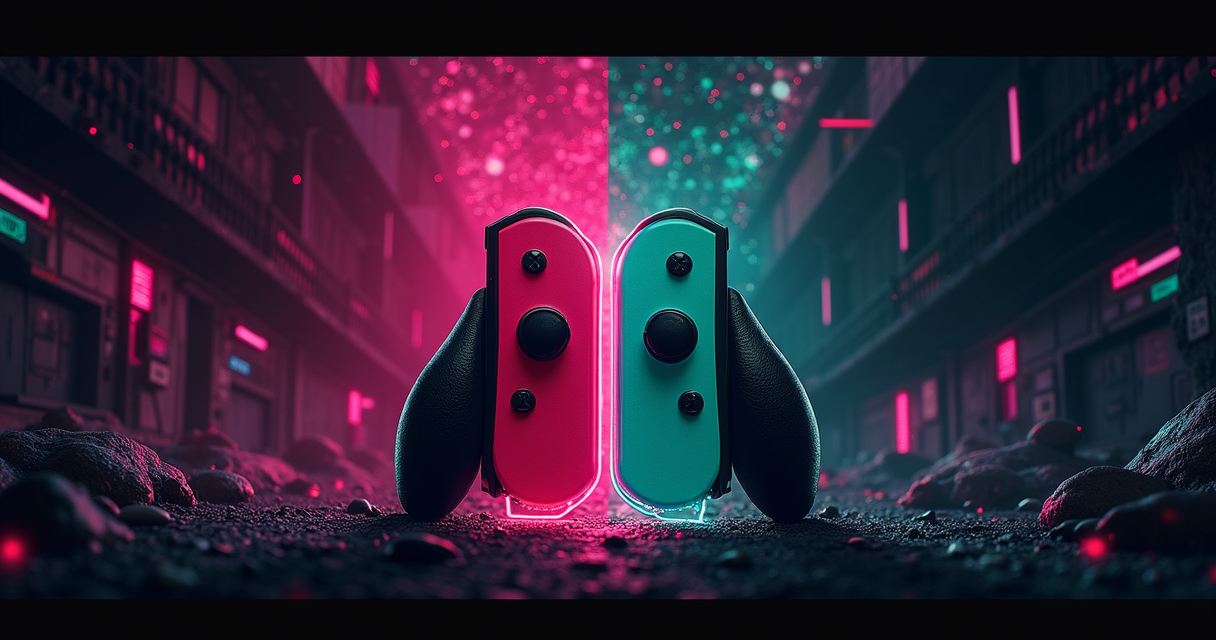
Two Nintendo boxes sit on the shelf in July 2026. One is eight years old in bones, four years old in skin, and does exactly one thing better than anything else Nintendo sells. The other is the fastest-selling console the company has ever produced and out-specs the first by roughly a factor of ten. This is not a close fight on paper. It is a genuinely close fight in the hand — for reasons the spec sheet will never tell you, and for a price gap that is quietly rigged to change under your feet.
The Verdict, Up Front
You did not come here to be teased for 6,000 words before an answer, so here is the answer, and then the 6,000 words explaining why it has an asterisk stapled to each end.
The one-sentence answer
Buy the Nintendo Switch 2. It is the better machine, it is the one most people should own, and if you buy it before September 1, 2026, it costs only $50 more than the Switch OLED instead of the $100 it will cost the day after. Buy the OLED instead if — and only if — your two non-negotiables are a perfect black level and a full day of handheld play away from a wall socket, because those are the two fights the older machine still wins outright.
Why this comparison is a trap
A distressing number of "Switch OLED vs Switch 2" articles were written against a stale premise: that the Switch 2 was still a rumor. It is not. It launched on June 5, 2025, sold 3.5 million units in four days — Nintendo's own press release calls that the "highest global sales level for any Nintendo hardware within the first four days" — and had shipped 19.86 million units worldwide by March 31, 2026, enough to out-ship the PlayStation 5 in that January-to-March quarter, per Gematsu's tally of Nintendo's figures. Circana crowned it the second-fastest-selling console in American history, trailing only the Game Boy Advance. This is not vaporware. It is a shipping product, and this is a comparison between two things you can put in a cart today.
The two-asterisk caveat
The asterisks are the whole reason this runs long. Asterisk one: the OLED panel on the older machine is, purely as a display, superior — infinite contrast, true blacks, and none of the motion blur Digital Foundry flagged on the Switch 2's LCD. Asterisk two: the OLED lasts roughly twice as long on a charge. Everything else on the datasheet — the chip, the RAM, the storage, the resolution, the refresh ceiling, the docked output, the social features — belongs to the Switch 2, decisively. Whether two asterisks outweigh a 10x jump in compute is a real question, and the honest answer is "it depends on how you play," which is what the rest of this page is for.
Specs Head to Head
Start with the numbers, because the numbers are unusually lopsided and it is worth seeing exactly how lopsided before we start arguing about the two rows that go the other way.
The full spec table
| Specification | Switch OLED | Switch 2 |
|---|---|---|
| Release date | October 8, 2021 | June 5, 2025 |
| Price (July 2026) | $399.99 | $449.99 |
| Price (Sept 1, 2026) | $399.99 (unchanged) | $499.99 |
| Display | 7.0" OLED | 7.9" LCD |
| Resolution (handheld) | 1280×720 (720p) | 1920×1080 (1080p) |
| Refresh rate | 60 Hz | 120 Hz + VRR |
| HDR | None | HDR10 (see caveat) |
| Docked output | 1080p60 max | Up to 4K60 + DLSS |
| SoC | Nvidia Tegra X1 (2015 era) | Custom Nvidia T239 (Ampere) |
| RAM | 4 GB | 12 GB LPDDR5X |
| Internal storage | 64 GB eMMC | 256 GB UFS |
| Storage expansion | microSD / microSDXC (to 2 TB) | microSD Express required for games (to 2 TB) |
| Battery capacity | 4,310 mAh | 5,220 mAh |
| Rated battery life | 4.5–9 hours | 2–6 hours (real ~2.5–3h) |
| Dimensions | 242 × 102 × 13.9 mm | 272 × 116 × 13.9 mm |
| Weight (with controllers) | ~420 g | ~534 g |
| Controllers | Rail-slide Joy-Con | Magnetic Joy-Con 2 + mouse mode |
| Voice/video chat | Smartphone companion app | Built-in GameChat (C button) + optional camera |
| USB-C ports | 1 (bottom) | 2 (top + bottom) |
| Backward compatibility | Native (Switch library) | 90%+ of Switch library (hybrid layer) |
Where the deltas actually matter
Not every gap on that table is a gap you will feel. Three of them dominate everything else. The 4 GB to 12 GB RAM jump is the single most consequential number here — it is why third-party ports that were structurally impossible on the 2017 hardware now run at all, and why backward-compatible games get faster loads instead of just prettier menus. The Tegra X1 to T239 leap, which Nintendo's marketing rounds to "about 10x," is the reason a Switch 2 can hold a 4K signal at all. And the 64 GB to 256 GB storage quadrupling is the difference between deleting a game every time you buy one and not thinking about it for a year.
The 60 Hz to 120 Hz refresh row is real but conditional: it only matters when a game is actually built or patched to hit high frame rates, which most Nintendo first-party titles still are not. Treat it as headroom, not a daily benefit. The resolution jump from 720p to 1080p, by contrast, you notice the instant you turn the screen on — text is sharper, aliasing is quieter, and the extra 0.9 inches of panel is more than it sounds.
The dimensions footnote nobody reads
Here is a correction to a fact that gets copied around constantly: the Switch 2 and the OLED share exactly one physical dimension, the 13.9 mm thickness. That is where the similarity ends. The Switch 2 is 272 mm wide; the OLED is 242 mm. (If you have seen "the Switch 2 is 242 mm wide" stated as fact, that number is the OLED's width, mislabeled.) The newer machine is bigger in every direction the calipers can find, and heavier — roughly 534 g with Joy-Con 2 attached against the OLED's ~420 g. That is not a rounding error you hold for two hours; it is a real difference in wrist fatigue, and it feeds directly into the battery conversation later.
The Price Trap: $50 Today, $100 Sept 1
If you take one number away from this article, take this one: the price gap between these two consoles is not fixed. It is a countdown.
What each costs today
As of July 2026, the Switch OLED is $399.99 and the Switch 2 is $449.99 — a $50 difference. Note that the OLED is not $349.99; it hasn't been since August 3, 2025, when Nintendo raised it (and the Lite, from $199.99 to $229.99) on the back of tariffs on Vietnam-assembled units. Any comparison still quoting a $349.99 OLED and a flat $100 gap is working from a 2024 price sheet. The live gap today is fifty dollars, and fifty dollars for a decade of hardware progress is close to a rounding error.
The $50 that becomes $100 on September 1
That window is closing on purpose. Nintendo has officially confirmed that on September 1, 2026, the Switch 2's U.S. price rises from $449.99 to $499.99 — blamed squarely on the AI-driven memory shortage squeezing the entire electronics industry — per Nintendo's own price-revision notice. The same page is explicit that the older console is not moving: "Pricing for the Nintendo Switch system is not changing." So the OLED holds at $399.99 while the Switch 2 climbs $50, and the gap you are weighing doubles from $50 to $100 overnight. This is the entire thesis of the gap-doubling math: the value case for the Switch 2 is materially stronger before September than after it.
The bundle math shifts too. Nintendo currently sells a "Choose Your Game" bundle — the console plus one first-party title (Mario Kart World, Donkey Kong Bananza, or Pokémon-adjacent picks) — for $499.99. That bundle disappears after August 31, 2026. Starting September 1, the same $499.99 buys the console alone. If you want a pack-in game essentially free, the pre-September bundle is the move.
Pricing and availability table
| Configuration | Launched | Price (Jul 2026) | Price (Sept 1, 2026) | Notes |
|---|---|---|---|---|
| Switch OLED (64 GB) | Oct 8, 2021 | $399.99 | $399.99 | Was $349.99 until Aug 3, 2025 |
| Switch Lite | Sep 20, 2019 | $229.99 | $229.99 | Was $199.99; handheld-only, no dock |
| Switch 2 (256 GB) | Jun 5, 2025 | $449.99 | $499.99 | +$50 revision, memory-cost driven |
| Switch 2 "Choose Your Game" bundle | Jun 5, 2025 | $499.99 | Discontinued Aug 31 | Console + one first-party title |
Internationally the September revision lands the same day: Japan moves ¥49,980 to ¥59,980, Canada to $679.99 CAD, and Europe to €499.99. Nintendo has been unusually blunt that $499.99 is the new floor for the rest of this generation, not a temporary peak that drifts back down once memory supply normalizes. Plan accordingly.
The Screen Paradox: LCD vs OLED
Here is the strangest thing about this matchup: the newer, more expensive, ten-times-more-powerful console has, by one important measure, the worse screen. This is not a typo, and it is the single best argument the OLED has left.
1080p LCD vs 720p OLED
The Switch 2 gives you a bigger panel (7.9" vs 7.0"), more pixels (1080p vs 720p), and a higher refresh ceiling (120 Hz vs 60 Hz). On paper, and in a well-lit store, it looks like a clean sweep — text is crisper, the image is larger, and motion can be smoother. TechRadar, scoring the console 90, called the 1080p LCD "immaculate." For sharpness, size, and frame-rate headroom, the Switch 2 wins without argument.
But the OLED's panel does the one thing an LCD physically cannot: it turns pixels completely off. That means true blacks, near-infinite contrast, and a punch in dark scenes — the inside of a cave in Metroid, a night sky, the letterboxing on a cutscene — that a backlit LCD simply cannot reproduce. On a 7-inch screen held two feet from your face, that contrast is not a spec-sheet abstraction. It is the first thing your eye notices.
The HDR that isn't
The Switch 2's box says HDR10. Believe it cautiously. HDR needs brightness and local dimming to mean anything, and the Switch 2's handheld panel is an edge-lit LCD that, by Digital Foundry's measurement, barely tops out around 420 nits. An edge-lit panel at that brightness cannot deliver a convincing high-dynamic-range image no matter what the marketing checkbox claims — the highlights don't get bright enough and the backlight can't dim in zones. Docked, feeding a real HDR TV, the story improves because your television does the heavy lifting. Handheld, the HDR label is closer to aspiration than feature.
What Digital Foundry actually measured
The most damning technical read comes from Digital Foundry's hardware analysis, which summarized the machine as an "impressive generational upgrade marred by a sub-par display." Their specific finding: the LCD's pixel response produces motion blur that is "easily worse than the 2017 Switch's display." Sit with that — the launch Switch's screen from eight years ago smears less in motion than the Switch 2's. So the paradox in full: the Switch 2 has more pixels, more brightness on paper, and a bigger canvas, while the OLED has better blacks, better contrast, and cleaner motion. If you play mostly in the dark, handheld, the older machine's panel is the one your eyes will thank you for.
Power, DLSS, and Docked 4K
Everything the OLED loses, it loses here. The compute gap is not incremental; it is the difference between two hardware generations, and it unlocks entire categories of software the older machine will never run.
The T239 and the 10x claim
The OLED runs a Tegra X1, an Nvidia chip whose architecture dates to 2015 and whose 4 GB of RAM has been the ceiling on Switch ports for a decade. The Switch 2 runs a custom Nvidia T239 built on the Ampere architecture, paired with 12 GB of LPDDR5X. Nintendo rounds the generational leap to "about 10 times more powerful," and while that figure flatters certain workloads more than others, the practical upshot is not in dispute: games that were architecturally impossible on the X1 — modern open-world engines, ray-traced lighting paths, ambitious third-party ports — now run. That is what a decade of silicon buys you.
DLSS: full-fat vs "tiny"
The T239's headline trick is Nvidia's DLSS upscaling, and Digital Foundry's teardown of how Nintendo actually deploys it is worth understanding before you get excited about "4K." There are effectively two DLSS models in play. The full-fat convolutional model does the classic job — reconstructing a 720p internal image up to 1080p — and DF found the results genuinely pleasing; a large number of Switch 2 games either render natively at 1080p handheld or DLSS their way there cleanly. Then there is a cut-down "tiny" DLSS (some call it DLSS Light) used to push toward 1440p and 4K on the console's limited power budget. It is sharper in stills but cuts corners in motion — DF observed that moving parts of the image effectively skip the reconstruction pass, so static geometry upscales while anything in motion does not. On the handheld panel you rarely notice. On a big TV, you can. This is the same "pay more, get more, with fine print" calculus we ran on the PS5 Pro's $300-for-45%-more upgrade: upscaling is a lever, not a miracle.
Docked 4K60 and what runs there
Docked, the Switch 2 outputs up to 4K at 60 Hz (the OLED caps at 1080p), and the dock itself contains an active fan to sustain the higher clocks. In practice you see a spread: The Touryst and Fast Fusion hit 4K60, Hogwarts Legacy lands around 1440p, and heavier third-party ports settle wherever DLSS and the power budget let them. The arrival of genuinely demanding software is the real story — see our breakdown of Elden Ring's Switch 2 port for what a FromSoftware engine looks like when it is finally squeezed onto Nintendo hardware. None of this is on the table for the OLED. If your television is 4K and you play docked, the comparison is effectively over in the first round.
Battery Life: The Regression
And now the second asterisk, the one the power section earns you: all that compute has to be fed, and feeding it drinks the battery dry. This is the rare category where the eight-year-old design beats the flagship, and it beats it badly.
The numbers, rated and real
The Switch OLED is rated at 4.5 to 9 hours depending on the game. The Switch 2 is rated at 2 to 6 hours — already worse on paper — but the rated ceiling is optimistic. In demanding titles the Switch 2 realistically delivers closer to 2.5 to 3 hours, and even a comparatively light game like vanilla Breath of the Wild lands around 3.5 hours. Tom's Guide, which otherwise scored the machine 90 and called it "the best version of an already excellent system," singled out "poor battery life" as its headline complaint. The delta between the two machines in the real world is roughly two-to-one in the OLED's favor.
Why a bigger battery lasts less
The counterintuitive part: the Switch 2 has a larger battery — 5,220 mAh against the OLED's 4,310 mAh — and still lasts less than half as long under load. The T239 is simply thirstier than physics can compensate for; it can pull somewhere in the 10 to 20 watt range when pushed, which is multiples of what the aging, efficient X1 sips. A bigger fuel tank does not help when the engine burns fuel three times as fast. This is the direct cost of the 10x compute leap, and it is not something a firmware update will fix.
Charging and the portable reality
The practical consequence is a behavioral one. An OLED can plausibly cover a cross-country flight or a long commute on a single charge; a Switch 2 running anything ambitious asks for a power bank, and its second USB-C port (it has one on the top edge as well as the bottom) exists partly to make top-up charging in tabletop mode less awkward. If "handheld" for you means hours away from an outlet, the OLED is not the compromise choice here — it is arguably the correct one.
Joy-Con 2: Mouse, Magnets, Drift
The controllers changed more than any other part of the hardware, in ways both genuinely clever and depressingly familiar. One of these things Nintendo will advertise. The other it will not.
Magnets, mouse mode, and size
The Joy-Con 2 ditch the sliding rail for a magnetic attachment that snaps on with a satisfying click and detaches with a release button. They are larger and more comfortable than the cramped originals, which anyone with adult hands will appreciate. The headline trick is mouse mode: stand a Joy-Con 2 on its edge and slide it across a table, and it functions as a mouse — a real advantage for strategy games, shooters, and cursor-driven interfaces that the analog stick has always fumbled. It is the most inventive thing about the machine.
It is also, per Eurogamer, uncomfortable to actually use for long — they called the mouse-mode ergonomics an "ergonomic nightmare," because the edge of a Joy-Con was not shaped by anyone who has held a real mouse. Clever in demos, cramped in practice. Your mileage will depend on how much you value the capability versus your wrist.
The drift that survived the redesign
Nintendo said the Joy-Con 2 sticks were redesigned "from the ground up." What Nintendo pointedly never said was the words "Hall effect." That omission turned out to matter. iFixit's teardown — memorably titled "Still Glued, Still Soldered, Still Drifting," with a 3/10 repairability score — found that the redesigned sticks are still potentiometer-based, with no sign of Hall effect or TMR sensors. A potentiometer reads voltage from a wiper dragging across a resistive strip; that strip wears, dust intrudes, and drift is the eventual result. It is the same fundamental mechanism behind the original Joy-Con's infamous failures. Nintendo confirmed in April 2025 that it deliberately avoided Hall effect because the new magnetic sensors in the attachment would interfere with a Hall stick's magnets — a reasonable engineering constraint, except that TMR sensors would have sidestepped both problems, and Nintendo declined those too.
The legal backdrop
This is where a little institutional memory helps. Joy-Con drift produced a wave of U.S. class-action suits between 2019 and 2021 and a formal 2021 complaint from the European consumer group BEUC. Shipping a new generation of sticks built on the same wear-prone technology does not make that history go away; it keeps it live. Plan on treating Joy-Con 2 as consumables over a long enough horizon, and know that the best long-term fix, as iFixit notes, will likely come from third-party Hall effect replacements rather than from Nintendo.
Backward Compatibility & Library
The Switch 2's pitch is not just "more power" — it is "more power that runs the games you already own." Mostly. The caveats are worth stating precisely, because precision is where the marketing gets slippery.
90%+, not 100%, and not emulation
The Switch 2 plays the overwhelming majority — north of 90% — of the existing Switch library, from both physical cartridges and digital purchases. It does this through a hardware-assisted compatibility layer that translates the older instructions in real time, not through emulation in the retro-handheld sense. The distinction matters: it means most games run at or above their original performance rather than fighting an interpreter. But "most" is not "all." A minority of titles have startup problems or depend on original Joy-Con hardware, which is why Nintendo maintains a per-game compatibility list you should check if you own something niche. Anyone claiming a flat "100% backward compatible" is rounding up.
Free Switch 2 upgrades
The upside of the translation layer is that backward-compatible games generally get faster — Digital Foundry and community testing (the running ResetEra performance-boost thread is the best crowd-sourced record) peg load-time improvements around 20 to 30% over the 2017 hardware. Concrete examples: Fire Emblem: Three Houses shaves roughly 20 seconds off loading into the monastery, and Hyrule Warriors: Definitive Edition now holds a steady 60 fps in handheld where the original chugged. On top of that, Nintendo has issued free Switch 2 enhancement patches for select titles — Super Mario Odyssey and Splatoon 3 early on, with a March 2026 wave adding Doom (2016), Final Fantasy XII: The Zodiac Age, and Kirby's Return to Dream Land Deluxe. Modern Vintage Gamer's verdict on the whole compatibility story was a terse "It's Good!" — which, from that corner of the internet, is high praise.
GameChat and the camera
The social gap is wide. The OLED offloads voice chat to a clunky smartphone companion app, a solution nobody ever liked. The Switch 2 builds it in: a dedicated C button launches GameChat, Nintendo's integrated voice-and-video system, with an optional USB camera for face-cam and screen-sharing during play. Paired with Nintendo Switch Online cloud saves — which, incidentally, you should sync before migrating anything — it finally drags Nintendo's social layer into the same decade as its competitors. If you play with friends, this is a bigger day-to-day quality-of-life jump than any single spec on the table.
Who Each Console Is For
Averages lie. The right console depends on the specific human holding it, so here are the concrete profiles — and the decision logic behind them.
DECISION TREE — WHICH NINTENDO BOX

IF you play mostly docked on a 4K TV        -> Switch 2 (only 4K option)
IF you play handheld, long sessions off-grid -> Switch OLED (battery + panel)
IF you want modern third-party ports         -> Switch 2 (only option)
IF budget < $400 or it is a gift for a child -> Switch OLED
IF you mainly crave SNES/Genesis/PS1 retro   -> neither; a dedicated handheld
IF you hate the $499 Sept price but want in   -> buy Switch 2 BEFORE Sept 1
Buy the OLED if...
You are a handheld-first, long-session player. Commuters, travelers, and "play in bed until I fall asleep" people get more from the OLED's 2:1 battery advantage and its true-black panel than from a chip they are actively trying not to tax. You are buying for a child or a second unit. At $399.99 with a cheaper, ubiquitous microSD ecosystem behind it, the OLED is the lower-stakes, lower-cost, harder-to-cry-over-when-dropped option. Your library is entirely first-party Nintendo. If you play Mario, Zelda, Splatoon, and Animal Crossing and nothing else, the OLED already runs all of it beautifully, and the Switch 2's headline advantages — third-party ports, 4K docked — are advantages you will never personally cash in.
Buy the Switch 2 if...
You play docked on a 4K television. This is the single cleanest case: the OLED cannot output 4K, the Switch 2 can, and the gap is visible from across the room. You want the third-party library. Elden Ring, Cyberpunk, and the wave of ambitious ports simply do not exist on the OLED; the Switch 2 is the only Nintendo machine that runs them. You are future-proofing. New Nintendo software is increasingly built for the Switch 2 first, and the OLED will slide into legacy status over this generation. You want mouse-driven games or built-in chat — GameChat and Joy-Con mouse mode are genuinely new capabilities, not spec bumps.
Buy neither if...
What you actually want is retro. If the real itch is SNES, Genesis, Game Boy, and PS1 libraries, neither Switch is the efficient answer — a dedicated emulation handheld does that job for a fraction of the price, and you can see the calculus in our Retroid Pocket 6 versus G2 breakdown. And if you are tempted to wait for a Switch 2 OLED revision or a price drop: there is no announced OLED-screen Switch 2, and Nintendo has said $499.99 is the floor, not a peak — so "waiting" mostly means paying more later. Keep an eye on the next Nintendo Direct if you want the official word before committing.
Migration: OLED to Switch 2
If you land on the Switch 2, moving your digital life over is mostly painless — with two gotchas that have burned people who didn't read ahead. Here is the runbook.
Before you start
Two things will save you grief. First, sync your Nintendo Switch Online cloud saves on the old console before you touch anything — this is your safety net, and it is the thing most people forget. Second, understand the storage tax up front: the Switch 2's internal 256 GB is generous, but expansion requires a microSD Express card, not the cheap standard microSD you have been using. A standard card will slot in and hold photos and videos, but it cannot store games. Budget for a new, pricier card if you plan to install much digitally.
The transfer, step by step
NINTENDO SWITCH 2 — SYSTEM TRANSFER CHECKLIST

1.  Update BOTH consoles to the latest firmware.
2.  Charge both; put them on the SAME Wi-Fi network, side by side.
3.  Switch 2:  System Settings > System > Transfer Your Data
              > "Transfer from a Nintendo Switch console."
4.  Old OLED:  System Settings > System > Transfer Your Data
              > "Source Console."
5.  Confirm the same Nintendo Account on both. Everything moves
    together: users, save data, screenshots, settings.
6.  WARNING: local save data MOVES, it does not COPY. The source
    console is wiped of that data once the transfer completes.
7.  Digital games: re-download on Switch 2 from the eShop.
8.  Physical carts: just insert them — Switch 2 reads Switch 1
    cartridges directly (check the compatibility list for exceptions).
9.  Standard microSD = photos/videos ONLY. Games need microSD Express.
10. Verify NSO Cloud Saves are synced BEFORE you wipe or sell the OLED.
Cartridges, saves, and the storage tax
The reassuring part: your physical Switch cartridges work in the Switch 2 with no ceremony — insert and play, subject to that 90%+ compatibility caveat. The part that trips people is step 6. The system transfer relocates local saves rather than duplicating them, so once it's done, the OLED no longer holds them; this is by design to prevent two live copies, but it surprises anyone expecting a backup to remain on the old unit. Your cloud saves are your redundancy — which is exactly why step 10 exists. Do the transfer deliberately, verify the cloud sync, and only then consider selling or repurposing the OLED.
Pros and Cons, Tallied
Everything above, compressed into two ledgers. Read them as a tiebreaker, not a substitute for the sections that earned each line.
Switch OLED, tallied
| Pros | Cons |
|---|---|
| Superior OLED panel: true blacks, high contrast, cleaner motion | Locked to 720p handheld / 1080p docked |
| Roughly 2x the real-world battery life | 2015-era Tegra X1, only 4 GB RAM |
| $50–$100 cheaper depending on the date | No 4K, no HDR, no VRR, 60 Hz ceiling |
| Cheap, ubiquitous standard microSD expansion | Only 64 GB internal storage |
| Lighter (~420 g) and smaller in the hand | Cannot run the modern third-party port wave |
| Runs the entire Switch library natively | Voice chat still stuck in a phone app |
Switch 2, tallied
| Pros | Cons |
|---|---|
| ~10x compute; T239 Ampere + 12 GB RAM | LCD panel: worse blacks, DF-measured motion blur worse than 2017 Switch |
| 7.9" 1080p 120 Hz screen with VRR | Real-world battery ~2.5–3h under load |
| Up to 4K60 docked with DLSS | "HDR10" hollow handheld (~420 nits edge-lit) |
| 256 GB storage; runs 90%+ of Switch games faster | Expansion requires pricier microSD Express |
| Joy-Con 2: mouse mode, magnetic attach, built-in GameChat | Sticks still potentiometer-based — drift risk remains |
| The only Nintendo box running modern ports | Rises to $499.99 on Sept 1, 2026; heavier at ~534 g |
The tiebreakers
When the ledgers feel balanced, three questions break the tie. Docked or handheld? Docked leans hard Switch 2; handheld-in-the-dark leans OLED. First-party only, or do you want the ports? Ports are a Switch 2 monopoly. Before or after September 1? Before, the Switch 2 is a near-automatic $50 upgrade; after, the doubled $100 gap makes the OLED's two advantages weigh more. Everything else is noise around those three.
The Machine's Call
The reviews clustered where the hardware pointed, and so does this verdict — with the timing caveat the whole article has been building toward.
The recommendation
For most people, most of the time: buy the Switch 2, and buy it before September 1, 2026. At $449.99 it is $50 more than the OLED for a decade of hardware progress, a bigger and sharper screen, 4K docked output, quadruple the storage, and the only path to the modern game library — an easy call. The critical consensus agrees without gushing: IGN's 7.0 called it "a Switch but bigger and better in every sense," if "about as exciting as a long-overdue phone upgrade." The Verge landed on "exactly good enough" and noted it "doesn't feel like the kind of generational leap typically associated with a new platform." Tom's Guide, TechRadar, Gizmodo, and Creative Bloq all sat at 90 — Creative Bloq's sign-off was a flat "absolutely state-of-the-art. Buy it." Polygon put the machine in its proper historical frame: it is "closer to the technical cutting edge than Nintendo has been since the launch of GameCube and Game Boy Advance in 2001." That is the correct altitude for this device — not a revolution, a very good, very overdue modernization.
The one scenario to wait — or stay
Two groups should not follow the herd. If you are a handheld-first, off-grid player who values a perfect black level and a full afternoon of battery over raw horsepower, the OLED is not a downgrade for you — it is the right tool, and it is cheaper. Keep it, or buy it. And if you are on the fence purely about money, understand that "waiting" is the losing move here: there is no announced cheaper Switch 2, no OLED-screen revision on the calendar, and Nintendo has stated $499.99 is the floor for the generation. The clock runs against you, not for you.
Final word
The Switch 2 wins this comparison the way a new phone wins against your three-year-old one: comprehensively, unsurprisingly, and with two nagging exceptions — the screen and the battery — where the old thing was quietly better all along. Digital Foundry's line that the machine is "an impressive generational upgrade marred by a sub-par display" is the truest sentence written about it. Buy the Switch 2 for the power, the ports, and the future. Buy the OLED for the panel, the battery, and the price. Just do not buy either from an article quoting a $349.99 OLED and a flat $100 gap — that math expired in August 2025, and the real gap is a countdown to September.
Questions the search bar asks me
- Is the Switch 2 worth $100 more than the Switch OLED?
- As of July 2026 it is only $50 more — $449.99 versus the OLED's $399.99 — which makes the upgrade easy to justify. That gap doubles to $100 on September 1, 2026, when the Switch 2 rises to $499.99 (Nintendo official) while the OLED holds at $399.99, turning it into a genuine judgment call against the OLED's better panel and battery.
- Does the Switch OLED have a better screen than the Switch 2?
- As a panel, yes. The OLED delivers true blacks and higher contrast, while Digital Foundry measured the Switch 2's edge-lit LCD blurring in motion 'easily worse than the 2017 Switch' and topping out near 420 nits, making its HDR10 claim mostly hollow handheld. The Switch 2 wins on size (7.9"), resolution (1080p), and refresh (120 Hz) instead.
- Will my old Switch games work on the Switch 2?
- The overwhelming majority — north of 90% of the Switch library — runs on Switch 2 via a hardware-assisted compatibility layer (not emulation), typically with 20–30% faster load times. A minority have startup issues or need original Joy-Con; Nintendo maintains a per-game compatibility list, and physical cartridges slot in directly.
- How much worse is Switch 2 battery life than the OLED?
- Meaningfully worse, roughly 2:1. The OLED is rated 4.5–9 hours; the Switch 2 is rated 2–6 hours but realistically delivers about 2.5–3 hours in demanding games — despite a larger 5,220 mAh battery versus the OLED's 4,310 mAh — because the T239 chip can draw 10–20 watts under load.
- Are the Switch 2 Joy-Con still prone to stick drift?
- Probably. iFixit's teardown found the redesigned Joy-Con 2 still use potentiometer sticks — no Hall effect or TMR sensors — the same wear-prone technology behind the original drift class actions. Nintendo confirmed in April 2025 it avoided Hall effect because the magnetic attachment would interfere with the sensor magnets, and declined TMR as well.
Ben covers the hardware end of retro gaming: FPGA cores, real-cartridge dumping, capture setups, CRT vs scaler workflows, and the legal and physical preservation infrastructure that keeps old games playable. Every post under this byline is reviewed pre-publish by Sam P., Editor & Operator — corrections to info@instalinkoteam.com. Published 2026-08-29 · Last updated 2026-08-29. Full bios on the author page.