FREE ADVENTURE HOMEBREW GAMES
Adventure games are homebrew's most ambitious lane — dungeons, items, secrets and stories demand more design, more content and more stamina than any other genre on vintage hardware. The games below are the ones whose developers went the distance: full quests for dead consoles, released free, playable right here.
4 GAMES · ALL SYSTEMS · ALL LEGAL · NO DOWNLOADS
ALL 6 ADVENTURE GAMES ON THE SHELF
 AngunaGBA · ADVENTURE · 2008
A proper Zelda-like dungeon crawler: keys, bosses, secrets, and a grumpy hero.
 PorklikeGAME BOY · ADVENTURE · 2021
A procedurally generated dungeon crawler for original Game Boy — explore randomised rooms, defeat enemies, and collect items across runs that never…
 Shock LobsterGAME BOY · ADVENTURE · 2021
An action-RPG for original Game Boy: you are a lobster with electric powers on a quest through aquatic dungeons, fighting enemies and talking to NPCs.
 SkylandGBA · ADVENTURE · 2021
A deep strategy roguelite for Game Boy Advance: build and manage flying island fortresses, repel enemy attacks, and survive endless procedurally…
 Europa rescue!GB COLOR · ADVENTURE · 2022
Repair a dead orbital station single-handed — a room-by-room puzzle adventure for the Game Boy Color.
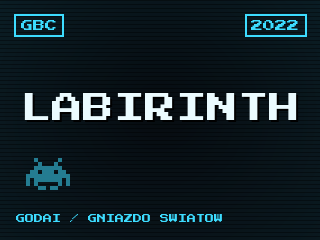 LabirinthGB COLOR · ADVENTURE · 2022
Lost in a strange land with no map, you advance by helping everyone you meet — a gentle GBC adventure-RPG.
WHERE THE OVERWORLD CAME FROM
Console adventure begins in 1980 with Adventure on the Atari 2600 — Warren Robinett compressing a text game into a single moving square that carries objects around a kingdom, then hiding his own name in a secret room because Atari wouldn't credit its programmers. Six years later The Legend of Zelda handed the genre its grammar: an open overworld, dungeons full of locks and keys, and — once it reached cartridge form — a battery inside so a quest that long could actually be saved. Metroid landed the same year and bent the formula sideways into ability-gated exploration, a branch homebrew developers still climb.
The 16-bit era is where it matured. A Link to the Past (1991) codified the top-down formula so thoroughly that "Zelda-like" became a genre name; the Genesis answered with Landstalker, Beyond Oasis and Crusader of Centy; and Link's Awakening (1993) proved a complete adventure fits in a pocket — a precedent both Game Boy entries on this shelf lean on. Everything below descends from those blueprints, built decades later by people who studied them screen by screen.
WHY THIS SHELF IS THE SHORT ONE
Four games. My platformer shelf is busier, and the reason is honest arithmetic: adventure is the most expensive genre you can build on vintage hardware. A platformer needs levels; an adventure needs a world — map data, item logic, doors that remember being opened, dialogue, and a save system — all inside machines like the NES, which offers 2KB of work RAM and eight sprites per scanline before things start flickering. Most homebrew projects in this genre die as tech demos. The ones below didn't.
The constraints are also where the genre's best ideas come from. Lock-and-key progression exists because gating old rooms behind new items lets a small map play like a big one. Secrets are everywhere partly because hiding content is cheaper than adding it. And saving was a genuine engineering problem — before battery-backed SRAM was common, long games handed you a password the length of a sonnet. A homebrew developer who ships a finished quest for a dead console solved all of this voluntarily, on their own time, then gave it away. That's why this shelf is short, and why everything on it earned the slot. The longer story lives in what homebrew actually is.
THE TOOLS BEHIND THE 2021S
Three of my four adventures are stamped 2021, and that isn't coincidence — it's tooling. Modern Game Boy development runs on GBDK-2020, a maintained open-source C toolchain, and GB Studio, a free visual builder that since 2019 has turned making a real, hardware-accurate ROM into something a determined beginner can finish. The GBA side has devkitARM and mature libraries, plus the structural luxury of a 32-bit ARM processor — developers can write in C without counting every cycle by hand. The Genesis has SGDK. None of this existed when these consoles were alive; official development kits cost a fortune and shipped under NDA.
Community game jams keep the release calendar moving — recurring Game Boy and GBA competitions push developers to actually finish, and a deadline is the difference between a tech demo and a quest with an ending. I sweep those release channels every week, check the file headers, and trace each license back to the author's own upload before anything lands here. The newest survivors sit on new this month.
WHICH CARTRIDGE TO PULL FIRST
Four games, four different itches. Anguna is the canonical pick — a proper Zelda-like with keys, bosses, secrets and a grumpy hero, and at 2008 the elder of this shelf. If "adventure" means dungeons and a map that slowly starts making sense, start there. Porklike trades the authored quest for procedurally generated dungeons: runs are short, death is information, and no two descents match — the right pick when you have ten minutes instead of an evening.
Shock Lobster is the reflex option, an action-RPG about a lobster with electric powers working through aquatic dungeons — adventure structure for arcade hands. Skyland sits at the far end: a strategy roguelite about building and managing flying island fortresses while repelling attacks, the slow-burn choice for players who prefer plans to swordwork. Every game page lists its system, controls and history before you press start. And if you're bringing a Bluetooth pad, run it through the gamepad tester first — thirty seconds there spares the lobster the blame for your stick drift.
WHAT VISITORS WANT TO KNOW
- Why are there fewer adventure games than other genres?
- Because adventures are the most expensive thing a homebrew developer can attempt — dungeons, items, scripting and hours of content, all on vintage hardware. Few get finished; the finished ones that are also legally free are rarer still. This shelf is small because it's honest.
- Which systems do these adventure games run on?
- This shelf currently spans 2 systems: GBA, Game Boy. The mix shifts as the weekly hunt adds games — each card shows its system, and each game page carries controls, history and credits.
- How long are these adventures?
- Real quests, not minigames: expect multiple hours each, with dungeons and progression. Save states mean you can play them like modern games — stop anywhere, resume anytime, no password screens required.