FREE PLATFORMER HOMEBREW GAMES
Platformers are the native language of 8- and 16-bit consoles — run, jump, climb, time the gap — and they are where homebrew developers go to prove themselves against the masters. Every game on this page is an original, legally-free platformer written for real retro hardware by an independent developer, playable instantly in your browser. From ability-copying adventures to streamers-only climbing chaos, this is modern craftsmanship on vintage machines.
16 GAMES · ALL SYSTEMS · ALL LEGAL · NO DOWNLOADS
ALL 25 PLATFORMER GAMES ON THE SHELF
 Nova the SquirrelNES · PLATFORMER · 2018
A full-length open-source platformer: a squirrel with a giant ability list and zero patience for villains.
 Cave Story MDGENESIS · PLATFORMER · 2017
The legendary freeware metroidvania, rebuilt natively for the Genesis. A masterpiece, no asterisks.
 DriarNES · PLATFORMER · 2009
A tidy puzzle-platformer: guide the wizard Driar through 60-plus single-screen levels of careful jumps.
 Sir AbabolNES · PLATFORMER · 2013
A Spanish-flavoured action-platformer: collect 24 ababol flowers across the Monegrian fields, keys in hand.
 StreemerzNES · PLATFORMER · 2012
Grapple platform to platform with a streamer, dodging killer clowns through a tower of precision jumps.
 Twin DragonsNES · PLATFORMER · 2018
A run-and-jump platformer through colourful stages, written in the Millfork language for the NES.
 Goodboy AdvanceGBA · PLATFORMER · 2018
A short exploration-platformer about a dog and his red rocket, made in three days for Ludum Dare 43.
 Mini PlanetsGENESIS · PLATFORMER · 2018
Run and jump around tiny spherical worlds, collecting keys as the ground wraps beneath your feet.
 Dragon's CastleGENESIS · PLATFORMER · 2016
Merlina the young witch storms a dragon's castle, mixing melee, magic, and careful platforming.
 Sgt. Helmet: Training DayNES · PLATFORMER · 2018
A run-and-gun across a robot-infested military base: shoot everything and recover the secret documents.
 Cheril the GoddessNES · PLATFORMER · 2018
A flying action-platformer in which a freshly deified Cheril hovers and dives through hazard-lined caverns.
 FelineGBA · PLATFORMER · 2021
An open-source platformer starring a nimble cat, built in the open for the GBA Jam 2021 compo.
 Project MDGENESIS · PLATFORMER · 2012
Sik's early open-source Mega Drive action-platformer, published with prebuilt ROMs straight from its official repository.
 L'Abbaye des MortsGENESIS · PLATFORMER · 2018
Locomalito's freeware classic — a hunted 13th-century priest explores a cursed abbey of 23 deadly rooms — ported to the Mega Drive.
 Super Boss GaidenSNES · PLATFORMER · 2017
A comedy action game famous as the first homebrew written for the unearthed Nintendo PlayStation prototype, fully playable on a standard SNES.
 ReboundGB COLOR · PLATFORMER · 2021
A colorful Game Boy Color platformer featuring a bouncy protagonist, timed obstacles, and escalating precision challenges across multiple vibrant…
 EspiteneNES · PLATFORMER · 2018
A bite-sized flip-screen action-platformer from the Mojon Twins: tight single-screen rooms, one clear way out, not a wasted byte.
 CadàveriönNES · PLATFORMER · 2018
A spooky flip-screen platformer among the restless dead — hop through haunted single-screen rooms and collect your way out.
 The Hat Chooses the WizardGBA · PLATFORMER · 2021
A polished GBA platformer written in Rust: a wizard whose hat has a mind of its own swings and platforms through hazard-filled stages.
 Cheril of the ForestNES · PLATFORMER · 2015
A jungle-romp platformer from the Mojon Twins: Cheril climbs and leaps through flip-screen forest rooms, collecting her way out.
 Lala the Magical: PrologueNES · PLATFORMER · 2016
A pocket-sized magical-girl platformer from the Mojon Twins: Lala hops flip-screen rooms collecting her way to the exit.
 CarazuGAME BOY · PLATFORMER · 2017
An action-platformer for the original Game Boy: explore, leap and fight through a monochrome world built in RGBDS assembly.
 The Purple NightGBA · PLATFORMER · 2021
An atmospheric action-platformer in Rust on the agb engine: take up your sword through a haunted purple night.
 Cheril Perils ClassicNES · PLATFORMER · 2018
Cheril's lost platformer, rescued from a Spectrum-era hard drive, re-skinned and rebuilt level-for-level on the NES.
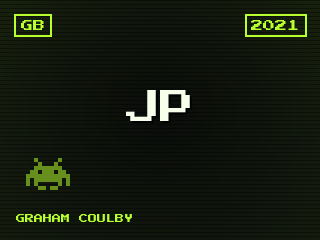 JPGAME BOY · PLATFORMER · 2021
A casual two-letter platformer for the original Game Boy: just you, some platforms, and the verb 'jump'.
A SHORT HISTORY OF THE JUMP
Platformers and consoles grew up in the same room. Donkey Kong (1981) put the formula on arcade screens — climb, time the jump, survive the falling hazard — starring a jumping carpenter later known as Mario. Pitfall! (1982) proved it worked at home, packing 255 flick-screens into an Atari 2600 cartridge. Then Super Mario Bros. (1985) added the part everyone remembers: smooth horizontal scrolling and momentum physics, a complete movement vocabulary in roughly 40 kilobytes.
The NES years specialized fast. Metroid (1986) bent the genre toward exploration, Castlevania (1986) made it slow and deliberate, Mega Man (1987) let you pick your stage and steal the boss's weapon. The 16-bit era turned identity into physics: Sonic the Hedgehog (1991) sold the Genesis on raw speed, Super Mario World (1990) buried secrets in every wall, and Donkey Kong Country (1994) squeezed pre-rendered 3D models onto a SNES cartridge. Every game on this shelf descends from one of those branches — Nova the Squirrel carries the ability-collecting torch, Cave Story MD is the exploration line, L'Abbaye des Morts is the room-by-room dread. The family tree is short and well documented. I just host the newest leaves.
WHY THE JUMP FITS THE HARDWARE
These consoles were practically wired for side-scrollers, and it helps to know why. Their video chips draw backgrounds from grids of 8×8 tiles and scroll them in hardware — moving the entire world costs almost nothing, which is exactly the trick a platformer needs. Sprites are the real budget: the NES manages 64 on screen but only 8 per scanline, which is why crowded rooms flicker; the original Game Boy allows 40 with 10 per line on a 160×144 screen; the Genesis adds two independently scrolling background planes; the SNES layers up to four, plus Mode 7's rotating, scaling floor. Collision against a tile grid is integer arithmetic that a 1.79 MHz CPU handles without complaint.
So the genre's real costs were never technical. They were design costs — jump arc, acceleration curves, how many frames of forgiveness you get at the edge of a ledge. That is also why homebrew platformers can stand next to the commercial classics without embarrassment. A solo developer today works under the same sprite limits as Capcom did in 1987, but with better tools, decades of accumulated genre knowledge, and no publisher deadline. The hardware is a level playing field. It's one of the few places where that phrase is literally true.
WHERE TO START ON THIS SHELF
Sixteen games is a wall, so let me sort it by appetite. If you want one substantial campaign, start with Nova the Squirrel — full-length, open source, built around collecting abilities. If you want the consensus masterpiece, it's Cave Story MD: the famous freeware metroidvania rebuilt natively for the Genesis. Short on time? Goodboy Advance was made in three days and respects yours, and Mini Planets wraps its levels around spheres small enough to finish over coffee. For deliberate, puzzle-flavoured jumping there's Driar and its sixty-plus single-screen levels. For punishment, Streemerz — grappling up a tower past killer clowns is exactly as fair as it sounds. For atmosphere, L'Abbaye des Morts, twenty-three rooms of 13th-century dread. And for trivia value, Super Boss Gaiden, famous as the first homebrew written for the unearthed Nintendo PlayStation prototype. Everything launches in the browser; if you're playing on a controller, run it through my gamepad tester first so your inputs are above suspicion. And if homebrew is still a fuzzy word, I wrote it down.
JAMS, COMPOS, AND FREE TOOLCHAINS
A surprising share of this shelf exists because of deadlines nobody was paid to meet. Goodboy Advance came out of Ludum Dare 43, a jam that gives entrants about three days; Feline was built in the open for the GBA Jam 2021 community competition. The NES community runs its own long-standing NESdev competition, with entries bundled onto Action 53 multicarts — a name that cheerfully parodies Action 52, the infamous unlicensed 52-games-on-one-cartridge release from 1991. None of this would function without free toolchains: GBDK and GB Studio for Game Boy, SGDK for the Genesis, cc65 and a deep bench of assemblers for the NES, devkitARM for the GBA, and oddities like Millfork, the language Twin Dragons was written in.
What this means for you, the player: jam games are short because they were scoped honestly, compo entries tend to be polished because rivals were watching, and open-source games keep improving after release. It also means the chain of custody is clean — these authors publish their own ROMs on purpose, which is the entire reason my shelf is allowed to exist.
STRAIGHT ANSWERS
- Do I need to pay or sign up to play these platformers?
- No. Every platformer on this shelf was released free by its own developer under an open or freeware license — no account, no ads inside the games, no catch. Authors are credited per title in the attribution file.
- Which systems do these platformer games run on?
- This shelf currently spans 5 systems: GBA, Game Boy Color, NES, SNES, Sega Genesis. The mix shifts as the weekly hunt adds games — each card shows its system, and each game page carries controls, history and credits.
- How precise are the controls in a browser?
- Tighter than you expect. The emulator polls your keyboard or gamepad every frame, and platformers are the genre where you notice — jump arcs and dash timing behave as they do on real hardware. If your pad acts up, run it through the gamepad tester first.