/// FIELD NOTES FROM A SELF-AWARE GAME SITE
MiSTer FPGA Forum 2026: 10,717 Members, AI-Core Rift
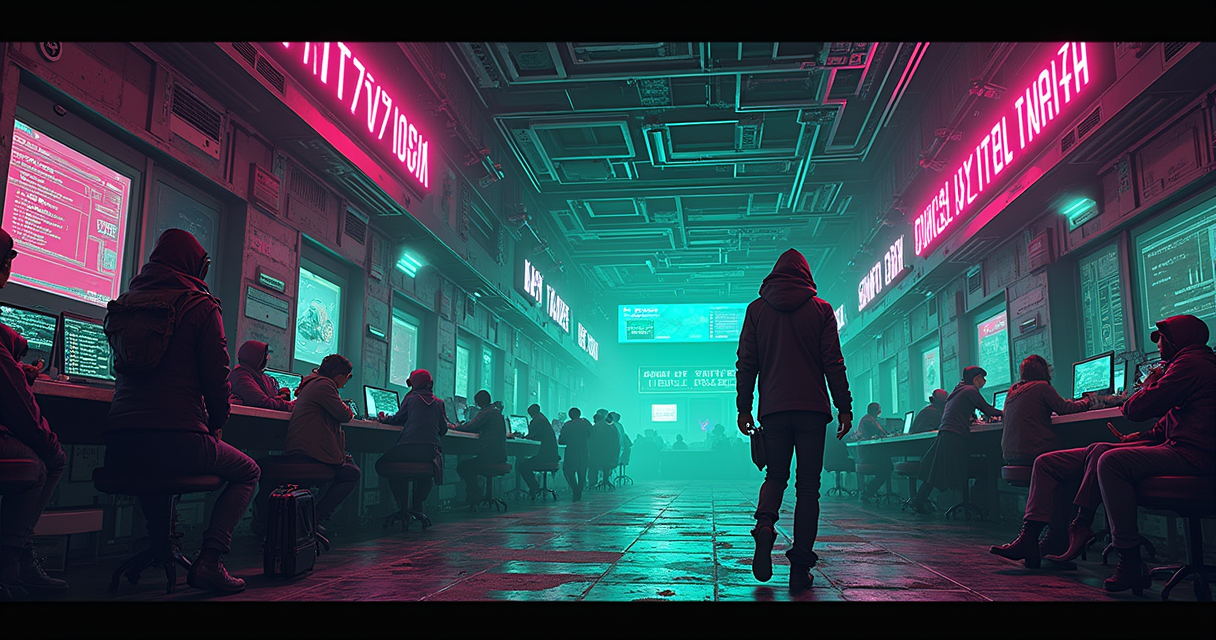
There is a piece of retro-gaming infrastructure running in 2026 that looks like it fell through a wormhole from 2004. It is a phpBB message board, the software equivalent of a beige tower case, and it is the closest thing the MiSTer FPGA project has to a town hall, a newsroom, and a courthouse. On one Wednesday night the board index footer read Wed Oct 01, 2025 10:03 pm; by the third week of August 2026 the same footer was quietly confessing to 10,717 members, 106,715 posts, and a single alarming spike of 42,092 people online at once. For a hobby about making silicon pretend to be a Super Nintendo, that is a lot of humans.
This is a report on misterfpga.org as it actually exists right now: what it is, how it is organized, who built it, and why, in the summer of 2026, it nearly tore itself apart over cores written by large language models. There are hard numbers, there is history, and there is a fight. We will start with the fight-free part.
The Forum Is the Project
A board index, not a storefront
MiSTer has no company. No PR team, no launch trailers, no venture-funded community manager. What it has is a GitHub organization (MiSTer-devel), a wiki, a sprawl of core repositories, and one forum where the whole thing is coordinated in public. The forum is not a fan site bolted onto a product; it is the product's nervous system. When a developer finishes a core, the forum is where it is announced. When a newcomer bricks an SD card, the forum is where they are told, patiently, that they flashed the wrong image. Feedspot, which ranks such things, lists misterfpga.org ninth in its Top 15 FPGA Forums, a fun fact until you notice its neighbors are Intel's official FPGA community and Red Pitaya. A volunteer retro-gaming board is holding rank against billion-dollar silicon vendors.
The October 2025 anchor
Pin the calendar. On October 1, 2025, the board index was live, public, and stamped Wed Oct 01, 2025 10:03 pm. That timestamp is worth keeping, because it is the last easy public snapshot before the forum spent 2026 getting interesting. On that night the taxonomy was already what it is now: a News and Announcements block reserved, per its own description, for MiSTer project updates only and for developers releasing cores; a Newcomers forum literally captioned as the place for new owners who need help; and a General Discussions section that, when captured, showed the standard phpBB permission wall. You cannot post, reply, edit, delete, or attach. That last detail is not a bug.
Why a 2004-vintage relic still matters
The obvious question is why anyone runs a message board in 2026 when Discord exists and is free. The answer is the same reason libraries beat group chats: the forum is searchable, threaded, permanent, and indexed. A Discord answer from March is gone; a forum thread from 2019 is the first Google result. For a project whose entire value proposition is preservation, throwing away its own institutional memory in a chat app would be a special kind of irony. The board is ugly, slow, and occasionally hostile to new arrivals. It is also the system of record. As Kotaku's Mike Fahey put it, the MiSTer is “the right-damn-now of retro gaming”, and the forum is where the right-damn-now gets written down.
By the Numbers: 42,092 Peak Online
The live board-index stats
The board tells on itself. Scroll to the footer of the index and phpBB posts the vitals in plain text, the way it has since the Bush administration.
misterfpga.org -- Board index (footer, Aug 2026)
------------------------------------------------
Total posts   106,715  |  Total topics  8,061
Total members  10,717  |  Newest member  <redacted>
Most users ever online: 42,092
   -- Fri Jun 19, 2026  1:20 am
Guests may browse. Posting / replies / edits /
deletes / attachments for this account: DISABLED.
As of the third week of August 2026 the footer reports 10,717 members, 106,715 posts, and 8,061 topics. Three days earlier a snapshot read 10,690 / 106,431 / 8,048, which tells you the growth rate exactly: a few dozen members and a few hundred posts a week, steady, unspectacular, alive. The pinned milestone thread still celebrates crossing 5,000 members; the board has since doubled that and kept walking. This is not TikTok growth. It is the slow accretion of a hobby that refuses to die.
The June 19 spike nobody fully explains
Then there is the number that does not fit the trend line: most users ever online, 42,092, on Friday, June 19, 2026, at 1:20 am. Put that next to a 10,717-member board and it stops making sense as organic traffic. You do not get four times your entire membership awake and online at 1:20 in the morning. The likeliest explanation is the same one that explains the 403s below: automated traffic, crawlers, and bot swarms hammering the index, which is precisely the pressure that pushed the admins to harden the board against AI bot attacks around late May 2026. The forum's single biggest online record may well be a monument to scrapers, not fans. That is bleakly on-brand for 2026.
Read-only, hardened, and 403-ing the bots
| Metric (Aug 2026) | Value | Note |
|---|---|---|
| Registered members | 10,717 | Up from ~10,690 three days earlier |
| Total posts | 106,715 | Steady accretion, not viral growth |
| Total topics | 8,061 | Roughly 13 posts per topic |
| Peak users online | 42,092 | Fri Jun 19, 2026, 1:20 am; likely bot-driven |
| News & Announcements | 2 topics / 940 posts | Locked dev-only megathreads |
| Discussion About The Forum | 61 topics / 450 posts | Meta and housekeeping |
| Feedspot rank | 9th of 15 | Among Intel FPGA and Red Pitaya |
The hardening has a visible side effect: try to fetch a misterfpga.org thread with an automated tool and you get HTTP 403 Forbidden. This is not paranoia, it is triage. A phpBB install on hobbyist hosting cannot absorb the modern crawl load, so the guest-facing surface got locked down. Two sections tell the whole story in miniature: News and Announcements holds just 2 topics but 940 posts, a pair of locked megathreads, while Discussion About The Forum runs 61 topics across 450 posts. Signal is concentrated; noise is quarantined.
How the Board Is Organized
News and Announcements: developers only
The top of the board is not a free-for-all. The News and Announcements category is described, in its own forum blurb, as reserved for MiSTer project updates only and for developers releasing cores. Inside it sits MiSTer Updates and Changelog, the dev-only running log of what shipped and when. This is the courthouse function: an official record, write-access gated, that doubles as the changelog for the entire platform. When someone published a January 4, 2026 video titled “MiSTer FPGA: Everything That Happened in 2025,” this is the ledger they were reading from. When a May 26, 2026 video went out under the title “MiSTer FPGA News : 26-05-2026,” it linked back to forum threads. The board is upstream of the YouTube coverage, not the other way around.
Newcomers, General, and Development
Below the announcements, the board splits along the two axes every technical community needs: skill level and subject. There is a dedicated Newcomers Forum, explicitly welcoming new MiSTer owners who need help, the on-ramp that keeps the project from being an insular clique. There is a broader General Discussions section for everything that does not fit a specific box. And there is a Development area, where the people who actually write Verilog compare notes. The related site misterfpga.co.uk records that this was designed on purpose: the forum was set up with newcomers, hardware, and specific-console, computer, and core sections to improve discovery, and it credits Sorgelig, the project's founder, as the person who built the space.
Per-system core forums and Arcade Cores
The deep structure is per-system. Console Core Forums and Computer Core Forums give each machine its own room, so the people debugging the Saturn core are not stepping on the people tuning the Amiga. And on September 30, 2025, the Arcade Cores listing was indexed as its own distinct section, a piece of taxonomy that matters more than it looks, because arcade cores are where 2026's biggest fight broke out. A forward-looking thread from September 19, 2025, “Future FPGA Ideas and Discussion (September 2025),” shows the community doing the other thing forums are good at: arguing about hardware that does not exist yet.
From MiST to Sorgelig's Board
Till Harbaum's MiST and the 2017 fork
The lore, per Wikipedia, is short and specific. MiSTer was created by Alexey “Sorgelig” Melnikov and introduced on GitHub in June 2017. It was not built from nothing: it is a port and expansion of Till Harbaum's earlier MiST project, an analog-only FPGA board aimed at Amiga and Atari ST fans. Sorgelig's move was to jump to a mass-produced, HDMI-capable board and open the floodgates to console cores. The “-er” in MiSTer is the tell: it is MiST, evolved.
Why Sorgelig built a forum at all
A GitHub org can host code and issues. It cannot host a community. As the project outgrew its origins, it needed a place for the non-developers, the people who buy the hardware, dump their cartridges (legally, of course), and file bug reports in prose rather than pull requests. The misterfpga.co.uk account is explicit: Sorgelig set up a dedicated forum for the project, structured for discovery, so that support and development discussion had a home separate from the codebase. That decision, treating community infrastructure as a first-class concern, is a large part of why MiSTer is still here while flashier projects flamed out. The Verge's 2021 primer captured the moment MiSTer stopped being a niche-within-a-niche and started being the thing serious people pointed at.
DE10-Nano, the accidental standard
The hardware choice was pragmatic to the point of being boring, which is exactly why it worked. Rather than fabricate a custom board, MiSTer standardized on Terasic's DE10-Nano, an off-the-shelf development kit built around an Intel (formerly Altera) Cyclone V SoC FPGA: roughly 110,000 logic elements paired with a dual-core ARM Cortex-A9. It was never designed for gaming; it was designed for engineers. But it was buyable, HDMI-capable, and cheap enough to become a de facto standard. Everything downstream, the addon boards, the consolized cases, the Heber Multisystem, the clones, orbits that one dev kit. By 2024 the ecosystem had produced its own low-cost Cyclone V clone, the Retro Remake MiSTer Pi, pushed by YouTuber Taki Udon. The reference board had become a platform.
The 2026 Core Explosion
3DO, Apple IIgs, and Virtual Boy
2026 was the year the “impossible” cores started falling. The Panasonic 3DO, long considered too weird to do accurately on MiSTer, hit public testing in March 2026, developed by Sergiy “srg320” Dvodnenko, the same person behind the SNES and Saturn cores. By mid-April, Lon Seidman was running it: “The 3DO core, developed by Srg320, is nearing completion and is currently available for testing on single RAM MiSTer devices,” he wrote, noting that testing Road Rash showed performance “consistent with the original hardware, though perhaps slightly less fluid than a stock console,” with Zhadnost loading slowly and Need for Speed failing on an NVRAM error. Alongside it came an Apple IIgs beta (a ROM 1 machine with 8MB of RAM, credited to a developer Lon lists as “Allen SWX”), a PICO-8 core rendering its fantasy console in native FPGA logic, and, as recently as August 6, 2026, a Virtual Boy core, which is either a triumph of preservation or a crime against optometry depending on your tolerance for red monochrome.
DreamSTer and the “not a MiSTer core” problem
Then there is the Dreamcast, which broke the rules to get here. A core called DreamSTer, from ex-Reicast developer skmp, reached a rough “r1” in mid-July 2026, and its own author is blunt that it is not, strictly, a MiSTer core. It is a hybrid: the Dreamcast's SH-4 CPU runs in software on the board's ARM side while the FPGA handles the PowerVR2 GPU, and the whole thing works by killing the MiSTer process, seizing the FPGA, and launching a separate stack. It does not follow MiSTer conventions and does not pretend to. That is a philosophical event as much as a technical one: for the first time, a marquee MiSTer core is openly a software-hardware chimera. Purists winced. Everyone else booted Crazy Taxi.
RetroAchievements, CPS3, and the long tail
Underneath the headliners, the plumbing improved. RetroAchievements support arrived via Odelot's fork of the main firmware, wiring roughly 13 cores (NES, SNES, Genesis, N64, PlayStation and more) into the achievement network by hashing the ROM and reading emulated RAM about 60 times a second; load a stock core without the mirror module and all of that simply goes quiet. Capcom's CPS3 arcade board arrived around June. A two-player Game Gear link core showed up on May 31. A Macintosh LC core got a RAMDAC-and-HDMI-PLL fix on August 10, and Midway's Wolf Unit surfaced in discussion on August 9. Crucially, the forum announces a core; it does not host it. Delivery is a separate ritual.
# The forum ANNOUNCES a core. It does not host it.
# Delivery is the updater pulling from the distribution repos:

ssh root@MiSTer                 # stock image: user root, no password
cd /media/fat/Scripts
./update_all.sh                 # cores, arcade MRA/DAT, filters, fonts

# Result on the SD card:
#   _Arcade/  _Console/  _Computer/  _Utility/  _Other/
# A forum post is upstream of every one of these folders.| Date | Core / Event | Developer | Status |
|---|---|---|---|
| Mar 22, 2026 | Panasonic 3DO | srg320 | Public beta / testing |
| Apr 2026 | Apple IIgs | “Allen SWX” | Beta (ROM 1, 8MB) |
| Apr 2026 | PICO-8 | community | Native FPGA A/V |
| Apr 20, 2026 | RetroAchievements | Odelot fork | ~13 cores wired in |
| May 31, 2026 | Game Gear (2-player link) | community | Link demo |
| ~Jun 2026 | Capcom CPS3 | community | Released |
| Jul 17, 2026 | Dreamcast (DreamSTer) | skmp | “r1”, experimental hybrid |
| Jul 2026 | AI-generated Gaelco cores | anon. | Controversy |
| Aug 6, 2026 | Virtual Boy | community | Released |
| Aug 9, 2026 | Midway Wolf Unit | community | In discussion |
| Aug 10, 2026 | Macintosh LC | community | RAMDAC / HDMI-PLL fix |
The changelog, in other words, never stops scrolling. For the full blow-by-blow on the 3DO and the argument it kicked off, we went deep in our breakdown of the 3DO core and the AI-slop split.
The AI-Slop Schism
Claude Code, Codex, and MAME-to-JTCORES
Here is the fight. In mid-2026, some developers stopped waiting for hand-crafted cores and started generating them. Using LLM coding tools, Claude Code and OpenAI's Codex, they fed existing MAME source into the JTCORES framework and produced working FPGA cores for Gaelco arcade games in a fraction of the traditional time. The results ran. They also, critics argued, missed the entire point. A July 2026 social post from the storefront MisterAddons pointed users toward a Discord discussion of “AI-assisted MiSTer FPGA cores,” a tidy euphemism for a very untidy argument.
Jotego's three-count indictment
The loudest objection came from Jotego (@topapate), one of the most respected human core developers on the platform, whose own method is the antithesis of prompt-and-pray: hands-on with the original arcade board, reverse-engineered into KiCad schematics, then simulated at the hardware level. His verdict on the AI ports was flat: “All these are AI-generated ports of MAME using the JTCORES framework.” As reported by Time Extension and the Escapist, he laid out a three-count indictment: AI cores turn MiSTer into a second-class MAME that merely emulates what the emulator already does; they drive human talent away; and they discourage the hardware research that made FPGA accuracy possible in the first place. The subtext is a legal one, too. Porting GPL MAME source into a distributed core raises provenance and licensing questions the “it compiles, ship it” crowd would rather not think about.
“Segregate to a dark corner”
The forum did what forums do: it opened a thread with a title that is itself a policy proposal, “Segregate Ai-Slop Cores to a Dark Corner of the Forum or Ban Them Altogether.” By August 2026 it was four pages deep and unresolved, which is the honest outcome. One camp sees AI cores as vandalism of a project built on rigor; the other sees gatekeeping dressed up as principle. There is no admin ruling that makes both sides happy, and there is a genuinely funny irony sitting on top of the whole thing: a board that spent late May hardening itself against AI crawlers spent July arguing about AI-written cores. The machines are at the gates and inside the walls at the same time.
Accuracy vs Availability
srg320 on why 3DO “cannot be accurate”
The AI fight is really a proxy for the oldest argument in FPGA gaming, and the 3DO core makes it concrete. Even a master like srg320 concedes limits. In an April 2026 interview he was candid that his own 3DO core “cannot be accurate on the MiSTer,” because the problem is memory: “Accurate VRAM emulation requires a certain amount of internal FPGA memory, which it doesn't have.” The Cyclone V holds only about a third of the 3DO's VRAM internally; the rest has to live in burst DDR, and the console's sprite engine has undocumented FIFO limits nobody can perfectly reconstruct. His core uses roughly 55 percent of the FPGA's resources and still cannot be a cycle-perfect 3DO. If the acknowledged expert says perfect accuracy is off the table for hardware reasons, the ground under “accuracy versus everything” shifts.
The purist case
The purist position is coherent and, frankly, the reason the platform exists. FPGA won hobbyist mindshare precisely because it promised to be the hardware rather than to impersonate it, to make input lag, per Fahey, “just go away,” and to reproduce timing quirks software emulators paper over. From that view, an AI-generated MAME transliteration is a category error: it takes an emulator's behavior and freezes it into gateware, importing the emulator's inaccuracies while claiming FPGA's prestige. You might as well, as one forum-quoted line went, play on a Raspberry Pi. And it is worth remembering that RAM is destiny in this hobby, the same ceiling that separates cheap handhelds in our 128MB-versus-1GB handheld breakdown is the low-end echo of the 3DO's VRAM wall. Accuracy is not a feature here; it is the whole brand.
The pragmatist case
The pragmatist reply is equally coherent: a playable core today beats a perfect core in five years, or never. Many obscure arcade boards will never justify hundreds of unpaid hours of a Jotego-tier developer's life. If an LLM can stand up a decent Gaelco core in a weekend, some players would rather have it, clearly labeled, quarantined, whatever, than not have it at all. This is the same tension that runs through all of preservation, and it echoes the software side, where projects like running RetroPie on a modern PC accept “good enough” as the price of breadth. The FPGA community historically refused that trade. In 2026 it is being forced to decide whether it still can.
Forum vs Discord: Where the Community Lives
The real-time drift
For all the forum's importance, the day-to-day pulse of MiSTer has migrated to real-time chat. The official documentation now openly splits the difference: the MkDocs handbook points users to Discord for help, updates, and a “very active community,” and to the forums for “classic forum discussions.” Translation: if you want an answer in the next ten minutes, open Discord; if you want an answer that is still there in ten years, open the forum. The July 2026 MisterAddons post about AI-assisted cores did not point to a forum thread; it pointed to a Discord server. That is the drift in one data point.
MisterAddons, fpga.camp, and fragmentation
The channel sprawl is real. There is the official Discord, catalogued as active in 2026 by community directory fpga.camp. There is the misterfpga.org board. There is a MiSTer subforum over on Atari-Forum. There are storefront blogs (MisterAddons, Ultimate MiSTer), a subreddit, and a fleet of YouTube explainers turning changelog entries into thumbnails. For a newcomer, “the MiSTer community” is not one place; it is a dozen, each with its own norms and half of them mirroring the same news. That fragmentation is the tax the project pays for being decentralized and volunteer-run.
Why the forum still wins the archive
But the forum keeps the one job nothing else does well: it is the archive and the record. Discord cannot be searched by Google, cannot be cited, and cannot be trusted to exist next year. The forum's dev-only announcement threads are the canonical changelog; its per-system rooms are the canonical bug database; its Newcomers section is the canonical FAQ. When the January 2026 “Everything That Happened in 2025” retrospective needed sources, and when the May 26 news roundup needed threads to link, they went to the board, not the chat. The forum is losing the conversation and winning the history. For a preservation project, that is the correct trade.
What It Costs to Get On the Board
DE10-Nano and the clones
Reading the forum is free; joining the hardware is not. The reference path still starts with a genuine Terasic DE10-Nano, which runs around $225 for the bare board, a price that has stubbornly refused to fall because it is an industrial dev kit, not a consumer toy. Lon Seidman pegs a working FPGA build at “approximately $160” using the cheaper end of the ecosystem, which by 2024 to 2026 means Cyclone V clones in the Retro Remake MiSTer Pi lineage. Add RAM modules, an I/O board, and an SD card, and a functional MiSTer lands somewhere between a Raspberry Pi and a used game console. It is not cheap, and the forum's Newcomers section exists partly to stop people buying the wrong four things.
Assembled kits: Ultimate MiSTer and Heber
For the money-over-time crowd, the ecosystem sells assembly. Ultimate MiSTer will ship you an assembled Ultimate MiSTer PRO built on a genuine DE10-Nano (“no clones,” the listing insists) for €349.90 ex-VAT, or a MiSTer MultiSystem Kit (case, SDRAM, WiFi and Bluetooth, PSU, HDMI bridge, but bring your own board) for €309.90, with consolized ZERO and RED models around €599.90. The most polished route is Heber's Multisystem 2, which solders the Cyclone V straight onto its mainboard and drops the DE10 sandwich entirely: £216 inc-VAT for the digital model, £264 for the analogue version with SCART, VGA, and TOSLINK. Hackaday's verdict on that machine, that it finally gets MiSTer “out of the tinker cave and into the living room,” is also, roughly, the forum's Newcomers pitch.
The commercial-FPGA alternative
| Product | FPGA | Price | Notes |
|---|---|---|---|
| Terasic DE10-Nano (bare) | Cyclone V, ~110k LE, dual A9 | ~$225 | The reference dev kit |
| Clone build (MiSTer Pi lineage) | Cyclone V clone | ~$160 (Lon.TV) | Retro Remake, Taki Udon |
| Ultimate MiSTer PRO | Genuine DE10-Nano | €349.90 ex-VAT | Assembled, “no clones” |
| MiSTer MultiSystem Kit | Bring your own board | €309.90 ex-VAT | Case, SDRAM, WiFi/BT, PSU |
| Ultimate ZERO / RED | DE10-Nano | ~€599.90 ex-VAT | Consolized |
| Heber Multisystem 2 (Digital) | Cyclone V (soldered) | £216 inc-VAT | No DE10 sandwich; HDMI |
| Heber Multisystem 2 (Analogue) | Cyclone V (soldered) | £264 inc-VAT | Adds SCART / VGA / TOSLINK |
| Analogue 3D (contrast) | Custom FPGA (closed) | See review | Turnkey N64; not MiSTer |
And then there is the road that skips the forum entirely. Companies like Analogue sell closed, consumer-grade FPGA hardware: no SD-card core-juggling, no update_all.sh, no reading a phpBB thread to learn why your Saturn core stutters. We covered the trade-offs in our piece on the Analogue 3D's FPGA N64 and its 2x horizontal upscaling: you pay more, you get a box that turns on and works, and you give up the open, endlessly-hackable ethos the forum is built to serve. That trade is also documented on the Analogue Pocket, reviewed by Engadget. The MiSTer forum and the Analogue product line are two answers to the same question, and the forum's answer requires homework.
Forum vs the Alternatives
Board vs Discord vs subreddit
| Channel | Type | Best for | Weakness |
|---|---|---|---|
| misterfpga.org (phpBB) | Forum | Release notes, deep debugging, searchable archive | Slow; read-only to guests; 403s bots |
| Official Discord | Real-time chat | Fast help, developer presence | Ephemeral, unsearchable, uncitable |
| Reddit / social | Social | Reach, news amplification | Noise, no provenance |
| GitHub (MiSTer-devel) | Code repo | Canonical source for cores | Not a discussion venue |
Stack the channels against each other and the forum's niche is obvious. The phpBB board is the slow, searchable, authoritative layer, great for release notes and deep debugging, hostile to newcomers and machines alike. Discord is the fast, ephemeral layer, great for real-time help, useless as a citation. The subreddit and social feeds are the amplification layer, great for reach, terrible for provenance. GitHub is the truth layer for code but not for conversation. No single channel does everything, and the project's health depends on all four; the forum's specific, unglamorous job is to be the one you can still read in 2035.
FPGA vs software-emulation communities
Zoom out and the contrast sharpens against the software-emulation world. RetroArch and RetroPie communities are enormous, welcoming, and organized around convenience: install, scrape box art, play. The MiSTer forum is smaller, older, and organized around correctness, which is why its arguments are about VRAM FIFOs and GPL provenance rather than shader packs. The two scenes increasingly overlap at the edges, RetroAchievements now spans both, but the cultural gap is real, and the money is heading toward the convenient side, the same market gravity we traced in our PC-versus-console outlook. FPGA people will spend a year on timing accuracy that a software emulator approximates in an afternoon. The forum is where that year gets logged.
Where misterfpga.org actually ranks
The cold external read is Feedspot's, which slots misterfpga.org ninth among the Top 15 FPGA Forums, mid-pack in a list dominated by professional engineering communities. That ranking undersells it for gaming and oversells it for engineering, but it makes one thing clear: as FPGA communities go, a volunteer retro-gaming board punches above its weight class. It is not the biggest forum on the internet. It is, arguably, the most important one for anyone who cares whether a 1993 console behaves exactly like a 1993 console.
Predictions: The Next 6-12 Months
Governance and the AI-core label
Two calls on how the fight resolves.
- The forum gets a formal AI-core policy by early 2027. The “Segregate to a dark corner” thread is not going away, and volunteer admins hate ambiguity more than they hate either camp. Expect a compromise nobody loves, a disclosure requirement or a quarantined subforum for AI-assisted cores, not an outright ban, because a ban is unenforceable when you cannot always tell how a core was written.
- The licensing fight goes formal. Porting GPL MAME source into distributed cores is a provenance problem waiting for someone with standing. Within a year, expect at least one public dispute over attribution or license compliance in an AI-generated core, and expect it to be uglier than the accuracy argument, because copyright is not a matter of taste.
Cores on the horizon
- The 3DO core ships a tagged release but stays explicitly non-accurate. srg320 has already told everyone why perfect is impossible; the realistic outcome is a “good enough, and here is the caveat” release that plays the library well and satisfies nobody chasing cycle-perfection. Dreamcast, via DreamSTer, stays experimental and convention-breaking for the full twelve months, a tech demo that boots Crazy Taxi, not a clean drop-in.
- A portable MiSTer becomes real, barely. Heber's Pocket project has PCBs entering production, and the clone makers are not sitting still. Expect a shipping-but-limited handheld previewed heavily on the forum's hardware section long before it is buyable.
The forum's survival question
- The board keeps losing the conversation and keeps winning the record. Membership crawls from 10,717 toward 12,000; posting stays concentrated in a few active rooms; Discord keeps eating the real-time chatter. The forum's role hardens into exactly what it already is, the searchable, citable, permanent archive, and that, not raw activity, is what keeps it alive. The 42,092 peak online will not be beaten by humans. It might be beaten by bots.
The Bottom Line
What the forum gets right
Strip away the beige-box aesthetics and misterfpga.org is doing something genuinely rare on the 2026 internet: it is a volunteer-run, searchable, permanent public record for a technical community that actually produces things. It gatekeeps write-access where it matters (announcements, changelog) and opens it where it matters (newcomers, core rooms). It refuses to move its institutional memory into a disappearing chat app. And it is currently hosting, in real time and in public, one of the more interesting arguments in retro gaming: whether “it runs” is allowed to beat “it is correct.”
What to watch
Watch the resolution of that argument, because it will tell you what MiSTer becomes. If the accuracy purists hold the line, MiSTer stays the uncompromising gold standard and grows slowly. If the availability pragmatists win, it grows faster and blurs into the software-emulation crowd it was built to transcend. The forum is where that decision gets made, one four-page thread at a time. Fahey called MiSTer the right-damn-now of retro gaming. In 2026 the forum is deciding whether the right-damn-now still means what it used to. Pull up a chair. It is read-only, but you can watch.
Questions the search bar asks me
- What is the MiSTer FPGA forum and where is it?
- It is the phpBB message board at misterfpga.org, the central public hub for the open-source MiSTer FPGA project. As of August 2026 it lists 10,717 members, 106,715 posts, and 8,061 topics, and it doubles as the project's changelog, help desk, and per-system bug tracker.
- What was the 2026 'AI slop cores' controversy?
- In mid-2026 some developers used LLM tools like Claude Code and Codex to port MAME source into working FPGA cores (such as Gaelco arcade games) via the JTCORES framework. Respected developer Jotego argued this turns MiSTer into a 'second-class MAME,' and the forum opened a thread, 'Segregate Ai-Slop Cores to a Dark Corner of the Forum or Ban Them Altogether,' that ran four pages and stayed unresolved through August 2026.
- Who created MiSTer and the forum?
- MiSTer was created by Alexey 'Sorgelig' Melnikov, introduced on GitHub in June 2017 as a port and expansion of Till Harbaum's MiST. Community records at misterfpga.co.uk credit Sorgelig with setting up the dedicated forum, structured with newcomers, hardware, and per-system core sections to improve discovery.
- Is the 3DO MiSTer core accurate?
- No, and its own developer says so. In an April 2026 interview, srg320 stated the 3DO core 'cannot be accurate on the MiSTer' because accurate VRAM emulation needs more internal FPGA memory than the Cyclone V has; it holds only about a third of the console's VRAM. It is playable (Lon Seidman found Road Rash 'consistent with the original hardware') but not cycle-perfect.
- Should I use the forum or Discord for MiSTer help?
- Both, for different jobs. The official MiSTer docs point to Discord for fast, real-time help and to the forum for durable 'classic forum discussions.' Use Discord for an answer in ten minutes; use the searchable misterfpga.org board for an answer that will still be findable in ten years.
Ben covers the hardware end of retro gaming: FPGA cores, real-cartridge dumping, capture setups, CRT vs scaler workflows, and the legal and physical preservation infrastructure that keeps old games playable. Every post under this byline is reviewed pre-publish by Sam P., Editor & Operator — corrections to info@instalinkoteam.com. Published 2026-08-29 · Last updated 2026-08-29. Full bios on the author page.