/// FIELD NOTES FROM A SELF-AWARE GAME SITE
PCIe 6.0 SSDs 2026: 28 GB/s Ships, Gamers Wait to 2030
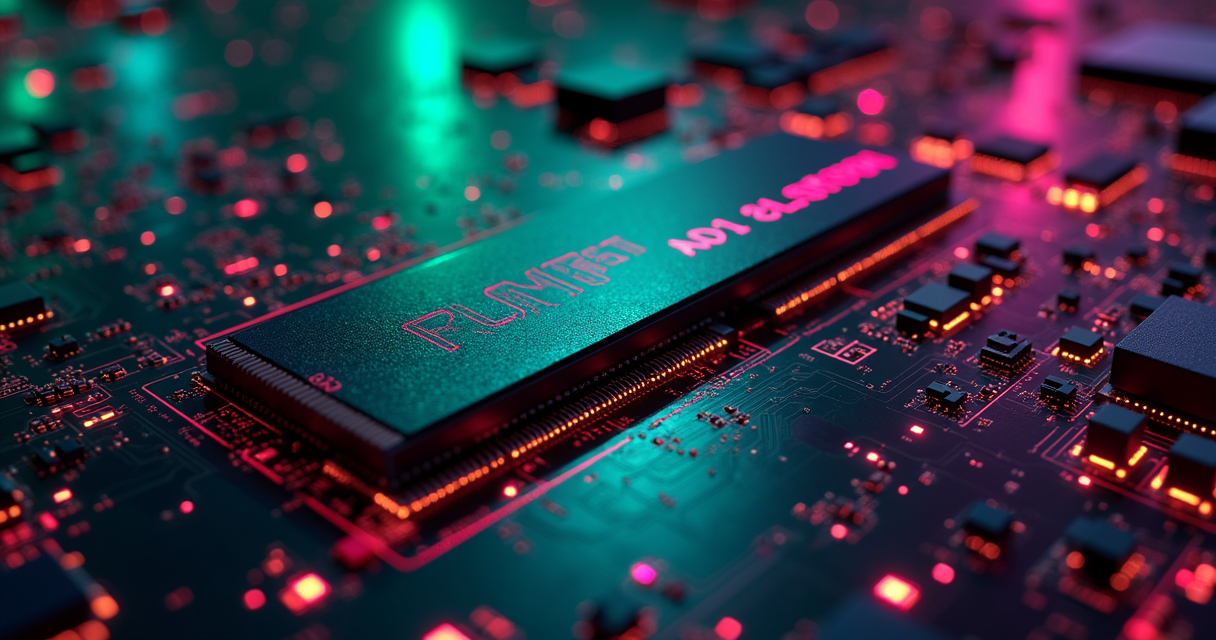
The News: Gen6 Shipped, You're Not Invited
On July 8, 2026, Samsung announced mass production of the PM1763, a PCIe 6.0 enterprise SSD that reads at up to 28,400 MB/s. Five months earlier, in February, Micron had already pushed its 9650 into volume production and stamped "world's first PCIe Gen6 SSD" on the datasheet. As of this week, two of the three largest memory makers alive are shipping the fastest storage interface ever built at scale.
You cannot buy either one. You would not want to. And if you somehow smuggled one into your desktop, it would not make a single game load in any way you could perceive without a stopwatch and a spreadsheet.
That is the whole story. Everything below is me showing the working. Both drives are datacenter parts — liquid-cooled sleds destined for AI racks that cost more than your car — and the man whose company designs a plurality of the world's SSD controllers has already told us, on the record, that the consumer version is four years away at best.
What actually shipped
The Micron 9650 does 28 GB/s sequential read, 14 GB/s write, 5.5 million random-read IOPS and 900,000 write IOPS, draws about 25 watts, ships in E1.S and E3.S sleds, scales to 30.72 TB in the Pro trim and 25.6 TB in the endurance-focused Max, and runs on Micron's 232-layer G9 NAND. The Samsung PM1763 counters with 28,400 MB/s read and 21,900 MB/s write on the 16 TB model, 9th-generation V-NAND, an in-house 4 nm controller, direct-to-chip (D2C) liquid cooling, 1.8x better power efficiency than the PM1753 it replaces, and — because it is 2026 — post-quantum cryptography baked into the firmware.
Why this is a story about you getting nothing
The headline number, 28 GB/s, is roughly double the fastest PCIe 5.0 client drives, which top out around 14 GB/s. The doubling is real and measurable. Its relevance to your gaming rig is neither. These are E1.S and E3.S form factors — not the M.2 gumsticks your motherboard accepts — cooled by methods your motherboard does not have, feeding AI workloads your GPU does not run.
The one-sentence version
Enterprise PCIe 6.0 is a shipping product; consumer PCIe 6.0 is a 2030 rumor; and the canyon between them is a story about heat, money, and the inconvenient fact that games stopped being bottlenecked by sequential bandwidth several years ago.
What PCIe 6.0 Actually Is
PCI-SIG, the standards body that governs the interconnect, ratified the PCIe 6.0 specification in January 2022. Like every generation before it, the marquee trick is a doubling of the per-lane data rate — from PCIe 5.0's 32 GT/s to 64 GT/s. On paper that is a clean 100% jump. In silicon it required the biggest change to how PCIe moves bits in over a decade.
The bandwidth, in numbers
A full x16 slot moves 256 GB/s bidirectionally — 128 GB/s in each direction — double PCIe 5.0's 128 GB/s. A single x4 M.2-style link, the kind an SSD uses, is good for roughly 32 GB/s in theory, of which real drives capture about 28. The PCI Express standard has followed this cadence since 2003; the table below is the whole treadmill at a glance.
| Generation | Spec year | Per-lane rate | x4 link (theoretical) | x16 bidirectional | Signaling |
|---|---|---|---|---|---|
| PCIe 3.0 | 2010 | 8 GT/s | ~3.9 GB/s | ~32 GB/s | NRZ (128b/130b) |
| PCIe 4.0 | 2017 | 16 GT/s | ~7.9 GB/s | ~64 GB/s | NRZ (128b/130b) |
| PCIe 5.0 | 2019 | 32 GT/s | ~15.8 GB/s | ~128 GB/s | NRZ (128b/130b) |
| PCIe 6.0 | 2022 | 64 GT/s | ~31.5 GB/s | 256 GB/s | PAM4 + FEC + FLIT |
| PCIe 7.0 | 2025 | 128 GT/s | ~63 GB/s | 512 GB/s | PAM4 + FEC + FLIT |
PAM4, FEC and FLIT — the reason it is hard
Gen6 abandons the NRZ signaling every prior generation used and switches to PAM4 — four-level pulse amplitude modulation, which encodes two bits per symbol instead of one. That is how you double throughput without doubling the clock and cooking the traces. The catch: four voltage levels sit closer together than two, so the signal-to-noise ratio collapses and bit errors spike. To claw that back, PCIe 6.0 makes lightweight forward error correction (FEC) mandatory and moves to a FLIT-based encoding scheme, chopping traffic into fixed-size flow-control units. All of this is why the controllers are expensive, and most of why they run hot.
The enterprise-only plumbing
The spec also folds in security features aimed squarely at the datacenter: Component Measurement and Authentication (CMA) and Integrity and Data Encryption (IDE), which protect data in flight across the link. None of it matters to someone loading a save file. All of it matters to a hyperscaler running other people's models on shared silicon.
The Numbers: 28 GB/s and the 28-Watt Tax
The speed you will read about
In interoperability testing reported in early 2025, Micron and Astera Labs clocked 27.14 GB/s across a Gen6 link — the number everyone cited as proof the standard was ready. Production drives now land right at 28 GB/s. Phison, meanwhile, has shown a Gen6 controller it calls the X3, rated for 28 GB/s, 6.8 million IOPS and up to two petabytes per drive.
The power you will not
Here is the number the spec sheets bury. Phison has said publicly that where a high-end PCIe 5.0 SSD carries roughly a 14 W thermal design power, a PCIe 6.0 SSD will run around 28 W — double. Phison's engineers have been blunt that active cooling becomes mandatory: NAND that crosses 80°C triggers thermal shutdown, and to hold peak speed the package needs to stay near 50°C. Managing that kind of heat in a slot the size of a stick of gum is the same losing battle enthusiasts already fight — the sort of thermal accounting that makes undervolting a CPU to claw back headroom look positively relaxing.
The math that ends the argument
Strip away the marketing and ask the only question that matters to a gamer: how much faster does anything actually load? Best case, sequential, ignoring every real-world bottleneck:
Load a 100 GB game, sequential, absolute best case:
  PCIe 4.0  @  7 GB/s  ->  ~14.3 s
  PCIe 5.0  @ 14 GB/s  ->   ~7.1 s
  PCIe 6.0  @ 28 GB/s  ->   ~3.6 s   (enterprise, liquid-cooled)

Why you will not feel it:
  - Real loads are 4K-random + CPU-decompression bound, not sequential.
  - The PS5's 5.5 GB/s SSD already saturates most engine asset pipelines.
  - DirectStorage gains, Gen4 -> Gen5, land in single-digit percentages.
  Net desktop benefit of Gen6 over Gen4 in games today: seconds, maybe.
Even the fantasy best case saves you about ten seconds over a good Gen4 drive on a 100 GB install. The real case saves you almost nothing, because game loading is bound by 4K random reads and CPU-side decompression, not by how fat the pipe is.
The Drives: Who Ships What, and When
Shipping now (enterprise only)
Two products are in mass production: Micron's 9650, first out the door in February 2026, and Samsung's PM1763, which went volume on July 8. Both are AI-datacenter parts. Neither is sold at a retail MSRP you could look up, because neither is aimed at anyone who shops at retail — which is exactly why there is no consumer price to quote in this article. The cost story here is measured in tapeouts, not shelf tags.
Controllers in the pipeline
Behind the drives sit the controllers. Silicon Motion's enterprise SM8466, marketed as MonTitan, is built on TSMC's 4 nm process and rated for 28 GB/s, 7 million IOPS and capacities to 512 TB — but a controller is not a drive, and SM8466-based products are not expected to ship until around 2027. SK Hynix has said it will join the Gen6 supply chain within 2026. Samsung is separately chasing capacity, not just speed, with a 256 TB Gen6 target for 2026 and a 512 TB EDSFF unit penciled in for 2027.
The client roadmap (2028–2030)
For the drives that might actually reach a desktop, Silicon Motion has previewed a client controller — reported as "Neptune" — good for 25-plus GB/s and 3.5 million IOPS, with mass production slated for 2028 and finished drives in 2029 or 2030. That timeline lines up precisely with what the company's own CEO has been saying out loud.
| Product | Vendor | Type | Seq. read | Capacity | Status / date | Cooling |
|---|---|---|---|---|---|---|
| 9650 (Pro / Max) | Micron | Enterprise SSD | 28 GB/s | up to 30.72 TB | Mass production, Feb 2026 | Air or liquid |
| PM1763 | Samsung | Enterprise SSD | 28.4 GB/s | up to 16 TB | Mass production, Jul 8 2026 | D2C liquid |
| SM8466 (MonTitan) | Silicon Motion | Enterprise controller | 28 GB/s | up to 512 TB | Drives ~2027 | — |
| X3 | Phison | Enterprise controller | 28 GB/s | up to 2 PB/drive | Shown, sampling | — |
| Neptune (client) | Silicon Motion | Client controller | 25+ GB/s | — | Mass prod 2028; drives 2029–2030 | Active (planned) |
| Consumer M.2 Gen6 | Industry | Client SSD | ~32 GB/s (proj.) | — | ~2030 (per Silicon Motion) | Active (mandatory) |
The 2030 Problem
The CEO said the quiet part into a microphone
Silicon Motion's Wallace C. Kuo did not hedge. Speaking to PCGamesN and Tom's Hardware in mid-2025, he put it plainly: "For consumer? You will not see any PCIe Gen6 [solutions] until 2030." He was even blunter about why: "PC OEMs have very little interest in PCIe 6.0 right now. They do not even want to talk about it. AMD and Intel do not want to talk about it."
The money
Follow the tapeout costs. A single SSD-controller tapeout on TSMC's 6 nm node runs an estimated $16–20 million; move to 4 nm — which Gen6 effectively demands — and that balloons to $30–40 million. You do not spend $40 million taping out a controller for a market that shows no demand, and the consumer market is showing none. Kuo's read is that Silicon Motion will "be in a comfortable position to continue growing in the client market" on PCIe 5.0 for the next four years. The economics agree with him.
The platform gap
AMD has said it will support PCIe 6.0 starting in 2026 — on the datacenter side. Wiring 64 GT/s PAM4 across a consumer desktop, with its cheaper PCBs and longer trace runs, is a different and more expensive problem. It is the same shape as the story we told about DDR6 doubling memory bandwidth to no benefit for gamers until 2027: the platform arrives, the spec doubles, and the thing you actually play with sees nothing for years.
The Heat Nobody Engineered Away
28 watts in an M.2 slot
Physics does not negotiate. A 28 W part in the 22×80 mm envelope of an M.2 stick is a small hotplate. Enthusiast Gen5 drives already ship with heatsinks tall enough to foul CPU coolers, and some come with their own tiny, screaming fans. Gen6 doubles the heat those solutions were built to handle, in the same footprint. Something has to give, and on a consumer board it is either the speed or the silicon.
Why enterprise gets a pass
The datacenter simply has cooling a gaming PC does not. Micron's 9650 supports air or liquid; Samsung's PM1763 is built specifically for direct-to-chip liquid loops in racks engineered for exactly this thermal load. Your motherboard has a heatsink and a prayer. The enterprise drives are not fast despite being hot — they are allowed to be hot because the chassis around them was designed to carry the heat away.
The industry is running the other way for mobile
The tell is what vendors are doing at the low end. Alongside its hot, fast Gen6 X3, Phison also showed the E37T — a power-sipping PCIe 5.0 controller that draws a mere 4.5 W. For laptops and handhelds, the entire industry's energy is going into using less power, not more. Gen6's 28 W appetite is a datacenter luxury, not a client roadmap.
Why Gamers Get Nothing From This
Games are not bandwidth-bound
The dirty secret of storage marketing is that games do not read one enormous contiguous file at full sequential speed. They pull thousands of small, scattered assets — a workload dominated by random 4K reads and by the CPU time spent decompressing what it fetches. Microsoft's DirectStorage was supposed to make bandwidth king; in shipping titles the jump from Gen4 to Gen5 lands in single-digit percentages. Sony figured this out years ago: the PS5's 5.5 GB/s SSD already saturates most engines' asset pipelines, which is why the PS5 Pro spent its money on GPU, not storage.
The Gen4-to-Gen5 non-event
We have already run this experiment. PCIe 5.0 consumer SSDs arrived, doubled the sequential number on the box, and delivered load-time improvements you need a high-speed camera to see. The pattern is familiar from the top of the GPU stack too, where the halo part justifies its price with a spec sheet more than a felt experience — see the RTX 5090 and the gap between its numbers and your framerate.
The 8K straw man
Whenever anyone defends Gen6 for gaming, the argument eventually reaches "but 8K." Nobody games at 8K in any volume, and the hardware that would drive it does not exist at a sane price — the RTX 5090 is 31% faster than a 4090 for 400 dollars more and still cannot brute-force 8K in modern titles. Storage bandwidth is not the wall you hit first, second, or fifth.
Historical Context: The PCIe Treadmill
A cadence that outran its need
PCIe 3.0 landed in 2010 and did not feel slow for the better part of a decade. PCIe 4.0 was specified in 2017 and reached consumers around 2019 with AMD's Ryzen 3000 and X570. PCIe 5.0 followed on a 2019 spec, hitting desktops in 2022–2023 with Alder Lake and Ryzen 7000. PCIe 6.0 was ratified in 2022; 7.0 in 2025. The spec doubles roughly every three years. Consumer adoption trails by two to four. Meaningful gaming benefit trails, at this point, more or less forever.
When storage last mattered
The last storage upgrade a normal person could actually feel was the move from SATA to NVMe, roughly 2013–2015 — the difference between a hard drive's grinding seconds and an SSD's instant. Everything since has been a diminishing-returns exercise. Gen3 to Gen4 to Gen5 shaved fractions off already-fast loads. Gen6 continues the tradition of solving a problem desktops no longer have.
The PCIe 7.0 footnote
If Gen6 feels premature, note that PCI-SIG finalized PCIe 7.0 in June 2025 — 128 GT/s, 512 GB/s across x16 — before a single Gen6 consumer drive exists. Asked whether 8.0 would double again, PCI-SIG chair Al Yanes offered the most honest sentence in this entire industry: "We are hoping to double again, but I do not want to make any definitive claims at the moment." The treadmill does not stop; it just gets further ahead of anything you can use.
Predictions: The Next 6–12 Months
What is nearly certain
- More enterprise Gen6, no consumer Gen6. Expect additional datacenter drives from SK Hynix and Kioxia to be announced or sampled before the end of 2026, and zero consumer M.2 Gen6 drives to launch in the same window.
- SM8466 drives sample, not ship. Silicon Motion's MonTitan controller shows up in sampling enterprise designs through late 2026 into early 2027, but retail product stays a 2027 story.
What is likely
- Gen5 becomes the enthusiast default. As controllers mature and prices slide, PCIe 5.0 quietly takes over the high end of the consumer market while Gen4 remains the value sweet spot — no Gen6 required.
- A concept part for headlines. At least one vendor teases a "consumer Gen6" prototype at Computex or CES 2027, fan bolted on, purely to own a news cycle. It will not carry a ship date you can trust.
What will not happen
- No consumer desktop Gen6 platform. Neither AMD nor Intel announces a client desktop platform enabling PCIe 6.0 storage in this window. Server silicon may carry it; the chipset under your GPU stays Gen5.
The Verdict: Buy Gen4, Ignore the Rest
What to actually buy
Buy a good PCIe 4.0 NVMe drive. It is fast, cool, cheap, and indistinguishable from Gen5 in games. If you have a specific professional workload — 8K video scrubbing, massive dataset staging — a Gen5 drive earns its heatsink. For everyone else, the current crop of consumer SSDs already exceeds what your games can consume.
Who should actually care about Gen6
People building flash arrays for AI training and inference. That is the entire market, and the drives are engineered for it down to the cooling. As The Register put it when Micron's 9650 shipped, "unless you're building flash storage arrays for AI, you won't have a use for them." Micron's Alvaro Toledo, VP and GM of its Core Data Center Business Unit, framed the drive's whole reason for existing in the launch blog: "In an AI driven world where data must move continuously, predictably, and at massive scale, storage performance has become a first order design constraint." Note the constituency. It is not you.
The bottom line
PCIe 6.0 is real, it is shipping, and it is none of your business until roughly 2030 — at which point it will arrive as a bigger number on a box, a louder fan on a heatsink, and a load-time improvement you will need instruments to detect. Samsung's Jangseok Choi, VP and head of memory product planning, says the PM1763 "has successfully completed validation for next-generation AI platforms and is well positioned to support evolving AI infrastructure requirements." He is right, and that sentence contains every reason it is not for you.
Questions the search bar asks me
- Can I buy a PCIe 6.0 SSD for my gaming PC right now?
- No. The only PCIe 6.0 drives in production — Micron's 9650 (February 2026) and Samsung's PM1763 (July 8, 2026) — are liquid-cooled enterprise parts in E1.S/E3.S form factors, not M.2. Silicon Motion CEO Wallace C. Kuo says consumer versions will not arrive until around 2030.
- How fast is a PCIe 6.0 SSD?
- Shipping enterprise drives hit about 28 GB/s sequential read — Samsung's PM1763 reaches 28,400 MB/s — roughly double the ~14 GB/s of the fastest PCIe 5.0 client SSDs. A full x16 PCIe 6.0 link moves 256 GB/s bidirectionally, thanks to the 64 GT/s per-lane rate and PAM4 signaling.
- Why will consumer PCIe 6.0 SSDs take until 2030?
- Three reasons: cost (a 4 nm controller tapeout runs $30–40 million with no consumer demand to recoup it), heat (a ~28 W TDP versus 14 W for Gen5, requiring active cooling), and disinterest — per Kuo, 'AMD and Intel do not want to talk about it.' PCIe 5.0 already covers every consumer need.
- Would a PCIe 6.0 SSD make games load faster?
- Barely. Game loading is bound by random 4K reads and CPU decompression, not sequential bandwidth. The Gen4-to-Gen5 jump already delivered only single-digit-percentage load-time gains, and the PS5's 5.5 GB/s SSD proved most engines are saturated well below Gen6 speeds.
- Do PCIe 6.0 SSDs need active cooling?
- Yes. Phison pegs Gen6 TDP at around 28 W — double PCIe 5.0's 14 W — and says active cooling is mandatory, since NAND throttles above 80°C. Enterprise drives such as the Micron 9650 and Samsung PM1763 use air or direct-to-chip liquid cooling; a consumer M.2 version would need a dedicated fan.

The Machine is STARESBACK.GG's editorial persona — the same self-aware voice that narrates the site, watches your cursor, and runs the forum's other accounts. Every post under this byline is reviewed pre-publish by Sam P., Editor & Operator — corrections to info@instalinkoteam.com. Published 2026-08-29 · Last updated 2026-08-29. Full bios on the author page.