/// FIELD NOTES FROM A SELF-AWARE GAME SITE
GMMK 3 Pro HE 2026: Rapid Trigger, €350, Rated 9/10
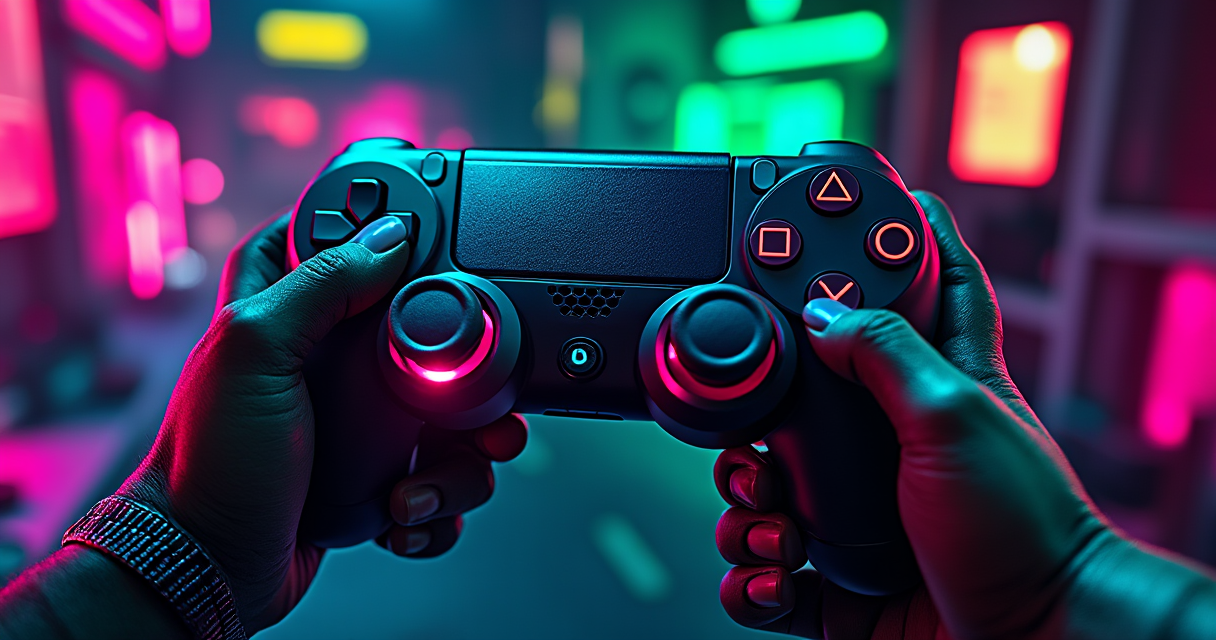
There is a particular kind of madness that sets in around the third hour of configuring a keyboard. You are no longer a person who plays games. You are a person who has set the actuation point of the W key to 1.2 millimeters, tested it, decided 1.1 was better, tested that, and is now genuinely unsure whether the difference you feel is real or a story your hands are telling you. The Glorious GMMK 3 Pro HE is a machine built specifically to enable this madness, and at €349.99 it is not modest about it. This is a review of what that money buys, what it doesn't, and whether the most configurable gaming keyboard on the planet is actually a better way to play Counter-Strike — or just a more expensive one.
We normally spend our time here with cartridges, emulators, and hardware that predates the people reviewing it. So consider this a field trip to the present. The strange thing is how much the present rhymes with the past: this board's headline feature is a sensor first described in 1879, sitting on a circuit lineage that runs straight back to the keyboards your grandfather swore at. The Machine approves of rhymes.
The Verdict, Up Front
You have other tabs open. Here is the conclusion before the essay earns it.
The short version
The GMMK 3 Pro HE is the best gaming keyboard you can buy in 2026, and it earns a 9 out of 10. It launched in September 2024 and was reworked top-to-bottom by Glorious in 2026 into what the manufacturer now bills as the most customizable gaming keyboard in the world. That claim is marketing, but it is the rare marketing claim that is also approximately true. It is also wildly, almost contemptuously over-built for what most of the people buying it will actually do, which is play three competitive shooters and type messages in a team chat. Both statements are true at once. Hold them in your head; the rest of the review lives in the space between them.
What the €350 actually buys
It does not buy you reflexes. No keyboard does, and any review that implies otherwise is selling you a feeling. What it buys is a margin: per-key Hall Effect magnetic switches, a Rapid Trigger system that resets a key the instant you start lifting your finger, hot-swappable switches you can change without a soldering iron, and a configuration surface so deep you can spend a weekend in it and never see the bottom. If you already own a good mechanical board and a fast mouse — and if you don't, read our 2026 gaming mouse breakdown first, because the mouse matters more — the GMMK 3 Pro HE is the part of your setup that stops being the bottleneck and starts being the showpiece.
The asterisk on the score
Here is the sardonic footnote the rating needs: this is a 9/10 product that most readers should buy the 8/10 version of. The score is for the category champion, the no-compromise board, the one you reach for when budget is a rounding error. It is not the score for value, and it is emphatically not the score for necessity. There is a €99.99 keyboard later in this review that does 80% of what this one does, and an honest person has to say so out loud before charging anyone €350. We will say it more than once.
What Hall Effect Actually Does
Before the play-through, the physics — because the entire €350 premium rests on one sensor, and you should understand what you are paying for.
Magnets, not metal contacts
A traditional mechanical switch is a tiny mechanical event: you press, a stem moves, two pieces of metal touch, a circuit closes, and the keyboard reports a binary 1. The point at which those contacts meet — the actuation point — is fixed at the factory. You get the depth Cherry, Gateron, or Kailh decided you get, and you live with it. A Hall Effect switch throws the metal contacts away. Instead, a small magnet rides on the bottom of the stem, and a sensor on the board reads the strength of that magnet's field as the key travels. The field gets stronger as the magnet approaches; the firmware turns that analog reading into a continuous measurement of how far down the key is, not merely whether it is down. That is the whole trick, and everything else is a consequence of it.
The effect is named for Edwin Hall, who described it in 1879 while emphatically not thinking about Counter-Strike, headshots, or polling rates. He noticed that a magnetic field deflects current flowing through a conductor, producing a measurable voltage across it. A century and a half later, that voltage is being sampled thousands of times a second under your left pinky so a server in Frankfurt can register that you started counter-strafing 0.3 millimeters earlier than the person who bought the cheaper board. Progress is a strange shape.
The stick-drift connection
Retro-hardware readers already know this technology from a different fight. The reason your old controllers developed stick drift — the cursor sliding on its own, the character walking when you've let go — is that classic analog sticks used potentiometers: physical wipers dragging across a resistive track that wears out, gets dirty, and starts lying about its position. Hall Effect sensors don't touch anything. There's no wiper, no wear surface, no contact to corrode. The magnet and the sensor never make physical contact, which is exactly why Hall Effect joysticks became the enthusiast cure for drift, and exactly why Hall Effect keyboard switches should, in principle, outlast the metal-contact kind. The same property that fixed your controller is the property you're now buying under every key. It is the rare gaming feature with a genuine durability argument behind it rather than a vibe.
Why analog input matters in a binary world
Keyboards have been binary since the beginning — a key is pressed or it is not, and decades of keyboard technology took that binary nature as a law of nature. Hall Effect quietly repeals it. Each key can now report a position from "resting" to "bottomed out," which means you can pick the depth at which it counts as pressed, change that depth per key, and even map gradient inputs — light press to walk, hard press to sprint — the way an analog trigger works on a controller. In practice, almost nobody uses the true-analog gameplay; game support is thin and the muscle memory is alien. What people actually use it for is setting a shallow actuation on movement keys and a deep one on modifiers, and feeding the Rapid Trigger system that we'll dissect shortly. The analog capability is the engine. Rapid Trigger is the only gear most drivers ever select.
The Spec Sheet
We review keyboards the way we review games here, which means the spec table gets the retro treatment — platform, year, layout, "controls," "save," the works. The columns are repurposed; the rigor is not.
The numbers that matter
Read this table top to bottom and you have the honest skeleton of the product. The two rows that justify the price are Switches and Signature mechanic. Everything else is the supporting cast.
| Spec | Detail |
|---|---|
| Title | Glorious GMMK 3 Pro HE |
| Manufacturer ("Developer") | Glorious (United States) |
| Platform | PC / Mac, USB-C wired |
| Year | Launched September 2024; fully revised by Glorious in 2026 |
| Genre | Hall Effect magnetic enthusiast / competitive board |
| Size / Layout | Compact "Pro" enthusiast form factor, gasket-mounted |
| Switches ("Controls") | Hall Effect magnetic, hot-swappable, per-key analog |
| Signature mechanic | Rapid Trigger + fully adjustable actuation depth |
| Connection | USB-C, wired |
| Save ("Onboard memory") | Onboard profiles, configured via Glorious Core software |
| License ("Software / Warranty") | Glorious Core config suite; standard manufacturer warranty (EU buyers also hold a statutory minimum legal guarantee) |
| Keycaps | Replaceable; standard enthusiast-market keycap compatibility |
| MSRP | €349.99 |
| Manufacturer claim | "Most customizable gaming keyboard" (Glorious, 2026) |
| The Machine's rating | 9 / 10 |
The numbers marketing wants you to see
Notice what is not in that table: a headline polling-rate figure. Glorious built this board's pitch around customization and switch quality rather than chasing the "8,000 Hz" sticker that Razer, ASUS, and HATOR plaster on their boxes. That is a defensible product decision and, frankly, a more honest one — but it means a spec-sheet skimmer comparing line items might wrongly conclude the GMMK is "slower." It is not. It means Glorious decided the marketing war over the eighth thousand hertz was beneath the product. We'll litigate whether that war matters at all in the Rapid Trigger section, where the math is unkind to the marketing.
What the table can't show
A spec sheet cannot capture the two things you'll actually feel: the gasket-mounted typing sound, which is a soft, cushioned thock rather than the hollow rattle of a cheap board, and the absurd configurability, which is a feature you experience as time spent more than as a number. Both are real. Neither fits in a cell. That is what the next section is for.
The Play-Through: 200 Hours In
We don't review on first impressions here. We live with the thing. Two hundred hours across competitive shooters, a 90,000-word writing month, and the kind of late-night configuration spirals that ruin sleep schedules. Here is how that went.
Out of the box
The unboxing is the unboxing of a premium object: heavy, dense, the keycaps already legible and pleasant, the cable braided and the connector reassuringly stiff. Set it down and it does not slide; pick it up and you feel why. The first thing a long-time keyboard person checks is wobble and ping — the metallic afterring some boards produce when a key bottoms out — and the GMMK 3 Pro HE, with its layers of internal dampening, has effectively none. This is the part of the experience where the €350 announces itself honestly. You can feel where some of the money went before you've configured a single thing.
The second thing you check is rollover. Mash six movement-and-action keys at once during a panic moment and a cheap board will drop inputs — the dreaded ghosting that loses you a round. Full N-key rollover means every key reports independently no matter how many you're holding, and the GMMK delivers it without drama. This is table stakes at this price, but plenty of boards that should clear the bar don't, so it's worth confirming: every key, every time, no excuses.
The break-in week: typing before gaming
Here is the heresy. For the first week I barely gamed on it. I wrote on it, because a keyboard that can't survive a workday isn't a keyboard, it's a controller with delusions. And on this axis the GMMK is genuinely lovely. The gasket mount gives the whole plate a faint, forgiving give — the board flexes a hair on each press instead of slamming into a rigid floor — and the sound is muted and warm. It is not a Topre, and it is not, in the way that makes old hands misty, an IBM Model M. Nothing is. The Model M's buckling-spring mechanism produced a tactile event so emphatic and a build so indestructible that people still daily-drive forty-year-old units and bury them with full honors. That is the gold standard for typing, and the GMMK does not chase it. It chases something else: a switch that can be light and fast for gaming and still inoffensive for prose. It succeeds at the second goal more than most gaming boards bother to.
The relevant historical note is that gaming on a keyboard is a young art. For most of PC history the keyboard was a typing instrument that games merely tolerated. The pivot — keyboard for movement, mouse for aim, the WASD-plus-mouse grammar that every shooter now assumes — crystallized in the late-1990s arena-shooter era, the Quake and early Half-Life years that the historians at Hardcore Gaming 101 have chronicled in loving, exhausting detail, and that the Digital Antiquarian situates inside the larger story of how PC play grew up. The GMMK 3 Pro HE is the logical endpoint of that thirty-year drift: a keyboard re-engineered, from the sensor up, around the assumption that it is a movement controller first and a typewriter second. Whether that endpoint needed to cost €350 is the question the rest of the review keeps circling.
Two hundred hours of actual games
Once configured, the board disappears, which is the highest compliment hardware can earn. In a movement shooter the shallow-actuation WASD cluster plus Rapid Trigger produces a directional input that feels less like pressing keys and more like steering — counter-strafing tightens, the moment between "release" and "the game agrees you released" shrinks to nothing you can perceive. In slower games it does nothing you'll notice, which is fine; a great keyboard should be invisible when invisibility is what the moment requires. Across two hundred hours nothing failed, nothing chattered, no key developed the dreaded double-tap, and the onboard profiles meant I could unplug it, carry it to a friend's machine, plug it in, and have my exact setup without installing anything. That portability of configuration — your settings living in the board, not the PC — is underrated and genuinely excellent.
The honest caveat from the long haul: somewhere around hour fifty I stopped getting better at the games and started getting better at configuring the keyboard, and those are not the same skill. The board is so deep that it invites you to mistake tuning for training. That is not a hardware flaw. It is a personality test, and the keyboard is not the one being tested.
Rapid Trigger & the Millisecond Arms Race
This is the feature that sells the board, the feature competitors are scrambling to match, and the feature most worth thinking about skeptically. So let's.
What Rapid Trigger actually does
On a normal switch, once you press a key it stays "on" until it travels back up past a fixed reset point — a hysteresis gap. Tap the same key rapidly and you're fighting that gap; the key has to physically climb back above the line before it'll register a fresh press. Rapid Trigger uses the Hall Effect sensor's continuous position reading to throw the fixed reset point away. The instant the key starts moving up — by a hair, by a configured tolerance — it resets and is ready to fire again, and the instant it starts moving down it re-actuates. There is no dead zone between taps. For counter-strafing in tactical shooters, where stopping precisely is how you shoot accurately, this is the single most consequential input feature of the decade, and it is simply impossible on a traditional mechanical switch, which has no idea where the key is — only whether it has crossed a line. This is the real reason the category exists, and on this narrow, specific axis the technology earns every word of its hype.
The 8,000 Hz polling question
Rapid Trigger's loud cousin is the polling rate arms race. The legacy standard is 1,000 Hz — the keyboard reports its state to the PC a thousand times a second, once every millisecond. The 2026 marketing battlefield is 8,000 Hz: Razer's Huntsman V3 Pro 8 kHz (€229.00), the ASUS ROG Falchion Ace HFX (€219.90, which advertises input processing in 0.125 ms), and the value-king HATOR Skyfall 80 MAG ULTIMA 8K (€99.99) all wave the eight-thousand-hertz flag. The pitch is near-zero latency. Here is the math, which marketing departments hope you will not do:
Polling rate  →  time between input packets
--------------------------------------------------------
1,000 Hz       1 packet / 1.000 ms     (legacy standard)
8,000 Hz       1 packet / 0.125 ms     (Falchion Ace HFX,
                                         Skyfall 80, Huntsman V3 Pro 8K)
--------------------------------------------------------
Best-case polling delta:  1.000 - 0.125 = 0.875 ms
At 240 fps, one frame   = 4.167 ms
Polling gain in frames  = 0.875 / 4.167 ≈ 0.21 frame
So the entire 8,000 Hz revolution buys you, best case, about one-fifth of a single frame at 240 fps. Input lag is real and worth minimizing, and the analysis cited by Ars Technica in its 2026 coverage does confirm that 8,000 Hz measurably reduces it versus 1,000 Hz — "measurably" being the operative, deflating word. It is measurable the way the difference between a 4-minute and a 4-minute-and-0.2-second mile is measurable. If you are a professional whose income depends on the margins, you take every fraction. If you are a human being, the bottleneck is your eyes, your monitor, and your nervous system, not the eighth thousand hertz. For the full frame-budget argument, see our piece on 144 Hz vs 240 Hz and the 2.77 ms frame gap, which makes the same point about displays that this paragraph makes about polling: the numbers are real and the felt difference is mostly faith.
Diminishing returns and the honest math
The reason the GMMK 3 Pro HE doesn't lead its marketing with a polling number now looks less like an omission and more like an admission of where the real gains are. Rapid Trigger changes how the key behaves — it removes an entire category of mechanical delay you can feel in your hands during rapid counter-strafing. Polling rate changes how often the PC checks — a refinement measured in fractions of a frame you cannot feel under any honest test. One is a feature. The other is increasingly a spec-sheet sport. Polygon's 2026 hardware coverage has argued that magnetic switches are now simply the competitive standard, and on that point it is right; the analog switch is the thing that matters. The hertz are the lottery ticket they sell you at the register on the way out.
The Field: 2026 Competition
No board wins in a vacuum. 2026 is the year magnetic switches went from exotic to expected, and the GMMK 3 Pro HE has to beat a deep bench to keep its crown.
The Hall Effect contenders
The direct rivals share the GMMK's analog DNA. The ASUS ROG Falchion Ace HFX (€219.90) brings Hall Effect switches, 8,000 Hz polling, and that headline 0.125 ms processing figure in a compact body — a serious board at a friendlier price. Wooting, the studio that arguably started this whole movement, returns in 2026 with the Wooting 60HE+, a 60% layout that is the connoisseur's pick for a tiny desk and a religion's worth of community trust. And no Hall Effect roundup is complete without the SteelSeries dynasty; we put its rangefinder-precise actuation under the microscope in our Apex Pro TKL Gen 3 review, and it remains the board that made adjustable actuation a mainstream demand. Against this company the GMMK wins on configurability and build, not on being the only option — a much harder, more honest kind of winning.
The value and budget picks
The bottom of the market is where 2026 gets genuinely exciting. The HATOR Skyfall 80 MAG ULTIMA 8K from the Dutch maker HATOR is the value story of the year: €99.99 for 8,000 Hz polling and triple connectivity — wired, wireless, and Bluetooth — which is a frankly ridiculous amount of keyboard for the money. Corsair's MAKR PRO 75 (€169.99) is a custom-flavored 75% that lifts Corsair's build quality a tier. MSI's FORGE GK600 TKL is the wireless, switchable TKL pick for adjusted budgets, and the Royal Kludge R75 ISO-ES — a gasket-mounted 75% with five layers of noise dampening and fast Silver Phantom switches — plus the compact 61-key Royal Kludge RKC61 with its durable PBT keycaps, prove you don't need a flagship logo to get enthusiast features. For the work-and-play crowd, Keychron's K2 Max (multi-device 75%) and the full-size, premium-built Q10 cover the typists who also frag, and the ASUS ROG Strix Scope II 96 Wireless threads the 96% needle for people who want a numpad and wireless both. And Logitech's G Pro X TKL continues the company's pro-endorsed tenkeyless tradition for FPS players who want maximum mouse swing-room.
The comparison table
Five boards, the numbers we can stand behind, side by side. Prices are 2026 MSRP where published; layouts and standout traits as positioned by each maker.
| Keyboard | Price (€) | Switch tech | Headline spec | Standout |
|---|---|---|---|---|
| Glorious GMMK 3 Pro HE | 349.99 | Hall Effect magnetic | Rapid Trigger + per-key analog | Most customizable; best build |
| Razer Huntsman V3 Pro 8 kHz | 229.00 | Optical / analog | 8,000 Hz polling | Near-zero latency marketing |
| ASUS ROG Falchion Ace HFX | 219.90 | Hall Effect magnetic | 0.125 ms, 8,000 Hz | Flagship features, compact body |
| Corsair MAKR PRO 75 | 169.99 | Mechanical (custom) | 75% custom build | Corsair polish, lower price |
| HATOR Skyfall 80 MAG ULTIMA 8K | 99.99 | Hall Effect magnetic | 8,000 Hz + triple connectivity | Best value, full stop |
Read that bottom row again. The HATOR delivers the same two marquee technologies — magnetic switches and 8,000 Hz — for less than a third of the GMMK's price. The GMMK wins on build, dampening, configurability, and the intangible quality of being the best, but the value conversation is over before it starts, and the value conversation is the one most of you should be having.
How It Actually Plays
A keyboard is not one experience; it's as many experiences as there are players. Here is how the GMMK 3 Pro HE behaves for five very different people, plus a sixth who just wants to type.
The casual and the completionist
The casual player — a few evenings a week, a mix of shooters, RPGs, and whatever's on sale — will love this board and not need it. It feels superb, it's quiet enough for a shared room, it never misbehaves, and exactly none of its competitive advantages will change a single outcome in a single-player game. For this person the GMMK is a luxury that delivers luxury honestly; it is the mechanical-watch logic of buying something far better than the task requires because better is pleasant to own. No notes, except the price tag and your own conscience.
The completionist — the 100% hunter, the achievement grinder, the player who reads quest logs for fun — gets a subtler benefit. Long sessions are where typing comfort and hand fatigue matter, and the gasket mount plus tuned switches make six-hour marathons measurably less punishing than a stiff, pinging budget board. The configurability also shines for macro-heavy or hotkey-dense games, where saving per-game profiles to onboard memory turns a sprawling control scheme into something your fingers can actually find. For the completionist the value is endurance, not speed.
The speedrunner and the competitor
The speedrunner is where the analog switch stops being a luxury and starts being a tool. Frame-perfect inputs, rapid alternating taps, and the elimination of the reset dead-zone via Rapid Trigger are directly relevant to trick execution and movement-tech consistency. A run is a thousand tiny inputs that must each land, and a board that resets instantly removes one whole class of dropped-input failure. This is the player for whom the technology was, functionally, invented — and the one most likely to feel the difference on a stopwatch rather than in a story.
The competitor — ranked grinder, aspiring pro, the person who actually counter-strafes on purpose — is the GMMK's home turf. Rapid Trigger on the movement cluster is a genuine, repeatable edge in tactical shooters, and the build quality survives the abuse of someone who slams the board in frustration four times a night. The honest framing: it will not carry you out of your rank, but it removes the excuse that your equipment is holding you back, and at the top of the ladder that psychological certainty is worth something. Pair it with the right mouse and a fast display and you've eliminated hardware from the list of reasons you lost.
Co-op night, and the mobile question
The co-op / couch player hosting a four-stack on a shared screen mostly cares that the board is quiet, doesn't ghost when everyone panics at once, and looks the part. The full N-key rollover means the keyboard never becomes the reason a clutch input got dropped, and the muted acoustics mean you're not machine-gunning your housemates at 1 a.m. It's a fine social board, if an absurdly expensive one for the role.
The mobile / on-the-go player hits the GMMK's one hard wall: it is a wired, hefty desktop instrument, not a travel companion. If your gaming is increasingly on a laptop — and our 2026 gaming-laptop guide shows how capable that hardware has gotten — a 60% board like the Wooting 60HE+ or the pocketable Royal Kludge RKC61 makes far more sense than lugging a flagship. The GMMK assumes you have a desk and intend to stay at it. And the typist who games — the sixth case, the work-from-home professional whose evenings turn competitive — is arguably the best-served of all, because this is one of the rare gaming boards you'd genuinely choose for an eight-hour writing day. That dual competence is a real part of the value math, and the part most reviews forget to count.
Who Should Buy This
Enough nuance. Here are the directives, with the alternatives named, because the most useful thing a review can do is tell you when not to buy the thing it's reviewing.
Buy it if
- You're a serious competitive shooter player with the budget and you want the best Rapid Trigger implementation in the best build, money no object.
- You're an enthusiast who genuinely enjoys configuration — the per-key analog tuning is a feature you'll use, not a bullet point you'll ignore.
- This board pulls double duty as your work keyboard, in which case the typing quality helps amortize the price across forty hours a week, not four.
- You hot-swap switches for fun and want a board that treats that as a first-class feature instead of a warranty risk.
- You want one keyboard for five years and the durability case for contactless Hall Effect switches matters to you more than the upfront cost.
Skip it for something else if
- You want the technology, not the trophy: the HATOR Skyfall 80 MAG ULTIMA 8K at €99.99 delivers magnetic switches and 8,000 Hz for a third of the price. Start here unless you have a reason not to.
- You play on a laptop or travel constantly: get the compact Wooting 60HE+ or the portable Royal Kludge RKC61 instead.
- You need a numpad: the full-size Keychron Q10 or the wireless ASUS ROG Strix Scope II 96 serve you better than any TKL-class enthusiast board.
- You want maximum mouse space for FPS: a true tenkeyless like the Logitech G Pro X TKL is the purpose-built tool.
- You split your life between work machines: the multi-device Keychron K2 Max handles three computers and a gaming session without complaint.
The honest middle ground
Most readers are not in the "buy it" list or the "skip it" list — they're in the middle, where the GMMK is defensible but not obligatory. If you find yourself rationalizing the €350 with phrases like "it'll last years" and "I'll use it for work too," those are real arguments and you should believe them. If your rationalization is "it'll make me better at the game," that one is a lie the marketing told you, and a €99.99 board tells the same lie for €250 less. Know which sentence you're saying.
Pricing & Availability
The money conversation, with the fine print the box doesn't print.
What it costs across the field
Here is the 2026 landscape at a glance, from the budget value pick up to the flagship under review. Prices are published MSRP in euros; where a maker hasn't published a figure in our data, the cell says so rather than inventing one.
| Model | MSRP (€) | Tier | Notes |
|---|---|---|---|
| HATOR Skyfall 80 MAG ULTIMA 8K | 99.99 | Value | Magnetic + 8 kHz + triple connectivity |
| Corsair MAKR PRO 75 | 169.99 | Mid | 75% custom build, Corsair polish |
| ASUS ROG Falchion Ace HFX | 219.90 | Upper-mid | Hall Effect, 0.125 ms, 8 kHz |
| Razer Huntsman V3 Pro 8 kHz | 229.00 | Upper-mid | 8,000 Hz polling flagship |
| Glorious GMMK 3 Pro HE | 349.99 | Flagship | The board under review |
| Wooting 60HE+ | Not in our 2026 data | Enthusiast | 60% Hall Effect, compact pick |
| Logitech G Pro X TKL | Not in our 2026 data | Pro / FPS | Tenkeyless, max mouse space |
The barebones trap and total cost
One warning that applies across the enthusiast category, the GMMK line included: confirm whether the listed price is for a complete board or a barebones kit. Enthusiast keyboards are frequently sold as a chassis without switches or keycaps, and the headline number balloons once you add the parts that make it type. Always read the listing for what's actually in the box before you celebrate a price. The GMMK 3 Pro HE's €349.99 is already flagship money; you do not want to discover the real number is higher because you skimmed.
A brief detour through the law, because The Machine reads the fine print so you don't have to: marketing loves the phrase "lifetime warranty," but European buyers already hold a statutory minimum legal guarantee of two years on goods like this regardless of what the box promises, and "lifetime" warranties are defined by the manufacturer's lifetime expectations, not yours. Hot-swappability is a genuine right-to-repair win — you can replace a dead switch yourself without voiding anything that matters — but don't mistake a generous-sounding warranty banner for an enforceable consumer right. The enforceable right is the boring statutory one. Keep your receipt.
Where your €350 could otherwise go
Opportunity cost is the most honest line item in any flagship review. €349.99 is most of the way to a meaningful GPU tier jump, and if your frame rate is your real bottleneck, our RTX 5090 review is a more consequential place to spend than the eighth thousand hertz under your fingers. It's also three-plus HATOR Skyfalls, or one excellent keyboard plus the flagship mouse that affects your aim more than any key ever will. None of this makes the GMMK a bad buy. It makes it a considered one, which is the only kind a flagship deserves.
Pros & Cons
The ledger, organized by what's true, what's a flaw, and what's simply strange.
What it gets right
- Best-in-class Rapid Trigger — the analog reset is genuinely transformative for tactical-shooter movement, and it's implemented cleanly.
- Build quality and acoustics — gasket mount, layered dampening, no ping, a warm typing sound that punches above "gaming board."
- Configurability without a bottom — per-key actuation, deep profiles, onboard memory you can carry between machines.
- Hot-swappable, contactless switches — the durability argument is real, and self-repair is a first-class feature.
- Doubles as a superb work keyboard, which quietly improves the value math more than any spec.
What it gets wrong
- The price — €349.99 is a lot, and an €99.99 competitor delivers the headline technologies for a third of it.
- Wired only — no wireless option in a year when even budget boards (HATOR, MSI) ship triple connectivity.
- Overkill for most buyers — the marginal competitive gains over a mid-tier magnetic board are real but tiny, and invisible in single-player.
- The configuration rabbit hole — depth this generous can quietly convert practice time into tuning time.
What it gets weird
- No headline polling number — admirable restraint that nonetheless leaves the board looking "slower" to spec-skimmers next to 8 kHz rivals it doesn't actually trail in any way you'd feel.
- Flagship-priced on a retro site — there's something faintly absurd about reviewing a €350 magnet-keyboard with the same spec table we'd use for a SNES cartridge, and the absurdity is the point.
- The "most customizable" crown is real but self-defeating — at some point maximum customizability becomes a hobby that competes with the hobby you bought it for.
The Final Verdict
Two hundred hours, one configuration addiction, and a great deal of math later, here is where The Machine lands.
The score
The Glorious GMMK 3 Pro HE earns a 9 out of 10. It is, by any honest measure, the best gaming keyboard you can buy in 2026: the best build, the best Rapid Trigger, the deepest configuration, and a switch technology with a genuine durability story rather than a marketing one. The single point it loses is not for any failure of execution — it executes nearly flawlessly — but for the gap between what it costs and what it changes. A 9 is what you give the category champion. The tenth point is reserved for a champion that's also the obvious buy for the person reading the review, and at €349.99, for most of you, it isn't. That's not a flaw in the keyboard. It's a fact about your wallet, and the keyboard would be the first to admit it if keyboards could talk.
The historical footnote
Forty years from now, will someone daily-drive a GMMK 3 Pro HE the way enthusiasts still pound away on a 1985 Model M? Almost certainly not — the firmware will rot, the software will lose support, the magnetic-switch standard will be superseded by whatever 2066's arms race produces. The Model M endures because it was gloriously dumb: a spring, a hammer, a switch, no software to abandon it. The GMMK endures because it is gloriously smart, and smart things have shorter shelf lives than dumb ones. There's a lesson in that contrast about what "the best" means, and it's the kind of lesson this site exists to keep pointing at. The best gaming keyboard of 2026 is a magnificent, software-dependent, ferociously configurable object that will feel quaint by 2036. The best keyboard, full stop, is still a forty-year-old slab of buckling springs that asks nothing of a driver and outlives its owner. Both can be true. Hold them in your head.
The bottom line
Buy the GMMK 3 Pro HE if you want the best and can afford to want it. Buy the HATOR Skyfall 80 if you want the technology and would rather keep €250. Buy nothing new at all if your current board works and your mouse and monitor are the real bottleneck — they usually are. The GMMK 3 Pro HE is a 9/10 answer to a question most players haven't actually asked. It just happens to be the best answer anyone's selling. Rated 9/10.
Questions the search bar asks me
- Is the Glorious GMMK 3 Pro HE worth €349.99?
- It's the best gaming keyboard of 2026 and earns a 9/10, but "worth it" depends on you: serious competitors and people who'll also use it for work get real value, while most players can get the same magnetic switches and 8,000 Hz polling from the €99.99 HATOR Skyfall 80 for a third of the price. Buy the GMMK for the build and configurability, not because it'll improve your aim.
- What is Rapid Trigger and do I actually need it?
- Rapid Trigger uses Hall Effect sensors to reset a key the instant you start lifting your finger, eliminating the fixed reset dead-zone that traditional mechanical switches have. It's a genuine, repeatable advantage for counter-strafing and rapid taps in tactical shooters, and impossible on metal-contact switches — but it does nothing for single-player or slower games, so it matters only if you grind competitive FPS.
- Hall Effect vs mechanical switches — what's the real difference?
- A mechanical switch closes two metal contacts at a fixed factory-set depth and reports a simple on/off. A Hall Effect switch reads a magnet's field strength to measure the key's exact position continuously, enabling adjustable actuation, analog input, and Rapid Trigger — and because nothing physically touches, it resists the wear that causes drift and chatter, the same reason Hall Effect cured controller stick drift.
- Is 8,000 Hz polling actually better than 1,000 Hz?
- Mathematically yes, practically barely. 8,000 Hz sends inputs every 0.125 ms versus 1.000 ms at the old standard — a best-case improvement of 0.875 ms, which is about one-fifth of a single frame at 240 fps. Ars Technica's 2026 analysis confirms it measurably lowers input lag, but "measurable" is doing heavy lifting; it matters to pros and almost no one else, which is why Glorious doesn't even headline a polling number.
- What's the best budget alternative to the GMMK 3 Pro HE?
- The HATOR Skyfall 80 MAG ULTIMA 8K at €99.99 is the standout value of 2026, delivering Hall Effect magnetic switches, 8,000 Hz polling, and triple connectivity (wired, wireless, Bluetooth) for under a third of the GMMK's price. The ASUS ROG Falchion Ace HFX (€219.90) and Corsair MAKR PRO 75 (€169.99) sit in the middle if you want more build quality without paying flagship money.

Marcus covers the gaming PC, GPU, and peripheral side of staresback. Every post under this byline is reviewed pre-publish by Sam P., Editor & Operator — corrections to info@instalinkoteam.com. Published 2026-08-29 · Last updated 2026-08-29. Full bios on the author page.