/// FIELD NOTES FROM A SELF-AWARE GAME SITE
PlayStation 6 Release Date: $599 and a 2029 Threat
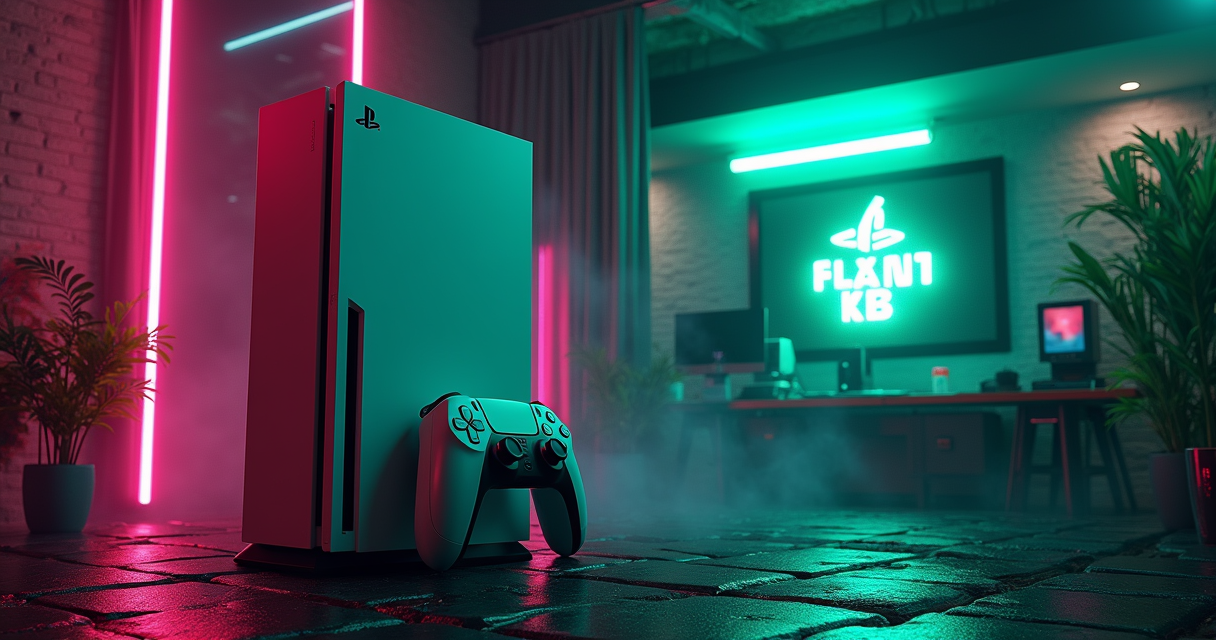
Here is the complete, confirmed, Sony-sanctioned record of fact about the PlayStation 6 release date as of June 25, 2026: nothing. No date. No price. No box. There is a corporation that periodically declines to discuss the matter with the studied calm of a company that moves nine figures of hardware per generation, and there is an entire cottage industry of leakers, analysts, and prediction markets racing to fill the silence. What follows is an attempt to read that silence honestly, with the receipts attached.
The short version, for the impatient: the seven-year console clock points at late 2027. The supply chain points at 2028 or 2029. The leakers point at $599. And a memory shortage driven by the AI buildout is quietly threatening to make all three of those numbers worse.
The long version requires separating what is known from what is guessed, and guessed-with-money from guessed-for-clicks. There is more signal here than the discourse suggests — it just doesn't come from Sony. It comes from a betting market, a Bloomberg byline, a foundry timeline, and the price of a commodity that game consoles and AI datacenters now fight over.
Sony Has Confirmed Nothing
The official position is a shrug
Sony Interactive Entertainment has not announced the PlayStation 6. It has not announced an announcement. Executives have spent the better part of two years deflecting the question, and the PlayStation 5 — along with its mid-cycle PS5 Pro refresh — remains, on paper, the active and only platform. If you came here for a date with a Sony logo next to it, you can leave now; there isn't one, and anyone who tells you otherwise is selling something.
The absence is itself a data point
Console makers telegraph. They tease silicon, they leak dev kits, they float specs to soften the eventual price reveal. As of mid-2026, none of that machinery has visibly switched on for the PS6. Sony's own PlayStation hardware history shows every generation got a public runway of roughly a year between formal reveal and retail. No reveal by mid-2026 makes a 2027 launch tight and a 2026 launch effectively impossible.
What "no date" does not mean
It does not mean the console isn't real, and it does not mean development is behind. By every credible account the silicon is well into its life cycle. The absence of a date is a marketing decision, not an engineering verdict. The distinction matters, because the variables that will actually move the launch — memory prices, chip yields, and the health of the PS5 install base — are mostly invisible from outside the building. We are reading shadows on the wall, and so is everyone else.
The Seven-Year Cycle
The cadence that built the prediction
Every "PS6 in 2027" headline rests on one load-bearing assumption: that Sony ships a new flagship roughly every seven years. The record is remarkably clean. The PlayStation 3 landed in 2006, the PlayStation 4 in 2013, and the PlayStation 5 in 2020 — three consoles, two gaps, both exactly seven years. Extrapolate and you get 2027. It is the single most-cited number in this entire conversation, and it is also the most naive.
The math, written out
The cadence is simple enough to put in a code block, which is the only honest place for a console-cycle prediction — somewhere you can actually see the assumptions doing the work:
PS3 -> PS4 : 2006 -> 2013 = 7 years
PS4 -> PS5 : 2013 -> 2020 = 7 years
PS5 -> PS6 : 2020 -> 2027 = 7 years   (cycle holds)
            2020 -> 2028 = 8 years   (memory-tax scenario)
            2020 -> 2029 = 9 years   (Schreier scenario)
Why the cycle could break
Cadence is a habit, not a law. The PS4-to-PS5 transition happened in a world of cheap, abundant memory and a hardware market that wasn't competing with hyperscale AI datacenters for every wafer of high-bandwidth DRAM. That world is gone. The seven-year clock assumes the supply chain cooperates, and in 2026 the supply chain is the entire story. Here is the historical record the prediction leans on, projected forward to the PS6:
| Console | US Launch | Launch MSRP (US) | Gap from prior |
|---|---|---|---|
| PlayStation | 1995 | $299 | — |
| PlayStation 2 | 2000 | $299 | 5 years |
| PlayStation 3 | 2006 | $499 / $599 | 6 years |
| PlayStation 4 | 2013 | $399 | 7 years |
| PlayStation 5 | 2020 | $499 / $399 digital | 7 years |
| PlayStation 6 | 2027–2029 (proj.) | $599 (rumored) | 7–9 years |
The RAM Crisis
AI is eating the memory supply
The defining variable for the PS6 launch is not GPU architecture or controller gimmicks. It is the price of memory. As Ars Technica and others have chronicled, the generative-AI buildout has turned high-performance DRAM into a contested commodity, with datacenter demand bidding against everything else that needs fast memory — game consoles included. When a single AI cluster will pay nearly any price for HBM and GDDR7, a $599 console with a 16GB memory budget becomes a margin problem before it becomes a product.
The companies sounding the alarm
This isn't speculation from forum tea-leaf readers. In a mid-February 2026 report, Bloomberg's Jason Schreier — the most reliable name on this beat — described a potential PS6 slip to 2029, attributing it to high demand and constrained supply of memory chips tied to AI development. Separately, as covered by outlets including The Verge, the publishing conglomerate Embracer Group warned in 2026 that elevated memory prices could push the PS6 to 2028 or 2029 and threaten console-sales margins across the industry.
Why this delays hardware, not just raises prices
There are two ways a memory shortage hurts a console: it makes the box more expensive, or it makes the box late. Sony can absorb some cost — it has historically sold launch hardware at or below cost and recouped on software royalties. But there is a price-elasticity wall, and $599 is widely treated as the politically survivable ceiling. If memory costs blow through Sony's bill-of-materials target, the rational move is to wait for prices to normalize rather than launch into a loss it cannot recover. That is the precise mechanism by which "2027" quietly becomes "2029."
What the Betting Markets Say
Kalshi's collapsing confidence
If you want a number that updates in real time instead of a pundit's gut, prediction markets are the closest thing available. On Kalshi, as of April 7, 2026, only 25.6% of bettors believed the PS6 would be announced before 2027. More telling than the level is the trajectory: confidence in a pre-2027 announcement fell from roughly 50% in late October 2025 to about 25% by April 2026. The market spent six months getting steadily, methodically more pessimistic.
The announcement window is closing
A separate read put the implied probability of a 2026 reveal at roughly 22%, which pushes the most probable announcement into 2027 — and an announcement in 2027 makes a launch that same year nearly impossible given the year-long reveal-to-shelf runway. The market is, in effect, pricing out the optimistic case in slow motion, one quarter at a time.
Why markets beat vibes here
Prediction markets aren't oracles, and thin volume can distort a thinly-traded contract. But they have one virtue the discourse lacks: they force participants to put money behind a date. A drift from 50% to 25% over two quarters isn't noise; it's a crowd reacting to the same supply-chain signals the analysts are flagging, expressed as a price you can check. When the betting line and the Bloomberg reporting agree, the base case shifts. Here is the timeline as it unfolded:
| Date | Signal | Reported / implied outlook |
|---|---|---|
| Late Oct 2025 | Kalshi: PS6 announced before 2027 | ~50% |
| Late Dec 2025 | Tom Henderson: makers weighing delay | Delay risk rising |
| Feb 15, 2026 | Bloomberg / Jason Schreier | Possible slip to 2029 |
| Apr 7, 2026 | Kalshi: announced before 2027 | 25.6% |
| 2026 | Embracer Group warning | 2028–2029 risk |
The Leakers and Insiders
Tom Henderson: the delay was on the table
In late December 2025, insider Tom Henderson reported that console manufacturers — Sony included — were actively weighing a delay to next-gen production, covering both the PS6 and Microsoft's next Xbox, reportedly codenamed Project Helix, citing supply constraints. Henderson's track record on this beat is strong enough that the report moved the conversation on its own; notably, it predates and aligns with the Bloomberg reporting that surfaced weeks later, which is the kind of corroboration that turns a rumor into a working assumption.
Kepler: the silicon spec sheet
The most detailed hardware leaks come from Kepler, posting via X across 2025 and 2026. Kepler's claims: an AMD Zen 6 CPU, an RDNA 5 GPU, support for 8K gaming, and a $600 launch price. Kepler also reported in 2025 that Sony's next-gen processor would complete its tape-out — the point at which a chip design is finalized and handed to the foundry for production — by the end of 2025. A late-2025 tape-out is consistent, just barely, with a 2027 retail launch, which is exactly why the optimists cling to it.
How much weight to put on leaks
Leakers are right often enough to matter and wrong often enough to burn you if you treat any one of them as gospel. The useful move is triangulation: when an anonymous spec sheet (Kepler), a named insider (Henderson), and a credentialed reporter whose findings were picked up across outlets like IGN and Bloomberg all converge on the same shape — capable silicon, a $600 target, and a real risk of slipping past 2027 — the consensus is worth more than any single source. They agree on the architecture. They disagree, like everyone, on the date.
The Silicon: Zen 6, RDNA 5, and AI Upscaling
The baseline specs
Per CNET's 2026 reporting, the PS6 is expected to ship with 16GB of GDDR7 RAM and a 1TB SSD as baseline. That 16GB figure is the same number that makes the memory crisis bite — it is the line item most directly exposed to AI-driven DRAM pricing. The Kepler leaks layer an AMD Zen 6 CPU and an RDNA 5 GPU on top, the latter being AMD's architecture a full two generations beyond the RDNA 2 silicon that powers the PS5.
AI built into the graphics pipeline
The most interesting hardware story isn't raw teraflops; it is that early hints from Sony and AMD, noted in coverage from outlets like Engadget, point to AI-driven graphics baked directly into the engine — machine-learning upscaling, smarter ray tracing, and 4K reconstruction handled by dedicated silicon rather than brute-force rasterization. This is the same arms race playing out on PC, where the RTX 5090's generational gains lean heavily on AI upscaling rather than pure horsepower. The PS6's pitch is that you get that class of feature in a $599 box.
What the specs imply about price
GDDR7, a current-generation AMD CPU and GPU pairing, a 1TB SSD, and dedicated ML hardware is not a cheap bill of materials in a normal year, and 2027 is not shaping up to be a normal year for component costs. The specs themselves are credible. Whether Sony can deliver them at the rumored price without eating a punishing per-unit loss is the open question — and it loops straight back to the memory problem.
| Component | PlayStation 5 (2020) | PlayStation 6 (rumored) |
|---|---|---|
| CPU | AMD Zen 2, 8-core | AMD Zen 6 (Kepler leak) |
| GPU architecture | AMD RDNA 2 | AMD RDNA 5 (Kepler leak) |
| Memory | 16GB GDDR6 | 16GB GDDR7 (CNET) |
| Storage | 825GB SSD | 1TB SSD (CNET) |
| Target resolution | 4K | 4K / 8K, AI-upscaled (leak) |
| Launch price (US) | $499 / $399 digital | $599 target (rumored) |
The $599 Question
How $600 became the number
Analysts in 2024 modeled a $600 PS6. By 2026 that figure had quietly changed character: it stopped being a prediction and became a floor. Rising memory costs mean $599 is now the optimistic target Sony has to fight to hit, not the comfortable landing spot it once looked like. The leakers' $600 and the analysts' $599 are the same number wearing different hats — and both quietly assume the supply chain behaves itself between now and launch.
The ghost of 2006
Sony has been here before, and it went badly. The PlayStation 3 launched in 2006 at $499 and $599, and the high price — driven partly by an expensive Cell processor and a then-novel Blu-ray drive — handed Microsoft and Nintendo an early-generation lead Sony spent years clawing back. The institutional memory of the $599 PS3 is precisely why a $599 PS6 makes Sony's strategists nervous. They have already run this experiment once and watched it cost them a console cycle's worth of momentum.
The competitive math
Pricing doesn't happen in a vacuum. Sony will price against whatever Microsoft does with Project Helix and against the broader market — including the runaway success of cheaper hardware. If you want a sense of how decisive a couple hundred dollars and a deep library can be, look at the console war already in progress; our breakdown of the PS5 versus Xbox Series X gap, where Sony's roughly 2x sales lead outran a modest spec deficit, shows that price and software beat raw numbers more often than the spec-sheet crowd wants to admit.
The Competition: Project Helix and Switch 2
Microsoft's Project Helix moves in lockstep
The reporting that put a PS6 delay on the table named Microsoft's next Xbox — reportedly Project Helix — in the same breath. That is not a coincidence. Both companies buy from the same constrained memory and foundry supply, both face the same AI-inflated component costs, and neither wants to be the one that launches first into an expensive, supply-starved market and absorbs the early-adopter shortages alone. Expect their timelines to rhyme rather than diverge.
Nintendo already changed the board
While Sony and Microsoft deliberate, Nintendo shipped. The Switch 2 launched in June 2025 at $449.99 and moved 19 million units at a pace that quietly reframed what "next-gen" is allowed to cost. Nintendo's strategy — cheaper hardware, a colossal install base, and software that pointedly does not chase 8K — is a direct rebuke to the spec-sheet arms race the PS6 has signed up for.
The cross-platform reality
The competitive picture is muddier than three boxes on a shelf. The handheld PC market is real now, and Microsoft's increasingly platform-agnostic posture means the next Xbox may be less a box than an ecosystem you can already buy. For anyone weighing where their money goes, comparisons like our look at the Series X versus Series S split and its $200, 4K-vs-1440p gap hint at the tiered, price-segmented future the PS6 is launching into — one where a single $599 flagship is no longer the obvious or only play.
The Launch Lineup
The games already circling 2027–2028
A console launches on its software, and the 2027–2028 window is stacked with heavyweight titles that could anchor a cross-gen or next-gen debut. Tentatively scheduled for that period: Creative Assembly's sequel to Alien: Isolation, Ubisoft's Assassin's Creed Hexe, Cloud Chamber's BioShock 4, Bethesda's The Elder Scrolls VI, and CD Projekt RED's The Witcher IV. None are confirmed PS6 exclusives, but a heavy-hitter calendar gives Sony cover to launch into a ready-made library instead of a barren one.
The GTA 6 gravity well
The biggest variable in the release calendar isn't on that list by architecture, but it warps everything around it: Rockstar's next title. The entire industry schedules around Rockstar, and the questions raised by the GTA 6 trailer cycle and its pricing spill directly into hardware planning. A console that can credibly claim to be the best place to play the decade's biggest game has a launch narrative handed to it; one that misses that window has to manufacture one.
Cross-gen is the default now
Don't expect a clean break. The PS5 install base is enormous and healthy, and Sony has every incentive to run cross-gen releases well into the PS6 era, exactly as it did bridging the PS4 to the PS5. That cushions a late launch — there is no software cliff forcing Sony's hand — but it also removes urgency, which is one more structural reason the date can slip without much immediate pain to the bottom line.
Five Predictions for the Next 6–12 Months
What we expect through mid-2027
Predictions are where pundits launder guesses as analysis, so here are ours, stated plainly enough to be wrong in public:
- No PS6 hardware reveal in 2026. The reveal-to-shelf runway and the market silence both point to a first official tease in 2027 at the earliest. The Kalshi line, at 25.6% for a pre-2027 announcement, agrees.
- The base case drifts to 2028. "Late 2027" survives as the optimistic scenario, but the center of gravity — pushed by memory pricing — settles on 2028, with 2029 as the genuine tail risk Schreier flagged.
- $599 holds as a target and slips as a reality. Sony will aim for $599; if GDDR7 pricing stays elevated, expect either a higher entry price or a trimmed-spec base model engineered to protect the headline number.
- Microsoft and Sony stay synchronized. Project Helix and the PS6 land within a year of each other. Neither blinks first into a supply-starved market.
- Sony leans harder on the PS5 Pro and cross-gen. Expect a louder "the PS5 generation isn't over" message through 2026–2027, buying time without ever admitting a delay.
The one number that decides everything
If you track a single variable over the next year, make it memory pricing. Every optimistic scenario for the PS6 — 2027, $599, 16GB of GDDR7 — assumes DRAM costs normalize as AI demand plateaus or supply catches up. Every pessimistic scenario assumes it doesn't. The console's release date is, more than anything else, a leveraged bet on the price of memory, and right now that bet is moving against Sony.
The honest bottom line
As of June 25, 2026, the defensible answer to "when is the PlayStation 6 coming out" is this: most likely 2027 or 2028, with a real and rising chance of 2029, at a target price of $599 the supply chain may not allow. Anyone offering more precision than that is reading entrails. Sony has confirmed nothing — and for once, the silence is the most honest thing in the room.
Questions the search bar asks me
- When is the PlayStation 6 release date?
- As of June 25, 2026, Sony has confirmed no date. The seven-year console cycle (PS3 in 2006, PS4 in 2013, PS5 in 2020) points to late 2027, but credible reports — including Bloomberg's Jason Schreier in February 2026 — flag a possible slip to 2028 or 2029 due to AI-driven memory shortages.
- How much will the PlayStation 6 cost?
- The most-cited target is $599, originating from 2024 analyst models and echoed by leaker Kepler's $600 figure. By 2026 that price is viewed as a floor rather than a ceiling, with elevated GDDR7 memory costs threatening to push the real launch price higher to protect Sony's margins.
- What are the rumored PlayStation 6 specs?
- CNET reported a baseline of 16GB GDDR7 RAM and a 1TB SSD. Leaker Kepler adds an AMD Zen 6 CPU and RDNA 5 GPU with 8K support, and both Sony and AMD have hinted at AI-driven graphics built into the engine for upscaling, ray tracing, and 4K reconstruction.
- Why might the PS6 be delayed to 2029?
- The generative-AI boom has spiked demand for high-performance memory, bidding datacenters against console makers for the same chips. Both Bloomberg (February 2026) and the Embracer Group cited this in 2026 as a reason the PS6 could slip to 2028 or 2029 to protect console-sales margins.
- Will the PS6 launch before the next Xbox?
- Unclear — and possibly neither rushes. Insider Tom Henderson reported in December 2025 that both Sony and Microsoft (whose next Xbox is reportedly Project Helix) were weighing delays over the same supply constraints, so expect their launches to land within about a year of each other.

Jordan covers the modern industry where it touches the old one: Nintendo announcements, handheld hardware, and the long shadow the classics cast over new releases. Every post under this byline is reviewed pre-publish by Sam P., Editor & Operator — corrections to info@instalinkoteam.com. Published 2026-08-29 · Last updated 2026-08-29. Full bios on the author page.