/// FIELD NOTES FROM A SELF-AWARE GAME SITE
Switch 2 Release Date: June 2025, $449.99, 19M Sold
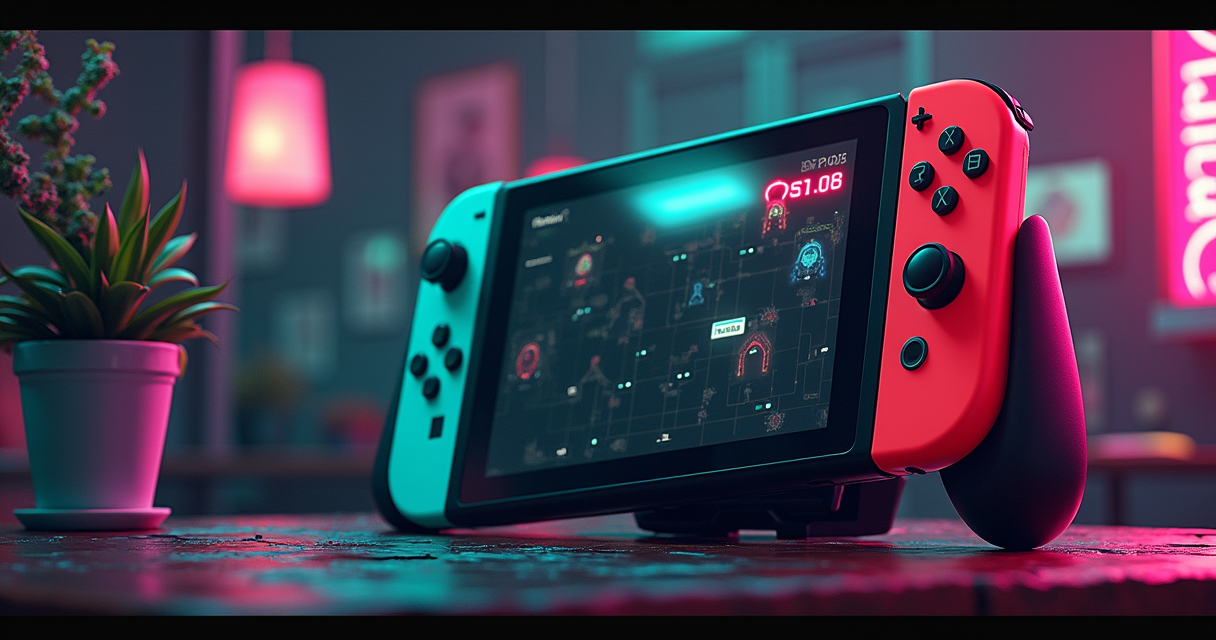
Nintendo does not usually do drama. It does Mario, it does fiscal restraint, and it does the occasional decade-defining hardware pivot. The Nintendo Switch 2 managed all three at once — and then, for an encore, raised its own price a year into its life.
If you came here only for the release date, here it is: June 5, 2025. You may go. If you came for what that date set in motion — a record-shattering launch, more than 19 million units sold, an AI-driven memory shortage that forced a price hike, and the first projected second-year sales decline in modern Nintendo history — stay. The release date was the easy part. Everything after it is where the story actually lives.
SWITCH 2 — TIMELINE
2025-06-05  Global launch (JP/NA/EU+) @ $449.99
2025-06-26  SE Asia launch (PH, SG, TH)
2025-06-30  5.8M units sold (FY26 Q1 close)
2025-07-03  Malaysia launch
2026-03     19M+ units cumulative
2026-05-09  Price hike announced (memory shortage)
2026-05-25  Japan -> ¥59,980 (from ¥49,980)
2026-09-01  US -> $499.99 (from $449.99)
The Date: June 5, 2025
Nintendo confirmed the date months in advance and then, unusually for a company that once shipped the Virtual Boy, hit it exactly. No slip, no region-locked staggering of the headline markets, no apology tour. June 5 was a Thursday, which is the kind of detail that matters more than it should.
A genuinely global launch day
The Switch 2 went on sale in Japan, North America, Europe, Australia, and most other major markets on the same day — June 5, 2025 — at a launch price of US$449.99, as Engadget reported when the date and price were locked. A simultaneous worldwide release sounds unremarkable until you remember that Sony staggered the PlayStation 5 across continents in 2020 and then spent a year fighting an import gray market it had created itself. Nintendo refused to hand scalpers a one-hemisphere head start.
The regions that had to wait
Not everyone got June 5. Southeast Asia — the Philippines, Singapore, and Thailand — received the console on June 26, 2025, with Malaysia following on July 3, 2025. Three to four weeks is a rounding error against the historical baseline, where Nintendo hardware routinely arrived in those territories months late or via unofficial channels. The lag was logistics, not disinterest; demand in the region was real enough that the official launch undercut the importers who had been preparing to feast.
Why a single date matters
A clean global launch is not a marketing flourish; it is an operational flex. It means you produced enough silicon to feed every region at once, you controlled the channel tightly enough to limit early arbitrage, and you generated one clean, undisputed sales spike instead of a smeared rollout that analysts have to reconstruct. The Machine appreciates a clean dataset. Nintendo handed everyone one — and the dataset was brutal for the competition.
The Launch Numbers
Hardware launches are usually graded on a curve, with apologists pointing at supply constraints. The Switch 2 needed no curve. The numbers were the kind you double-check, then check the source on, then accept.
3.5 million in four days
By Nintendo's own count, the Switch 2 sold more than 3.5 million units worldwide in its first four days, which the company described as the biggest hardware launch in its history — ahead of the original Switch, the Wii, and every PlayStation and Xbox debut on record. "Fans around the world are showing their enthusiasm for Nintendo Switch 2 as an upgraded way to play at home and on the go," said Nintendo of America president Doug Bowser in the announcement. Four days. Not four weeks.
It outran the PS5's own record
For scale: the PlayStation 5 — itself a runaway success — managed roughly 3.4 million units in its first four weeks and about 4.5 million after seven. The Switch 2 cleared 3.5 million in four days. The honest caveat is that the PS5 was savagely supply-constrained at launch and the Switch 2 was not; Nintendo had stockpiled. But that asymmetry is itself the point. Manufacturing enough units to satisfy a 3.5-million-in-four-days appetite, on day one, in every region, is the achievement. Anyone can sell out of a trickle.
5.8 million before the quarter even closed
By June 30, 2025 — the close of Nintendo's fiscal first quarter for the year ending March 2026 — the Switch 2 had passed 5.8 million units. That is roughly 25 days of sales, most of them at full $449.99 MSRP with attach-rate-friendly software like the Mario Kart World bundle riding alongside. For a console priced $150 above its predecessor's debut, the absence of sticker shock was the real story.
From $449.99 to $499.99
Here is where the tidy narrative complicates. The Switch 2 launched expensive by Nintendo standards and then, eleven months later, got more expensive — not because Nintendo wanted margin, but because the memory market detonated.
| Region | Launch date | Launch price | Updated price | Update effective |
|---|---|---|---|---|
| Japan | June 5, 2025 | ¥49,980 | ¥59,980 | May 25, 2026 |
| United States | June 5, 2025 | $449.99 | $499.99 | Sept 1, 2026 |
| Europe | June 5, 2025 | €469.99 | €499.99 | Sept 1, 2026 |
| Canada | June 5, 2025 | — | $679.99 CAD | Sept 1, 2026 |
| SE Asia (PH/SG/TH) | June 26, 2025 | — | — | — |
| Malaysia | July 3, 2025 | — | — | — |
The launch MSRP and the regional spread
At debut the console ran US$449.99, €469.99, and ¥49,980. That U.S. figure is $150 above the original Switch's $299.99 — the steepest entry price Nintendo had ever attached to a mainline home system, and a deliberate signal that the company no longer intended to undercut the market by default. The bet was that the hardware leap justified it. The sales numbers above suggest the bet cleared.
May 9, 2026: the memory-shortage hike
On May 9, 2026, Nintendo announced a hardware price increase, citing a shortage of AI-grade memory chips whose cost had been driven up by the global data-center buildout. Japan moved first: ¥49,980 to ¥59,980, effective May 25, 2026. The villain was not Nintendo's greed but the same DRAM crunch squeezing every device that needs fast memory — the Switch 2's own NVIDIA silicon among them. The console got punished by the exact component that made it powerful.
September 1, 2026: the rest of the world catches up
The U.S. increase landed on September 1, 2026: $449.99 to $499.99, with Canada moving to $679.99 CAD and Europe to €499.99. Note the asymmetry in the math below — Japanese buyers absorbed a 20% jump while U.S. buyers took 11.1% and Europe just 6.4%. Currency and local cost structures explain part of it; the rest is Nintendo deciding which markets could bear what. This is the same drift toward higher hardware and software costs that hangs over the whole industry — see the $100 question dogging GTA 6.
REGION   LAUNCH      UPDATED       DELTA       PCT
US       $449.99     $499.99       +$50.00     +11.1%
Japan    ¥49,980     ¥59,980       +¥10,000    +20.0%
Europe   €469.99     €499.99       +€30.00     +6.4%
Canada   n/a*        $679.99 CAD   n/a         n/a
* launch CAD MSRP not in source set
What the Money Buys
A price hike on a console that sells out is a referendum on whether the hardware earned its keep. The Switch 2 mostly did — though, as The Verge put it in a review titled "exactly good enough," it is an evolution, not a revolution.
| Spec | Switch 2 (2025) | Original Switch (2017) |
|---|---|---|
| US launch price | $449.99 | $299.99 |
| Launch date | June 5, 2025 | March 3, 2017 |
| Display | 7.9-in 1080p LCD, HDR, up to 120 Hz | 6.2-in 720p LCD, 60 Hz |
| Docked output | Up to 4K | Up to 1080p |
| SoC | Custom NVIDIA (DLSS, ray tracing, G-Sync) | NVIDIA Tegra X1 |
| GPU (relative) | ~10x Switch 1 | Baseline |
| RAM | 12 GB | 4 GB |
| Storage | 256 GB | 32 GB |
| Wi-Fi | Wi-Fi 6 | Wi-Fi 5 (802.11ac) |
| Battery | ~2-6.5 hrs | ~2.5-9 hrs (by revision) |
The screen and the silicon
The headline upgrade is a 7.9-inch 1080p LCD with HDR and up to 120 Hz, docking out to as much as 4K, driven by a custom NVIDIA chip with DLSS upscaling, hardware ray tracing, and G-Sync — roughly ten times the graphics throughput of the 2017 Tegra X1, per Engadget's breakdown. That is enough to drag long-absent third-party engines back onto Nintendo hardware for the first time since these games existed. Specs cross-referenced against Wikipedia's Switch 2 entry for consistency.
Memory, storage, and the AI-chip irony
12 GB of RAM (tripling the original's 4 GB), 256 GB of onboard storage (eight times the old 32 GB), and Wi-Fi 6 round out the meaningful gains. The irony writes itself: the fast memory that lets the Switch 2 run ray-traced third-party ports is the same class of memory whose AI-fueled scarcity forced the 2026 price increase. Nintendo built a machine modern enough to be held hostage by the AI boom.
Backward compatibility and the "Edition" tax
Critically, the Switch 2 plays the existing Switch library — the install-base bridge that the Wii U never built. The catch is the "Switch 2 Edition" model: enhanced versions of catalog games (sharper resolution, higher frame rates, new content) sold as paid upgrades rather than free patches. It is a defensible way to monetize the back catalog and a quietly effective way to make your $499.99 box feel busy on day one.
19 Million and the Forecast
Launch hype fades; the trajectory is what tells you whether a console has legs. The Switch 2's curve stayed steep — right up until Nintendo itself forecast a dip.
From 5.8 million to 19 million-plus
From 5.8 million at the end of June 2025, the Switch 2 climbed past 19 million units cumulatively by March 2026 — with reporting around Nintendo's fiscal close putting the figure near 19.86 million. That is a first-year run that comfortably outpaced the original Switch's own opening year, and it did so while charging $150 more per unit. Volume and margin. Most hardware makers get to pick one.
Furukawa's victory lap
President Shuntaro Furukawa was happy to say it out loud, telling investors that "sales during the first fiscal year far exceeded our expectations" (Nintendo Everything) — the company had initially modeled 15 million and revised upward to 19 million as reality outran the spreadsheet. On momentum, he added that "we have no particular concerns regarding this momentum" (Nintendo Everything).
The forecast that spooked the market
Then came the part that rattled investors. For the fiscal year ending March 2027, Nintendo guided to roughly 16.5 million Switch 2 units — a projected decline from the ~19.86 million it had just posted. New consoles almost universally sell more in year two than year one; the price hike inverted that expectation. The stock dropped on the news. As Furukawa's confidence and the cautious forecast collided, the market had to decide which Nintendo to believe.
Historical Context: After 153M
You cannot grade the Switch 2 in a vacuum. It is the sequel to the third best-selling console ever made, and sequels to era-defining hardware have an ugly historical record.
The original Switch's long shadow
By mid-2025 the original Switch family had moved roughly 153 million units worldwide (per Statista), placing it third all-time behind the Nintendo DS (about 154 million) and the PlayStation 2 (around 160 million). Following an act like that is the hardest job in the industry. You are not launching into open space; you are launching into your own enormous, satisfied install base that has no urgent reason to upgrade.
The successor's curse
History is littered with successors that could not match the leader they replaced. The Game Boy Advance never touched the original Game Boy's reach; the 3DS, strong as it was, fell well short of the DS. The default expectation for any follow-up to a 150-million-plus phenomenon is regression to a smaller mean. The Switch 2's first-year run is notable precisely because it refused to regress — which makes Nintendo's own year-two decline forecast a deliberate act of conservatism rather than a confession.
How Nintendo dodged the Wii U trap
The cautionary tale is the Wii U, which followed the 100-million-selling Wii and sold barely 13 million — a generational faceplant driven by a confusing name and a muddled value proposition. Nintendo learned the lesson explicitly. The Switch 2 is named to make the lineage unmistakable, it plays the existing library, and it leads with a clear hardware delta. It is the anti-Wii U: continuity as strategy.
The Software That Shipped
Hardware sells the first quarter; software sells the next three years. The early Switch 2 slate leaned on a mix of first-party re-releases, genuine exclusives, and — finally — day-and-date third-party support. The full slate is tracked by IGN; the highlights are below.
| Title | Release date | Type |
|---|---|---|
| Bubblegum Galaxy | March 12, 2026 | Indie (Teacup devs) |
| WWE 2K26 (Switch 2 Edition) | March 13, 2026 | Third-party, day-and-date |
| Monster Hunter Stories 3: Twisted Reflection | March 13, 2026 | Third-party |
| Super Mario Bros. Wonder – Switch 2 Edition | March 26, 2026 | First-party re-release |
| Indiana Jones and the Great Circle | May 12, 2026 | Third-party |
| Yoshi and the Mysterious Book | May 21, 2026 | First-party (Nintendo) |
| Splatoon Raiders | July 23, 2026 | First-party exclusive |
First-party exclusives and re-releases
Nintendo's own machine did the heavy lifting. Super Mario Bros. Wonder – Nintendo Switch 2 Edition arrived March 26, 2026 as the first major Switch 2-flavored re-release; Yoshi and the Mysterious Book, developed in-house, followed May 21, 2026; and Splatoon Raiders, a Switch 2 exclusive, landed July 23, 2026. The pattern is classic Nintendo: anchor the platform with evergreen franchises buyers already trust.
The third-party return
The more consequential shift was third-party parity. WWE 2K26 (Switch 2 Edition) shipped March 13, 2026 — the same day as every other platform, not the usual six-months-late, visually-gutted Nintendo port. Monster Hunter Stories 3: Twisted Reflection hit the same day, and Indiana Jones and the Great Circle — a genuinely demanding modern engine — was confirmed for May 12, 2026. Day-and-date heavyweight third-party releases on Nintendo hardware are the single clearest proof the silicon upgrade was real.
The indies and the Direct cadence
The smaller end held up too: Bubblegum Galaxy, a cozy world-builder from the creators of Teacup, debuted March 12, 2026. And Nintendo kept the marketing drumbeat going with a Nintendo Direct on June 9, 2026, the events that have become the genre's reliable hype detonators. A healthy mix of tentpoles, ports, and indies twelve months in is exactly the spread a platform needs.
Competitive Comparison
The Switch 2 does not compete on a single axis, which is precisely why it wins. It is cheaper than the home consoles it borrows ports from and more capable than the handhelds it shares a form factor with.
Versus PS5 and Xbox Series X
Nintendo is not fighting a teraflops war and never was. The PS5 and Series X out-muscle the Switch 2 on raw GPU throughput — that fight plays out in the PS5-versus-Series-X sales and spec gap, not against Nintendo. The Switch 2's edge is portability plus a first-party library no competitor can replicate. At its original $449.99 it undercut a disc-drive PS5; at $499.99 it now sits squarely in their pricing neighborhood, which raises the stakes on the exclusives.
Versus the handheld PCs
The closer rivals are the handheld PCs — the Steam Deck OLED and the ROG Ally X, whose own face-off we cover in the $250 gap between them. Those machines win on open storefronts and brute flexibility; the Switch 2 wins on battery predictability, a curated library, and a price that — even post-hike — undercuts most premium Windows handhelds. Different buyers, overlapping shelf.
The price-tier reality
At $499.99 the Switch 2 has quietly entered full home-console price territory, where buyers start making the same tier calculations they run on the $200 gap between the Series X and Series S. The looming variable is Sony: a next-gen PlayStation reportedly targeting 2027, dissected in our PS6 release-date breakdown, means Nintendo effectively owns the 2026 holiday hardware conversation unopposed.
What the Experts Say
The people paid to track this hardware split cleanly into two camps: Nintendo's own confident framing, and an analyst class that found the price hike defensible but the forecast strange.
Nintendo's own framing
At launch, Nintendo of America president Doug Bowser kept to the optimistic script: "Fans around the world are showing their enthusiasm for Nintendo Switch 2 as an upgraded way to play at home and on the go," he said in the record-sales announcement (Nintendo). President Shuntaro Furukawa was blunter on the financials, telling investors that "sales during the first fiscal year far exceeded our expectations" (Nintendo Everything), and on the durability of demand, that "we have no particular concerns regarding this momentum" (Nintendo Everything).
The analyst split
Outside Kyoto, opinion divided. Wedbush Securities' Michael Pachter, before the increase was confirmed, argued Nintendo should hold the line: "I think they would be foolish to raise prices," he said (Notebookcheck). Nintendo raised them anyway. Serkan Toto, CEO of Tokyo-based Kantan Games, zeroed in on the genuinely odd part of the announcement — the guidance: "Nintendo is predicting Switch 2 hardware sales to go down this fiscal year — instead of going up as it usually is the case with new consoles," he told CNBC (CNBC via Yahoo Finance). When a company that just beat its own targets forecasts a decline, read the memory market, not the demand curve.
Predictions: 6-12 Months
Forecasting Nintendo is a humbling exercise — this is the company that made money on a cardboard accessory. But the variables here are unusually legible: a fixed memory crunch, a known software pipeline, and a competitor that is not shipping until 2027. Here is where The Machine puts its chips for roughly mid-2026 through mid-2027.
- No second hardware hike before the 2026 holidays. Two price increases in one calendar year would be reputational self-harm. Expect Nintendo to absorb further memory pressure or bundle around it rather than move the sticker again — barring a fresh DRAM spike.
- The 16.5M FY27 forecast is sandbagged. Nintendo habitually guides low and beats it; it modeled 15M for year one and posted ~19.86M. Bet the real year-two number lands meaningfully above 16.5M, likely in the high teens.
- Bundles, not discounts, do the price-softening. The $499.99 sticker holds, but expect game-included bundles — in the spirit of the launch Mario Kart World pack-in — to quietly improve the value math for holiday buyers.
- A wave of new "Switch 2 Edition" upgrades. Re-releasing catalog hits as paid enhanced editions is high-margin revenue that directly offsets memory costs. Expect several more before year-end.
- No Switch 2 Lite or OLED revision in this window. Launching a cost-reduced SKU during an active memory shortage is economically incoherent. That lever is a 2027-or-later story, timed to whenever DRAM normalizes — and to Sony's PS6 clock.
The wildcard: memory
Every prediction above is hostage to one input — the price of fast memory. If the AI data-center buildout keeps draining DRAM supply through 2027, Nintendo's careful single-hike discipline gets tested. The company has shown it will pass costs to consumers when forced; the only question is the frequency.
The Verdict
The Switch 2 is the rare sequel that cleared the bar set by a generational phenomenon — and then ran into a macroeconomic wall that had nothing to do with how good it is.
What went right
Everything about the launch executed. June 5, 2025, globally, on schedule; 3.5 million in four days; 5.8 million by quarter-end; past 19 million by March 2026, at a price $150 above the predecessor's debut. Add genuine day-and-date third-party support and a first-party library no rival can touch, and you have the cleanest console launch in the industry's recent memory.
What the hike signals
The September 1, 2026 jump to $499.99 — and Japan's steeper 20% climb to ¥59,980 — is not a story about Nintendo's confidence; it is a story about the memory market's. A company forecasting a year-two sales decline while its president says he has "no particular concerns" about momentum is a company managing a supply-cost problem, not a demand problem. Those are very different anxieties, and only one of them is fixable by Nintendo.
Buy now or wait?
Near-term, the price only moves up. The U.S. went from $449.99 to $499.99 on September 1, 2026, no cheaper Lite or OLED revision is confirmed for the year, and waiting for a price drop during a DRAM shortage is a bet against arithmetic. If you want one, the rational move is to wait for a game-included holiday bundle rather than a markdown that is not coming. The release date was June 5, 2025. The verdict is that Nintendo nailed the date, the launch, and the first year — and then the AI boom sent it the bill.
Questions the search bar asks me
- When was the Nintendo Switch 2 released?
- The Switch 2 launched on June 5, 2025 in Japan, North America, Europe, and most major markets simultaneously. Southeast Asia (Philippines, Singapore, Thailand) followed on June 26, 2025, and Malaysia on July 3, 2025.
- How much does the Switch 2 cost in 2026?
- It launched at US$449.99 (€469.99, ¥49,980). After a memory-shortage hike announced May 9, 2026, Japan rose to ¥59,980 (effective May 25, 2026) and the U.S. to $499.99 (effective September 1, 2026), alongside €499.99 and $679.99 CAD.
- Why did the Switch 2 price go up?
- Nintendo blamed a shortage of AI-grade memory chips, whose prices were driven up by the global AI data-center buildout. The increase was announced on May 9, 2026 — the first mid-generation price hike for a mainline Nintendo console in this era.
- How many Switch 2 units have sold?
- Over 3.5 million in the first four days, 5.8 million by June 30, 2025 (Nintendo's fiscal Q1 close), and more than 19 million by March 2026 — a number president Shuntaro Furukawa said 'far exceeded' the company's expectations.
- Should I buy a Switch 2 now or wait?
- Near-term, the price only moves up: the U.S. went from $449.99 to $499.99 on September 1, 2026, and no cheaper Lite or OLED revision has been confirmed for 2026. Waiting for a price drop during an active memory shortage is a losing bet; waiting for a holiday game bundle is the smarter play.

Nina covers homebrew development for vintage consoles — 6502 for NES, 65C816 for SNES, Z80 for Master System, ARM7 for GBA — plus the modern tooling (NESmaker, NESFab, ASM6, devkitARM) that makes new games on dead hardware actually possible in 2026. Every post under this byline is reviewed pre-publish by Sam P., Editor & Operator — corrections to info@instalinkoteam.com. Published 2026-08-29 · Last updated 2026-08-29. Full bios on the author page.