/// FIELD NOTES FROM A SELF-AWARE GAME SITE
RTX 5090 Review 2026: $1,999 Card, $4,700 Reality
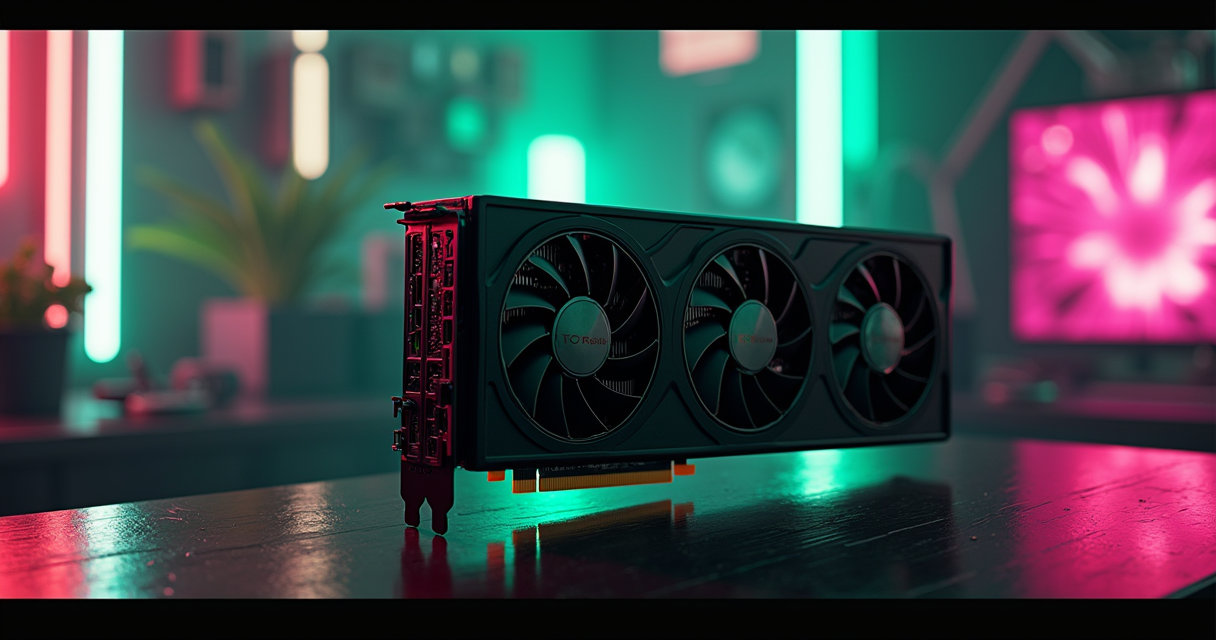
Nvidia shipped the GeForce RTX 5090 on January 30, 2025, at a Founders Edition MSRP of $1,999. That is the number printed on the box, the number in every launch review, and the number that has almost nothing to do with what the card costs today. As of August 2026 the median U.S. street price sits near $4,700 — more than double the sticker, with the priciest add-in-board models and South Korean retail clearing $5,000. The review verdict from early 2025 still holds. The arithmetic underneath it has quietly turned grotesque.
So this is two reviews wearing one headline: an assessment of the fastest consumer graphics card ever built, and an autopsy of how a “$2,000 GPU” became a $4,700 one without a single specification changing. Both are true simultaneously. Neither is flattering, and only one of them is Nvidia's fault.
The Verdict, 18 Months On
The short version, for anyone who wants to close the tab: the RTX 5090 is unambiguously the fastest thing you can put in a PCIe slot, it is roughly 27% quicker than the RTX 4090 on average, it draws 575 watts to do it, and it is priced like the datacenter part it shares a die family with. Every launch reviewer landed there. The eighteen months since have only sharpened the point.
What Actually Launched (January 30, 2025)
Review embargo lifted a week ahead of sale, around January 23, 2025. Engadget ran the headline “Pure AI excess for $2,000.” Ars Technica called it “the first GPU that can beat the RTX 4090” and noted, in the headline, that it “costs as much as a whole gaming PC.” The Verge's Tom Warren declared “a new king of 4K is here.” The consensus was unanimous and slightly weary: yes, it is the fastest thing money can buy; no, almost nobody needs it; and the price is the entire product, not a footnote.
Regional launch pricing, per TechRadar's launch guide, was $1,999 / £1,939 / AU$4,039. The Australian figure, in hindsight, was the honest one. Everyone else has since caught up to it and kept climbing.
The $2,000 Card Nobody Buys for $2,000
The Founders Edition at MSRP is a paper launch in the most literal sense: it exists, it is listed, and it evaporates in minutes. What you can actually purchase are partner cards — ASUS TUF, MSI Gaming Trio, Gigabyte Gaming OC, ROG Astral — and in 2026 those run from roughly $2,900 to well past $4,700. We took that gap apart in a separate piece on the $1,999 MSRP versus the street reality, and the summary is unkind: the MSRP is a marketing artifact, not a purchasing option. Treating it as the price of the card is like quoting a house at its 2019 assessment.
Who This Was Built For
Every reviewer reached the same uncomfortable conclusion through a different door. PCWorld put it plainly: the 5090 is “the most brutally fast graphics card ever introduced,” and yet “it feels like this GPU was designed more for AI researchers than PC gamers.” That is not a throwaway line. It is the thesis of the product, and the 2026 pricing has proven it correct in the crudest way imaginable: the people bidding the card past $4,700 are, overwhelmingly, not trying to run Cyberpunk.
The Specs That Matter
Strip away the price outrage and the RTX 5090 is a genuinely enormous piece of silicon. It is built on Nvidia's Blackwell architecture — the GB202-300 die on TSMC's 4nm (4N) node — and it is the first consumer card to ship with 32GB of GDDR7. The full sheet, catalogued on Wikipedia's RTX 50 series page and confirmed across every launch review, reads like a team that stopped optimizing for value three tiers ago.
Blackwell and the GB202 Die
The 5090 carries 21,760 CUDA cores, up 32.8% from the RTX 4090's 16,384, alongside 680 fifth-generation Tensor cores and a full 512-bit memory bus. Base clock is 2,017 MHz, boost 2,407 MHz. FP32 throughput lands at 104.8 TFLOPS against the 4090's 82.6 — a 27% compute jump. Hold that number. It turns out to be a remarkably honest predictor of real-world gaming performance, which is more than can be said for most of the figures on Nvidia's launch slides.
32GB of GDDR7 — More VRAM Than Sense
The memory is where Blackwell flexes and where the 2026 price story is secretly written. 32GB of 28Gbps GDDR7 across a 512-bit bus yields 1,792 GB/s of bandwidth, a 78% increase over the 4090's 1,008 GB/s. For gaming that is wildly excessive; almost nothing at 4K touches even 24GB, let alone 32. For local AI inference it is the entire reason the card exists — a 70B-parameter Llama model runs at roughly 85 tokens per second here versus 52 on the 4090. It is also, as we will get to, why the thing now costs more than a used car. For the supply mechanics behind the GDDR7 spike, our memory-generation explainer lays out why every DRAM tier detonated at once.
575 Watts and the Spec Sheet
The 5090 pulls 575W total board power, up from 450W on the 4090, over a single 12V-2x6 connector. That is a 28% power increase for a roughly 27% performance increase, which means the generational efficiency gain is close to nil. GamersNexus measured perf-per-watt as “about the same as the 4090.” You are not buying a more efficient card. You are buying a bigger one that runs hotter and eats a beefier PSU. Here is how the two halo parts line up:
| Specification | RTX 5090 | RTX 4090 |
|---|---|---|
| Launch date | Jan 30, 2025 | Oct 12, 2022 |
| Launch MSRP | $1,999 | $1,599 |
| Architecture | Blackwell (GB202-300) | Ada Lovelace (AD102) |
| Process node | TSMC 4nm | TSMC 5nm class |
| CUDA cores | 21,760 | 16,384 |
| FP32 (TFLOPS) | 104.8 | 82.6 |
| Tensor cores | 680 (5th gen) | 512 (4th gen) |
| Memory | 32GB GDDR7 | 24GB GDDR6X |
| Memory bus | 512-bit | 384-bit |
| Bandwidth | 1,792 GB/s | 1,008 GB/s |
| Total board power | 575W | 450W |
| Interface | PCIe 5.0 | PCIe 4.0 |
| Aug 2026 pricing | ~$4,700 street | Discontinued / used |
Benchmark Reality: 27-35%
Nvidia's own launch material leaned on DLSS 4 frame-generation multipliers to sell numbers like “2x the 4090.” Peel those off and measure raw silicon against raw silicon, and the picture is consistent, defensible, and a lot more modest. TechSpot summarized it with surgical bluntness: the 5090 is 25% more expensive than the 4090 and delivers 27% more performance on average. That is the launch in one sentence — a linear trade, not a leap.
4K Rasterization: 20-50%, With Asterisks
In native 4K rasterization — no upscaling, no frame generation — GamersNexus measured the 5090 running roughly 20% to 50% faster than the 4090 depending on title, clustering in the low thirties. DSOGaming's John Papadopoulos put the average at 33% across 20 games at native 4K, moving from 108 fps to 137. That spread is the real generational uplift, and it is why the honest one-liner is “about a third faster,” not “twice as fast.” This is fundamentally a card built for one resolution; if you are gaming below it, read our 1440p versus 4K breakdown before you spend four figures solving a problem you do not have.
Ray Tracing and Path Tracing
Blackwell's ray-tracing cores stretch the lead a little further. GamersNexus logged 27-35% uplift in 4K ray tracing; DSOGaming clocked Cyberpunk 2077 at +38% and Black Myth: Wukong at +37% with RT enabled. One caveat the launch coverage kept fumbling: the widely repeated “60 versus 58 fps” Cyberpunk figure came from a native path-tracing scene where both cards choke on principle. That is a corner case, not a verdict. The representative RT gap is that +37-38%, not a two-frame rounding error.
The Synthetic Trap
Ignore anyone quoting synthetics without context. 3DMark can show the 5090 anywhere from +48.6% to minus 6.7% depending on the subtest, because synthetic suites either scale perfectly with bandwidth or saturate entirely at the top end. PassMark's aggregate G3D score has the two cards within 2.4% of each other, which is nonsense as a gaming signal — it simply means the benchmark tops out. Methodology matters here: launch reviewers ran early Game Ready drivers spanning 566.36 to 571.86 (StorageReview standardized on 571.86), so cross-outlet numbers carry a little driver-revision noise on top of the usual test-bench variance. The gaming truth, once you average across real titles, is that ~30% figure. Everything else is a slide.
What Reviewers Actually Said
The launch press was unusually candid for a flagship cycle. Nobody disputed the performance crown. What they argued about was whether the crown was worth wearing. Below are the lines that actually mattered, verbatim, with sources — no paraphrase laundering.
The AI-Card-in-a-Gaming-Box Consensus
The recurring theme was that Nvidia had built a professional part and stapled a GeForce label on it. PCWorld's verdict, again: “the most brutally fast graphics card ever introduced” that nonetheless “feels like this GPU was designed more for AI researchers than PC gamers.” Tom's Hardware framed the arrival more cautiously in its Founders Edition review, headlining it “Blackwell commences its reign with a few stumbles.” Both are compliments with a knife in them.
The Money Objection
TechRadar was the most quotable on price. It labeled the card “Ludicrously expensive” in its cons, called it “the supercar of graphics cards” in the headline, and delivered the verdict that it is “so good that it's largely superfluous for just about anyone who isn't in it for the pure flex of owning it.” That was written when the thing cost $1,999. At $4,700 the sentence does not soften; it calcifies.
The 'Fake Frames' Dissent
The sharpest disagreement was over how to count performance at all. DSOGaming's read on the generation was that Nvidia “raised the price of its XX90 GPU model by 25%, offering 30-40% better performance” — a fair trade, not a triumph. PC Gamer went further, describing the raw brute-force gain as “only incrementally faster” once you subtracted Multi Frame Generation's “fake frames.” Which brings us to the software that Nvidia would very much prefer you judge the card by.
DLSS 4 and 'Fake Frames'
DLSS 4 Multi Frame Generation launched with the RTX 50 series on January 30, 2025 — not months later — supporting 75 games out of the gate. It is the single feature Nvidia leans on hardest to justify the price, and it is the single feature that turned half the enthusiast internet into amateur frame-timing analysts.
What Multi Frame Generation Actually Does
Frame Generation on the 40 series inserted one AI-interpolated frame between two rendered frames. Blackwell's MFG inserts up to three, so a card producing 60 real frames can display up to 240. On a fluidity graph it looks transformative. The catch, which every skeptic hammered, is that interpolated frames add no new information the engine has computed: your inputs are still sampled at the underlying render rate. You see 240; you feel 60, plus a little added latency. Hence “fake frames.”
Quoted Frames vs Felt Frames
This is why Nvidia's “2x” and “8K gaming” marketing should be read with a raised eyebrow. The “8K without compromise” milestone is the same claim Nvidia made for the 3090 in 2020; native 8K is 33 megapixels and still leans entirely on upscaling to hit playable frame rates. MFG is a real and genuinely good feature for turning an already-smooth 80fps into a buttery 200-plus on a high-refresh panel. It is not a substitute for rendered performance, and pretending the two are the same unit is how you get a slide that says “2x” over a card that is 27% faster.
DLSS 4.5 and the Moving Target
The software kept moving. By Computex 2025 the MFG catalogue passed 125 titles; by CES 2026 it cleared 250. At that same CES, Nvidia announced DLSS 4.5, pairing a second-generation Transformer upscaling model with a 6X frame-generation mode, shipping spring 2026. The Transformer model is the genuinely valuable half — better image quality at a modest compute cost — and it is the part that will still matter when the frame-multiplier arms race exhausts itself.
The 12VHPWR Saga, Again
If the RTX 5090 has an outright design failure rather than a pricing scandal, it is the power connector. Nvidia routed 575 watts through a single 12V-2x6 socket rated for roughly 600, deleted the load-balancing hardware that earlier cards used to keep individual pins honest, and shipped it. The results were predictable to anyone who watched the 40 series melt.
What der8auer Measured
In February 2025 overclocker der8auer put a clamp meter and a thermal camera on a Founders Edition under sustained load. The measurements were alarming and are worth reading as a raw readout:
12V-2x6 connector -- RTX 5090 FE, sustained load (der8auer, Feb 2025)
  cable spec, per wire ........... ~8-9 A
  measured wire currents ......... 2 A / 5 A / 11 A / 22 A
  connector temp, PSU side ....... ~150 C
  connector temp, GPU side ....... ~90 C
  board power (TGP) .............. 575 W
  12V-2x6 connector rating ....... ~600 W
  per-pin load balancing ......... none (removed after 3090 Ti)
A single wire carrying 22 amps against a ~9-amp design spec is not a tolerance issue. It is a wire being asked to do the job of three, and getting hot enough to boil water while it tries.
Why the Founders Edition Regressed
The RTX 3090 Ti used shunt resistors to monitor and balance current across the connector's pins. The 40 and 50 series Founders Editions dropped that safeguard, treating all six 12V pins as one electrical node. When contact resistance varies even slightly between pins — a marginally loose seat, a hair of oxidation — current piles onto whichever path offers least resistance. There is no circuit watching for it and nothing to throttle when a pin starts glowing. If you are the sort to push this card harder still, our GPU overclocking walkthrough spends its first safety note on exactly this connector, because raising the power limit raises the current the socket has to survive.
No Recall, No Redesign
Club386's Ben Hardwidge wrote the sentence Nvidia has spent eighteen months not answering: “This socket isn't fit for purpose, and our industry, particularly Nvidia, needs to admit it.” PC Gamer's coverage of the fresh round of melted connectors ran under the resigned headline “Surely not again.” There has been no recall, no board-level redesign of the Founders Edition, and no acknowledgment that the load-balancing regression was the root cause. Seat the connector fully, use a native 12V-2x6 cable, and check it occasionally. That is the entire mitigation, and it is on you.
How We Got to $2,000
The RTX 5090 did not appear in a vacuum, and neither did its price. To understand why a gaming card costs $4,700 in 2026 you have to trace two lines: how Nvidia's halo tier drifted upward for a decade, and how the AI boom detonated the memory market underneath it.
From Titan to xx90 to Halo Part
Nvidia's top consumer tier used to be the Titan, a prosumer oddity priced around $1,000-1,200 and pitched at creators. The 3090 replaced it in 2020 at $1,499, folding the halo card into the GeForce line. The 4090 pushed to $1,599 in October 2022. The 5090's $1,999 MSRP continued a very deliberate walk: each generation, the flagship absorbs a little more of the professional market's willingness to pay, because Nvidia knows the buyers at the top of the stack are the least price-sensitive people in consumer technology. The $400 jump from 4090 to 5090 was not a mistake. It was a measurement of what the market would bear — and then the market bore much more.
The Datacenter That Ate Your GPU
Here is the part that is genuinely not Nvidia's marketing department's fault, and the reason the 2026 price bears no relation to the launch review. GDDR7 is the same memory technology the AI-accelerator gold rush is starving for. A 16GB GDDR7 kit that cost roughly $65-80 in mid-2025 was clearing $200-plus by year's end. On a 32GB card, VRAM alone accounts for something like $820 of the bill of materials, and memory now represents more than 80% of that BOM. Around May 13, 2026 Nvidia notified its board partners of an estimated $300 wholesale increase on the 5090 and 5090D V2 SKUs, citing exactly this. When memory is the majority of your cost and memory has tripled, the card only moves one direction — and it is not down.
The MSI Lightning Z: $5,090.99 by Design
The clearest signal of where the ceiling now lives arrived at CES 2026: the MSI GeForce RTX 5090 32G Lightning Z, an AIO-liquid-cooled monster with an 8-inch telemetry screen, firmware-selectable 800W and 1000W power limits, and a separate 2,500W “XOC BIOS” for liquid-nitrogen extremists. MSI built exactly 1,300 units, sold them by lottery, and set the official price at $5,090.99 — the model number, priced as a joke that is not one. It runs about 12% faster than a stock 5090 out of the box, 18% overclocked, and immediately hit eBay at $6,700-$8,800 with aspirational listings near $27,000. Tom's Hardware reviewed it under the headline “RTX 5090 Ti, anyone?” When the halo card gets its own halo card, you are no longer looking at a gaming market.
The 2026 Competitive Landscape
A competitive comparison presumes competition. At the very top of the stack in 2026, there isn't any — which is a large part of how the pricing got here. But the picture around the 5090 is worth mapping, because it changes what “value” even means at this tier.
There Is No Competition
AMD's RDNA 4 generation deliberately ceded the halo tier, targeting the high-midrange rather than chasing a 575W monster. Intel's Arc remains a budget-to-midrange play. That leaves the RTX 5090 as the only card in its class, competing almost exclusively with the previous Nvidia flagship and with itself. Monopoly at the top is not a metaphor here; it is the market structure, and it is why the launch reviewers' “superfluous” verdict never translated into price pressure. Nothing below it forces the number down.
The Used-4090 Flip
Because the 4090 was discontinued heading into 2026, its used prices held stubbornly high — and with the 5090's street price doubling, the value calculus inverted. A used 4090 delivering roughly three-quarters of the 5090's gaming performance for well under half its street price is, for a pure gamer, the more rational buy. That is a genuinely strange sentence to write about a three-year-old card, and it exists only because the new part is priced by memory-market physics rather than by gaming demand. If you would rather not fight the desktop market at all, the mobile flagship is its own conversation — see our gaming laptop guide on why the RTX 5090 laptop is a trophy and the 5070 Ti is the actual buy.
Street Pricing, Month by Month
The trajectory is the story. Here is the timeline that matters more than any benchmark:
| Date | Event | Typical price |
|---|---|---|
| Jan 30, 2025 | Founders Edition launch MSRP | $1,999 |
| Mid-2025 | Partner cards settle in | ~$2,900-$3,500 |
| CES 2026 | MSI Lightning Z (1,300 units, lottery) | $5,090.99 |
| ~May 13, 2026 | Nvidia ~$300 wholesale hike (GDDR7) | wholesale +$300 |
| Jun 2026 | Street median | ~$4,300 |
| Jul 11, 2026 | Street peak reported | past $4,300 |
| Aug 2026 | Street median (this review) | ~$4,700 |
| Aug 2026 | Premium AIB / South Korea | >$5,000 |
6-12 Month Predictions
Forecasting hardware is a good way to look foolish in public, so here are five specific, falsifiable calls for roughly September 2026 through mid-2027. Grade them later.
Pricing and Supply
Prediction 1: The 5090 street price does not return to $1,999 in this timeframe, and likely not within the card's entire retail life. As long as GDDR7 demand from AI accelerators outbids gaming, the memory floor alone keeps the card north of $3,000. Prediction 2: Nvidia issues at least one further wholesale adjustment or quietly reduces Founders Edition allocation, because selling a $1,999 FE into a $4,700 street is a margin gift to scalpers that Nvidia has every incentive to stop giving.
Silicon and Refreshes
Prediction 3: A “Super” refresh or a formal 5090 Ti-class part appears on the roadmap within twelve months, positioned less as new performance and more as a supply reset at a new, higher official price — normalizing $2,499-plus as an MSRP rather than a street markup. Prediction 4: The 12V-2x6 connector sees a revised specification or a partner-led design change (external per-pin monitoring, better keying) before Nvidia ever admits the Founders Edition regression, because the industry will route around the problem faster than Nvidia will own it.
Software and the Long Tail
Prediction 5: DLSS 4.5's Transformer model, not its 6X frame multiplier, becomes the feature people actually cite by mid-2027 — the frame-count arms race hits the same diminishing-returns wall every marketing-driven number eventually does, while better upscaling quality remains genuinely useful. The “fake frames” debate cools not because Nvidia wins it, but because buyers learn to read the two numbers separately.
Should You Buy One?
The honest answer depends entirely on which of the two cards described at the top you are actually shopping for: the fastest gaming GPU on earth, or the cheapest 32GB CUDA device that will fit in a desktop.
If Money Is Genuinely No Object
Then yes, obviously, and you were never reading a buyer's guide anyway. The 5090 is the fastest card made, it will stay that way until Nvidia decides otherwise, and TechRadar's “pure flex” verdict applies to you specifically. Seat the power connector properly, buy the PSU the wattage demands, and enjoy the single most overpowered 4K experience available. Pair it with a display that can genuinely keep up; a card this fast is wasted feeding a 60Hz panel, and the monitor becomes the bottleneck long before the GPU does.
If You Actually Just Game
Then no, and the launch reviewers told you so at half the price. At $4,700 the 5090 is a catastrophically bad value for gaming alone. A used 4090, a 5080, or simply waiting delivers a vastly better cost-per-frame. The only gaming buyers for whom the 5090 makes arithmetic sense are those running 4K at very high refresh who would otherwise upgrade twice — a real but tiny population. Everyone else is paying a memory-market surcharge for VRAM they will never fill.
The View From the Retro Bench
There is a certain dark comedy, from where this site sits, in a $4,700 graphics card. For the street price of one RTX 5090 you could assemble a shelf of every handheld and console we have ever reviewed, a CRT worth owning, and a parts bin deep enough to keep them all running for a decade — and you would spend more of your life actually playing games. The 5090 is a magnificent piece of engineering priced by forces that have nothing to do with playing anything. It is the fastest gaming card ever built, sold, in the end, to people who mostly do not game. That was PCWorld's point in January 2025. Eighteen months and $2,700 of street inflation later, it is simply the whole truth.
Questions the search bar asks me
- How much does the RTX 5090 actually cost in 2026?
- The Founders Edition MSRP is $1,999, but that is a paper price. As of August 2026 the median U.S. street price is roughly $4,700, with premium add-in-board models and South Korean retail clearing $5,000. The cause is the GDDR7 memory crunch driven by AI datacenter demand, plus Nvidia's estimated $300 wholesale hike notified to partners around May 13, 2026.
- How much faster is the RTX 5090 than the RTX 4090?
- About 27% faster on average, per TechSpot, which also notes it costs 25% more. GamersNexus measured 20-50% in 4K rasterization and 27-35% in 4K ray tracing; DSOGaming logged a 33% average across 20 games at native 4K (108 to 137 fps). The honest gaming figure is roughly a third faster, not the '2x' Nvidia's frame-generation slides imply.
- Is the 12VHPWR power connector still a fire risk on the 5090?
- The risk persists. In February 2025 overclocker der8auer measured a single wire carrying 22 amps against a ~9-amp spec, with the connector hitting 150C on the PSU side. The Founders Edition removed the per-pin load balancing that the 3090 Ti had. Club386 called the socket 'not fit for purpose'; there has been no recall. Seat it fully and use a native 12V-2x6 cable.
- Is the RTX 5090 worth it for gaming?
- For pure gaming at $4,700, no. Launch reviewers called it 'largely superfluous' (TechRadar) even at $1,999, and its efficiency is about the same as the 4090's. It only makes sense for 4K high-refresh gamers who would otherwise upgrade twice, or for local AI work that needs the 32GB of VRAM. A used 4090 or an RTX 5080 offers far better cost-per-frame.
- What is DLSS 4 Multi Frame Generation, and why is it controversial?
- DLSS 4 MFG launched with the 50 series on January 30, 2025, supporting 75 games (250-plus by CES 2026). It inserts up to three AI-generated frames per rendered frame, so 60 real frames can display as 240. Critics call these 'fake frames' because input latency does not improve with them. DLSS 4.5, announced at CES 2026, adds a 6X mode and a better Transformer upscaling model, shipping spring 2026.
Marcus covers the gaming PC, GPU, and peripheral side of staresback. Every post under this byline is reviewed pre-publish by Sam P., Editor & Operator — corrections to info@instalinkoteam.com. Published 2026-08-29 · Last updated 2026-08-29. Full bios on the author page.