/// FIELD NOTES FROM A SELF-AWARE GAME SITE
Switch 2 vs Steam Deck 2026: $339 Cheaper, Deck Emulates
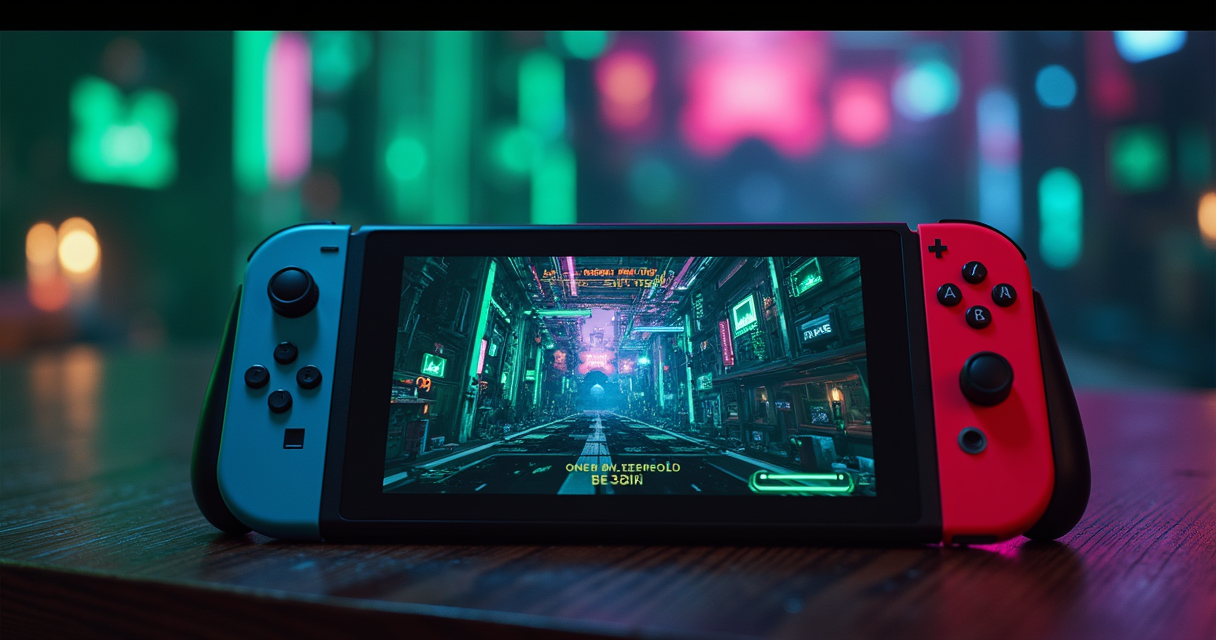
Type "switch vs steam deck" into anything in 2026 and you are, whether you meant to or not, asking about the Nintendo Switch 2 and the Steam Deck OLED. The original Switch is a museum piece with a 155-million-unit tail; the LCD Steam Deck was quietly discontinued over the winter. What's left standing are two 7-inch-class handhelds that share a form factor and almost nothing else. One is a sealed Nintendo appliance that boots to a curated garden. The other is a pocket x86 PC that will run whatever you throw at it, and ask no questions.
For most of the last three years this was an easy column to write: the Deck was the cheap, powerful, open one, and the Switch was the expensive, locked, first-party one. In 2026 half of that sentence inverted. Valve raised the Deck's price by up to $300 in May; Nintendo is holding the Switch 2 at $449.99 until September. The bargain handheld is now the Nintendo one. That single fact reorders the entire comparison — and for a retro-minded buyer, it collides head-on with the older, uglier truth that only one of these machines actually lets you own and run four decades of console history. This is the long version of that argument, with the receipts.
The 31-to-1 Gap
Start with the scoreboard, because it frames everything that follows and because it is wildly lopsided.
Nineteen million in a year
Nintendo shipped 19.86 million Switch 2 units by March 31, 2026 — its first fiscal year — against an internal projection of 15 million it blew past by a third. The figures are corroborated across VGChartz and Gematsu: 6.73 million in the Americas, 4.40 million in Europe, 5.66 million in Japan, 3.06 million everywhere else. The launch itself was violent — roughly 3.5 million units in the first four days of June 2025, more than double the Steam Deck's entire 2022 shipment estimate of about 1.62 million. Add the original Switch's 155.92 million lifetime and Nintendo's combined active install base clears 175 million.
The Steam Deck's quiet five million
Valve doesn't publish hardware numbers, which is itself a tell. The best public estimates put the Steam Deck's total lifetime sales near 5.6 million units across three years. Divide it out and you get a roughly 31-to-1 adoption gap in Nintendo's favor. Even against the Switch 2 alone — one year on the market — the Deck is outsold better than three to one. For reference, Sony's PS5 sits around 93.6 million shipped over the same window, per VideoCardz; the Switch 2 outsold it in the January-March quarter and is still a fraction of its lifetime total. Handhelds are not consoles, but the ranking is the ranking.
What the gap does and doesn't prove
Here's the part the fanboys skip: install base measures distribution, not capability. Nintendo mass-markets to grandmothers; Valve sells a Linux computer to people who know what a shader cache is. The Switch 2's numbers prove Nintendo can move hardware, that the used market will be liquid, and that the accessory ecosystem will be deep. They prove nothing about which machine is better at running Metroid Prime. What the gap actually matters for, to a retro buyer, is software gravity — the Switch platform has logged around 1.4 billion lifetime software units at an attach rate near nine games per console, a first-party juggernaut no emulator library replaces. The Deck answers with a different kind of scale: more than 21,000 titles rated Steam Deck Verified or Playable, the entire Steam back catalog behind them, and every console from 1983 to roughly 2008 available to anyone willing to dump their own carts. Two definitions of "library," and they barely overlap.
The Price Inversion of 2026
If you internalized the 2022-2024 pricing, throw it out. The relationship flipped this spring, and it flipped hard enough to change the buying advice.
The Deck used to be the bargain
For most of its life the Steam Deck undercut everything. The LCD base model launched at $399, the OLED arrived at $549 for 512GB and $649 for the 1TB, and Valve ran the whole line as a loss-leader for its store. That machine — the cheap, subversive one — no longer exists at those numbers. The 256GB LCD Deck was discontinued on December 19, 2025 amid the NAND shortage and was out of stock at retail by February. The floor fell out of the lineup.
May 27, 2026: the $300 hike
Then Valve did something almost unheard of for maturing hardware: it raised prices, steeply, on a three-year-old product. As of May 27, 2026, the 512GB Steam Deck OLED is $789 and the 1TB OLED is $949 — increases of up to $300, first reported by Tom's Hardware and confirmed by gHacks and Game Informer. Overseas it's uglier still: €779/€919 in the EU, £649/£849 in the UK, CA$1,129/CA$1,349 in Canada, AU$1,199/AU$1,499 in Australia. Valve's stated reason was the "current state of component costs and other global logistical challenges" — corporate for the AI-driven DRAM and NAND crunch that has strip-mined the memory market throughout 2026. The Deck didn't get better. It got expensive.
September 1: Nintendo's own increase
Nintendo isn't immune to the same crunch. The Switch 2 launched at $449.99 and will rise to $499.99 on September 1, 2026, a revision Nintendo attributes to memory costs and confirms on its official price-revision page. We broke down the timing and the regional math in our Switch 2 release-date and pricing rundown. But do the arithmetic on today's date: a $449.99 Switch 2 versus a $789 Deck OLED is a $339 gap in Nintendo's favor. Even after September 1, the Switch 2 stays roughly $289 cheaper than the cheapest new Deck. The machine that used to be the premium-priced walled garden is now the value pick, and the open PC handheld is the luxury item. If you want the straight spec-and-DLSS version of this fight without the emulation lens, our Switch 2 vs Steam Deck spec breakdown covers it; this piece is about what happens when you care about the previous forty years of games.
The Spec Sheet, Line by Line
Numbers first, interpretation second. Below is the full comparison — hardware and emulation capability in one table, because for this audience those are the same conversation.
The headline hardware
The Switch 2 is bigger-screened, sharper, higher-refresh, and dramatically lighter. The Deck OLED is heavier, lower-resolution, but carries an OLED panel and more than double the battery. One is a tablet built around a display; the other is a computer built around a battery and a pair of trackpads. Keep that framing in mind as you read the rows.
The table
| Spec | Nintendo Switch 2 | Steam Deck OLED |
|---|---|---|
| Launch price | $449.99 (→ $499.99 Sep 1, 2026) | $789 (512GB) / $949 (1TB) |
| Screen | 7.9″ LCD, 1080p, 120Hz, HDR | 7.4″ OLED, 1280×800, 90Hz, HDR |
| SoC | Custom Nvidia T239 (Ampere, Samsung 8nm) | AMD "Sephiroth" APU (RDNA 2, 6nm) |
| CPU | 8× Arm Cortex-A78C, ~1GHz | 4c/8t Zen 2 x86, up to ~3.5GHz |
| GPU (docked / handheld) | 3.07 / 1.71 TFLOPS FP32 | 1.6 TFLOPS FP32 |
| Upscaling | Nvidia DLSS | AMD FSR |
| Storage | 256GB UFS 3.1 | 512GB / 1TB NVMe PCIe Gen 3 |
| Expansion | microSD Express only | Standard microSD (UHS-I) |
| Battery | 5,220mAh / 19.7Wh | 50Wh |
| Weight | ~400g bare / ~534g with Joy-Con 2 | 640g |
| Wireless | Wi-Fi 6 | Wi-Fi 6E |
| OS | Nintendo OS (proprietary, locked) | SteamOS 3.6 (Arch Linux; dual-boot Win 11) |
| Video out | 4K@60 docked / 1080p@120 handheld | Up to 8K spec / ~4K@60 practical |
| Supported retro systems | NSO curated only (NES–GameCube) | NES–PS2/GC/Wii/Dreamcast/Saturn/PSP |
| Save states | NSO suspend points + rewind only | Unlimited, per-emulator |
| Netplay | First-party titles only | Full (RetroArch/Parsec/native) |
| CRT / custom shaders | None (fixed filters in some NSO apps) | Full shader stack (CRT-Royale, etc.) |
| Homebrew / custom ROMs | None (no public exploit mid-2026) | Open |
Where the spec sheet lies
Two rows deserve an asterisk before anyone builds an argument on them. First, the process node: the Switch 2's T239 is fabricated on Samsung's aging 8nm line, not the 4nm figure that keeps migrating through spec tables — a meaningful gap, because 8nm is why the chip runs cooler by design but leaves performance on the floor. The Deck's Sephiroth APU is a 6nm part; the older 7nm "Aerith" silicon belongs to the discontinued LCD unit. Second, the weight: you'll see the Deck OLED listed at 669g in careless tables, but that is the LCD model. The OLED is 640g — still about 20% heavier than a fully-assembled Switch 2, and roughly 60% heavier than a bare Switch 2 tablet. Hold both for ten minutes on a couch and the difference is not academic. There's a third quiet asterisk that matters specifically to this audience: storage expansion. The Switch 2 accepts only microSD Express, a fast but pricey and still-scarce format; the Deck takes any commodity UHS-I microSD, which is where you'll stash a multi-terabyte ROM collection for pocket change. For a buyer who thinks in library size, that difference compounds fast.
Raw Performance and the TFLOPS Mirage
The temptation is to line up teraflops and declare a winner. Resist it. These are different instruction sets running different software stacks, and the single-number comparison is a trap.
TFLOPS across architectures
Docked, the Switch 2 hits 3.07 TFLOPS; undocked it settles to about 1.71 TFLOPS, right on top of the Steam Deck OLED's 1.6 TFLOPS. So in handheld mode — the mode that matters for a handheld — they are, on paper, a coin flip. But the Switch 2's number is Nvidia Ampere and the Deck's is AMD RDNA 2, and cross-architecture FLOPS comparisons are close to meaningless. What actually decides frames is the software: the Deck runs native, unmodified PC code compiled for x86, while the Switch 2 runs bespoke ports that Nintendo and its partners hand-tune for the fixed target. That hand-tuning is worth real performance, and it cuts against the open platform.
DLSS vs FSR
This is the Switch 2's genuine edge, and it's not on the spec sheet as a number. Nvidia's DLSS reconstructs from a lower internal resolution more cleanly than AMD's FSR does at equivalent cost. Digital Foundry's Cyberpunk 2077 testing is the tidy example: the Switch 2 upscales roughly 540p to 1080p and comes out visibly cleaner than the Deck's 480p-to-720p FSR pass, at a lighter compute cost. Nintendo is essentially borrowing frames from Nvidia's tensor cores that AMD's silicon can't match. In motion, on a small panel, DLSS is the reason the Switch 2 punches above its raw grunt.
The benchmark receipts
Three independent looks, three consistent conclusions. Digital Foundry found the Switch 2 ran Hogwarts Legacy "better overall, keeping it locked to a mostly stable 30fps," and did it drawing just 7W against the Deck's 14W. PCGamesN, using an RTX 3050 / RX 6600 desktop proxy to model the two GPUs, put the Switch 2 chip around 53% faster on paper — roughly 29fps to 19fps in their synthetic — while stressing that the figure is theoretical and evaporates the moment real software and thermals intervene. And PC Gamer, after living with both, filed the summary that best captures the whole fight: "a closer battle than I expected," landing on the Deck for raw value but conceding the Switch 2 delivers "the Nintendo feel, look, and software." GamesRadar went further, headlining that it "wildly underestimated the Switch 2." Community testing tracks the reviews — Steam Community and Reddit threads on Deck emulation repeat the same refrain, that most sixth-gen content is full-speed out of the box with the odd title needing a manual clock bump, while the Switch 2's ceiling is simply whatever Nintendo shipped. The honest read: in first-party and well-ported AAA content, the Switch 2 hangs with or edges the Deck at half the wattage. That advantage does not survive contact with emulation, for reasons the next sections make painfully clear.
Battery, Thermals, and the Screen
Efficiency and endurance are not the same thing, and the Switch 2 wins one while losing the other. This is the section where the physical experience of holding the thing gets decided.
Battery: the Deck's revenge
The Switch 2 carries a 19.7Wh pack; the Deck OLED carries 50Wh, more than two and a half times the fuel. Efficiency narrows the gap but never closes it. Digital Foundry's like-for-like runtimes, aggregated across their coverage, tell the story cleanly:
- Hogwarts Legacy: Switch 2 ~2h45m vs Deck ~4h
- Stardew Valley: Switch 2 ~4h vs Deck ~7h
- Persona 4 Golden: Switch 2 ~4h18m vs Deck 7h+
- Hitman World of Assassination: Switch 2 ~2h40m vs Deck ~2h
In all but the most punishing AAA cases the Deck lasts 1-2 hours longer, and reviewers on YouTube consistently report the same. The exception — Hitman, where the Switch 2 nudges ahead — is exactly the AAA-with-DLSS scenario where Nintendo's efficiency shines. For everything lighter, and emulation is the lightest load there is, the bigger battery wins.
Thermals and power draw
The flip side is that the Switch 2 sips. That 7W-vs-14W Hogwarts figure isn't a fluke; the 8nm Ampere part is tuned for a low, flat power curve, and the console runs cool and quiet as a result. The Deck's Zen 2 CPU is the thirstier design, and under a heavy PS2 emulation load — where you're leaning on that x86 CPU, not the GPU — the fan spins up and the pack drains fast. So the paradox: the machine you'd want for emulation (the Deck) is also the one that pays the highest battery tax to do it. Plan for a power bank either way.
The screen paradox
On paper the Switch 2 wins the display: 7.9 inches, 1080p, 120Hz, HDR against the Deck's 7.4 inches, 1280×800, 90Hz, HDR. Bigger, sharper, faster. But it's an LCD, and the Deck's is an OLED — so the Deck delivers true blacks and per-pixel contrast the Switch 2 physically cannot. Digital Foundry called the Switch 2 panel "problematic in a number of ways," flagging its HDR implementation and response characteristics. For pixel-art retro content — where you want inky blacks behind a CRT shader and low persistence — the OLED is the better canvas despite the lower resolution. For modern 1080p games at 120Hz, the Switch 2 screen is the better instrument. If you're weighing panels specifically, our Switch OLED vs Switch 2 comparison digs into how Nintendo's own display strategy has zig-zagged between LCD and OLED across generations.
The Emulation Question
Here is the fork in the road, and for a retro site it is the only fork that matters. Everything above is preamble. The Steam Deck is an open cannon; the Switch 2 is a locked vault. Those are not adjectives — they are architecturally enforced states, and they determine what you can do with the hardware you paid for.
Open cannon vs locked vault
The Deck ships as a Linux PC. Flip to Desktop Mode and it will run EmuDeck, RetroArch, or RetroDECK, which between them cover NES through PS2, GameCube, Wii, PSP, Dreamcast, Saturn, and dozens more. You get unlimited save states, CRT and custom shaders, online netplay, RunAhead latency reduction, per-game configuration overrides, and the freedom to add your own dumped ROMs. It is, functionally, every retro handheld ever made, plus a full Steam library, in one 640g slab. Our guide to installing 200+ RetroArch cores is the natural next step once the Deck is in your hands.
The Switch 2, mid-2026, has no public homebrew exploit. None. The scene is quiet enough that community boards actively discourage discussion of Switch 2 vulnerabilities. There is no user-installable emulator, no custom shader pipeline, no way to sideload a ROM you dumped from your own cartridge. Everything retro on the machine flows through Nintendo, on Nintendo's terms.
The NSO rental model
What Nintendo offers instead is Nintendo Switch Online + Expansion Pack, an $80/year subscription that unlocks curated apps for NES, SNES, N64, Game Boy, GBA, Genesis, and — Switch 2-exclusively — GameCube. The GameCube app launched in June 2025 with The Wind Waker, F-Zero GX, and SoulCalibur II, and the 2026 additions have trickled in: Super Mario Sunshine, Pokémon XD: Gale of Darkness (March 2026), Luigi's Mansion, Wario World, Chibi-Robo, and Fire Emblem: Path of Radiance. It's a genuinely nice catalog, rendered at roughly double the original internal resolution.
But read the model carefully. You are renting. Stop paying the $80 and the games vanish. You cannot add a title Nintendo hasn't chosen to ship. You get suspend points and rewind — not arbitrary save states — and a couple of fixed display filters, not a shader stack. It is emulation with the freedom surgically removed. Compare that to a Deck SD card: dump your own GameCube discs, and those files are yours until the flash wears out.
The capability matrix
Stacked head to head, the emulation feature gap is not close. It's a rout.
| Emulation capability | Switch 2 (NSO) | Steam Deck (EmuDeck/RetroArch) |
|---|---|---|
| Systems available | NES–GameCube, Nintendo's picks | NES–PS2/GC/Wii/PSP/Dreamcast/Saturn+ |
| Add your own ROMs | No | Yes |
| Save states | Suspend points only | Unlimited slots |
| Rewind | Yes (select titles) | Yes (all cores) |
| Fast-forward | No | Yes |
| CRT / custom shaders | No | Full stack |
| RunAhead (latency cut) | No | Yes |
| Online netplay | First-party titles only | Yes |
| Per-game config | No | Yes |
| Ownership model | Rental ($80/yr) | Own outright |
If your definition of a retro machine includes CRT shaders, netplay against a friend three time zones away, or simply playing a game Nintendo declined to license, the Switch 2 is a non-starter and the table is why. Want to go even deeper than the Deck's SteamOS stack allows? A dedicated Batocera install turns the same silicon into a 200-system emulation console that boots straight to a couch UI.
Supported Systems: What Each One Plays
Capability is theoretical until it meets a framerate. So here's what actually runs, at what quality, with the benchmark sourcing the brief asked for.
What the Steam Deck plays
Nearly everything through the sixth console generation, and much of it upscaled. Per the Retro Game Corps Steam Deck emulation guide and the official EmuDeck Dolphin documentation, most GameCube and Wii titles run at full speed in Dolphin, typically bumped to 2x (720p) or 3x (1080p) internal resolution over the Vulkan backend. GameCube games, in particular, look spectacular upscaled. The rough edges are known and documented: a handful of demanding titles won't hold full speed until you engage the PowerTools plugin and pin the Manual GPU Clock to 1200MHz from the Quick Access menu — a fix that shipped alongside a Dolphin speed boost GamingOnLinux covered back when the Deck was new. PS2 via PCSX2 is mostly full-speed with room to upscale; below that, DS runs in melonDS, PSP is effortless in PPSSPP, and arcade boards run in FBNeo and MAME. This is where the Deck's Zen 2 x86 CPU at ~3.5GHz earns its keep — emulation is single-thread-bound, and that CPU obliterates the Switch 2's eight ~1GHz Cortex-A78C cores for the CPU-heavy work of GameCube and PS2 recompilation. The GPU wins benchmarks; the CPU wins emulators. The Deck's honest ceiling is the same as everyone's: the Switch and Switch 2 themselves, plus the most demanding late-era PS2 and a few CPU-bound Wii titles. Nothing below that troubles it.
What the Switch 2 plays
Three buckets, all curated. Its own Switch 2 library (native, and excellent — Mario Kart World alone sold 14.70 million, Donkey Kong Bananza another 4.52 million). Backward compatibility with the original Switch catalog, better than 90% of it, often with a resolution and framerate lift. And the NSO retro apps described above. That's the entire universe. There is no fourth bucket. You cannot make the Switch 2 play a Saturn game, a PSP game, a Dreamcast game, or a GameCube game Nintendo hasn't licensed, because the OS will not let you.
The accuracy gap
This is the technical knife-twist, and it comes with hard numbers. Digital Foundry tested the Switch 2's NSO GameCube emulator and measured F-Zero GX at 124.1ms of input latency versus 71.8ms on original GameCube hardware — three extra frames of lag, per the DF breakdown carried by Nintendo Life and ScreenRant. DF also found the F-Zero steering velocity curve mismapped, adding sensitivity that isn't in the original. Their verdict: "faithfully represented" but in need of further work from Nintendo. Passable for The Wind Waker; genuinely felt in F-Zero GX and SoulCalibur II, the two games where reflexes decide outcomes. Now the contrast: a Steam Deck running RetroArch with RunAhead enabled can undercut original-hardware latency by rolling the emulator forward and hiding internal frames. The open platform isn't just more flexible than Nintendo's — on the metric that defines emulation quality, it is measurably more accurate. Nintendo charges $80 a year for three frames of added lag; the Deck gives you negative lag for free.
The Law and the Lore
Every emulation argument eventually trips over the same nervous question, so let's dispatch it with the actual case law rather than forum folklore.
Emulators are legal. ROMs are the crime.
The emulator — the software that mimics old hardware — is legal in the United States, and this is settled, not speculative. In Sony Computer Entertainment v. Connectix (2000), the Ninth Circuit held that reverse-engineering the PlayStation BIOS to build the Virtual Game Station emulator was fair use. The parallel Sony v. Bleem litigation reinforced it. Writing and running an emulator is protected; clean-room reverse engineering is protected. What is not legal is distributing copyrighted ROMs and BIOS files you don't own the rights to. The line is bright: the tool is fine, the copyrighted content is not. Dump your own cartridges and discs and you're on solid ground. Download a torrent of the SNES library and you are not. The Steam Deck doesn't change that calculus; it just gives you a machine that respects your side of the line.
The Yuzu precedent
The stakes are not hypothetical. In March 2024, the developers of Yuzu, the leading Switch emulator, settled with Nintendo for $2.4 million and shut the project down — Nintendo's argument centered on circumvention of encryption and the piracy it enabled, not on emulation as a concept. Ryujinx, the other major Switch emulator, ceased development later in 2024. The upshot for this comparison is stark: there is no reliable way to emulate the Switch or Switch 2 on any hardware in 2026, Deck included. The Deck's emulation dominance is entirely about the previous forty years of consoles — Nintendo's own current-gen library is a sealed box on every machine, including its own.
Why Nintendo keeps the vault locked
None of this is accident. Nintendo's business is selling you the same Super Mario Bros. for the fifth time, and an open platform is antithetical to that. The NSO subscription is the monetization of nostalgia as a service — you never own the game, you pay rent on access, and the moment you stop, the library goes dark. Nintendo's legal posture reinforces it: the company has spent years issuing takedowns against ROM sites, pursuing emulator projects, and extracting settlements large enough to end them, while running no equivalent program to preserve its own delisted catalog. The archival burden falls entirely on the community it litigates against. The Machine's position, for the record: a rented ROM is not a preserved ROM. When Nintendo delists a title or shutters the service, the only copies that survive are the ones enthusiasts dumped and archived themselves — on open hardware, exactly the kind the Switch 2 refuses to be. Preservation and the walled garden are enemies, and the Deck is on preservation's side.
Five Buyers, Five Verdicts
Abstract specs are useless at the register. Here are concrete buyers, each with a data-backed call — because the right answer genuinely depends on who's asking.
When the Switch 2 wins
1. The Nintendo-first family. If the shortlist is Mario Kart World, the next Zelda, and Donkey Kong Bananza, the conversation is over. Those games exist on exactly one machine, run flawlessly, and cost $339 less than a Deck. The NSO retro catalog is a bonus, not the reason. Buy the Switch 2.
2. The plug-and-play buyer. Someone who wants to press power and be in a game in ten seconds, with zero interest in Desktop Mode, Vulkan backends, or GPU clock overrides. The Switch 2 is an appliance; the Deck is a computer that can be an appliance if you configure it. For this person, the Deck's openness is overhead, not value. Buy the Switch 2.
3. The battery-anxious commuter with light games. On indie and 2D fare — the stuff most handheld owners actually log hours in — the Switch 2's efficiency plus a lighter chassis makes it the better travel companion, provided your library is on-platform. Buy the Switch 2, but know you're trading away the entire emulation universe for it.
When the Steam Deck wins
4. The emulation maximalist. If your dream handheld is every console from the Atari 2600 to the PS2, with CRT shaders, RunAhead, netplay, and files you own outright, there is no debate. The Deck does all of it; the Switch 2 does none of it. The $339 premium buys you an open platform that is, per Digital Foundry's own latency numbers, more accurate than Nintendo's rental. Buy the Steam Deck.
5. The PC gamer who wants a second screen. A Steam library of 21,000+ Verified titles, SteamOS with Windows 11 dual-boot, mod support, and the ability to run anything that runs on a PC. The Switch 2 can't touch this use case by definition. Buy the Steam Deck — and treat the emulation stack as the enormous free bonus it is.
The edge cases
A sixth buyer sits in the middle: the retro tinkerer on a strict budget. If you want emulation but $789 is out of reach, the honest answer is that neither of these is your machine — a cheaper dedicated handheld or a $199 Retroid runs your SNES and PS1 library for a quarter of the Deck's price. The Deck earns its premium only when you need GameCube, PS2, and a real Steam library in one device. Below that bar, its price stops making sense in 2026.
Pricing and Availability, Mid-2026
The full price ladder, current as of July 2026, including the discontinued models so you don't chase a ghost.
The 2026 price ladder
| Model | US price | Status | Notes |
|---|---|---|---|
| Switch 2 (256GB) | $449.99 | Current | → $499.99 on Sep 1, 2026 |
| Steam Deck OLED 512GB | $789 | Current | Hiked from $549 on May 27, 2026 |
| Steam Deck OLED 1TB | $949 | Current | Hiked from $649; anti-glare etched glass |
| Steam Deck LCD 256GB | $399 | Discontinued | Dropped Dec 19, 2025; out of stock by Feb |
Regional Deck pricing after the hike: €779/€919 (EU), £649/£849 (UK), CA$1,129/CA$1,349, AU$1,199/AU$1,499. The Switch 2 remains globally consistent at its $449.99-equivalent until the September revision, per Android Authority's coverage of the Valve increase.
Total cost of ownership
Sticker price understates the gap in both directions, and it's worth being precise. The Switch 2 is cheaper up front but pricier to feed: first-party games run $79.99-$89.99 at full retail, GameCube access costs the $80/year NSO Expansion Pack, and storage expansion demands pricey microSD Express cards that, in mid-2026, still command a steep premium per gigabyte over the standard UHS-I microSD the Deck uses. The Deck costs more at the register but its software economics are gentler: Steam's perpetual sales, a library you keep forever, free emulation, and cheap commodity storage. Over three years, a heavy Nintendo buyer and a heavy Deck buyer can end up far closer than the $339 hardware delta suggests — the Nintendo tax is just deferred into the software and the memory cards.
Where to actually buy
The Switch 2 is available everywhere Nintendo hardware is sold and is no longer supply-constrained. The Deck OLED sells primarily direct from Valve via Steam, with certified refurbished units occasionally surfacing at a discount that, post-hike, is worth waiting for. Avoid the third-party markup sellers; there's no scarcity premium to justify it in 2026. And ignore the SEO-mill "deals" sites cloning these specs — several fabricate prices and review scores wholesale.
Migrating From Switch to Steam Deck
Say you've read this far and decided the open platform is worth the premium. Here's how to move your retro life onto a Steam Deck without losing a weekend to it.
Before you switch
Set expectations first. Your Switch games do not transfer — Nintendo titles are a sealed box, and no emulator plays them reliably. What migrates is your retro library: anything from consoles the Deck emulates, sourced from cartridges and discs you own and dump yourself. You'll want the 512GB model at minimum (the OS and a couple of modern games eat the base storage fast) plus a high-capacity microSD dedicated to ROMs. Budget an evening for setup, not a full day.
Setting up EmuDeck
EmuDeck is the one-click installer that pulls down every major emulator and wires them into Steam ROM Manager so your games appear in the console-style Gaming Mode UI. The whole flow:
# On the Steam Deck, hold POWER -> "Switch to Desktop" to enter Desktop Mode.

# 1. Download EmuDeck from emudeck.com and run the installer.
#    It fetches RetroArch, Dolphin, PCSX2, DuckStation, PPSSPP, and more.
flatpak run org.libretro.RetroArch      # confirm RetroArch launches once

# 2. EmuDeck creates an ~/Emulation/roms tree. Drop your own dumps in:
#    ~/Emulation/roms/{nes,snes,n64,gc,ps2,psx,dreamcast,saturn,psp}/

# 3. Run Steam ROM Manager (from EmuDeck) to add games as non-Steam
#    shortcuts with box art, then return to Gaming Mode.

# 4. For any GameCube/Wii title that won't hold full speed, open the
#    Quick Access (...) menu in-game and set:
#      Manual GPU Clock -> 1200 MHz
#      enable the PowerTools plugin
Prefer a dedicated retro OS over SteamOS? Image a second microSD with Batocera and boot into a purpose-built emulation front end that leaves your SteamOS install untouched. And once you're in RetroArch, our core installation walkthrough gets you from a bare install to 200+ systems in about 40 minutes.
Bringing your saves
Emulator saves are portable files. If you were already emulating on a phone or another handheld, copy the .srm, .state, and memory-card files into the matching folders under ~/Emulation/saves and RetroArch will pick them up. Saves trapped inside a physical cartridge's battery-backed SRAM need a hardware dumper to extract — the same tool you'd use to rip the ROM legally in the first place. Cloud-save services from the original Switch, needless to say, do not cross the fence; Nintendo's ecosystem is a one-way door on the way out.
The Verdict
Two machines, two philosophies, and after all the numbers a verdict that refuses to be universal. So here's the honest split, with the trade-offs laid bare.
Pros and cons, both machines
| Nintendo Switch 2 — Pros | Nintendo Switch 2 — Cons |
|---|---|
| $339 cheaper than a Deck OLED today | Locked OS; no homebrew, no custom ROMs |
| Exclusive first-party library (MKW, Zelda, DK) | Retro = $80/yr rental you never own |
| DLSS upscaling beats FSR at equal cost | NSO GameCube adds 3 frames of lag (DF) |
| Runs cool and quiet (7W vs 14W Hogwarts) | Half the battery capacity (19.7 vs 50Wh) |
| Lighter (534g vs 640g), bigger 120Hz screen | LCD, not OLED; games cost $79.99-$89.99 |
| Steam Deck OLED — Pros | Steam Deck OLED — Cons |
|---|---|
| Open platform: emulates NES through PS2/GC/Wii | $789 minimum; hiked up to $300 in May 2026 |
| Full-speed GameCube upscaled 2x-3x (Dolphin) | Heavier at 640g; thirstier Zen 2 CPU |
| RunAhead can beat original-hardware latency | Lower-res 1280x800 90Hz panel |
| OLED contrast; 50Wh = 1-2 hrs more battery | Setup is a project, not plug-and-play |
| 21,000+ Verified Steam titles; own everything | Cannot play Switch/Switch 2 exclusives at all |
The data-backed call
For the buyer this site is written for — someone who cares about the previous forty years of games as much as the next forty — the Steam Deck OLED wins, and it isn't close, the $339 premium notwithstanding. It runs GameCube and PS2 at full speed where the Switch 2 runs a curated subset at three frames of added lag. It gives you save states, CRT shaders, netplay, and RunAhead where the Switch 2 gives you suspend points and a subscription. It lets you own your library where the Switch 2 rents it back to you at $80 a year. On the one metric that defines emulation quality — latency — Valve's open stack is measurably more accurate than Nintendo's, per Nintendo's harshest critics at Digital Foundry. That is a comprehensive win on the terms that matter to a retro buyer.
Who should buy which
But the verdict flips the instant the question changes. If you want Mario Kart World and the next Zelda, or you want to hand a machine to someone who will never open Desktop Mode, or you simply cannot justify $789 for a handheld, the Switch 2 at $449.99 is the correct and cheaper choice — buy it before September 1 and pocket the fifty dollars. As PC Gamer put it, it's "a closer battle than I expected," and the reason it's close is that these two machines answer different questions. The Switch 2 asks what do you want to play tonight. The Steam Deck asks what do you want to still be able to play in twenty years. Answer that honestly and the register does the rest.
Questions the search bar asks me
- Is the Switch 2 or the Steam Deck cheaper in 2026?
- The Switch 2 is cheaper by a wide margin. It sits at $449.99 until September 1, 2026, when Nintendo raises it to $499.99. The cheapest new Steam Deck OLED has cost $789 since Valve's May 27, 2026 hike, and the $399 LCD model was discontinued in December 2025 — so the Switch 2 is roughly $339 cheaper today.
- Can the Steam Deck emulate GameCube and PS2?
- Yes, and well. Dolphin runs the bulk of the GameCube and Wii libraries at full speed on the Deck, typically upscaled to 2x or 3x internal resolution, per Retro Game Corps and the official EmuDeck documentation; PCSX2 handles most of the PS2 catalog. The Switch 2, by contrast, only plays the specific GameCube titles Nintendo rents through the NSO Expansion Pack ($80/year).
- How bad is the Switch 2's GameCube input lag?
- Digital Foundry measured F-Zero GX at 124.1ms of latency on the Switch 2's NSO emulator versus 71.8ms on original GameCube hardware — three extra frames. It's tolerable for a slow game like The Wind Waker but genuinely felt in F-Zero GX and SoulCalibur II. A Steam Deck running RunAhead can actually undercut original-hardware latency.
- Is emulation legal?
- The emulators themselves are legal. U.S. courts settled this in Sony v. Connectix (2000) and the Bleem litigation, which upheld emulation and clean-room reverse engineering as fair use. What's illegal is distributing copyrighted ROMs and BIOS files — so dump your own cartridges and discs. For scale on the stakes: Yuzu's developers paid Nintendo $2.4 million to settle in March 2024.
- Which handheld has better battery life?
- The Steam Deck OLED, thanks to its 50Wh pack versus the Switch 2's 19.7Wh (5,220mAh). In like-for-like tests, Digital Foundry saw Stardew Valley last about 7 hours on the Deck against 4 on the Switch 2, and reviewers generally report 1-2 more hours on the Deck. The Switch 2 is more power-efficient per watt (7W vs 14W in Hogwarts Legacy) but simply carries less than half the battery.
Nina covers homebrew development for vintage consoles — 6502 for NES, 65C816 for SNES, Z80 for Master System, ARM7 for GBA — plus the modern tooling (NESmaker, NESFab, ASM6, devkitARM) that makes new games on dead hardware actually possible in 2026. Every post under this byline is reviewed pre-publish by Sam P., Editor & Operator — corrections to info@instalinkoteam.com. Published 2026-08-29 · Last updated 2026-08-29. Full bios on the author page.