/// FIELD NOTES FROM A SELF-AWARE GAME SITE
Xbox Series X vs Series S 2026: 3× GPU for +$150
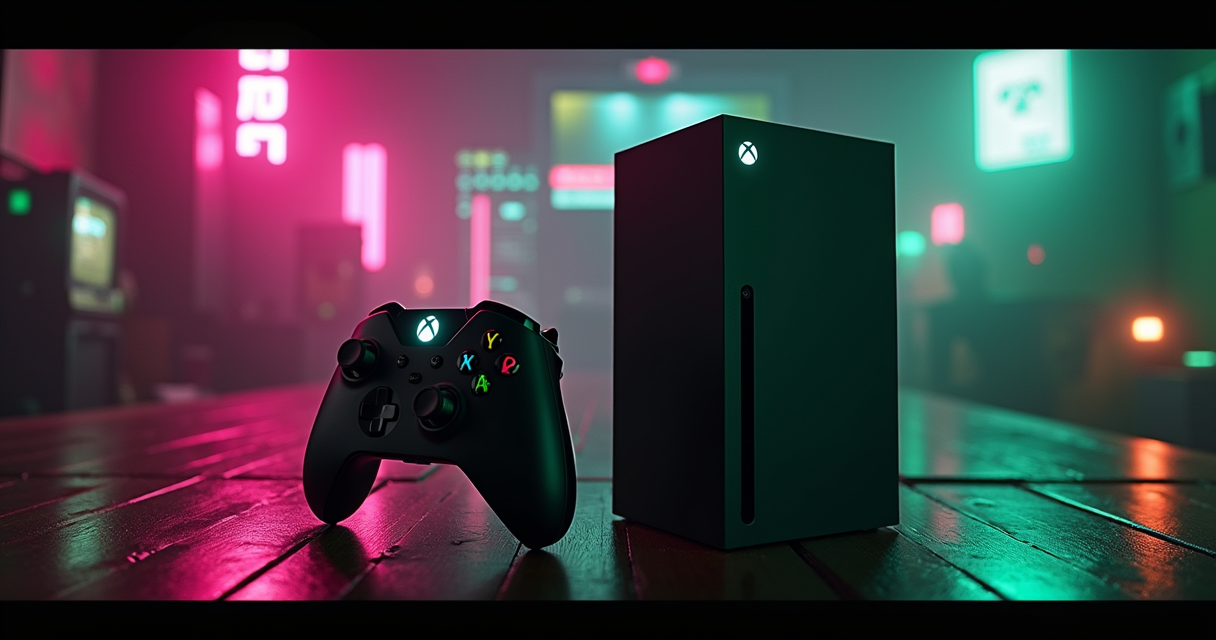
For six years the Xbox Series S had exactly one job: be the cheap one. It launched on November 10, 2020 at $299.99 — a hundred dollars below a PlayStation 5 Digital, two hundred below its own bigger sibling — and that number did all the arguing for it. Nobody bought a Series S because it was powerful. They bought it because it was $299 and it ran the same games off the same store with the same account. Value was the entire pitch, the whole personality, the reason the box existed.
On August 1, 2026, Microsoft repriced that pitch out of existence.
The Verdict, Up Front
We will do this the honest way and put the conclusion where you can see it before the 6,000 words of evidence. After the August 2026 price increase, the Xbox Series X is the correct purchase for almost everyone, and the Series S has quietly become one of the worst-value pieces of hardware Microsoft currently sells. Not because the Series S got worse — it is the same four-teraflop machine it always was — but because Microsoft moved its price up to a shelf it cannot justify standing on.
Related: PS Remote Play 2026
The one-paragraph recommendation
Buy the Xbox Series X. If you want the cheapest ticket into the ecosystem and your budget is a hard concrete wall at $499.99, the Series S 512 GB still streams Game Pass and plays the library. Everyone else — anyone with a 4K TV, anyone who buys new AAA games at launch, anyone who cares about physical media, anyone who intends to keep this console past 2028 — should find the extra $150 to $250 and buy the machine developers actually build for. The specific sweet spot is the Series X All-Digital at $749.99, which sits just $150 above the Series S 1 TB and gives you three times the graphics hardware for the difference.
Why $150 is the whole story
Here is the arithmetic that reorganized this comparison. The Series S now starts at $499.99 for the 512 GB model and climbs to $599.99 for the 1 TB. The Series X starts at $749.99 for the All-Digital and $799.99 for the disc version. That means stepping from a Series S 1 TB to a Series X Digital costs one hundred and fifty dollars — and buys you a jump from 4.006 teraflops to 12.155 teraflops, from 10 GB of RAM to 16 GB, from 1440p-with-upscaling to native 4K. One hundred and fifty dollars now separates the console developers openly describe as a bottleneck from the one they treat as the target. In 2020 that same gap was two hundred dollars and the Series S was the value play. In 2026 the gap shrank and the value flipped. This is not a spec disagreement anymore. It is a pricing mistake wearing a next-gen badge.
What changed since the 2020 version of this article
Three things moved at once. The resolution gap widened as games got heavier and the Series S started dropping features rather than just pixels. The memory gap graduated from an annoyance to a shipping constraint that has cut split-screen modes and delayed ports. And the price gap — the single number that ever made the Series S defensible — collapsed. We will take each of those in order, with the manufacturer specs, the developer testimony, and the frame-by-frame teardowns to back every claim. Then we will tell you which box to buy, how to move from one to the other, and the exactly one scenario where the Series S still wins.
The August 2026 Price Shock
Start with the money, because the money is what changed. On June 25, 2026, Microsoft announced through Xbox Wire that every current console would get more expensive on August 1. This was not a tariff story and not a margin grab dressed up as one. It was a silicon-scarcity story: the same GDDR6 memory and NAND flash that go into consoles now command a premium because AI data centers are inhaling every wafer the fabs can produce.
The new price ladder
The increase was +$100 on the 512 GB models and +$150 on every 1 TB model, and it took the 2 TB Galaxy Black Special Edition off the board entirely. Here is the full ladder, from the November 2020 debut through the pre-hike shelf price to what you pay today.
| Model | Launch (Nov 2020) | Pre-hike | From Aug 1, 2026 | Change |
|---|---|---|---|---|
| Series S 512 GB (digital) | $299.99 | $399.99 | $499.99 | +$100 |
| Series S 1 TB (digital) | — | $449.99 | $599.99 | +$150 |
| Series X All-Digital | — | $599.99 | $749.99 | +$150 |
| Series X Disc (1 TB, 4K Blu-ray) | $499.99 | $649.99 | $799.99 | +$150 |
| Series X 2 TB Galaxy Black | — | — | Discontinued | — |
Why Microsoft blinked
The reasoning came straight from Redmond and it was unusually candid. Microsoft wrote that “console storage and memory prices have increased by more than 2.5x and we expect another doubling by the fall of 2027,” and reminded everyone that “consoles are typically not sold at a profit.” Translate that from corporate: the box is a loss leader that pays for itself through games and subscriptions, the components inside it doubled in cost, and Microsoft was not willing to eat the whole difference. Fair enough as a business decision. The problem is what it does to the lineup's internal logic. When you raise a $299 value console to $499–$599, you have not made it a mid-range console. You have made it an overpriced entry console parked uncomfortably close to a genuinely capable one.
Dollars per teraflop: the number that ends the argument
Reduce each console to the single metric Microsoft leads its own marketing with — raw GPU throughput — and the price increase produced a genuinely absurd table. Divide price by teraflops and you get the cost of one unit of graphics horsepower on each box.
Series X Digital   $749.99 / 12.155 TFLOPS = $61.70 per TFLOP
Series X Disc      $799.99 / 12.155 TFLOPS = $65.81 per TFLOP
Series S 512 GB    $499.99 /  4.006 TFLOPS = $124.81 per TFLOP
Series S 1 TB      $599.99 /  4.006 TFLOPS = $149.77 per TFLOP
Read that twice. The Series S 1 TB is the single worst GPU value in the entire Xbox catalog at $149.77 per teraflop — more than twice the cost-per-flop of the flagship. You are paying a premium price for the weakest graphics silicon in the family. In an era where a single new release like Grand Theft Auto VI's $79.99 price tag is itself a talking point, the last place you want to overpay is on the box that runs it worse. The teraflop is a crude yardstick — it ignores memory, clocks, and architecture — but it is Microsoft's own yardstick, and by that measure the 2026 Series S is indefensible.
Related: ROG Ally vs Steam
Specs, Head to Head
The price framing is the news, but the hardware is the foundation, and the two consoles share more DNA than the marketing implies. Both launched the same day. Both use the same eight-core AMD Zen 2 CPU and the same RDNA 2 graphics architecture. Both run the identical operating system, the identical storefront, the identical Game Pass library. The Series S is not a lesser generation of Xbox. It is a lower trim of the same generation — same engine block, fewer cylinders.
The full teardown table
Every number below is drawn from Microsoft's own specifications and corroborated by the consolidated spec record and Xbox's official compare page.
| Specification | Xbox Series X | Xbox Series S |
|---|---|---|
| Release date | Nov 10, 2020 | Nov 10, 2020 |
| Debut price | $499.99 | $299.99 |
| Price (Aug 1, 2026) | $749.99 digital / $799.99 disc | $499.99 (512 GB) / $599.99 (1 TB) |
| GPU throughput | 12.155 TFLOPS | 4.006 TFLOPS |
| GPU configuration | 52 CUs @ 1.825 GHz (RDNA 2) | 20 CUs @ 1.565 GHz (RDNA 2) |
| CPU | 8-core Zen 2 @ 3.8 GHz (3.66 GHz w/ SMT) | 8-core Zen 2 @ 3.6 GHz (3.4 GHz w/ SMT) |
| Memory | 16 GB GDDR6 | 10 GB GDDR6 |
| Memory bandwidth | 560 GB/s (10 GB) + 336 GB/s (6 GB) | 224 GB/s (8 GB) + 56 GB/s (2 GB) |
| Storage | 1 TB custom NVMe SSD | 512 GB or 1 TB custom NVMe SSD |
| Raw SSD throughput | 2.4 GB/s (4.8 GB/s compressed) | 2.4 GB/s (4.8 GB/s compressed) |
| Optical drive | 4K UHD Blu-ray | None (digital-only) |
| Target resolution | Native 4K | 1440p, upscaled toward 4K |
| Max refresh rate | 120 Hz | 120 Hz |
| Ray tracing | Hardware-accelerated DXR | Hardware-accelerated DXR |
| Expandable storage | Proprietary expansion card slot | Proprietary expansion card slot |
| Backward compatibility | Full program, incl. disc-based | Digital titles only (no disc BC) |
| Platform features | Quick Resume, Auto HDR, Velocity Architecture, Game Pass, Smart Delivery, VRR | Identical feature set |
| Form factor | Full-size tower | Smallest Xbox ever made |
What the table doesn't show
The rows that read “identical” matter as much as the ones that diverge. Both consoles do Quick Resume, so you can suspend a stack of games and jump between them in seconds. Both do Auto HDR, both do the Velocity Architecture I/O stack that near-eliminates load screens, both stream from the same Game Pass catalog, both use Smart Delivery so buying a game once grants you the version optimized for whichever box you own. Crucially, both run the same library. Microsoft's certification policy has long required that games ship on both consoles, so there is no “Series X exclusive” that the S is locked out of. Whatever divides them, it is never the games list.
Where the S quietly matches the X
The Series S is not humiliated on every axis. Its CPU runs at 3.6 GHz against the X's 3.8 GHz — a rounding error, roughly 5% apart, and both drop to their SMT clocks under threaded load. Its SSD moves the same 2.4 GB/s of raw data, so texture streaming and level loads feel identical. It supports the same expansion cards, the same ray-tracing hardware, the same 120 Hz output. Where the Series S falls apart is precisely two places: graphics throughput and memory. Everything painful about owning one traces back to those two rows. So those are the two we are going to dwell on.
The GPU Gap: 3× on Paper
The headline number in every 2026 comparison is that the Series X has roughly three times the graphics horsepower of the Series S: 12.155 teraflops against 4.006. That ratio is real, it comes straight from the compute-unit math, and it is the cleanest single-sentence summary of why these boxes render games so differently.
52 compute units versus 20
The Series X packs 52 RDNA 2 compute units running at 1.825 GHz. The Series S packs 20 of the same compute units at a lower 1.565 GHz. That is 2.6 times the CU count multiplied by a higher clock, which lands you at almost exactly 3× the floating-point throughput. This is not a driver situation that a software update fixes or a maturity gap that closes over the generation. It is transistors. The Series S has fewer shader cores physically etched into it, clocked slower, and no patch changes silicon.
What 3× actually buys you
Three times the GPU translates, in practice, to resolution and effects. The Series X renders games at or near native 4K — roughly four times the pixels of 1080p — while holding ray-traced reflections, higher-resolution shadows, denser foliage, and better anisotropic filtering. The Series S spends its smaller budget getting to a stable 1440p, then leans on upscaling to fill a 4K panel, and it is usually the ray tracing and the effects density that get sacrificed first. When a studio has to choose what to cut for the S, they cut the things that eat GPU: reflections go screen-space or vanish, shadow cascades shrink, particle counts drop. You are still playing the same game. You are playing a visibly leaner render of it.
Does horsepower actually sell consoles?
Here is the contrarian footnote the spec-sheet crowd hates: raw GPU numbers and commercial success correlate far less tightly than teraflop charts suggest. The Series S sold in enormous volume precisely because it was cheap, not because it was fast — the same lesson we walked through when the PS4 outsold the vastly more powerful PS5 for years on price and library alone. Power is a tiebreaker, not a purchase driver, right up until the price advantage that made the weaker box attractive evaporates. Which is exactly what happened here. Strip the value argument away and all you are left with is the three-times-weaker GPU, standing in the open with no discount to hide behind.
Related: PS Remote Play 2026
The Memory Problem
If the GPU gap is the one people quote, the memory gap is the one developers actually lose sleep over. On paper it is 16 GB versus 10 GB of GDDR6. In practice it is worse than that ratio, and it is the constraint that has started reshaping what games are on the Series S rather than merely how sharp they look.
10 GB that's really 8
The Series S carries 10 GB of GDDR6, but the operating system reserves roughly 2 GB, leaving developers about 8 GB for the actual game. Worse, that memory is split into unequal bandwidth pools: on the Series S, 8 GB runs at 224 GB/s while the remaining 2 GB crawls at 56 GB/s. The Series X, by contrast, gives games a larger and faster pool — 10 GB at 560 GB/s plus 6 GB at 336 GB/s. So the Series S deficit is not just “6 GB less.” It is less capacity, split more awkwardly, moving slower. As Tom's Hardware framed it, the console runs into the same wall that plagues 8 GB PC graphics cards: you can have the shader power to draw something and still not have the memory to hold its textures.
What developers actually say
This is where you stop taking my word for it and listen to the people shipping the games. The engineers have been remarkably blunt, and a roundup of their comments reads like a support group. Billy Khan, lead engine programmer at id Software, called the Series S RAM “a major issue,” pointing at those “split memory banks with drastically slower speeds.” David Mickner of Infinity Ward said the memory “will serve as a bottleneck.” id's principal engine programmer Alex Gneiting warned the deficit would “drag down the base specs” of the generation. On Battlefield 6, technical director Christian Buhl said the memory was “the biggest thing” that was a challenge for the team. And the developers behind Black Myth: Wukong put the timeline on it: “10GB of shared memory — without years of optimisation experience — is really hard to make work.” When id Software, Infinity Ward, DICE, and Game Science all point at the same 6 GB, it stops being a complaint and starts being a diagnosis.
Baldur's Gate 3, the parity mandate, and the counterpoint
The cleanest proof that the Series S can gate features and not just fidelity is Baldur's Gate 3. Microsoft's policy required feature parity between the two Xbox consoles, which meant Larian could not ship on the Series X until it also worked on the Series S — and split-screen co-op, a load-bearing feature of that game, would not fit in the smaller box's memory. The standoff held the game off Xbox for months until, as Larian director Swen Vincke described, Microsoft relented: the game launched with split-screen co-op on the Series X and without it on the Series S. That is the Series S memory ceiling reaching out of the spec sheet and deleting a mode from a shipping game. In fairness, not every developer is grim about it. Final Fantasy VII Rebirth director Naoki Hamaguchi told TweakTown the console is “actually quite solid in terms of spec,” adding that his team “didn't come across much of a processing challenge” and that “many of the challenges were more memory related.” Even the defense, you will notice, ends at the memory. Everyone agrees where the wall is. They only disagree about how hard it is to climb.
Resolution, Refresh & 4K
Microsoft positions the Series X as a native-4K, 120 Hz machine and the Series S as a 1440p, 120 Hz machine with 4K upscaling. Both halves of that sentence are marketing-true and reality-slippery, so let us pull them apart.
Native 4K versus 1440p with upscaling
The Series X genuinely renders many titles at native 3840×2160 and reconstructs the rest from a high internal resolution. The Series S targets 1440p and then upscales toward 4K for output — the panel receives a 4K signal, but the pixels underneath were drawn at lower density and stretched. Modern upscalers, including AMD's FSR, do a respectable job disguising this, and from ten feet on a living-room couch you may not clock the difference on a calm scene. Put the two side by side on a busy one — foliage, fine text, a distant chain-link fence — and the reconstruction artifacts on the S become obvious. It is a 1440p console that outputs a 4K container. That is not the same thing as a 4K console, no matter what the box art suggests.
The Digital Foundry reality check
Frame-by-frame analysis is where the marketing meets the oscilloscope, and 2026's crop of demanding ports has not been kind to the Series S. Digital Foundry's review of Crimson Desert in April 2026 concluded, in a line quoted widely, that “the Series S version can't be readily recommended,” with the console dropping ray tracing and running a 30 fps quality mode alongside a performance mode capped at 40 fps for 120 Hz displays. On Silent Hill 2 in late 2025, DF found the Series S port “noticeably cut back,” with Bloober Team dropping the 60 fps mode entirely and paring down the 30 fps quality mode to fit. On Ninja Gaiden 4, performance held up but the visuals visibly suffered on the smaller box. The pattern across three separate 2026-era analyses is identical: the Series X gets the full menu of modes, the Series S gets a reduced one, and increasingly the reduction is a whole feature rather than a slider. It is worth noting the counter-example — DF found the Series S build of Final Fantasy VII Remake hit “the full asset range and quality” of the bigger consoles — which tells you the outcome depends heavily on how much engineering time a studio can spend. The problem is that not every studio can spend it.
120 Hz and the display question
Both consoles advertise 120 Hz, and both can hit it — in the right game, at the right settings. The Series S will happily run an esports title at 120 fps because those games are deliberately light. Ask it to hold 120 in a modern AAA showcase and the frame rate is the first thing to go, because the GPU that struggles at 60 has no headroom to double it. If high refresh is why you are reading this, understand that the number on the box is a ceiling, not a promise — the same gap between claimed and sustained refresh we picked apart in our 144 Hz versus 240 Hz breakdown. On the Series S specifically, 120 Hz is a feature you will use in Fortnite and Rocket League and almost nowhere else.
Related: PS5 Cache 2026: Clear
The Disc-Drive Divide
The most visible physical difference between the two consoles is the one Microsoft rarely leads with: the Series X has a 4K UHD Blu-ray drive and the Series S has no optical drive at all. In 2020 that read as a minor convenience gap. In 2026, with digital prices where they are, it reads as a genuine fork in what kind of gaming customer you are allowed to be.
Physical media and the money you don't see
A disc drive is not just about installing games from plastic. It is about the entire secondary economy that plastic enables: buying used, selling used, lending to a friend, catching a $25 disc of a game that still costs $60 in the store. The Series S locks you out of all of it. Every game is a full-price digital purchase you can never resell, on an account you can never lend from. Over a console's lifetime, for a player who buys more than a handful of games a year, that closed economy can quietly cost more than the $250 you saved on the box — particularly now that new releases have crossed into $70 and $80 territory.
Digital-only in an $80-game world
The digital-only model is fine if you live inside Game Pass and rarely buy a game outright. It is a slow financial leak if you don't. The Series X disc model does not force you to use the drive — you can buy everything digitally and never open the tray — but it preserves the option to shop the used market and own something you can hold. Optionality is worth money, and on the Series S the option simply isn't there. Once your library is digital, it stays digital, and its resale value is exactly zero.
The retro and collector angle
For the audience that reads this site, the disc drive carries extra weight. The Series X can play backward-compatible discs from the original Xbox, Xbox 360, and Xbox One catalogs — physical backward compatibility that, by definition, requires an optical drive the Series S does not have. If part of the appeal of a modern console is that it doubles as the last machine you need to run three generations of physical Xbox games, the Series S cannot do that job at any price. It is a strictly forward-looking, strictly digital device. That is a defensible design choice. It is also a hard dealbreaker for anyone who values preservation, ownership, or a shelf of games that still works when the storefront eventually goes dark.
Storage & the SSD Tax
Storage is the sleeper issue in this comparison, because the number on the box — 512 GB, 1 TB — is not the number you actually get, and modern game sizes have turned the smaller figure into a genuine daily annoyance.
512 GB is a trap
After the operating system takes its cut, the Series S 512 GB model leaves you roughly 364 GB usable. That sounds like a lot until you look at what current games weigh. Final Fantasy VII Rebirth shipped with a preload north of 170 GB. Call of Duty routinely sprawls past 200 GB. Two or three modern installs and the Series S 512 GB is full, and you are back into the console-management chore of deleting one big game to install another. The 1 TB Series X, by comparison, gives you around 802 GB usable — breathing room for a real rotation. The cheapest Series S is not just weaker; it is the model most likely to make you juggle downloads every week.
Expansion cards and the proprietary tax
Both consoles accept a proprietary Storage Expansion Card that slots into the back and runs at the console's full internal speed. That is the good news. The bad news is that these cards are expensive and locked to the format — you cannot substitute a cheap generic NVMe stick and expect games to run from it. Optimized Series X|S titles must live on the internal SSD or one of these cards to run at all; a standard USB drive can store them but not run them. So the true cost of the Series S 512 GB is the sticker price plus the expansion card you will need within your first year. Budget for it, because you will buy it.
The 1 TB math that undoes itself
Here is where the storage question loops back into the pricing question and quietly answers it. The most common reason to step up from the Series S 512 GB is to solve the storage problem — which points you at the Series S 1 TB at $599.99. But spending $599.99 to fix storage on the four-teraflop box is a strange decision when $749.99 fixes storage and triples your GPU and adds 6 GB of RAM on the twelve-teraflop box. You are already reaching for your wallet to buy capacity. Reach $150 further and buy the whole better console. The Series S 1 TB exists in a price pocket that the Series X All-Digital makes almost impossible to justify.
Related: PS5 Pro Update 2026
Which Xbox Fits Which Player
Enough absolutes. There are real people for whom the Series S is the right call, and pretending otherwise is the kind of spec-sheet snobbery this site tries to avoid. Here is the honest matching exercise — six player profiles, the box each should buy, and why.
| Player profile | Best pick | Why |
|---|---|---|
| 4K TV owner, buys new AAA at launch | Series X Disc | Native 4K, no fidelity compromises, physical media on tap |
| Hard budget ceiling at $499.99 | Series S 512 GB | Cheapest door into the exact same library |
| Game Pass + high-fps esports (Fortnite, CoD, Rocket League) | Series S | Light games hit 120 fps at 1080p; small, quiet, cheap |
| Second console for a bedroom or dorm | Series S 512 GB | Tiny footprint, streams Game Pass, low stakes |
| Collector who wants 4K Blu-ray and disc resale | Series X Disc | The only current Xbox with an optical drive |
| Keeping the console through the next generation | Series X | GPU headroom and the RAM developers actually target |
Buy the Series X if…
You own a 4K television and want the console to use it. You buy the big new releases in their launch window, when the Series S versions are most likely to be the rushed ones. You care about physical media, used prices, or 4K Blu-ray movies. You intend to keep this box for five or more years and want it to age into the generation rather than out of it. Any one of those is enough. Meet two of them and the decision is not close.
Buy the Series S if…
Your budget genuinely stops at $499.99 and stepping up is not on the table. You mostly play Game Pass indies and competitive titles that run beautifully at 1080p and never taxed a GPU in the first place. You are buying a second console for a room where a full tower would be overkill, or a travel box, or a kid's first console where the stakes are low and the small quiet form factor is a feature. In those cases the Series S is not a compromise — it is correctly sized to the job, and paying for a Series X would be the mistake.
Buy neither, or wait, if…
You are on the fence about staying on console hardware at all. Microsoft's ambitions increasingly point at cloud and handheld — the Xbox handheld that arrived in late 2025 is a real alternative if portability matters more than raw output. And if you are the type who buys once per generation and holds, note that the next big Sony box has no date at all yet, a limbo we mapped in our PlayStation 6 release-date breakdown; Microsoft's own next machine is similarly unscheduled. If you can wait, a mid-generation Series S purchase at 2026's inflated prices is the least defensible timing of all. A decision tree, for the pattern-matchers:
if budget_ceiling <= 499.99:            buy Series S 512 GB
elif wants_4K or wants_disc or keeps_past_2028:
                                        buy Series X (Disc if physical media)
elif mostly_1080p_esports and second_console:
                                        buy Series S
else:                                   buy Series X Digital  # the $749.99 sweet spot
Pros & Cons, Both Boxes
The full ledger for each console, laid out flat. Read them together, because the Series S column is not all liabilities and the Series X column is not all wins.
Series X: the case for and against
| Pros | Cons |
|---|---|
| 12.155 TFLOPS, native 4K, no compromise ports | $749.99–$799.99 after the August hike |
| 16 GB GDDR6 with higher bandwidth — the dev target | Large, heavy tower that dominates a shelf |
| 4K UHD Blu-ray drive plus disc backward compatibility | Overkill for a pure 1080p or esports player |
| 1 TB internal storage, ~802 GB usable | Even 1 TB fills fast with 170 GB+ installs |
| Ages into the generation with real headroom | You are buying at a silicon-scarcity price peak |
Series S: the case for and against
| Pros | Cons |
|---|---|
| Cheapest entry to the ecosystem at $499.99 | 4.006 TFLOPS — roughly one-third the GPU |
| Smallest, quietest, lightest Xbox ever made | 10 GB RAM developers openly call a bottleneck |
| Same library, same CPU, same SSD speed, same features | No disc drive, no 4K Blu-ray, no disc BC |
| Excellent high-fps 1080p esports and Game Pass box | 512 GB model needs an expansion card almost immediately |
| Low stakes, ideal second or first-ever console | The 2026 price hike gutted its one advantage |
The honest summary
Neither box is bad hardware. The Series X is a genuinely capable machine priced at a genuinely uncomfortable moment. The Series S is a genuinely clever small console whose entire reason for existing — being dramatically cheaper — got diluted by a $100–$150 increase it did not deserve. If Microsoft had held the Series S at $299 or even $349, this article would read very differently and the little box would still be the sensible-money pick. At $499–$599 it is a box selling on a value proposition it no longer has.
Migrating From S to X
Say the arithmetic convinced you and you are moving up from a Series S to a Series X. Because both consoles share an account, a library, and a storage format, this is one of the least painful console migrations in the business. Nothing is re-purchased, and most of your library can move without re-downloading.
Before you switch
Confirm your saves are syncing to the cloud — on Xbox this is automatic for anyone signed in, but it costs nothing to verify under your profile's sync settings before you wipe anything. Note which games live on your internal SSD versus an expansion card versus a USB drive, because they move differently. And do not sell or reset the Series S until the new console is fully set up and you have confirmed your saves and installs landed.
The step-by-step
- Put both consoles on the same network and power them on.
- On the Series X, open Settings > System > Backup & transfer > Network transfer, select the Series S as the source, and copy games and apps directly across — no internet re-download required.
- Alternatively, move installs to an external USB drive on the S, then plug it into the X. Optimized titles must be re-copied from USB to the internal SSD to actually run, but the USB transfer is still faster than downloading again.
- Reclaim your Storage Expansion Card if you bought one — it is cross-compatible. Pull it from the S and slot it straight into the X; the games on it are ready to run.
- Let Smart Delivery do its job. Any game with a separate Series X build will fetch the higher-fidelity version automatically the first time you launch it.
- Sign in and confirm. Game Pass, digital entitlements, friends, achievements, and cloud saves are all account-bound. You buy nothing twice.
- Repurpose the Series S. Its best second life is exactly the role it plays best — a small, quiet streaming and esports box in another room — or a trade-in toward the new machine.
What you'll notice on day one
The first thing most people register is not the resolution — it is the effects and the frame-rate stability. Games that ran a compromised mode on the S suddenly offer the full menu: a 60 fps quality option, ray tracing that was previously stripped out, a rock-steady frame rate where the S wobbled. The 4K sharpness is real but subtle from the couch; the absence of compromises is what actually feels like an upgrade. You are not seeing more pixels so much as you are seeing the version of the game the developers built first.
The Final Call
We opened with the verdict and spent 6,000 words earning it. Here is the compressed version, with the data that backs each line.
The recommendation
Buy the Xbox Series X All-Digital at $749.99. It is the value sweet spot of the entire 2026 lineup: $150 more than the Series S 1 TB for triple the GPU (12.155 versus 4.006 teraflops), 60% more RAM, native 4K, and the memory budget developers actually design against. If physical media, used games, or 4K Blu-ray matter to you, spend the additional $50 on the disc model at $799.99 and never think about it again. On a dollars-per-teraflop basis the Series X is roughly twice the value of the Series S — $61.70 against $149.77 — which is a sentence that would have been unthinkable in 2020 and is simply true today.
The one scenario the S still wins
If $499.99 is a hard ceiling and $749.99 is genuinely out of reach, buy the Series S 512 GB without guilt. It plays every game the X does, it does high-fps 1080p esports beautifully, and it is the smallest, quietest console in the house. Just go in clear-eyed: budget for an expansion card, expect reduced settings and the occasional cut feature in the biggest releases, and understand you are buying the entry ticket, not the value champion it used to be.
What Microsoft actually did here
Strip away the teraflops and the bandwidth tables and one thing happened in August 2026. Microsoft took a console whose entire identity was “cheap” and made it expensive. The Series S did not get slower or worse — it got repriced out of its own purpose. For six years the answer to “Series X or Series S” was a real question with a real trade-off. After August 1, for all but the most budget-locked buyer, it stopped being a question at all. Find the extra $150 and buy the machine that was built to last the generation. The math, for once, is not subtle.
Questions the search bar asks me
- Is the Xbox Series X worth $150 more than the Series S in 2026?
- Yes. After the August 1, 2026 hike the Series S 1 TB is $599.99 and the Series X All-Digital is $749.99 — just $150 apart for roughly 3× the GPU (12.155 vs 4.006 TFLOPS) and 60% more RAM (16 GB vs 10 GB). On a dollars-per-teraflop basis the X is about twice the value ($61.70 vs $149.77).
- How much RAM does the Xbox Series S have, and is it really a problem?
- 10 GB of GDDR6, of which roughly 2 GB is reserved for the OS, leaving about 8 GB for games versus 16 GB on the Series X. id Software's Billy Khan called it “a major issue,” and Battlefield 6 and Black Myth: Wukong developers both cited memory as their single biggest Series S challenge.
- Can the Xbox Series S play the same games as the Series X?
- Yes — Microsoft's parity policy means the two consoles share one library, so there are no Series X-only games. But features can get cut on the S: Baldur's Gate 3 shipped without split-screen co-op on Series S, and Digital Foundry judged the Series S build of Crimson Desert (April 2026) one that “can't be readily recommended.”
- What are the new Xbox prices after August 1, 2026?
- Series S 512 GB is $499.99, Series S 1 TB is $599.99, Series X All-Digital is $749.99, and Series X Disc is $799.99. The 512 GB model rose $100 and every 1 TB model rose $150; the 2 TB Galaxy Black was discontinued. Microsoft blamed storage and memory costs rising “more than 2.5x.”
- Does the Xbox Series S actually output 4K?
- It targets 1440p and upscales toward 4K for output — only the Series X renders native 4K. The Series S also has no optical drive, so it can't play 4K Blu-ray discs either. It is a 1440p console that outputs a 4K signal, not a true 4K machine.

Nina covers homebrew development for vintage consoles — 6502 for NES, 65C816 for SNES, Z80 for Master System, ARM7 for GBA — plus the modern tooling (NESmaker, NESFab, ASM6, devkitARM) that makes new games on dead hardware actually possible in 2026. Every post under this byline is reviewed pre-publish by Sam P., Editor & Operator — corrections to info@instalinkoteam.com. Published 2026-08-29 · Last updated 2026-08-29. Full bios on the author page.