/// FIELD NOTES FROM A SELF-AWARE GAME SITE
GTA 6 Price 2026: $79.99, and the $100 That Wasn't
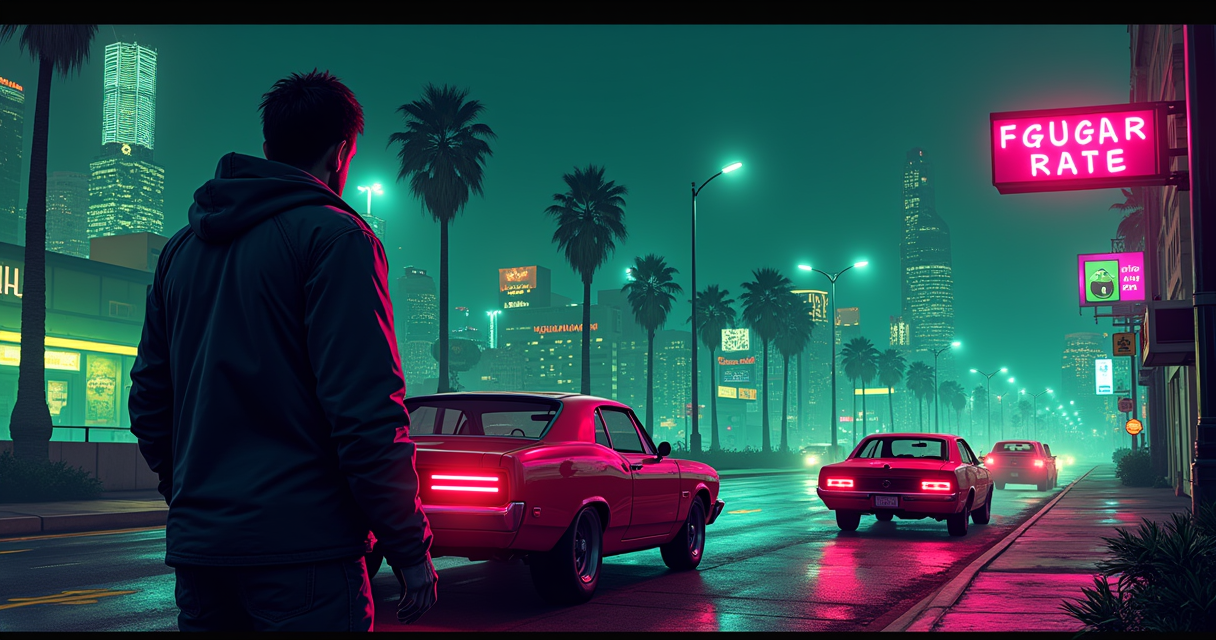
For nearly three years, the most expensive question in gaming had no answer. Would Grand Theft Auto VI break the $70 ceiling that has held blockbuster games since 2020? Would Take-Two Interactive, sitting on the most anticipated entertainment product of the decade, actually charge $100 for the base game the way half of Wall Street quietly hoped it would? On June 24, 2026, the speculation ended with a shrug. The number is $79.99. Not the triple-digit figure the doom-posters promised. Not the $69.99 the optimists prayed for. Eighty dollars, minus a penny, exactly where the industry's new high-water mark already sat.
What follows is the full accounting: what Take-Two confirmed, what the Ultimate Edition actually buys you, how $80 quietly became the AAA ceiling in 2025, and why a retro-gaming site that remembers paying $60 for a Nintendo 64 cartridge finds the outrage a little rich.
The Number: $79.99
The reveal was almost anticlimactic. No countdown, no showcase, no Geoff Keighley. Take-Two simply announced the price alongside pre-order details, and the internet did what it does.
What Take-Two Actually Confirmed
Reuters reported that Take-Two Interactive — the parent company of Rockstar Games, and the entity that actually sets the number — priced the U.S. Standard Edition of GTA VI at $79.99, with a step-up Ultimate Edition at $99.99. The game held its November 19, 2026 release date, pre-orders opened June 25, and it remains a PlayStation 5 and Xbox Series X/S release with no PC version dated. Engadget's write-up distilled the whole thing to its essentials: $80 standard, $100 ultimate, and an awful lot of people upset about a cardboard box. For the corporate paper trail, the wire copy lives on Reuters' syndicated report, and Wikipedia's Grand Theft Auto VI entry logs the same figures.
The Ultimate Edition, and What $20 Buys
The premium tier is officially named the Ultimate Edition, it is digital only, and it carries a $20 premium over the Standard Edition. Reuters described its contents as exclusive vehicles, weapons, and apparel — content Take-Two says is “woven into the story” of Jason Duval and Lucia Caminos, the game's two protagonists and the first playable duo in series history. Digital buyers also receive a free month of GTA+, Rockstar's GTA Online membership, which tells you exactly where the company expects to make its real money. More on that later.
The Price Came Without a Delay
This matters more than it sounds. The last time Rockstar sent out a press release, on November 6, 2025, it was to push the game from May 26, 2026 to November 19, 2026 — a six-month slip that gutted Take-Two's fiscal calendar and triggered a wave of union grievances after staff firings. So when the June announcement arrived carrying a price instead of a new date, the market exhaled. The date held. Pre-orders went live. That combination — firm price, firm date, open pre-orders — is the market's way of saying the game is real and shipping. The only console generation this launches on is the current one; if you want to play it in November, you need a working current-generation PS5 or Xbox Series machine, because the still-undated PlayStation 6 will not exist in time to matter.
The Full Price Sheet
Here is every confirmed number in one place, because the regional spread is where the interesting arguments hide.
US and UK, Side by Side
| Edition | US price | UK price | Format | Headline extras |
|---|---|---|---|---|
| Standard | $79.99 | £69.99 | Digital, or a box with a download code | Base game; Vintage Vice City Pack if pre-ordered before Nov 20 |
| Ultimate | $99.99 | £89.99 | Digital only | Exclusive vehicles, weapons and apparel tied to Jason & Lucia; Ultimate-only content; one month of GTA+ (digital) |
BBC News reported the same structure for the UK: £69.99 standard, £89.99 ultimate. Note the currency-conversion sleight of hand that every publisher pulls — £69.99 is meaningfully more than a straight FX conversion of $79.99 would suggest, VAT or no VAT. British players have been paying the “island tax” on software since the ZX Spectrum, and GTA VI is not the game that breaks the habit.
What the Ultimate Edition Actually Is
Strip away the marketing and the Ultimate Edition is a $20 cosmetic-and-convenience bundle. Vehicles, personalized weapons, exclusive apparel, and content the company says threads through the campaign. It is not a season pass, it is not confirmed story DLC, and it is not a “deluxe” version with a numerically bigger game inside. It is the upsell tier, engineered to convert the roughly one-in-four buyers who reflexively pick the biggest box. If that sounds cynical, note that Take-Two's own CEO all but confirmed the logic on the earnings call — again, later.
The Pre-Order Bonuses
Every purchase made before November 20 — standard or ultimate, physical or digital — includes the Vintage Vice City Pack, a collection of throwback items nodding to the 2002 Vice City that a large chunk of this game's audience is too young to have played at launch. Digital pre-orders stack a free month of GTA+ on top. It is a tidy piece of behavioral engineering: reward pre-commitment, seed the online economy, and make the physical edition — which we will get to — look even more pointless than it already is.
Eighty Dollars Isn't New
The single most important fact about the GTA VI price is that Rockstar did not set it. The industry did, twelve months earlier, and Rockstar simply declined to be the villain who went higher.
Nintendo Fired the First Shot
In June 2025, Nintendo launched the Switch 2 with Mario Kart World at $79.99 — the first major first-party game from any platform holder to ask $10 above the $70 standard, and the most expensive game Nintendo had ever published. GamesRadar called it a possible “new normal” and warned that the real test would come in year two. Tellingly, Nintendo did not apply $80 across the board — Donkey Kong Bananza shipped at $70 — which established the template Take-Two would copy: reserve the top price for the crown-jewel title, hold the line elsewhere. If you want the full accounting of how the Switch 2 reset console economics, we broke it down in our Switch 2 versus Steam Deck comparison.
Xbox Followed, Take-Two's Own Sports Games Didn't
Microsoft moved next: The Outer Worlds 2 became Xbox's first $80 first-party title, with more flagged to follow, and console and accessory prices crept up alongside it. By the time GTA VI was priced, $80 was not a Rockstar provocation — it was a club that already had two of the three platform holders in it. The delicious wrinkle is internal: Take-Two publishes NBA 2K27 at $70, a full ten dollars below its own crime opus. When your own basketball game undercuts your own action game by the price of a Steam indie, you have conceded that $80 is a tier, not a floor. Even Xbox's own hardware strategy is a study in selective pricing, as we noted covering the Xbox handheld launch.
The $100 Ceiling Take-Two Chose Not to Break
This is the part the “most expensive game ever” headlines buried. For months, the sell-side floated $100 as plausible — the demand was there, the franchise prints money, and nobody would have blinked. Reuters framed $79.99 as pushing GTA VI above the $69.99 ceiling that had defined blockbuster pricing since 2020, which is true. But it is equally true that Take-Two left a crisp $20 per copy on the table on the base game, across a title analysts expect to sell tens of millions in its first weeks. That is not charity. That is a company reading the room after Nintendo took the arrows for going first.
A Short History of the Sticker
To understand why $79.99 is both a milestone and a yawn, you have to look at where the number has been. The base-game price is one of the stickiest figures in consumer electronics, and it has moved exactly three times in twenty years.
Sixty Dollars Held for Fifteen Years
The $59.99 standard-edition price arrived with the HD-console era — the PlayStation 3 and Xbox 360 generation — and then simply refused to move. It survived the entire PS3/360 run, the entire PS4/Xbox One run, and a decade and a half of inflation. Grand Theft Auto IV launched at $59.99 in 2008. Grand Theft Auto V launched at $59.99 in 2013. Same franchise, same price, five years apart, during which the actual cost of making these games exploded.
Seventy Arrived With the PS5
The first crack came in 2020. Sony and publishers used the PlayStation 5 launch to push next-gen software to $69.99, starting with titles like NBA 2K21 and Sony's own first-party slate. It was controversial for about a fortnight and then became invisible — the fate of every price hike that sticks. Five years later, Nintendo added the next ten dollars.
What GTA V Actually Cost in 2013
| Representative title | Console generation | Year | Base MSRP (US) |
|---|---|---|---|
| GTA: San Andreas | PS2 / Xbox | 2004 | $49.99 |
| Grand Theft Auto IV | PS3 / Xbox 360 | 2008 | $59.99 |
| Grand Theft Auto V | PS3 / Xbox 360 | 2013 | $59.99 |
| Next-gen software (e.g. NBA 2K21) | PS5 / Xbox Series | 2020 | $69.99 |
| Mario Kart World | Switch 2 | 2025 | $79.99 |
| Grand Theft Auto VI | PS5 / Xbox Series | 2026 | $79.99 |
Read that table top to bottom and the story writes itself: the base price rose $30 in twenty-two years, from $49.99 to $79.99, while the games got orders of magnitude more expensive to build. Which brings us to the argument Take-Two really wants you to have.
The Inflation Argument
Every time a price hike lands, the publisher reaches for the same defense: adjusted for inflation, games are cheaper than they used to be. It is a self-serving argument. It is also, annoyingly, mostly correct.
Zelnick's Math
On Take-Two's August 7, 2026 earnings call, CEO Strauss Zelnick made the case directly. “The real cost of a AAA video game is a whole lot lower today than it was 20 years ago,” he said, per Kotaku's transcript. “Pricing has not kept pace with inflation.” He went further, insisting Rockstar “got it right” and that GTA 6 “will be an incredible bargain”. The line that actually matters, though, was quieter: “Our goal is not to maximize price.” Translation from executive into English: we could have charged more, and we know it.
The N64 Cartridge That Cost $120
Here is where a retro site earns its keep, because the numbers back Zelnick up harder than his own investor deck does. Per ScreenRant's inflation breakdown, running old sticker prices through the U.S. Bureau of Labor Statistics CPI produces figures that make $80 look like a rounding error:
AAA BASE PRICE, NORMALIZED TO 2026 USD
--------------------------------------------------
Title                Year   Sticker   ~2026 USD
--------------------------------------------------
Super Mario Kart     1992   $39.99    ~$90    [SR]
Mario Kart 64        1997   $59.99    ~$120   [SR]
GTA IV               2008   $59.99    ~$90    [CPI]
GTA V                2013   $59.99    ~$82    [CPI]
Mario Kart World     2025   $79.99    ~$81    [CPI]
Grand Theft Auto VI  2026   $79.99     $79.99 [MSRP]
--------------------------------------------------
[SR] ScreenRant/BLS   [CPI] approx, BLS   [MSRP] as set
A Mario Kart 64 cartridge in 1997 cost the equivalent of roughly $120 in today's money. Super Mario Kart on the SNES, five years earlier, works out to about $90. And that is before you get to the genuinely feral end of the market — Neo Geo AES cartridges routinely sold for $200 and up in the early 1990s, which is comfortably north of $400 today. Anyone who paid $59.99 for a Nintendo 64 game in 1997 and is now clutching pearls over $79.99 in 2026 is, mathematically, paying less in real terms for a vastly larger product. This same $79.99 tier is now everywhere in 2026; FromSoftware's Elden Ring Tarnished Edition landed at the exact same figure.
Where the Argument Breaks
And yet. The inflation defense has a hole you can drive an armored Kuruma through: it treats $79.99 as the total cost of the product, when everyone involved knows it is the entry fee. A 1997 cartridge was a complete, finished, one-time transaction. GTA VI is a storefront. The $80 buys the campaign; the real revenue engine is GTA Online, Shark Cards, and a live-service economy engineered to extract money for years. Comparing a modern live-service megagame's sticker price to a finished 1997 cartridge and declaring it a bargain is comparing a gym membership to a dumbbell. Both true, both incomplete.
What the Analysts Are Saying
The pricing produced one of the more entertaining analyst splits in recent memory, because the same number looked like restraint to one camp and cowardice to another.
The CEO's Case
Zelnick's full framing, from that August earnings call, was that tiered pricing lets Rockstar serve two audiences: “offering phenomenal value at $80 makes sense for some consumers, and offering incremental value at a modestly increased price makes sense for other consumers.” He also conceded the obvious about leverage: “Given the hype around this title, I think we could have made any number of other pricing choices.” That is a CEO telling shareholders he left money on the table on purpose — and daring them to complain about it while the pre-order numbers roll in.
The $200 Take
The most quotable reaction came from Ben Thompson, the analyst behind the Stratechery newsletter, who argued that $80 dramatically undersold the product. As reported by OpenCritic and Kotaku, Thompson's position was that a game with this much demand and cultural gravity should command something closer to $200 — that Rockstar was practically giving it away. It is an easy position to take when it is not your $200, but the underlying logic is sound: GTA VI has no substitute good. There is no competing product a frustrated buyer can switch to. In pure pricing-power terms, $80 is conservative to the point of leaving the parking brake on.
The Sell-Side Split
Between those poles sat the working analysts. Wedbush's Michael Pachter had floated $100 as entirely plausible before the reveal. Jefferies' James Heaney called a $100 base edition “unlikely,” pegging the range at $70 to $80 — a call that aged well. And Konvoy's Josh Chapman modeled the practical outcome that actually matters to Take-Two's balance sheet: at $80, he projected GTA VI to move roughly 85 million copies in its first two months. Run that math — 85 million times $80 — and the $20 Rockstar “left on the table” by not charging $100 evaporates against the volume the lower price protects. That is the whole game. Zelnick is not being generous; he is being a revenue-maximizer who understands that price elasticity is real even for the biggest brand in the medium.
The Disc That Isn't
If the price barely moved the needle, one adjacent decision genuinely enraged people: there is no disc.
DRM in a Box
The physical “edition” of GTA VI is not a playable Blu-ray. It is a box containing a download code, plus a preload window ahead of launch. Engadget's Jessica Conditt did not mince words, headlining her coverage “the Grand Theft Auto 6 physical edition is overpriced DRM in a box.” As she put it: “The box is your standard rectangular, disc-holding shape, but the game itself doesn't come on a disc — or two — at all.” That is precisely what it is: the ergonomics of a digital purchase, dressed in the costume of a physical one, at a physical-retail price.
No Disc, No Resale, No Preservation
The consequences are not abstract, and they land hardest on exactly the audience this site serves. A download code cannot be resold once redeemed. It cannot be lent to a friend. It cannot be traded in. And it cannot be preserved — when the authentication servers eventually go dark, that “physical” box becomes a coaster with cover art. The first-sale doctrine, the legal principle that lets you resell a book or a game you bought, simply does not reach a redeemed download code. Rockstar has quietly converted a property right into a license, and charged retail shelf pricing for the privilege.
What Collectors Lose
For a franchise this culturally significant, the absence of a real physical release is a genuine loss. A sealed copy of GTA V for the PS3 is a preservable artifact; a sealed GTA VI code-in-a-box is a bet that a QR code will still resolve in fifteen years. The retro-collecting hobby exists because past generations shipped complete games on physical media. GTA VI is a reminder that the current generation is shipping licenses, and that the version future emulator communities will have to fight to preserve does not currently come on any disc you can buy.
The Business Case for $10 More
Zoom out from the sticker and the pricing decision is a rounding error inside one of the largest financial bets in entertainment history.
Why $10 Extra Matters at This Scale
At Chapman's projected 85 million copies in two months, every single dollar of base price is worth $85 million in the first quarter alone. The gap between $79.99 and $69.99 is therefore roughly $850 million in Take-Two's pocket over that window — from a single ten-dollar increment the industry had already normalized. That is the real reason the $80 tier existed before Rockstar needed it: at GTA volume, ten dollars is not a price, it is a line item that rivals the entire lifetime revenue of most studios.
A Budget North of $1 Billion
The spending justifies the ambition. Take-Two has confirmed GTA VI cost more than $1 billion to make across roughly five years of development, while declining to confirm the wilder $2 billion figures floating around (and the $3-to-$5 billion numbers are a debunked extrapolation from Rockstar North's payroll, not a budget). Even at the confirmed floor, this is the most expensive video game ever made by a wide margin — for context, GTA V cost an estimated $265 million in 2013. When your production budget has a ten-figure comma in it, $79.99 versus $99.99 is not a moral question. It is a spreadsheet cell tuned to maximize the area under the demand curve.
The GTA Online Engine
And the base price is not where this game earns out anyway. Take-Two's FY2027 net-bookings guidance sits at $8–8.2 billion — a jump of more than $1 billion year over year, driven overwhelmingly by this launch — but the durable money is recurring. GTA Online has reportedly generated on the order of $1 million per day in the years since GTA V, and the entire GTA VI pricing structure, from the GTA+ month bundled with digital pre-orders to the Ultimate Edition's cosmetics, is engineered to funnel buyers into that recurring economy. The $80 gets you in the door. The door is not where the register is.
What Happens Next
Prediction is a mug's game, but the incentives here are legible enough to make a few calls for the next six to twelve months.
The Launch Breaks Records and the Price Discourse Dies
- No price cut, no wobble before launch. With pre-orders open and demand vertical, $79.99/$99.99 holds flat through November 19. GTA V made $1 billion in three days in 2013 at $59.99; a bigger game at $80 into a larger installed base shatters every launch-revenue record that matters, and the $80 discourse evaporates within a week of release — exactly as the $70 discourse did in 2020.
PC Arrives Later as a Second Sale, and the Upsell Spreads
- The PC edition lands later, and it is the upsell. There is still no PC date. Rockstar ships to console first and monetizes PC as a second event: GTA V hit consoles in 2013 and PC in 2015. Expect a PC announcement 6–18 months post-launch, priced at $79.99 or bundled into an “expanded” edition.
- The Ultimate attach rate becomes the metric to watch. If the $20 upsell converts at scale, “$80 base plus $20 premium” metastasizes across the industry through 2027. Watch Take-Two's next two earnings calls for any disclosure of Ultimate mix.
The Standard Cements and the Disc Backlash Doesn't Land
- $80 cements as the marquee-title standard. With Nintendo, Xbox, and Rockstar all planting the flag, 2027 tentpoles — including at least one Sony first-party heavyweight — test $80 for their crown jewels while holding $70 for everything else, the two-tier split Nintendo pioneered with Bananza.
- The disc backlash produces zero policy change. The “DRM in a box” anger is real and completely toothless. The physical edition still sells out, and no future Rockstar release reverses course. Preservationists lose this one.
The Verdict
The GTA VI price is a Rorschach test, and how you read it says more about your priors than about Rockstar.
Restraint, Not Generosity
Take-Two did not price GTA VI at $79.99 out of kindness to gamers. It priced it there because $100 invited “greediest game ever” headlines it did not need, because $70 left elasticity-safe money on the table, and because $80 was the exact number that let Zelnick call it an “incredible bargain” with a straight face while still clearing an extra ten dollars a copy over the old ceiling. It is a masterclass in reading the room after letting Nintendo take the first arrows. Restraint, yes — but the calculated kind, not the charitable kind.
The Honest Bottom Line
And here is the part the outrage cycle gets wrong: on the raw price, they are right that $80 for a finished single-player game is defensible, even cheap, against the historical record. A 1997 cartridge cost more in real terms. Where they are also right is that this is not a finished single-player game — it is the front door to a live-service economy, and the sticker is the least of what you will eventually spend. Both things are true. Buy the Standard Edition, skip the Ultimate unless you actually want the cosmetics, ignore the code-in-a-box entirely, and understand that the $79.99 is not the price of the game. It is the cover charge.
Questions the search bar asks me
- How much does GTA 6 cost?
- The Standard Edition is $79.99 in the US and £69.99 in the UK; the Ultimate Edition is $99.99 / £89.99 and is digital only. Take-Two confirmed the pricing on June 24, 2026, with pre-orders opening June 25, per Reuters and BBC News.
- Why is GTA 6 $80 instead of $70?
- $80 became the AAA marquee-title ceiling in 2025, when Nintendo launched Mario Kart World at $79.99 and Xbox followed with The Outer Worlds 2. CEO Strauss Zelnick argued on Take-Two's August 7, 2026 earnings call that game prices haven't kept pace with inflation — though Take-Two's own NBA 2K27 stayed at $70.
- Does the GTA 6 physical edition include a disc?
- No. The physical box contains a download code plus a preload, not a playable disc — Engadget called it 'overpriced DRM in a box.' The Ultimate Edition is digital only. A redeemed code cannot be resold, lent, or traded in.
- Did the price change the release date?
- No. GTA 6 kept its November 19, 2026 release date, unchanged from the November 6, 2025 delay announcement that moved it off May 26, 2026. It launches on PlayStation 5 and Xbox Series X/S only, with no PC version dated.
- What do you get in the $99.99 Ultimate Edition?
- The Ultimate Edition adds exclusive vehicles, weapons and apparel tied to protagonists Jason and Lucia, plus Ultimate-only content 'woven into the story,' for $20 over Standard. Digital buyers also get a free month of GTA+. It is a cosmetic-and-convenience upsell, not a story-DLC season pass.

Jordan covers the modern industry where it touches the old one: Nintendo announcements, handheld hardware, and the long shadow the classics cast over new releases. Every post under this byline is reviewed pre-publish by Sam P., Editor & Operator — corrections to info@instalinkoteam.com. Published 2026-08-29 · Last updated 2026-08-29. Full bios on the author page.