/// FIELD NOTES FROM A SELF-AWARE GAME SITE
Xbox Series X vs Series S 2026: $799 vs $499, 3x GPU
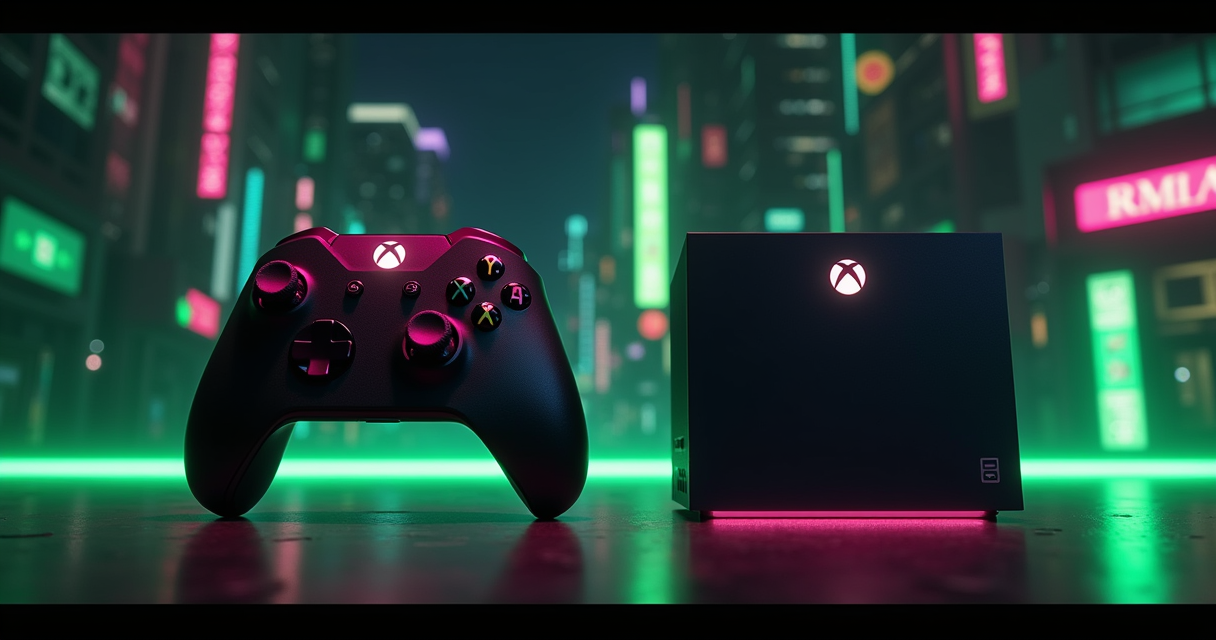
There was a time, not so long ago, when the choice between the Xbox Series X and the Xbox Series S was simple to explain to a stranger at a bus stop. One cost $499.99 and rendered games in native 4K. The other cost $299.99 and did not. Two hundred dollars separated ambition from thrift, and the entire marketing apparatus of two console generations was built on that clean, comprehensible gap. That world ended on August 1, 2026. The Series S 512GB now costs $499.99 — the exact launch price of the flagship it was designed to undercut — and the conversation has changed from cheap versus powerful to something far more uncomfortable: how small is the gap you are actually saving, and how much of your future are you mortgaging in RAM to save it?
This is a comparison written after the reset. We are going to put the two consoles side by side on silicon, on price, on the parity rules that bind them together whether Microsoft likes it or not, and on the six kinds of human who might reasonably buy one. We will not tell you the Series S is a scam, because it isn't. We will tell you that Microsoft has spent two years quietly dismantling the one argument the Series S had, and that in 2026 you should think very hard before you save the $250.
The 2026 Reset: When Value Cost $499.99
The console that was supposed to be cheap
The Series S arrived on November 10, 2020 at $299.99, alongside a $499.99 Series X. The pitch was elegant. Same CPU, same architecture, same generation of games, same Game Pass, same Quick Resume — just a smaller GPU, less memory, no disc drive, and a 1440p target instead of 4K. If you owned a 1080p television, a cheaper monitor, or simply did not care about counting pixels from ten feet away, the Series S was one of the best-value pieces of gaming hardware ever shipped. For years it was the cheapest legitimate on-ramp to a current-generation console, full stop.
Microsoft kept expanding the family. On October 15, 2024, three new SKUs landed: a 1TB Series S in Robot White at $349.99, an all-digital 1TB Series X (also Robot White) at $449.99, and a 2TB Galaxy Black Series X Special Edition at $599.99, as Xbox Wire announced that summer. The lineup had never offered more choices. It had also never been more expensive, and it was about to get worse.
What changed on August 1, 2026
On June 25, 2026, Microsoft announced a worldwide console price update effective August 1, 2026. The increase was $100 for 512GB models and $150 for 1TB models, and the company confirmed it would sunset the 2TB model entirely as part of the change. When the dust settled, as Variety reported, the Series S 512GB had jumped to $499.99, the Series S 1TB to $599.99, the Series X Digital to $749.99, and the disc-based Series X to $799.99. Microsoft's justification was blunt and, unusually for a press statement, checkable: console storage and memory prices had risen by more than 2.5x, and the company expected another doubling by the fall of 2027.
Our thesis in one line
Microsoft's own storefront still frames the Series X as the fastest, most powerful Xbox ever and the Series S as the best value in gaming. One of those slogans survived contact with the 2026 price sheet; the other did not. The Series S 512GB now matches the original 2020 launch price of the premium Series X, which means the value console costs what the flagship used to. That single fact reframes the entire comparison. You are no longer choosing between a budget box and a premium box. You are choosing between two expensive boxes separated by $250, and the cheaper one asks you to accept a memory ceiling that has been the single most-complained-about spec of the generation. Buy the gap, not the badge.
Series X vs Series S: The Full Spec Sheet
The silicon, side by side
Both consoles are the same animal underneath: a custom AMD system-on-chip pairing eight Zen 2 CPU cores with an RDNA 2 GPU, wrapped in Microsoft's Velocity Architecture for storage streaming. The differences are entirely in how much of each ingredient you get. Here is the honest, spec-by-spec breakdown, drawn from Microsoft's published specifications and corroborated by TechSpot's spec-by-spec comparison.
| Specification | Xbox Series X | Xbox Series S |
|---|---|---|
| Launch price | $499.99 (Nov 2020) | $299.99 (Nov 2020) |
| Price from Aug 1, 2026 | $799.99 disc / $749.99 digital | $499.99 (512GB) / $599.99 (1TB) |
| GPU architecture | Custom RDNA 2 | Custom RDNA 2 |
| GPU compute units | 52 CUs @ 1.825 GHz | 20 CUs @ 1.565 GHz |
| GPU throughput | 12.15 TFLOPS | 4.006 TFLOPS |
| CPU | 8x Zen 2 @ 3.8 GHz (3.66 GHz SMT) | 8x Zen 2 @ 3.6 GHz (3.4 GHz SMT) |
| Total memory | 16GB GDDR6 | 10GB GDDR6 |
| Memory bandwidth | 10GB @ 560 GB/s + 6GB @ 336 GB/s | 8GB @ 224 GB/s + 2GB @ 56 GB/s |
| Memory usable for games | ~13.5GB | ~8GB |
| Internal storage | 1TB custom NVMe SSD | 512GB custom NVMe SSD |
| SSD raw throughput | 2.4 GB/s (up to 4.8 GB/s compressed) | 2.4 GB/s (up to 4.8 GB/s compressed) |
| Optical drive | 4K UHD Blu-ray (disc SKU) | None (disc-free) |
| Target resolution | Native 4K (2160p) | 1440p, upscaled toward 4K |
| Frame-rate ceiling | Up to 120 fps | Up to 120 fps |
| Ray tracing | Hardware-accelerated DXR | Hardware-accelerated DXR (memory-limited) |
| HDMI / display features | HDMI 2.1, VRR, 4K@120, Auto HDR, Dolby Vision | HDMI 2.1, VRR, 4K@120, Auto HDR, Dolby Vision |
| Quick Resume / DirectStorage | Yes | Yes |
| Backward compatibility | OG Xbox, 360, One (with enhancements) | Same library (no 4K enhancements) |
| Storage expansion | Proprietary card (512GB/1TB/2TB) + USB for old-gen | Same card standard + USB for old-gen |
| Dimensions | 301 x 151 x 151 mm, ~4.45 kg | 275 x 151 x 63.5 mm, ~1.93 kg |
Reading the table: what actually matters
Three rows decide this comparison, and it is not the three you would expect. The GPU line is the headline everyone quotes, but the CPU line tells you the consoles are near-twins where it counts for simulation, physics, and AI. The memory line — 16GB versus 10GB, and more importantly ~13.5GB versus ~8GB usable — is the row that quietly governs texture quality, ray tracing, and draw distance across the entire library. And the optical-drive line is the row that decides whether you own your games as objects or only as licenses. Everything else is a rounding error by comparison.
Where the two consoles are identical
Do not let the gap distract you from the parity. Both machines ship with the full Velocity Architecture: the same custom NVMe SSD raw speed of 2.4 GB/s, the same DirectStorage decompression, and the same Quick Resume feature that suspends multiple games in memory and restores them in seconds. Both support up to 120 fps, both do variable refresh rate over HDMI 2.1, both do Auto HDR and Dolby Vision for gaming, and both play the entire four-generation backward-compatible library. Both run identical versions of the Xbox dashboard, Game Pass, and cloud saves. If you never open a settings menu or a resolution counter, the two consoles feel remarkably similar in the hand. The differences are real, but they live in the pixels and the megabytes, not the menus.
4 vs 12 Teraflops: What the Gap Buys
The teraflop gap, honestly counted
The Series X delivers 12.15 TFLOPS of GPU compute against the Series S's 4.006 TFLOPS. Do the arithmetic and that is a 3.03x advantage — call it three times the raw graphics throughput. You will sometimes see this rounded up to four times the power in loose comparisons that simply divide 12 by 4 and shrug at the decimals; round in whichever direction flatters your purchase, but the honest figure is 3x, not 4x. The compute-unit count (52 versus 20) and the clock speed (1.825 GHz versus 1.565 GHz) are both bigger on the X, and the two multiply together into that threefold gap. The CPU, by contrast, is nearly a wash: 3.8 GHz versus 3.6 GHz, a 200 MHz downclock on the Series S that Microsoft imposed for thermal headroom in the smaller chassis. Frame rate, which is largely CPU-bound in well-optimized engines, is therefore not where the Series S falls down. Resolution and effects are.
What it looks like in real games
In practice, the gap expresses itself in a predictable pattern. The Series X renders at or near native 4K, holds 60 and 120 fps modes more consistently, and keeps ray tracing switched on in demanding titles. The Series S targets 1440p, frequently reconstructs from a lower internal resolution using techniques like AMD FSR, drops or heavily simplifies ray tracing, and trims texture resolution and draw distance to fit its budget. When a game offers a 120 fps performance mode, the Series X reaches it at a higher resolution; the Series S reaches the same frame rate by sacrificing more pixels to get there. We are deliberately not quoting specific per-game FPS figures here, because those numbers drift with every patch and every reviewer's test scene — but the direction of the gap is uncontested across every technical outlet that measures it.
Three sources, one conclusion
The consensus is unusually tight. Tom's Hardware has documented how the Series S runs into VRAM-style limitations that mirror the struggles of 8GB PC graphics cards, forcing lower settings and disabled ray tracing on demanding ports. Digital Foundry, in its DF Direct Weekly podcast, reported that developers told them the console's limited memory was a bigger problem than its CPU or GPU power. And spec aggregators from TechSpot to Notebookcheck all land on the same silicon figures: 12.15 TFLOPS against 4.006, 16GB against 10GB. When the hardware press, the developers, and the spec sheets all agree, the argument is over. The Series X is meaningfully more powerful; the only open question is whether that power reaches your eyeballs given your television — a question that, as with the debate over whether the PS5 Pro's upscaling is worth its premium, depends heavily on how close you sit and how large the panel is.
The 10GB Problem Microsoft Won't Advertise
10GB, split two ways
Here is the spec that decides more Series S ports than the teraflop count ever will. The Series S carries 10GB of GDDR6, but it is not a uniform pool. Eight gigabytes run at 224 GB/s and two gigabytes run at a comparatively glacial 56 GB/s. The operating system reserves roughly 2GB, which leaves developers with about 8GB of usable, fast memory for the entire game — framebuffers, textures, geometry, audio, and simulation state combined. The Series X, by contrast, offers 16GB split into a 10GB fast pool at 560 GB/s and a 6GB pool at 336 GB/s, leaving developers roughly 13.5GB to work with. That is not a small difference. It is nearly 70 percent more usable memory, at more than double the bandwidth on the fast pool.
Why memory, not teraflops, is the ceiling
Memory is where modern console ports live or die because the biggest consumers of it — render targets and texture budgets — scale directly with resolution. A game that fits comfortably in 13.5GB at 4K on the Series X has to be re-budgeted, not just down-clocked, to fit in 8GB on the Series S. That is why the console tends to lose ray tracing first (RT structures are memory-hungry), then texture resolution, then draw distance. It is also why Microsoft eventually relented and, as Digital Trends reported, gave developers a software update that let them reclaim a few hundred additional megabytes from the OS reservation — a tacit admission that 8GB was tighter than the platform holder wanted to say out loud.
Microsoft's answer: 1440p is 44 percent of the pixels
Microsoft's own engineers framed the memory budget as a feature, not a compromise, and the logic is actually sound. Andrew Goossen, a Microsoft technical fellow, explained to Digital Foundry that the biggest consumers for memory are really the render targets and the texture budget and both of those shrink significantly with targeting the lower resolution — so 1440p is 44 per cent of the size of 2160p. In other words, the Series S was designed as a 1440p machine precisely because 1440p needs far less memory than 4K, and 10GB was sized to that target. The design is coherent. The problem is that six years of cross-generation games have relentlessly pushed the memory ceiling, and a console sized for 2020's 1440p games is a tighter fit for 2026's. The floor held; the games grew.
The Parity Clause and the Baldur's Gate War
The rule: no Series X-exclusives
The Series S is not merely a cheaper Xbox. It is a contractual obligation. Microsoft's certification policy requires that any game shipping on Series X must also ship on Series S with feature parity — the same content, the same modes, the same progression. There are no Series X-exclusive games, by design. This is the single most consequential fact about the Series S that never appears in a marketing bullet, because it cuts both ways: it guarantees the cheap console never gets left behind, and it means the entire Xbox library is perpetually budgeted around 8GB of usable RAM. Every developer targeting Xbox is, in effect, targeting the Series S floor.
Baldur's Gate 3 and the split-screen war
The most famous collision between that rule and physical reality was Baldur's Gate 3. Larian Studios could not initially get the game's split-screen co-op running within the Series S memory budget, and the parity clause meant that if the S couldn't do it, the X release was blocked too. The standoff was resolved only after Larian boss Swen Vincke met with Xbox leadership and negotiated a rare exception. As Vincke put it, all improvements will be there, with split-screen co-op on Series X. Series S will not feature split-screen co-op, but will also include cross-save progression between Steam and Xbox Series. The game shipped in 2023 with an asymmetric feature set, and — in a fitting coda — split-screen co-op finally arrived on the Series S over a year later in patch 8, restoring full parity, as Newsweek documented. The saga is the clearest proof that the parity clause is a real engineering constraint, not a slogan.
Spencer's bet: the S is an advantage now
Microsoft has doubled down rather than backed off. Phil Spencer has repeatedly confirmed the compatibility requirement is not going away, and he has reframed it as a strategic asset. I actually think we have a real advantage because we've been targeting S for quite a while, Spencer told an interviewer, that our games have been built and they're portable across many different specs. His argument, as covered by Video Games Chronicle, is that the rise of battery-powered handhelds has validated the low-power target: a game that already runs on the Series S floor is a game that ports cleanly to weaker hardware. Whether that is genuine foresight or a retroactive justification for a memory decision made in 2019, it aligns Xbox with the same broad-spectrum thinking that drives the Switch 2 versus Steam Deck debate and the wider handheld-PC arms race. The Series S floor and the handheld ceiling are converging, and Microsoft is betting its library sits comfortably in the overlap. It also means cross-generation tentpoles — the kind of years-long release schedule you see with Elden Ring's staggered DLC rollout — will keep landing on both boxes for the life of the generation.
Discs, Downloads, and Storage
The disc-free reality of the Series S
The Series S has never had a disc drive, and there is no add-on to bolt one on. Microsoft's product page states it plainly: the Series S is disc-free, targets 1440p with 4K upscaling, and ships with a 512GB custom SSD. That means every game you play is a download, every game you own is a license rather than an object, and you cannot buy, sell, lend, or borrow physical copies. For a household deep in Game Pass this is a non-issue; for a collector, a bargain-bin hunter, or anyone who values resale, it is disqualifying. The Series X disc model, by contrast, is described by Microsoft as the native 4K console with a UHD Blu-ray player and 1TB of storage — it plays physical games and doubles as a 4K Blu-ray movie player, which the all-digital models cannot.
4K Blu-ray, resale, and Game Pass math
The disc drive is worth more than nostalgia. It is a 4K UHD Blu-ray player, which as a standalone device would cost a meaningful fraction of the console. It is a resale channel: physical games hold trade-in value that digital licenses never will. And it is a hedge against the download-only future, letting you play preowned discs bought for a fraction of list price. Against all that sits Game Pass, which genuinely changes the calculus — if you subscribe, you rarely buy individual games at all, and the disc drive becomes dead weight. The honest framing is this: the disc drive costs $50 over the digital Series X ($799.99 versus $749.99), and whether that $50 is worth it depends entirely on whether you buy games as objects or rent a library by the month.
Storage: 512GB fills fast
The Series S ships with a 512GB SSD, of which only around 364GB is actually usable after the system reserve. In 2020 that was tight. In 2026, with live-service installs routinely exceeding 100GB and the largest modern titles pushing well past 150GB, it is a genuine constraint — you will be juggling installs from week one. The Series X's 1TB (roughly 802GB usable) buys breathing room but is not infinite either. Both consoles expand only through the same proprietary storage cards (512GB, 1TB, and 2TB), which run fast enough for current-gen games but carry a premium price per gigabyte; standard USB drives work only for storing and playing backward-compatible older titles, not current-gen games. Factor the cost of an expansion card into any Series S purchase, because you will want one sooner than the box suggests.
Pricing and Availability After August 1, 2026
The August 1, 2026 price sheet
Here is the full post-update pricing, confirmed across TechPowerUp, Windows Central, Pure Xbox, and VGChartz. All figures are US MSRP unless noted; the 2TB Galaxy Black model was discontinued as part of the same update.
| Model | Storage / media | Original price | Pre-Aug 2026 | From Aug 1, 2026 | Change |
|---|---|---|---|---|---|
| Series S 512GB | 512GB, disc-free | $299.99 (2020) | $399.99 | $499.99 | +$100 |
| Series S 1TB | 1TB, disc-free | $349.99 (2024) | $449.99 | $599.99 | +$150 |
| Series X Digital | 1TB, disc-free | $449.99 (2024) | $599.99 | $749.99 | +$150 |
| Series X | 1TB, UHD Blu-ray | $499.99 (2020) | $649.99 | $799.99 | +$150 |
| Series X 2TB Galaxy Black | 2TB, UHD Blu-ray | $599.99 (2024) | $599.99 | Discontinued | — |
Regional pricing rose in step. Pure Xbox's August 3, 2026 regional breakdown listed the UK Series S 512GB at £429.99, with the rest of the lineup climbing proportionally. Expect similar increases across the EU and other markets, since Microsoft framed the update as worldwide.
The value math nobody wants to do
Now the arithmetic that actually decides purchases. The Series S 512GB at $499.99 sits $250 below the Series X Digital at $749.99. For that $250 you forgo three times the GPU, 6GB of additional memory, and 512GB of storage. That is a real saving for a real cut in capability. But look one row up: the Series S 1TB at $599.99 is only $150 below the full-power Series X Digital at $749.99. For an extra $150 over the 1TB Series S, you get triple the GPU and 60 percent more usable RAM. The 1TB Series S is, bluntly, the weakest value in the entire stack — squeezed from below by its own 512GB sibling and from above by a full-power console that is barely more expensive. If you find yourself considering it, you have almost certainly talked yourself into the Series X without realizing it.
Availability and what got discontinued
The 2TB Galaxy Black Series X, the most expensive current-gen Xbox, is gone. The surviving lineup is four SKUs: two Series S (512GB and 1TB) and two Series X (digital and disc). Supply, notably, is not the problem it once was. Windows Central reported that US Xbox Series sales jumped 86 percent year-over-year in June 2026, the highest monthly units of the year, even as prices climbed — a reminder that the pricing story and the demand story are, for now, moving in opposite directions. This price war is not happening in a vacuum, either; it plays out against Sony's own lineup, and the $649 PS5 versus $799 Series X flip is now the defining cross-platform pricing question of the year.
Which Xbox for Which Buyer: Six Scenarios
Buyers who should get the Series S
The Series S still wins outright for two kinds of buyer. The first is the Game Pass-first player on a 1080p or entry-level 1440p television who measures value in games-per-dollar-per-month rather than pixels. If your library is a subscription and your panel is not 4K, the Series X's advantages largely evaporate before they reach your eyes, and $499.99 is the sane price of entry. The second is the second-console or kids-room buyer: a small, quiet, cool-running box for a bedroom, a dorm, or a den, where a compact 1.93kg console that plays the same games as the living-room flagship is exactly the right tool. In both cases the memory ceiling is a real limitation you are consciously trading away for money and size.
Buyers who should get the Series X
Three buyers should not hesitate on the X. The 4K home-theater owner with a large HDR panel is the obvious one — this is the only Xbox that renders native 4K and keeps ray tracing on, and on a big screen the difference is visible, not theoretical. The physical-media collector and resale-minded buyer needs the disc SKU specifically, for the UHD Blu-ray drive, the trade-in value, and the preowned bargains that digital licenses can never offer. And the digital-only power user who wants maximum capability without paying the $50 disc premium is precisely who the $749.99 Series X Digital exists for — full silicon, full memory, 1TB, no drive.
The it-depends middle
The sixth buyer is the storage-hungry live-service player — the household that lives in a handful of enormous games like GTA 6, Call of Duty, Fortnite, or Warzone and never uninstalls anything. For this buyer the deciding spec is capacity, and the answer is nuanced: the Series X's 1TB is the comfortable default, but even it will need an expansion card eventually. The Series S 1TB technically addresses the capacity need, but as established above, it is poor value against the full-power X Digital only $150 dearer. For the storage-anxious, the recommendation collapses back to the Series X — you were going to buy a storage card either way, so start from the console that also gives you the GPU and the RAM.
| Scenario | Best pick | Why |
|---|---|---|
| Game Pass-first, 1080p TV | Series S 512GB ($499.99) | 4K advantages don't reach a 1080p panel |
| Kids room / second console | Series S 512GB ($499.99) | Small, quiet, same library |
| 4K HDR home theater | Series X disc ($799.99) | Native 4K + ray tracing + 4K Blu-ray |
| Physical collector / resale | Series X disc ($799.99) | UHD drive, trade-in value, preowned |
| Digital-only power user | Series X Digital ($749.99) | Full power, no disc premium |
| Storage-hungry live-service | Series X (either) | Start from more RAM + 1TB base |
Pros and Cons, Tabulated
Series X: pros and cons
The flagship's case is straightforward, and so are its costs. It is the more expensive, larger, heavier box, but everything you pay for is capability you keep.
| Xbox Series X — Pros | Xbox Series X — Cons |
|---|---|
| 12.15 TFLOPS GPU, ~3x the Series S | $799.99 disc / $749.99 digital — the priciest surviving Xbox |
| 16GB RAM (~13.5GB usable) removes the port ceiling | Large 301mm chassis, ~4.45kg footprint |
| Native 4K with ray tracing intact | 1TB fills fast on 100GB+ installs |
| Disc SKU plays physical games + 4K UHD Blu-ray | Expansion cards are proprietary and pricey |
| Consistent 60/120 fps at higher resolutions | Digital SKU has no drive and no add-on option |
Series S: pros and cons
The value console's ledger has shifted. The pros are the same as ever; the headline con is new, and it is the price.
| Xbox Series S — Pros | Xbox Series S — Cons |
|---|---|
| Cheapest current-gen Xbox at $499.99 (512GB) | No longer cheap — matches the 2020 Series X launch price |
| Tiny, quiet, cool 1.93kg chassis | Only ~8GB usable RAM caps textures and ray tracing |
| Same CPU, Game Pass, Quick Resume, and full library | 512GB (~364GB usable) is genuinely tight in 2026 |
| Excellent on a 1080p or entry 1440p panel | Disc-free: no physical games, no resale, no 4K Blu-ray |
| Ideal second console or kids-room box | 1TB variant at $599.99 is the worst value in the lineup |
The honest summary
The Series X's cons are all about size, price, and the eternal storage squeeze — inconveniences, not compromises. The Series S's cons are about capability and, newly, about value: the console that used to win on price now wins only marginally, and only for buyers whose displays and libraries genuinely don't need the extra power. Neither console is bad. But the gap between them is now $250, and $250 buys a lot of headroom.
Migrating From Series S to Series X
Before you switch: what carries over
Upgrading from a Series S to a Series X is one of the smoothest console migrations in the business, because the entire Xbox ecosystem is account-bound rather than device-bound. Your digital game licenses, your Game Pass subscription, your cloud saves, your friends list, your achievements, and your settings all live on your Microsoft account, not the box. Sign in on the new console and most of it simply reappears. The only things physically tied to the old console are locally installed game files and any locally stored saves that haven't synced — and there are three clean ways to move those across.
Step-by-step: Series S to Series X
- On the old Series S, install every pending system and game update, then let cloud saves sync fully (Settings, System, Storage, and confirm saves are backed up).
- Sign in to the new Series X with the same Microsoft account so your licenses, Game Pass, and cloud saves associate automatically.
- Choose your transfer method: network transfer console-to-console over the same Wi-Fi or LAN, an external USB drive as a shuttle, or simply re-download everything from the cloud.
- For network transfer, put both consoles on the same network and use the built-in console-to-console transfer tool to copy installed games and apps directly.
- For a USB shuttle, copy games to an external drive on the Series S, then plug it into the Series X and move them onto the internal SSD — current-gen games must live on the internal SSD or a proprietary expansion card to run.
- Verify your saves loaded correctly in two or three games before you wipe or sell the old console.
A quick reference for the paths and the logic:
TRANSFER CHECKLIST (Series S -> Series X)
----------------------------------------
1. Old console: Settings > System > Updates (install all)
2. Old console: confirm cloud saves synced
3. New console: sign in (same Microsoft account)
   -> digital licenses + Game Pass + saves auto-restore
4. Move installed games via ONE of:
     a) Network transfer  (same LAN, console-to-console)
     b) USB drive shuttle (copy off S -> copy onto X SSD)
     c) Re-download        (slowest, needs no cables)
5. Current-gen games MUST sit on internal SSD or
   the proprietary expansion card (NOT plain USB).
6. Old-gen (360/One) titles CAN live on plain USB.
Going the other way, and the gotchas
Downgrading from a Series X to a Series S works identically in reverse, with two caveats worth stating plainly. First, any 4K or enhanced settings you enjoyed on the X are gone — the same game will render at the Series S's lower target, because the profile follows the hardware, not your preference. Second, storage will hurt: moving a mature library from a 1TB X to a 512GB S means you cannot fit it all, and you will be uninstalling and re-downloading constantly unless you buy an expansion card. The proprietary storage cards are cross-compatible between the two consoles, so a card bought for one works in the other — the one piece of good news in an otherwise lossy downgrade. In every other respect the account-bound model makes the move painless; it is only capability and capacity you leave behind.
The Verdict: Buy the Gap, Not the Badge
The recommendation
After the August 2026 reset, the decision matrix is simpler than the marketing wants it to be. The old logic — buy the S to save $200 — assumed a $200 saving that no longer exists at the top of the lineup. Here is the cheat sheet, stripped of sentiment:
DECISION MATRIX (2026 prices)
-----------------------------
1080p/1440p TV + Game Pass-first ....... Series S 512GB  ($499.99)
Kids room / small quiet 2nd console .... Series S 512GB  ($499.99)
4K HDR TV, want native 4K + RT ......... Series X disc   ($799.99)
Physical discs / resale / 4K Blu-ray ... Series X disc   ($799.99)
Digital-only, want full power + 1TB ..... Series X Digital($749.99)
Storage-hungry live-service player ...... Series X (either)
AVOID: Series S 1TB ($599.99) -> only $150 under full-power X Digital
The one console most people should buy
For the majority of buyers in 2026 — anyone with a 4K television, which is now most of them — the Xbox Series X Digital at $749.99 is the sanest purchase in the lineup. It delivers the full 12.15 TFLOPS, the full 16GB of memory, and the 1TB SSD, without the $50 disc-drive premium that only matters if you buy physical games. If you do buy discs, want a 4K Blu-ray player, or care about resale, spend the extra $50 on the disc-based Series X at $799.99 and never think about it again. Either way, you are buying the console with no ceiling, and given how tightly the parity clause binds the whole library to the Series S floor, buying the machine that comfortably clears that floor is the decision you are least likely to regret across a five-year ownership window.
The one to avoid
The Series S 512GB at $499.99 remains a legitimate, even excellent, buy for the specific buyer whose display and library don't demand more — the Game Pass subscriber on a 1080p panel, the second console, the kids room. Buy it with eyes open about the 8GB usable-memory ceiling and the 364GB of usable storage, and it will serve that role well. The console to actually avoid is the Series S 1TB at $599.99. It is the worst value in the stack: it sacrifices three times the GPU and 60 percent of the usable RAM to save a mere $150 against the full-power Series X Digital. Microsoft narrowed the price-and-value gap sharply this year, and nowhere is that narrowing more punishing than on that one SKU. When the flagship's cheapest full-power configuration is $150 away, the mid-tier compromise stops making sense. Buy the gap, not the badge — and in 2026, the gap is finally small enough that most people should just buy the X.
Questions the search bar asks me
- How much do the Xbox Series X and Series S cost after the August 1, 2026 price increase?
- As of August 1, 2026, the Series S 512GB is $499.99, the Series S 1TB is $599.99, the Series X Digital is $749.99, and the disc-based Series X is $799.99. Microsoft raised 512GB models by $100 and 1TB models by $150, and discontinued the 2TB Galaxy Black model, per Variety and TechPowerUp.
- What is the real performance difference between the Series X and Series S?
- The Series X's GPU delivers 12.15 TFLOPS against the Series S's 4.006 TFLOPS — a 3.03x gap, often loosely rounded to 4x. The CPUs are nearly identical (3.8 GHz vs 3.6 GHz), so the difference shows up in resolution and ray tracing, not frame rate: the X targets native 4K while the S targets 1440p and frequently drops ray tracing to fit its memory budget.
- Why is the Series S's 10GB of RAM considered its biggest weakness?
- The Series S has 10GB of RAM, but the OS reserves about 2GB, leaving only ~8GB for games versus ~13.5GB on the Series X. Digital Foundry reported developers found this memory limit a bigger problem than the CPU or GPU, since render targets and textures scale with resolution. Microsoft's Andrew Goossen noted 1440p uses only 44 percent of the memory that 2160p (4K) requires.
- Can the Series S play the same games as the Series X?
- Yes. Microsoft's parity clause requires every Series X game to also ship on the Series S with feature parity — there are no Series X-exclusives. The Series S versions run at lower resolutions and reduced settings, and in rare cases (like Baldur's Gate 3's split-screen co-op) features arrive later, but the library is identical.
- Which Xbox should most people buy in 2026?
- For anyone with a 4K TV, the $749.99 Series X Digital is the best value — full 12.15 TFLOPS and 16GB RAM without the $50 disc premium (pay it for the $799.99 disc model if you want physical games or 4K Blu-ray). The $499.99 Series S 512GB suits Game Pass-first players on 1080p panels; avoid the $599.99 Series S 1TB, which is only $150 under the full-power X Digital.

Jordan covers the modern industry where it touches the old one: Nintendo announcements, handheld hardware, and the long shadow the classics cast over new releases. Every post under this byline is reviewed pre-publish by Sam P., Editor & Operator — corrections to info@instalinkoteam.com. Published 2026-08-29 · Last updated 2026-08-29. Full bios on the author page.