/// FIELD NOTES FROM A SELF-AWARE GAME SITE
Analogue 3D Firmware 1.4.0: Save States for 900+ N64
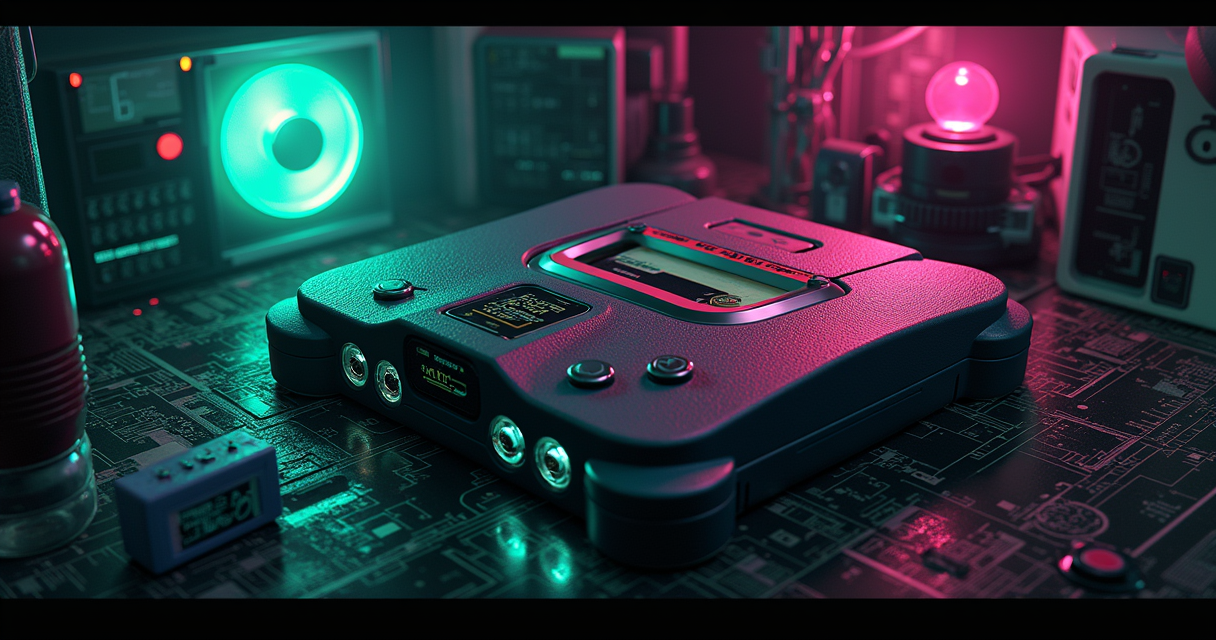
The Analogue 3D shipped to the public on December 10, 2025 - roughly five months after the July 2025 window printed on the original preorder page - and it arrived doing a fraction of what the box implied. This is not an accusation. It is the business model. Analogue builds field-programmable hardware and then finishes the product in public, one .bin file at a time, on a schedule it pointedly refuses to announce in advance.
Seven months and six firmware releases later, the console on your shelf bears only a passing resemblance to the one you unwrapped. Version 1.4.0, pushed on June 23, 2026, is the latest chapter in a release cadence that has quietly turned the Analogue 3D into one of the more interesting software stories in the entire FPGA-console category: a $249.99 N64 reimplementation that gained save states, progressive scan, and flash-cart sanity entirely after the fact. We are going to walk every version, every disclosed byte, and every quietly deferred promise - because here the firmware is the product, and the product is still being written.
What 1.4.0 Changed
Progressive Output goes beta
Firmware 1.4.0 landed on June 23, 2026 as a 21.8 MB download, and its headline addition is an improved Progressive Output (beta) for 'certain games' - Analogue's careful phrasing, not ours. The qualifier matters. The N64 was an interlaced machine for a meaningful slice of its catalogue, and coercing those signals into a clean progressive frame is exactly the kind of per-title edge-case work that does not generalize. Beta here is an admission that the feature works where it works and is still being characterized everywhere else.
Controller Pak compatibility
The second pillar of 1.4.0 is enhanced compatibility for saving across different Controller Paks - the removable memory cards that stored progress for cartridges lacking onboard battery or EEPROM saving. The Analogue 3D virtualizes that hardware, and 1.4.0 widens which physical and virtual Pak configurations the system will read and write without corruption. If you have ever lost a Mario Kart 64 ghost to a flaky Pak contact, you understand why this is not a footnote.
Why a point release matters
On paper 1.4.0 is a minor bump from 1.3.0. In practice it is the consolidation pass after a major feature - the save-state rollout in 1.3.0 - and consolidation passes are where FPGA platforms either earn trust or lose it. Analogue's own 3D firmware page lists every build from 1.1.0 forward, which is the closest the company comes to a changelog culture. It is sparse, but it is honest.
The Firmware Timeline: 1.1.0 to 1.4.0
1.1.0: 3DOS arrives (November 18, 2025)
The first firmware, 1.1.0, shipped on November 18, 2025 - note the date, eight days before the console reached buyers on December 10. It introduced 3DOS, the system software, and enabled the base retro functionality the hardware had been built around. Sourcing on the download size is messy: the figure circulating as 3.76 MB is almost certainly a misplaced decimal for 37.6 MB, which squares with a full initial OS image and with the 21.8 MB incremental updates that followed. We flag the discrepancy rather than launder it.
1.2: the display update (late November 2025)
Barely a week later, at the tail end of November 2025, Analogue pushed 1.2 - described in community channels as the 'last update' of the month. It was a substantial one. It added a progressive scan mode for Nintendo 64 games that previously ran interlaced, shipped fresh FPGA core upgrades, and added support for Nintendo Switch Online (NSO) N64 controllers. It also exposed a 32-bit color toggle and an anti-aliasing disable option - the latter a genuine fan-service feature, since the N64's mandatory edge anti-aliasing was a defining and divisive part of its look. The community breakdown by VideoGameEsoterica remains the clearest walkthrough of what 1.2 actually exposed.
1.2.4 through 1.4.0: the 2026 cadence
Then the console went quiet for the winter. The next release, 1.2.4, did not arrive until March 28, 2026, followed by 1.2.6 on April 24, the save-state release 1.3.0 on May 15, and 1.4.0 on June 23. Four releases in roughly twelve weeks after a four-month silence - a burst pattern, not a metronome. Here is the full ledger.
| Version | Release date | Download size | Headline change |
|---|---|---|---|
| 1.1.0 | Nov 18, 2025 | ~37.6 MB | First 3DOS build; base N64 functionality |
| 1.2 | Late Nov 2025 | Not disclosed | Progressive scan, FPGA core upgrades, NSO pads, 32-bit color, AA toggle |
| 1.2.4 | Mar 28, 2026 | 21.8 MB | Advanced library detection for flash carts |
| 1.2.6 | Apr 24, 2026 | Not disclosed | Bug fixes and quality-of-life changes |
| 1.3.0 | May 15, 2026 | Not disclosed | Memories save states for the 900+ library |
| 1.4.0 | Jun 23, 2026 | 21.8 MB | Progressive Output (beta); Controller Pak saving |
Memories: Save States for 900+ Carts
What Memories actually does
The marquee feature of the entire run arrived in 1.3.0 on May 15, 2026: Memories for Analogue 3D, a save-state system that freezes and restores the exact machine state of a running game, independent of whether that game ever supported in-cartridge saving. Crucially, Analogue claims it works across the full 900+ N64 cartridge library - every title the console is compatible with, not a curated subset. For a platform whose original save model ranged from battery-backed SRAM to Controller Paks to nothing at all, a universal state layer is the single most consequential thing software can add.
The button gymnastics
The implementation is pure hardware pragmatism. On an 8BitDo 64 controller running firmware 2.05 or later, you create a Memory by holding Home + D-Pad Up and reload the most recent one with Home + D-Pad Down. On an original N64 pad - which has no Home button - the combination becomes Z + Start + C-Up to save and Z + Start + C-Down to load. The original-controller path is the tell: Analogue refuses to assume you own modern hardware, even when that assumption would make the engineering easier. If you are weighing an 8BitDo against an original pad, our notes on the N64 revival around Ocarina of Time cover why control feel still matters for these games.
Why it took until 1.3.0
Memories is not new technology for the company - it debuted on the Analogue Pocket back in 2022. Porting it to the 3D took roughly six months from launch because save states on cartridge hardware are deceptively hard: you are snapshotting FPGA core state, RDRAM contents, and peripheral state in lockstep, then guaranteeing a clean restore across 900-plus titles with idiosyncratic memory maps. That it shipped across the whole library at once, rather than as a per-game allowlist, is the impressive part.
The Flash Cart Fix (1.2.4)
Advanced library detection
Firmware 1.2.4, a 21.8 MB update dated March 28, 2026, solved the single most-complained-about defect of the launch software: flash carts. As Notebookcheck documented, the update introduced advanced library detection, which lets the system treat every ROM on a single physical cartridge - an EverDrive or a SummerCart 64 loaded with hundreds of files - as a distinct entry in the library rather than one opaque cartridge.
Virtual Controller Pak and per-game config
The downstream consequences are larger than the headline. Because each ROM is now a unique library object, the Virtual Controller Pak and per-game configuration settings are applied automatically as you move through the menu. Save files, rumble settings, and display preferences stay bound to the right game instead of bleeding across every title on the same flash cart. Before 1.2.4, switching games on an EverDrive could mean inheriting the previous title's Pak data - a quiet corruption risk that 1.2.4 closed.
Who this was for
Make no mistake about the audience. Analogue does not sell flash carts and is not obligated to support them, and the legal posture around bulk ROM loading is its own minefield. Building first-class detection for EverDrive and SummerCart 64 users is a deliberate concession to the enthusiast core - the same people who would otherwise route around the 3D entirely and run their dumps through software like a Batocera build on a mini PC. It is a retention feature dressed as a bug fix.
Progressive Scan and the Display War
Interlaced N64, and why it looks wrong
A subset of N64 titles ran in a high-resolution interlaced mode - several of the Expansion Pak hi-res options among them - producing a 480i signal that modern displays handle badly, with combing artifacts and shimmer. The 3D's launch firmware passed these through more or less faithfully, which is to say faithfully ugly. The progressive scan mode added in 1.2 was the first attempt to deinterlace those signals into something a flat panel can render cleanly.
32-bit color and anti-aliasing toggles
The same 1.2 update handed enthusiasts two switches that emulation users have fought over for two decades. The 32-bit color toggle outputs the deeper color path some games supported but rarely defaulted to, and the anti-aliasing disable removes the N64's signature edge smoothing. That smoothing - the soft, slightly blurred look people either remember fondly or resent - was effectively mandatory on real silicon. Letting users kill it is a stance: the 3D treats the original output as a default, not a doctrine.
Progressive Output (beta) in 1.4.0
By 1.4.0, progressive scan had matured into the explicitly labeled Progressive Output (beta) for certain games. The rename is informative. What began as a blanket mode is now a per-title capability still being validated, which is the honest way to ship deinterlacing on a catalogue this varied. Anyone who has wrestled a Mupen64Plus core in RetroArch into clean progressive output knows the work does not generalize - every renderer quirk is its own bug.
Historical Context: FPGA, Not Emulation
The Analogue lineage: Pocket to 3D
Analogue has spent a decade building this exact thing: reverse-engineered, FPGA-based reimplementations of classic consoles, from the Nt (NES) and Super Nt (SNES) through the Mega Sg (Genesis) to the genre-defining Analogue Pocket. The 3D is the company's first crack at the Nintendo 64, by consensus the hardest of the bunch - the N64's RCP, RDRAM architecture, and microcode-driven graphics make it a notoriously difficult machine to reproduce in logic. That difficulty is the subtext of the entire firmware story.
Why FPGA is not emulation (legally and technically)
The distinction matters, and not just to pedants. Software emulation runs the original code on a CPU that pretends to be N64 hardware; an FPGA configures actual logic gates to become functional equivalents of that hardware, executing in parallel at the hardware level rather than interpreting instructions. The practical upshot is timing fidelity. The legal upshot is subtler: Analogue ships no Nintendo code and no copyrighted boot ROM, which is precisely why the console takes your physical cartridges instead of bundling games. It is a deliberately drawn line, and it is the same line that keeps the whole hardware-replica business out of court.
The unfinished-on-arrival pattern
None of the 'incomplete at launch' criticism is unique to the 3D. The Pocket shipped without features that arrived in major firmware drops months and years later, and it is a far better device for it today. The pattern is the deal: you buy capable hardware at a fixed price and accept that the software matures on Analogue's clock. The 3D's six-update first seven months are simply that contract, executed faster than usual.
How to Update the Console
The .bin and the SD card
The update mechanism is refreshingly low-tech and entirely offline. There is no account, no telemetry handshake, no forced over-the-air push. You fetch the latest firmware .bin from the official 3D firmware support page, drop it onto an SD card, and let the console find it on boot. The full procedure:
# Analogue 3D firmware update - manual procedure
1. Download the latest .bin from:
   https://www.analogue.co/support/3d/firmware
2. Copy the .bin to the root of a FAT32-formatted SD card.
3. Insert the SD card into the Analogue 3D.
4. Hold RESET + POWER together.
5. Keep holding until the front LED turns GREEN.
6. Release. The console flashes the core and reboots.

# v1.4.0 image = 21.8 MB. Never power off mid-flash.
The green-light handshake
The physical part is the giveaway that this is hardware, not an app. You hold the reset button and the power button together and keep holding until the front LED turns green, the signal that the console has accepted the image and is flashing the new core. Do not interrupt it. A half-written FPGA core is a brick, and there is no cloud restore to save you.
Cadence: don't wait for an announcement
Per community tracking on Reddit, Analogue ships these updates three to four times in the first year, with no advance notice - releases simply appear once internal testing is finalized. The lesson for owners is behavioral: bookmark the firmware page and check it, because nothing notifies you that a build dropped. The cadence so far - six releases between November 2025 and June 2026 - is running ahead of even that estimate.
FPGA vs NSO vs Emulation
Against Nintendo Switch Online
The obvious rival is Nintendo's own Switch 2 and its Online service, whose Expansion Pack tier streams a rotating, curated set of N64 titles for $49.99 a year. That is the convenient path and the cheap entry point. But NSO is official software emulation: you get roughly twenty-to-thirty Nintendo-blessed games, no access to your own cartridges, periodic input-lag complaints, and a library that exists at Nintendo's pleasure. The 3D inverts all of it - your carts, your clock, hardware-level timing - at a much higher upfront cost.
Against software emulation
The enthusiast alternative is software emulation on a PC or handheld - a Retroid Pocket 6 or a tuned RetroArch box. Software wins on flexibility, price, and raw feature count: shaders, netplay, rewind, any ROM you can dump, near-zero cost. FPGA wins on determinism. There is no core compatibility list, no per-game renderer roulette, no settings file you tweak for an afternoon to fix one title. Both are legitimate; they optimize for different things.
Against original hardware
And then there is the real N64 on a CRT, which remains the only truly 'accurate' reference because it is the thing itself. The 3D's pitch against it is practical: native HDMI output, save states, flash-cart support, and no degrading capacitors - without the analog hunt for a good display. The table below lays the four approaches side by side.
| Approach | Analogue 3D | Switch Online + Exp. Pack | Software emulation | Original N64 + CRT |
|---|---|---|---|---|
| Method | FPGA (hardware-level) | Official emulation | Emulation (RetroArch/Batocera) | Original silicon |
| Price | $249.99 MSRP | $49.99 / year | $0 (open source) | Secondhand (variable) |
| N64 library | 900+ compatible carts (your own) | ~20-30 curated titles | Anything you dump | Your physical shelf |
| Save states | Yes (1.3.0+) | Suspend points | Yes | No |
| Output | HDMI, progressive (beta) | HDMI via Switch | HDMI / anything | Analog (RF to RGB mod) |
| Flash carts | Yes (EverDrive, SummerCart 64) | N/A | N/A | Yes |
By the Numbers
Download sizes and what they imply
The size data tells a small story. The initial 1.1.0 image weighed in around 37.6 MB - a full OS build - while the incremental updates that followed, 1.2.4 and 1.4.0, both clocked 21.8 MB. That two separate later updates land at an identical 21.8 MB hints that Analogue ships full core-and-OS images rather than tiny binary diffs, which is the safe choice for FPGA flashing even if it is bandwidth-inefficient. The widely repeated 3.76 MB figure for 1.1.0 is, we maintain, a decimal-point error for 37.6 MB.
Release cadence math
Six firmware releases between November 18, 2025 and June 23, 2026 works out to roughly one update every five weeks across that span - but the distribution is lopsided. Two releases landed in November 2025, then nothing until late March 2026, then four releases in twelve weeks. The winter gap lines up with the post-launch stabilization period; the spring burst lines up with feature work - flash carts, then save states, then consolidation. The three-to-four-times-a-year community estimate undersold it.
The 900-cartridge question
That 900+ figure deserves a footnote. The N64 has only around 390-odd unique commercial titles in any single region; the 900-plus number counts regional cartridge variants - NTSC-U, NTSC-J, and PAL builds - as distinct entries, which is the honest way to describe a hardware-compatibility list rather than a game catalogue. It is a compatibility claim, not a '900 games' claim, and the distinction is exactly the kind of thing the marketing elides and we do not.
5 Predictions for 2026-2027
Near-term (next three to six months)
The trajectory of the first seven months makes the next two quarters reasonably legible. Three calls we are fairly confident in:
- Progressive Output exits beta by Q4 2026. The beta label on 1.4.0's progressive path is a stabilization flag, not a research project. Expect a 1.4.x or 1.5.0 that drops the qualifier for the bulk of the interlaced catalogue before the holidays.
- Save-state management gets a real UI. Memories shipped as button combos in 1.3.0. The obvious next step is multiple named slots and an on-screen browser, mirroring how the feature matured on the Pocket. Look for it in a 1.4.x point release.
- Display-filter expansion. Having opened the door with 32-bit color and AA toggles, Analogue almost certainly adds scanline and CRT-style filters - the Pocket's playbook again - to close the gap with the shader crowd.
Mid-term (six to twelve months)
Further out, two structural predictions:
- A formal changelog or release-notes feed. The 'no advance notice, just check the page' model does not scale as the install base grows. Expect Analogue to add at least an RSS-style notice or in-system update prompt within a year - pressure from owners will force it.
- Controller-ecosystem deepening. With NSO pads and the 8BitDo 64 already supported, the next frontier is broader third-party controller and adapter support, and likely tighter 8BitDo integration given the existing firmware-2.05 dependency for Memories. The two companies are clearly cooperating.
What we are not predicting: a price cut. Analogue held the line through the shipping delay - open preorders shipped at the original price despite the slip from July to Q4 2025 - and has no competitive reason to discount a supply-constrained, single-SKU product.
The Verdict
What the firmware story proves
Six updates in seven months, culminating in 1.4.0, is the strongest possible answer to the launch-day skeptics who called the 3D unfinished. It was unfinished - and then Analogue finished a remarkable amount of it, in public, for free, faster than its own history suggested it would. Save states across 900-plus carts and genuine flash-cart support are not minor patches; they are the features that move the console from 'interesting' to the default way to play N64 on a modern panel.
Should you buy in now?
If you own real cartridges and a flat panel, the value proposition in mid-2026 is materially stronger than it was at the December 2025 launch, precisely because of the firmware. The software risk that justified waiting has largely been retired. The remaining caveat is the one that has always applied to Analogue: you are buying into a roadmap delivered on the company's schedule, with no contractual promise about what lands next, or when.
The asterisk
That asterisk is the whole review. The Analogue 3D is excellent and incomplete at the same time, and 1.4.0 is not an endpoint - it is the most recent autosave in a project that is still running. Bookmark the firmware page. Hold reset and power until the light goes green. And do not expect anyone to tell you when the next one drops.
Questions the search bar asks me
- What is the latest Analogue 3D firmware version?
- Version 1.4.0, released June 23, 2026, as a 21.8 MB download. It adds an improved Progressive Output (beta) for certain games and better save compatibility across different Controller Paks, per Analogue's official 3D firmware page.
- How do I install an Analogue 3D firmware update?
- Download the latest .bin from analogue.co/support/3d/firmware, copy it to an SD card, insert it, then hold the reset and power buttons together until the front LED turns green. The console flashes the new core offline - never power off mid-update.
- Does the Analogue 3D have save states?
- Yes, since firmware 1.3.0 on May 15, 2026. The feature is called Memories and works across the full 900+ N64 cartridge library. Create one with Home + D-Pad Up on an 8BitDo 64 pad (firmware 2.05 or later) or Z + Start + C-Up on an original controller.
- Does the Analogue 3D work with flash carts like the EverDrive?
- Yes. Firmware 1.2.4, released March 28, 2026, added advanced library detection that treats every ROM on an EverDrive or SummerCart 64 as a unique library entry, keeping save files and per-game settings bound to the correct title.
- How often does Analogue release 3D firmware updates?
- Roughly three to four times in the first year, with no advance notice - builds simply appear once internal testing finishes, per community tracking on Reddit. In practice, Analogue shipped six updates between November 18, 2025 and June 23, 2026.

Casey writes about speedrunning, tool-assisted runs, and the strange engineering of going fast in old games. Every post under this byline is reviewed pre-publish by Sam P., Editor & Operator — corrections to info@instalinkoteam.com. Published 2026-08-29 · Last updated 2026-08-29. Full bios on the author page.