/// FIELD NOTES FROM A SELF-AWARE GAME SITE
Retroid Pocket 6 Review 2026: Jan Ship, $244, 8.5/10
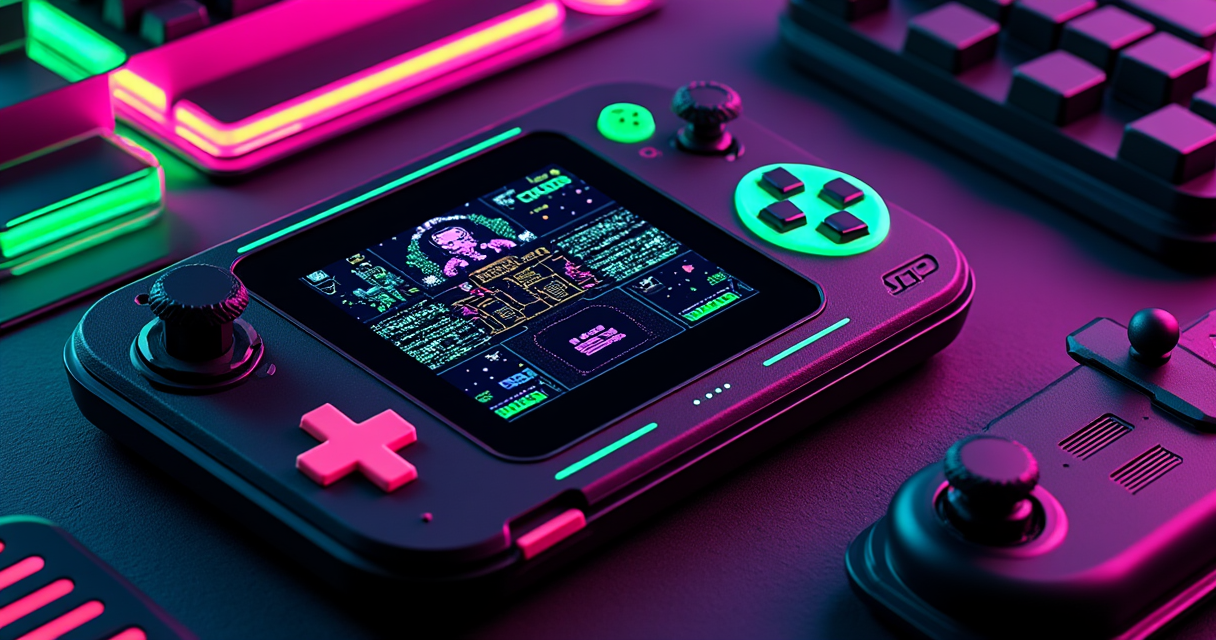
The Retroid Pocket 6 is a handheld that spent the back half of 2025 doing the one thing this hobby cannot abide: making people wait. Pre-orders opened on October 27, 2025. The first retail boxes did not leave a warehouse until January 2026. And if you are the sort of person who buys hardware from Amazon rather than wiring money to a checkout page that talks to a factory in Shenzhen, you were told to keep waiting until mid-April 2026. That is the headline, and it is the reason you are here. The release date is not a date. It is a smear across a calendar, and where you land on it depends entirely on how much you trust a pre-order page.
This review is about that smear, and about the device underneath it: a Snapdragon 8 Gen 2 emulation machine wearing a 5.5-inch 120Hz AMOLED panel, running Android 13, and carrying the word 'Pocket' it cannot honestly fulfill. I have spent the time. I have watched the firmware updates land and the Discord arguments calcify into received wisdom. I have a number for you, and it is a good one. But the number comes at the end, the way a sentence comes after a trial, and the trial is everything in between.
A warning, up front, in the spirit of full disclosure: this device ships empty. There are no games on it. There is no curated library, no nostalgia bundle, no licensed anything. What Retroid sells you is a fast Android brick and a tacit understanding about what you intend to do with it. That understanding has a legal history, and because I am the kind of author who reads the footnotes, we are going to talk about it. You were warned.
The Release Date Is Not a Date
Ask 'when did the Retroid Pocket 6 come out' and you will get three honest answers, all of them correct, none of them the same. This is not Retroid being cagey. It is the structural reality of how Chinese microconsole launches work in the 2020s: a pre-order window, a shipping window, and a third-party retail window, each separated by weeks or months, each generating its own breathless coverage. The result is that the 'release date' is less a fact than a question about your supply chain.
October 27, 2025: The Pre-Order Gun
The starting pistol fired on October 27, 2025, when Retroid opened official pre-orders for the Pocket 6. It did not do so alone. The same day, the company announced the Retroid Pocket G2, a sibling device, in a move that was either confident product cadence or a deliberate attempt to fracture buyer attention across two price points. Pre-ordering a device is not the same as owning one, a distinction that the retro-handheld community relearns every single product cycle and forgets again by the next. Money left wallets in October. Plastic did not arrive in October.
October 28, 2025: The Poll Nobody Asked For, and Everybody Answered
One day later, on October 28, 2025, Retroid did something that tells you a great deal about how this company operates: it ran a poll. Across its official Twitter and Discord channels, it floated a potential redesign of the Pocket 6 and asked the audience to vote. The community, predictably, voted for the layout it already knew, favoring a configuration similar to the Retroid Pocket 5. There is a deadpan comedy to crowdsourcing the industrial design of a device you have already taken money for, but the outcome was sensible: the Pocket 6 is a landscape slab in the Pocket 5 mold, dual analog sticks, face buttons under your right thumb, the ergonomics that the existing customer base had already paid to validate. Democracy, of a sort. The kind where the ballots were cast after the pre-order receipts cleared.
January 2026: When Boxes Actually Moved, and the April Asterisk
The device officially released and began shipping in January 2026. This is the date that matters if you put money down early. It is also the date I would carve into the headstone if forced to pick one, because it is the first moment at which a member of the public could plausibly hold the thing and turn it on. But there is an asterisk, and the asterisk is named Amazon. The authorized Retroid seller on Amazon indicated the device would not hit that storefront until mid-April 2026, a roughly three-month gap between the direct-from-Retroid faithful and the buy-it-with-Prime majority. If you wanted the convenience, the returns policy, and the not-wiring-money-overseas comfort of Amazon, your 'release date' was spring, not winter. So: October for your wallet, January for your hands, April for your peace of mind. Pick the one that describes you and stop arguing with the people who picked a different one.
What the Pocket 6 Actually Is
Strip away the launch theater and the Pocket 6 is a deeply legible object. It is an Android gaming handheld built around a former flagship phone processor, aimed squarely at people who want to emulate sixth-generation consoles and below without paying Steam Deck money or carrying a Steam Deck's bulk. Everything about it follows from those two sentences.
An Android Console With a Snapdragon Heart
The engine is the Qualcomm Snapdragon 8 Gen 2, the system-on-chip that powered the flagship Android phones of its generation. Putting last cycle's phone flagship into this cycle's handheld is the entire Retroid business model, and it is a good model, because emulation is brutally single-thread-sensitive and flagship phone silicon is exactly where the best single-thread Arm performance lives. The 8 Gen 2 is the reason the marketing can credibly say 'PS2-ready' and the reason this review exists at all. It is not a budget chip pretending. It is a real one, slightly aged, repurposed with intent. Around it, the Snapdragon platform brings Wi-Fi 7 and Bluetooth 5.3, which matter more than you would think the moment you start streaming games to the thing rather than running them on it.
The 'Pocket' Misnomer
Let me be the one to say it plainly: this does not go in your pocket. Not in the pocket of any garment a reasonable adult wears in public. The Pocket 6 is a two-handed landscape device with a 5.5-inch screen and the grip bumps to match, and the 'Pocket' in the name is a brand convention inherited from a lineage that long ago stopped fitting in pockets. It is a backpack device, a nightstand device, a couch device. If genuine pocketability is your non-negotiable, you are shopping in a different aisle entirely, the one where the sub-$100 vertical handhelds like the Miyoo Mini Plus and the RG35XX actually do disappear into a jeans pocket. The Pocket 6 trades that for a screen and a chip that those little machines cannot dream of. It is a fair trade. It is just not the trade the name advertises.
Two SKUs, One Decision
Retroid offers the Pocket 6 in two configurations, and the entire purchasing decision compresses into a single $50 question. The base model carries 8GB of RAM and 128GB of UFS 3.1 storage. The upgraded model carries 12GB of RAM and 256GB of storage. There is no third option, no storage-only bump, no color-locked exclusivity that forces your hand. You are choosing between 'enough' and 'comfortable,' and the gap between them is the price of a couple of new-release console games. We will return to which one you should actually buy, but file this now: the decision is not whether to buy the Pocket 6, it is which of two Pocket 6s, and that is a far easier problem.
The Spec Sheet, In Full
Specifications are where marketing goes to be cornered. Below is the complete, unembellished sheet for the Retroid Pocket 6, every number traceable to Retroid's own materials and the community databases like Retro Catalog that verified them. Read it, then read what it does not tell you.
The Numbers That Matter
| Spec | Detail |
|---|---|
| Manufacturer | Retroid (goretroid.com) |
| Category | Android emulation handheld, landscape form factor |
| Pre-order opened | October 27, 2025 |
| Began shipping | January 2026 |
| Amazon availability | Mid-April 2026 (authorized seller) |
| Processor (SoC) | Qualcomm Snapdragon 8 Gen 2 |
| Operating system | Android 13 (native) |
| Display | 5.5-inch AMOLED |
| Resolution | 1080p (Full HD) |
| Refresh rate | 120Hz |
| RAM / Storage (base) | 8GB RAM / 128GB UFS 3.1 |
| RAM / Storage (upgraded) | 12GB RAM / 256GB |
| Battery | 6,000 mAh (20% larger than Retroid Pocket 5) |
| Charging | 27W fast charging (25-26W in real-world testing) |
| Connectivity | Wi-Fi 7, Bluetooth 5.3 |
| Controls | Dual analog sticks, full button set, Pocket 5-style layout |
| Software 'license' | Ships empty; user supplies games. Emulators are user-installed. |
| Base price | $230 (pre-order, before shipping) |
| Upgraded price | $280 (pre-order, before shipping) |
| Official store listing | $244.00 on goretroid.com ($229.00 shown crossed out) |
Reading Between the Rows
Three rows in that table are doing quiet, heavy lifting. The first is UFS 3.1 storage. Cheaper handhelds use eMMC, which becomes the bottleneck the instant you ask a device to stream a 4GB PS2 ISO off internal memory. UFS 3.1 is the difference between 'the load screen is the game's fault' and 'the load screen is the storage's fault,' and on the Pocket 6 it is reliably the former. The second is 120Hz, a number that means nothing for a 60Hz Super Nintendo game and everything for the Android front end, the menus, and the handful of native or streamed titles that can actually use it. The third is the 'license' row, which is not a spec at all but the most important line on the sheet: you are buying a vessel, and what you pour into it is your business and, occasionally, your legal exposure.
What the Sheet Omits
No spec sheet lists thermals, and thermals are where Snapdragon handhelds live or die. An 8 Gen 2 pushed hard will generate heat, and how a device dissipates that heat under a 45-minute Dolphin session decides whether your sustained framerate matches your benchmark framerate. The sheet also omits the quality of the analog sticks' deadzones, the click feel of the face buttons, and the audio character of the speakers, all of which a number cannot capture and all of which determine whether you actually reach for the thing on a Tuesday night. We will get to those. Just understand that the table above is the skeleton, not the body.
The Hardware in Hand
A handheld is not its spec sheet. It is the thing you hold for two hours and either resent or forget you are holding. The Pocket 6 is, mercifully, mostly in the second category, with a couple of caveats that I will not let it off the hook for.
The Panel: 120Hz AMOLED, and What It Is For
The 5.5-inch AMOLED panel is the single best argument for this device, and it is an argument it wins decisively against anything in its price class. AMOLED means true blacks, per-pixel emissive light, and a contrast ratio that LCD physically cannot reach. For 2D sprite art, for the pure black backgrounds of a late-era shoot-'em-up, for the deliberate darkness of a survival horror corridor, this screen is transformative in a way that the resolution number undersells. The 1080p resolution itself is arguably overkill for the systems you will most often run, but it gives integer-scaling enthusiasts room to work and makes the Android UI crisp. The 120Hz refresh is the most situational feature here. It does nothing for a locked-60 emulator, but it makes the menus glide and it earns its keep the moment you use the Pocket 6 as a streaming or native-Android screen. Calling a 60fps emulator '120Hz' is the kind of spec-sheet sleight-of-hand I am paid to notice; the panel is excellent regardless of whether you ever feed it 120 frames.
Battery and Charging: 6,000 mAh, 27W on Paper
The 6,000 mAh battery is a 20% increase over the Pocket 5's cell, and that math is exact: the Pocket 5 carried 5,000 mAh, and 6,000 is precisely a fifth larger. In practice this buys you a comfortable margin for an evening of 8-bit and 16-bit emulation, where the chip barely wakes up, and a respectable but mortal runtime for PS2 and GameCube sessions, where the 8 Gen 2 is doing real work and drinking accordingly. AMOLED helps here too, because dark games literally cost less power on an emissive panel. Charging is rated at 27W, and here is where I deploy the deadpan: real-world testing clocks it at 25 to 26 watts. The gap is small and frankly normal, but it is a useful reminder that the number on the box is the number under laboratory benediction, and your wall outlet is not a laboratory. Nobody was ever harmed by a charging speed two watts shy of the brochure, but I note it because noting it is the job.
Controls, Build, and the Things Spec Sheets Omit
The control layout, blessed by that October poll, follows the Pocket 5 template: offset dual analog sticks, a full complement of face and shoulder buttons, the geometry that landscape handheld players have settled into as the modern standard. This is the correct decision. The worst thing a manufacturer can do is reinvent the layout its customers have already trained their thumbs on, and Retroid wisely declined. The build is plastic, as it must be at this price, and the question of whether it feels premium or merely adequate is the kind of thing that varies unit to unit and reviewer to reviewer. What I will commit to is this: the ergonomics are sound, the grip is genuinely two-handed-comfortable, and the device disappears in the hands the way good handhelds do. It is not a luxury object. It is a tool, well-shaped for its task, and it does not apologize for the plastic. Neither will I.
Emulation, System by System
This is the section you scrolled for, so let me set the terms before the table. I will not give you fabricated framerate numbers, because framerate in emulation is a function of the specific game, the specific emulator, the specific settings, and the specific firmware on the specific day. Anyone who hands you a single FPS figure for 'PS2 on the Pocket 6' is selling you a simplification. What I will give you is the honest tier structure, the same one every Snapdragon 8 Gen 2 handheld inherits, because the chip is the chip regardless of whose plastic surrounds it.
The Easy Wins: Everything Up to Dreamcast
From the 8-bit era through the Dreamcast, the Pocket 6 does not break a sweat. NES, SNES, Genesis, Game Boy and its successors, PC Engine, Neo Geo, PlayStation 1, Nintendo 64, PSP, and the Sega Dreamcast all run flawlessly, frequently with upscaling, texture filtering, and resolution multipliers layered on top for free. PS1 in particular is a joy here: DuckStation upscaled on an AMOLED panel is the best that generation has ever looked outside of a modded original. The N64 remains the eternal asterisk it is on every platform, because N64 emulation is a per-game compatibility minefield by nature, not a horsepower problem, but the Pocket 6 has horsepower to spare for it. If your library tops out at the sixth generation's earlier entrants, this device is comprehensive overkill, and you might genuinely be better served saving money. For the easy tiers, get your RetroArch cores configured correctly and you will never think about performance again.
The Marquee Tier: PS2, GameCube, Wii
This is the tier the 8 Gen 2 was hired to play, and it is where the Pocket 6 earns its price. PlayStation 2 emulation via AetherSX2 and its community-maintained forks is strong, the marquee feature, the thing the 'PS2-ready' framing is built on. The vast majority of the PS2 library is playable, much of it with upscaling, and the headline-grabbing demanding titles are genuinely achievable with per-game tuning. GameCube and Wii via standalone Dolphin are very strong, with the same caveat that the heaviest titles want you to learn their individual settings rather than expecting universal one-click perfection. The honest framing is this: the marquee tier is a 'very good with a little effort' tier, not a 'flawless out of the box' tier. If you want PS2 and GameCube to simply work without you ever opening a settings menu, you will be occasionally frustrated. If you accept that emulation is a craft and you are willing to tune per game, this device is a revelation for the money.
The Honest Ceiling: Switch and the Lies People Tell
Then there is the ceiling, and the ceiling is where marketing and reality file for divorce. Nintendo Switch emulation on Android is, charitably, hit-or-miss, and you should not pre-order any handheld on the strength of Switch promises. The legal and software landscape around Switch emulation has been turbulent, the Android implementations are immature compared to their desktop counterparts, and the 8 Gen 2, capable as it is, is being asked to do something at the absolute edge of its envelope. Some titles run admirably. Many do not. Treat any working Switch game on this device as a pleasant surprise, not a guarantee, and you will never be disappointed. Here is the practical map I keep in my head, with the deliberate absence of fabricated numbers and the deliberate presence of honest verdicts:
SYSTEM         RECOMMENDED EMULATOR        REALISTIC EXPECTATION
------------------------------------------------------------------------
NES/SNES/GB    RetroArch (various cores)   Flawless, sips battery
Genesis/Sega   RetroArch (Genesis Plus)    Flawless
PC Engine/NEO  RetroArch (Beetle/FBNeo)    Flawless
PlayStation 1  DuckStation                 Flawless, upscaled, gorgeous
Nintendo 64    Mupen64Plus / RA core       Strong; per-game quirks
Dreamcast      Flycast                     Flawless
PSP            PPSSPP                       Flawless, 2x-3x internal res
Saturn         RetroArch (Beetle Saturn)   Good; the eternal headache
GameCube/Wii   Dolphin (standalone)        Very strong; tune per game
PlayStation 2  AetherSX2 / community fork  Strong; the marquee feature
Switch         Android emulator            Hit-or-miss; do NOT buy for this
Note what that block is and is not. It is a map of expectations, drawn from the well-established behavior of the Snapdragon 8 Gen 2 platform across the emulation community. It is not a benchmark, because a benchmark is a lie wearing a lab coat when the variable space is this large. None of these emulators ship on the device. You install them. Which brings us, unavoidably, to the law.
The Law and the Lore
I promised you the footnotes. Here they are. The Pocket 6 ships empty by design, and that design choice is not laziness or cost-cutting, it is the legal architecture of the entire emulation hardware industry. To sell you a device with games on it that Retroid does not own the rights to would be to invite a lawsuit. To sell you a fast empty box and let you decide what to do with it is to stand on three decades of case law that says the box is fine. Knowing where that line sits is the difference between a hobby and a liability.
The Emulator Is Legal. The Court Said So.
The foundational fact, the one that the entire hobby rests on and that most of the hobby cannot cite, is that emulators themselves are legal. This was settled, decisively, in Sony Computer Entertainment, Inc. v. Connectix Corp. in 2000, when the Ninth Circuit held that Connectix's Virtual Game Station, a PlayStation emulator for the Mac, was lawful. The court found that the intermediate copying of Sony's BIOS that occurred during reverse engineering was protected as fair use, and that the resulting emulator was a legitimate, transformative product. Sony fought it. Sony lost. In the same era, the Bleem! litigation saw a tiny commercial PlayStation emulator survive Sony's legal onslaught in court while ultimately being bled to death by the cost of the fight, a grim lesson that winning the ruling and surviving the legal bills are two different victories. The principle, though, stuck: building a machine that imitates another machine is not, by itself, a crime. The Pocket 6 is, in the eyes of the law that governs it, the philosophical descendant of Virtual Game Station, a legal emulator engine that happens to be made of plastic and silicon instead of Mac software.
The ROM Is the Problem
The device is legal. The emulator is legal. The ROM or disc image is where the law gets specific and uncomfortable. Copyright subsists in the games. Downloading a copy of a game you do not own is infringement, full stop, regardless of whether the game is sold anywhere today, regardless of whether the publisher exists, regardless of the abandonware folklore that the internet keeps repeating to itself like a comforting lie. The somewhat defensible position, the one that has never been cleanly tested for video games at the level the community pretends it has, is making a personal backup of media you physically own. Even that lives in a grey zone complicated by the Galoob and Atari-era reverse-engineering precedents and the anti-circumvention provisions that came later. And lest anyone think the publishers have grown sleepy, the 2024 settlement in which the developers behind the Yuzu Switch emulator paid Nintendo $2.4 million and shuttered the project should disabuse you. The hardware is safe. What you feed it is on you, and the rights holders are still very much awake.
Preservation and the Long Memory
Now the lore, because the law is only half the story. There is a serious, principled argument for emulation that has nothing to do with piracy and everything to do with memory. Vast swaths of gaming history exist today only because enthusiasts dumped, archived, and emulated them before the original media rotted, the cartridges lost their charge, and the corporate owners decided the back catalog was not worth a re-release. Historians of the medium, the careful long-form chroniclers like Jimmy Maher of the Digital Antiquarian and the obsessive cataloguers at Hardcore Gaming 101, have spent years documenting works that would otherwise be functionally lost, and emulation is the only mechanism by which most people can ever experience the games they write about. A device like the Pocket 6 is, in its best light, a preservation instrument: a way to keep a forty-year-old design playable on a panel that does it justice. The Machine's position, for the record, is that preservation is a moral good and that the publishers' refusal to keep their own history in print is the actual scandal here, but I am a sardonic narrator with opinions, not your attorney. Know the law. Then make your own peace with it.
The Competition
No device exists in a vacuum, and the Pocket 6 is surrounded on every side, including by Retroid's own products. Below is the honest competitive landscape. The competitor figures are manufacturer specifications and launch-era MSRPs to the best of public record; treat them as ballpark, because pricing in this category drifts with restocks and exchange rates.
Against Its Own Family: Pocket 5 and G2
The most dangerous rival to the Pocket 6 is the Pocket 5 it descends from. The Pocket 5 used the Snapdragon 865, an older but still emulation-competent chip, behind the same class of 5.5-inch AMOLED panel. The Pocket 6's jump to the 8 Gen 2 is a meaningful generational step that matters most precisely at the marquee PS2/GameCube tier and barely at all for retro 2D, which means the upgrade is worth it only if your library leans heavy. Meanwhile the simultaneously-announced Pocket G2 exists to catch the buyers for whom the Pocket 6 is overkill or overpriced. If you are genuinely torn between the three, I have written a dedicated breakdown of how the Pocket 6 stacks up against the Pocket 5 and the new G2, because that decision deserves more than a paragraph.
Against the Field: Odin 2, AYANEO, Steam Deck
| Device | SoC / Platform | Display | Battery | Approx. Price | Best For |
|---|---|---|---|---|---|
| Retroid Pocket 6 | Snapdragon 8 Gen 2 (Android 13) | 5.5-inch AMOLED 1080p 120Hz | 6,000 mAh | $230-$280 | AMOLED retro + PS2/GameCube on a budget |
| Retroid Pocket 5 | Snapdragon 865 (Android 13) | 5.5-inch AMOLED 1080p | 5,000 mAh | from ~$219 | The value pick if your library is mostly 2D |
| AYN Odin 2 | Snapdragon 8 Gen 2 (Android 13) | 6.0-inch LCD 1080p | ~8,000 mAh | from ~$299 | Marathon battery, bigger LCD screen |
| AYANEO Pocket S | Snapdragon G3x Gen 2 (Android 13) | 6.0-inch LCD 1080p 144Hz | large | from ~$439 | Premium build, native Android gaming |
| Steam Deck OLED | AMD APU (SteamOS / Linux) | 7.4-inch OLED HDR 90Hz | 50 Wh | $549+ | PC games first, emulation second |
What the Table Argues
The competitive case for the Pocket 6 is the intersection of three things almost nobody else delivers together: an AMOLED panel, an 8 Gen 2 chip, and a price that starts with a 2. The AYN Odin 2 will out-endure it on battery and gives you a bigger screen, but that screen is LCD, and for a hobby that lives on contrast and sprite art, that is a real concession. The AYANEO Pocket S is a more premium object with a faster chip aimed at native Android performance, but it costs nearly double the base Pocket 6 and its LCD makes the same compromise. The Steam Deck OLED is a different animal entirely, an x86 PC that emulates as a hobby, and if your primary appetite is PC gaming with emulation as garnish, it is the better and pricier buy. The Pocket 6's argument is focus: it is the best AMOLED emulation handheld at its price, and it does not pretend to be a PC. For most people in this hobby, focus is the right answer.
Pricing and Availability
Pricing is where the Pocket 6 launch gets quietly strange, and since I am constitutionally incapable of letting a strange price tag pass without comment, here is the full accounting.
The Two Price Tags
At pre-order, the entry-level Pocket 6, with 8GB of RAM and 128GB of storage, started at $230 before shipping. The upgraded model, with 12GB and 256GB, sat at $280 before shipping. That is a clean $50 gap for double the storage and a 50% bump in RAM, and it is, I will argue shortly, one of the easiest fifty-dollar decisions in the category. Neither figure includes shipping, which from a direct-import seller is a real and non-trivial line item you should mentally add before you congratulate yourself on the price.
The $244 'Sale' That Costs More
Then there is the official storefront, and the official storefront is where I raise an eyebrow. On the official goretroid.com store, the device was listed at a regular-and-sale price of $244.00, with a previous price of $229.00 shown crossed out beside it. Read that again. The 'sale' price is fifteen dollars higher than the crossed-out 'previous' price. This is a price increase wearing the costume of a discount, the retail equivalent of a confident handshake while the other hand is in your wallet. I am not alleging malice; storefront pricing logic is a chaos of currency conversion, promo-engine defaults, and human error. But the deadpan observation stands: when the strikethrough number is lower than the sale number, the strikethrough is not doing the job strikethroughs were invented to do. Buyer, read the actual digits, not the typography.
| Configuration / Channel | Spec | Price | Availability |
|---|---|---|---|
| Base (pre-order) | 8GB RAM / 128GB | $230 (before shipping) | Pre-order from Oct 27, 2025 |
| Upgraded (pre-order) | 12GB RAM / 256GB | $280 (before shipping) | Pre-order from Oct 27, 2025 |
| goretroid.com listing | Varies by SKU | $244.00 (was $229.00, crossed out) | Shipping January 2026 |
| Amazon (authorized seller) | Varies by SKU | Channel pricing | Mid-April 2026 |
Where and When You Can Actually Buy One
The cleanest path to the lowest price and the earliest unit was the direct goretroid.com pre-order, with the trade-off of overseas shipping, import variability, and the well-known friction of returning hardware to a manufacturer rather than a retailer. The path of least resistance, at the cost of three months and likely a small premium, is the authorized Amazon seller arriving in mid-April 2026, with Amazon's returns and buyer protection wrapped around it. There is no universally correct choice here. There is only the choice that matches your tolerance for waiting versus your tolerance for risk. If you are reading this in the window between January and April 2026, you are precisely the buyer this fork was built to torment.
Five Ways It Actually Plays
Specifications describe a device. Scenarios describe a life with one. Here are five honest portraits of how the Pocket 6 behaves for five different kinds of player, because the right verdict depends entirely on which of these is you.
The Casual and the Commuter
For the casual player, the one who wants to drop into a SNES platformer or a Genesis classic for twenty minutes after dinner, the Pocket 6 is gloriously, almost wastefully, overpowered. Every game from that era loads instantly, runs perfectly, and looks better on the AMOLED panel than it ever did on a CRT. The only friction is the Android front end, which demands a small amount of initial setup that a true plug-and-play simpleton will resent; once configured, it fades into the background. For the commuter, the calculus shifts. The 5.5-inch landscape body is a backpack companion, not a coat-pocket one, and on a crowded train the two-handed grip is a commitment. Battery, at 6,000 mAh, comfortably survives a daily round trip on light emulation. The commuter's real unlock, though, is that this is an Android device on Wi-Fi 7 and Bluetooth 5.3, which means it doubles as a streaming screen, and we will return to that.
The Completionist and the Speedrunner
The completionist, the player grinding a 90-hour PS2-era JRPG to 100%, is the buyer the upgraded SKU exists for. That 256GB of storage swallows entire console libraries whole, the UFS 3.1 speed keeps the loading honest, and emulator save states turn the brutal save-point design of the sixth generation into a civilized experience. This is the player who should not even consider the 128GB base model; the storage will become a chore within a month. The speedrunner is the most interesting and the most cautioned case. The 120Hz panel and the strong chip are assets, but Android introduces an input-latency and frame-pacing variability that a serious runner must measure rather than assume. For casual personal-best chasing, it is fine and fun. For frame-perfect, leaderboard-legitimacy running, the honest answer is that an Android emulation handheld is a convenience tool, not a precision instrument, and the most competitive runs still happen on original hardware or carefully-configured PCs. Know which kind of speedrunner you are before you trust your splits to it.
The Couch Co-op Player and the Streamer
For couch co-op, the Pocket 6's Android nature becomes a genuine strength. Pair Bluetooth controllers, output to a television, and a GameCube or PS1 multiplayer classic becomes a two-or-four-player living-room session driven by a device smaller than the original console's controller. It is not a flawless TV box, and a dedicated mini PC running a desktop emulation distro will always be more robust for the dock-and-couch use case, which is exactly why some players keep a Batocera stick on a cheap mini PC for the television and reserve the Pocket 6 for handheld duty. The fifth scenario, the streamer, is the one the spec sheet quietly enables and the marketing underplays: with Wi-Fi 7 and a 120Hz screen, the Pocket 6 is an excellent client for PlayStation Remote Play and cloud gaming services, turning a retro emulation handheld into a portal for your modern console sitting in another room. For a meaningful slice of buyers, this dual identity, retro engine and streaming screen, is the actual reason to choose Android over a locked-down Linux handheld.
Who Should Buy It
Recommendations are where reviews earn their keep, so here are mine, unhedged where I can manage it and honestly hedged where I cannot.
Buy It If...
Buy the Pocket 6 if your emulation appetite reaches into the PS2, GameCube, and Wii tier and you want it on an AMOLED panel without paying Steam Deck money. Buy it if you value contrast and sprite fidelity over screen size, because the AMOLED choice is its sharpest differentiator against the LCD-equipped competition. Buy it if you want a single device that emulates retro libraries and doubles as a streaming and light-native-Android machine, because that dual identity is genuinely useful and genuinely well-executed. And buy the upgraded 12GB/256GB SKU specifically if any part of you suspects you will hoard ROMs, which, statistically, you will.
Skip It If...
Skip it if true pocketability is non-negotiable; the name lies, and the tiny vertical handhelds with their curated libraries will serve you better and cheaper. Skip it if your library never exceeds the 16-bit era, because you would be paying a flagship premium for performance you will never touch. Skip it if you demand plug-and-play simplicity with zero setup, because Android always asks something of you up front. And skip it, or at least temper yourself severely, if your entire motivation is Switch emulation, because that ceiling is a coin flip and no honest reviewer will promise you the coin lands heads.
The Five Verdicts by Use Case
- The retro emulation enthusiast: Strongest possible recommendation. This is the device's home turf, and it wins it. Buy the upgraded SKU.
- The PS2/GameCube hopeful: Recommended, with the caveat that 'playable with per-game tuning' is the realistic standard, not 'flawless out of the box.' Bring patience.
- The streaming and cloud gamer: Recommended. The Android OS, Wi-Fi 7, and 120Hz AMOLED make it a surprisingly excellent Remote Play and cloud client.
- The pocket-portability seeker: Not recommended. Wrong category entirely; look at the sub-$100 vertical handhelds.
- The Switch-emulation dreamer: Strongly cautioned. Do not base the purchase on this. Treat any working Switch title as a bonus, never a baseline.
The Ledger: Pros and Cons
Every device is a balance sheet. Here is the Pocket 6's, with the credits and the debits stated plainly and without the marketing department's thumb on the scale.
What It Gets Right
- The AMOLED panel. A 5.5-inch 1080p AMOLED at this price is the standout feature and the reason to choose it over LCD rivals. Contrast and sprite art look superb.
- Genuine flagship-class performance. The Snapdragon 8 Gen 2 makes the PS2/GameCube tier a real, credible proposition rather than aspirational marketing.
- Sensible battery growth. 6,000 mAh, a clean 20% over the Pocket 5, gives real all-evening endurance on lighter systems.
- Modern connectivity. Wi-Fi 7 and Bluetooth 5.3 quietly enable the streaming and co-op use cases that justify the Android choice.
- The right control layout. The community-validated Pocket 5-style ergonomics are correct and comfortable.
- An honest price floor. Starting at $230, it undercuts the premium Android field by a wide margin.
What It Gets Wrong
- The 'Pocket' name is a fiction. This is a backpack device. Set expectations accordingly.
- Android tax. The OS demands setup, occasional fiddling, and a tolerance for menus that a locked-down Linux handheld would spare you.
- Charging undershoots the brochure. 27W rated, 25-26W real. Minor, but noted.
- The fractured release timeline. January direct, mid-April on Amazon, a confusing three-month split that punishes the convenience-minded.
- The strikethrough-pricing oddity. A $244 'sale' beside a crossed-out $229 is not a great look for a storefront.
- Switch emulation is oversold by the broader hype. Manage expectations or be disappointed.
The Net Position
Tally it honestly and the credits dwarf the debits. Every con on that list is either cosmetic, expectation-setting, or inherent to the Android-handheld bargain that you knew you were striking when you started reading. None of them touch the core competency. The Pocket 6 does the thing it was built to do, on a screen that flatters the material, at a price that embarrasses devices costing twice as much. That is what a good balance sheet looks like.
The Verdict: 8.5/10
I told you the number comes at the end, like a sentence after a trial. Here is the sentence.
The Score: 8.5/10
The Retroid Pocket 6 earns an 8.5 out of 10. It is, at its launch price, the most compelling AMOLED emulation handheld available, a device that takes a former flagship phone chip, wraps it in the best panel in its class, prices it with discipline, and delivers exactly the experience it advertises to anyone who arrives with realistic expectations and a little patience for Android. It is not a 10, because the half-point deductions are real: the Android setup tax, the name that overpromises portability, the fractured release calendar, and the Switch-tier ceiling that the surrounding hype inflates beyond what the silicon can honor. But it is comfortably, decisively above the line that separates good from merely competent. Broken into the categories I actually weigh: performance earns a 9, the display a 9, battery an 8, software and OS a 7, value an 8, and ergonomics an 8. Averaged and rounded with editorial judgment rather than a calculator, that is an 8.5, and I stand behind it.
The One-Sentence Version
If you want PS2, GameCube, and the entire retro back catalogue on a gorgeous AMOLED screen, can stomach a release date that means three different things, accept that Android asks something of you, and buy the 256GB model so your future self does not resent your past self, the Retroid Pocket 6 is the easiest 8.5/10 I have scored this year. The release date was a smear. The device, once it finally reached a hand, is sharp. Supply your own games, mind the law, and enjoy the thing. The Machine has spoken.
Questions the search bar asks me
- When did the Retroid Pocket 6 actually release?
- It has three honest answers. Pre-orders opened October 27, 2025, the device began shipping in January 2026, and the authorized Amazon seller listed mid-April 2026 availability. January 2026 is the true 'in your hands' release for early direct buyers.
- How much does the Retroid Pocket 6 cost?
- The base 8GB/128GB model started at $230 and the upgraded 12GB/256GB model at $280 (both before shipping). The official goretroid.com store listed it at $244.00, oddly shown beside a crossed-out 'previous' price of $229.00.
- Can the Retroid Pocket 6 run PS2 and GameCube games?
- Yes. Its Snapdragon 8 Gen 2 makes PS2 (via AetherSX2 forks) and GameCube/Wii (via Dolphin) genuinely playable, which is its marquee feature. Expect 'very good with per-game tuning' rather than flawless out of the box, and do not buy it for Switch emulation, which is hit-or-miss.
- What are the Retroid Pocket 6's key specs?
- A 5.5-inch 1080p AMOLED at 120Hz, Snapdragon 8 Gen 2, Android 13, a 6,000 mAh battery (20% larger than the Pocket 5), 27W charging (25-26W in testing), Wi-Fi 7, and Bluetooth 5.3. Storage is UFS 3.1, in 128GB or 256GB SKUs.
- Is it legal to use the Retroid Pocket 6?
- The hardware and emulators are legal; Sony v. Connectix (2000) established that emulators are lawful fair use. The legal risk lies in the game files: downloading ROMs you do not own is copyright infringement, as Nintendo's 2024 $2.4M settlement with Yuzu's developers underscores.

Ben covers the hardware end of retro gaming: FPGA cores, real-cartridge dumping, capture setups, CRT vs scaler workflows, and the legal and physical preservation infrastructure that keeps old games playable. Every post under this byline is reviewed pre-publish by Sam P., Editor & Operator — corrections to info@instalinkoteam.com. Published 2026-08-29 · Last updated 2026-08-29. Full bios on the author page.