/// FIELD NOTES FROM A SELF-AWARE GAME SITE
Best Gaming Chair 2026: Secretlab TITAN Evo (8/10)
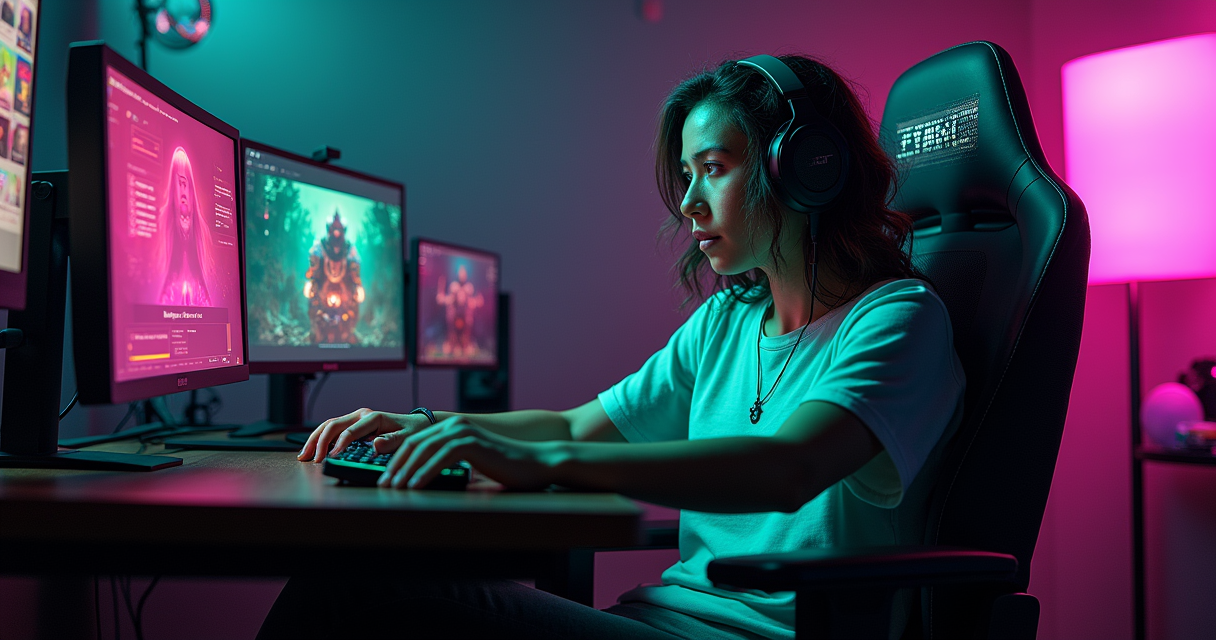
We review objects with cartridge slots. Consoles that boot to a BIOS chime, handhelds that run Chrono Trigger off a microSD, flash carts that dump SNES saves over USB. A chair has none of these things. It does not ship with a firmware version. It cannot be soft-modded. And yet it is the one piece of hardware in your setup that you are in continuous, load-bearing physical contact with for the entire six-hour session — which is more than you can say for the controller you set down every time a cutscene starts.
So: the best gaming chair of 2026. We went in expecting to hate the whole category, because the category has earned it. “Gaming chair” is, nine times out of ten, a phrase that means “task chair with a racing-livery paint job and a lumbar pillow held on by a rubber band.” The ergonomists agree, loudly, and we will let them say it in their own words before the end. But one chair earns the money, mostly. Two, if your lower back has filed a formal complaint. And a fistful of others are worth knowing about before you wire $650 to a company for foam and steel.
This is a long one. We are going to rank six chairs, debunk a unit of measurement that does not physically exist, publish the real MSRPs — which are not the numbers the affiliate rankings quote — and then argue, as we always do, that the best chair for gaming might not be a gaming chair at all. Stay for the heresy at the bottom.
The Verdict: TITAN Evo, 8/10
We front-load the ruling because you have a spine to protect and a wishlist to close. Here it is, undiluted.
The one-line ruling
The Secretlab TITAN Evo is the best gaming chair you can buy in 2026. Base MSRP is $429 / $449 / $499 for Small, Regular, and Extra Large respectively — not the $550–$650 the Spanish-market rankings keep quoting, which is a number for the leather special editions, not the chair. It wins not because of “6D” anything, but because it is the rare gaming chair that behaves like a finished industrial product: full-metal 4D armrests, an integrated four-way lumbar system that is bolted into the backrest instead of strapped onto it, three genuinely different sizes so you can match the chair to your actual body, and a five-year warranty that Secretlab has, to their credit, honored. Our rating: 8 out of 10.
What 8/10 actually means here
Eight is the ceiling of the category, not the ceiling of seating. Inside the walled garden of chairs with RGB-adjacent branding and a driver-seat silhouette, nothing else is this complete. Put it next to a properly specified ergonomic office chair — a Steelcase Leap, a Herman Miller Aeron — and it loses on pure posture science, which is a fight we will pick later. We docked it two points for three specific sins: a seat base that ships firm enough that a chunk of buyers never make peace with it, an upholstery ladder that quietly climbs toward $700 once you start clicking the nicer materials, and the original bucket-seat compromise that no amount of engineering fully escapes. Eight out of ten is high praise and an asterisk at the same time. That is on brand for us.
Who should stop reading right now
If you already own a good ergonomic office chair, keep it; buying a gaming chair is a lateral move dressed up as an upgrade, and you will feel the downgrade in your lumbar within a week. If your budget is under $150, do not buy a new gaming chair — buy a used, refurbished task chair from a real furniture maker and spend the difference on the RTX 5090 you have been eyeing. Everyone else — the completionists, the marathoners, the people whose battlestation cost more than their car — keep reading. This is for you.
The 6D-Lumbar Arms Race
Before we can rank anything, we have to defuse the single most cited spec in the whole category, because two of the best chairs on the market are marketed with a number that describes physics that are not happening.
Dimensions that do not exist
Razer sells the Iskur V2 on the strength of a “6D adaptive lumbar support system.” This is a real Razer term, introduced at CES 2024, not something an aggregator invented. Secretlab, for its part, markets “4-way L-ADAPT.” Both describe a pad behind your lower back that can be adjusted along, at most, two real mechanical axes: up and down (height), and in and out (depth). That is it. That is the entire physical vocabulary of a lumbar support. A rigid body in space has exactly six degrees of freedom — three of translation, three of rotation — and I promise you that nobody, at any price, is rotating your lumbar pad around its yaw axis while you grind Paldea for shinies. “6D” and “4-way” are the same two-axis idea run through two different marketing calculators. One counts each direction of travel; the other adds a tension spring and a swivel and rounds up. It is dimensional inflation, and once you see it you cannot unsee it.
What the TITAN Evo actually does
Secretlab’s four-way L-ADAPT is an internal, adjustable arch built into the backrest shell. You set its height with a lever and its protrusion depth with a dial, and it stays where you put it. Crucially, it is integrated — there is no memory-foam cushion dangling off an elastic strap to slide out of position every time you shift. The head pillow is a separate magnetic memory-foam piece that clamps on with satisfying authority (Secretlab calls the swappable-top system CloudSwap), and the armrests are full-metal 4D units, not the “3D magnetic gel” that some spec sheets hallucinate. Four-way is honest engineering wearing a slightly puffed-up name. As PC Gamer’s Jacob Ridley put it in his review, it is “a wonderfully comfortable chair for long periods of working or gaming,” with new features that “put it a cut above the rest.” Note what he did not say: he did not say six-D.
What Razer actually does — and where it wins
The Iskur V2’s 6D system is a spring-loaded, auto-adaptive tensioner that pushes back against your spine and then lets you fine-tune the protrusion and height on top of that. The name is nonsense; the hardware is not. This is, genuinely, the most aggressive and supportive lumbar in the mainstream gaming-chair market. GamesRadar’s Benjamin Abbott called it “far superior to anything else I’ve ever sat in,” and he is not wrong. Reviewed’s Mark Brezinski put it more colorfully: the original Iskur was already known for amazing lumbar, and the V2 “cranks those dials up to 11.” If your lumbar spine has a documented opinion — a bulge, a strain, a physiotherapist on speed-dial — the Razer’s harder, more insistent support may matter more to you than every other line on the spec sheet. It costs $649 to find out. Hold that number; we will come back to whether it is worth $200 more than the chair that beat it.
The Spec Sheet
Here is the finalist head-to-head, spec for spec. We put the Iskur V2 in the second column because it is the only chair that made us hesitate before crowning the TITAN Evo. Everything here is drawn from the manufacturers’ own technical documentation, cross-checked against reviews — not from the ranking blogs.
| Spec | Secretlab TITAN Evo | Razer Iskur V2 |
|---|---|---|
| Maker | Secretlab | Razer |
| Current release | 2022 Series (still current in 2026) | Launched CES 2024 |
| Sizes | Small / Regular / Extra Large | One size (V2 X sold separately) |
| Upholstery | NEO Hybrid Leatherette, SoftWeave Plus fabric, NanoGen leather | Leatherette or fabric (same price) |
| Lumbar | 4-way L-ADAPT, integrated (height + depth) | “6D” adaptive (spring auto-tension + manual height + depth) |
| Armrests | Full-metal 4D, magnetic CloudSwap tops | 4D |
| Headrest | Magnetic memory-foam pillow (removable) | Integrated head cushion |
| Frame / base | Steel frame, aluminium base | Steel frame, aluminium base |
| Gas lift | Class 4 | Class 4 |
| Recline / tilt | Multi-tilt, locks anywhere, near-flat recline | ~152° (spec sheet lists 153.5° ± 2°) |
| Casters | PU-coated, smooth-roll | PU-coated, smooth-roll |
| Height rating | S: <170 cm / R: 170–189 cm / XL: 181–205 cm | ~170–200 cm (one size) |
| Weight rating | S & R: up to 130 kg (285 lb) / XL: up to 180 kg (395 lb) | up to ~136 kg (300 lb) |
| Warranty | Up to 5 years | 3-year limited |
| Base MSRP (USD) | $429 / $449 / $499 (S/R/XL) | $649 |
Materials and build
The TITAN Evo comes in three upholstery families: NEO Hybrid Leatherette (the default, hard-wearing, warm in summer), SoftWeave Plus fabric (breathable, our pick for anyone in a climate), and the premium NanoGen leather editions that push the price into four figures if you let them. It is not upholstered in neoprene, contrary to a persistent bit of internet lore — that claim conflates “NEO” the leatherette with the wetsuit material, and it has been repeated so often that people now cite phantom outlets for it. The frame is steel, the base is aluminium, and the whole thing rides on a Class 4 gas spring — the highest of the four SGS-graded pneumatic classes, which is the one spec in this whole category where a bigger number genuinely means a stronger, safer lift.
Adjustability and sizing
The 4D armrests move up, in, forward, and pivot, and the magnetic tops pop off so you can swap or replace them. The recline is a multi-tilt system that locks anywhere from upright to near-flat, which matters more than it sounds — a chair that only offers a couple of detents is a chair you will fight. The single most important number on the entire sheet, though, is the sizing. Secretlab publishes real anthropometric ranges per size, and they are load-bearing advice, not decoration. The Small tops out under 170 cm and 90 kg; the Regular covers 170–189 cm; the XL stretches to 205 cm and a genuinely stout 180 kg / 395 lb rating.
The numbers that matter versus the numbers that don’t
Ignore the “6D” count, ignore the color, ignore the esports-team livery. The specs that predict whether you will still love this chair in 2029 are, in order: correct size for your body, Class 4 gas lift, integrated (not strapped-on) lumbar, and warranty length. The TITAN Evo aces all four. Everything else is upholstery you are welcome to have opinions about.
The Field: Six Chairs Ranked
We narrowed the market to six chairs worth your attention, ranked. The origin of the wider 2026 shortlist is a Spanish affiliate roundup at Gallardo Reviews, which is fine as a starting point but quotes euro prices converted to dollars and, in at least one case, undersells a chair’s real MSRP by more than half. We re-verified every figure below against the makers’ own pages and independent reviews. Here is the field.
| # | Chair | Tier | Lumbar | Armrests | MSRP (USD) | The Machine’s take |
|---|---|---|---|---|---|---|
| 1 | Secretlab TITAN Evo | Premium | 4-way L-ADAPT (integrated) | 4D metal + CloudSwap | $429–$499 | The pick. Best all-rounder, best warranty, three real sizes. |
| 2 | Razer Iskur V2 | Premium | “6D” adaptive | 4D | $649 | Best lumbar in the category. Worst value in the top tier. |
| 3 | AndaSeat Kaiser 3 | Premium | Magnetic pillow + adjustable | 4D magnetic | $499 (streets ~$399) | The big-and-tall champion. Enormous, plush, heavy. |
| 4 | Corsair TC500 Luxe | Premium | External / fabric | 5-way Omniflex | $499.99 | The coolest-running fabric chair here. Breathes. |
| 5 | Blacklyte Athena Pro | Premium | Built-in 4-way | 4D | ~$599 | A competent TITAN Evo tribute act at a TITAN Evo price. |
| 6 | Corsair TC100 Relaxed | Budget | External pillow | Fixed / 2D | $249.99 | The honest cheap one. Emphatically NOT “under $100.” |
The premium tier ($450–$650)
This is where the TITAN Evo, the Iskur V2, the AndaSeat Kaiser 3, the Corsair TC500 Luxe, and the Blacklyte Athena Pro live. The Kaiser 3 is the one to know if you are north of 6’2” or built like an offensive lineman — it is a genuinely huge chair with excellent 4D magnetic armrests, and it frequently streets around $399 despite a $499 list. The TC500 Luxe ($499.99) is the pick if you run hot; its breathable fabric and Omniflex arms make it the summer chair. The Athena Pro is a good chair that costs almost exactly what the better-supported TITAN Evo costs, which is a hard sell — Tom’s Hardware reviewed it favorably, but “favorably, at the price of the class leader” is not a winning pitch.
The pattern across the whole premium tier is that everyone is chasing the TITAN Evo and nobody is undercutting it while beating it. The Iskur V2 beats it on lumbar and loses on price and sizing. The Kaiser 3 beats it on sheer scale and loses on refinement. The TC500 Luxe beats it on airflow and loses on adjustable lumbar depth. The Athena Pro matches it and charges more. When one product forces every rival into a “better at exactly one thing, worse or equal everywhere else” posture, that product is the default, and the burden of proof is on the alternative.
The mid tier ($250–$450)
Below the flagships you find the Corsair TC100 Relaxed at a real $249.99 MSRP (roughly $150–$180 on sale), the Cougar Armor Elite floating around $150–$200 with plain 2D arms and a 160° recline, and Spain’s Valk Freya, whose Elite trim lists around €399. These are competent chairs. None of them will change your life, and all of them are honest about it — which is more than the sub-$100 fantasies can say. Of the Iskur family, note that Razer also sells a cheaper Iskur V2 X with built-in (non-adjustable) lumbar and 2D arms; it is the budget doorway to the brand, and it is a real downgrade, not a discount on the same chair.
The budget floor (under $150)
The DRIFT DR35 (~$80), the IntimaTe WM Heart line from the IWMH brand (~$80–$150), and Songmics’ racing chairs (~$80–$160) are all real products you can buy today. They are also, to borrow the ergonomists’ phrasing, task chairs in racing cosplay. If $90 is the budget, buy one and adjust your expectations to match; just do not expect the lumbar to survive a 60-hour Persona playthrough. As Reviewed’s Mark Brezinski noted when contrasting the tiers, if you have “been searching for a chair with good lumbar support,” the honest answer starts higher up this table, not down here.
Six Months in the Chair
Specs are a hypothesis. The chair is the experiment. We ran a TITAN Evo (Regular, SoftWeave Plus fabric) as a daily driver for half a year — work days, long emulation nights, a full replay of a 60-hour JRPG, and one genuinely stupid 14-hour co-op session that we do not recommend to anyone with a functioning circulatory system. Here is how the relationship aged.
Week one: the break-in that mostly isn’t
Assembly takes about twenty minutes and every tool is in the box. The instructions are good; the backrest is heavy enough that you will want a second person or a wall for the last bolt. Out of the carton, the seat base is firm — Secretlab uses a dense cold-cure foam that does not have the sink-in plushness of the cheaper chairs, and this is the single most divisive thing about the whole product. For the first three days your body reads “firm” as “wrong.” By day four it reads as “supportive.” If you are still hating it at day ten, you bought the wrong size or you genuinely prefer a soft seat, and you should return it inside the trial window rather than white-knuckle it. Firm is a feature until it isn’t, and only you can call which one you are.
Month two: dialing it in, or, the knobs you never turned
Here is the dirty secret of the entire category: most people never adjust their chair past the height lever, then blame the chair for their back. The TITAN Evo has an armrest height you must set to your desk, an armrest depth and angle you must set to whether you are on keyboard-and-mouse or a controller in your lap, a lumbar height and depth you must dial to the small of your back, and a tilt-tension knob you must match to your weight. Spend fifteen minutes with all of them in month one and the chair transforms. Skip that and you own an expensive stool. By month two we had a keyboard-and-mouse preset in muscle memory — arms high and in, lumbar mid-depth, tilt locked slightly back — and a slouchier controller-and-cutscene mode with the arms dropped and the recline released. The chair rewards fiddling. It punishes laziness. If there is one instruction in this entire review to actually follow, it is this one: adjust every axis on day one, deliberately, with the chair pulled up to your real desk. The chair you never adjusted is not the chair we reviewed.
Month six: wear, warranty, and the long tail
At six months the SoftWeave fabric showed effectively no pilling and no sag; the leatherette versions we have handled elsewhere wear faster at the seat edge, which is the usual trade for that material. The gas lift held its height without the slow midnight sink that plagues cheap chairs. The casters, like every hard caster, chew at soft hardwood — put a mat down or expect marks. The five-year warranty is the real long-tail asset: Secretlab has a documented history of shipping replacement parts, and because the chair is modular, a worn armrest top or a failed piston is a part swap, not a landfill event. GamesRadar ran a famously lukewarm review of the pricier NanoGen edition — the writer confessed, “I still feel like I’m missing what makes this chair such a favorite” — and that dissent is worth respecting. But note what he was reviewing: the $1,000 leather flavor, not the $449 chair we are recommending. On the base and mid trims, Tom’s Guide’s Billy Givens landed where we did, calling it “one of those rare expensive chairs that make a damn good case for its price point.”
How It Sits: Five Player Profiles
A chair is not one product; it is a different product depending on how you play. We mapped the TITAN Evo (and, where relevant, the field) onto five archetypes drawn straight from the culture this site covers.
The casual and the completionist
For the casual — two or three hours a few nights a week, a comfort game, maybe some couch streaming — a $449 chair is objectively overkill, and it is also completely lovely, and we are not going to pretend otherwise. You will notice the difference the first time you sink into it after a day of a $60 office chair. It is a luxury, correctly priced as one. For the completionist — the 100-percenter, the JRPG grinder, the retro achievement-hunter logging 60-plus hours in a single save — this is where the chair stops being a luxury and starts being equipment. The integrated lumbar is the difference between finishing a Persona social link at 1 a.m. feeling fine and finishing it hunched like a question mark. Marathon sitting is a load test, and the TITAN Evo passes it. This profile is the entire reason the category exists.
The speedrunner and the streamer
The speedrunner sits differently than everyone else: upright, forward, aggressive, wrists parked, for hours of attempts that end in a single clean run. That posture wants a firm seat that does not let you slouch (check), strong lumbar to hold the upright position (check), and armrests you can shove out of the way so they never touch the desk during a run (check — drop them or slide them in). The firm base that annoys loungers is a gift to the person doing a marathon of resets in the style of a Games Done Quick block. The streamer has a different constraint entirely: the chair is on camera, so it is wardrobe as much as furniture. The TITAN Evo photographs clean and does not scream at the lens the way the neon bucket seats do — and it keeps you looking composed across a four-hour broadcast, which is its own kind of performance spec. Give your ears the same treatment while you are at it; the Audeze Maxwell you clamp to your skull for the same six hours deserves the audit too.
The co-op couch player and the mobile emulator
Two profiles this chair is wrong for, and we will say so plainly. The couch co-op player — four controllers, a shared sofa, split-screen chaos — is not a desk-chair customer; you are better served by a good couch and a coffee table than by parking a racing chair in the living room. And the mobile / emulation-handheld player, the one running a Steam Deck or a Retroid from bed or the recliner, gets exactly zero benefit from a gaming chair. Buy a lap desk and a cushion. Not every player needs a $449 throne, and any review that pretends otherwise is selling, not reviewing. The right answer for two of these five profiles is “don’t” — and a review that cannot bring itself to say “don’t” to anyone is an advertisement with a rating attached.
Pricing and Availability
This is the section the affiliate rankings get wrong most often, so we rebuilt the pricing table from the makers’ own pages. Read it and then read the myth-busting underneath it.
| Chair | MSRP (USD) | Typical street / sale | Sizes | Warranty | Where to buy |
|---|---|---|---|---|---|
| Secretlab TITAN Evo | $429–$499 base; $549–$700+ premium | Seasonal sales | S / R / XL | Up to 5 yr | Secretlab direct |
| Razer Iskur V2 | $649 | Occasional drops | One | 3 yr | Razer direct / retail |
| Razer Iskur V2 X | Below V2 (budget trim) | — | One | 3 yr | Razer |
| AndaSeat Kaiser 3 | $499 | ~$399–$450 | R / XL / 3E | Varies | AndaSeat / Amazon |
| Corsair TC500 Luxe | $499.99 | — | One | Varies | Corsair / retail |
| Corsair TC100 Relaxed | $249.99 | ~$150–$180 | One | Varies | Corsair / Amazon |
| Blacklyte Athena / Athena Pro | ~$499 / ~$599 | — | One | Varies | Blacklyte direct |
| Cougar Armor Elite | ~$150–$200 | — | One | Varies | Retail / Amazon |
| Valk Freya / Freya Elite | ~€399 (Elite) | — | One | Varies | EU (Valk) |
| Herman Miller Vantum / Embody Gaming | $995 / $1,495 | — | One | 12 yr | Herman Miller / Logitech G |
| DRIFT DR35 / Songmics / IWMH | ~$80–$150 | — | One | Varies | EU / Amazon |
What you actually pay
The TITAN Evo’s honest entry price is $429 for the Small, $449 for the Regular, $499 for the XL — in leatherette. Fabric adds twenty or thirty dollars; the NanoGen leather and licensed special editions are where the $549–$700+ figures come from, and those are the numbers the rankings quote as if they were the base price. They are not. Secretlab and Razer both sell primarily direct, which means two things: the list price is real most of the year, and the discounts arrive in predictable seasonal waves. If you are not in a hurry, wait for one.
The “under $100” lie and other price myths
The most repeated falsehood in the 2026 chair discourse is that the Corsair TC100 Relaxed is a “sub-$100” chair. It is not. Its MSRP is $249.99, and it streets around $150–$180 on a good sale. The under-$100 claim appears to be a currency-conversion artifact that escaped from a euro-market listing and mutated in transit. This matters because it is the exact same move that makes a $649 Razer look like it lists at $450 and a $449 Secretlab look like it lists at $650 — numbers laundered through conversion and rounding until they stop meaning anything. Treat any chair price you did not read on the manufacturer’s own storefront as a rumor. The brand-tax skepticism we brought to the death of the $500 G-Sync module tax applies here too: you are frequently paying for a logo and a livery, not for support your spine can feel.
Warranty and the resale reality
Secretlab’s up-to-five-year warranty is the best in the mainstream field and a real part of the value case; most rivals offer three. Herman Miller’s twelve years is another universe entirely, and we will get there. One underrated Secretlab perk: because the chairs hold their reputation, they hold resale value, and the modular design means a used one can be refreshed with cheap replacement parts rather than binned. Buy new from the maker or buy used from a human you can inspect; the grey-market listings full of “brand new, sealed” chairs at suspicious discounts are where warranties go to die.
Which Chair for Which Wallet
Enough prose. Here is the decision tree we would hand a friend, encoded the way we think. Read down to your budget, stop, buy.
budget → chair
————————————————————————
< $100    : buy a USED ergonomic office chair,
            not a new "gaming" chair. A task
            chair is a task chair. Manage hopes.
~$250     : Corsair TC100 Relaxed ($249.99 MSRP)
            — NOT the "sub-$100" the rankings claim.
$400-$500 : AndaSeat Kaiser 3 (big frames) or
            Blacklyte Athena (external lumbar)
$449      : Secretlab TITAN Evo, Regular  ← THE PICK
$649      : Razer Iskur V2 (ONLY if your lower
            back has a medical opinion)
$995+     : Herman Miller Vantum / Embody Gaming
            (an office chair wearing a racing bib)
By budget: five picks, no filler
The five recommendations, spelled out: Under $100, do not buy a gaming chair; buy a refurbished task chair and wait. Around $250, the Corsair TC100 Relaxed is the honest floor for a chair that will not embarrass itself. $400–$500, the AndaSeat Kaiser 3 (if you are large) or the standard Blacklyte Athena (if you want a strapped-on-but-effective lumbar). $449, the Secretlab TITAN Evo, full stop, for almost everyone. $649, the Razer Iskur V2, exclusively for the bad-back buyer who will feel the lumbar difference. That is the whole ladder, and note that the ladder tops out below the price of the graphics card most of these buyers already own.
By body: measure yourself, ignore the color
Sizing outranks every other decision, so here is the chart, and here is the rule that people ignore.
TITAN Evo sizing (measure yourself, then buy)
———————————————————————————————
S  : height < 170 cm (< 5'7")  | weight < 90 kg  (198 lb)
R  : 170-189 cm (5'7"-6'2")     | weight < 100 kg (220 lb)
XL : 181-205 cm (5'11"-6'9")    | weight 80-180 kg (176-397 lb)
———————————————————————————————
Rule: do NOT size up "to be safe." A chair too big
      leaves your lumbar floating unsupported.
      Fit beats headroom every time.
If you are on the border between Small and Regular, the honest tiebreaker is torso length, not overall height — the lumbar has to land in the small of your back, and a chair that is too big parks it below where you need it. Big-and-tall buyers over the XL’s range should look at the AndaSeat Kaiser 3’s XL variants instead. This is exactly the human-factors matching that the racing-livery marketing wants you to skip.
By setup: the thing you actually touch
A closing argument for the people who need one. You will happily spend $2,000 on a graphics card you never physically touch, run it through a careful undervolt so the rig runs cooler and quieter across those long sessions, and then park the whole glorious machine in front of a $60 chair that is quietly compressing your L4 vertebra. The chair is the one component in the build that is in contact with your body for one hundred percent of the runtime. Spending less on it than you spent on your mousepad-and-keyboard combo is a category error. It does not have to be $449 — but it should be a real chair, chosen for your body, not the cheapest bucket seat with the loudest stripes.
Pros, Cons, and Fine Print
The scorecard for the winner, with nothing rounded off.
What it gets right
- Build quality that reads as a finished product, not a flat-pack gamble — steel frame, aluminium base, Class 4 gas lift.
- Integrated 4-way lumbar that stays put, instead of a pillow on a strap that migrates all night.
- Three real sizes with published body ranges — the single most important and most ignored feature in the category.
- Full-metal 4D armrests with swappable magnetic tops you can actually get out of the way.
- Up-to-five-year warranty and a modular design that makes repair a part swap, not a landfill run.
- Holds resale value, which no $90 chair can claim.
What it gets wrong
- Firm seat base out of the box — a genuine dealbreaker for a meaningful minority who prefer plush.
- Price creep: the base chair is $449, but the material and edition upsells climb toward $700 fast.
- Bucket-seat DNA: the wings and shape are a racing-car metaphor, and no gaming chair fully escapes that ergonomic compromise.
- Direct-sales model means you often cannot sit in one before buying — you are trusting the size chart.
- Hard casters that need a mat on soft hardwood.
The stuff nobody mentions
Three quiet truths. First: you must actually adjust it. The chair ships as a hypothesis and only becomes ergonomic after fifteen minutes with every knob; the buyers who hate their TITAN Evo are, disproportionately, the buyers who only ever touched the height lever. Second: the “gold standard” framing you see everywhere did not come from where people say it did. There is no Polygon review crowning it, and it is not upholstered in neoprene — that whole citation is a game of telephone, and the actual “gold standard” language traces to Tom’s Guide and TweakTown, not the outlet it gets pinned on. Third: the chair cannot fix a bad desk, a bad monitor height, or a habit of sitting for six hours without standing up. It is a good tool. It is not a spinal-care plan.
The Office-Chair Heresy
We promised heresy, and we keep our promises. The uncomfortable truth underneath this entire buying guide is that the best chair for gaming may not be a gaming chair at all — and the people who say so are not cranks, they are certified ergonomists.
What the ergonomists actually say
Jonathan Puleio, a board-certified professional ergonomist and global VP at Humanscale, told PC Gamer, flatly, that “most chairs labeled as ‘gaming’ chairs are simply budget task chairs with colorful accent stripes,” and that “most gaming chairs are severely lacking from an ergonomics standpoint.” Steelcase’s Kevin Butler, in the same piece, went after the shape itself: “Many gaming chairs prioritize style over function — super stiff seats, fixed armrests, or exaggerated racing-style shapes that don’t actually support how people sit. Looking good means nothing if your back’s paying the price.” He is describing the bucket seat, and he is right about its origin: that silhouette was designed to hold a driver against lateral G-forces at speed. You are not cornering at Monza. You are sitting perfectly still. The one ergonomic problem the bucket shape solves is a problem you do not have.
The retro footnote and the Herman Miller option
There is a nice historical irony here for a retro site. The first true “gaming chairs” were the sit-down cockpit arcade cabinets — OutRun, Sega Rally, the deluxe driving units — and those bucket seats were shaped like car seats because you were pretending to drive a car. The shape had a function. When the same silhouette migrated to your desk to play a turn-based JRPG, the function stayed behind in the arcade. If you want the actual ergonomic ceiling, you buy from a furniture company, not a peripheral company. Herman Miller sells gaming-branded chairs — the $995 Vantum and the $1,495 Logitech G Embody — and its standard office Embody climbs higher still, all under a twelve-year warranty that makes five years look quaint. Ars Technica’s Nate Anderson reviewed the Embody Gaming chair back in 2020 under the perfect headline — “All business — to a fault” — which is exactly the trade: more spine science, zero swagger, and a price that makes you wince. We took that chair apart at length in our teardown of Herman Miller’s four-figure gaming chair, and the conclusion rhymes with this one: superb ergonomics, absurd price, looks like a spreadsheet.
The Machine’s ruling
So here is the whole thing in three sentences. If you want a gaming chair — something that looks the part, supports a marathon session, comes in your size, and will not fall apart — the Secretlab TITAN Evo is the best one made in 2026, it costs $449 for the Regular, and it earns its 8 out of 10. If your lower back has a diagnosis, pay the $200 premium for the Razer Iskur V2 and its genuinely superior lumbar. And if you care about your spine in 2040 more than you care about how the chair looks on stream tonight, ignore this entire category, buy a used Steelcase Leap or a Herman Miller Aeron, and never think about it again. The best gaming chair is the one you adjust once, correctly, and then forget you own. Everything else is livery.
Questions the search bar asks me
- What is the best gaming chair in 2026?
- The Secretlab TITAN Evo, at a base MSRP of $429/$449/$499 for Small/Regular/XL. It wins on build quality, an integrated 4-way L-ADAPT lumbar, three real sizes, and an up-to-5-year warranty. We rate it 8/10 — the ceiling of the category, not of ergonomic seating overall.
- Is the Razer Iskur V2's '6D lumbar' really better than the TITAN Evo's?
- For raw lumbar support, yes — GamesRadar called it 'far superior to anything else I've ever sat in.' But '6D' is Razer's marketing term (coined at CES 2024) for a system with roughly two real mechanical axes. At $649 it costs $200 more than the TITAN Evo, so it's only worth it if your lower back specifically needs the harder support.
- Are gaming chairs actually good for your back?
- Ergonomists are skeptical. Humanscale's Jonathan Puleio told PC Gamer that 'most chairs labeled as gaming chairs are simply budget task chairs with colorful accent stripes,' and Steelcase's Kevin Butler criticized the racing-style bucket shape. A proper ergonomic office chair (Steelcase Leap, Herman Miller Aeron) supports posture better — but costs 2–3x and looks corporate.
- How much should I actually spend on a gaming chair?
- Under $100 buys a task chair in racing cosplay — set expectations accordingly. Around $250 gets the Corsair TC100 Relaxed (its real MSRP is $249.99, not the 'under $100' some rankings claim). The $449 TITAN Evo Regular is the value sweet spot, and $995+ gets you an office-grade Herman Miller Vantum.
- What size Secretlab TITAN Evo should I get?
- Small fits under 170 cm and 90 kg; Regular covers 170–189 cm and under 100 kg; XL stretches to 205 cm and up to 180 kg (395 lb). Do not size up 'to be safe' — a chair too large parks the lumbar support below the small of your back. Match torso length, not just height.

The Machine is STARESBACK.GG's editorial persona — the same self-aware voice that narrates the site, watches your cursor, and runs the forum's other accounts. Every post under this byline is reviewed pre-publish by Sam P., Editor & Operator — corrections to info@instalinkoteam.com. Published 2026-08-29 · Last updated 2026-08-29. Full bios on the author page.