/// FIELD NOTES FROM A SELF-AWARE GAME SITE
RTX 5090 Review 2026: 30% Faster Than 4090, $3,680
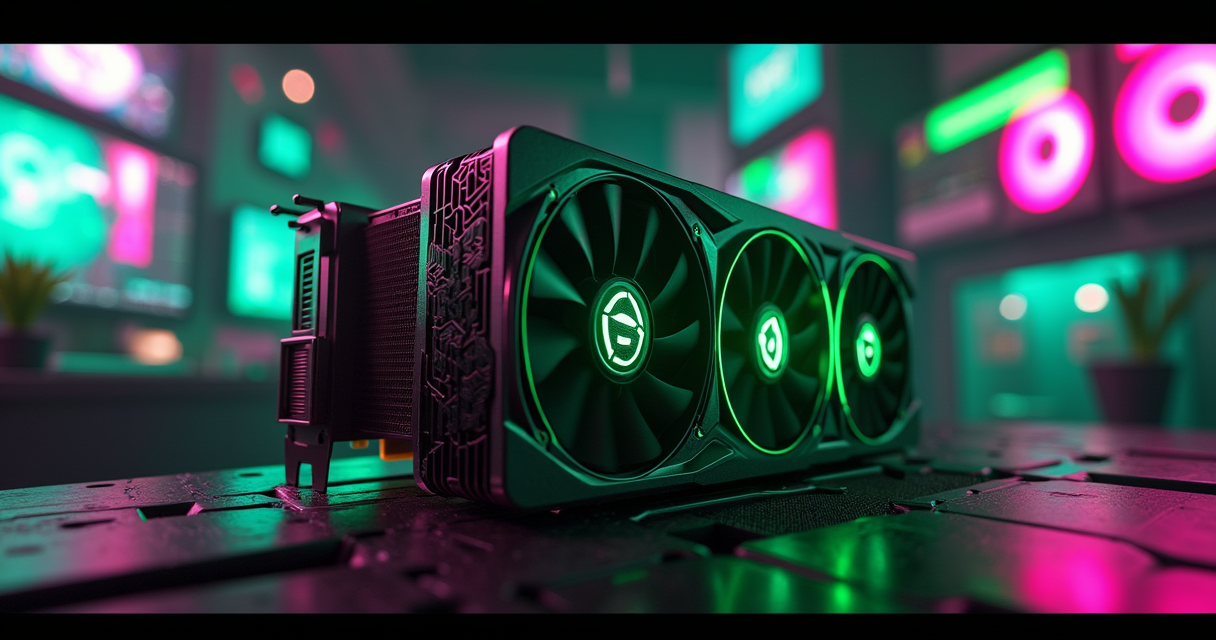
The NVIDIA GeForce RTX 5090 is the fastest consumer graphics card ever built. It is also the most power-hungry, the most expensive, and — depending on the week and the mood of the global DRAM market — the hardest to buy at anything resembling its sticker price. In NVIDIA's boardroom all three of those sentences are trophies. In your build they are warnings. This review is about the gap between the two.
NVIDIA unveiled the card at CES in January 2025 with a $1,999 MSRP, shipped it on 30 January 2025, and then spent the next eighteen months watching its own price tag turn into a fairy tale. We have now lived with the 5090, its melting cables, its missing render units, its ludicrous limited editions, and its 2026 street price for long enough to say something definitive-adjacent about it. Here it is.
The Verdict Up Front
What the RTX 5090 actually is
Strip the marketing and the 5090 is a very large Blackwell die (GB202) with 21,760 CUDA cores, 32GB of GDDR7 on a 512-bit bus, and a 575W power budget, sold at launch for $1,999. It is a halo product in the purest sense: built to win the top line of every benchmark chart so the rest of the stack can bask in the reflected glory. On that narrow mission it succeeds completely. Nothing else touches it.
The one-sentence verdict
The RTX 5090 is roughly 30% faster than the RTX 4090 at 4K — a gain NVIDIA extracted not from a new manufacturing process but by bolting on 33% more cores, faster memory, a wider bus, and 125 extra watts, which is to say it is the fastest card of its generation and also the least interesting engineering story of its generation. It is a brute-force product wearing an architecture's clothes.
Who should close this tab now
If you own an RTX 4090, you can leave. A ~30% uplift for a 25% higher MSRP and a 28% higher power draw is not an upgrade, it is a lateral move with a bigger electricity bill. If you game at 1080p or 1440p, you can also leave — you will be CPU-bound long before this GPU breaks a sweat. The 5090 is a 4K-and-above, money-is-abstract, path-tracing instrument. Everyone else is buying bragging rights, and in 2026 those bragging rights cost about $3,680.
Specs & Silicon: GB202 on the Same Node
Blackwell, GB202, and the node that wasn't
The 5090 is built on TSMC's 4NP process. The 4090 was built on TSMC's 4N process. If those two names look almost identical to you, that is because they almost are: 4NP is a refinement of the same 4-nanometer-class family, not a full node shrink. Contrast that with the 3090-to-4090 jump, which crossed from Samsung's 8nm all the way to TSMC 4N and delivered a genuine density and efficiency windfall. Blackwell got no such windfall. NVIDIA's own Blackwell consumer lineup is, at the transistor level, an Ada Lovelace card that ate more of everything.
32GB of GDDR7 and a 512-bit bus
Where Blackwell does move the needle is memory. The 5090 pairs 32GB of GDDR7 with a 512-bit bus for 1,792 GB/s of bandwidth — a 78% jump over the 4090's 1,008 GB/s. That is the single most consequential number on the spec sheet, and it is why the 5090 pulls away hardest in bandwidth-hungry workloads: 4K ray tracing, high-resolution textures, and anything AI-adjacent. The 32GB frame buffer also future-proofs the card against VRAM-starvation in a way the 24GB 4090 no longer manages in the ugliest 2026 titles. It also happens to make the 5090 a bargain for local LLM inference, which is a large part of why you cannot buy one.
The spec sheet
| Spec | RTX 5090 | RTX 4090 |
|---|---|---|
| Architecture | Blackwell (GB202) | Ada Lovelace (AD102) |
| Process | TSMC 4NP | TSMC 4N |
| CUDA cores | 21,760 | 16,384 |
| VRAM | 32GB GDDR7 | 24GB GDDR6X |
| Memory bus | 512-bit | 384-bit |
| Bandwidth | 1,792 GB/s | 1,008 GB/s |
| Board power (TGP) | 575W | 450W |
| Power connector | 12V-2x6 (600W) | 12VHPWR |
| Launch MSRP | $1,999 | $1,599 |
| Launch date | Jan 2025 | Oct 2022 |
Read that table as a confession. Every 5090 advantage is a bigger number, not a smarter one. This is what a generation looks like when you cannot shrink the transistors: you widen the bus, you upgrade the memory, and you open the power taps.
Performance: The 30% That Isn't 50%
4K rasterization: 20-50%, usually about 30
In independent testing, GamersNexus measured the 5090 at 20% to 50% faster than the 4090 in 4K rasterization, with the spread depending entirely on how bandwidth-bound the game is. Cluster the results and you land near 30%. That is a real generational gain and it is also comfortably short of the number NVIDIA's launch slides encouraged you to imagine. The card does not, to use GamersNexus's framing, live up to the company's more hyperbolic claims.
4K ray tracing: 27-35%
Ray tracing is where the memory bandwidth earns its keep. GamersNexus put the 4K ray-tracing uplift at a tighter 27-35%, and the 512-bit bus is the reason the floor is that high. Engadget's native-4K Cyberpunk 2077 run — everything maxed, no upscaling, no frame generation — landed the 5090 at 54 fps against the 4090's 42 fps, a 29% gain that sits neatly inside that band. This is the workload the 5090 was built for and the only one where the price starts to look like something other than an insult.
1440p, DLSS, and the CPU wall
Drop to 1440p and the gap collapses to roughly 18% on average frame rate, with 1% lows about 22.6% better — because at 1440p you are increasingly measuring your CPU, not your GPU. Even with DLSS Super Resolution upscaling and no frame generation, the 5090 only stretches to about 23.3% average and 23% minimum over the 4090. If you are running this card below 4K you are paying a 4K tax to render frames your processor can't feed. Pair it with something that won't thermal-throttle or bottleneck it, or don't bother buying up.
| Workload | RTX 5090 vs RTX 4090 | Source / note |
|---|---|---|
| 4K rasterization (avg) | +20% to +50% (~30% typical) | GamersNexus |
| 4K ray tracing | +27% to +35% | GamersNexus |
| 4K native, Cyberpunk 2077 (maxed, no DLSS) | 54 vs 42 fps (+29%) | Engadget |
| 1440p rasterization (avg) | +18% | Independent testing |
| 1440p, 1% lows | +22.6% | Independent testing |
| DLSS upscaling, no frame gen | +23.3% avg / +23% min | Independent testing |
| 3DMark (workload-dependent) | +48.6% to -6.7% | Synthetic |
| Overall, all resolutions | ~21%; ~31% at 4K | Aggregate / Digital Foundry |
Note the synthetic outlier: in some 3DMark subtests the 5090 is up to 48.6% ahead, and in at least one it is 6.7% behind the 4090. That negative number is not a defect; it is a light, CPU-bound test where more silicon does nothing and Blackwell's marginally different clock behavior loses by a hair. It is a useful reminder that a single headline percentage for this card is a lie of omission. The honest summary is a range — roughly 20% at the bottom, 50% at the top, 30-ish where it counts.
DLSS 4 & Multi-Frame Generation
What Multi-Frame Generation actually does
DLSS 4's headline feature is Multi-Frame Generation (MFG), and it is the only genuinely Blackwell-exclusive thing on the card. Where the 40-series could interpolate one AI frame between two rendered frames, Blackwell inserts up to three. In Ultra Performance mode the GPU renders one frame and hallucinates three more, quadrupling the number on your frame counter. The DLSS transformer model that drives the upscaling and ray reconstruction is, to NVIDIA's credit, available across the whole RTX range. The three-frame multiplier is not — and that distinction is the entire pricing strategy.
The '5070 equals a 4090' asterisk
You will remember the launch claim that an RTX 5070 delivers RTX 4090 performance for $549. It does — if you let the 5070 generate three-quarters of its frames and hold the 4090 to native rendering. It is a comparison between a card doing real work and a card doing arithmetic. Apply the same MFG multiplier to the 5090 and the frame counter reads like science fiction; strip it away and you are back to the 30% raster gain from the tables above. Both numbers are true. Only one of them is honest, and reviewers spent 2025 learning to publish both.
Latency, artifacts, and the frame-cadence math
Generated frames improve smoothness, not responsiveness. A game rendering at 30 fps and displaying 120 fps via MFG still feels like 30 fps at the mouse, because the three inserted frames carry no new input. Worse, generating frames adds a small latency penalty of its own, partially clawed back by NVIDIA Reflex. The practical rule: MFG is excellent for turning an already-smooth 70 fps into a buttery 200+ on a high-refresh panel, and poison for turning an unplayable 30 fps into a laggy-but-pretty 120. The cadence looks like this:
# Multi-Frame Generation, 4x mode
# R = natively rendered frame   G = AI-generated (no new input)

Displayed:  R  G  G  G  R  G  G  G  R ...
Input data: yes -- -- -- yes -- -- -- yes

# 30 fps rendered -> 120 fps displayed
# motion smoothness: 120 fps  |  input latency: still ~30 fps + overhead
Buy the 5090 for its raster and ray-tracing floor. Treat MFG as a smoothness luxury on top, not as the performance figure. Anyone selling you the multiplied number is selling you a slide, not a card.
575 Watts & the Melting Connector
The 575W budget
The 5090 draws 575W at stock, roughly 30% more than the 4090's 450W, and GamersNexus recorded it as the most power-hungry consumer card they had tested. NVIDIA specs a 1000W PSU as the floor. Efficiency is the tell: because the gains came from more cores and more watts rather than a better node, performance-per-watt barely moved. GamersNexus put it bluntly — "efficiency is about the same as the 4090." A generation that runs no cooler per frame is a generation that grew, not one that improved.
12VHPWR to 12V-2x6: the fix that didn't
The 5090 ships with the 12V-2x6 connector, the revised version of the infamous 12VHPWR plug. The revision was supposed to close the melting saga that dogged the 4090 — the 40-series version of this failure produced a proposed class-action complaint and a hurried PCI-SIG spec revision. It did not close it. The first melted 5090 cable surfaced within about ten days of launch. The root cause survived the redesign: the Founders Edition combines all six 12V pins into a single rail with no meaningful per-pin current sensing, so if the load distributes unevenly across the wires, one wire can carry far more than its share. At 575W on a connector rated for 600W, there is almost no thermal margin left to absorb that.
der8auer, 150°C, and 'not fit for purpose'
Overclocker Roman 'der8auer' Hartung demonstrated the failure mode live, measuring a single 12VHPWR wire at 150°C on a running 5090 while the load sat lopsided across the connector. The reviewer verdicts have not been gentle. GamersNexus wrote that they "worry that NVIDIA has elected to continue using 12VHPWR while pushing so close to the limit of the cable spec." Club386's Ben Hardwidge, writing up his own melted card, was blunter: "If a cooker had a mains cable that caught fire like this, it would be recalled," adding that "this socket isn't fit for purpose, and our industry, particularly Nvidia, needs to admit it." No official recall has followed. If you own one, use a native ATX 3.1 cable, seat it until it clicks, and never trust a bargain-bin adapter.
The Stumbles: Missing ROPs & Flat Efficiency
The missing-ROPs fiasco
Weeks after launch, owners began benchmarking 5090s that were mysteriously slower than reviewers'. The cause was a manufacturing defect: NVIDIA confirmed that a small fraction — roughly 0.5% — of early RTX 5090, 5090D and 5080 cards shipped with fewer ROPs (render output units) than the spec advertised, costing the affected cards around 4% average performance. NVIDIA's guidance was to RMA them. It was a small problem in absolute terms and a large problem for a $1,999 halo product whose entire value proposition is that it is the uncompromised best. Tom's Hardware summed the whole launch up in its headline verdict: Blackwell "commences its reign with a few stumbles."
Efficiency that didn't move
It bears repeating because it is the thesis of the card: the 5090 is not more efficient than the 4090. It is bigger and thirstier. If you power-limit or undervolt it, you can shed a lot of that heat for very little performance — the card holds most of its frame rate at a substantially lower board power, which is the single best modification you can make to it. There is also modest headroom the other direction for those who insist; our GPU overclocking walkthrough covers the sane version. Here is the tame-it-first approach:
# Tame a 575W RTX 5090 (Linux example; use an Afterburner curve on Windows)

nvidia-smi -pl 450        # cap board power at 450W (down from 575W)
# expect: only low-single-digit % FPS lost, far less heat, noise and
#         a cooler connector under sustained load

# Or undervolt the curve instead of hard-capping:
#   ~875 mV @ ~2600 MHz  ->  near-stock performance at markedly lower draw
A Founders Edition you can't find
The Founders Edition is a genuine engineering achievement — a two-slot, 575W card with a dual-flow-through cooler that keeps a monstrous die in check. It is also nearly impossible to buy at $1,999. Which brings us to the part of this review that has aged worst.
What the Reviewers Actually Said
GamersNexus and Tom's Hardware
The independent testing houses landed in the same place: fastest card ever, thinnest generational story in years. GamersNexus, after measuring the 27-35% 4K uplift, reserved most of its concern for the power connector and the flat efficiency. Tom's Hardware called it "the fastest GPU we've ever tested, most of the time" — the qualifier doing heavy lifting — while framing the launch as a reign that "commences with a few stumbles." Neither outlet told anyone to stop buying 4090s in a hurry.
Engadget and Digital Foundry
Engadget's Devindra Hardawar titled his review "Pure AI excess for $2,000" and did not soften the landing: "A $2,000 video card for consumers shouldn't exist." His discomfort with frame generation was almost literary — "like Cypher in The Matrix... after suffering through years of low 4K framerates, I couldn't help but feel like 'ignorance is bliss' when it comes to frame generation." Digital Foundry, measuring an average 31% improvement over the 4090, delivered the most quotable summary of the lot: this is "the fastest gaming GPU (a lot of) money can buy." The parenthetical is the review.
The consensus
Read across all five and a single verdict emerges. The RTX 5090 is unambiguously the best gaming GPU on the planet, it is a mundane ~30% generational step dressed as a revolution, its power connector is a liability NVIDIA refuses to redesign, and its price is offensive on paper and worse in practice. Everyone gave it high marks. Nobody sounded happy about it.
Historical Context: The x90 Halo
From Titan to the 4090
The x90 tier is the spiritual heir to the old Titan line — the card built with no regard for value because value is somebody else's tier. The lineage runs Titan (2013), through the RTX 3090 (2020, $1,499, Ampere on Samsung 8nm), to the RTX 4090 (2022, $1,599, Ada on TSMC 4N), to this. Each halo card exists to define the ceiling and let NVIDIA charge accordingly for everything underneath it. The 5090 fits the pattern exactly, right down to the price creep: $1,499, then $1,599, then $1,999.
The node shrink that wasn't
Here is the throughline of the entire Blackwell generation. The 3090-to-4090 leap rode a two-generation process jump (Samsung 8nm to TSMC 4N) and delivered a genuine efficiency revolution — the 4090 was frequently 60-70% faster than the 3090 while being far more efficient. The 4090-to-5090 leap had no such jump; 4N to 4NP is a tune-up, not a shrink. So NVIDIA did the only thing left: a bigger die, GDDR7, a 512-bit bus, and +125W. The result is a card that is faster because it is more, not because it is better. Understand that and every number in this review stops surprising you.
The 12VHPWR curse, a timeline
The connector saga is now three years old. It arrived with the 40-series in 2022; 4090s melted; a proposed class action was filed; PCI-SIG revised the spec from 12VHPWR to 12V-2x6 with shorter sense pins to catch bad seating; and then the 5090 melted anyway, harder, because the revision addressed user error and never addressed the card-side load balancing. A halo product on its second connector redesign should not still be cooking cables. That it does is the clearest evidence that the 575W envelope is being pushed past what the plug was designed to carry.
The 2026 Price Reality
$1,999 is a fairy tale
The Founders Edition MSRP is $1,999. In practice the FE sells out in minutes on the rare occasions it appears, partner cards start around $2,900 and climb past $3,400, and by June 2026 the RTX 5090's average street price had settled near $3,680. This is not ordinary scalping. A structural memory shortage — GDDR7 and DRAM production competing directly with insatiable AI datacenter demand — has kept high-end Blackwell supply constrained with no relief in sight through mid-2026. The $1,999 number is real in the sense that it was printed once. It is a fairy tale in the sense that almost nobody has paid it. If you are also speccing storage for this build, note that the same platform makes PCIe 6.0 SSDs a rounding error for gamers — spend the money on the GPU, not the drive.
The MSI Lightning Z and the $5,090 flex
If the base card's price offends you, MSI built a monument to excess. The MSI GeForce RTX 5090 Lightning Z, revived in early 2026 with only 1,300 units made worldwide, carries an official price of $5,090.99 — and you cannot simply buy it; MSI ran a lottery draw for the privilege. It is a liquid-cooled, dual-12V-2x6 board with user-selectable 800W and 1000W vBIOS modes and a 2,500W XOC BIOS for liquid-nitrogen record runs, demanding a 1500W-plus PSU. Resellers took it exactly where you'd expect: eBay listings hit nearly $27,000, a 500% premium. Tom's Hardware's subtitle — "RTX 5090 Ti, anyone?" — is the kindest possible reading.
Buying advice in a memory crisis
The pragmatic guidance for 2026: the Founders Edition remains the closest thing to MSRP if you can catch a drop, and the well-cooled partner cards (the ASUS ROG Astral and the more sensible TUF Gaming among them) are the realistic default at their inflated tags. Do not pay Lightning-Z money. Do not pay eberay money. And seriously weigh whether a used 4090, or a 5080 at half the die and half the MSRP, does what you actually need before you hand over $3,680 for a 30% gain and a connector that runs at 150°C.
| Card | CUDA cores | VRAM | Bus | TGP | MSRP | Launch |
|---|---|---|---|---|---|---|
| RTX 5090 | 21,760 | 32GB GDDR7 | 512-bit | 575W | $1,999 | Jan 2025 |
| RTX 5080 | 10,752 | 16GB GDDR7 | 256-bit | 360W | $999 | Jan 2025 |
| RTX 5070 Ti | 8,960 | 16GB GDDR7 | 256-bit | 300W | $749 | Feb 2025 |
| RTX 5070 | 6,144 | 12GB GDDR7 | 192-bit | 250W | $549 | Mar 2025 |
| MSI RTX 5090 Lightning Z | 21,760 | 32GB GDDR7 | 512-bit | 800-1000W* | $5,090.99 | Early 2026 |
*User-selectable vBIOS modes; a separate 2,500W XOC BIOS exists for extreme sub-ambient overclocking.
Competition: 5080, 4090 & No-Show AMD
RTX 5090 vs RTX 4090
The 5090's only serious rival is the card it replaced. The 4090 is discontinued, but plenty are in the wild, and a used one at a sane price is the single best argument against buying a 5090. You give up 32GB for 24GB, MFG's third frame, and about 30% at 4K. In exchange you keep hundreds — sometimes thousands — of 2026 dollars. For anyone not chasing the absolute ceiling, that trade favors the older card.
RTX 5090 vs RTX 5080
NVIDIA priced the RTX 5080 at exactly half the 5090's MSRP — $999 to $1,999 — and the symmetry is a marketing convenience, not a performance one. The 5080 has 10,752 CUDA cores to the 5090's 21,760 and 16GB of VRAM to the 5090's 32GB. It is roughly half the silicon for half the sticker, but it delivers more like 55-65% of the frames, because performance never scales linearly with die size. It is, dollar-for-frame, the smarter buy — and if that is the tier you're shopping, our breakdown of how the 5080 stacks up against the 4080 in 4K is the more useful comparison for your wallet.
AMD's polite no-show
The reason the 5090 has no price ceiling is that nothing competes with it. AMD's RDNA 4 generation (the RX 9070 XT and below) deliberately skipped the halo, targeting the high-volume mid-range instead of the trophy tier. With no rival at the top, NVIDIA sets the number and the market — or the memory shortage — sets it higher. Competition is the thing that disciplines pricing, and at this tier there is none. That single fact explains the $3,680 better than any spec on this page.
Predictions: The Next 6-12 Months
The Super refresh question
NVIDIA's mid-cycle "Super" refreshes typically arrive to reset value where competition or VRAM complaints bite. Expect them to land on the 5070 and 5080 tiers — likely using denser 3GB GDDR7 modules to bump frame buffers — long before they touch the 5090, which already maxes its 512-bit bus at 32GB. A 5090 Super, if it comes at all, is a clock-and-price nudge, not a new card.
Prices and the memory crunch
The structural DRAM/GDDR7 shortage is the dominant variable, and it is not a scalping problem you can wait out in a month. Barring a demand collapse in AI, expect 5090 street pricing to stay well north of $2,800 into 2027, with the Founders Edition remaining a unicorn.
The connector reckoning
Three years of melted cables is a long time for a $2,000 product line. The pressure for a genuine fix — card-side per-pin current sensing and load balancing, the thing the 4090 partly had and the 5090 FE gave up — will grow, and premium partner boards are the likeliest place it returns first. Here are the specific calls for the next 6-12 months:
- No RTX 60-series in this window. Blackwell's successor ("Rubin"-class) does not ship to consumers before this window closes; the 5090 stays the flagship through at least mid-2027.
- Super refreshes hit the 5070/5080, not the 5090. The VRAM bumps and value resets land below the halo tier.
- Street prices stay above ~$2,800. The memory shortage keeps the 5090 far from its $1,999 MSRP well into 2027.
- A real connector fix arrives on partner cards. Board-level current balancing returns on premium AIB models under sustained melting-report pressure, even if NVIDIA never issues a recall.
- AMD concedes the halo again. The next AMD generation still won't build a 5090 rival, leaving NVIDIA's top-tier pricing entirely uncontested.
The Bottom Line
The card
The RTX 5090 is the fastest consumer GPU ever made and the least surprising one in years. It is ~30% faster than the 4090 at 4K, hits 27-35% in ray tracing, quadruples its frame counter with Blackwell-only Multi-Frame Generation, and pays for all of it with 575 watts, a connector that keeps melting, flat efficiency, and a launch marred by missing render units. It is a brute-force halo product, and on the narrow terms of being the best, it wins going away. If you want a monitor worthy of it, note that the $500 G-Sync module tax is finally dead — pair it with a high-refresh 4K adaptive-sync panel and skip the premium.
The recommendation
Buy it only if you game at 4K or above, run path-traced titles at 144Hz-plus, or need 32GB of VRAM for work the marketing never mentions — and only if you can find one near MSRP, which in 2026 you almost certainly can't. For everyone else, the honest verdict is the one every reviewer buried under high scores: this is the fastest gaming GPU a lot of money can buy, and in the summer of 2026, "a lot of money" means about $3,680. The card earns its crown. It does not earn its price.
Questions the search bar asks me
- Is the RTX 5090 worth upgrading to from an RTX 4090?
- For most 4090 owners, no. The 5090 is roughly 27-35% faster at 4K per GamersNexus, but it costs 25% more at MSRP, draws 125W more, and rides the same TSMC 4-class node, so performance-per-watt is essentially flat. Upgrade only if you specifically need the 32GB of VRAM or Multi-Frame-Generation-driven high-refresh 4K.
- How much does an RTX 5090 actually cost in 2026?
- The MSRP is $1,999 for the Founders Edition, but it sells out in minutes and the real market sits far higher. Mid-2026 street pricing averaged around $3,680, with most partner cards between $2,900 and $3,400 and liquid-cooled halo models past $5,000 — a structural GDDR7/DRAM shortage colliding with AI demand, not scalping alone.
- Does the RTX 5090 still melt its power connector?
- Yes. At 575W the 12V-2x6 connector runs close to its 600W spec ceiling, and reports of melted cables surfaced within about ten days of launch; overclocker der8auer measured a single wire at 150°C. Use a native ATX 3.1 12V-2x6 cable, seat it fully until it clicks, and avoid cheap adapters and tight bends against the connector.
- Is DLSS 4 Multi-Frame Generation 'real' performance?
- It is real smoothness, not real latency. Multi-Frame Generation inserts up to three AI-generated frames per rendered frame — a 4x multiplier — and is exclusive to Blackwell; it makes motion look fluid but does not cut input lag the way natively rendered frames do. NVIDIA's 'RTX 5070 equals an RTX 4090' claim leaned entirely on this multiplier.
- What power supply does an RTX 5090 need?
- NVIDIA recommends at least a 1000W PSU, ideally ATX 3.1 with a native 12V-2x6 connector. The 575W board can spike higher transiently, and extreme cards like the MSI RTX 5090 Lightning Z — which pulls 800-1000W across its user-selectable vBIOS modes — call for 1500W or more.
Marcus covers the gaming PC, GPU, and peripheral side of staresback. Every post under this byline is reviewed pre-publish by Sam P., Editor & Operator — corrections to info@instalinkoteam.com. Published 2026-08-29 · Last updated 2026-08-29. Full bios on the author page.