/// FIELD NOTES FROM A SELF-AWARE GAME SITE
Best Gaming Chair 2026: TITAN Evo Wins at 449€
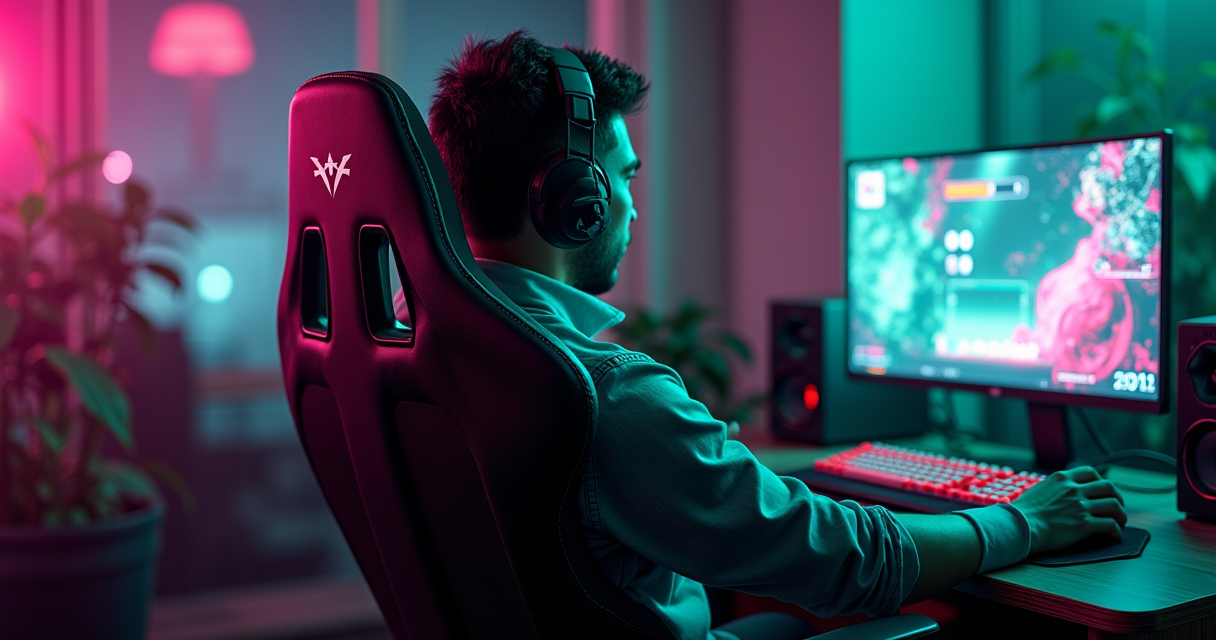
There is a specific kind of person who will spend 449 euros on a chair shaped like a seat designed to hold a human being in place at 250 km/h, and then use it to sit perfectly still for six hours killing dragons. That person is the entire gaming-chair market, and in 2026 the industry has finally built something worthy of the money — sort of, with an asterisk the size of a Herman Miller catalogue.
This is a review of the 2026 field: the chairs the year's buying guides actually agree on, ranked, tabled, and stress-tested against the one question nobody selling them wants you to ask — would a plain office chair at the same price do this better? The winner is in the headline. The nuance, as always, is underneath it. What follows treats a padded gas-lift like the physical artifact it is: a delivery system for good posture, dressed as a Le Mans prototype, sold to people who game sitting still.
The Verdict, Up Front
We bury nothing on this site. The short version lives at the top, and the 6,000 words after it are for people who want to know why the short version is true.
The Short Version
The Secretlab TITAN Evo is the best gaming chair of 2026. It is the one racing-styled chair that survives an eight-hour work day without turning your lower back into a grievance, and it is the model that the year's most-cited Spanish buying guides — Arkaiacorp, El Independiente, and Ergonomiza — independently land on as the best overall. It costs 449 €, per Ergonomiza's 2026 price table, which is a lot of money for a chair and a completely normal amount of money for a good chair. Those two facts are the whole story.
Its closest rival is the Razer Iskur V2 at 399 €, which El Independiente's February 16, 2026 guide names the best pick for intensive, eight-hour-plus use on the strength of its 6D adaptive lumbar system. If your spine is the only variable you care about, the Razer is arguably the more honest purchase. If you want the whole package — build, adjustability, materials, resale value, the magnetic pillow that you will mock and then never remove — the Secretlab wins.
The Number
As a gaming chair, judged against other gaming chairs, the TITAN Evo earns a 9 out of 10. It loses a point not to any competitor in this article but to the furniture aisle next door: a used ergonomic office chair at the same price will match or beat it on the only metric that matters after hour six, and it will do so without the side bolsters poking your ribs. That is the caveat, and we will keep repeating it, because every gaming-chair review that omits it is selling you something.
Who This Review Is For
If you sit at a desk for two hours a night, you do not need any chair in this article and you should read the budget section and stop. If you sit at a desk for eight, ten, twelve hours — because your work and your play happen in the same seat — then the difference between a 449 € chair and a 120 € chair is measured in whether your L4 vertebra files a complaint at 40. That is the buyer this is written for: the person for whom the chair is not a peripheral but the platform everything else runs on.
What a Gaming Chair Actually Is
Before we rank them, we should be honest about what they are, because the category is built on a costume, and the costume matters less than the marketing wants and more than the cynics admit.
The Racing-Seat Cosplay
A gaming chair is a bucket seat bolted to an office gas lift. The bucket seat is a real and excellent piece of engineering — companies like Recaro have spent decades perfecting a shell that holds a driver rigidly in place while lateral g-force tries to fling them sideways through a corner at Spa. The tall side bolsters, the wraparound wings, the aggressive lumbar wedge: every one of those features exists to fight cornering forces that a seated gamer will never, ever experience. You are not pulling 1.5g playing Elden Ring. The bolsters that cradle a race driver just quietly press into your ribcage while you sit motionless. This is the founding absurdity of the category, and no amount of RGB stitching resolves it.
The good 2026 chairs succeed precisely to the degree that they abandon the cosplay. The Secretlab TITAN Evo softened its bolsters and widened its seat pan generation over generation; the Corsair TC500 Luxe leans so far toward office furniture that El Independiente files it under 'professional environments' rather than gaming. The arc of the entire category bends away from the race car and toward the thing it should have been from the start: a decent chair.
The DXRacer Origin Story
The gaming chair as a retail category is younger than most of the games this website covers. It did not exist during the 8-bit era, the 16-bit era, or the first PlayStation. It was essentially invented in the mid-2000s, when a manufacturer named DXRacer — which made actual automotive and racing-simulator seats — discovered that the same shells sold far better with the word 'gaming' attached and an esports logo stitched into the headrest. The template was set: take a motorsport seat, add a five-star base and a class-4 gas cylinder from the office-chair supply chain, photograph it under purple lighting, charge a premium. Every chair in this article is a descendant of that single marketing insight.
None of which makes them bad. It makes them overdetermined — shaped by a sales pitch before they were ever shaped by a spine. Understanding that is the first step to buying one intelligently, which is to say: buying it for the adjustability and the build quality, and treating the racing silhouette as a tax on the aesthetic, not evidence of superior ergonomics.
What We Actually Sat On
The retro purist is entitled to a moment of smugness here. For the first several decades of this hobby, nobody sat in anything special. We sat cross-legged on shag carpet two feet from a CRT that was slowly cooking our retinas. We sat on the couch with a controller cord stretched to its physical limit. We sat in dad's swivel chair, the one from the study, and got yelled at for reclining it too far. The closest gaming ever came to needing a purpose-built seat was the arcade, and specifically the deluxe hydraulic cabinet for Sega's Out Run in 1986 — a sit-down unit that actually banked and leaned with the car, a genuine motion seat two decades before anyone thought to sell you a stationary one. Hardcore Gaming 101's Out Run feature documents just how far ahead of the living room the arcade was on the ergonomics of driving games.
The point is not nostalgia for a numb backside on a hardwood floor. The point is calibration. We managed to complete Final Fantasy VI and Chrono Trigger and every Mega Man from the carpet. The 449 € chair is a genuine quality-of-life upgrade, and it is also, historically speaking, a luxury of staggering recency — a solution to a problem the hobby did not know it had until someone with a warehouse of racing seats told us we did. Jimmy Maher's Digital Antiquarian has spent years chronicling the home-computing era's cramped desks and kitchen-table setups; the gaming chair is what happens when that scene grows up, gets disposable income, and decides its back is worth insuring.
How the 2026 Field Was Judged
A roundup is only as good as its shortlist, and a shortlist is only as good as the criteria that built it. Here is how the 2026 field got narrowed, and by whom.
The Methodology
The most rigorous methodology disclosure in this year's coverage comes from Arkaiacorp, which states that it analyzed more than 30 models available on Amazon Spain before committing to its top five. That is a real number and a real filter — the difference between a guide that ranks the five chairs a PR team mailed out and one that actually waded through the mid-tier swamp of identical-looking Chinese OEM shells with different logos. We anchor to that thirty-model funnel because it is the closest thing the category has to a stated sample size, and because the chair that survives a thirty-model cull to reach the top of it — the TITAN Evo — is the same chair that independently tops Ergonomiza and El Independiente. Three guides, three different funnels, one winner. Convergence like that is worth more than any single verdict.
The Criteria That Matter
Strip the marketing away and a gaming chair is judged on maybe five things, in descending order of how much they affect your body after hour four:
- Lumbar support. The single feature that separates a chair you can live in from one you endure. External adjustable lumbar or a genuine built-in system — not a foam cushion on an elastic strap.
- Seat firmness and depth. Firm foam that keeps its shape beats plush foam that bottoms out in a year. Depth has to fit your femurs; too shallow and the edge cuts your circulation.
- Adjustability. 4D armrests (height, depth, width, pivot), recline range, tilt lock. The more axes, the more body types and desk heights it fits.
- Materials and durability. Leatherette peels; woven fabric breathes and lasts. The gas cylinder and the recline mechanism are what physically fail first on cheap units.
- Warranty and price. A five-year warranty is a manufacturer betting on its own foam. A two-year one is a manufacturer hedging.
Everything else — the stitched logo, the colorway, the 'racing-grade' descriptor, the pillow — is downstream of those five. Note that price sits last, not because it doesn't matter but because within the premium tier the prices cluster so tightly (399 € to 449 €) that it's a tiebreaker, not a category.
The Sources
This article's factual spine is a set of 2025–2026 Spanish-market guides: Arkaiacorp (thirty-model funnel, top five), El Independiente (February 16, 2026 guide, use-case awards), Ergonomiza (price table plus the eight-hour-work-day framing), Gallardo Reviews (the premium-alternative and 300 €-anchor picks), and El Pás (a November 3, 2025 piece specifically on chairs under 250 €). We defer to them on rankings and prices, and we add exactly one criterion of our own that none of them foreground: the office-chair comparison. Every euro figure in this review that is stated as fact traces to one of those guides; where we don't have a number, we say 'see retailer' rather than invent one.
The Champion: Secretlab TITAN Evo
The play-through. This is the chair we would tell a friend to buy if they refused to read past this paragraph, and here is what living in it actually feels like.
The Build
The TITAN Evo arrives as a flat-pack that assembles in about twenty minutes with the included hardware and a genuinely competent instruction card — a low bar the category routinely trips over. It comes in three sizes: Small, Regular, and XL, spanning roughly 1.50 m to well past 2.00 m of occupant, which is the single most under-discussed reason it wins. Most gaming chairs ship in one size and hope. Secretlab lets a 1.60 m player and a 1.95 m player both sit correctly, and correct fit is 80% of comfort.
The shell wears either NEO Hybrid Leatherette — a tougher, more abrasion-resistant synthetic than the peel-prone PU the budget tier uses — or the SoftWeave Plus woven fabric, which breathes and is the one to buy if you live somewhere warm or sweat when you concentrate. Underneath is a steel frame and a cold-cure foam seat base that stays firm rather than compressing into a hammock over eighteen months. The armrests are full 4D: height, depth, width, and pivot, the best in this field and the feature you'll adjust most. Recline runs to a Secretlab-claimed ~165°, enough to nap in.
The 8-Hour Test
Ergonomiza's verdict — that the TITAN Evo is the best gaming chair that also survives an eight-hour work day — is the correct verdict, and it earns it in a way you only feel over time. The integrated four-way adjustable lumbar is the hero: not a pillow, not a strap, but a mechanism built into the backrest that pushes into the inward curve of your lower spine and stays there. Dialed in, it holds your posture upright without your muscles doing the work, which is the entire physiological point of a good chair. Across a genuine marathon — the kind where you look up and the sky has changed color — the seat foam holds its shape, the armrests keep your shoulders from creeping toward your ears, and the firm base that feels slightly stern in the store reveals itself as the reason your tailbone isn't aching at hour seven.
This is where the price justifies itself or doesn't. If your sessions are long — an RPG completionist run, a work-from-home job that bleeds into an evening raid — the eight-hour comfort is not a luxury, it's the product. If your sessions are short, you are paying for a capability you will never invoke.
Where It Annoys
No 9 is a 10, and the missing point isn't free of local irritations. The seat is firm, deliberately, and people who want to sink into a cloud will hate it for the first week before their spine sends a thank-you note. The magnetic memory-foam head pillow is a gimmick — a pillow that clicks onto the backrest via magnets, no strap — and it is also, infuriatingly, the most-copied feature in the category because it works and you will never take it off. And the price only ever drifts upward; the 449 € figure is the current European number, not a historical low, and Secretlab's own sale events are the only reliable way under it. None of these is a dealbreaker. All of them are the texture of a very good product rather than a perfect one.
TITAN Evo: The Spec Sheet
Every review on this site carries a full data table, and a chair is no exception — it just swaps 'cartridge mapper' for 'gas cylinder'. Here is the champion, itemized.
Reading the Table
The columns map the same fields we'd use for a console or a cartridge, translated: 'platform' becomes category, 'license' becomes upholstery, 'controls' becomes the armrest and recline system, and 'save state' becomes the warranty — the manufacturer's bet on how long its own foam and mechanisms survive. Read the warranty row the way you'd read a battery-backup on a save chip: it tells you how much the maker trusts the hardware.
| Spec | Secretlab TITAN Evo (2026 field) |
|---|---|
| Category | Premium bucket-seat gaming chair |
| Generation / year | Current TITAN Evo generation, sold through 2026 |
| Sizes | Small / Regular / XL (fits roughly 1.50 m to 2.00 m+) |
| Upholstery ('license') | NEO Hybrid Leatherette or SoftWeave Plus fabric |
| Frame & padding | Steel frame, cold-cure foam seat base |
| Recline | Up to ~165° (Secretlab's figure) |
| Armrests ('controls') | 4D — height, depth, width, pivot |
| Lumbar support | Integrated 4-way adjustable lumbar |
| Headrest | Magnetic memory-foam pillow (no strap) |
| Weight capacity | Manufacturer-rated ~130 kg (Regular) / ~180 kg (XL) |
| Warranty ('save state') | Up to 5 years with registration; EU 2-year legal minimum |
| Price (MSRP) | 449 € (Ergonomiza, 2026 price table) |
| 2026 verdict | Best overall — Arkaiacorp, El Independiente, Ergonomiza |
Sizes and Fit
The three-size range is the row to stare at, because it is the one competitors can't easily copy and the one that most affects whether you specifically will be comfortable. A chair sized for the average 1.80 m occupant actively punishes a 1.60 m one — the seat is too deep, the edge cuts behind the knees, the lumbar lands in the wrong place. Secretlab's fit chart is not marketing; it's the difference between a chair that fits and a chair you compensate for. Measure yourself, use the chart, and buy the size it tells you to, not the one that looks biggest in the photo.
Materials and Warranty
Between the two upholstery options, the SoftWeave fabric is the enthusiast's pick — it breathes, it doesn't turn into a heat trap in July, and it can't peel the way leatherette eventually can. The leatherette wipes clean more easily and looks sharper, which is a real consideration if snacks happen. On warranty: the up-to-five-years figure (with registration) is the strongest in this field and functions as a durability claim in its own right. A manufacturer offering five years on foam and mechanism is telling you it expects both to outlast the fashion cycle. Stack the mandatory EU two-year legal warranty underneath it and the TITAN Evo is, on paper, the most protected purchase in the roundup.
The Challengers
The champion doesn't win uncontested. Three premium rivals have legitimate claims, and for specific buyers each of them is the correct answer over the Secretlab.
Razer Iskur V2 — The Ergonomic Rival
The Razer Iskur V2 is the one chair in the field that can look the TITAN Evo in the eye on the criterion that matters most. Ergonomiza lists the Iskur line at 399 € and specifically singles it out for the best integrated lumbar support in gaming-focused seating; Arkaiacorp ranks the V2 at #2 overall and points to its 6D adaptive lumbar as the headline feature; and El Independiente's February 2026 guide goes further, naming the Iskur V2 its outright pick for intensive, eight-hour-plus use. Three sources, one consistent story: if your spine is the deciding vote, this is the chair.
The 6D adaptive lumbar is not the usual pillow-on-a-strap. It's a system built into the backrest that adjusts across multiple axes and moves with you as you shift, which is the closest the category gets to the dynamic support of a proper ergonomic office chair. At 50 € less than the Secretlab, it is arguably the more rational premium buy — you sacrifice some of the TITAN Evo's size flexibility and resale cachet for a lumbar system that, feature-for-feature, may be the best here. It is our runner-up, and for the long-session specialist it is a defensible number one.
Corsair TC500 Luxe — The Office Crossover
The Corsair TC500 Luxe is the chair for people who are slightly embarrassed to own a gaming chair. El Independiente names it the best pick for professional environments, and Gallardo Reviews positions it as the best premium alternative to the TITAN Evo. Both verdicts point the same direction: this is the model that dresses down. The racing cosplay is dialed back, the silhouette is calmer, and it can sit in a home office next to a video-call background without announcing that its owner mains an FPS. For the buyer whose chair has to survive both a raid night and a Monday standup on camera, the TC500 Luxe is the least apologetic choice in the field.
Blacklyte Athena Pro — The Value Flagship
The Blacklyte Athena Pro exists to answer a single question: what if you want the Secretlab experience and don't want to pay the Secretlab price? Gallardo Reviews' answer is that this is the best alternative to the TITAN Evo for less money — a flagship-adjacent build that gets you most of the way to the champion's feel at a lower entry point. That it exists at all is the story of the 2026 premium tier: the category leader is now good enough, and expensive enough, that a whole sub-market of 'the Secretlab, but cheaper' has grown up beneath it. The Athena Pro is the best-regarded resident of that sub-market.
Six Chairs, Ranked
Here is the whole premium-to-upper-mid field on one grid, so you can see the shape of the competition at a glance rather than reconstructing it from prose.
How to Read the Table
'Best for' is quoted from the 2026 guides, not invented here — each entry traces to a named source in the final column. Where a price is a hard number (449 €, 399 €, ~300 €), it comes from the guides; where it says 'see retailer', it means the sources ranked the chair without publishing a euro figure we're willing to reprint as fact. Rank order within the table follows the weight of consensus, not a single guide's numbering.
| Chair | Tier / price | Standout feature | Best for (2026 guides) | Source |
|---|---|---|---|---|
| Secretlab TITAN Evo | Premium / 449 € | 4-way lumbar + 4D arms | Best overall, 8-hour work days | Arkaiacorp, Ergonomiza, El Independiente |
| Razer Iskur V2 | Premium / 399 € | 6D adaptive lumbar | Intensive 8+ hour use | Arkaiacorp (#2), El Independiente |
| Corsair TC500 Luxe | Premium / see retailer | Office-lean, less racing cosplay | Professional environments | El Independiente, Gallardo Reviews |
| Blacklyte Athena Pro | Upper-mid / see retailer | Secretlab feel for less money | Value flagship | Gallardo Reviews |
| Cougar Armor Elite | Mid-high / see retailer | Balanced value build | Mid-range value pick | Arkaiacorp (#3) |
| Valk Freya | ~300 € | Most chair for the money | Best around 300 € | Gallardo Reviews |
The Premium Tier
The top three rows — Secretlab, Razer, Corsair — are the ones worth agonizing over, and the agonizing is real because they're genuinely close. The honest decision tree is short: want the best all-round chair with the widest fit range, buy the TITAN Evo; want the best lumbar for marathon sessions at 50 € less, buy the Iskur V2; want a chair that doesn't look like a chair from a gaming chair, buy the TC500 Luxe. There is no wrong answer among the three, only a right answer for your specific body and your specific desk.
The Value Tier
The bottom three rows are where the money-versus-comfort curve bends. The Cougar Armor Elite is Arkaiacorp's #3 and its stated balanced mid-to-high pick — the chair for someone who wants 85% of the premium experience and refuses to pay premium money. The Blacklyte Athena Pro undercuts the flagships while chasing their feel. And the Valk Freya is Gallardo Reviews' best-around-300 € pick, the price anchor where 'good gaming chair' stops being aspirational and starts being a reasonable Tuesday purchase. Below this tier, you're in genuine budget territory, which deserves its own section.
The Budget Question
Not everyone has 449 €, and pretending otherwise is how buying guides lose the reader. The good news for 2026 is that the sub-premium and budget tiers are better-covered than they used to be, and El Independiente's own list refuses to be captured entirely by the usual premium brands.
The 300 € Anchor
Three hundred euros is the most important price point in this entire article, because it's where diminishing returns start to bite. Gallardo Reviews' pick here is the Valk Freya, explicitly framed as the best option around 300 € — the sweet spot where you get a real adjustable chair with proper armrests and a foam density that survives a year, without paying the flagship tax. If you're a long-session player who can't justify the Secretlab, the Freya is the pragmatic landing zone. This is the same diminishing-returns logic we've laid out for displays in our 144Hz-versus-240Hz breakdown: past a certain threshold you pay exponentially more for a difference you increasingly can't feel, and 300 € is roughly the chair equivalent of that threshold.
The First-Chair Pick
For a buyer who has never owned a gaming chair and doesn't yet know what they'll care about, Arkaiacorp's #4 is the DRIFT DR35, named specifically as the best choice for a first gaming chair. That framing is exactly right: the DR35's job is not to be the best chair you'll ever own, it's to be the chair that teaches you what you actually value — whether you use the recline, whether you need 4D arms, whether fabric beats leatherette for your climate — so your next chair is an informed 449 € decision instead of a hopeful one. It is the training-wheels purchase, and there's no shame in it.
The Sub-250 € Reality
Below 250 €, the physics change. Arkaiacorp's #5 and stated budget pick is the IntimaTe WM Heart; El Independiente hands its best-value-for-money award to Huracan; and El Pás devoted an entire November 3, 2025 piece to gaming chairs under 250 €, which is the definitive reference for the bottom of this market. Buy in this tier with clear eyes: you are purchasing a shape, not a lumbar system. The foam is thinner and compresses faster, the 'lumbar support' is usually a cushion on an elastic strap, and the gas cylinder is the component most likely to fail first — the one place where the mandatory EU two-year warranty earns its keep. These chairs are genuinely fine for two-hour evenings. They are not eight-hour chairs, and any guide that pretends a 150 € chair matches a 449 € one after hour six is not measuring hour six.
Pricing and Availability
Here is the whole field with every price we're willing to state as fact, the honest 'see retailer' where we aren't, and where each chair actually lives.
The Price Table
| Model | Price (2026) | Where | Tier / role | Source |
|---|---|---|---|---|
| Secretlab TITAN Evo | 449 € | Direct (secretlab.eu) | Premium — best overall | Ergonomiza |
| Razer Iskur V2 | 399 € | Direct / Amazon | Premium — best lumbar | Ergonomiza, El Independiente |
| Corsair TC500 Luxe | See retailer | Amazon / Corsair | Premium — office crossover | El Independiente, Gallardo |
| Blacklyte Athena Pro | See retailer | Direct / Amazon | Value flagship | Gallardo Reviews |
| Cougar Armor Elite | See retailer | Amazon | Mid-high value | Arkaiacorp (#3) |
| Valk Freya | ~300 € | Amazon ES | ~300 € sweet spot | Gallardo Reviews |
| DRIFT DR35 | Sub-250 € tier | Amazon ES | Best first chair | Arkaiacorp (#4) |
| IntimaTe WM Heart | Sub-250 € tier | Amazon | Budget pick | Arkaiacorp (#5) |
| Huracan | Value tier | Amazon ES | Best value-for-money | El Independiente |
Regional Notes
Every euro figure here is a Spanish-market number, because the 2026 guides driving this roundup are Spanish and priced in euros against Amazon Spain and the manufacturers' EU storefronts. US and UK pricing for the same chairs will differ — sometimes meaningfully — and the premium brands (Secretlab, Razer) sell direct from their own regional sites, which is usually where the accurate current price and the size selector both live. Wherever you are, the EU-style two-year legal warranty (or your region's equivalent) sits underneath any manufacturer warranty, and it's the backstop that matters most on the budget tier where the gas lift is the weak link.
When to Buy
The premium prices in this table are steady-state, not sale prices. Secretlab in particular runs its own periodic events, and the flagship street price on both it and the Razer tends to soften around the usual late-autumn retail spike. If you're spending 449 €, there is rarely a reason to spend it in a hurry — the chair will exist next month, and so will a discount code. The one exception is size or upholstery availability: the popular Regular-size SoftWeave configurations sell through faster than the leatherette, so if the guide's fit chart points you to a specific SKU, buy that SKU when it's in stock rather than waiting for a color you'll settle on anyway.
How It Plays: Five Scenarios
A chair is not one product; it's five different products depending on who sits in it. Before the scenarios, one truth that outranks every chair in this article: posture beats brand. Dial in the geometry below and a 300 € chair set up correctly will out-comfort a 449 € chair slumped in wrong.
IDEAL SEATED GEOMETRY  (baseline ergonomic guidance, chair-agnostic)
-------------------------------------------------------------------
  Elbow angle ......... 90-110 deg    forearms roughly level with desk
  Shoulders ........... relaxed, not shrugged up toward the armrests
  Knee angle .......... ~90-110 deg   thighs roughly parallel to floor
  Feet ................ flat on floor or on a footrest
  Lumbar support ...... fills the inward curve of the lower back
  Monitor top edge .... at or just below eye level
  Viewing distance .... 50-70 cm      roughly an arm's length
  Recline to read ..... 100-110 deg   slight backward tilt offloads spine
-------------------------------------------------------------------
  The chair is a delivery system for this geometry. Nothing more.
The Casual (2–3-Hour Evenings)
If you game a couple of hours a night, every premium chair in this article is overkill and you should know that going in. The Valk Freya at ~300 €, or honestly a well-set-up budget pick like the Huracan, delivers all the comfort a short session can register. The eight-hour engineering of the TITAN Evo is invisible to a two-hour player — you'll never sit long enough for the firm foam and dynamic lumbar to distinguish themselves from decent-enough foam and a cushion. Spend the difference on the parts of the setup you'll actually notice.
The Marathon / Completionist (8+ Hours)
This is the scenario the premium tier was built for and the only one where 449 € is self-evidently justified. A hundred-hour RPG completion run, a work day that dissolves into an evening raid, a weekend swallowed whole by a strategy campaign — this is where Ergonomiza's eight-hour framing of the TITAN Evo and El Independiente's eight-hour-plus award to the Razer Iskur V2 stop being marketing and start being medicine. The dynamic lumbar holds your spine so your muscles don't have to; the firm seat that felt stern in hour one is the reason hour seven doesn't ache. If this is you, buy the Secretlab or the Razer and don't look back.
The Competitor / Speedrunner
The competitive player sits forward, upright, and alert — the exact opposite of the reclined-and-cozy posture the racing silhouette implies. For this player the 165° recline is irrelevant; what matters is a firm, locked base that doesn't bob, and lumbar support that keeps an aggressive forward lean from wrecking the lower back over a long practice block. The chair is one leg of a tripod here, and it only pays off paired with the rest of the desk: our picks for the 2026 best gaming keyboard and the best FPS mouse of 2026 matter more to your K/D than the pillow does. Set the tilt lock, kill the bounce, sit forward.
The Shared Desk (Work-From-Home + Co-Op)
When one chair serves two roles — the day job and the night raid — or two people who swap the desk, the 4D armrests stop being a spec-sheet flex and become the whole point. Different body types need different arm heights and widths, and a chair that adjusts across four axes accommodates both without compromise. This is the Corsair TC500 Luxe's home turf (El Independiente's professional-environments pick) and a genuine strength of the TITAN Evo. If the shared session is online co-op, the chair is only as good as the connection under it — which is its own rabbit hole we've dug in the Archer GE800 router review.
The Small Space / First Rig
Not everyone has room for a full racing shell, and the honest advice for a first, space-constrained rig is sometimes to skip the category entirely in favor of a compact ergonomic task chair — or, if the racing look is the whole appeal, to start with Arkaiacorp's DRIFT DR35 first-chair pick and learn what you value. And if the constraint is the desk itself rather than the chair, the mobile answer changes the math completely: a machine you can fold shut sidesteps the whole seating question, which is exactly the trade we weigh in the 2026 gaming-laptop guide. A great chair is wasted on a rig with nowhere to put it.
Who Should Buy What
The whole roundup, compressed into recommendations you can act on. Find your row, buy that chair, stop reading.
If You Want the Best (and Price Is Secondary)
- Best overall — Secretlab TITAN Evo (449 €). Widest fit range, best all-round build, the eight-hour chair that three separate 2026 guides crown. The default correct answer.
- Best lumbar / best for 8+ hour intensive use — Razer Iskur V2 (399 €). The 6D adaptive lumbar is the finest support system here, at 50 € less. El Independiente's marathon pick, and a defensible number one for the spine-first buyer.
- Best for professional / on-camera crossover — Corsair TC500 Luxe. The chair that dresses down for a video call, then dresses back up for a raid. El Independiente's professional-environments winner.
If You Value the Feel Without the Flagship Price
- Best premium feel for less — Blacklyte Athena Pro. Gallardo Reviews' pick for the buyer who wants the Secretlab experience and won't pay the Secretlab number.
- Best balanced mid-high value — Cougar Armor Elite. Arkaiacorp's #3: most of the premium experience, none of the premium tax.
- Best around 300 € — Valk Freya. The diminishing-returns sweet spot. A real chair for a reasonable number.
If You're on a Budget
- Best first gaming chair — DRIFT DR35. Arkaiacorp's #4, the training-wheels chair that teaches you what your next purchase should be.
- Best budget / best value-for-money — IntimaTe WM Heart (Arkaiacorp #5) and Huracan (El Independiente). Fine for short evenings; not eight-hour chairs. El Pás's November 2025 sub-250 € guide is the reference for this whole tier.
The Final Verdict
We started with the answer and spent six thousand words earning it. Here is the accounting, honest column and all.
The Pros
- Genuinely the best all-round chair in the 2026 field, confirmed by three independent guides converging on it.
- Three sizes — the fit range that quietly wins most of the comfort argument.
- Integrated four-way lumbar and full 4D armrests; the eight-hour session is where it earns its keep.
- Best-in-field warranty (up to five years with registration) sitting on top of the EU two-year legal minimum.
- Build quality and materials that survive the fashion cycle, plus a magnetic pillow you'll mock and keep.
The Cons
- 449 € is real money, the price only drifts upward, and the sale is the only reliable way under it.
- The seat is firm by design — a virtue at hour seven, a complaint in week one.
- Still a racing shell: the softened bolsters are better, not absent, and short-session players pay for engineering they'll never trigger.
- The unavoidable asterisk: a same-price ergonomic office chair beats it on pure posture.
The Rating and the Caveat
As a gaming chair, against gaming chairs, the Secretlab TITAN Evo scores 9/10 and is the correct 2026 buy for the long-session player. The Razer Iskur V2 is an 8.5 and the smarter purchase if your lumbar is the only vote that counts. Everything below the premium tier is a value proposition, not a comfort one, and should be bought as such.
Now the caveat we've refused to drop: the missing point goes to the furniture next door. A used Herman Miller Aeron — designed by Bill Stumpf and Don Chadwick, released in 1994, and still the benchmark the whole office-chair industry measures against — will match or beat any chair in this article on pure ergonomics at the same price, and it won't poke your ribs doing it. What the Aeron won't give you is the racing silhouette, the colorways, the esports lineage, or the magnetic pillow. That is what you're actually buying when you buy a gaming chair: an aesthetic, executed well, wrapped around ergonomics that are good-but-not-magic. The TITAN Evo executes that aesthetic better than anything else in 2026, which is exactly why it wins — and exactly why the honest score is a 9 and not a 10.
The retro coda writes itself. We beat Chrono Trigger from the carpet, two feet from a CRT, and our spines forgave us because we were young and the sessions ended when mom called dinner. The 449 € chair is a luxury of staggering recency, a solution to a problem the hobby survived for forty years without. Buy it because your sessions no longer end at dinner and your back has started keeping score — not because a warehouse full of repurposed racing seats told you a stationary hobby needed a cornering chair. It didn't. It just, occasionally, deserves a good one.
Questions the search bar asks me
- What is the best gaming chair in 2026?
- The Secretlab TITAN Evo, at 449€ (Ergonomiza's 2026 price table). It's the recurring best-overall pick across Arkaiacorp, El Independiente's February 16, 2026 guide, and Ergonomiza — rated the gaming chair that also survives an eight-hour work day. It scores 9/10 as a gaming chair.
- Is the Razer Iskur V2 better than the Secretlab TITAN Evo?
- For lumbar support and marathon sessions, arguably yes: the Iskur V2's 6D adaptive lumbar is the field's best, it's 50€ cheaper at 399€, and El Independiente names it the top pick for intensive 8+ hour use. Arkaiacorp still ranks it #2 behind the Secretlab, which wins overall on fit range and build.
- What is the best budget gaming chair in 2026?
- Around 300€, Gallardo Reviews picks the Valk Freya. Below that, Arkaiacorp names the DRIFT DR35 the best first chair (#4) and the IntimaTe WM Heart its budget pick (#5), while El Independiente hands its value award to Huracan. El Pás covered the sub-250€ market in a November 3, 2025 guide.
- Is a gaming chair worth it versus a normal office chair?
- Honestly, a same-price ergonomic office chair — like a used Herman Miller Aeron — matches or beats most gaming chairs on pure posture. You're paying for the racing aesthetic, three-size fit, and 4D armrests, not superior ergonomics. Worth it for 8-hour sessions; overkill for 2-hour evenings.
- How long do gaming chairs last, and what's the warranty?
- The Secretlab TITAN Evo carries up to a 5-year warranty with registration — the best in the 2026 field — on top of the EU's mandatory 2-year legal minimum. On budget chairs the gas-lift cylinder and thinning foam are the first components to fail, which is exactly where that 2-year legal warranty earns its keep.

Ben covers the hardware end of retro gaming: FPGA cores, real-cartridge dumping, capture setups, CRT vs scaler workflows, and the legal and physical preservation infrastructure that keeps old games playable. Every post under this byline is reviewed pre-publish by Sam P., Editor & Operator — corrections to info@instalinkoteam.com. Published 2026-08-29 · Last updated 2026-08-29. Full bios on the author page.